I’ve also been meaning to try peanuts, so it’s interesting to see someone getting any harvest in the North. I should have grown peanuts while I lived in Kansas and the summers were plenty hot. I’ve found a lot of the hot-weather crops that did exceptionally well there (okra, tepary beans, cowpeas, sesame) are slow and sullen here, producing little if anything.
5 Likes
The fastest maturing peanut I’ve grown is Black as sold by Sandhill Preservation. It is mature about 10 days earlier than Shronce Black. As a generalization, smaller peanuts mature faster than larger peanuts. A few varieties can mature in 100 days. For comparison, I harvested Black first, then Texas Red & White, then Bramling Pink, then Schronce Black. The last two were mature at the same time.
Peanuts mature at the plant crown first and then out the runners. Some of them will always be immature at harvest and should be culled as inedible. Even very short season areas should be able to grow and mature crown peanuts as they can be harvested in about 90 days. Optimizing and maximizing harvest is getting the most mature peanuts before they start germinating in the shells. Somewhere around 120 days is required to get maximum production for a given variety.
4 Likes
Fruition seeds is where I purchased mine. They all germinated and came up. Highly recommend them.
Edit for context: I planted them sometime around 5/20 and you’re supposed to pull them once the frost hits but the plants were shriveled dead on 10/3 so I pulled them. Packet says they need 110 days.
1 Like
You planted peanuts directly in ground or sprouted seedlings indoors?
2 Likes
Directly into containers outdoors. The type I got came in the shell, you gently crack them and put the seed into the earth.
Thank you for the info. I will start with the variety you mentioned.
1 Like
Ordered all 4 varieties from Sandhill Preservation (Black, Brambling Pink, Schronce Black and Texas Red and White) as well as 4 varieties from Southern exposure (Carwile’s Virginia, Fastigiata Pin Striped, Schronce’s Deep Black, and Tennessee Red Valencia) to get started and try growing peanuts for the first time this year.
Are Schronce Black and Schronce’s Deep Black the same or different cultivars? Ordered Schronce Black from Sandhill and Schronce’s Deep Black from Southern Exposure.
1 Like
They are the same, I got my seed in 2010 from a guy whose dad developed Schronce Black in the 1960’s or early 1970’s. Ira at Southern Exposure got seed from him at the same time. It started out as a black peanut with 2 or 3 nuts per shell. He selected for 4 or 5 nuts per shell and was reasonably successful.
You will find Black a bit sweeter and a tad earlier maturing than Schronce. My source on Black was Lewis Kilgore who lived near Rainsville Alabama and grew them for a lot of years. He gave me a handful in 2004 which I grew in 2005, then grew a full row in 2006. I sent them to Glenn at Sandhill about 2007 and he grew them successfully in Iowa. He said it was the first time he had been successful growing peanuts in his climate.
Bramling Pink is from a distant cousin who lived near Knoxville TN. It is very similar to a peanut Rodger Winn grew for and sold to Southern Exposure calling it Dutch Fork. Bramling is perhaps a week earlier maturing.
I got Texas Red & White from Southern Exposure about 15 years ago and have maintained it since.
5 Likes
When do you harvest peanuts/groundnuts? The best that I can tell from searches is when the plant dies or when the flower is pollinated. Is there a telltale sign if the plant has already flowered or not? I was gone for two months in summer, so they may have flowered over that period, but I’m not sure.
I have Kersting’s Groundnut (so not a true peanut) and the packet said 4 to 6 months. I planted in late April/early May at the latest, so I should be in that range. Do I just keep waiting till the plants die? I just don’t want the nuts rotting in the wet soil for months because I didn’t know they were ready.


Do these look ready to start curing? This is Kersting’s Groundnut (relative to peanuts). Not really sure how groundnuts work. It looks really white, but its a pretty hard shell, and the test of the raw bean was green with a hint of peanuttyness. Just not sure when to flip the plants to start drying.
1 Like

Some Amazon peanuts that I grew. Only had 4 plants, had to pull them a little early as an animal was pulling up the plants. Tasted pretty good green, going to roast them because I don’t really have enough to boil. I want to save at least 10 seeds as well for next year. Hopefully I’ll get better germination, some of the nuts were sprouting in the ground.
2 Likes
So happy to find this thread! This year is the first time i am growing them in zone 5b, Michigan. I bought my seeds from Fruition Seeds shortly before it stopped selling seeds. We shall see if i will have any to harvest. I will likely save most to plant next year.
Y’all are great sources of information especially Fusion Power. I will try a short season variety from Sandhill next time. I just love supporting that seed preservation enterprise. I have so much respect for the couple who run it!
4 Likes
I grew Virginia peanuts in our garden near Rocheport MO, when I was in grad school at UofMO, back in the early 1990s. They filled well, and we enjoyed both parched and boiled goobers (I prefer boiled peanuts).
3 Likes
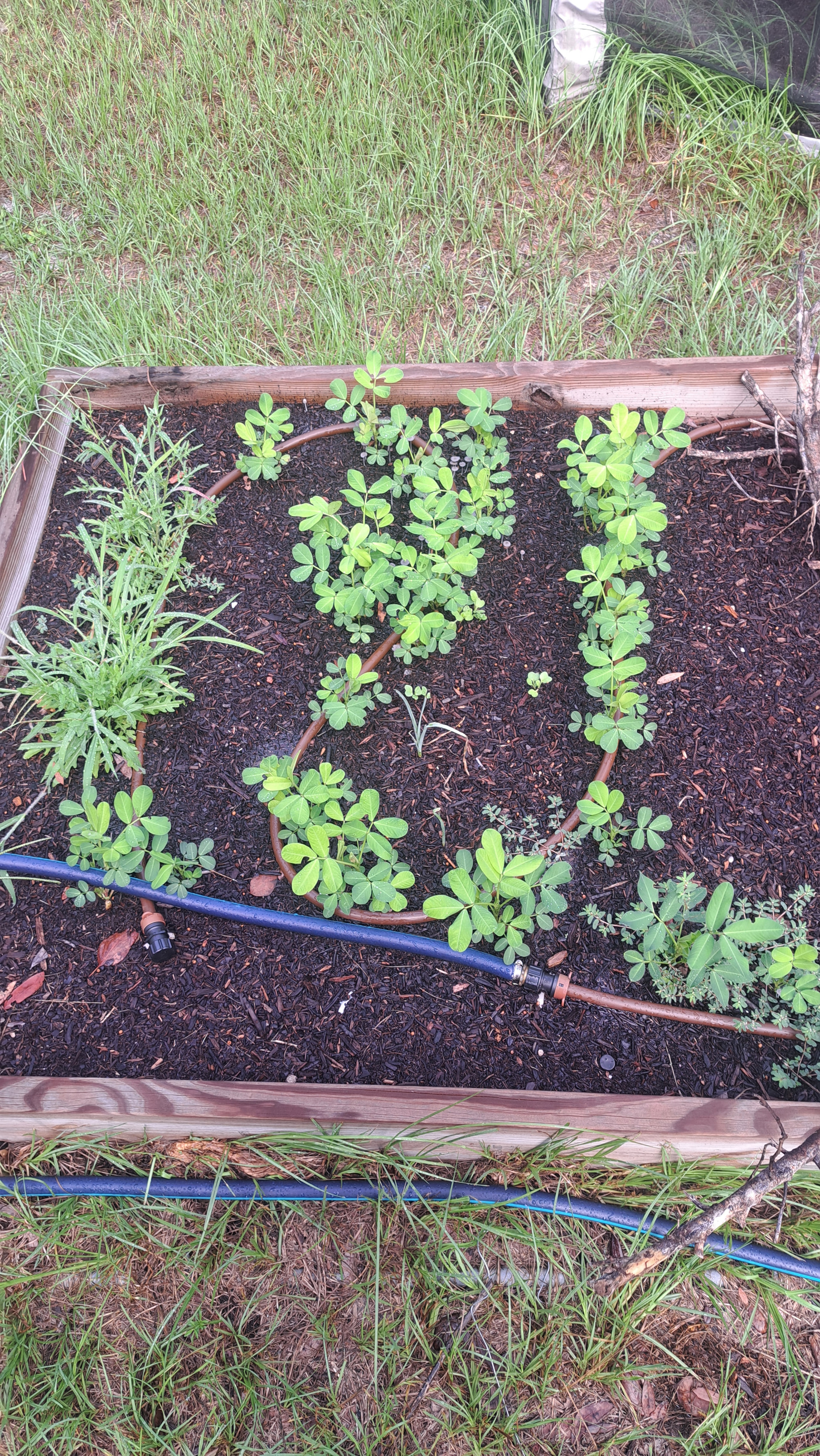
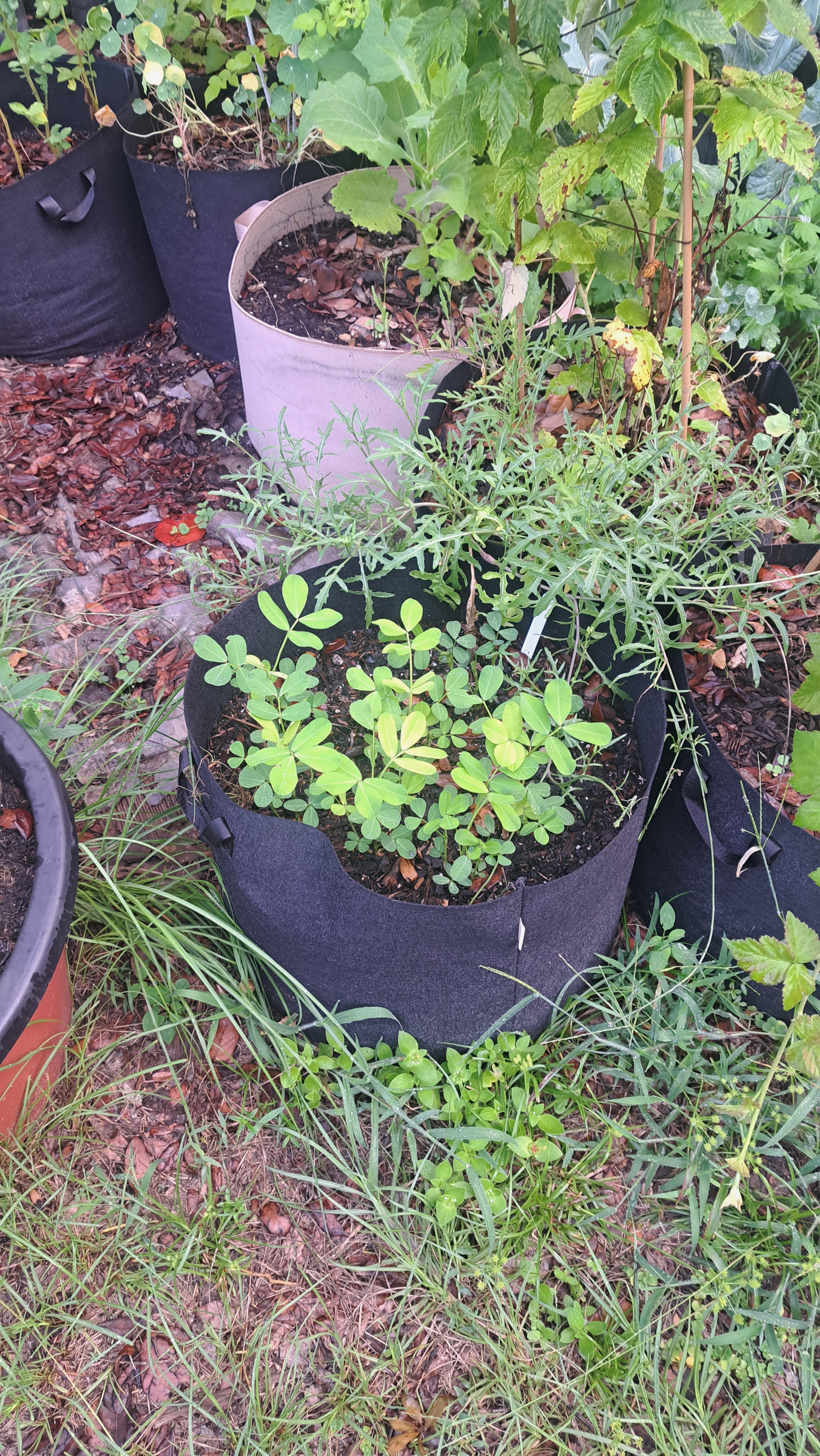
“Amazon wild peanuts”. These are from seeds save from last year. Probably 80% germination compared to the 30-40% germ I got from the seeds I bought. Pretty excited, hopefully the raised bed is deep enough to give a pretty good harvest.
2 Likes
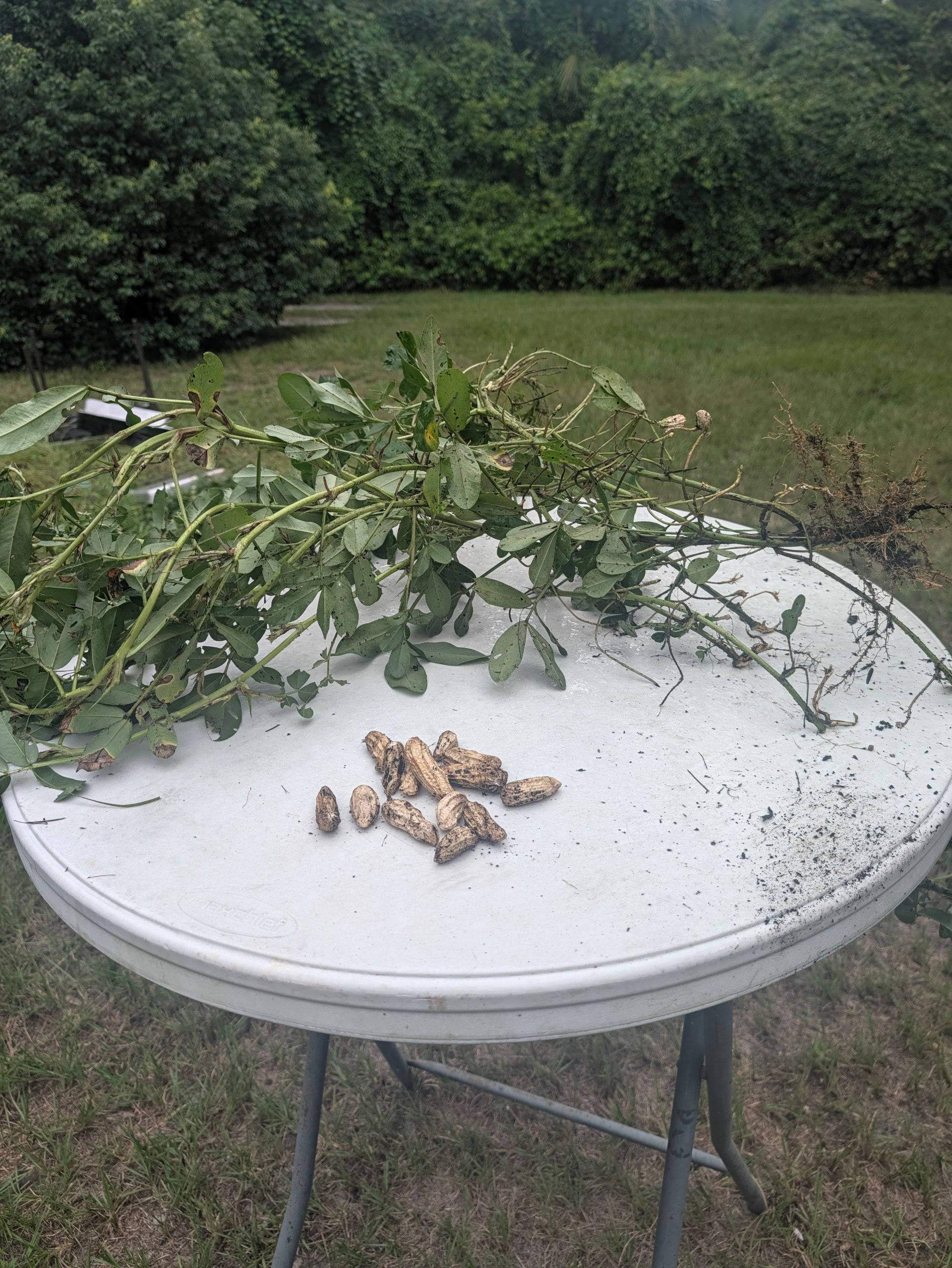
Early pull from one plant just to see how they are coming along. I didn’t dig up everything, so I definitely left some behind, but they look pretty good. No commercial numbers, but I don’t need thousands of peanuts. Although I wouldn’t mind it

2 Likes
Mine are a bit further along with around 100 peanuts per plant from what I can see so far. I should have plenty to ship to Sandhill for next year.
3 Likes
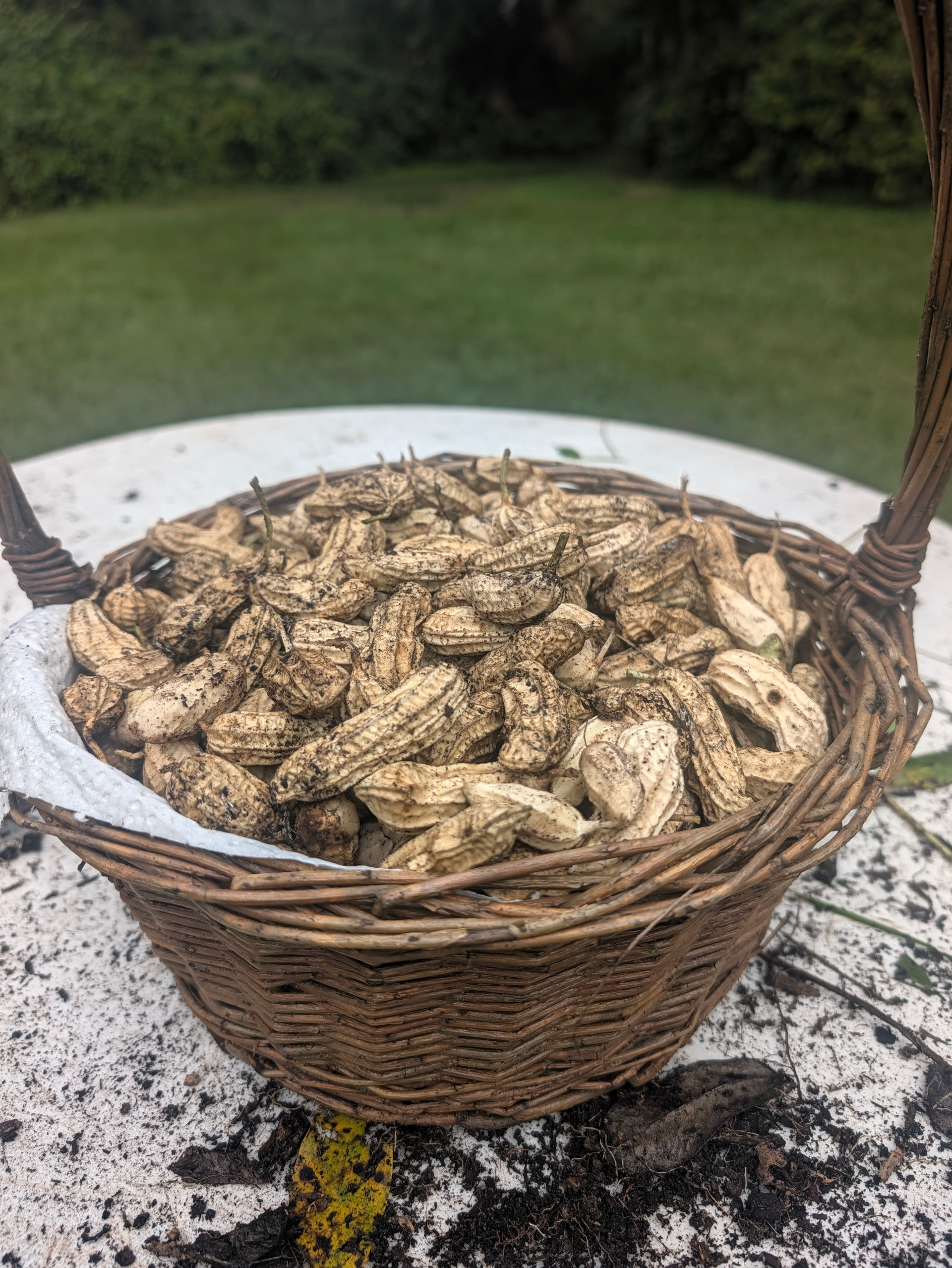
Behold! Peanuts! Area was about a 3’ x 4’ block and pretty shallow. These are Wild Jungle peanuts that I saved from last year. Germination was poor last year, so I over planted this year and had near perfect germination. So they bed became over crowded, which pushed alot of the “pegs” into the area, not forming peanuts. This happened much more prominently in my growbag population, where about 60% of the plant was not in contact in the ground. I know better now. Still, this is significantly better then last year’s haul and it does not include the ones I am saving for seed.
Time to make peanut butter!
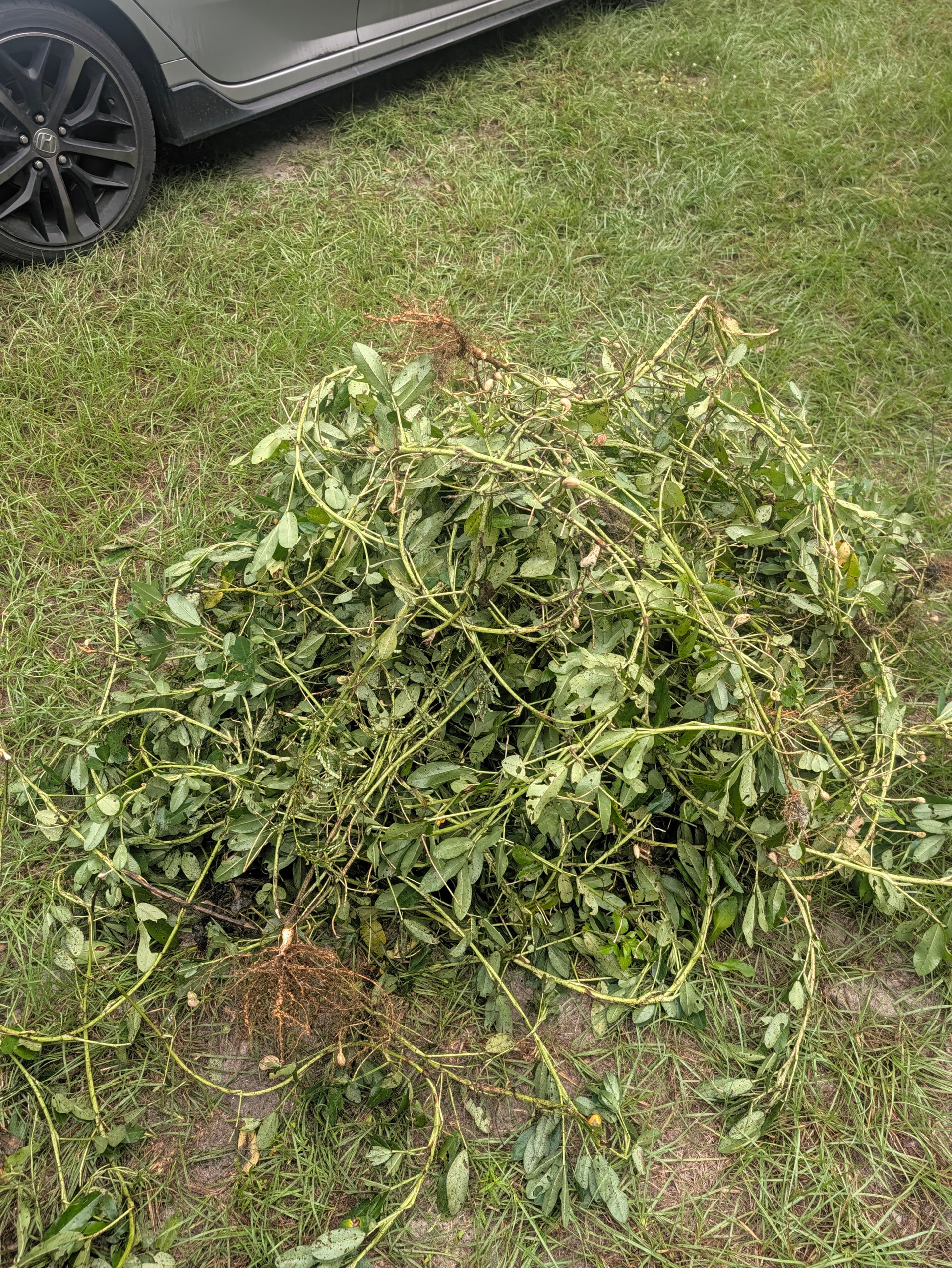
This was the vegatative mass. I assumed all peanuts grow like a vine, but after growing Babara and Krestings groundnuts which are basically small clumps, I guess that might not be the case.
4 Likes
There are 4 phenotypes of peanuts. They can be described as upright, sprawling, and flat on the ground. Of the varieties I grow, Black, Schronce Black, and Bramling are sprawlers often developing long runners 4 to 5 feet long. Texas Red & White is a compact flat variety with nothing taller than 8 inches and never more than 3 feet diameter.
3 Likes

Homemade peanut butter was absolutely delicious (on the left). Tasted almost exactly like roasted peanuts, which makes sense because the only ingredients are roasted peanuts and salt. I was worried at first that my food processor wasn’t fine enough to turn them into butter, but it worked out fine.
This was very fun to make. If I had children, it’s definitely something I would make with them. Going from a full peanut to basically cake crumbs and finally turning into peanut butter, all in a span of maybe 10-15 mins. Super cool! The jar only last about 2 weeks, but the oil never separated, which I think is a good sign.
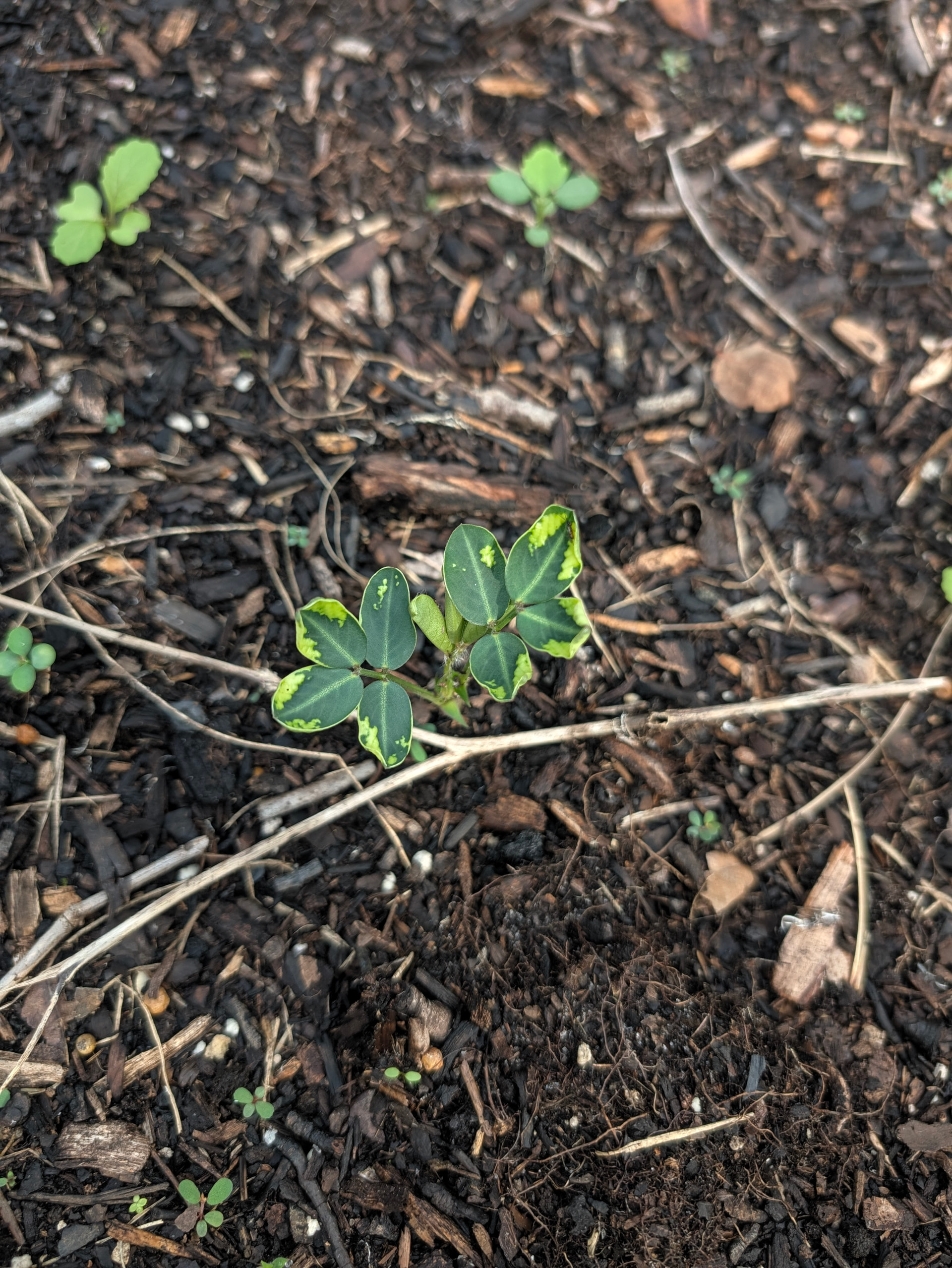
Has anyone transplanted peanuts before? I had a volunteer sprout and it has popped up variegated and I want to try to save it over winter. Might be a fool’s errand, but it would be cool to have the genetics. Maybe even put it in its own bag.
3 Likes
Leaves like that almost always mean the plant is virus infected. You can transplant them, just dig up at least a pint of soil with it and move it to a container of soil that has a hole ready for the soil plug.
2 Likes