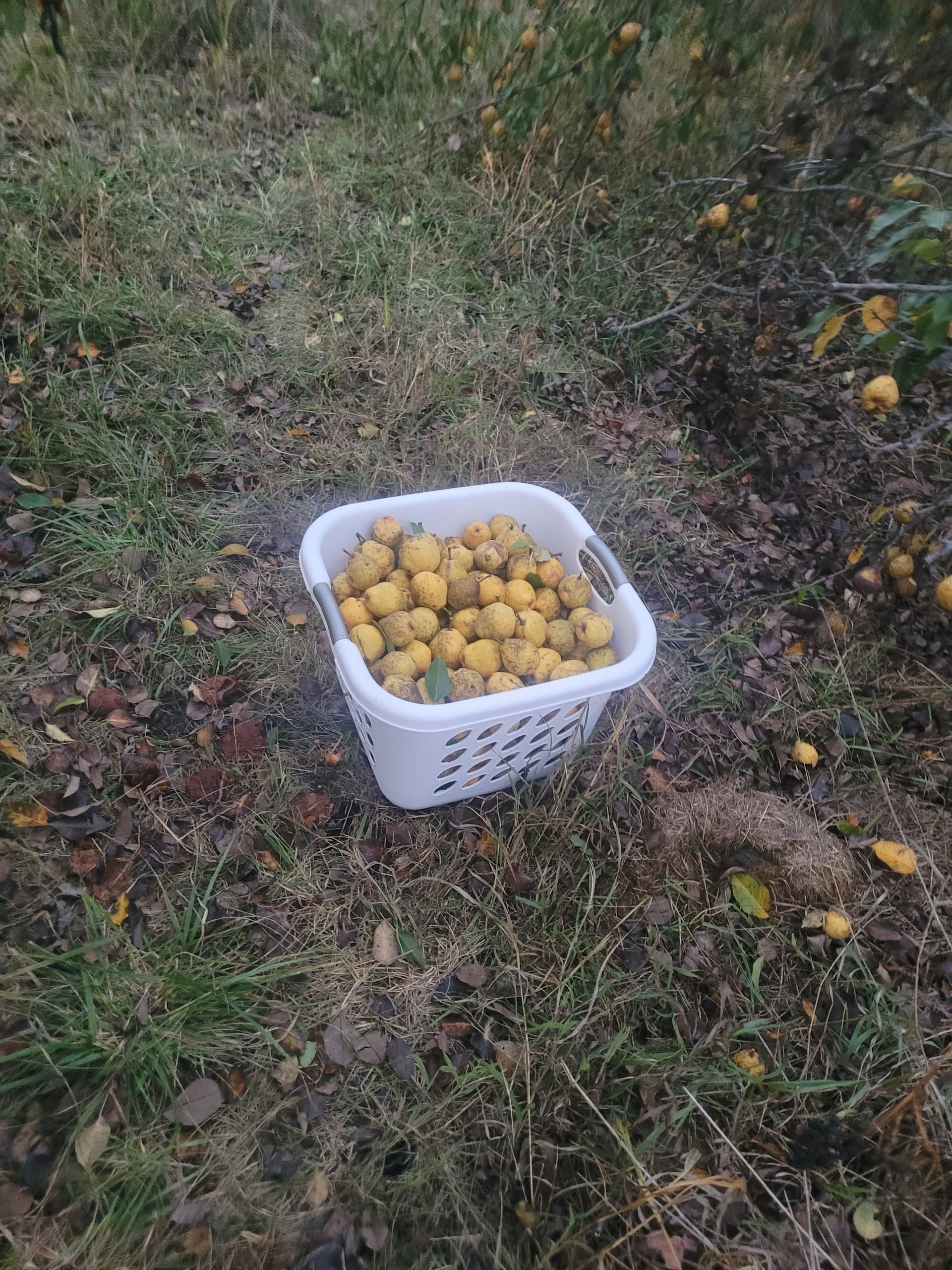
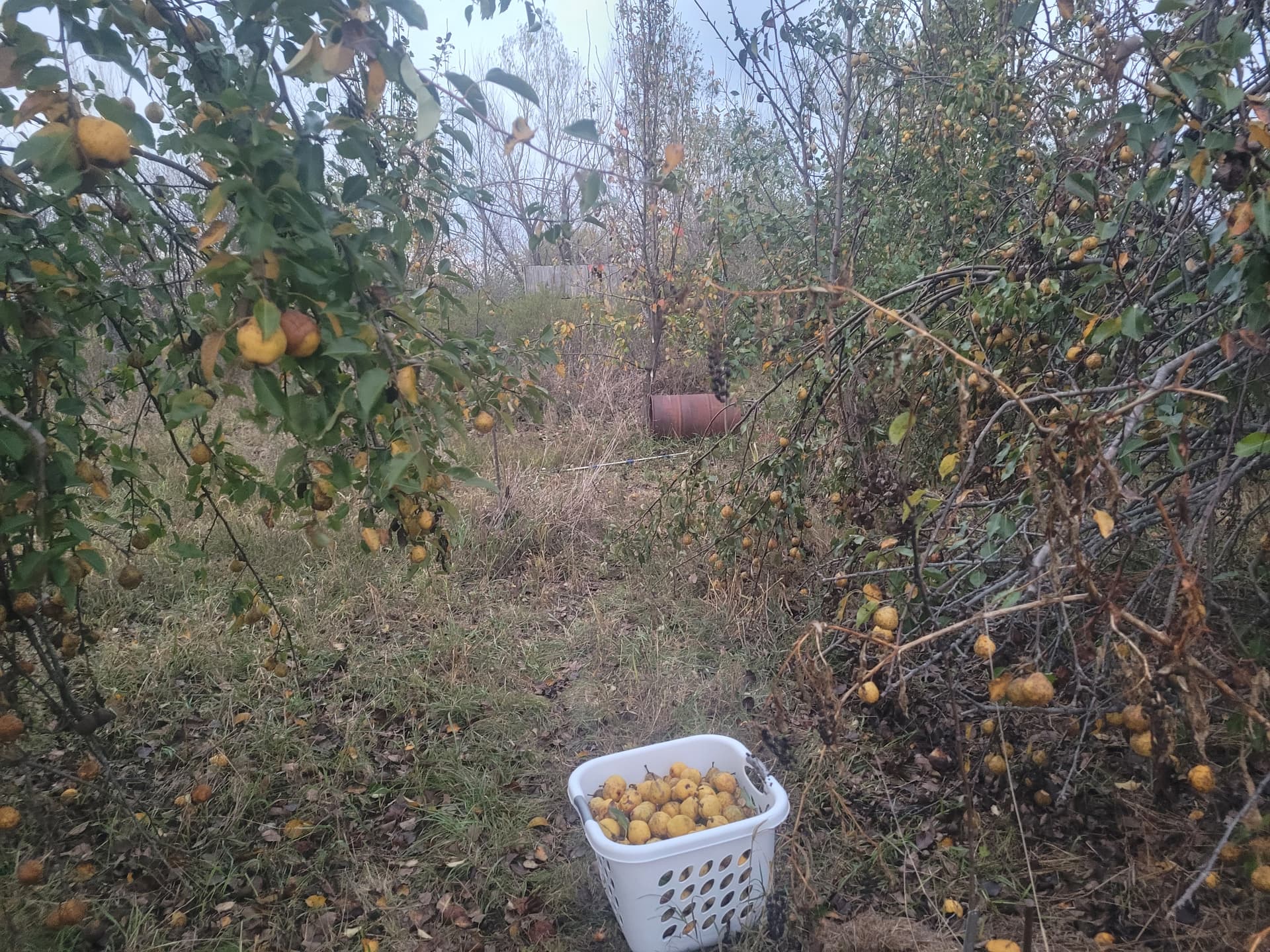
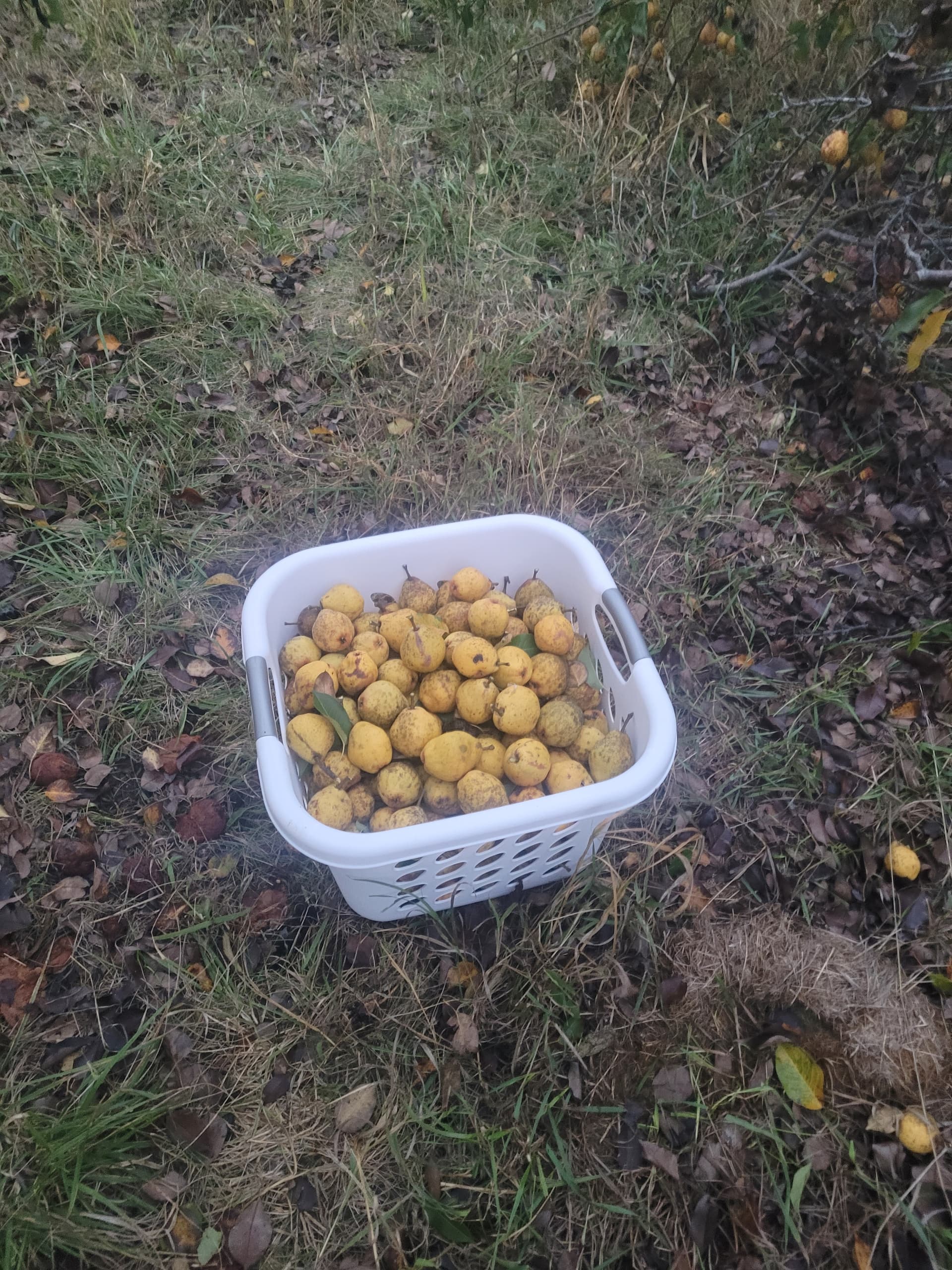
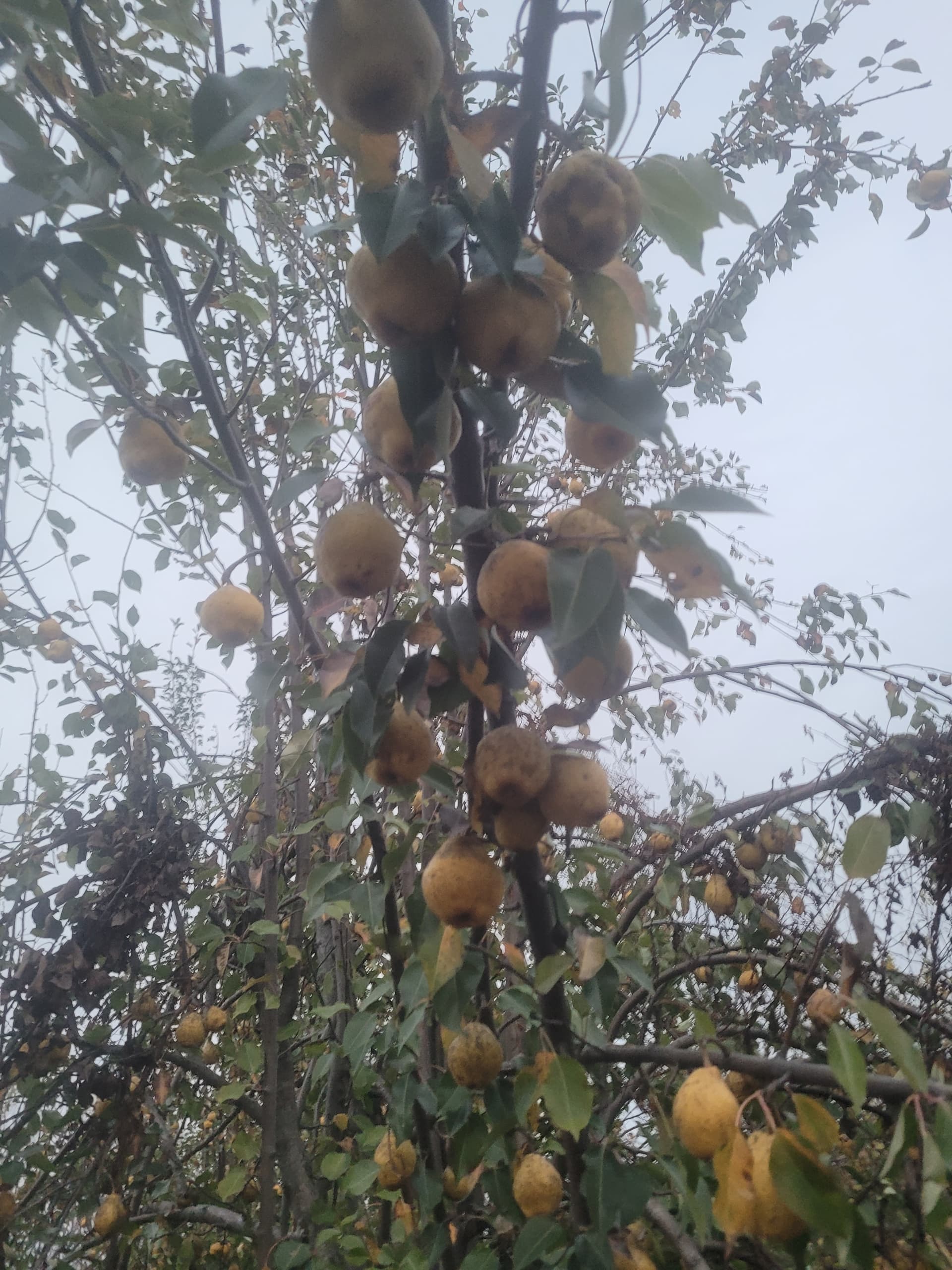
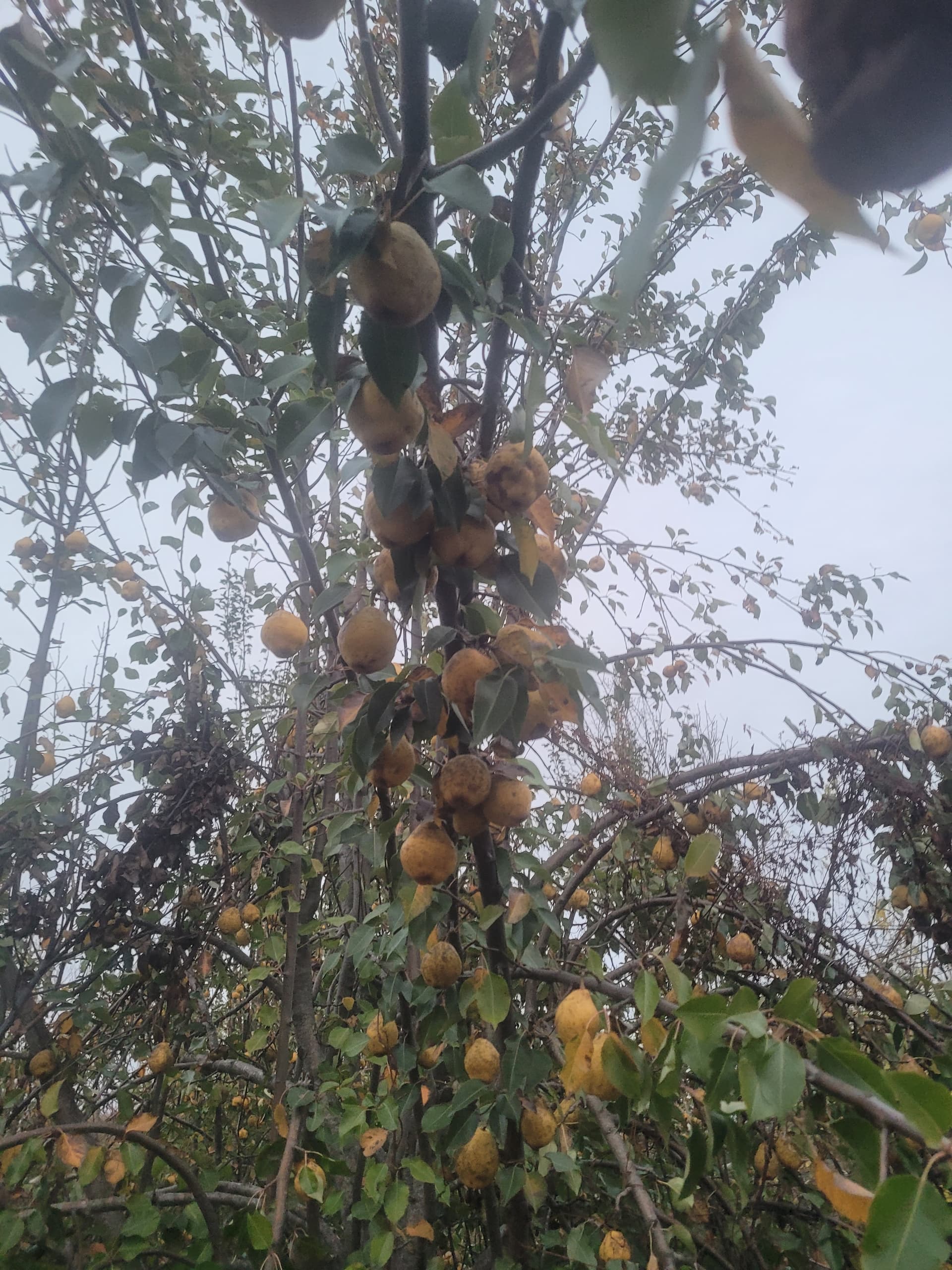
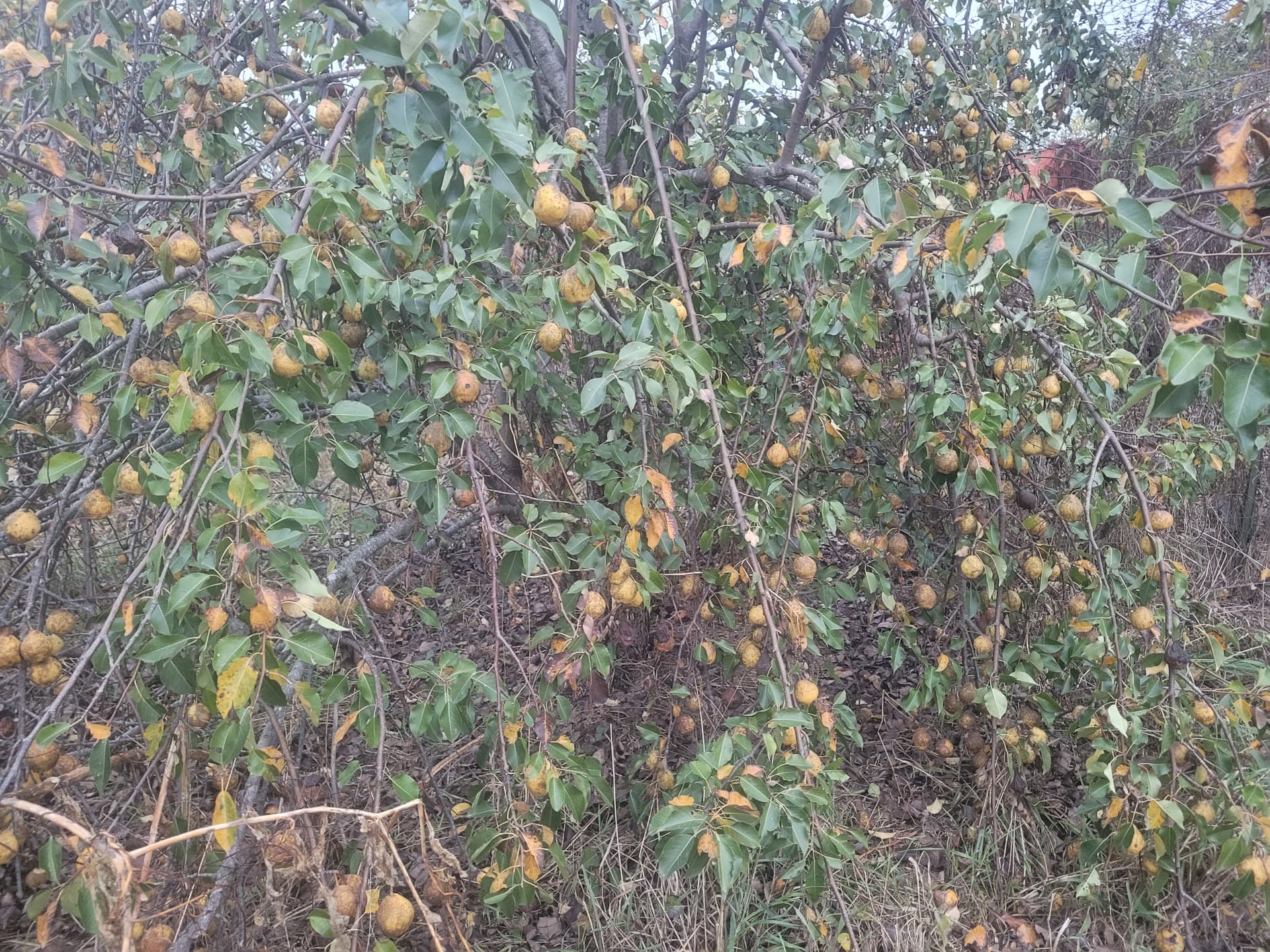
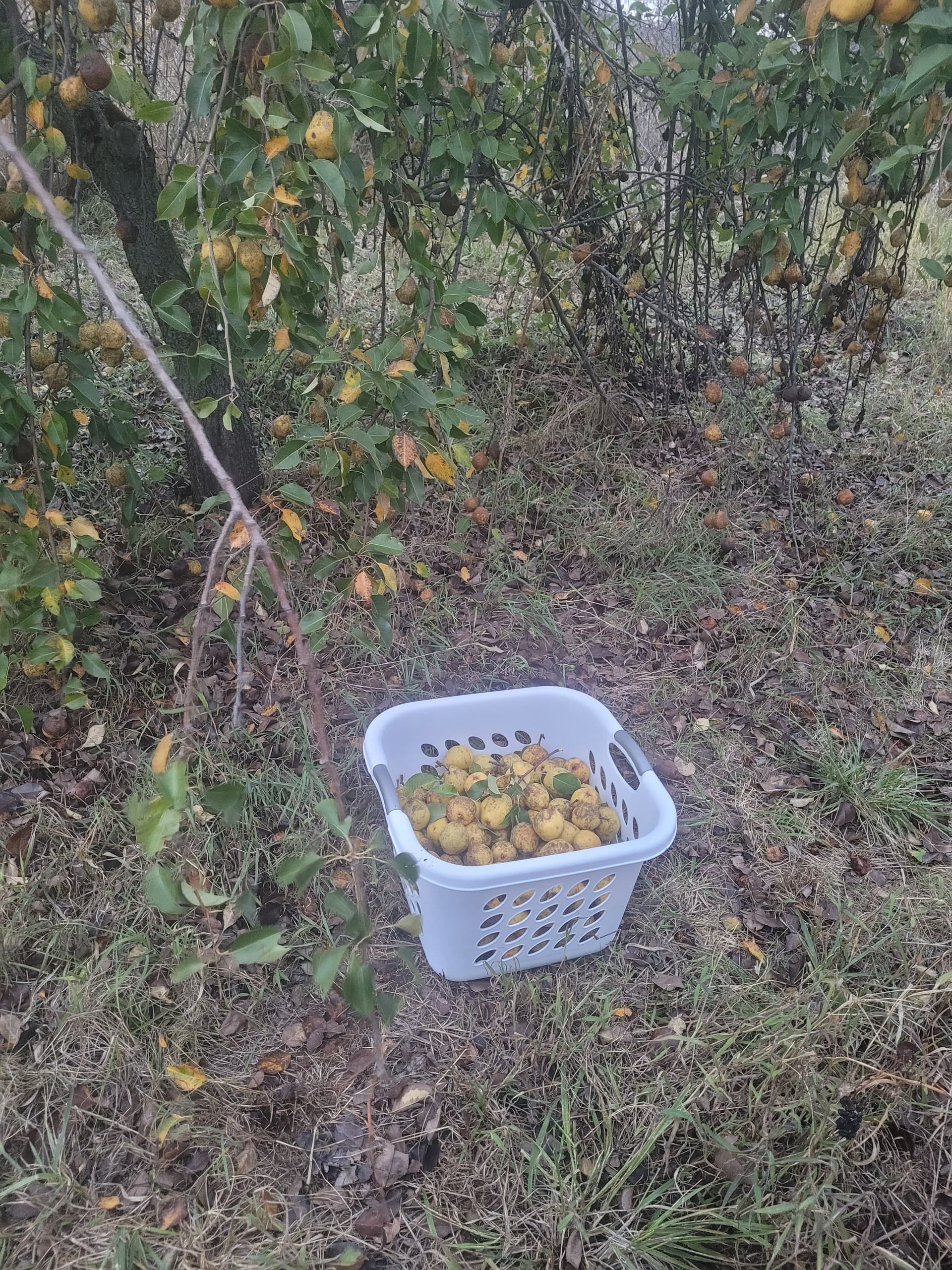
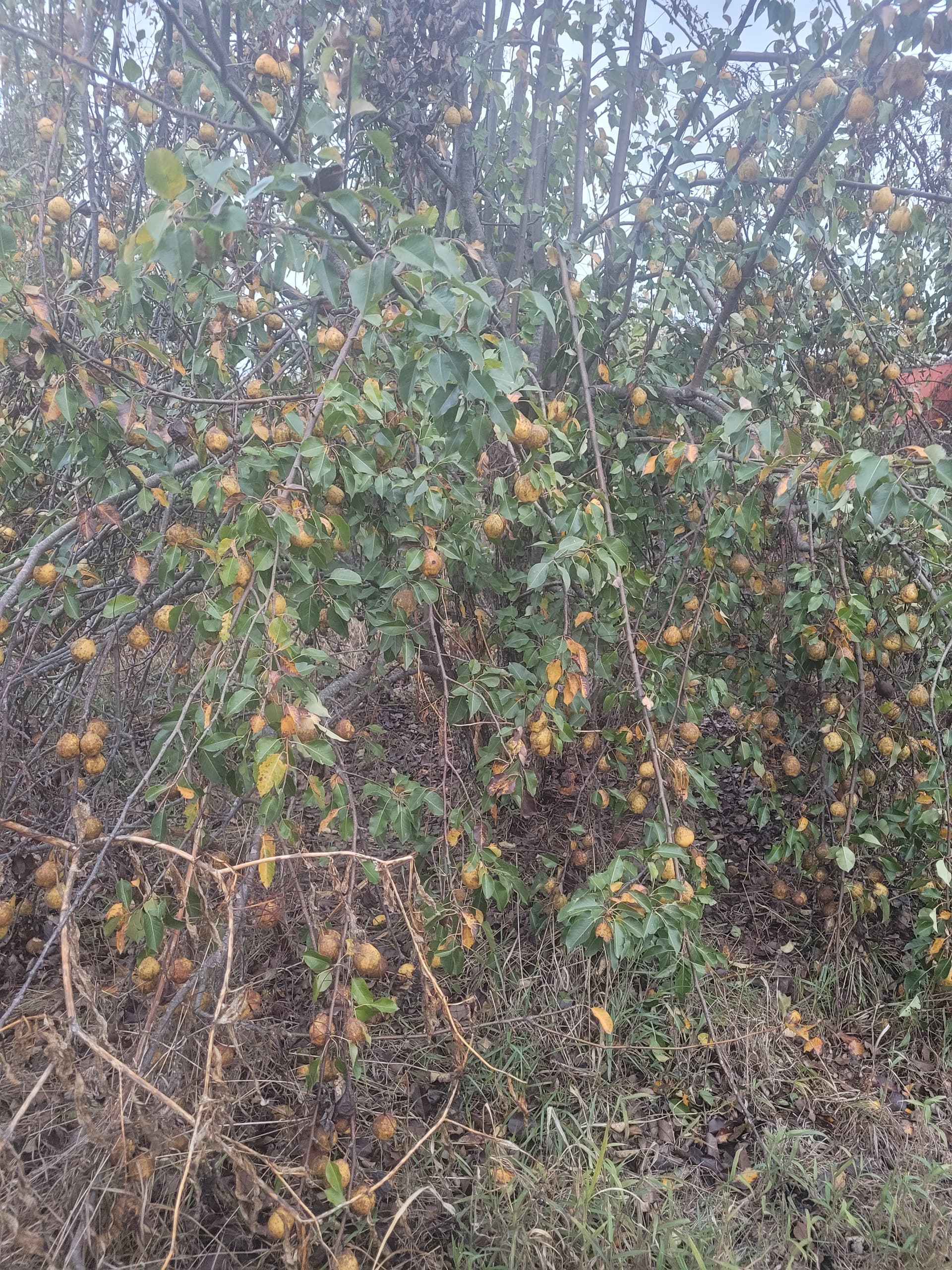
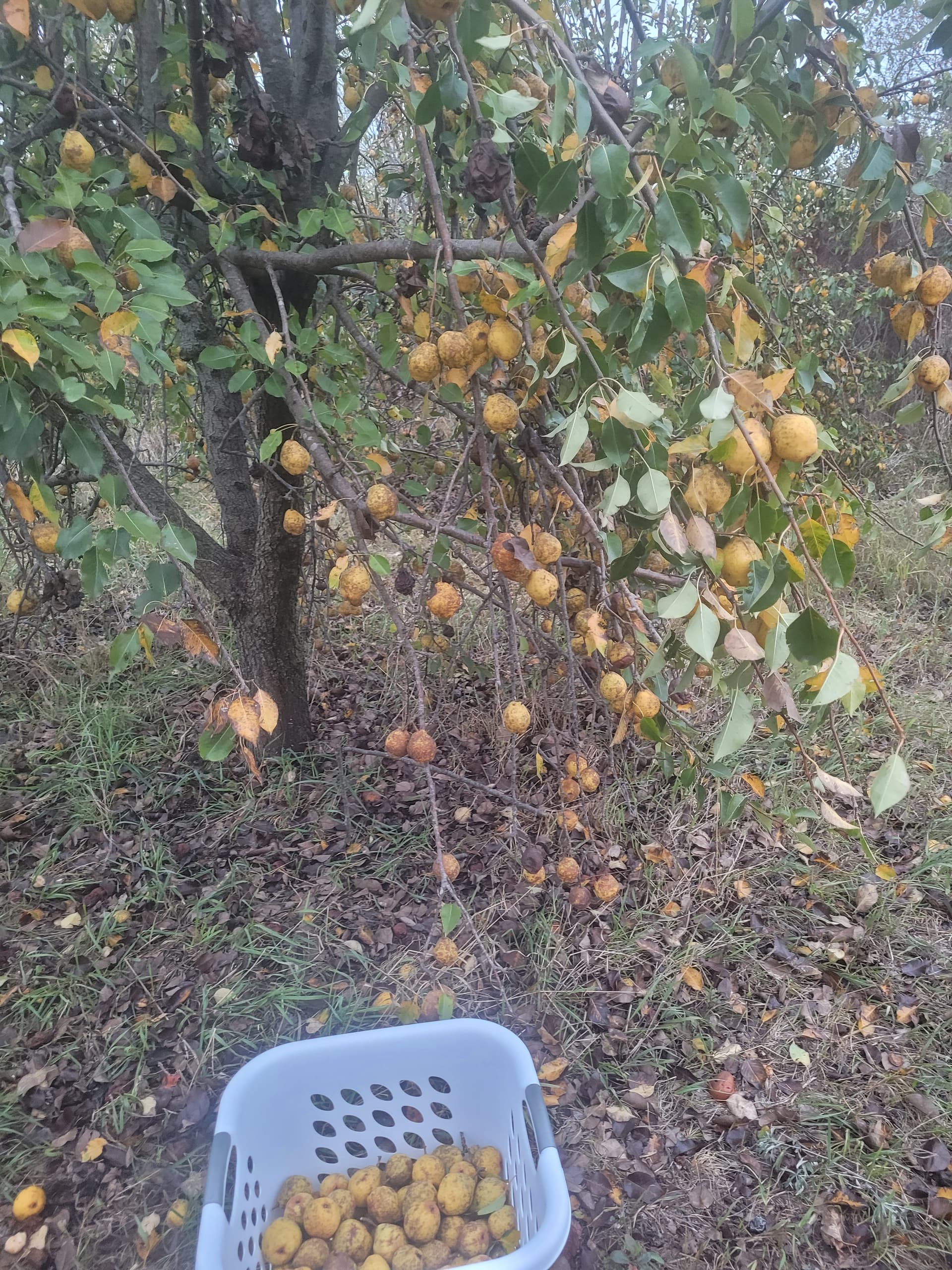
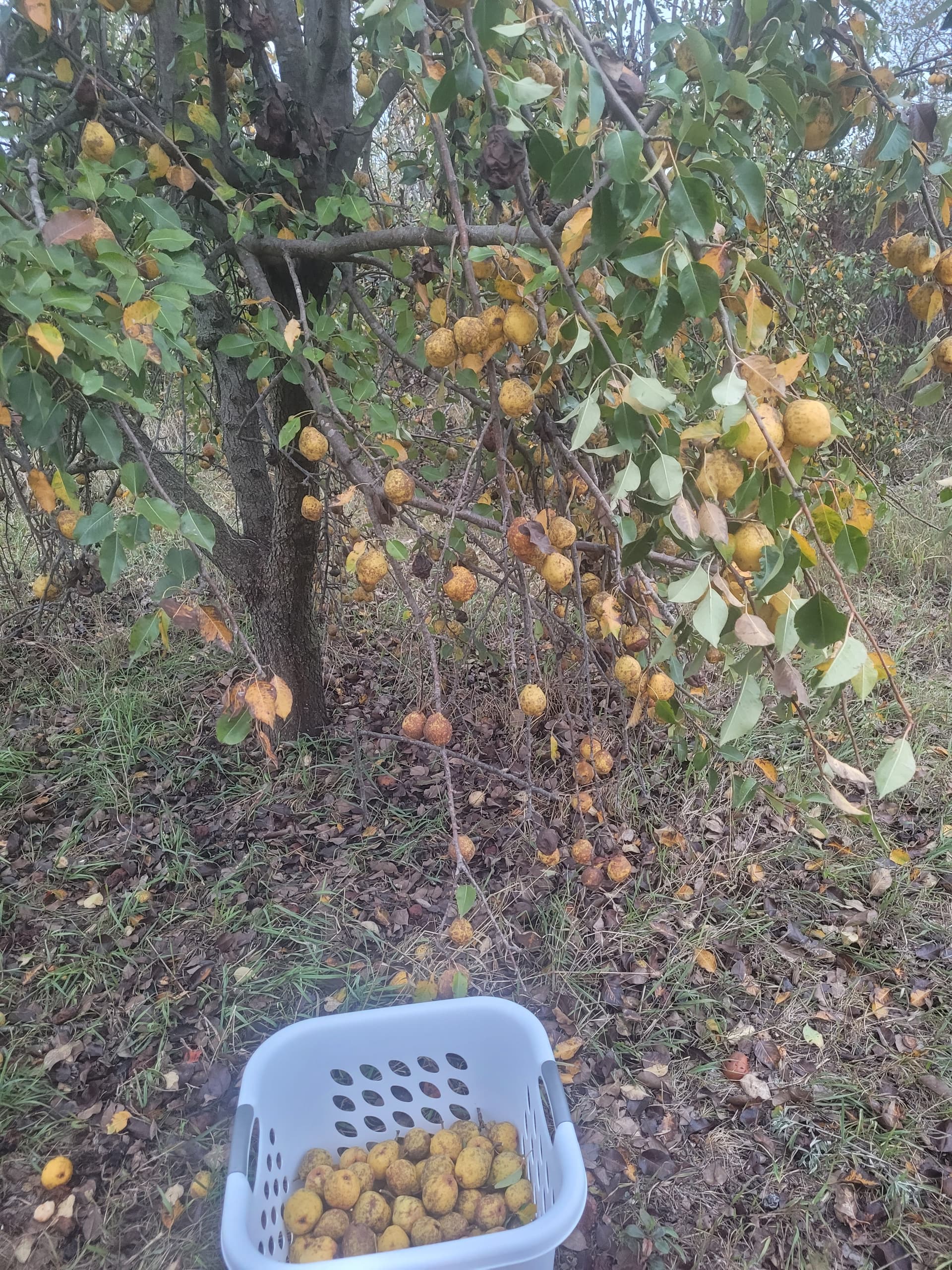
The bushels keep coming. I wont get them all harvested.




12 Likes
What do you do with all your pears?
4 Likes
These i will eat this winter.
3 Likes
Yum!!!
2 Likes
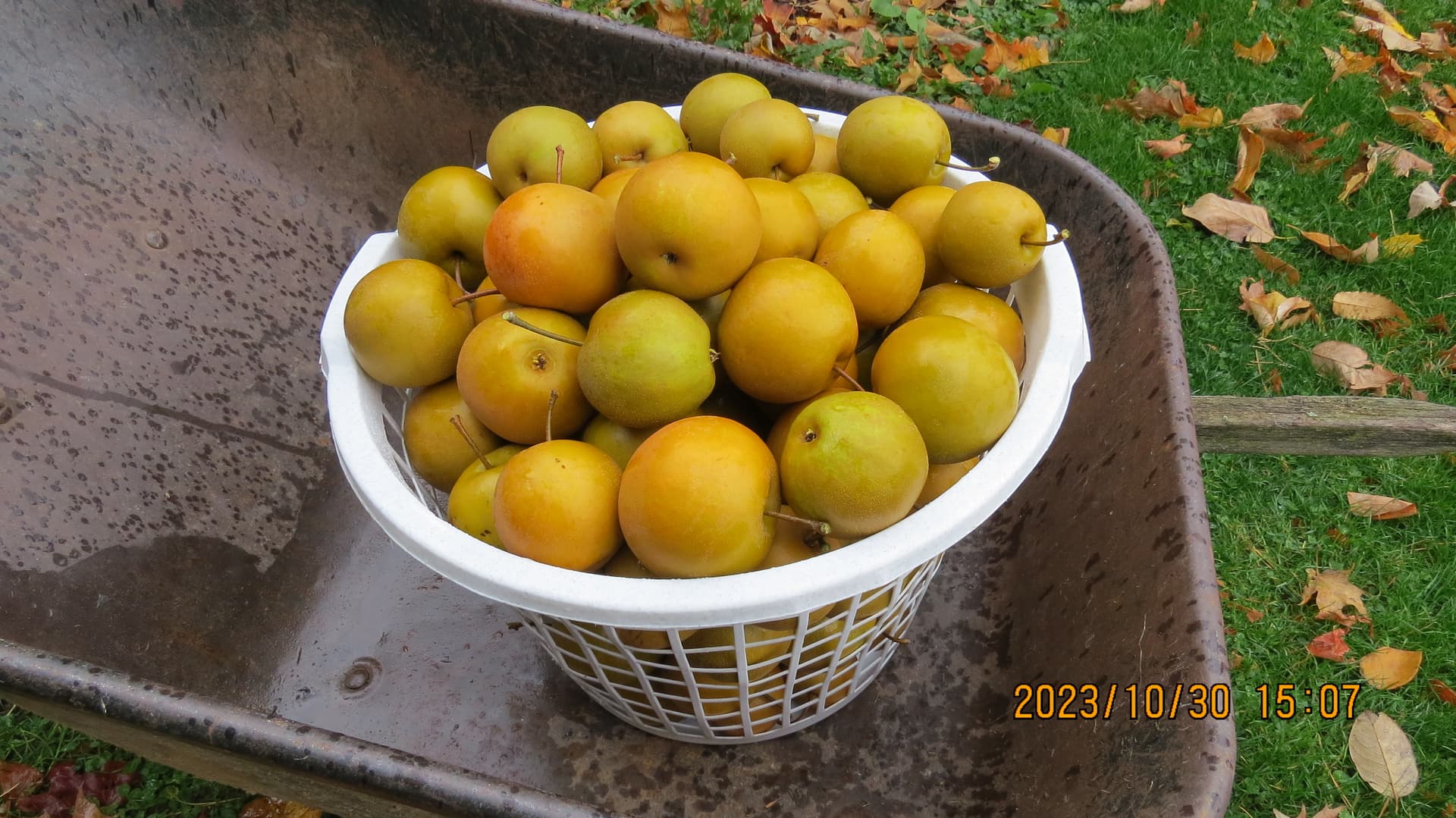
Picked most of the fruit from my latest bearing Asian Pear today. There is about 30 fruit left on the tree. I had to stop since my laundry basket was full. Probably get the rest in a day or two. These are Olympic and the tree was planted the spring of 2020. It had a few blooms the first year it was planted and I let a couple produce fruit to see what they would be like. Last year I had a good crop. This years crop was bigger yet but the pears were a bit smaller. I thin one pear to a spur. Maybe I should thin some totally? All my pears did well this year. Hope to repeat next year.
10 Likes
They look beautiful!
In a few years I hope to get a few dozen from my varieties, including Olympic (Korean giant).
2 Likes
@clarkinks Thanks for the thoughts- enjoy all all those pears!
2 Likes
My favorite, Luscious are very tasty, and are a late pear, but they require a lot of thinning. Summercrisps are a summer pear that make great pear crisp, but aren’t that great for fresh eating and don’t keep long. I freeze them in pieces with the peelings on, as the peelings seem to melt away in pear crisp. Both are hardy here in zone 4a, but Summercrisp has been the most reliable. The critters love both kinds.
1 Like
I finally got into the orchard today and picked almost all of my latest maturing pears. One newly grafted variety, Suij, has one pear. That one is supposed to be a really late culinary variety. Hopefully I’ll pick it before it falls. It is quite large. Here is the Raintree Nursery link - Suij European Pear — Raintree Nursery
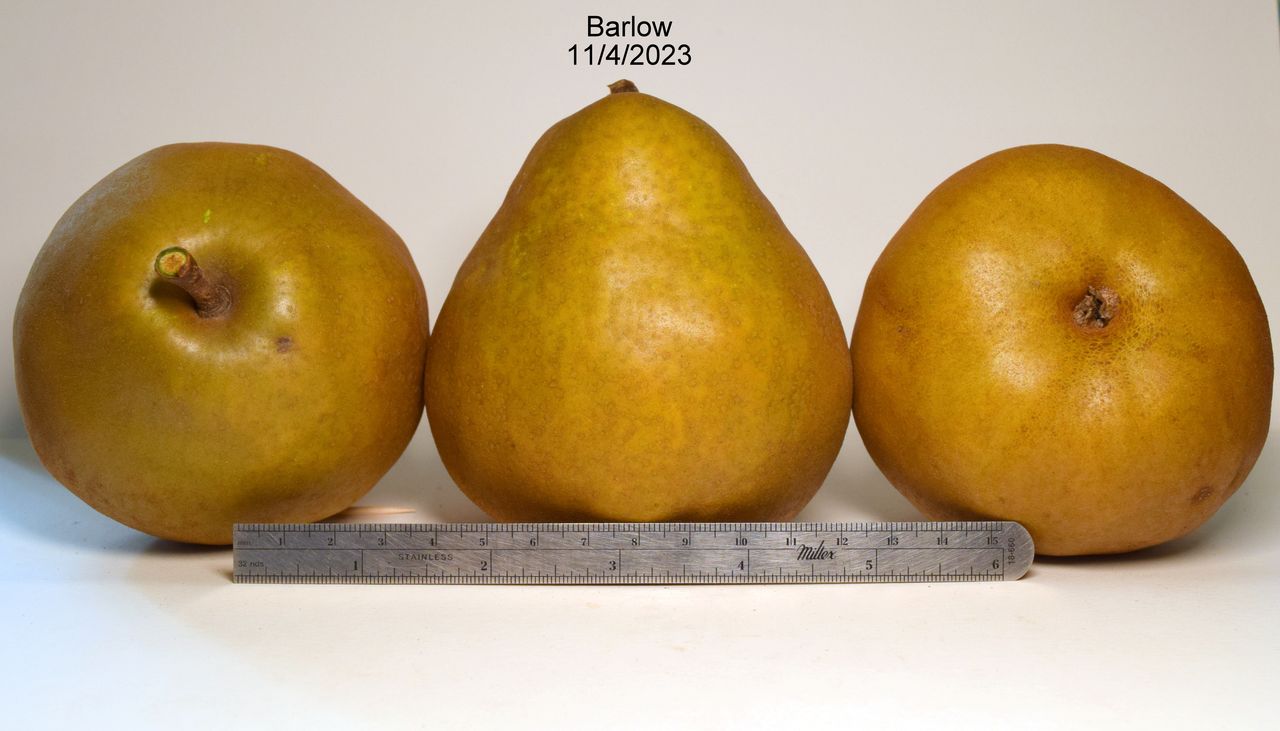
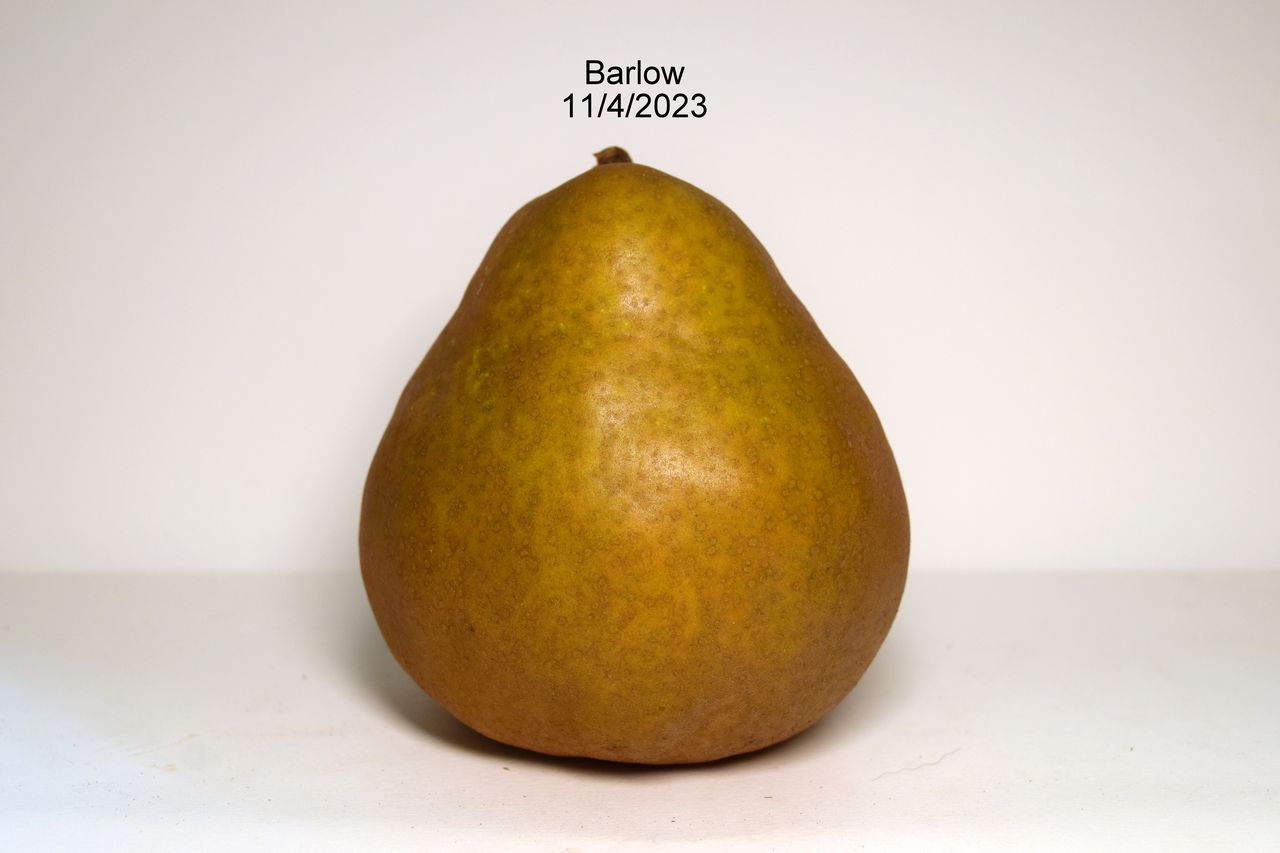
Barlow aka Eric’s Pear
I introduced this pear to the fruit growing community through the CRFG Plant Registration Program in December 2022 and added it to the USDA Corvallis Pear Repository. The narrative there has been erroneously edited. Here is the information that should be there.
“Matures late Sept/early Oct. Ripe late Oct, stores in refrigerator until mid to late Dec. Very tasty, sweet with minimal stone cells. It does not tend to have core breakdown.
The tree appears to be regrowth from a tree that died or was cut down as four equal sized trunks have regrown. It has been poorly pruned, mainly headed. It
also has large sharp spurs. My grafts are 6 years old and new growth seems to have fewer sharp spurs.
I have noticed no significant scab. The owner of
the original tree states that it has had some fire blight but that was easy to control. He has a Bartlett tree nearby that has had severe blight.”
2022 was a bad fire blight year and my tree did lose a limb but no other problem and no recurrence this year.
I’m anxious for others to try this variety. Hopefully, I’ll be able to get good scions from the original tree this year. Let me know if you want scions - available for postage only.
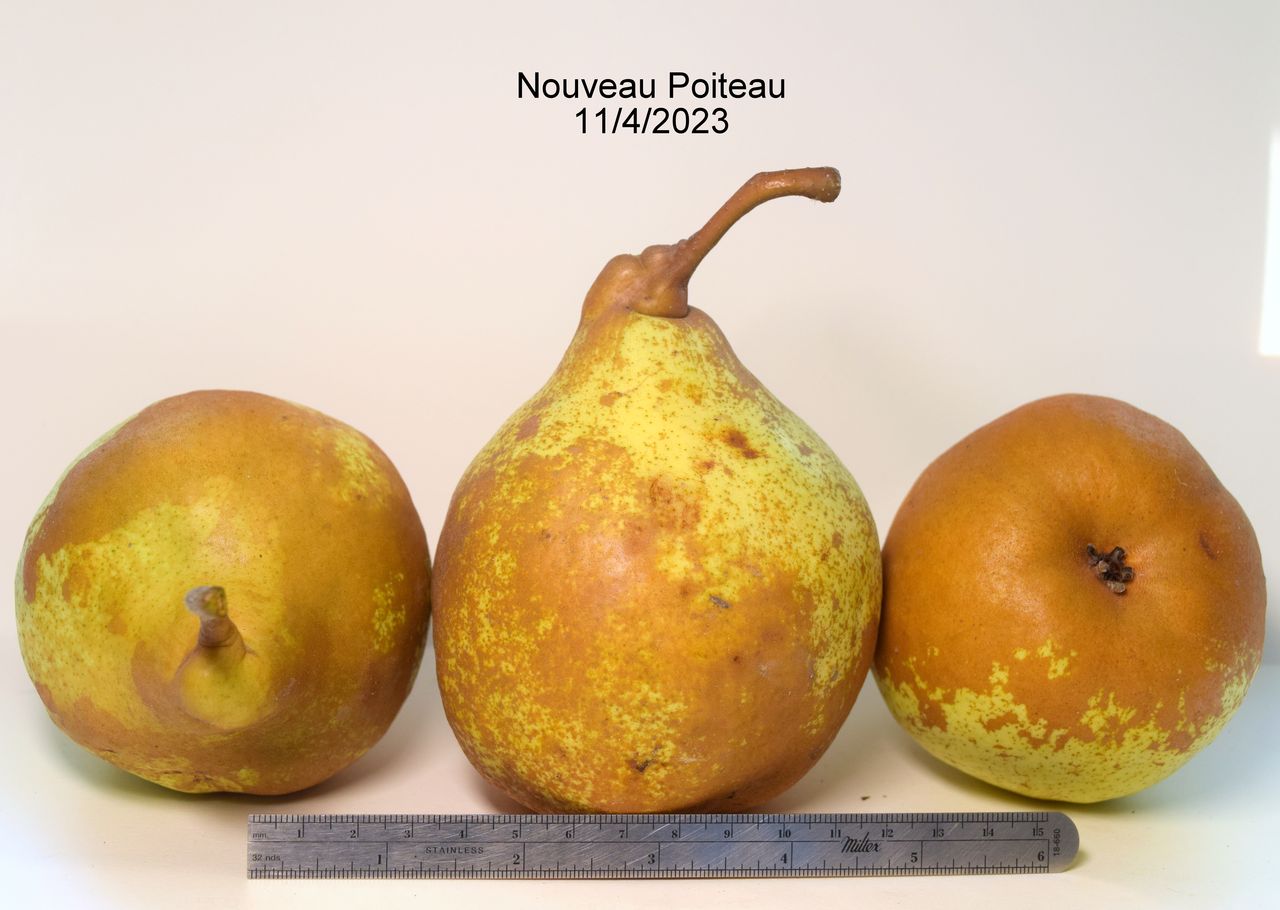
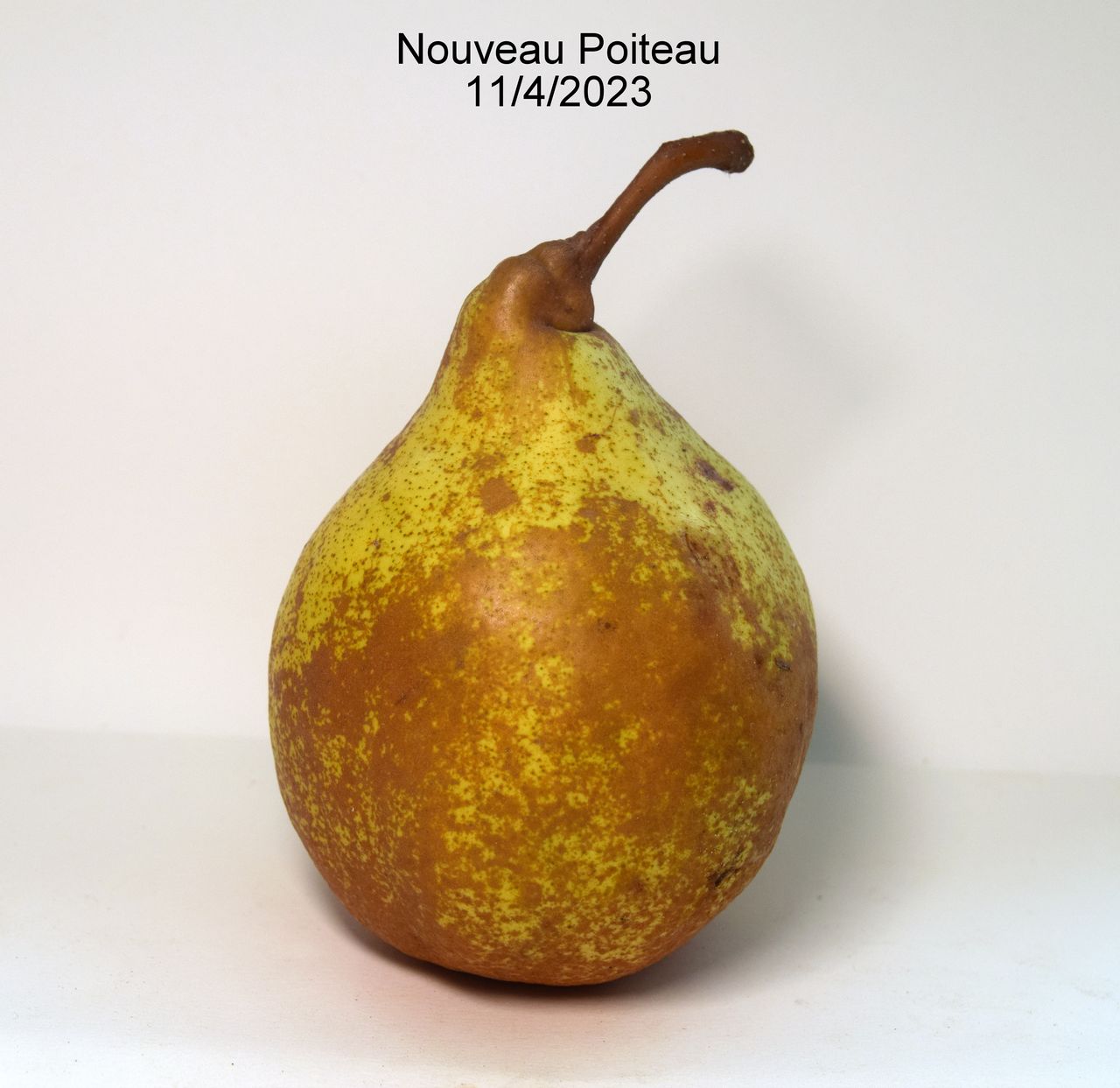
Nouveau Poiteau
From GRIN “Reliable and heavy cropping. Fruit medium, oval-pyriform; skin green turning pale green, variable russet, slight red blush; flesh white, sweet, juicy, melting; ripe late.”
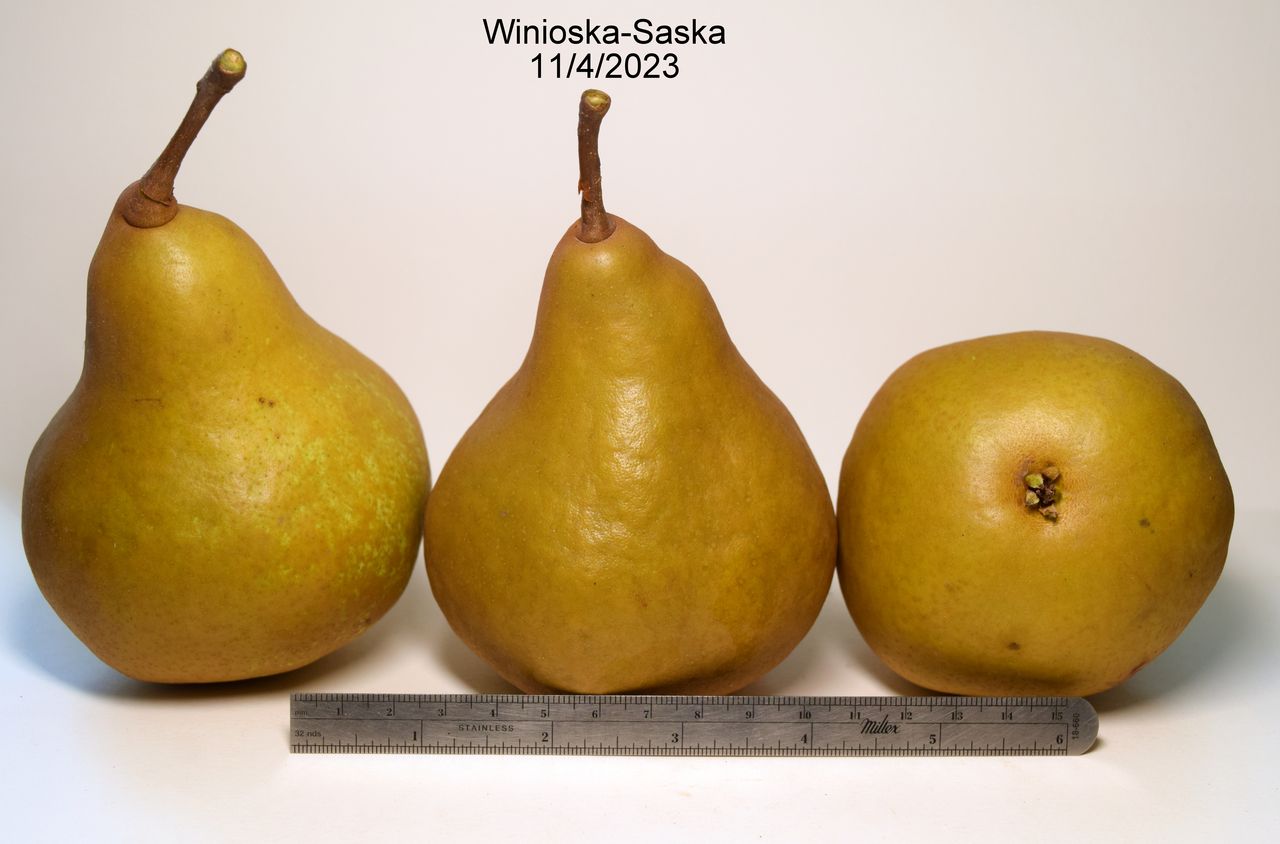
Winioska-Saska
I like the appearance of this pear. It is a late keeper and probably should be used as a culinary variety but maybe for dessert. I have grown it since 2012. It has never had fire blight although we have has 4 very bad blight years since it was grafted. It always has a good crop. This year’s fruit are large as are many of my varieties. All I know about it is that it was developed in Poland. If anyone has relatives in Poland who would be willing to contact the Agricultural folks to see if any records survive of if the variety is still grown there, please ask them. My searches have not been fruitful.
origin: Poland, origin institute: Research Institute of
Pomology, 96-100 Skierniewice, Pomologiczna 18.
cultivar: Winiowka saska. collected: 1975.
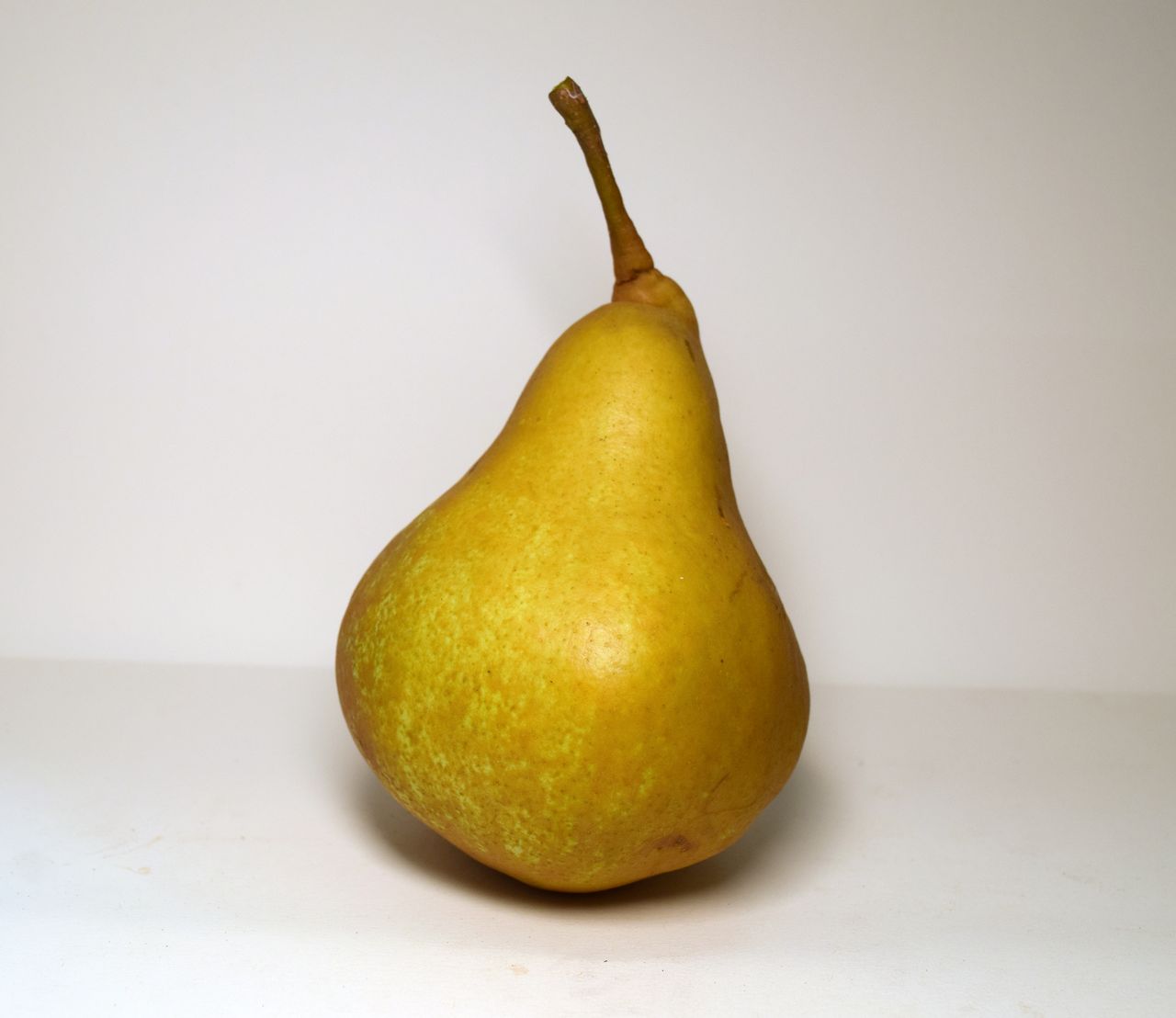
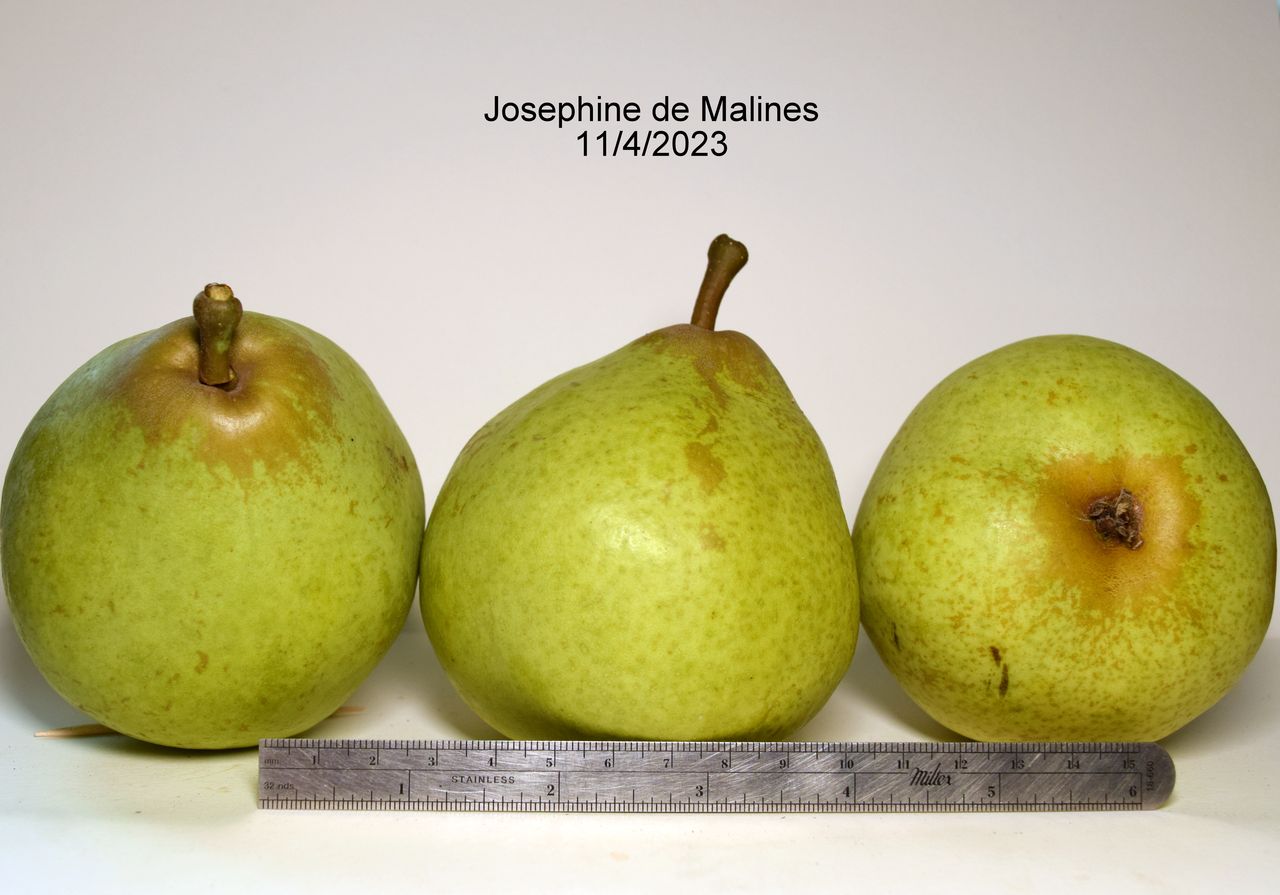
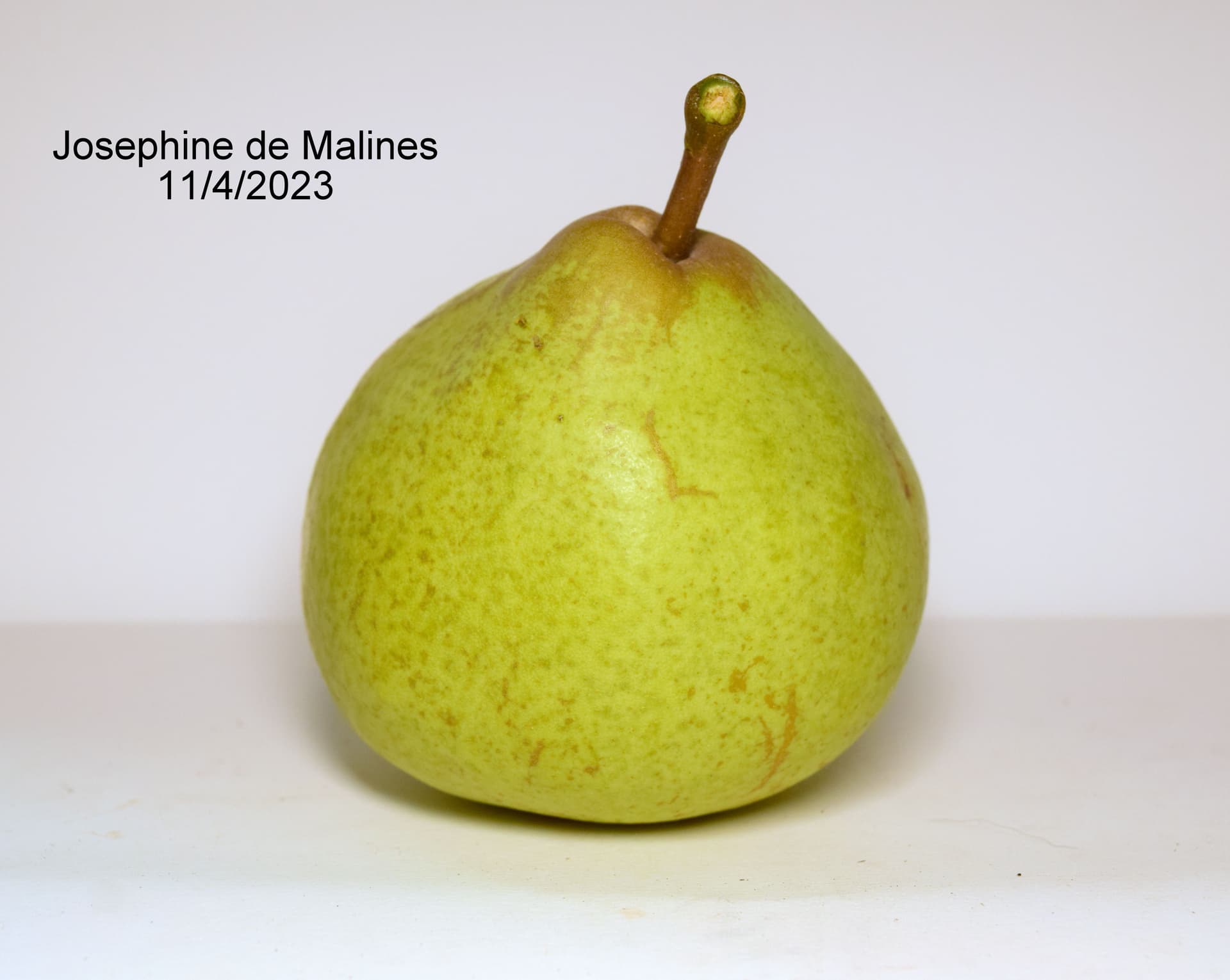
Josephine de Malines
Our favorite winter pear that follows Comice. What the following does not mention is that the flesh has a slight pinkish color. Also, it should be picked in mid to late Oct. most years. I’m late this year. Some of the fruit were too ripe today. It is still grown commercially in Australia.
“A famous very late winter pear. Small to medium, almost cone-shaped, pale green with juicy, buttery, tender, sweet flesh. A good cropper every year, this variety should not be picked until the leaves fall and must be brought to ripeness carefully or its flesh will remain granular and tasteless. Not ready to eat until after Christmas. Bunyard praised this pear almost too highly, saying, ‘If one winter pear only can be grown this should be selected.’ Of Belgian origin about 1830. – Robert Nitschke, Southmeadow Fruit Gardens Catalog, 1976.”
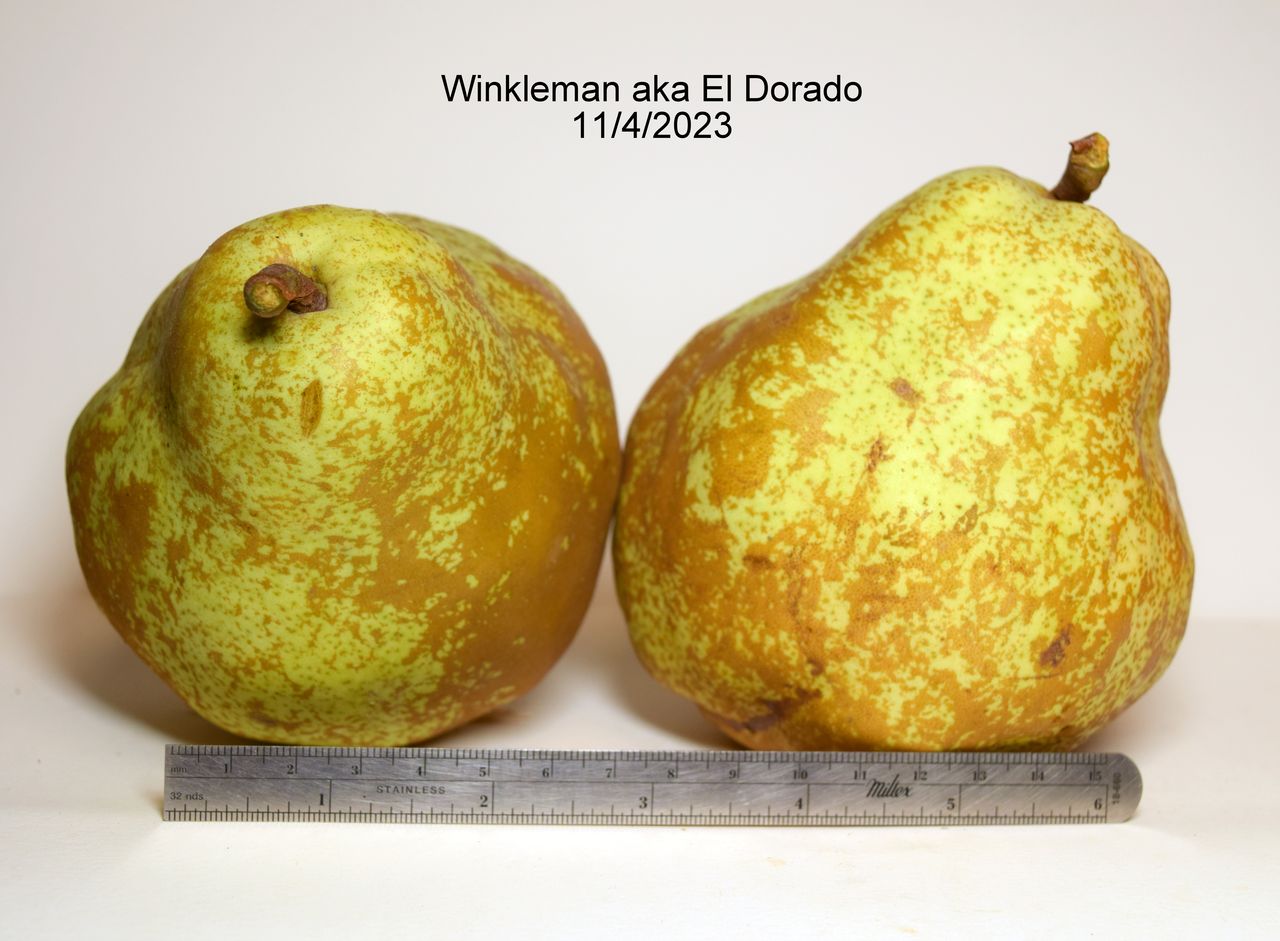
Winkleman aka El Dorado
These two are thought to be identical. I have grown them side by side for several years and agree. They usually are ready to pick in late September or early Oct. I may be a little late this year. The fruit are huge this year. Much larger than any we have had in the ten years it has been bearing.
From GRIN:
“El Dorado (PI 541388). Originated in Placerville, El Dorado County, California, by Robert Patterson. Introduced in 1945. Considered to be an open-pollinated seedling of Bartlett; discovered in 1931. Flesh quality fair to excellent, depending upon time of harvest, storage, and ripening conditions; sweet, with fair balance of sugar to acid; texture smooth, melting, with few grit cells; ripens very late, beginning about the third week in September; keeps well in cold storage at 30 to 32F until May and June.”
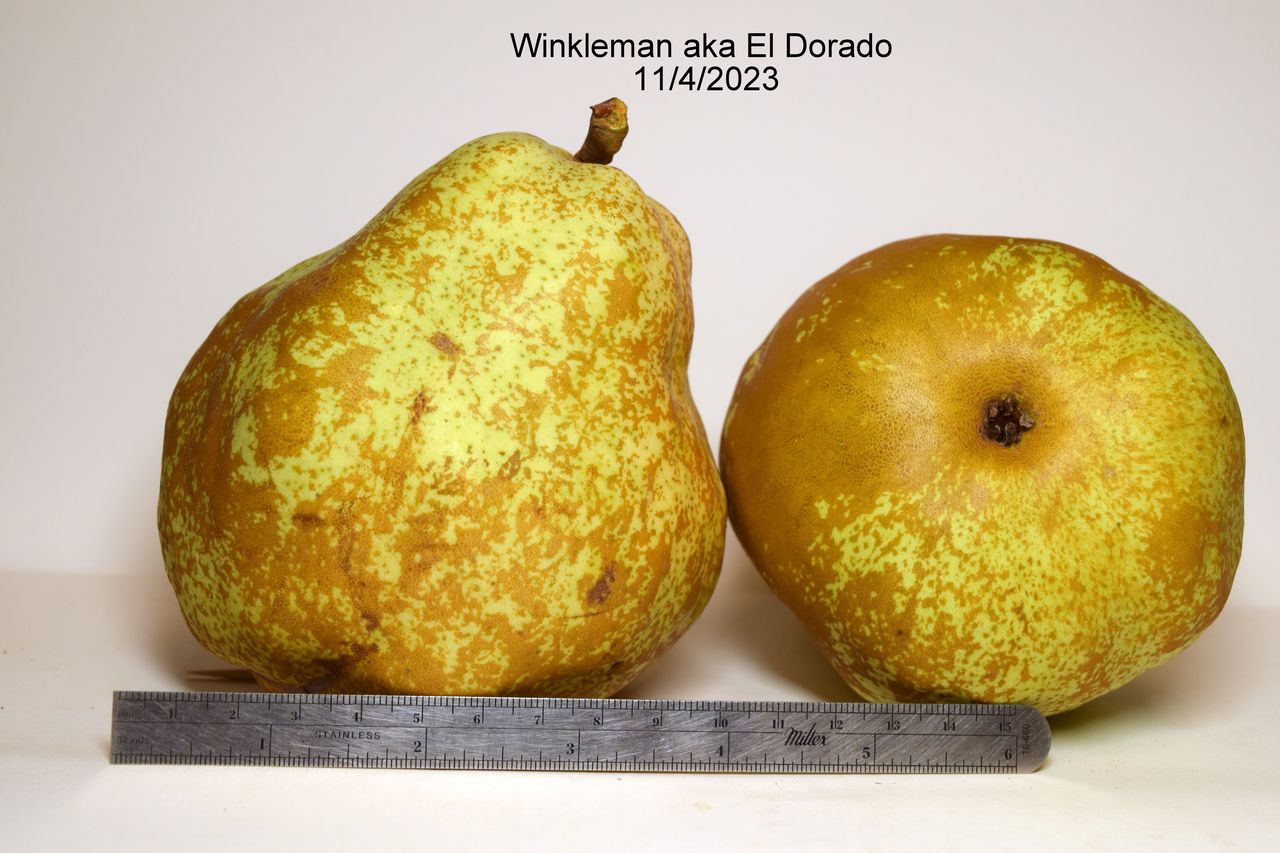
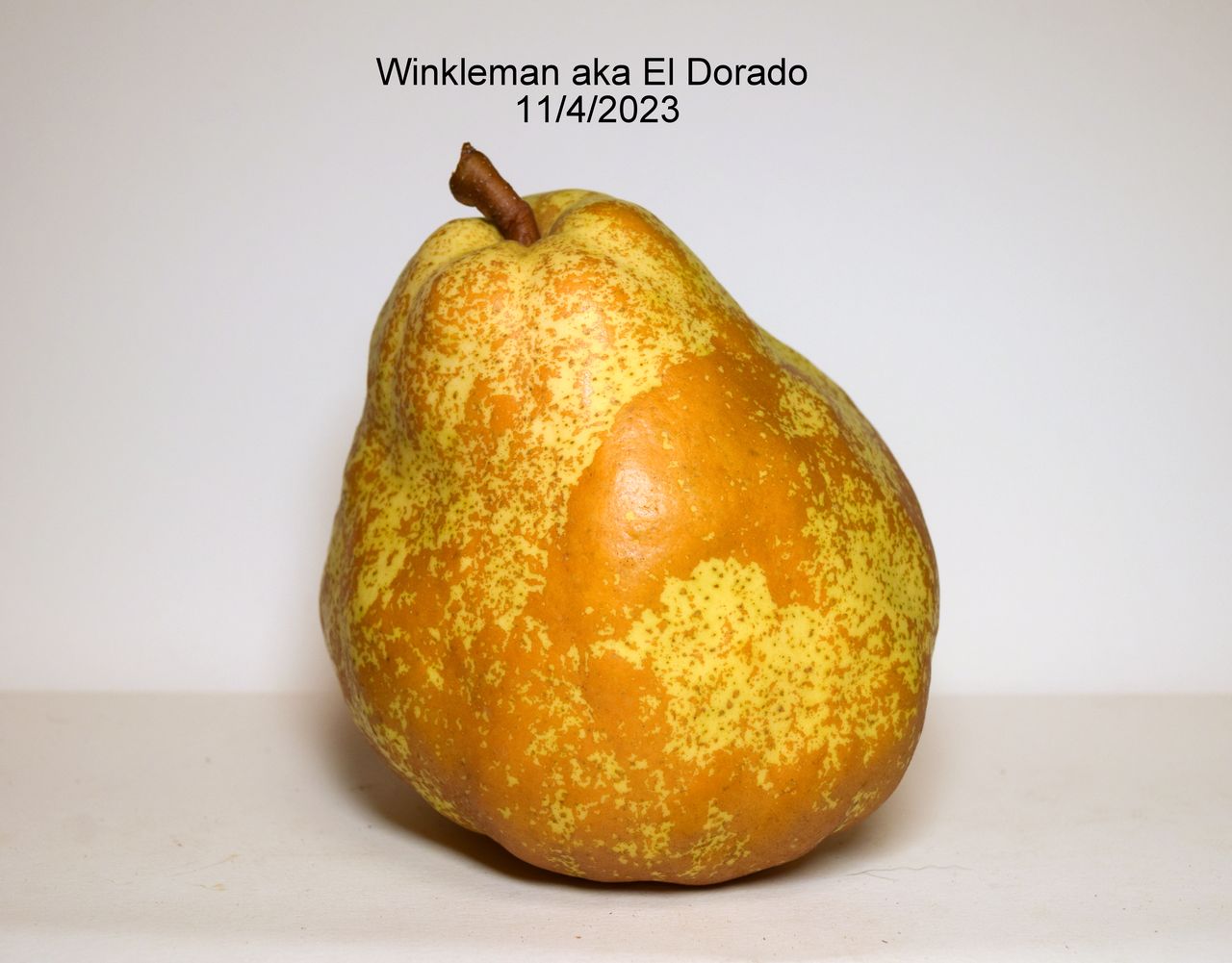
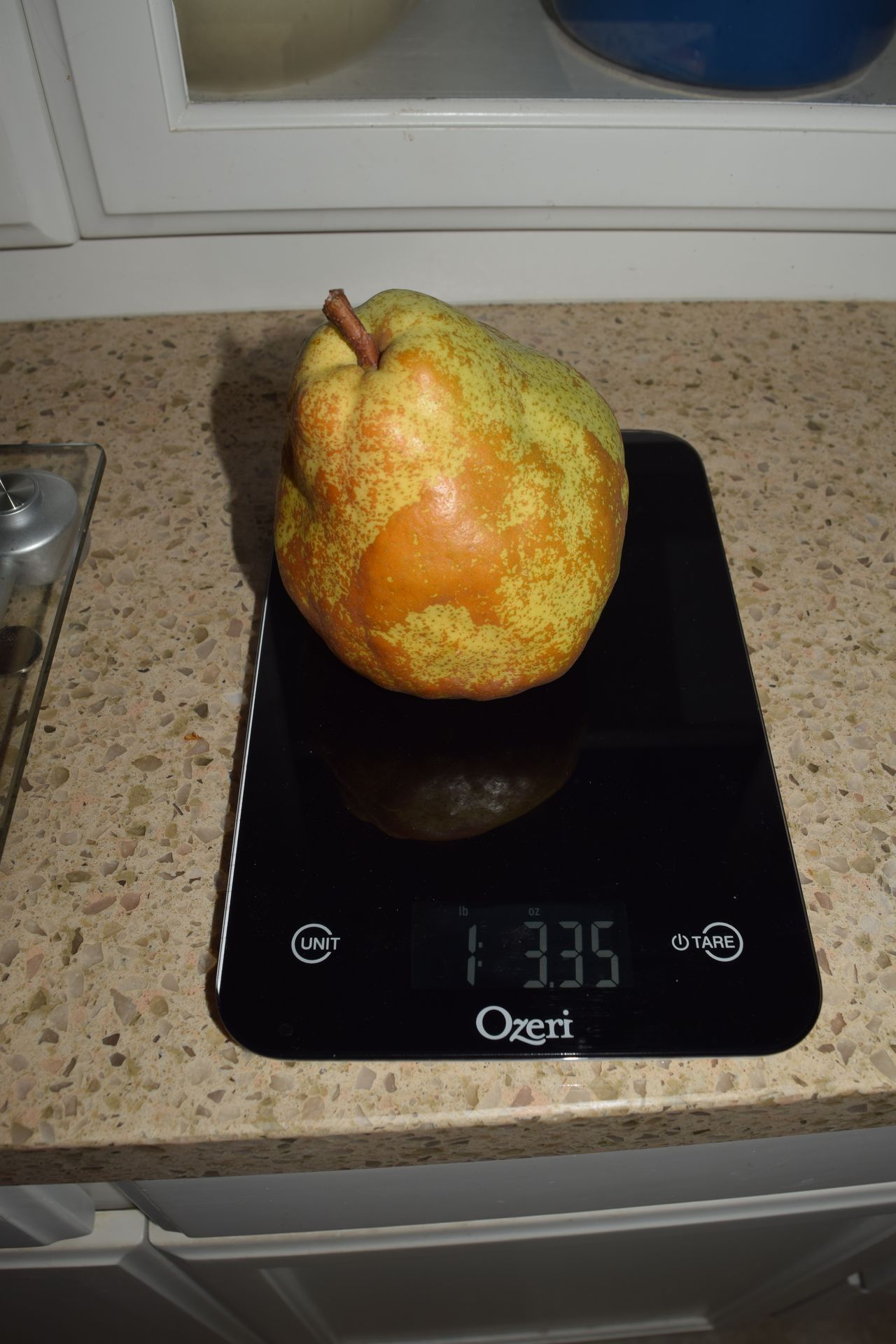
That’s all for today. We are having another tasting next week and I’m going to take several varieteis to try. I think this year I’ll be able to see how Jana’s Pear(Warren) stacks up against Comice. I think I can get them both ripe at the same time. Jana’s was late and Comice was on time for picking.
13 Likes
You will be hard pressed to get anything to stack up against Comice. I like the description on the JdM. I’m looking for a super late pear. Is it really the best tasting winter keeper?
2 Likes
This is not a harvest, but it seemed like pear people would be in here, and I wanted to try here first before starting a new thread.
I planed two Asian pears in the groun back in May. One of them is now developing some black spots on the leaves. I don’t know whether this is normal or something I should be concerned about. This is my first time growing a fruit tree. Nearby peppers and tomatoes suffered from some odd black rot inside the peppers and around the tomatoes this year, but I just chalked that up to how rainy it was.
Any advice appreciated. Not sure why the photos are rotated.


1 Like
Hi David, how do you rate your Buerre Hardy pear? Is it a reliable cropper? I’m thinking about planting another dwarf pear (free standing) and possibly an Asian pear. Thanks
2 Likes
Beurre Hardy is a very good pear. It is early midseason and needs to be picked as soon as it is ready to part from the tree as it will develop core breakdown if allowed to remain on the tree too long. I only have one limb grafted to it. It bears yearly for me and tends to set too heavily. It can be tardy in starting to bear fruit but my limb fruited quickly grafted on a vigorous older tree.
4 Likes
I replied privately to Robert. Short answer - Josephine de Malines is the best winter pear I have found so far.
4 Likes
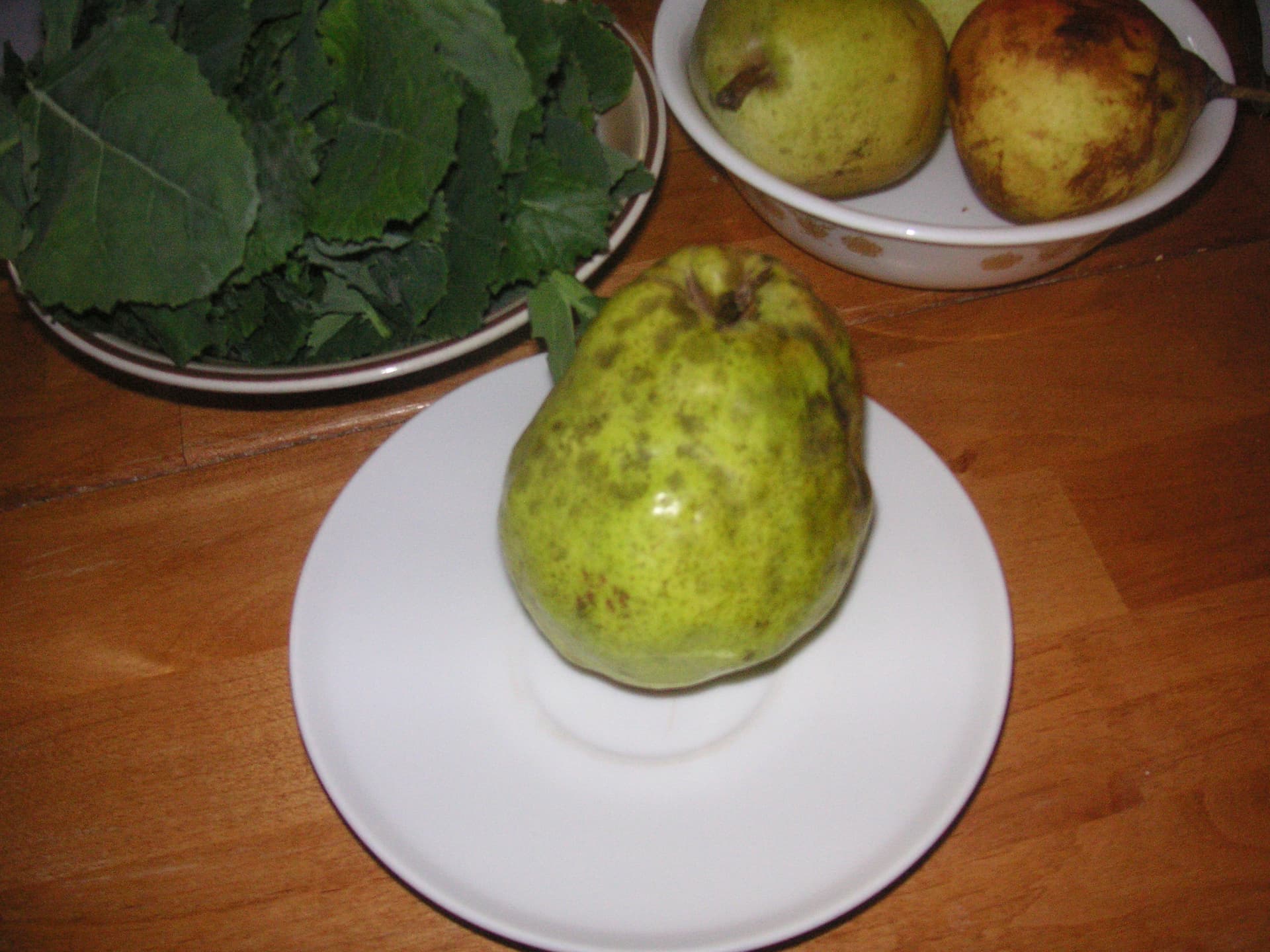
I had “first fruit” from a pear tree that sprouted up in my orchard between an Anjou and a Moonglow. My guess is it grew from seed of a windfall pear that I missed during Fall cleanup. This pear measures 3 inches across, roughly the same size as your Potomac pear.
I wondered if there was some gene expression in pear for a bumpy skin. I think this is genetic and not insect damage because I spray my orchard and my other pears are clean of insect strikes.
OK, this grew from seed and the Potomac is propagated by a graft from a specially selected cross grown from seed. But that a cross between an Anjou and a Moonglow has bumpy fruit, who knew?
6 Likes
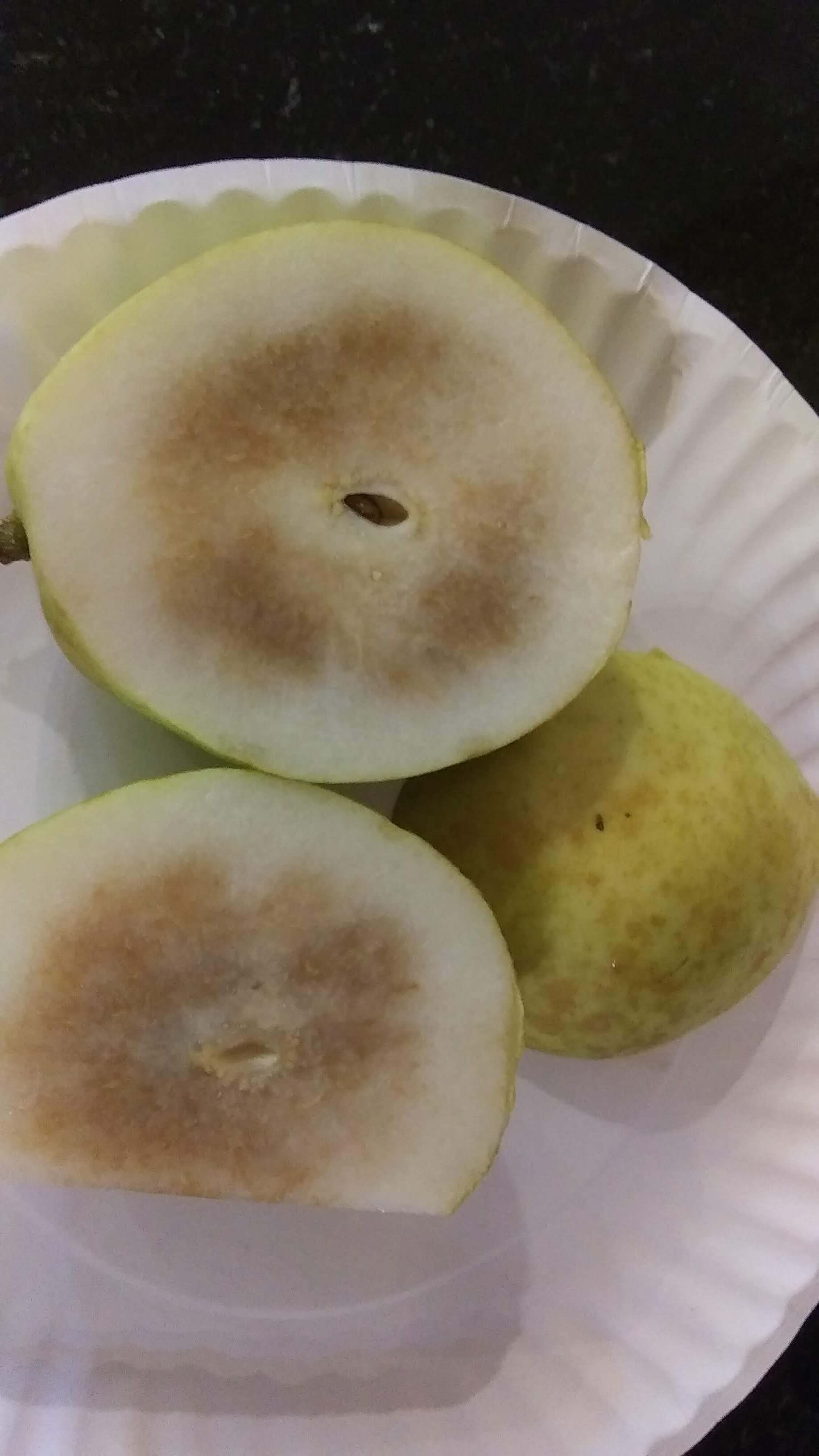
Some of my Bartlett pears looked like this after 30 days in the refrigerator and 2 days on the counter. Some looked ok. Should I have picked them sooner or is it another problem
2 Likes
Maybe some gene in d’Anjou is being passed along to Potomac and your seedling. It would be fun to compare DNA of the three varieties.
I have never had Anjou survive long enough to fruit. It’s not known to have bumpy fruit is it?
2 Likes
I think you didn’t pick them early enough. I’m having problems with Packham’s Triumph now. All are ripening with a mealy texture. I think I left them on the tree too long.
Every year I learn a little more about pears. Maybe I’ll work things out if I live to 100!
6 Likes
The pears will likely be around that long in my experience. Every pear is different from the rest in some way.
3 Likes
Mine has done great, but it’s getting grafted over this coming year. I put it in because they are supposed to store for 7 months, but I’m just not a fan. Hence my JdM question.
Has anyone tried one of those pressure testers? Pretty sure that’s what the pro’s use and I’m thinking about giving it a try.
1 Like