Thanks for such a detailed feedback. Pitty your Clapp’s didn’t fruit this year.
1 Like
Most of the pears that have been bred for fire blight resistance have been fairly good. If you read the pear threads, you will find that some of the pears listed have been severely damaged or killed in other areas. Remember, fire blight resistance does not mean immunity!
Shenandoah has had a lot of blossom blight but none that ran into the twigs. Despite the blight, it has had a good fruit set.
I have grown Warren, Magness, Potomac, Harrow Sweet, Harrow Delight, Harvest Queen, Harovin Sundown aka Coldsnap and Honeysweet with very little fireblight problems. Tyson has also been spared. Many of my other varieties have not had blight but I think that is just “luck of the draw.”
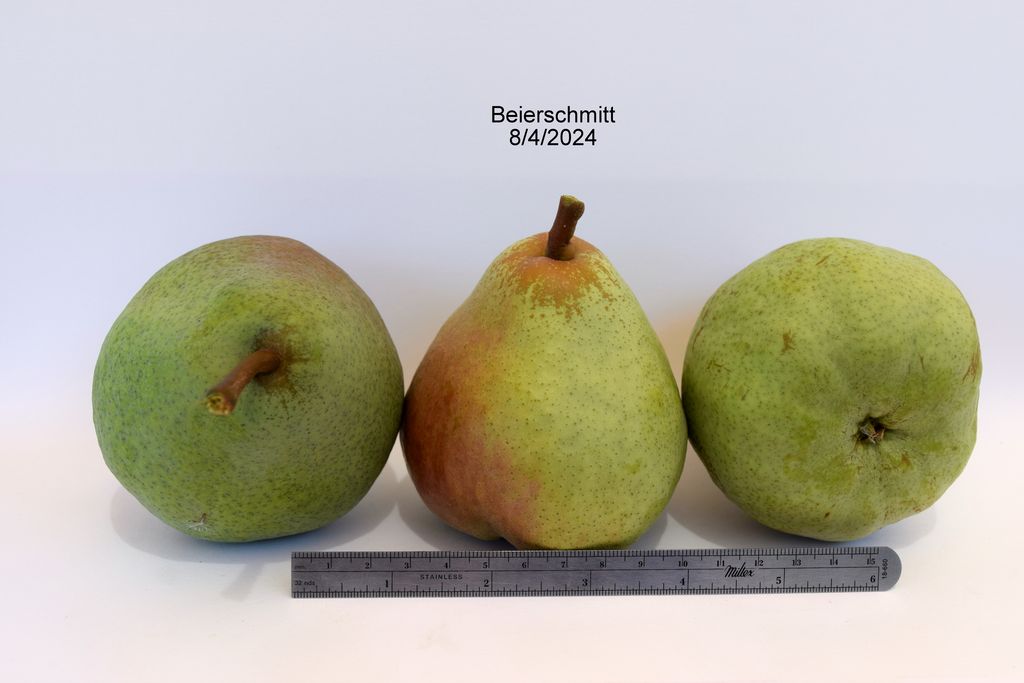
I started picking one of my favorite varieties today - Beierschmitt. I have not seen blight on it here in northern California or north Mississippi. I have observed it for over 30 years.
Duchess d’Angouleme also has some resistance. El Dorado has some resistance but gets blossom blight. Several of the hybrid pears like Ayers, Carrick, Mericourt and Dabney are blight resistant.
I recently grafted Elliot which was released from UC Davis in 1988 with significant resistance. I hope that is true. It is a very nice pear.
Seckel is supposed to have resistance but I have had major strikes on it. My neighbor lost a tree almost to the ground in our last epidemic year, 2022.
For the Asians, Shinko has good resistance. Korean Giant, Shinseiki. Hosui, Ya Li, Tsu Li, and Jilin have all had strikes. Ya Li and. Tsu Li have been totally killed on two occasions. I no longer try to grow them.
Here is a writeup I did several years ago for our CRFG chapter’s website.
I hope this helps.
6 Likes
thank you so much for you in depth reply. it is helpful. i will try to research more on which is best for my climate in terms of ripening.
1 Like
Three pears are falling today, 8/4/2024, so I checked to see if any release with a gentle tilt. They all did.
Belle Lucrative (Fondante d’Automne)
I grew this pear in the past but lost it to fireblight in 2015. I grafted it on a mature tree two years ago and it had a few pears this year. It is an old Flemish pear that is an excellent dessert pear. I can’t remember when the pear matured on my previous tree but I think this is quite early. All the descriptions say it is ripe in late Sept or early Oct. I wonder if it is mislabeled. The fruit description in Morgan’s The Book of Pears matches what I’m seeing today. We’ll see if the taste matches!
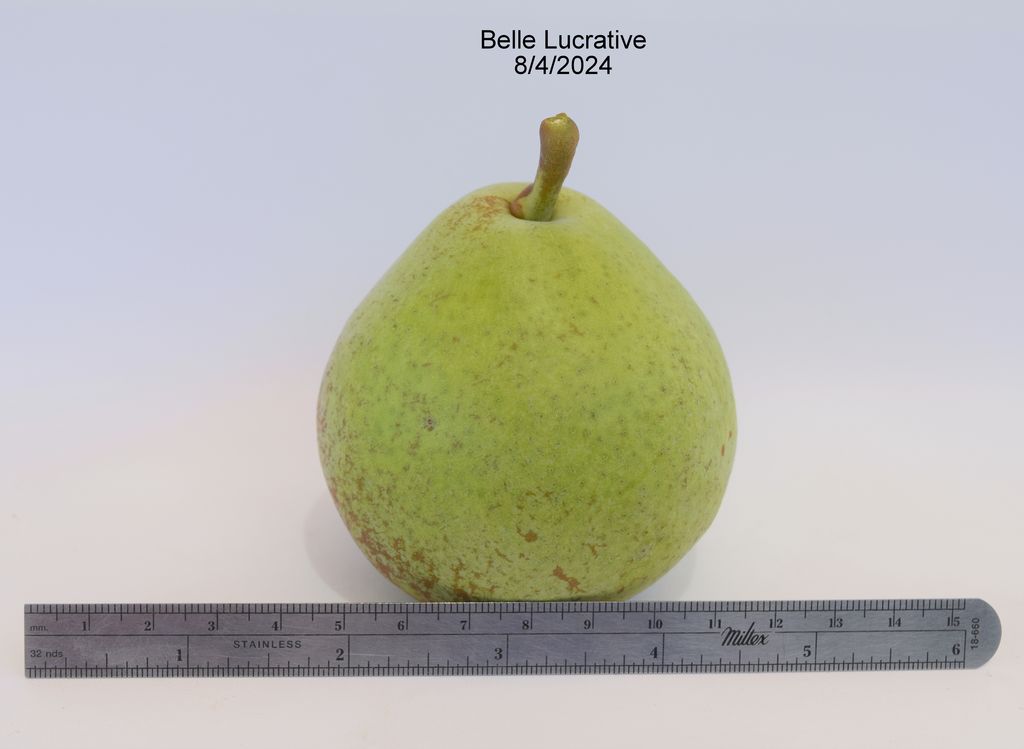
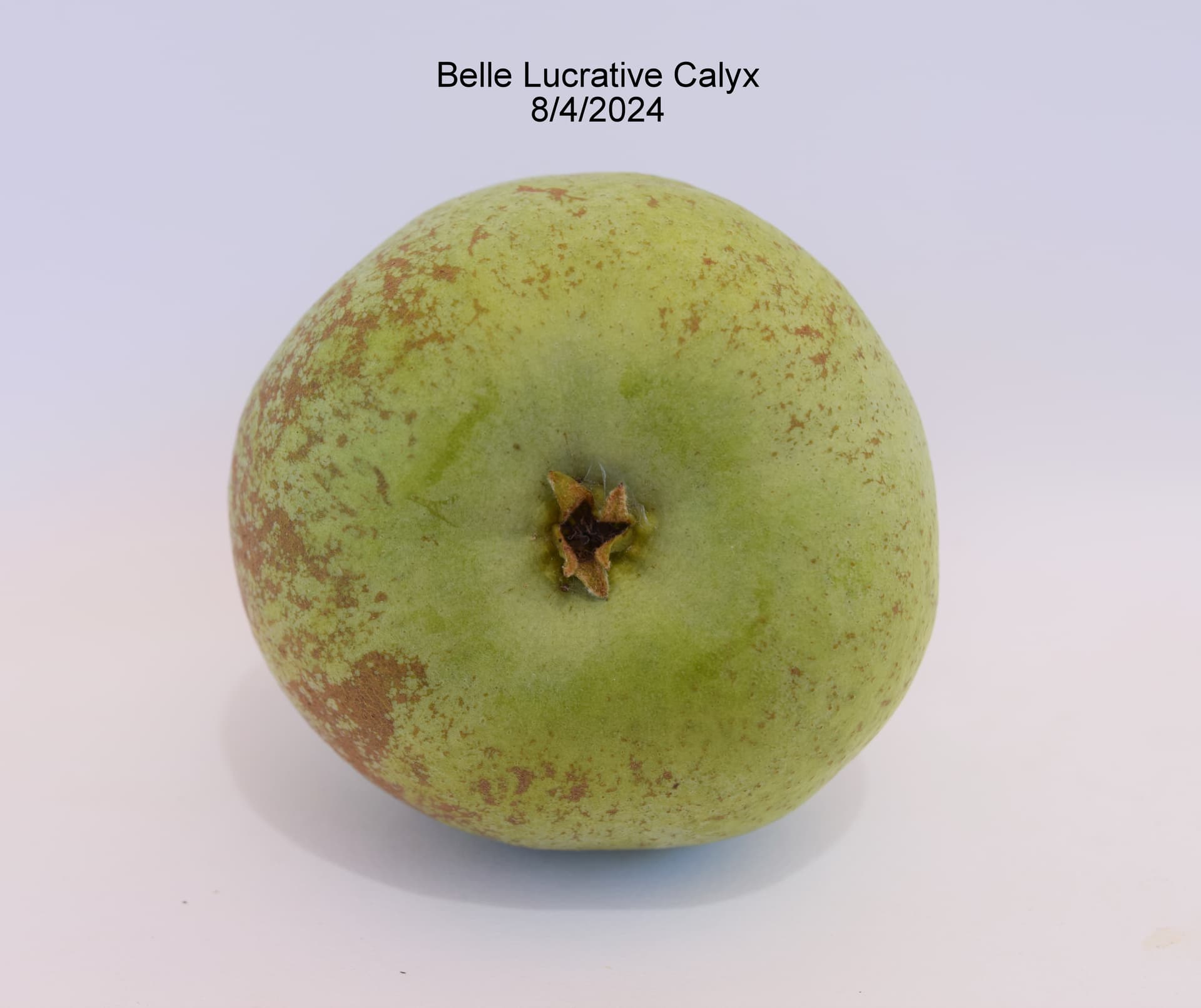
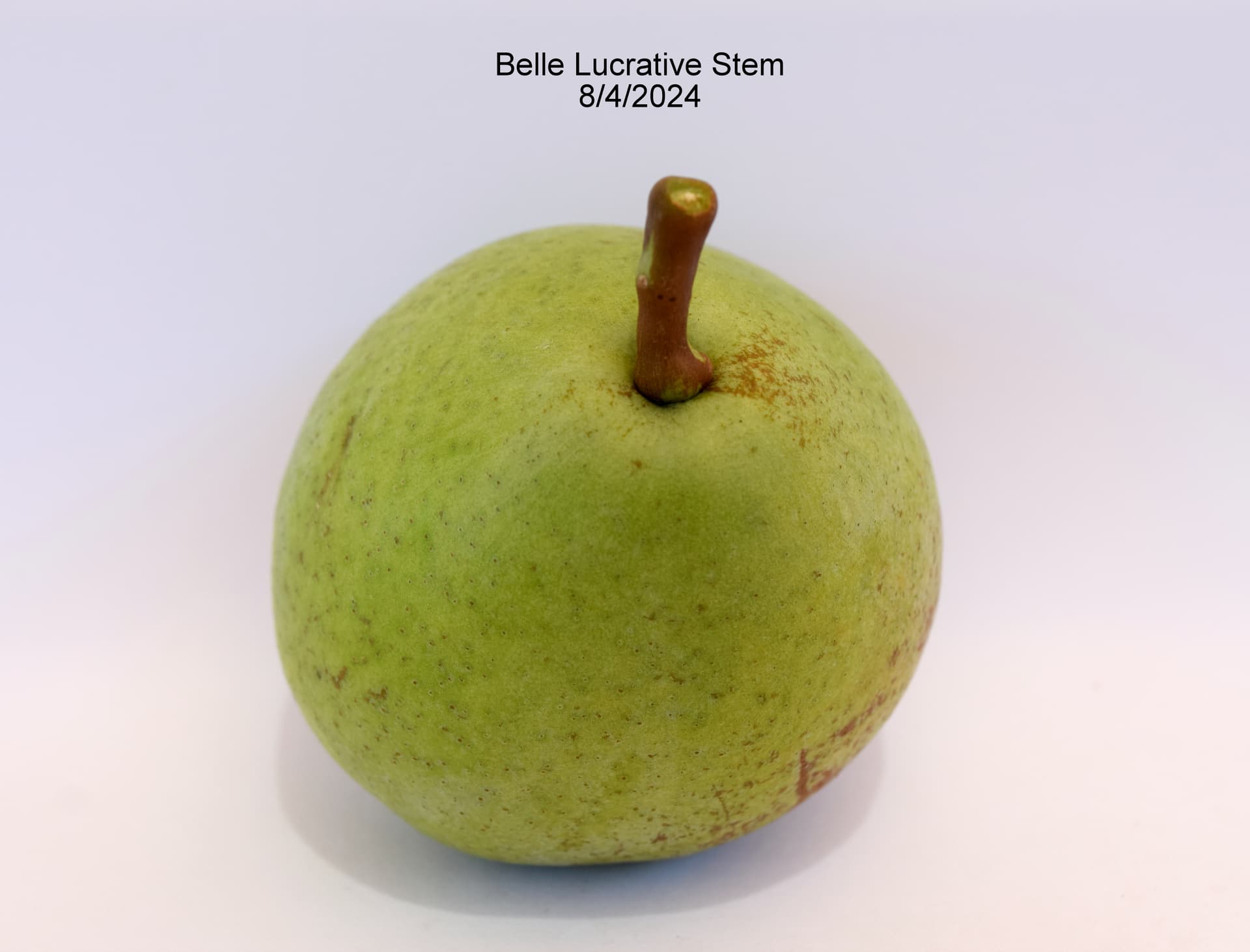
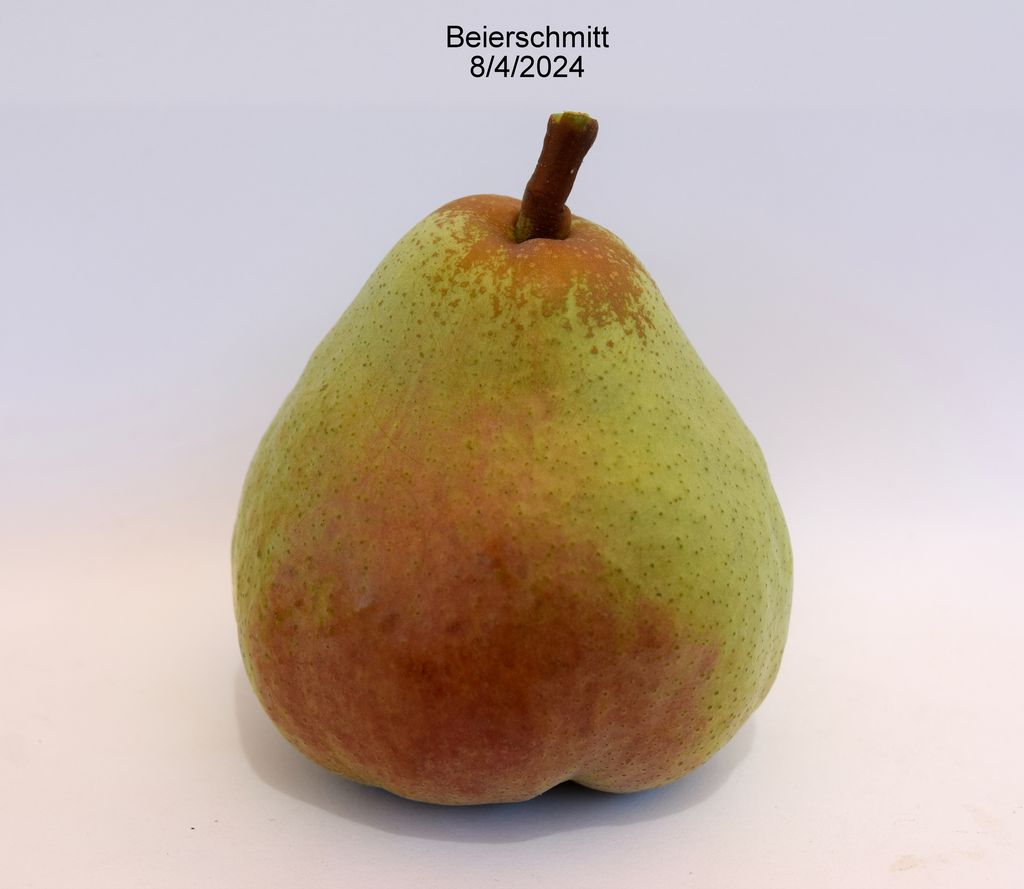
Next is Beierschmitt. Here is the link to last year’s post
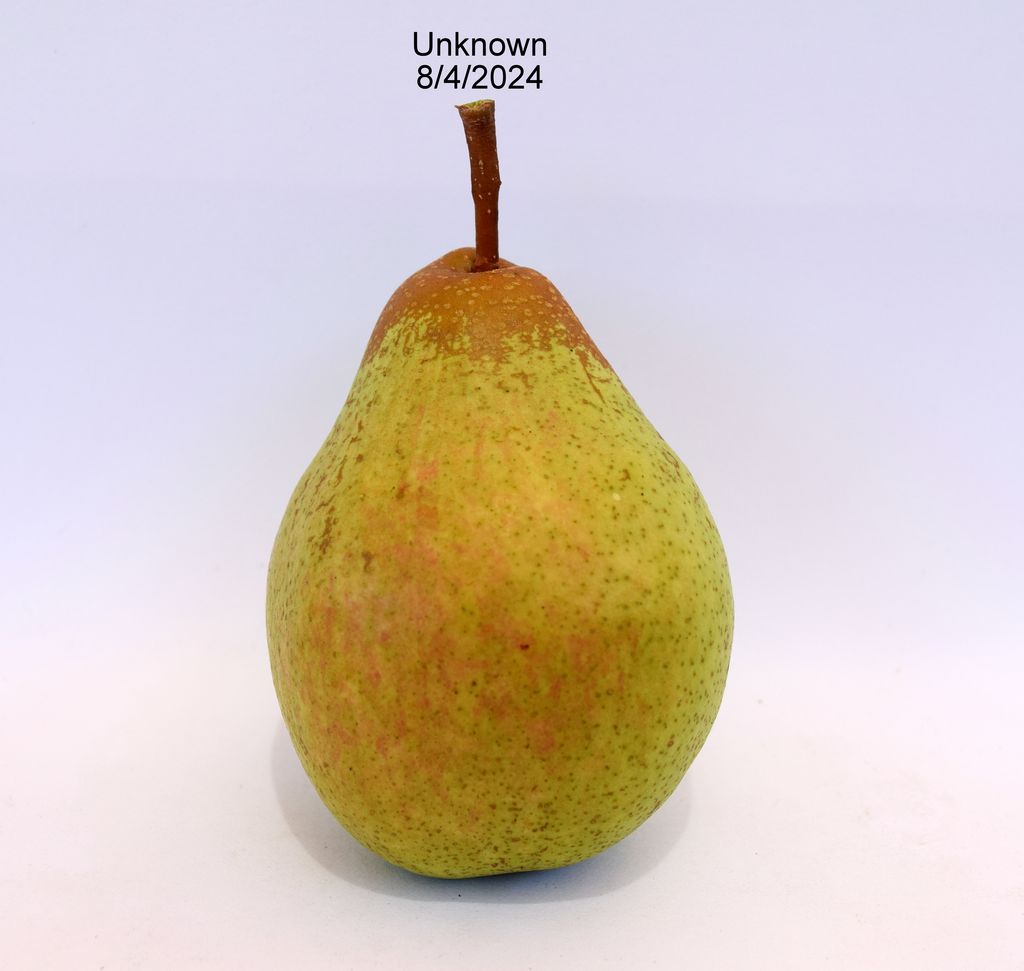
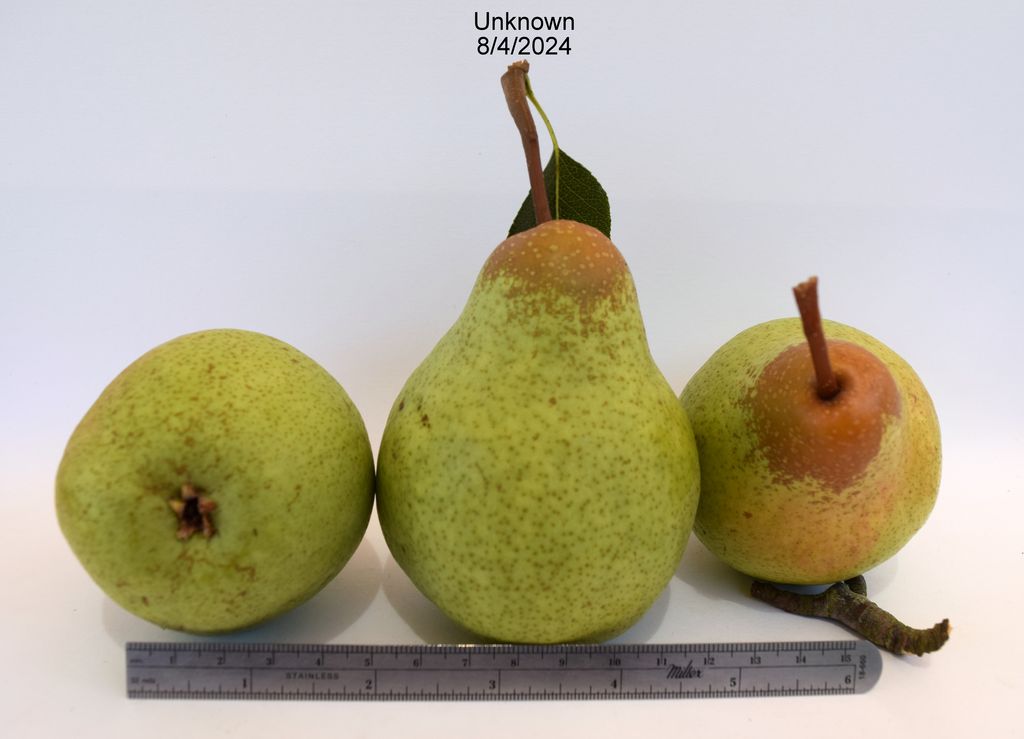
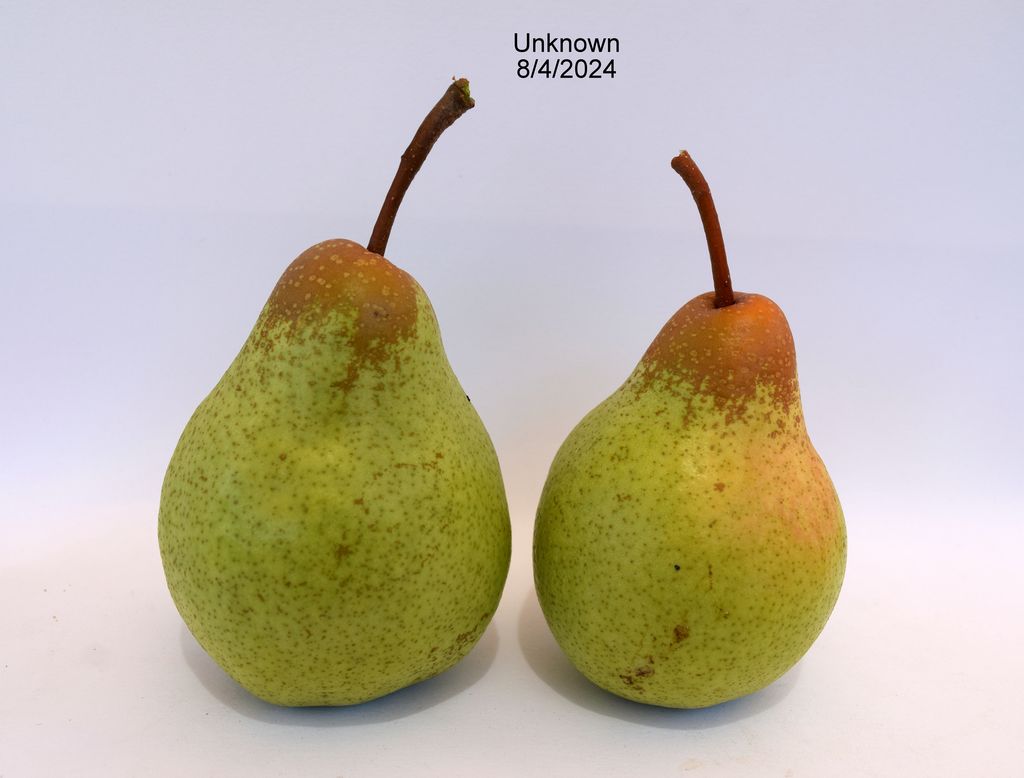
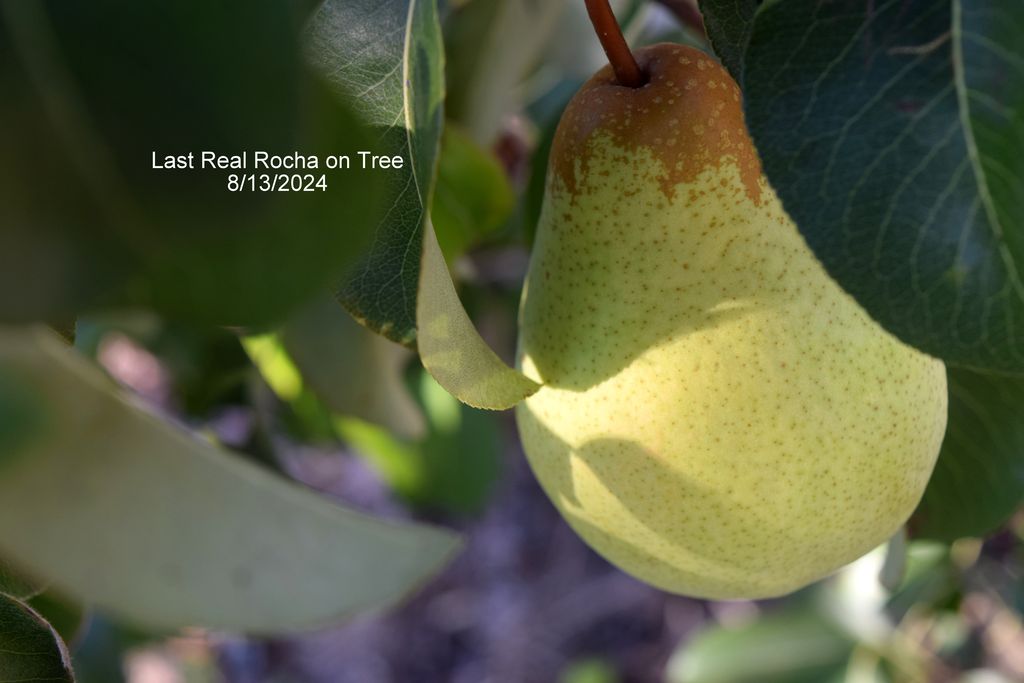
And the last variety for today. This is an unknown that I hope someone can help identify. It is a limb at the base of my Rocha tree. Rocha was grafted onto a rootstock that regrew after a young tree was killed by fireblight in either 2014 or 2015. This variety does not match what was originally grafted on that tree and I do not remember grafting any other variety on the tree. A mystery!
4 Likes
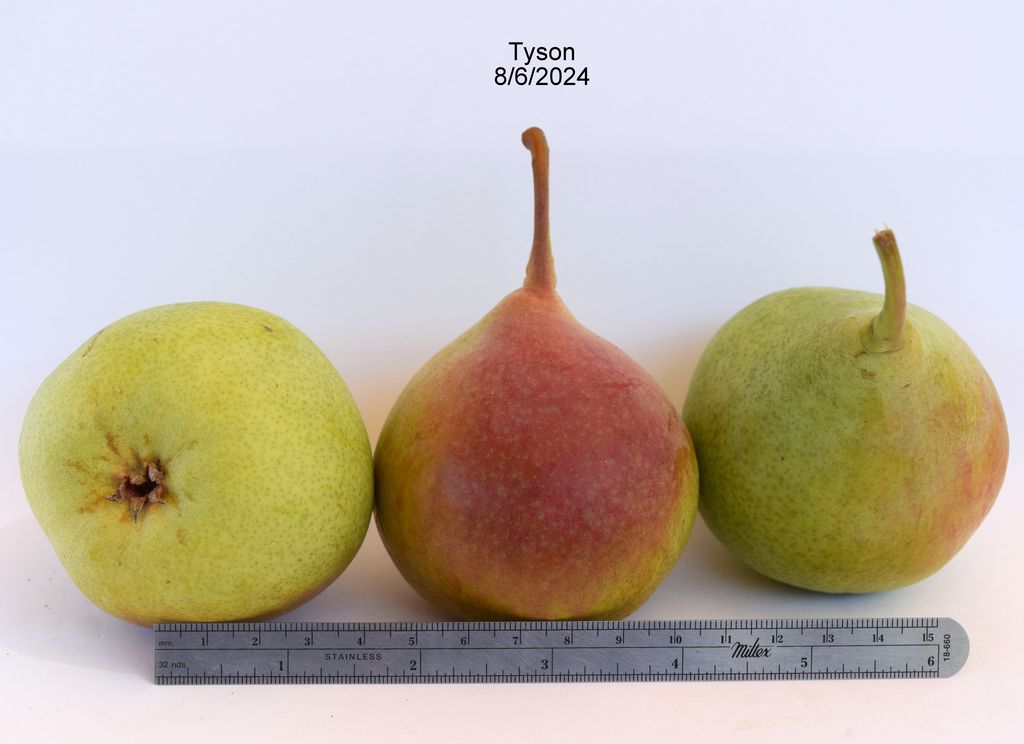
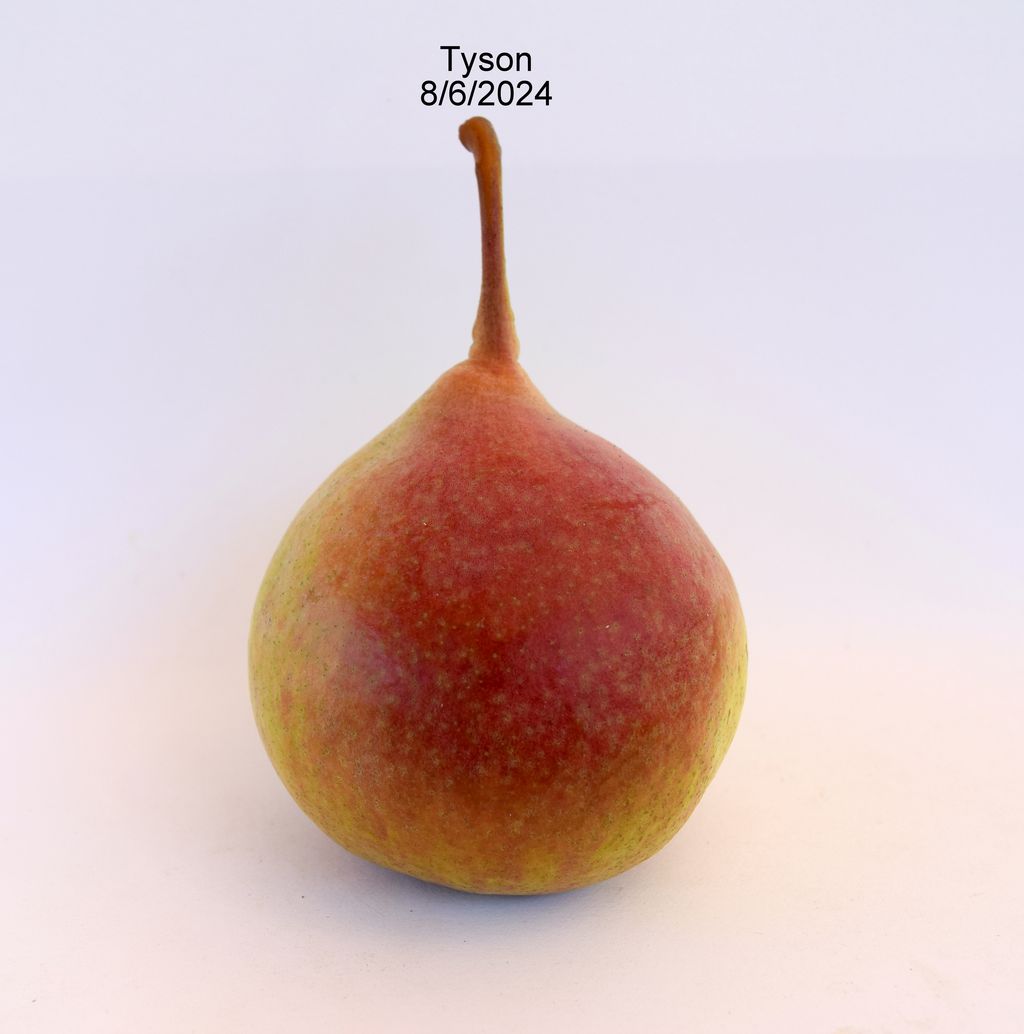
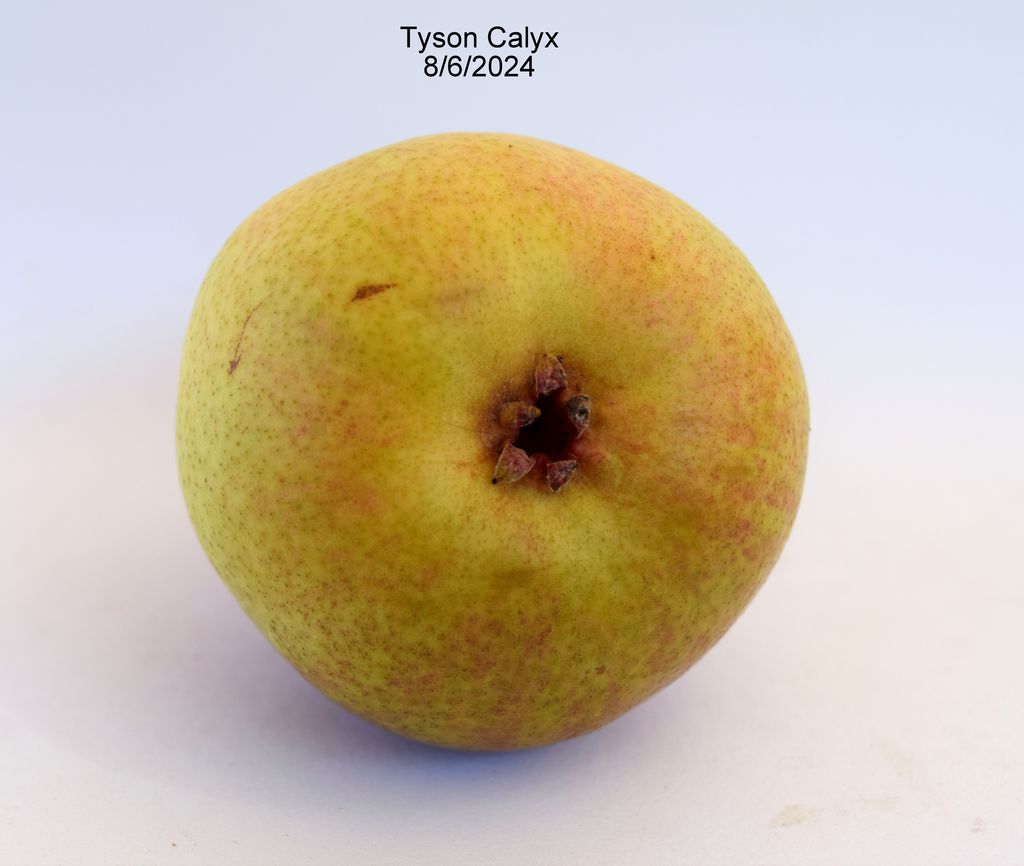
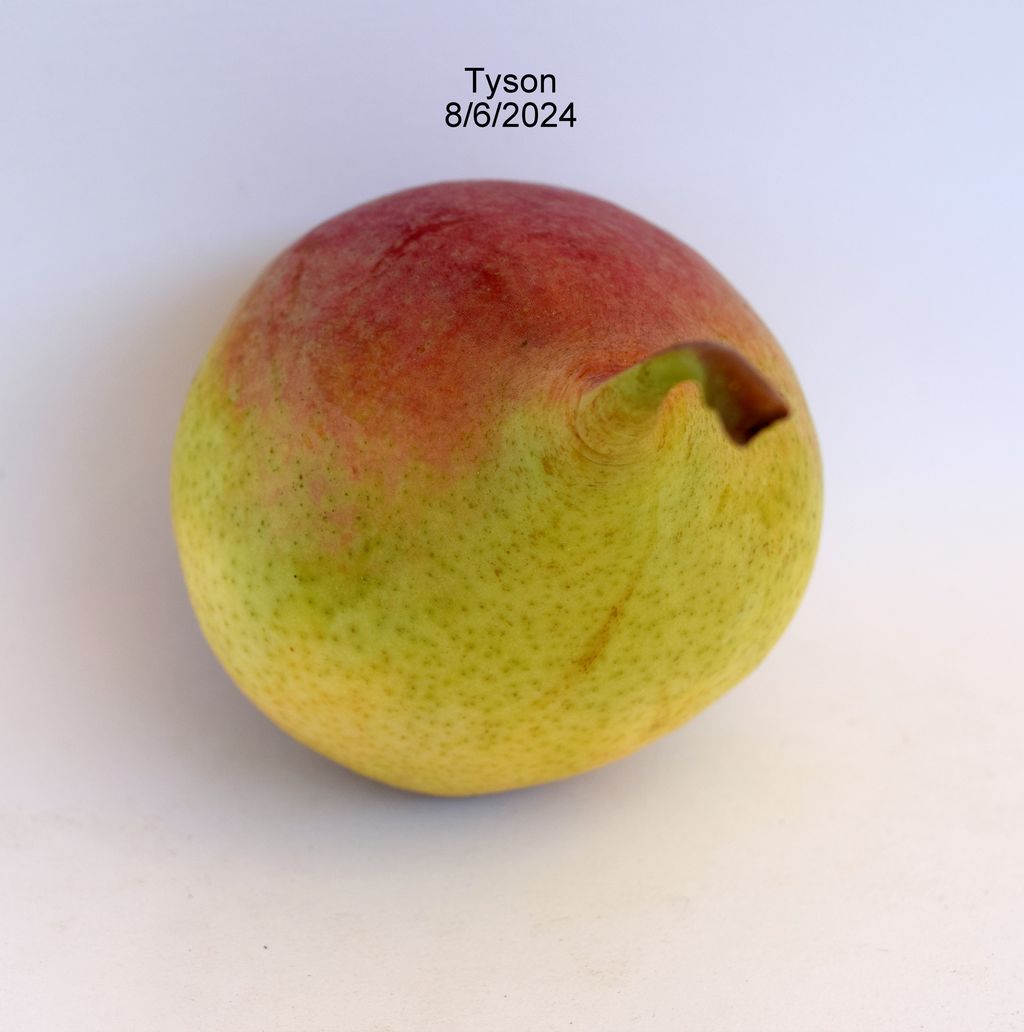
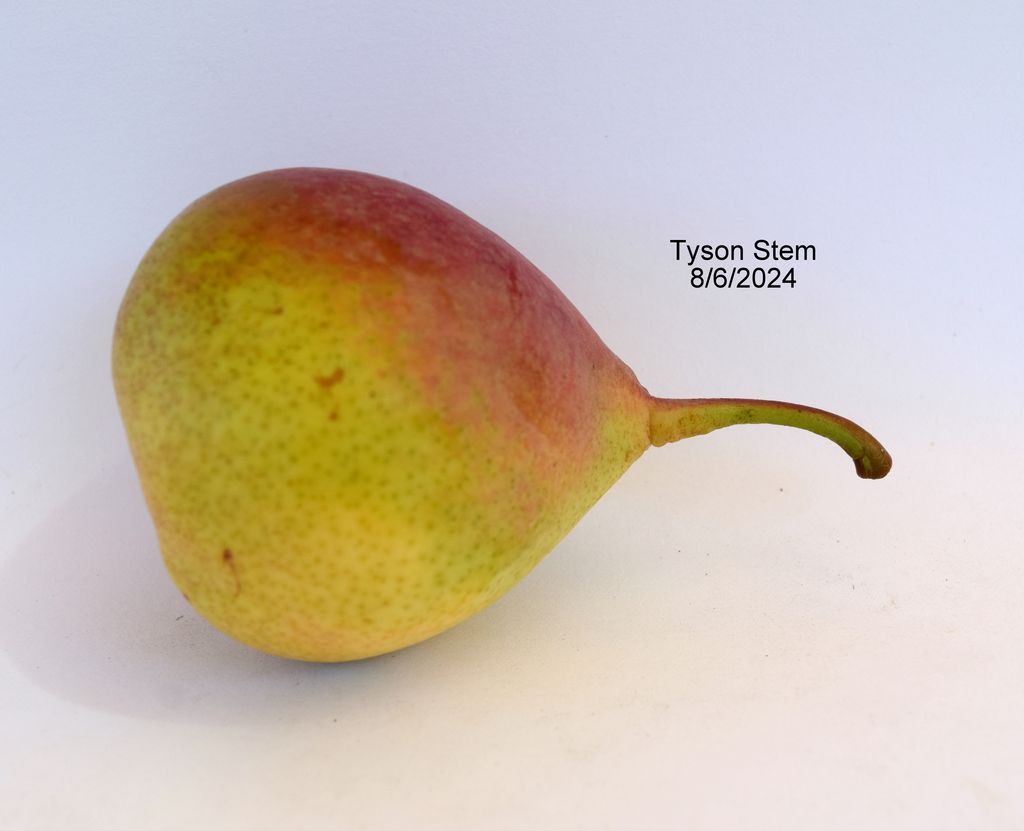
I started picking Tyson today - 8/6/2024. They had been falling for a few days but I have been preoccupied with too many other things. I picked a couple dozen and have that many more to pick. This is one limb on my Honeysweet tree grafted in 2015. It has never had fireblight and has been an alternate bearer - this is an “on year”.
Hedrick in Pears of New York obviously likes this pear! Read his description here. Click on Passport.
https://npgsweb.ars-grin.gov/gringlobal/accessiondetail?id=1436442
7 Likes
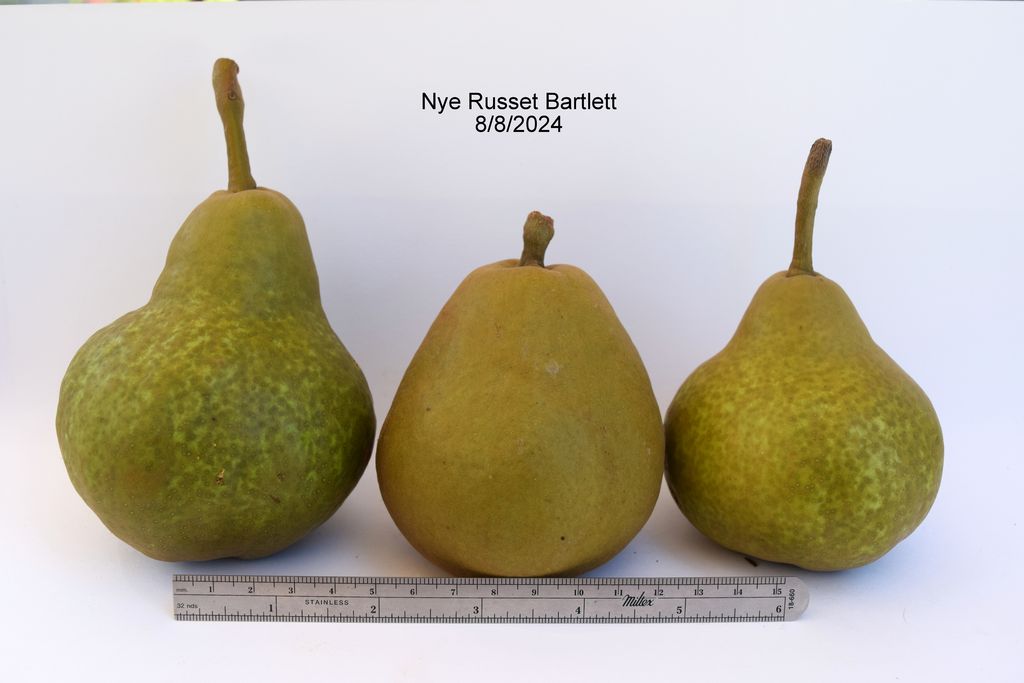
In the second week of August 2024 the following pears are ready to start picking - Harvest Queen, Buttirra Rosata Morettini, Chapin and Nye Russet Bartlett. I finished picking Beierschmitt from one of my grafts, the other is not ready yet. I also finished picking Tyson.
Here is Chapin from last year’s thread:
Chapin
The best garden pear to follow Beurre Giffard and even better in quality. Picked in mid-August, it ripens for eating during the following two weeks. A seedling of Seckel from the New York Station, but larger. The flesh is juicy, melting, smooth with a sweet, aromatic flavor of highest quality. Regularly productive making an ideal dwarf pyramid. – Robert Nitschke, Southmeadow Fruit Gardens Catalog, 1976.

BRM from last year;


6 Likes
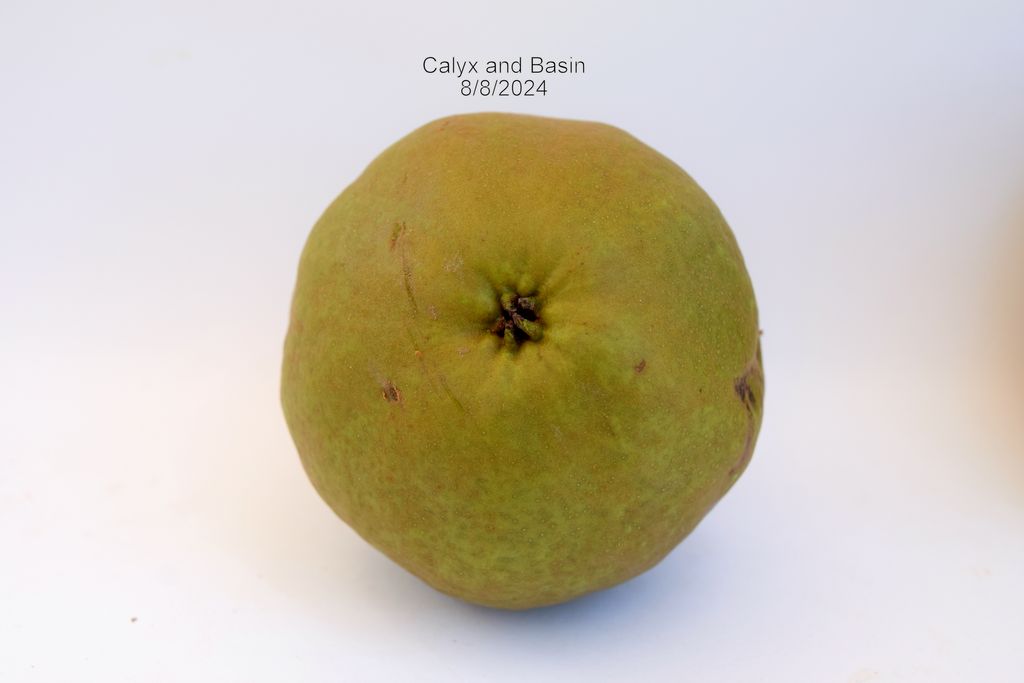
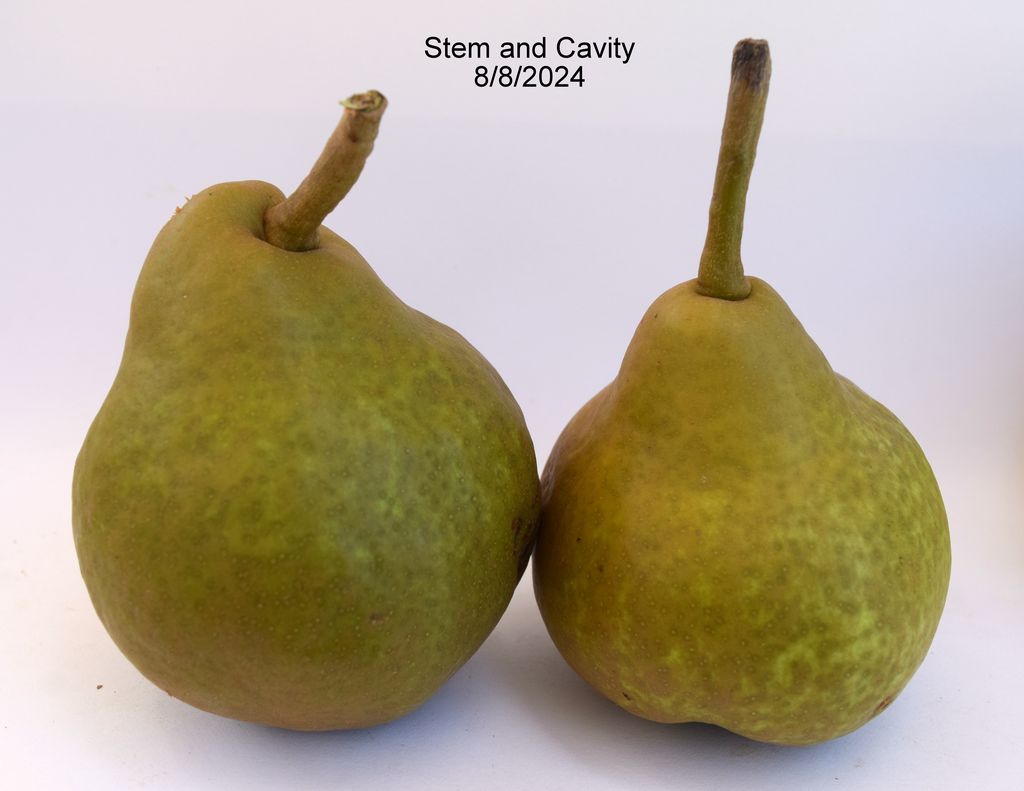
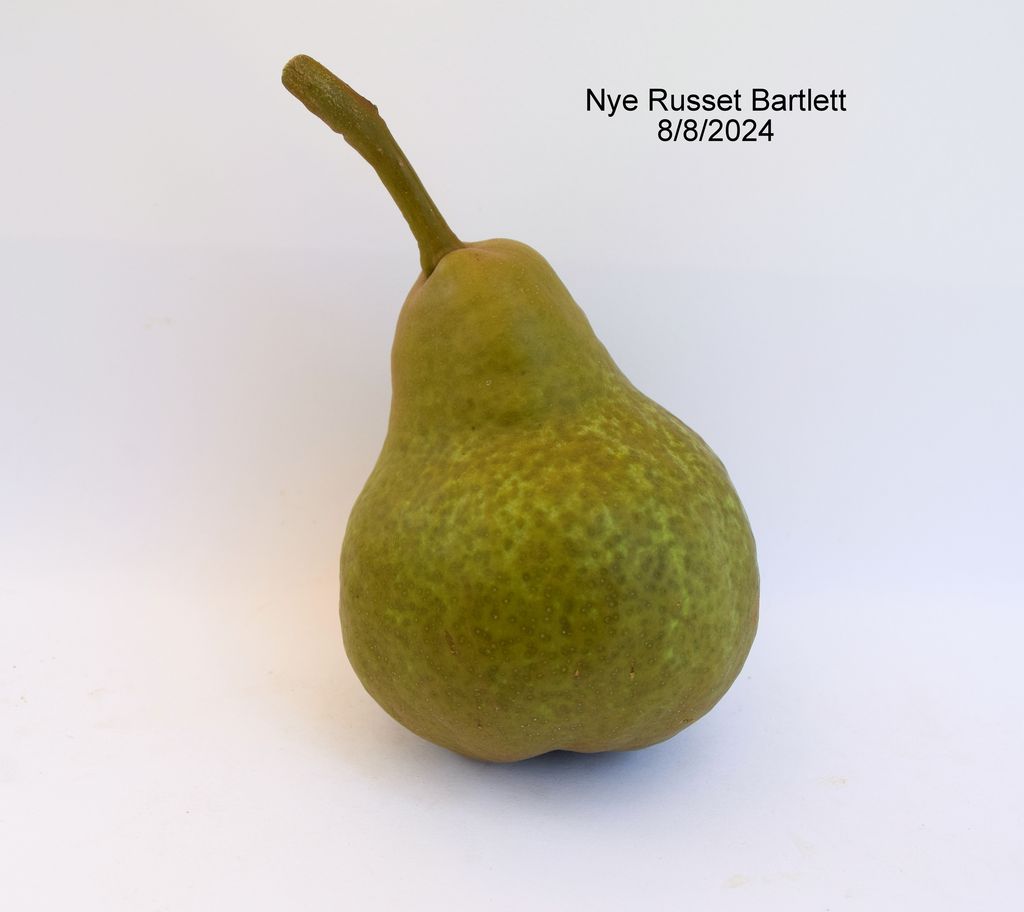
Nye Russet Bartlett started falling on 8-8 and several released with a gentle tilt. This is the second crop on a tree grafted in March 2019 to a calleryana root sprout from a Winter Nellis tree removed due to severe fire blight damage. I only had a couple of fruit last year.
From Raintree Nursery website - GRIN site is down
Nature’s improvement on the classic Bartlett! Similar to the favored Bartlett, but the small-to-medium fruit has a little more complex and spicy flavor, a firmer texture and the same early ripening. Its golden russet skin makes it more resistant to blemishes and scab due to the russeting. A bud mutation of Bartlett discovered in Talent, Oregon, by Stephen Nye in 1924. It ripens a week after Bartlett.
Blooms late, group 3. Resistant to scab. Considered an excellent dessert pear.
6 Likes
Your pictures show one reason I grafted Nye Russet Bartlett a few months ago. I also like the description of having slightly better flavor and storing better than Bartlett.
Fruit similar to Bartlett in form but appears a little smaller in size… Skin deep yellow, overlaid with a smooth “cinnamon” russet. very attractive for a russet sort. Flesh generally like that of Bartlett but somewhat firmer at maturity. Flavor sweeter and somewhat more spicy than that of Bartlett, rates among the very best in dessert quality. Keeps somewhat longer than Bartlett in cold storage and withstands handling operations unusually well. Its shelf life is longer.
1 Like
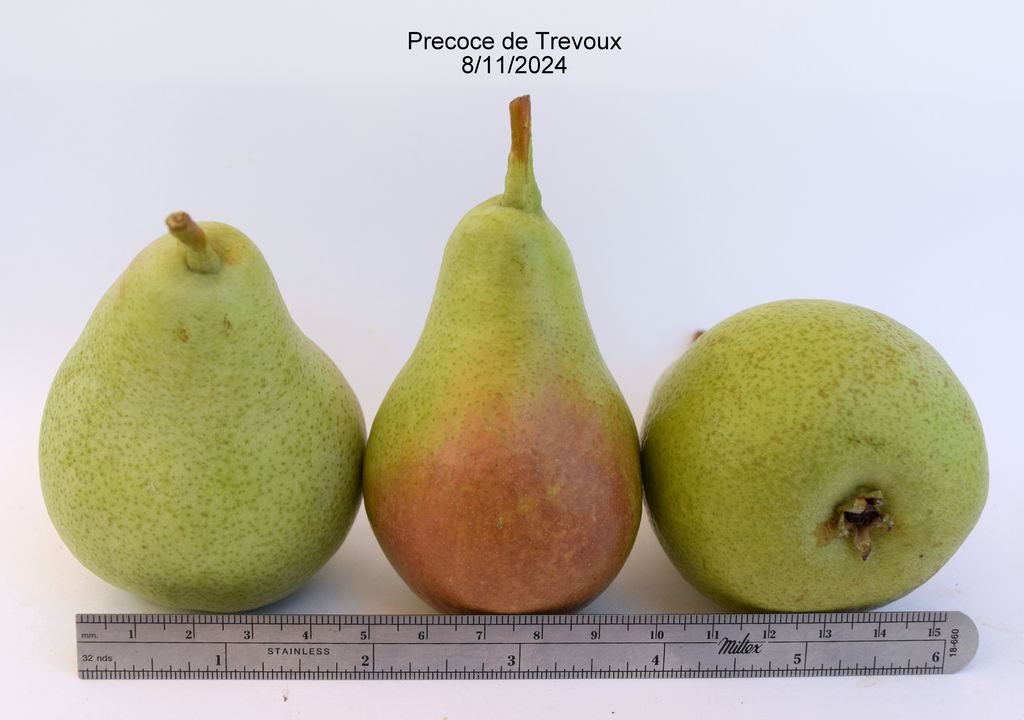
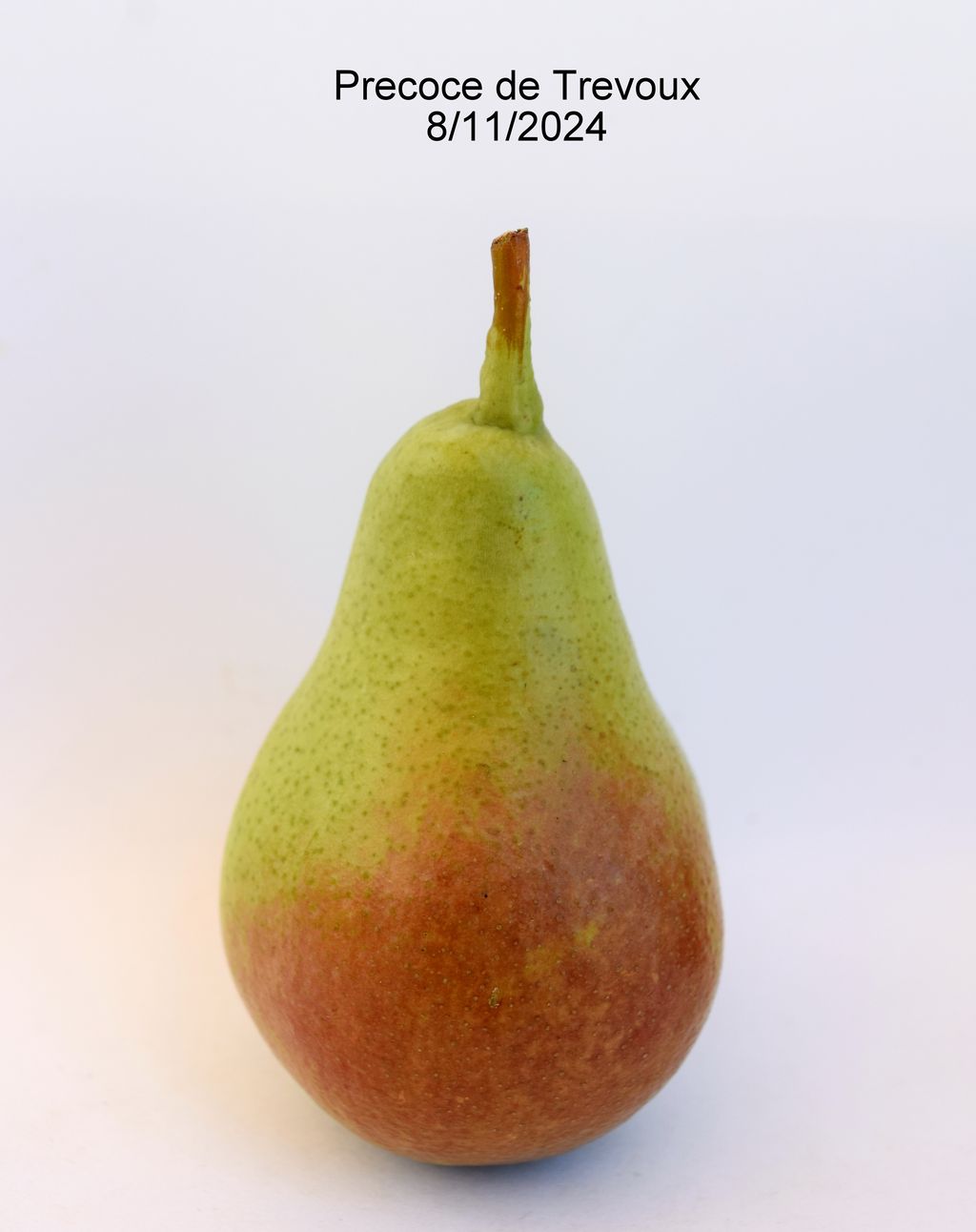
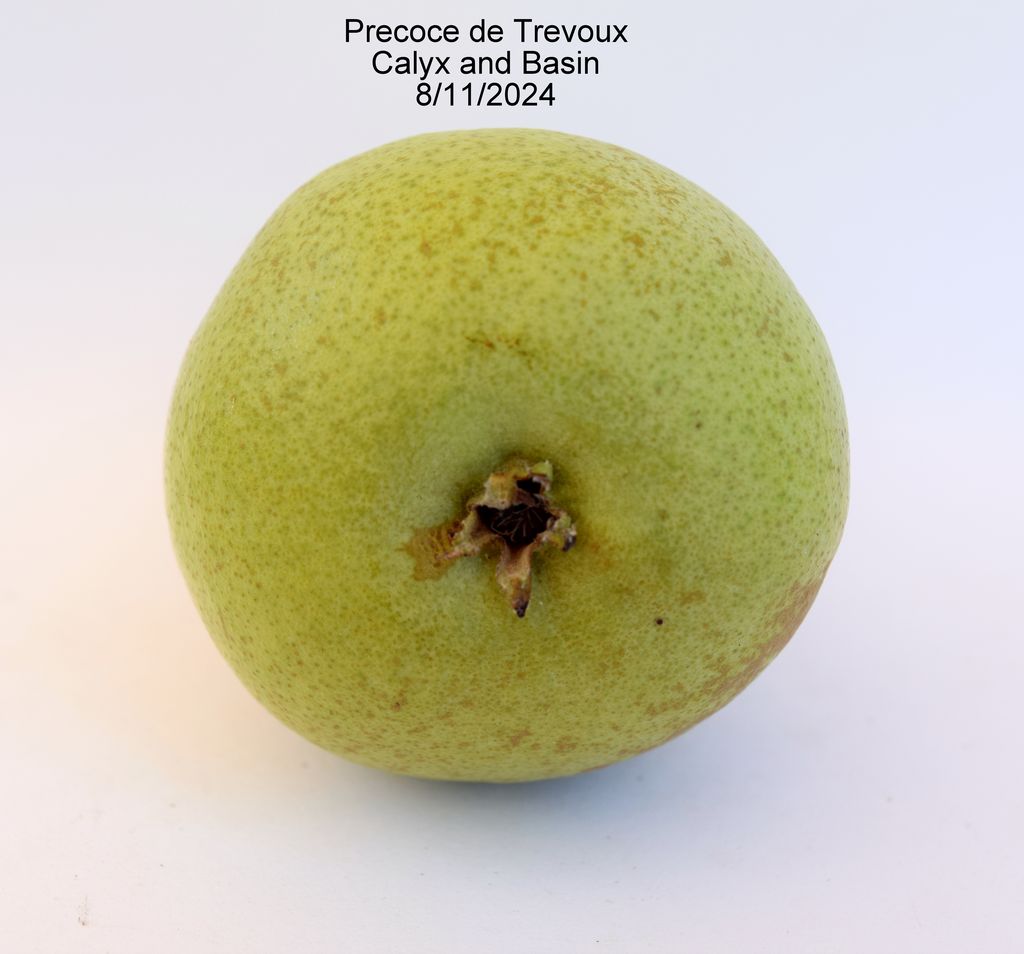
Today, August 11, 2024, I picked Precoce de Trevoux. This is the first fruit on this graft done in April 2020 on a mature tree. I picked all of the fruit today as most released from the tree easily and it is on a graft that is hard to pick - too high.
From Pears of NY:
Precoce de Trevoux.
Obtained by M. Treyve, TreVoux, Ain, Fr., and first published in 1862. Fruit full
medium size, pyriform-truncate, fine and tender skin of a vivid yellow, very finely dotted
with green and washed and streaked with carmine on the side next the sun; flesh white, fine, melting, juicy, sugary and richly flavored, agreeable perfume; good to very good; beginning of Aug.
5 Likes
I show Precoce de Trevoux as Bartlett X Comtesse de Paris.
2 Likes
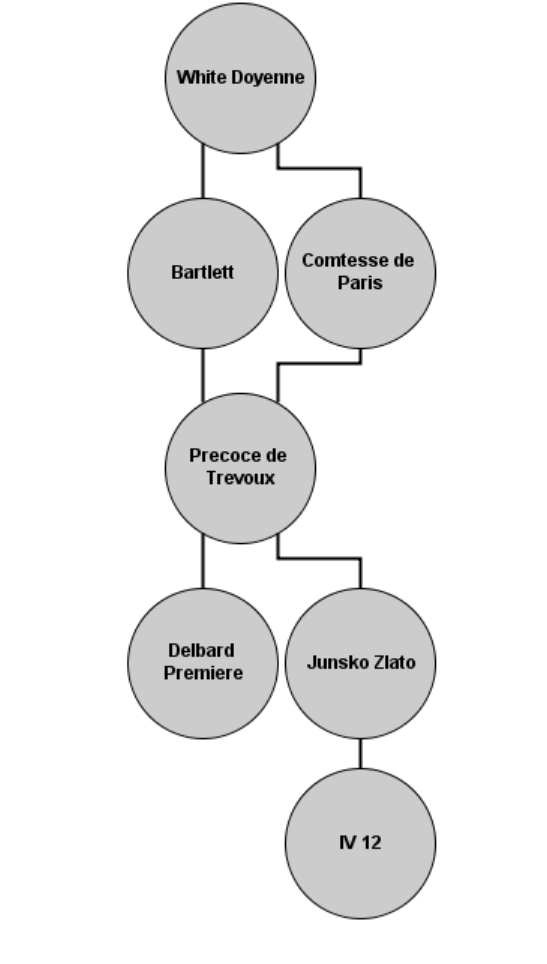
Flemish Beauty = Comtesse de Paris
so Precoce de Trevoux is Bartlett x Flemish Beauty
Clapp Favorite is also very closely related (Flemish Beauty x Bartlett)
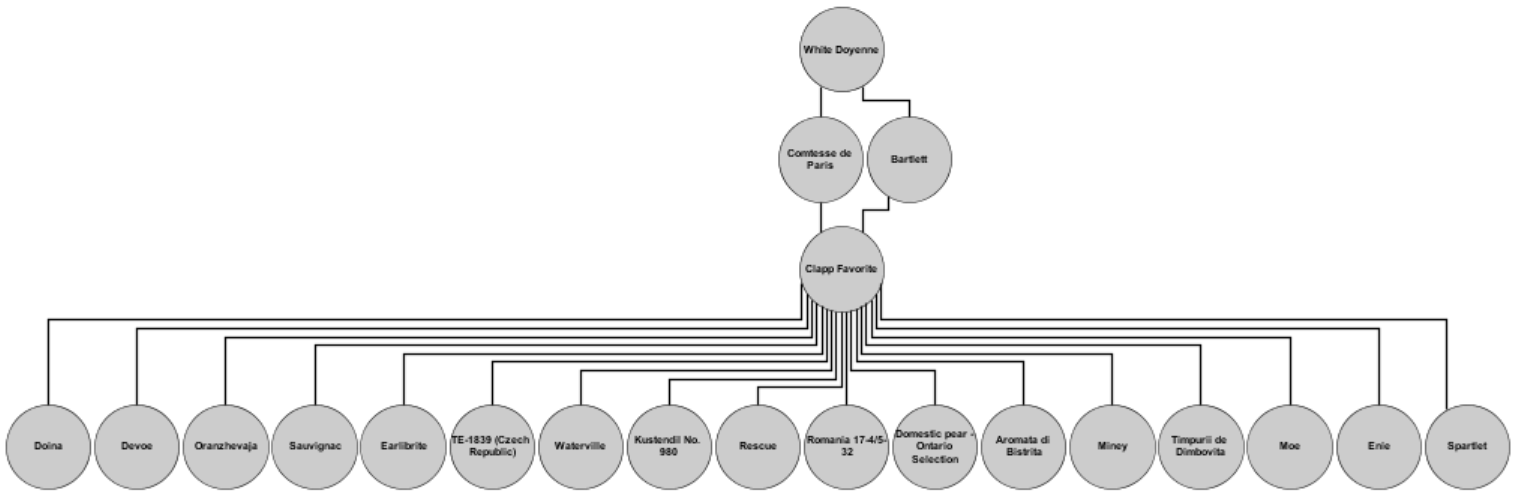
And Clapp Favorite is the parent of Devoe
1 Like
Do you have any experience with colette everbearing pears? Or any insight on them? Been thinking about getting one
Thanks for that information. It is a very nice-looking pear. I’m anxious to taste it. Unfortunately, the family does not share my enthusiasm for pears as long as we have plums, pluots and peaches on the counter. But, by the time the Warren, Magness, Jana’s Pear triad is ready they will be ready.
With that heritage, it is likely fairly fire blight sensitive. I have not had a strike on it yet. 2022 was a bad year but it did not bloom until this year. '23 and '24 have been blight free for pears so far. I have had a few strikes on apples.
3 Likes
No, I have never grown Colette. I assume it is a variety that has repeat blooms to give later ripening fruit. That could put it at risk for fire blight strikes. Have you researched that possibility?
3 Likes
I never even thought about that honestly. I thought fire blight was only acquired through insect transmissions along with open plant injuries
1 Like
Fire blight bacteria can be transmitted in many ways - blowing rain, wind, bees and other insects, infected tools and hands. Blossoms are the most sensitive and the late rat tail bloom is a source of strikes later in the season when conditions for infection can be prime. That is why I teach everyone to remove those blooms when possible. Since in my area, we don’t have hail storms in the summer to cause open wounds that are prime for infection, bloom is the most common reason for late season for strikes.
6 Likes
is your unknown pear rocha?
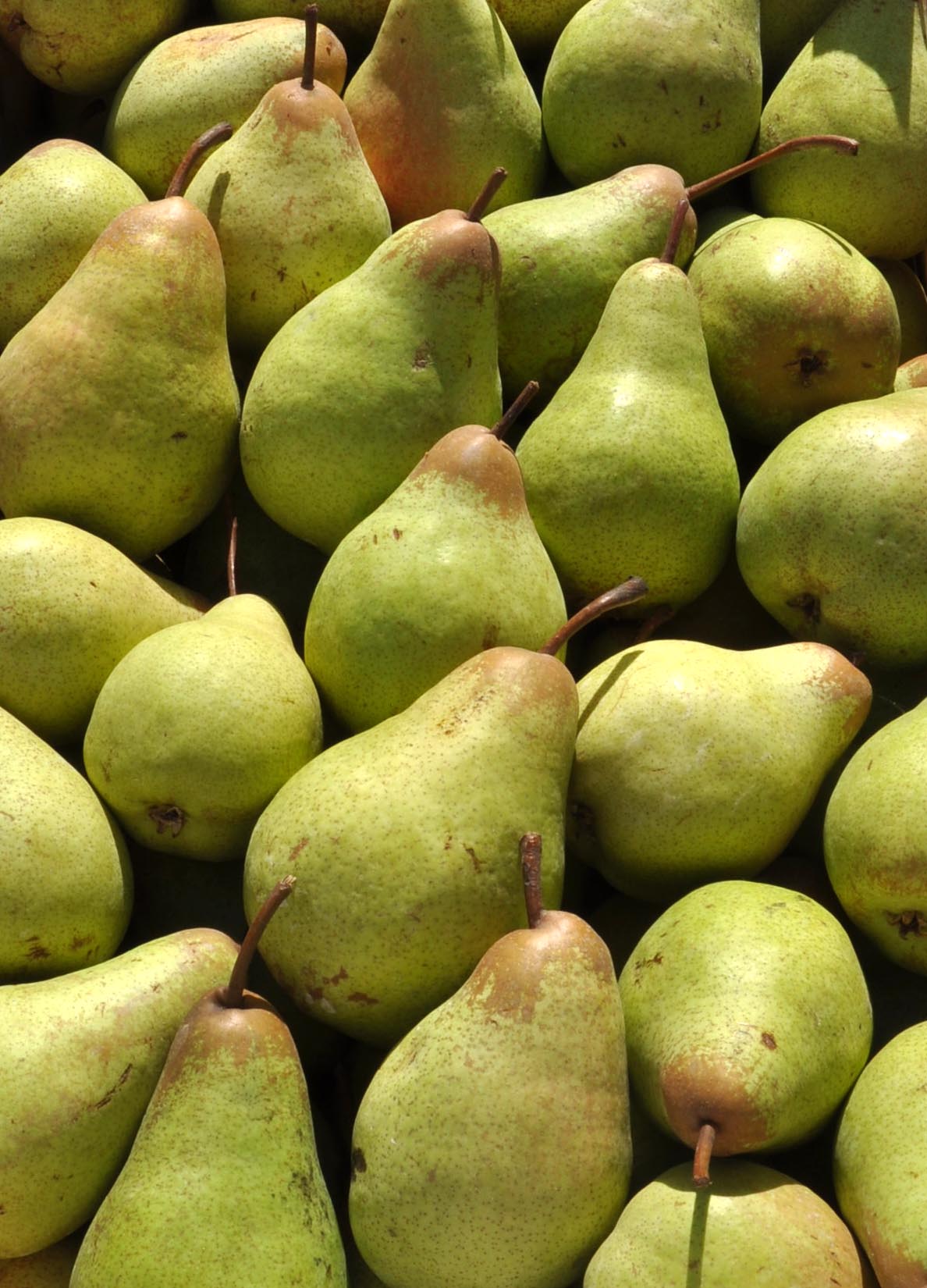
Another early pear that looks like this is beth (superfin x bartlett) and it is also early
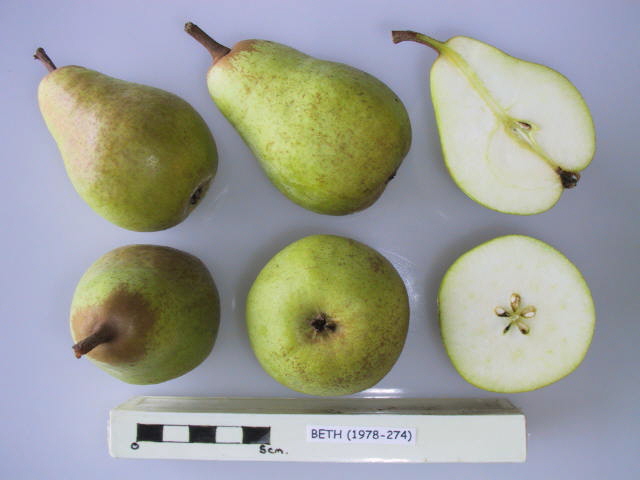
I don’t grow either, though
3 Likes
Yes, it probably is Rocha. I looked at pictures from Luisport who lives in Portugal. It is Rocha. The tree is Rocha but what are the pears on most of the of the tree??? Only the lowest limb of the tree has Rocha pears. This probably explains why I have not been impressed with what I thought was Rocha.
I just took some photos. #3 looks almost ripe. I’ll check it tomorrow.
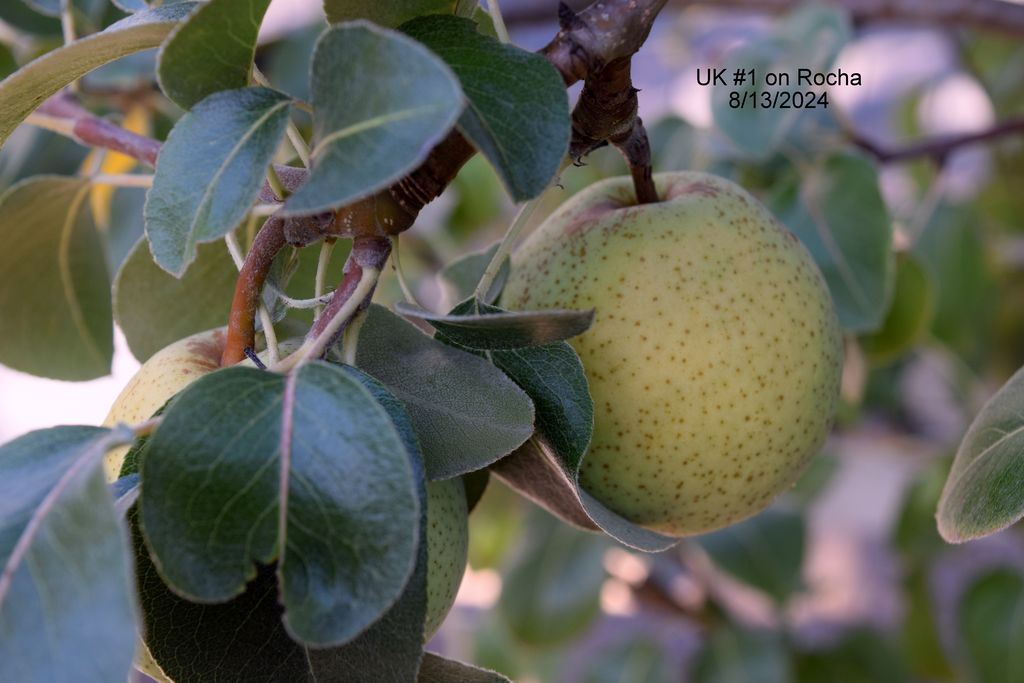
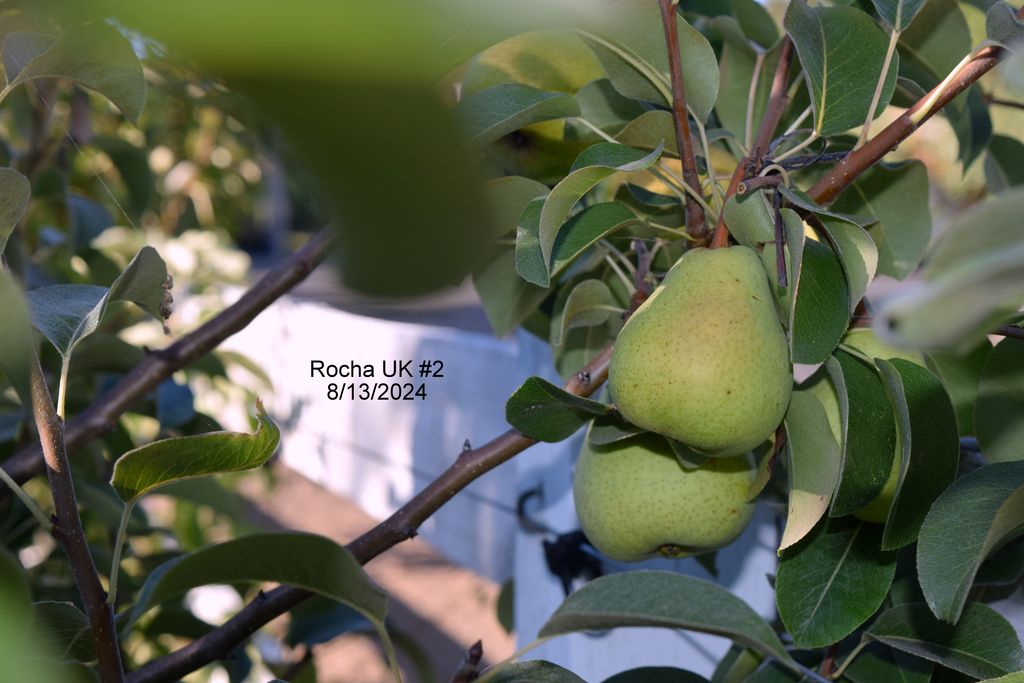
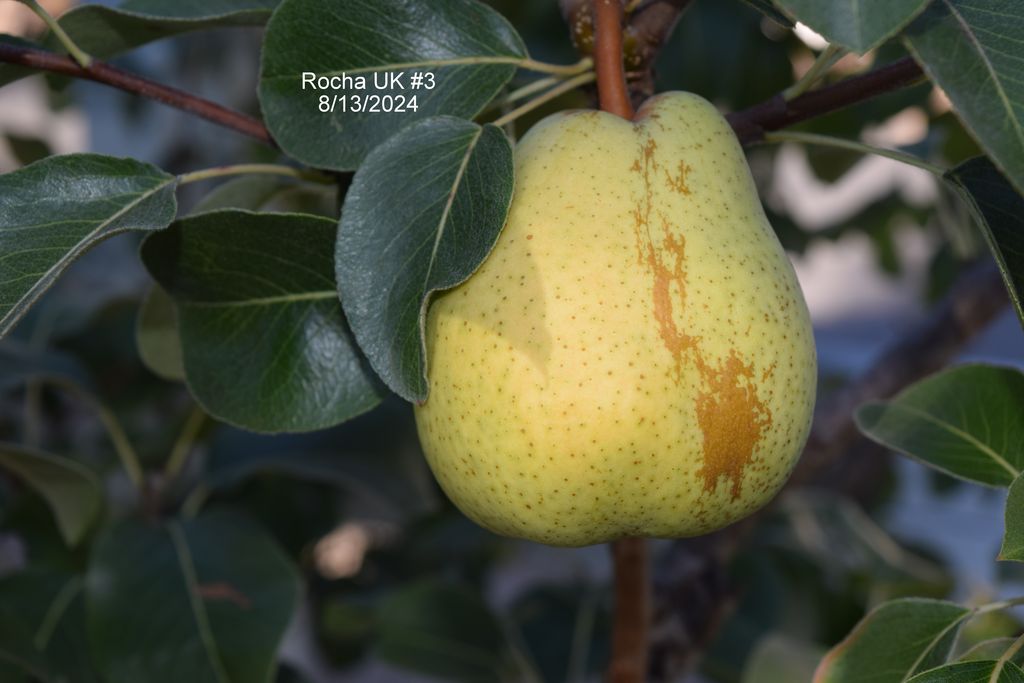
3 Likes
Where did you find the photos? I’ve been looking for a site with good pics.
1 Like
It does look like Pêra Rocha - Wikipedia
" Pera Rocha (Portuguese: [ˈpeɾɐ ˈrɔʃɐ]) [1] is a native Portuguese variety of pear. The earliest account of the Rocha variety dates from 1836, in the Sintra municipality. This variety was casually obtained from a seed, on Pedro António Rocha’s farm.[2] The variety derives its name from his family name. The ‘Rocha’ pear is produced in several places in Portugal. The production area is over 100 square kilometres (39 sq mi) and there are about 9,450 producers.[3]"
" Rocha
Category: Pear - Green
Rocha is a small to medium-sized round/ovate pear with pale green to pale yellow skin. It usually has attractive speckled, but smooth, russeting on the thin skin which does not detract from the eating experience. It is sweet and fragrant with white-yellow flesh and can be eaten either crisp or as it softens. This is an ideal pear for lunch boxes due to its size, sweetness and texture.
Good Fruit Guide Rating: ****
Rocha is an excellent pear with good sweetness and flavour.
Crisp or soft, sweet, flavoursome
Names: Rocha
Origin: Production of Rocha has traditionally been restricted to a unique, small area of Portugal, north of Lisbon: the region of Oeste. The variety was probably a chance seedling, discovered in 1836 by Mr. Pedro António Rocha on his farm in the region of Sintra.
Rocha was not much known outside Portugal until the mid-1990’s when, through various marketing campaigns and a shortage of European pears, it became established in European markets. The pear is now grown in a wider area than Oeste but is still very much synonymous with Portugal.
Rocha now has the status of Protected Designation of Origin “Pêra Rocha do Oeste”. This status is managed by the Association of Growers of Rocha Pear (Associação Nacional de Produtores de Pêra Rocha).
Grown in: Portugal, Argentina, UK. Attempts to grow Rocha in other regions have not been particularly successful as it has proved difficult to reproduce the pear’s unique flavour characteristics.
Harvest & Availability: Rocha is harvested in Portugal from mid-August to early September. Rocha has become one of the most consistently available pears during the European season as a result of good eating quality and storage capabilities.
- January: Portugal
- February: Portugal
- March: Portugal
- April: Portugal
- May: Portugal
- June: Portugal
- July: Argentina
- August: Portugal
- September: Portugal
- October: Portugal
- November: Portugal
- December: Portugal
Websites:
www.perarocha.pt – site by Associação Nacional de Produtores de Pêra Rocha"
1 Like