Only one parent of Rocha is listed. It is another offspring of White Doyenne.
Not many pears are much better flavored than White Doyenne. @marknmt has long reported it as one of his favorites that does well in a colder climate.
" Pyrus communis ‘White Doyenne’
This ancient French cultivar is prized for its melt-in-your-mouth texture and superb flavor, both fresh and cooked. Tastes like a fine, rich buttery chardonnay, sweet-yet-tart, with musky undertones and a strong perfume. The favorite pear of famous chef Alice Waters!
Ripens in September. Early bloomer; match with another early or mid-season bloomer for effective pollination. Lasts up to 3 months in storage. Some fireblight resistance.
USDA Zone: 4-9"
" White Doyenne pear tree produces one of the best autumn pears you will ever taste. This fine grained, buttery French pear has a long storied history throughout the States and Europe which speaks to its unquestioned popularity throughout the centuries. White Doyenne pears are small to medium pears with roundish shape. Pale yellow russeted skin with a small bright red blush on the exposed cheek. Flesh is juicy and sweet with a rich aromatic flavor and melting texture when fully ripe. The White Doyenne pear tree is a world-renowned fruit tree that came from France via Italy where it was described in first described in 1550 as the old Roman pear, Sementinum. Some fireblight resistance. Please refer below for more information on the organically grown White Doyenne pear tree for sale.
Considerations for White Doyenne Pear
USDA Zones: 5, 6, 7, 8, 9, 10
Heirloom: Yes
Uses: Fresh Eating
Harvest Period: Midseason
Low Chill: Yes
Bloom Period: Midseason
Pollination Requirement: Requires different variety with same bloom period
Origin Date: Italy 1550
Storage: 3 Months or More
Disease Resistance: Good
Rootstock: Ohxf 333(semi-dwarf)
Recommended Spacing: 12-16 ft.
Mature Size: 12-16 ft.
Water Requirements: 12-15 gallons per week May through Sept."
1 Like
I guess I had better try to graft White Doyenne again. I lost my tree in 2015 to fire blight.
3 Likes
I lost mine also to fb.
Last week I picked ther first two fruit on my young Rescue pear. It is a very nice-looking pear that has excellent press.
‘Rescue’ - found by Knox Nomura, a nursery grower near Buckley, WA. He had seen the pear at fruit shows but the exhibitor never allowed anyone to take cuttings from his tree during his lifetime, and after his death the tree was scheduled for removal to expand an adjacent cemetery. Knox Nomura “rescued” scionwood from this original tree, and sent trees to Mount Vernon in 1975 for testing. Introduced in 1987. – Washington State University, Mount Vernon:
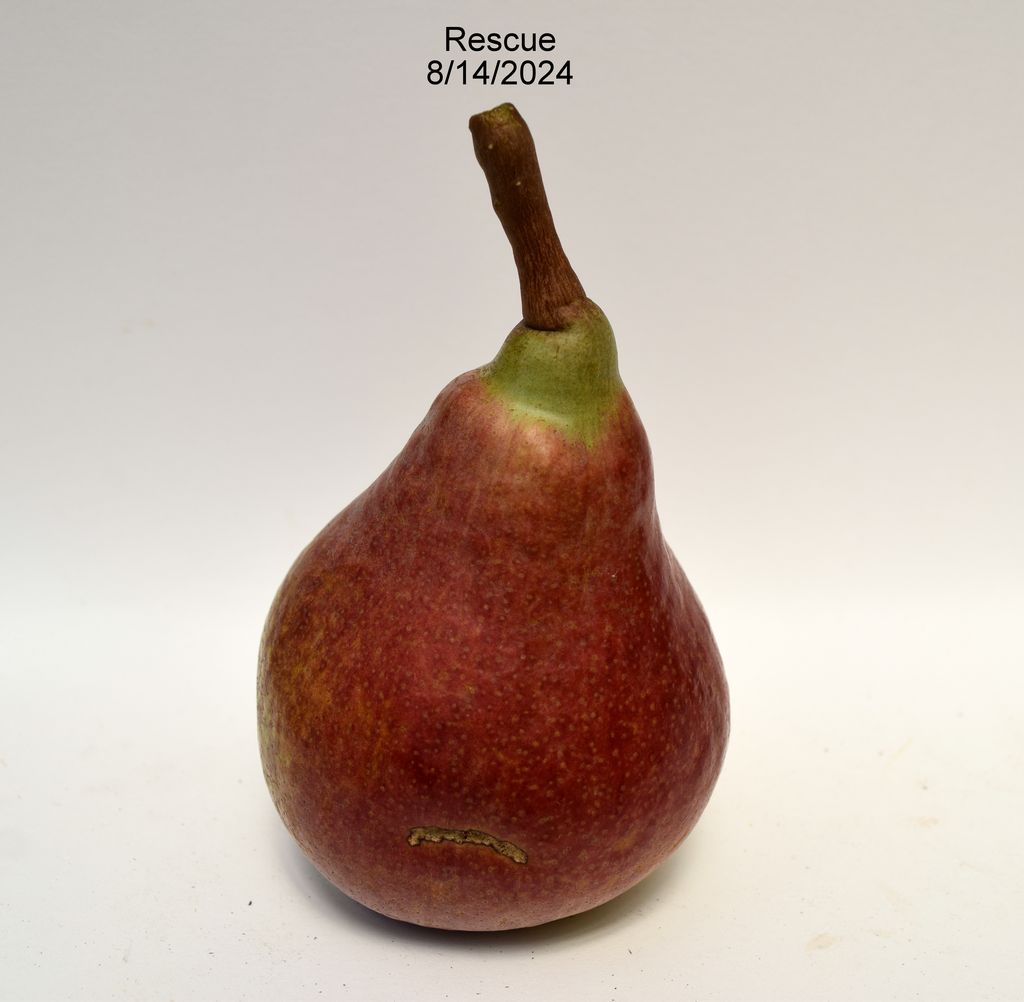
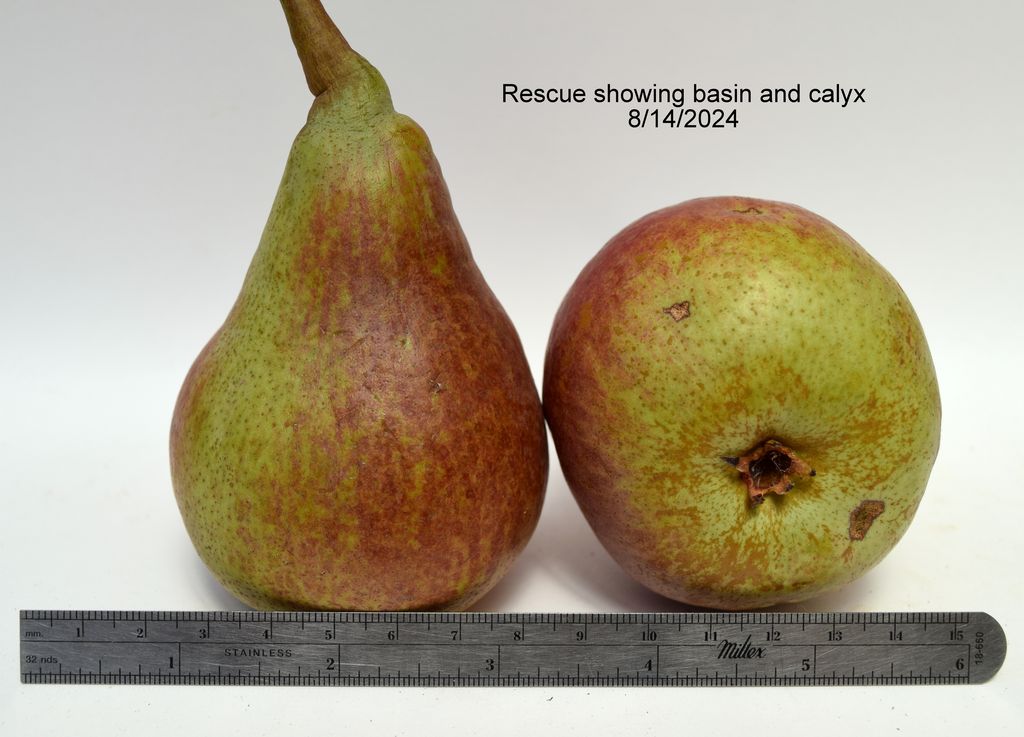
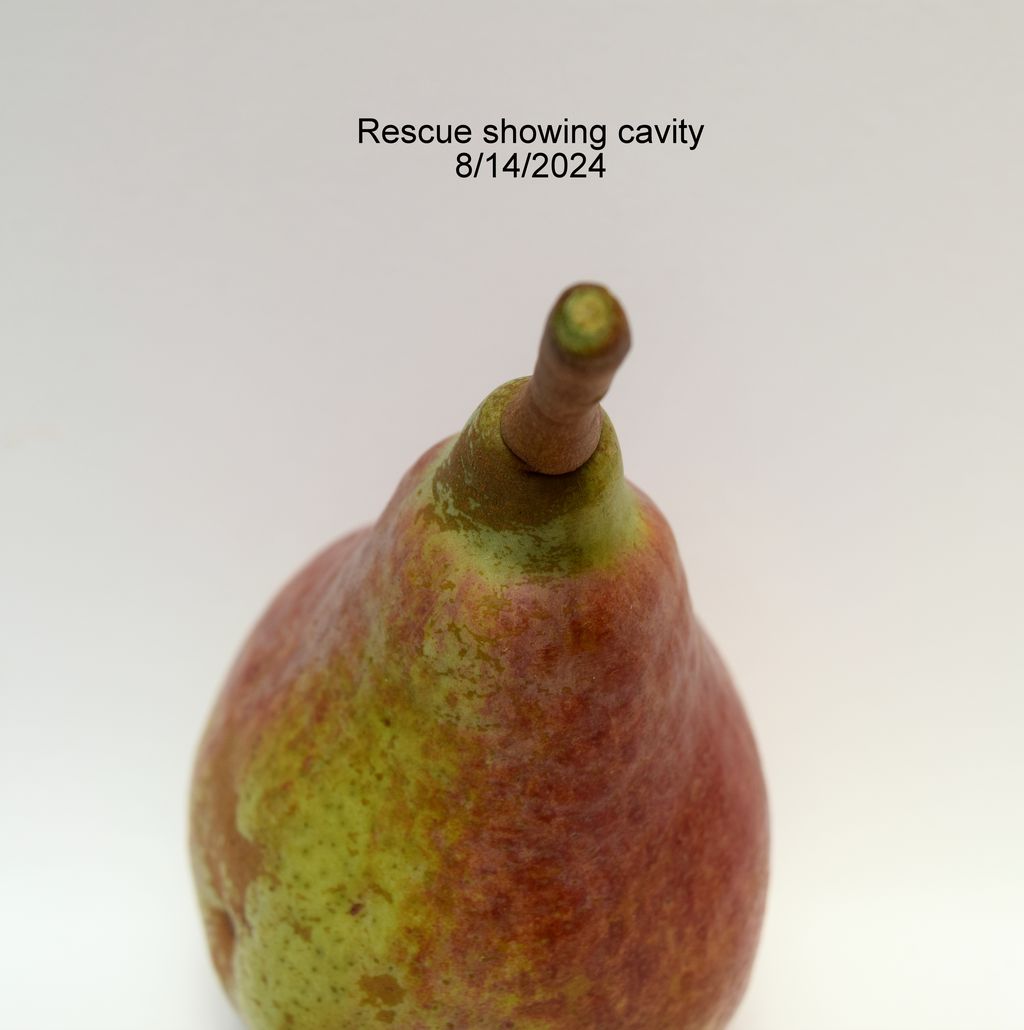
5 Likes
My rescue has a very thick skin which is both good and bad. The taste is good though not exceptional. Was that your experience? This year it produced a couple hundred pears. My tree was about 2 weeks ahead of yours.
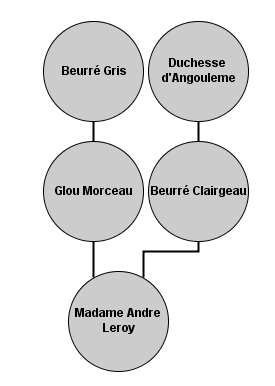
Rescue is now known
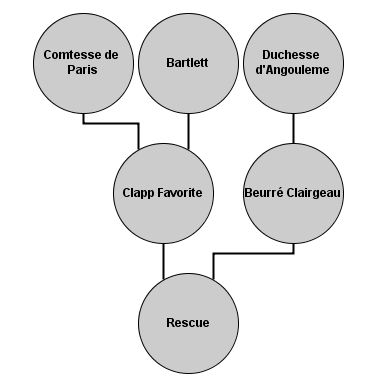
and has some famous heritage
and it is also a half-sister to another one you are growing, Madame Andre Leroy
as well as Beierschmitt (Beurre Clairgeau x Bartlett)
2 Likes
The last pic is Rocha pear for sure…
3 Likes
Thanks. Nice to have confirmation from a real Rocha grower!
1 Like
Thanks! Anything you nead just hask!
I tried eating a Rescue this morning. It was quite soft at the base of the stem. I could tell when I started pealing it that it was not ripe. Softness near the stem is usually a good sign. I have one more pear to test. I hope I’ll do better next time.
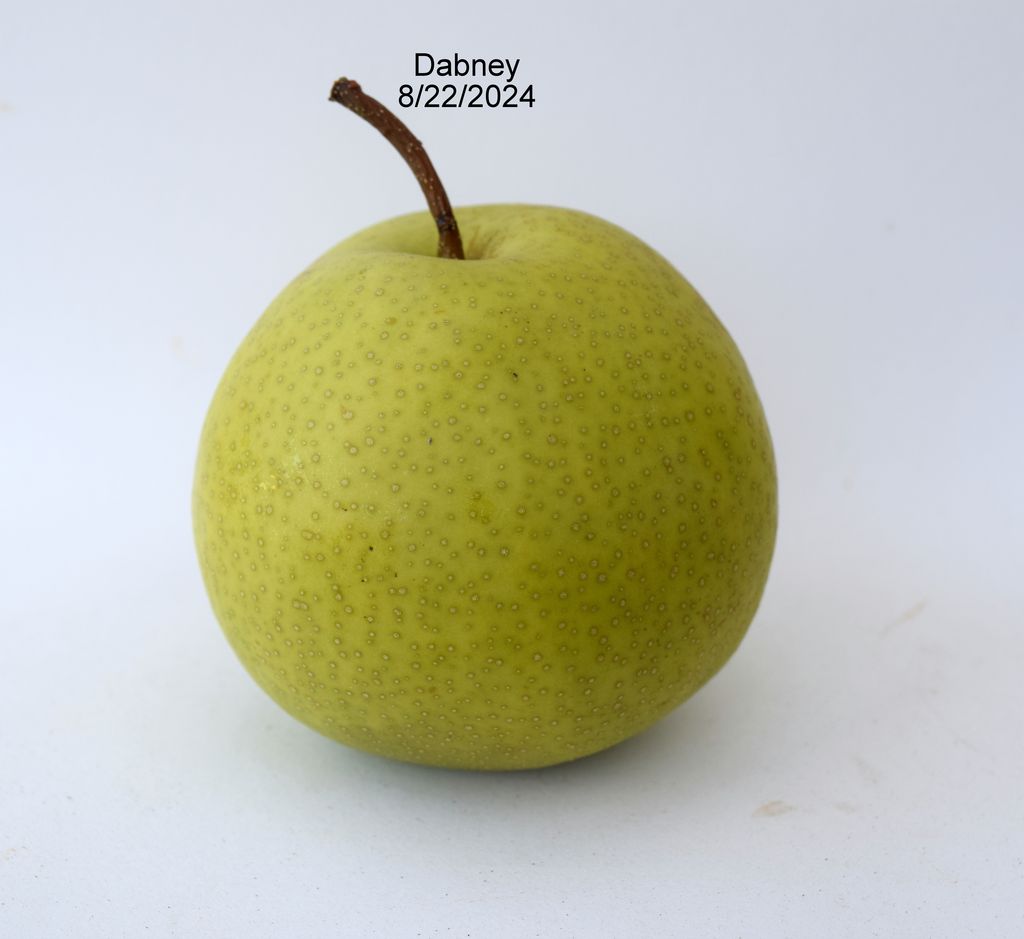
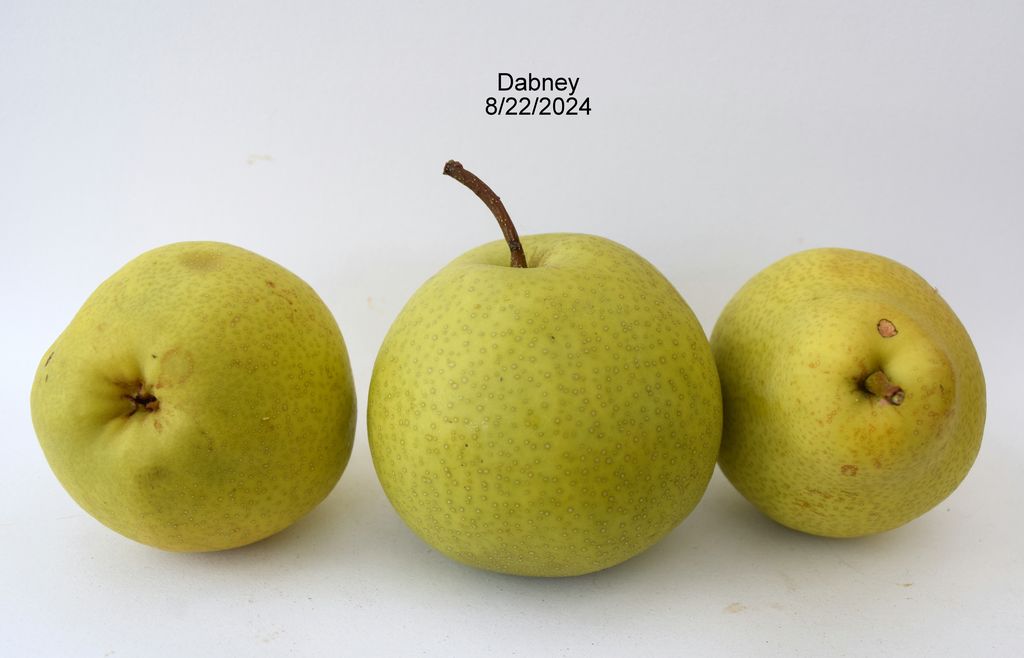
Yesterday I noticed a Dabney on the ground. This is the first fruit on this graft done on a mature tree in the spring of 2019. I picked the remaining four pears and ate two this morning. fairly good texture with very good acid. It should make a good tart. My best family pear taster liked it a lot - likes sweet/tart fruit.
The following is from GRIN. There is a more extensive description if you want to see it.
Dabney.- Originated in Knoxville, Tennessee, by Brooks D. Drain, Tennessee Agriculture Experiment Station. Introduced in 1954. Seckel x Garber; crossed in 1935; tested as Tennessee 35583. Fruit: size medium; oblong obovate, pyriform, sides unequal; skin thick, medium in toughness, smooth, waxen and dull, greenish; dots many, medium in size, russeted and conspicuous; core large; flesh yellowish-white, melting, tender, juicy, quality very good; flavor sprightly, sweet-subacid and very good dessert quality; picked late July and early August, ripening rapidly in summer temperatures; scored low for canning. Tree: small; spreading, becoming drooping with loads of fruit; comes into bearing at five years; productive; moderately resistant to fire blight. – Brooks and Olmo Register of Fruit and Nut Varieties.
6 Likes
@mayhaw9999 , your pears are simply beautiful and you are clearly a pear expert. In contrast, I am a very basic grower of pears with little knowledge of pears, but more than I had when I first planted my two pear trees. I bought a Moonglow and Starking Delicious when I first bought this land in 2007. They fruited several years later. I have never sprayed them but probably should.
They are always ugly and bug bitten and sometimes rotty on the inside. I still get enough after cutting away the disgusting parts to eat fresh and make cinnamon pear butter, which I like as well as apple butter. Also manage to make a few pear cakes to freeze for later each year.
Anyway, I just harvested my Moonglow several days ago. The pears were bigger than usual but at least half of them were their usual homely-looking specimens.
I am getting too old to feel safe up on a ladder in the orchard. Normally, I have been getting my husband up in the tractor loader and lifting him to the various branches. He is quite tall at 6’5” and has very long arms, so he could harvest most of the fruit. Currently he is having some severe problems with his feet and ankles so the tractor loader bucket is no longer an option.
I was trying to figure out how to get those upper pears down and came up with the bright idea of pushing the tractor loader against the big branches and trying to shake the tree. Maybe 3 pears fell down, but I did manage to scrape big pieces of bark off the branches. Not the smartest idea!
I then pondered what else I could try as I do not own one of those long-handled fruit pickers with the basket. I found a fishnet on a bamboo pole in the pole barn. Not sure why I even had it. I went out and began to wave that pole around and try to get the fruit into the net. Some did fall in there. However, the net kept snagging on all those little pear branch spurs and the fruit did not want to fall in there.
All I can say is I hope no neighbors were driving by while this wild-eyed, sweating old woman was running around my orchard with a long handled fishnet beating at the pears and cussin’ up a storm. To make it worse, half the pears that fell burst and I was taking them and chucking them as far away as I could in a rage. All the while yelling for the deer to come and get them as they eat everything else I try to grow.
So, that is the story of my pear harvest 2024. I hope everyone else’s went better. 
Sandra
8 Likes
Great story Sandra. Get one of those long-handled pickers. They really are worth it and I know what you mean about the ladder. Us old folks need to stay on the ground! I have two types of pickers. One is the basket type and the other grabs individual fruit without damage. I like it the best but it is a one fruit at a time tool. Here is a picture of my picker.
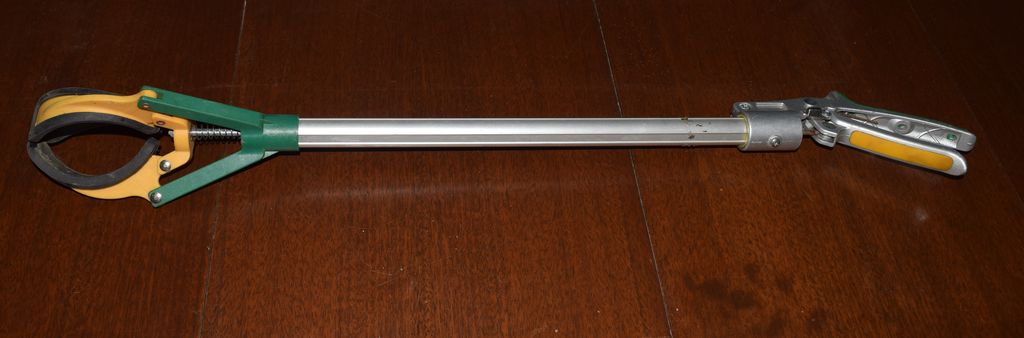
It is available from Home Depot. Zenport picker. There is a long-reach telescopic version.
I found the following at our local Ace hardware. You can put it on your own pole but others are available. Lowes has a selection of Walensee pickers.
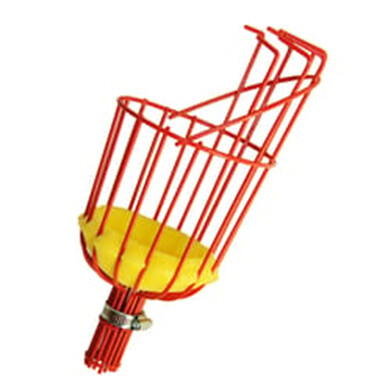
6 Likes
Thanks for the information and pictures of different pickers, David. I didn’t even know there were different kinds. I will definitely have to invest in one, as I don’t want a repeat scenario of this year’s harvest. 
2 Likes
Do you have any recommendations for summer european pears for eating fresh (harvest and eat without storage? I don’t usually store pears.
1 Like
A few disease resistant pears come to mind… harrow delight, ubileen, hybrids like crispn sweet, summer crisp. In early september Seckel.
Im in Michigan along the lakeshore so my season might be a couple weeks behind. Hows the fireblight by you? That blight will narrow down your long term options. Have you tried any asian pears?
1 Like
Just shrunk some of my trees from 30 foot to about 20 foot. I was using a 20 foot picking pole standing on a 10 foot ladder while fighting wasp over the fruit. Not sure if I’m in the old category yet, but that wasn’t working for me.
2 Likes
Yep, you’re old. Maybe even over the hill.
Kim,
Almost all of the summer pears will ripen without chill but some taste better with a week or two in the refer. So here are those that I have experience with that do well. Harrow Delight, Harvest Queen, Tyson, Butirra Rosata (and Precoce) Morettini, Souvenir du Congres, Beierschmitt, Bartlett and clones, Devoe, Warren and Magness, Onward, Rousselet of Stuttgart x Dr. Jules Guyot Hybrid V and Hybrid VII now named Vavilov, Seckel and Potomac. And of course, the very early ones Citron de Carmes, Klementinka, Stuttgarter Geishirtle, Ubileen Gift. Those don’t last well and I usually just snack on them in the orchard.
There are others but I don’t have experience with them. Clapp’s Favorite and Starkrimson AKA Kalle are good ones.
David
5 Likes
I think you were responding to SeattleFigs. I have a question. You mentioned a couple of pears that I’m not familiar with. Crispn Sweet and Summer Crisp. I don’t think they are available here.
Seckel is not very disease resistant. It is always listed as fire blight resistant but I have had major strikes on my tree and my back fence neighbor had one of his Seckels blight down to just above the graft in 2022, our last bad blight year. It recovered last year.
2 Likes