Gotcha. With parafilm covering everything I don’t worry about water at all. We’ve had some gully washers shortly (and sometimes consistently) after grafting and there’s never been any problems on my grafts from water. As far as temps go, a few years ago we had a weird spring where it went from 60’s as a high to 90’s for a solid week. The rootstocks in the field were starting to push leaves so I went ahead and grafted right ahead of that week in the 90’s. Just did my usual grafting and all the grafts took just fine. If I was using parafilm alone and no rubberband over the union I might worry about UV exposure, but my rubberbands cover the whole union. Other people’s mileage may vary, and I’d be glad to hear of scenarios where people experienced failures so we can be prepared.
I have had this effect previously. If I watered them ahead of time, they did well. If I forgot to water them, the graft died, but not necessarily the plant.
John S
PDX OR
Thanks good info! I grafted when it got hot again but this year has been very cold. Today it was in the low 50’s and felt colder from the wind. Now it’s going to rain again and be colder tomorrow so I covered with some plastic bags and cut holes below the graft union jic. The only few grafts I lost this year were from water getting in. I have rubber and wax now for the unions next season.
How are these surviving? If edible by humans, that wide harvest window of Deer Luscious would be a backyard orchard dream because our frost date could vary by 6 weeks, so I could still be harvesting up to the end of what the season allows. Without knowing anything, I could conjecture that once a persimmon has been through a few hard frosts, it is no more desirable to a human than an overripe banana? (Medlar is bletted in a temperature warmer than hard frost.)
Most of the seedlings are doing very well. A few of them have already topped 5 ft. The two grafted trees are struggling. I just buried them in leaves to protect them yesterday. Grafted trees are so much harder to establish in cold regions, and really need extra care. I’ve had a lot just die out-right from Southwest-injury, or lack of vigor. Seedlings don’t get Southwest-injury for some reason. Of the two Deer Luscious is doing better. You are correct about persimmons getting damaged by the freeze thaw cycles. They gain a weird textured, and become unpalatable. When I used to live in Illinois they were good to pick up till about Thanksgiving. If we started having nights too cold, (in the low 20 or upper teen’s), they get damaged when they thaw again. I had about a half a dozen local trees that all didn’t ripe until the very end of October, to mid-November. It always seemed like they could take more cold than one with a guess before damage. I don’t know exactly where the damage threshold is, but they can take several freezes as long as it’s not too cold, and not be negatively affected. You can also freeze them solid in a deep freeze and store them that way for a while if you use them immediately upon thawing. Medlars are pretty much the last fruit I pick on the farm. If I pick them too early, towards the end of October, they don’t blet properly for me.
Hi JRD
Can you describe your process for me? I have about a peck of IKKJ fruit which is ripening too fast for us. So to preserve before they spoil we would like to try your process to save some. Did you peel them first?
Dennis
Kent, Wa
As noted, the one time I did it, I let them get fully ripe. At that point, they were fairly soft so I couldn’t do much more than split them in half horizontally then dry the halves. I did not try to get them fully dry. I just wanted to reduce some of the excess water and concentrate the flavor. That worked. But I don’t think the halves were in the dehydrator more than a day or so, and they were still somewhat soft.
Soon after, my trees were severely damaged by cold so the crop has been rebuilding. In 2022 I picked ~300 fruits total from 3 trees, this year I picked ~30. If I get a big crop next year and want to dry IKKJ again in bulk, I’d follow the lead of @ncdabbler who seems to have more experience. As I understand it, he starts with a ripe but still firm fruit then makes fairly thin (e.g., 1/8") slices without peeling. Then he fully dehydrates those thin slices.
My PVNA variety Giboshi has thicker skin. I would peel those. Next year I intend to (1) isolate my potted Chocolate and Coffee Cake trees so that Giboshi remains unseeded, (2) process my Goboshi fruit when ripe but still firm, (3) peel them and dry them to make (or attempt to make) Hoshigaki.
Thanks,
After dehydration did you store in fridge or freeze until consumed?
Fridge. But I didn’t have a ton. They were all eaten with. a week.
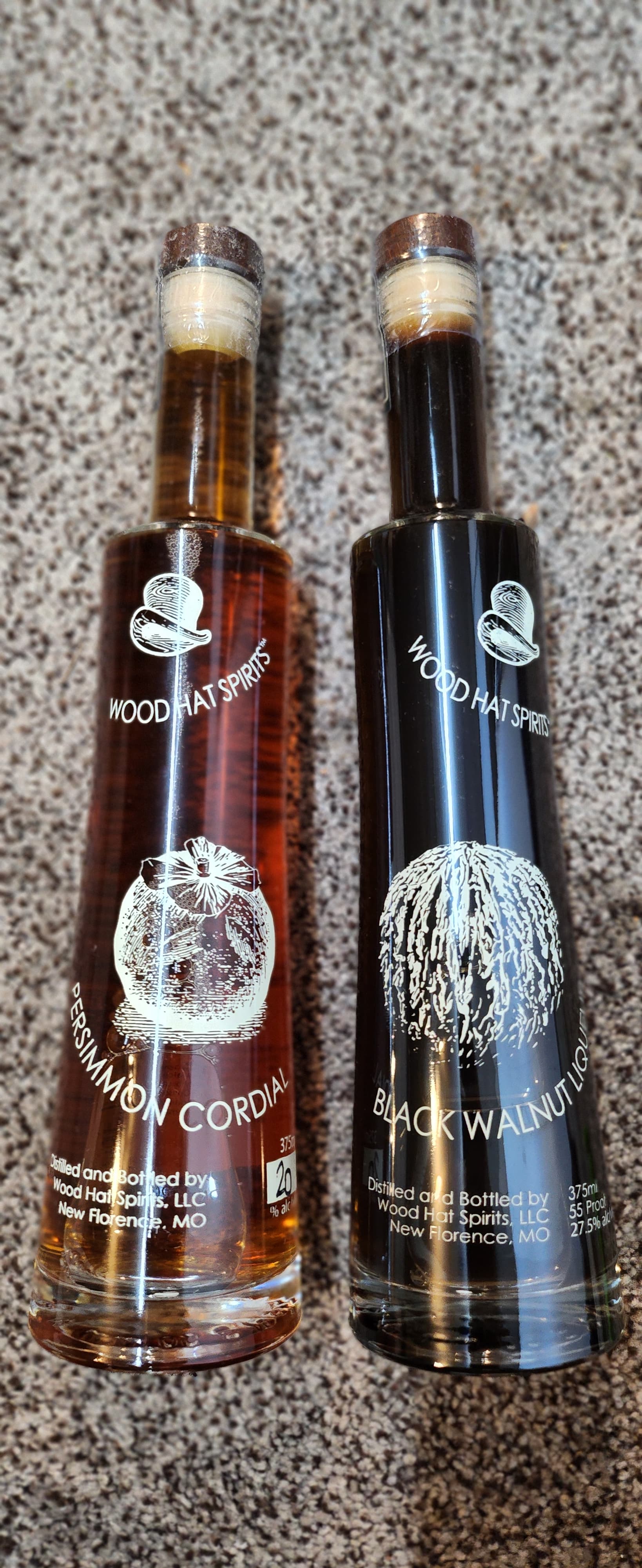
Had a bday dinner with friends… Just tried this American Persimmon cordial (i was trying to find anything made with Americans last week). I liked it, could detect the caramel-like notes. Just thought id pass it along (Think they from Montana). Black Walnut Nocino was alright but i liked the persimmon better.
So last night we trialed 5 IKKJ firm ripe fruits by slicing them horizontally into 5 slices per fruit. Dehydrated overnight about 10 hours. Unplugged power and let them cool off. Texture and taste were wonderful, still soft but very chewable. Will store in fridge while consuming. A successful test! Thanks JRD
Awesome! That’s all we can hope for. If you vary your method, please update us on results.
Hi hillbillyhort,
I run an arboretum preserving fruit and nut cultivars of eastern North America. We would like to add the persimmon cultivar “Sweet Lent” to the orchard.
How could we obtain scions from you?
All the best and wishing you a happy 2026!
Appalachian Foothills Fruits and Nuts (AFFN) a 501.c.3
affnorchard.org