How did the named selections come to be? These selections were discovered in areas with a large male persimmon population. How did Claypool et. al know that these were parthenocarpic?
I have quite literally never heard this. I was under the impression all american persimmon are parthenocarpic. they need a male to get viable seeds but not to fruit that is. I mean it doesnt matter to me because i dont see a reason to plant a wild seedling when named varieties are better almost universally, and they are like 80% male
1 Like
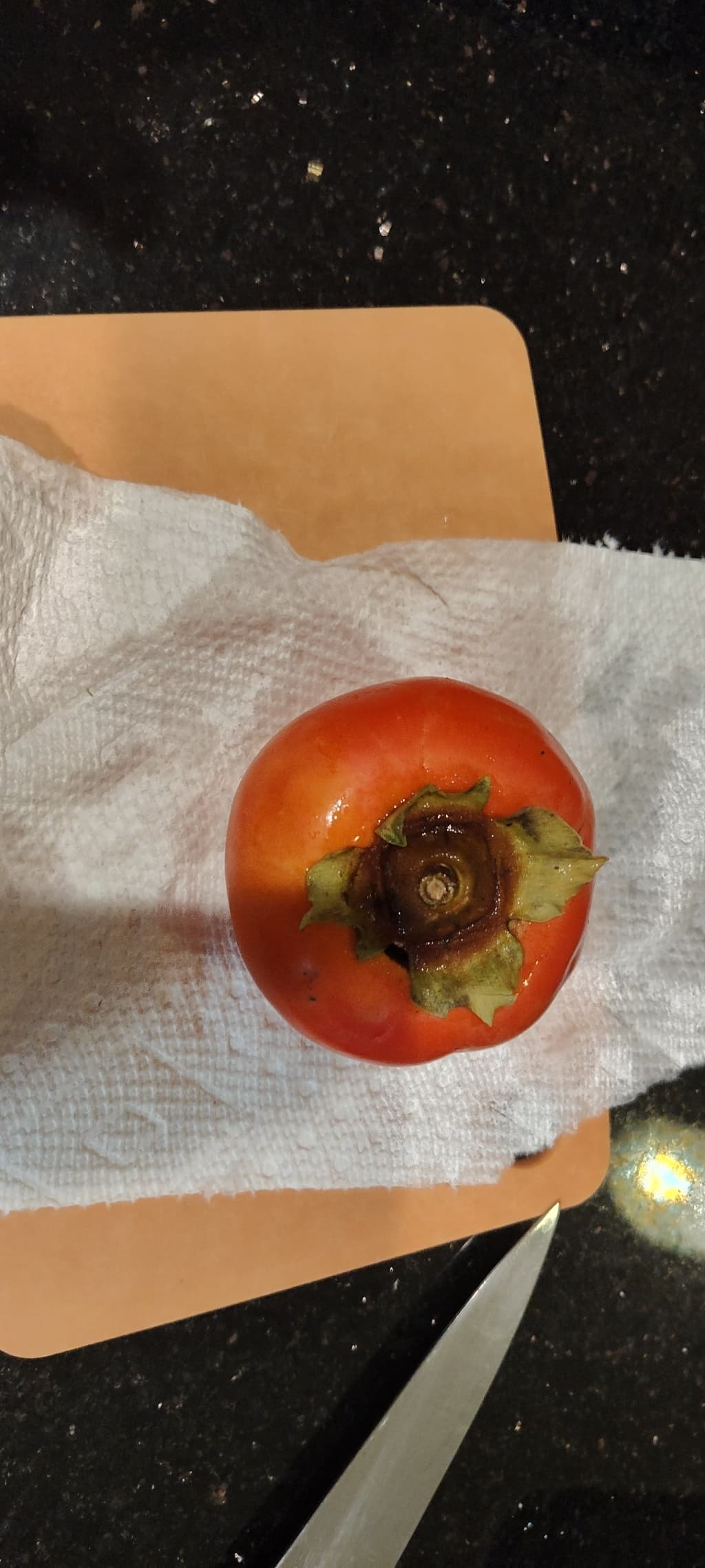
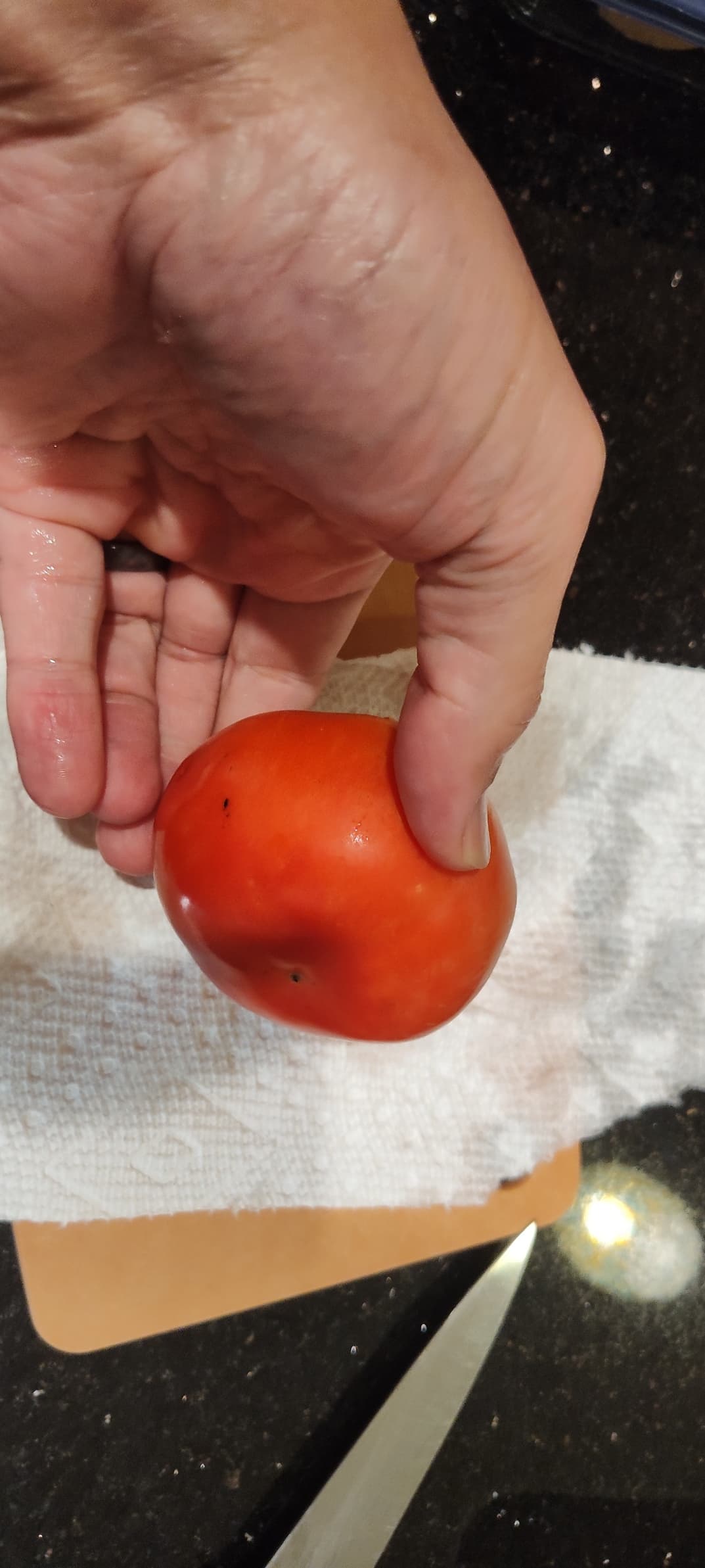
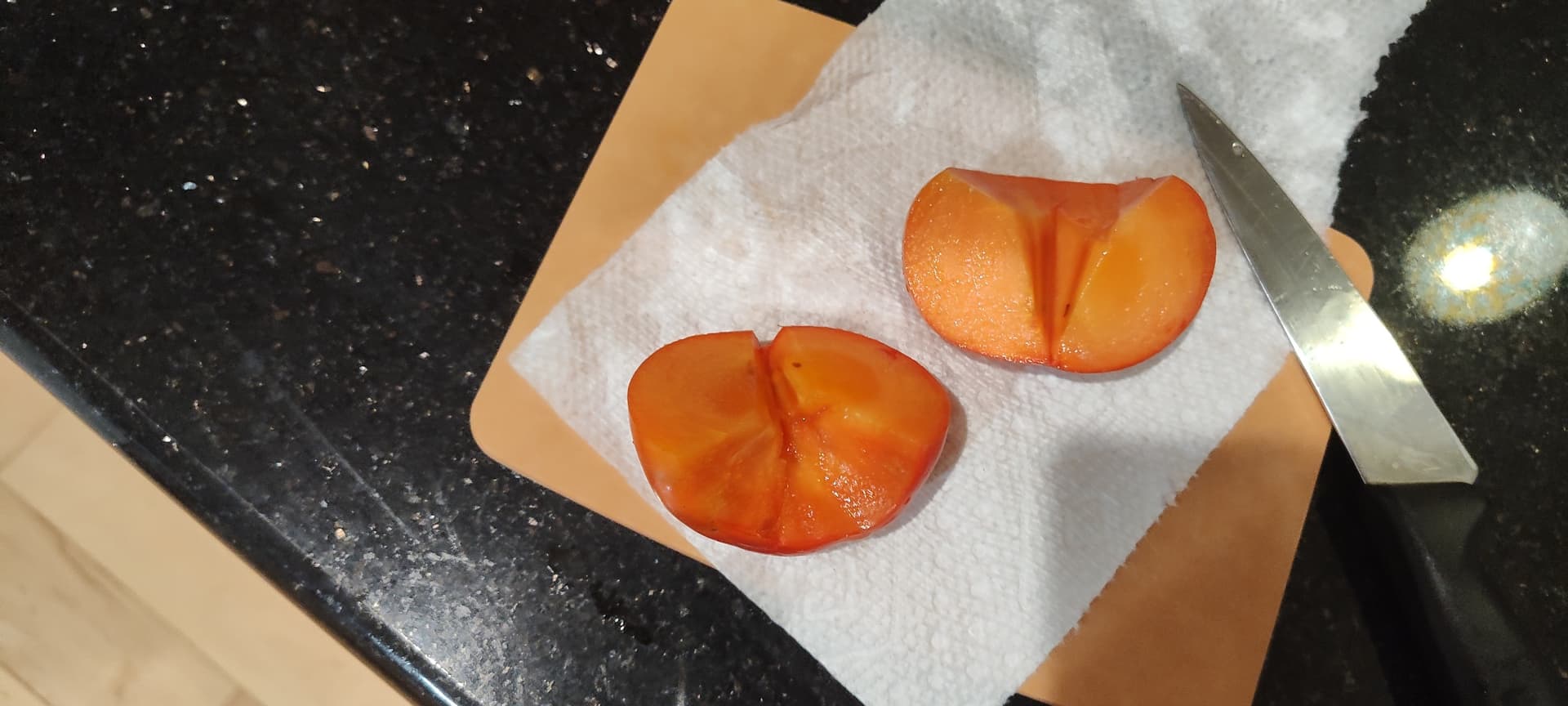
This is one of my few PCNA this year, it was a light set. Probably Matsumoto Wase. It was very good, and a little softer than I expected.
3 Likes
Persimmon varieties: Taishu, Taiten, Kanshu, Reigyoku, Kitaro, Youhou, Taiga, Taiho, Emperor Persimmon, Flat Seedless Persimmon.
3 Likes
I’m no expert but here’s what I think I know:
-
Some named selections (e.g., Yates / Juhl, Morris Burton) come straight from the wild. Almost all (but see #2) are female. I can confirm that Morris Burton does not require pollination.
-
One known named selection from the wild (Early Golden) has both female and male flowers. EG – and its descendants that retain that trait – are the pollen donors for all crosses that I’m aware of.
-
Thus, named selections that derive from crosses use a wild female (or its descendants) as the mother and EG (or its descendants) as the father. For example, H63A is Morris Burton x Early Golden.
Reportedly, parthenocarpy is more or less strong in wild females; depending on female variety, males are helpful or not – but apparently never essential for fruit production. I assume (just speculation) that the parthenocarpy of wild females was discovered as soon as growers started to grow those wild females apart from males. Such segregation would have facilitated reliable breeding, so maybe (the is also speculation) Claypool, Lehman and others re-discvered parthenocarpy when they established plantings of wild females for controlled pollination.
Assimilated Ancestries of American Persimmon Cultivars.pdf (1.2 MB)
5 Likes
I have a Meader that ripens late August to early September. Looking through wildlife nursery listings I see they claim late drop. Yet other nurseries list early drop. So what’s up mislabled?
16 Likes
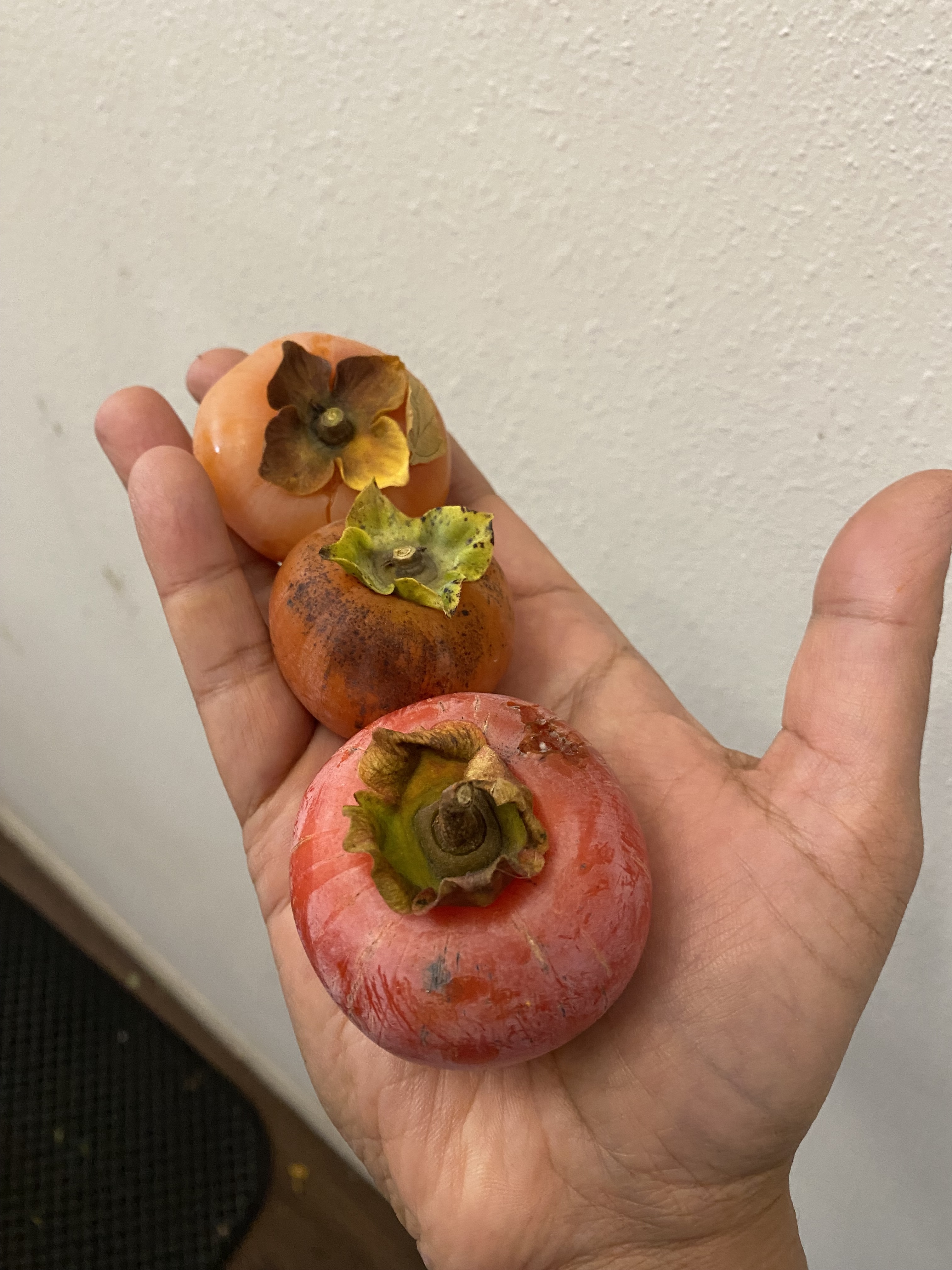
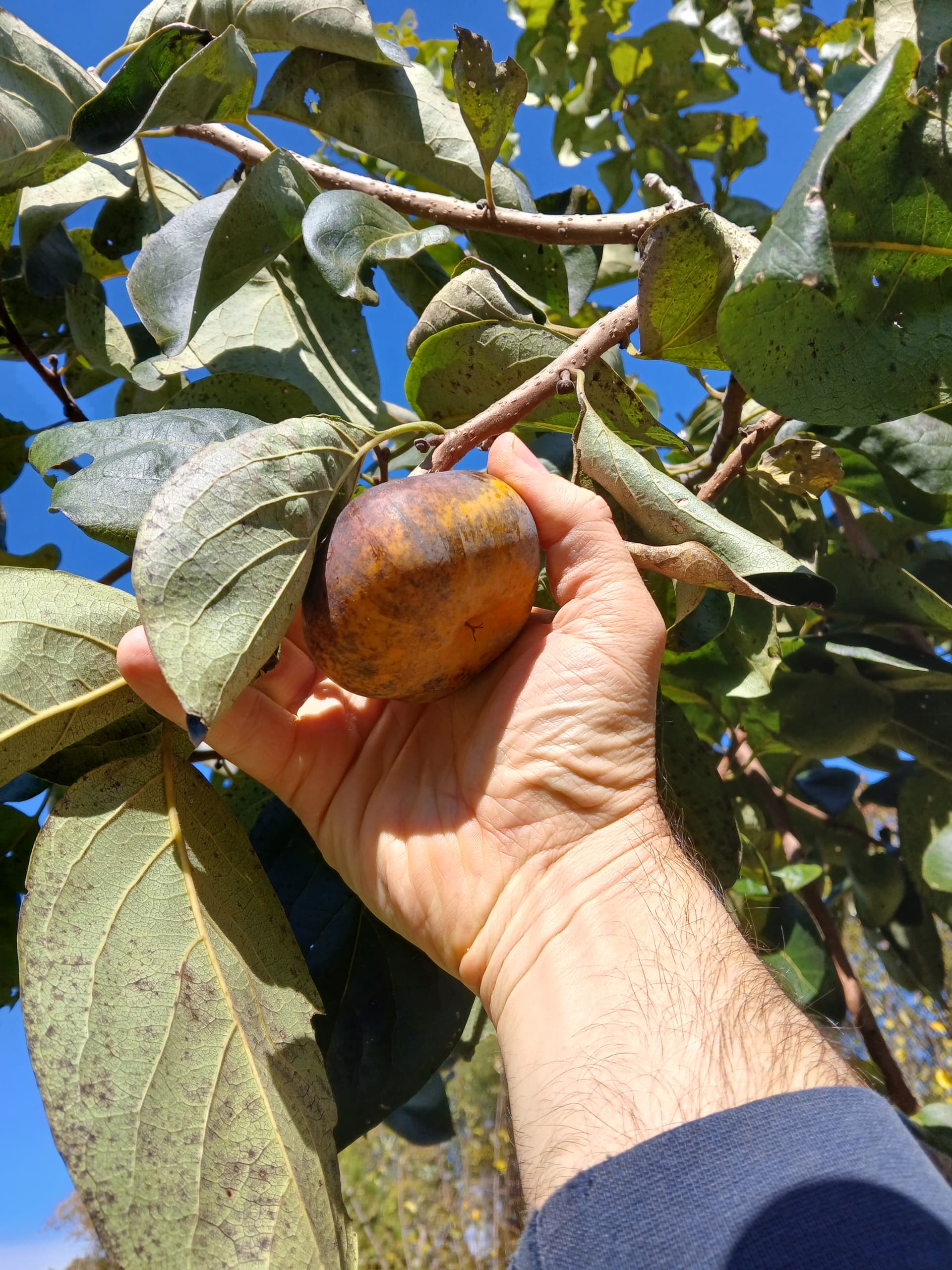
@ncdabbler Thank you for posting this. I thought mine looked strange, but I’ve never fruited JT-02 until this year.
2 Likes
Which zone are you in? You mentioned having 60 chromosome persimmons so I assume you’re pretty far south.
Your post history says you picked your first Meader on September 12th and it was still astringent.
I never see accurate times in catalogs. My understanding – from reading only – is that Meader would be considered early or early-mid drop with a long harvest window meaning it would be dropping in Iowa zone 5 early October into early November. Mid drop and late drop persimmons do not complete edible fruit in zone 5. I read posts that “very early” season cultivar Prok harvests starting around September 12 to 21st in zone 5.
1 Like
@Buckeye @ncdabbler … would love to hear your thoughts on the taste of JT02.
Did your fruit have any seeds ?
I have one that should fruit next year.
TNHunter
2 Likes
I am in central Illinois zone 5 or now 5b. I guess I had the chromosone count mixed up.
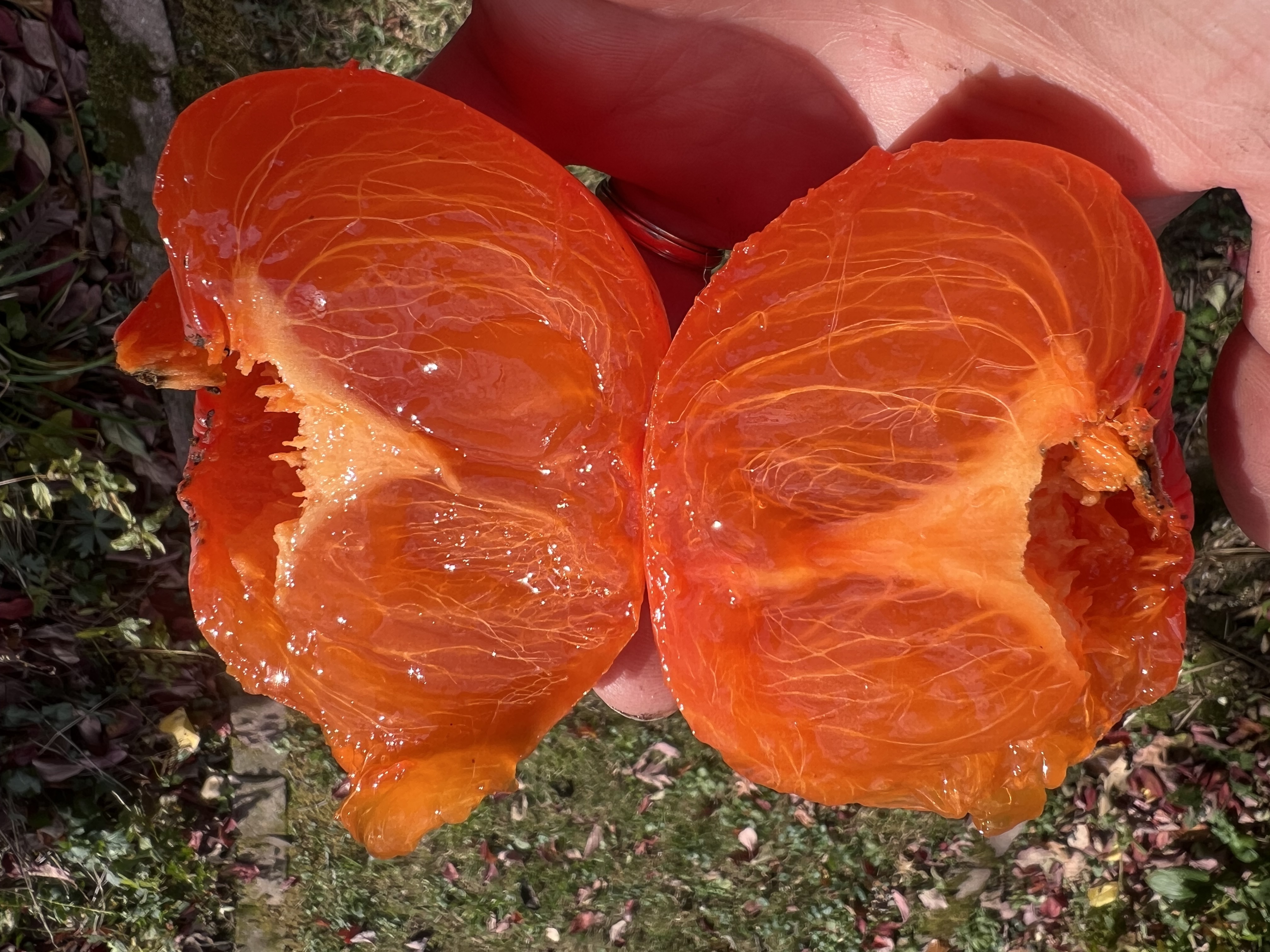
This post is about how I found parthenocarpy in a no name persimmon. My wife’s grandmothers place has always had 1 persimmon tree for 55 years that I know of. Large even then. This is a younger tree from the old one that is gone. Always had seeds from selfing. We were there November 1 and I wanted seed. Mid October drop. I got about 12 fruit. The last of them. I got 5 seeds. Only 1 seed per fruit on ones that had seed. The rest were seedless. Poor pollination this year I guess. Anyway we never knew it could be seedless.
3 Likes
Like all my hybrid persimmons, my JT-02 fruit have always had seeds (presumably pollinated by the native D. virginiana male trees in my yard and surrounding woods). They are very sweet and make excellent dried fruit when sliced just as they are starting to soften (dehydration removes the remaining astringency). I prefer the firmer texture of Kasandra, Nikita’s Gift and Zima Khurma. JT-02 fruit is much juicier and has a runny texture that isn’t as appetizing when they are fully ripe.
4 Likes
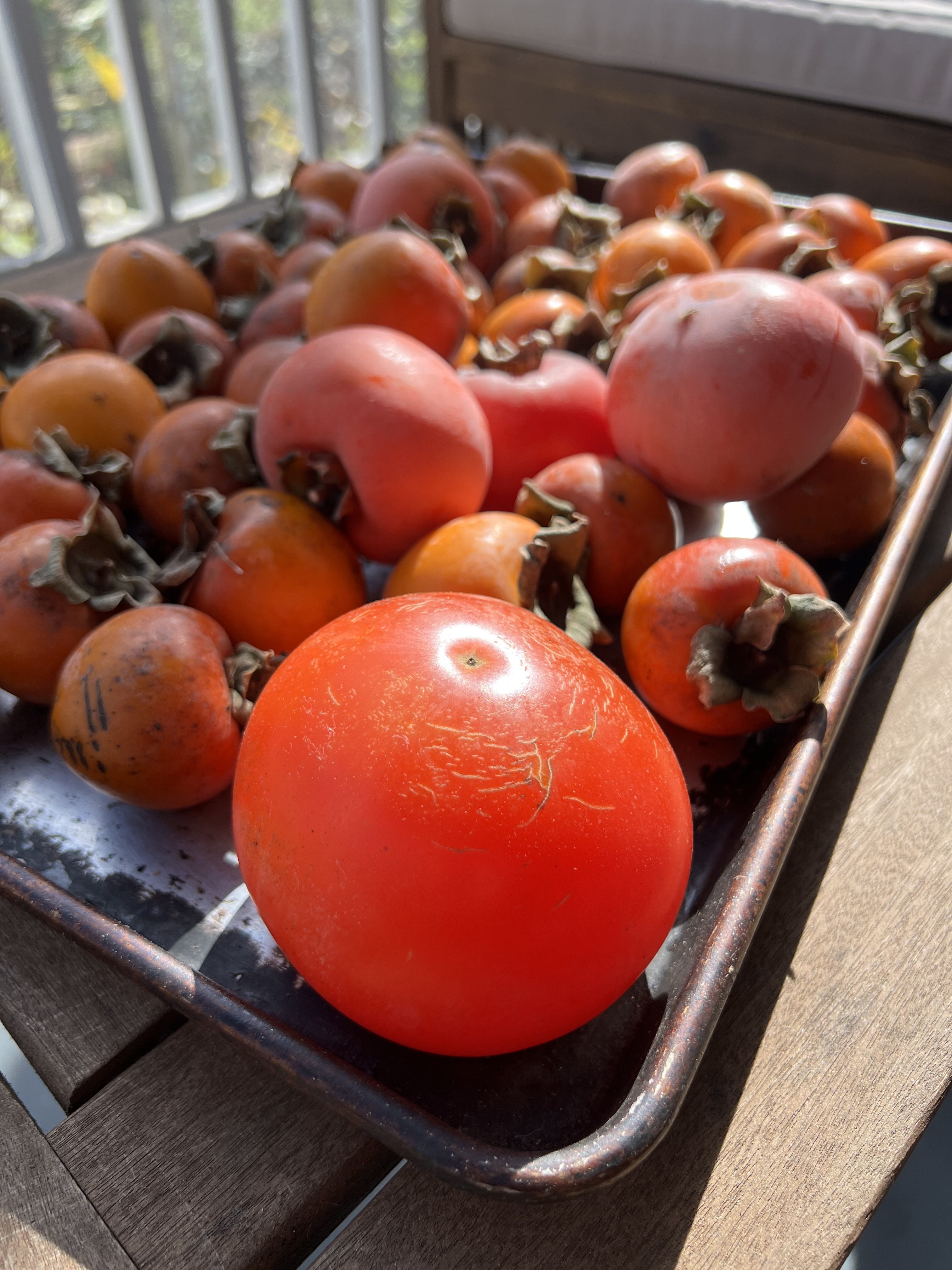
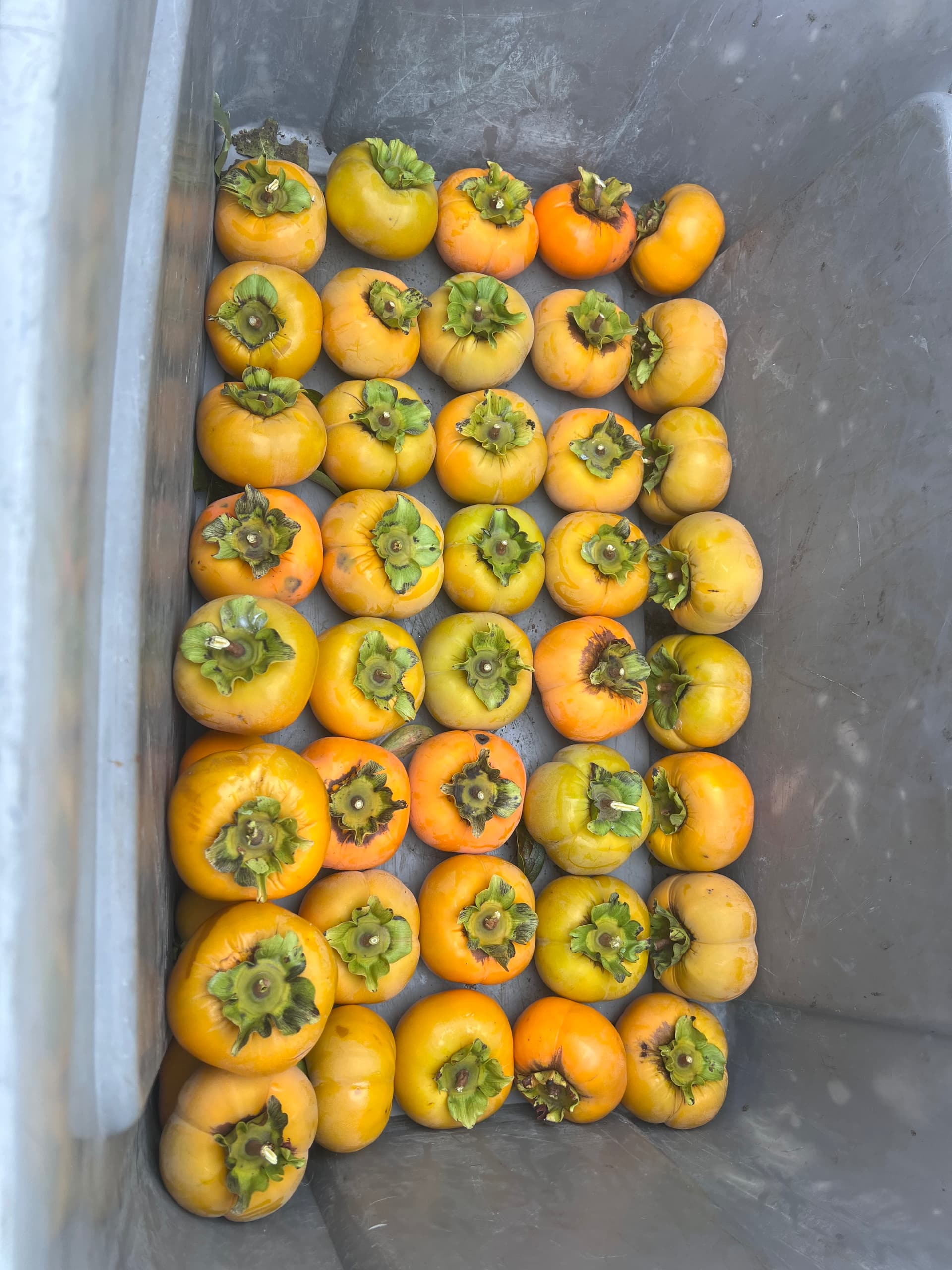
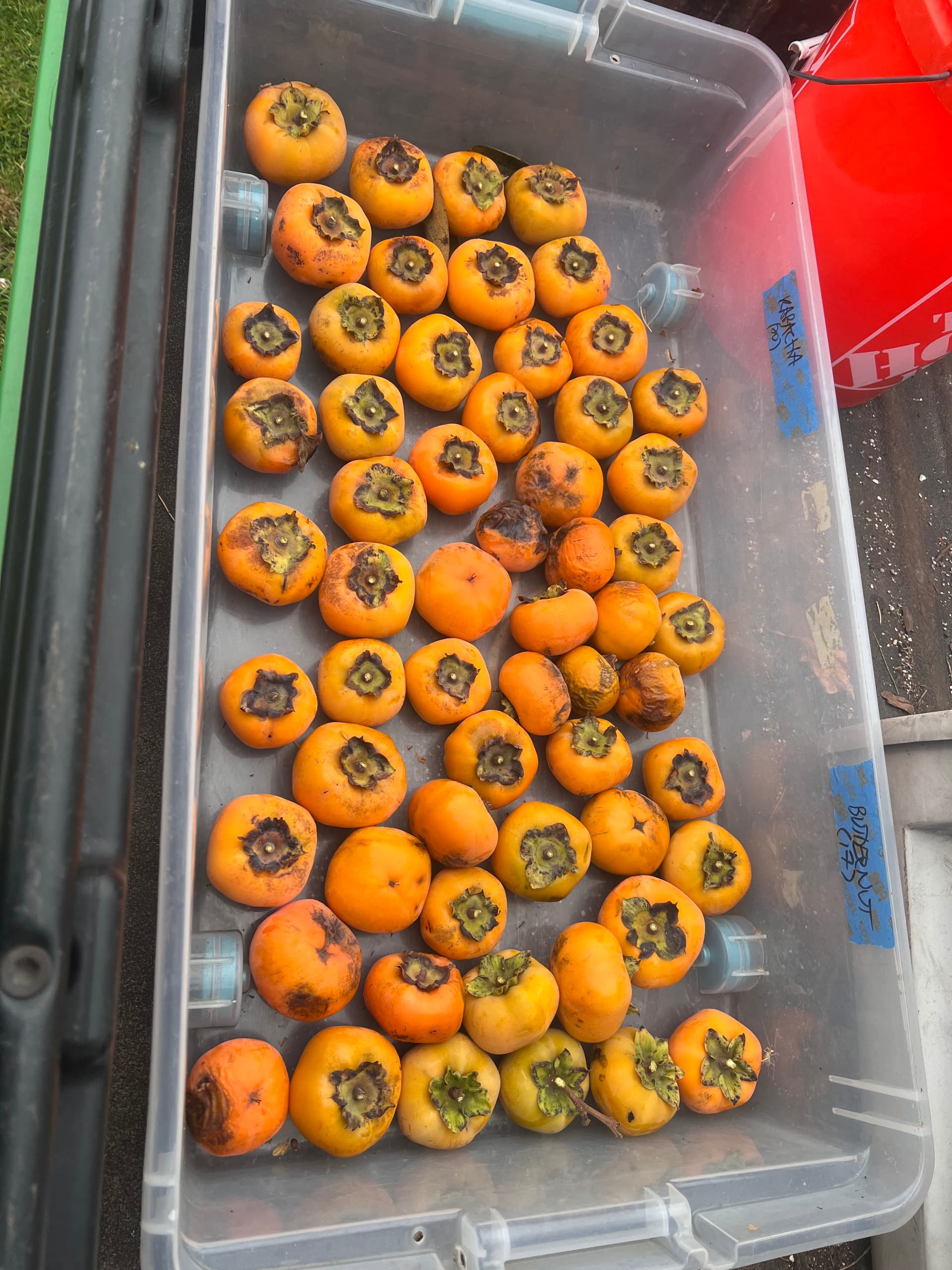
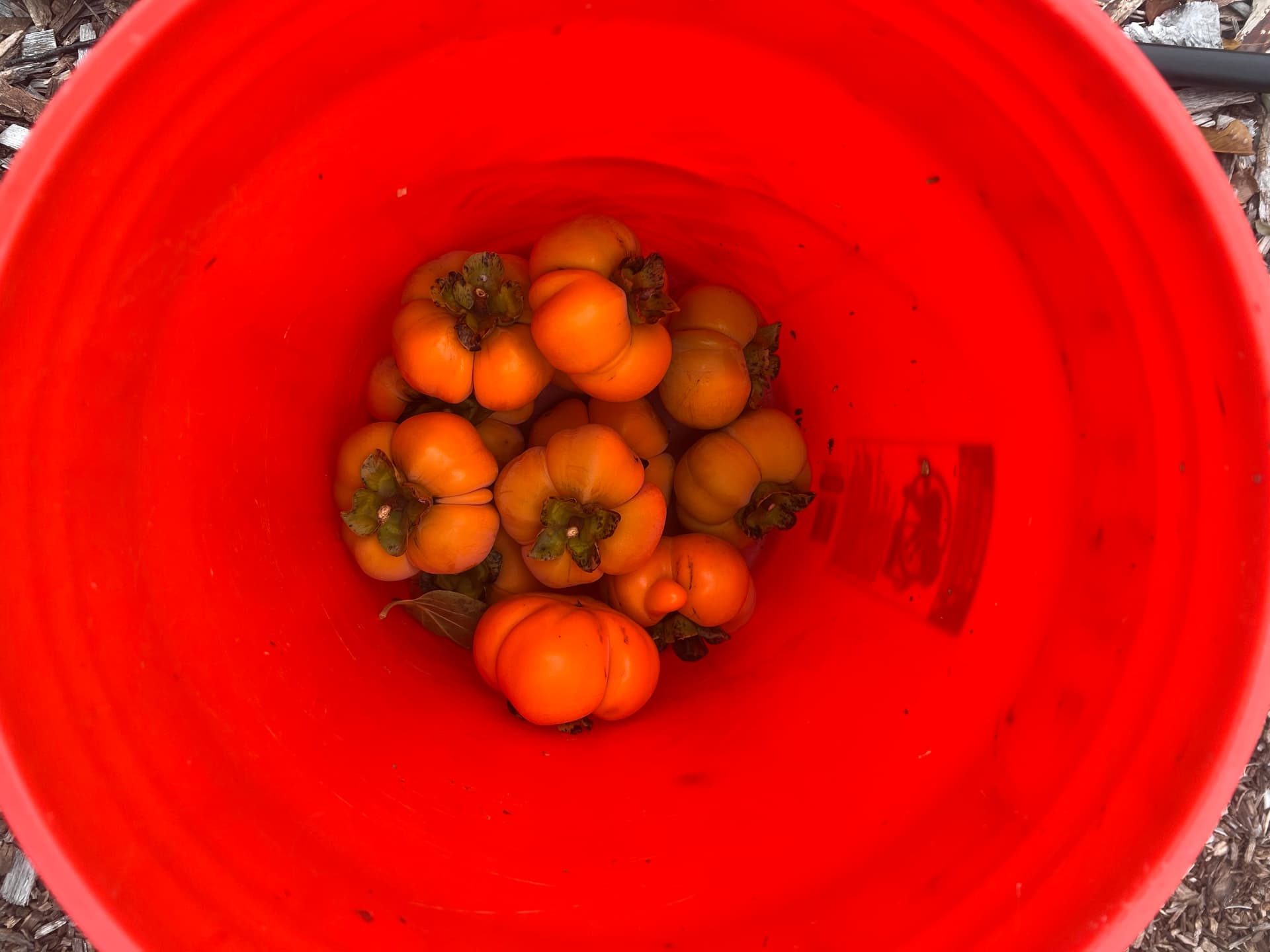
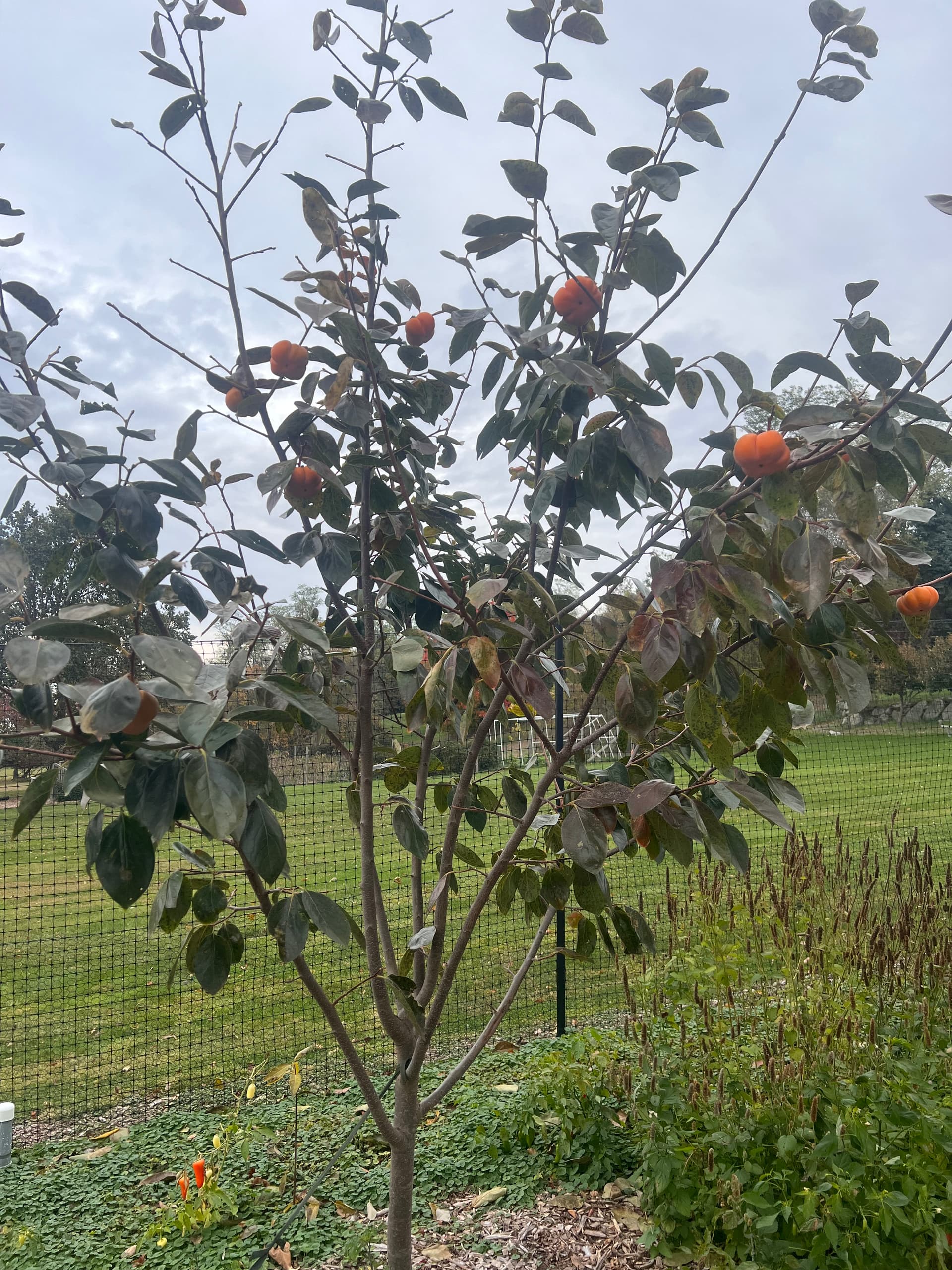
Weather is cool (50’s high) with no prospect for better. I decided to pick my IKKJs, JT-02s, and Sheng’s. That leaves only Kasandra. Top pic is the ~40 IKKJs from 3 trees; that’s not the biggest crop i’ve ever had but the trees are still rebounding from a near-death experience in 2023. Middle pic is ~50 JT-02s, 6 from a grafted branch on an established tree, the remainder from a small young stand alone tree. Bottom two pics are a bucket holding a dozen Sheng fruits from a small young stand-alone tree and – voila! – the tree.
FWIW, the JT-02s are generally ripe or ripe-ish on the bottom but not on the top. They’ll need 1-5 days indoors. Neither the IKKJ nor the Sheng are ripe at all. From experience, I know that the IKKJs will need a couple weeks. I haven’t fruited Sheng before so this fruit is uncharted territory for me.
9 Likes
I will definitely report back. I’ve only had hachiya, chocolate, and fuyu until now so I’m very excited to try these.
2 Likes
I have 2 Kasandras left… and they have ripened on the bottom half but not so well on the top.
Cooler weather evidently caused this… all that ripened earlier did not do this. Hopefully a few more days and they ripen on the top too.
We are eating IKKJs crunchy but still very well flavored and sweet daily now. Going to have to force ourselves to let a few more turn red and very soft.
TNHunter
2 Likes
You can take them indoors. To be sure, spray the top with ethanol (e.g., vodka).
1 Like
@JCW any update on the Dar sofey #2…
Tony
1 Like