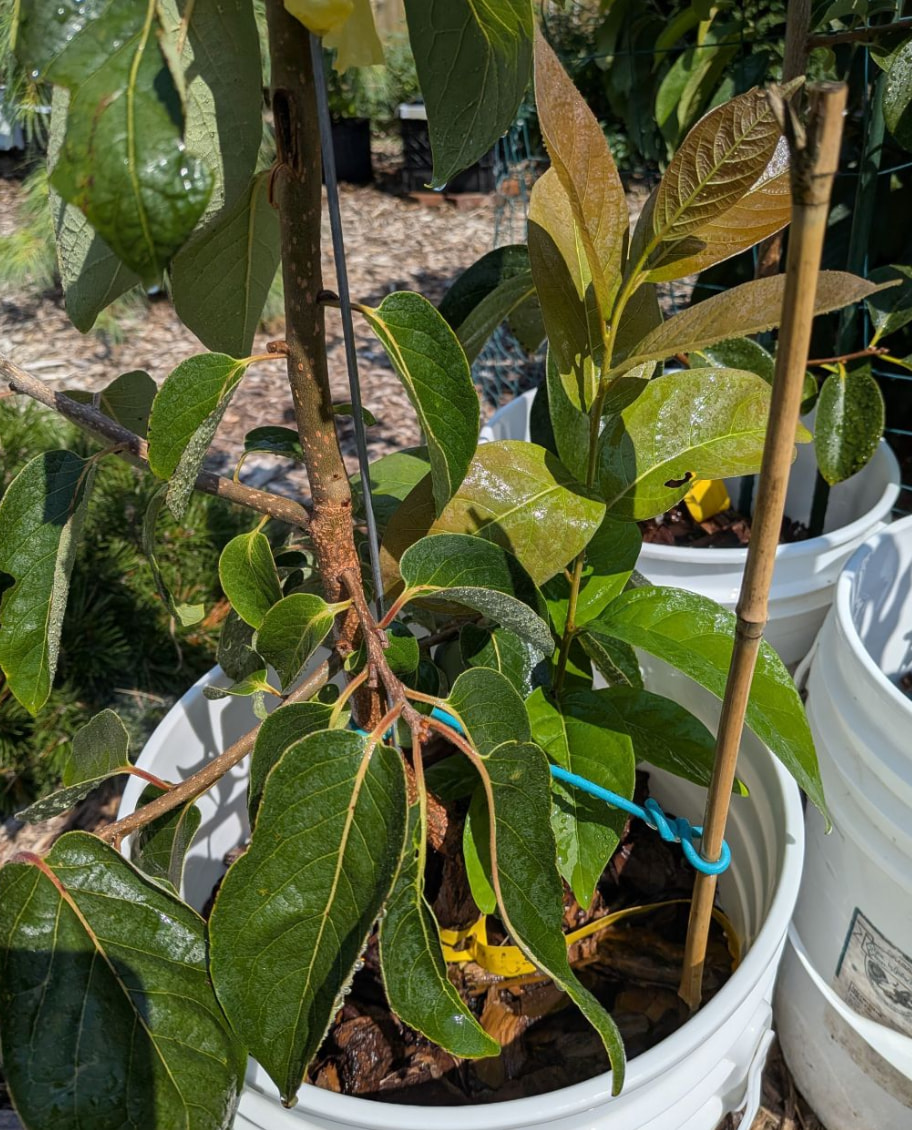
Valeene Beauty planted as a bare root tiny tree this Spring. I was impressed with how fast it put on leaves, but it has been this shape/size ever since.

2 Likes
Persimmon (and a lot of other trees) grow that way the first year. When the top stops growing, the roots are expanding. Pecans are also notorious for growing rapidly in early spring followed by no growth in late summer. They store reserves into a large taproot which is kind of like a sweet potato i.e. filled with starch. The next spring, the reserves power spring growth which can be incredibly fast for a few weeks.
9 Likes
Thanks! Great to hear this.
1 Like
@AlxTgr … to encourage height.. apply a stake and tie that longest shoot to it… point it straight up.. and it will start acting like a central leader. It may do another growth spurt.
I have seen mine do 2 or 3 growth spurts in a season.
TNHunter
2 Likes
Thanks. I’ll get that done soon.
1 Like
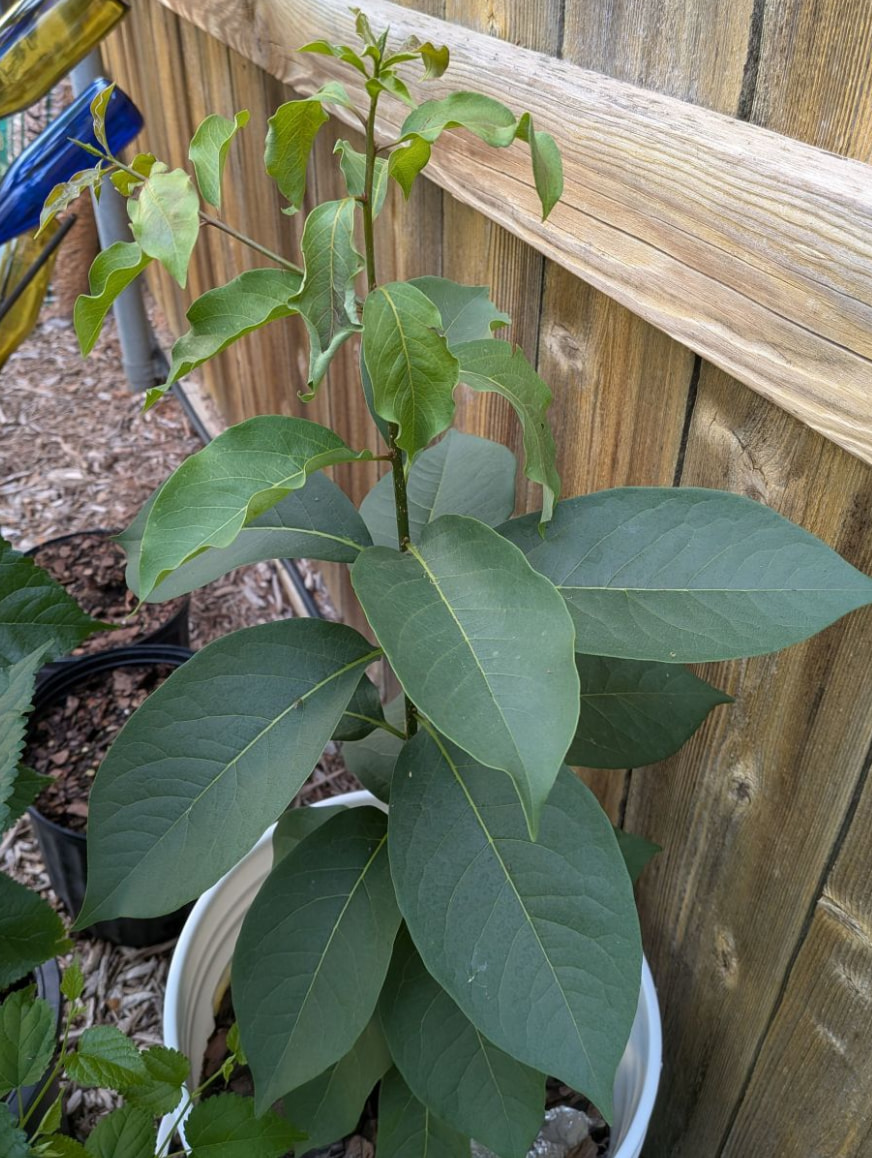
anyone have a guess at whats up with the top of this potted persimmon seedling(sucker from failed graft)? bottom 2/3 look great 
1 Like
That looks a little like psyllid damage… disfigured leaves.. curling up along the edges.
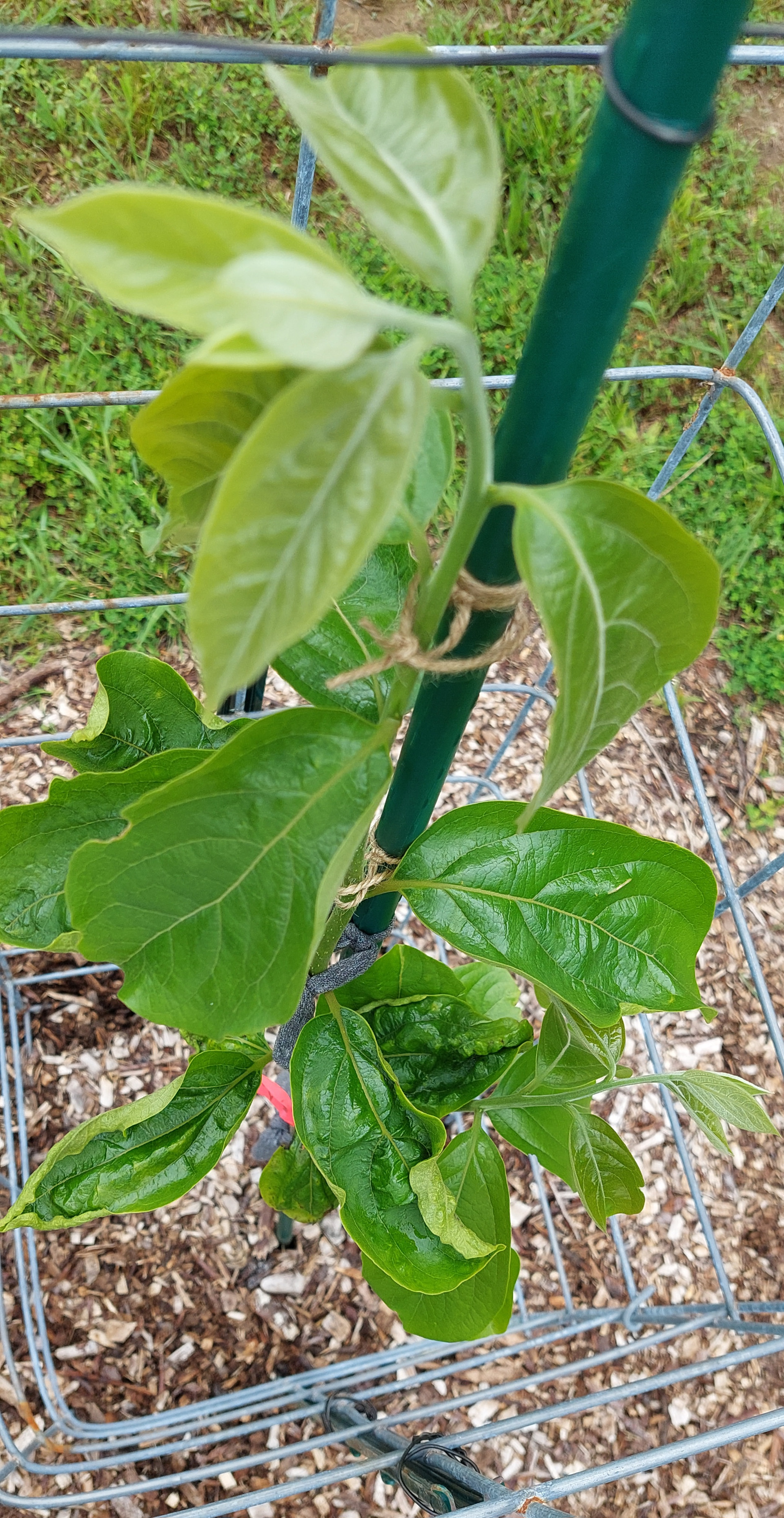
This graft of Saijo to wild DV.. suffered some psyllid attack early on… and I sprayed them with Sevin spray… a couple times.. and then the new growth looks normal.
Here psyllids can cause a graft to fail… if you don’t notice them and spray them soon enough. They are tiny white things in the nymph stage. Sap suckers.
They really like the new tender growth from persimmon grafts.
You can see what they did to the lower leaves on my Saijo.. but after spraying with Sevin a couple times the growth got back to normal.
Good Luck
TNHunter
4 Likes
Trev is right on. I did several Sevin liquid sprays on most of second growth spurt on the tips of my persimmon trees a few weeks ago.
Tony
2 Likes
I also ordered from Just Fruits and Exotics this year and also had this arrive with it. I ordered a “Great Wall.” After a couple rounds of insecticidal soap I think the bugs are gone. It just took me a while to realize I had a problem. (At first, I thought the tree was just stressed from shipping and my clumsy planting of it. As seems to the case every time I have ordered a tree so far, the crown was buried a few inches down in the pot. Not knowing to expect this, I planted it too deeply the first time and had to repeat the procedure after I realized I’d goofed.)
Great Wall seems to be growing just fine now despite my early mistakes (as far as anyone can tell in one summer). So I guess the tree is strong! I’d order again.
2 Likes
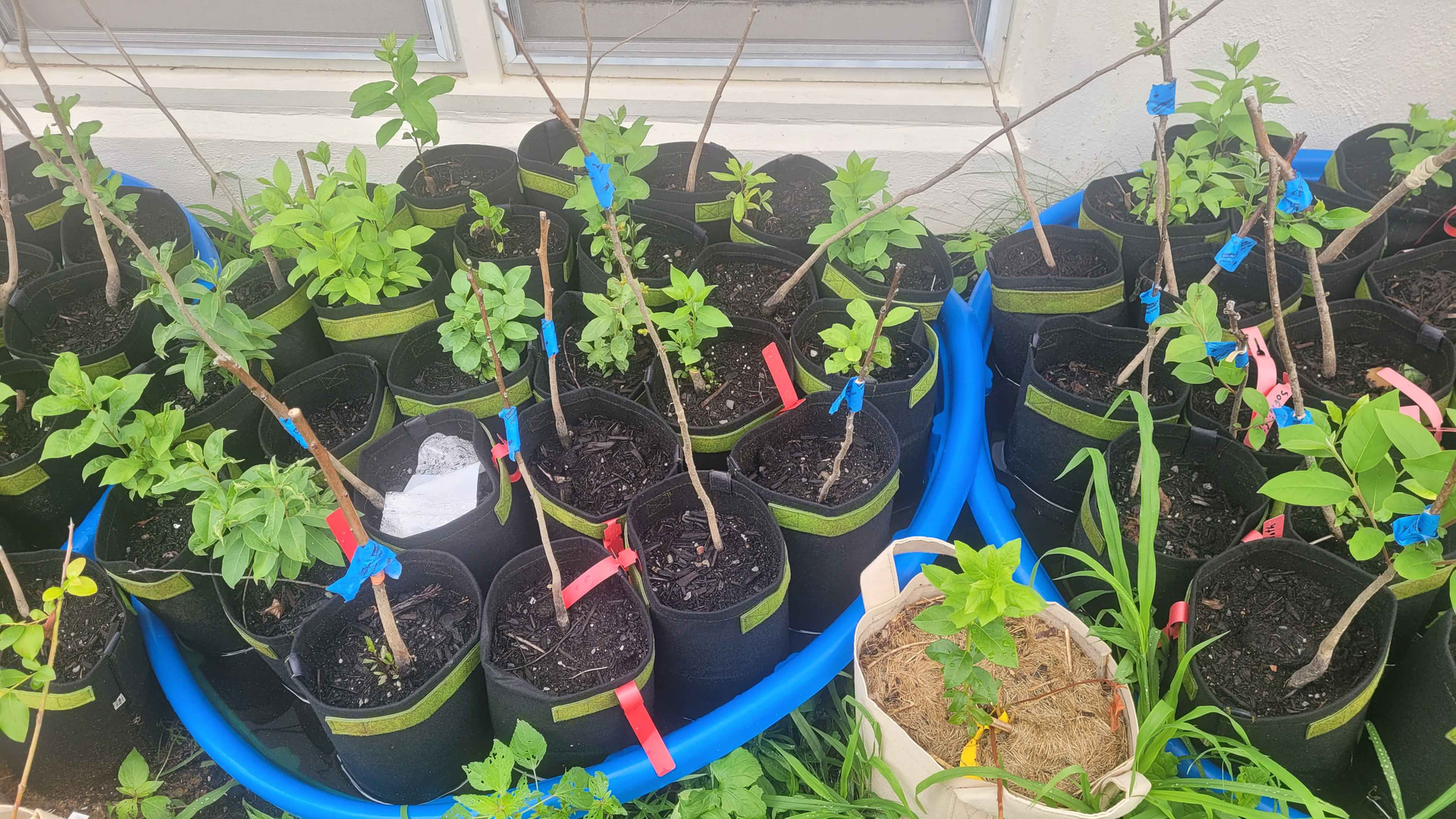
So, I had ordered 150 bare root persimmons from “Mid Atlantic Natives” with the intention of grafting them, since my seedlings had not grown enough to realistically graft on to them. These arrived in mid-March, which was a hassle since we still had very cold weather in NJ, and I could not dig to heal them in. I kept them indoors, in a few buckets or the bags that they shipped in, until it was warm enough for me to transplant. I was not able to get my compost delivery until mid-April, because my town doesn’t allow people to park in the street until then. I transplanted all of these Persimmon into basically pure compost. I sorted through the bare roots, discarded one for persimmon borer, and another couple for desiccation. I am very glad that I did NOT graft them bare root, as many ended up having some complications. The first, is probably my fault, and that is delayed emergence. It is 7/29/26, and I still have some trees that are just waking up. This is likely due to dry soil conditions, since they were planted in pure compost (with osmocote) and grow bags. The compost drains very well, and I used EZ wet to aid moisture retention, but they did eventually turn hydrophobic. To fix this, I placed them into kitty pools as giant water pans. These did a great job at allowing for the soil to recondition. I put more EZ wet into the base of the pools, along with some fertilizer, and soaked the trees. Now, every time it rains, they have an extended soaking period, which has not resulted in any rot issues.
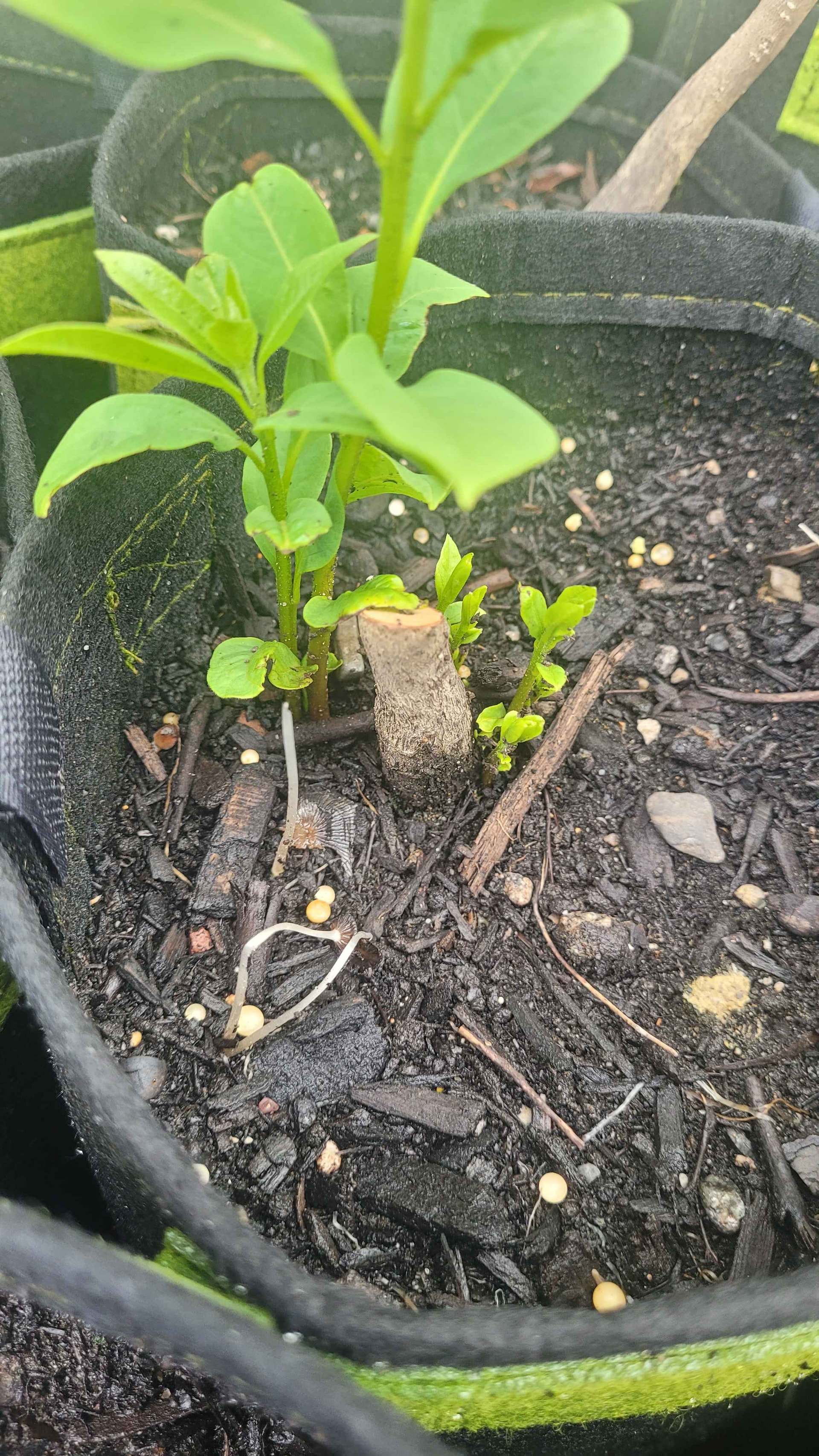
I graft them in batches, every couple of weeks, as they wake up. Again, I am glad I did not graft these bare-root because many died to the base and grew back from the roots. This happened to trees that passed the scratch test too, which I found interesting. If you are going to graft persimmon bare root, without a callous pipe, a strength in waiting may be to see the viability of the top growth.
Here is an example of common dieback and resultant regrowth. Very few actually died.
For almost all of the grafts, I used a modified Whip and tongue. For some, I used a cleft. I wrapped the graft tight with rubberbands and then dipped in melted paraffin wax/ bees wax in a 10/1 ratio, roughly. If you are doing this method, you need to protect the rubber bands from the sun and heat by wrapping them with something else. I mistakenly did not do this, and it caused several grafts to fail. I was used to just wrapping them and dipping them since it worked so well for the callous pipe, but they do not get exposed to the sun.
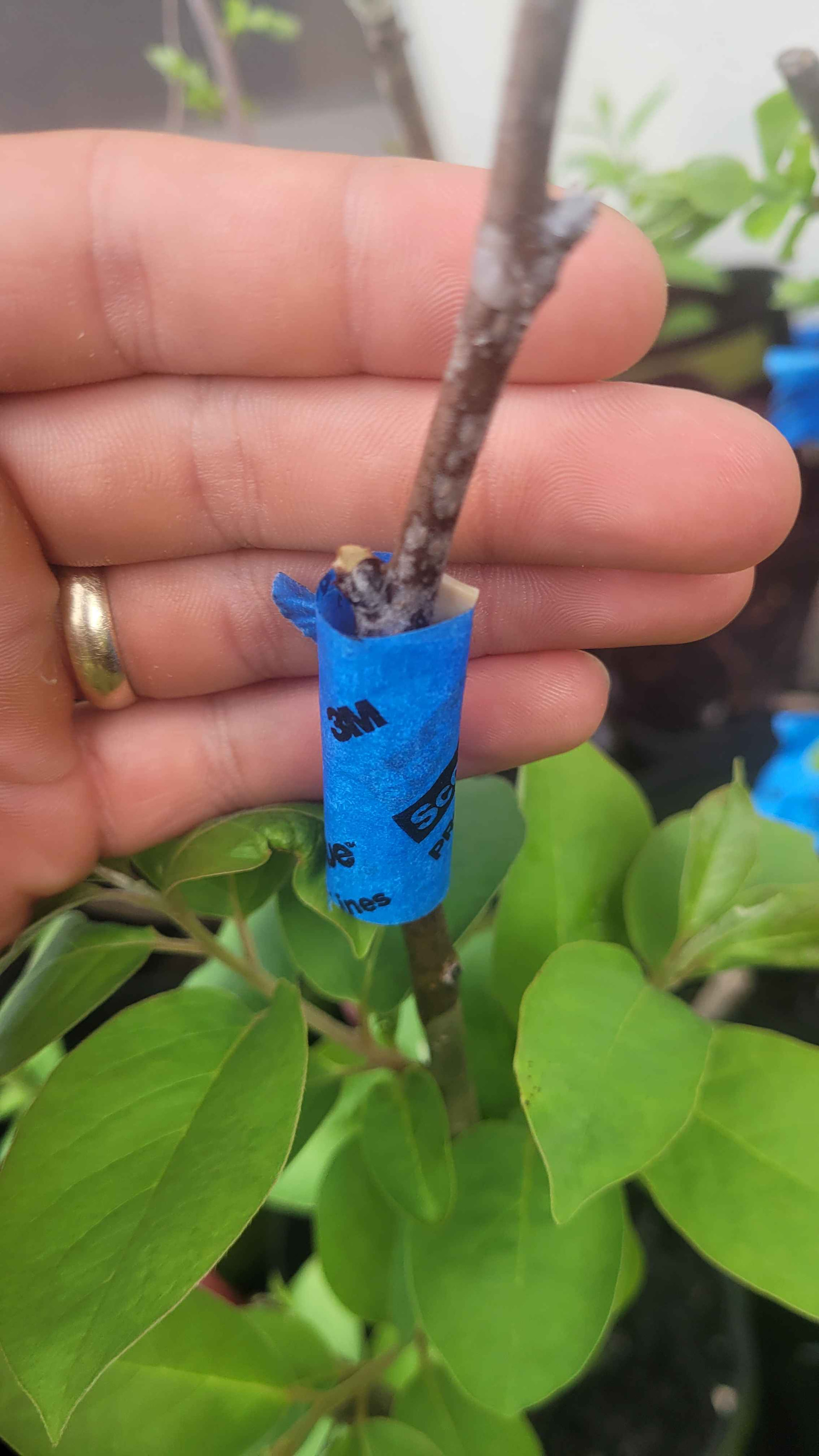
Here is an example of a mid-June graft I made, in the first batch. The rubber band basically came undone, but the graft kept thankfully.
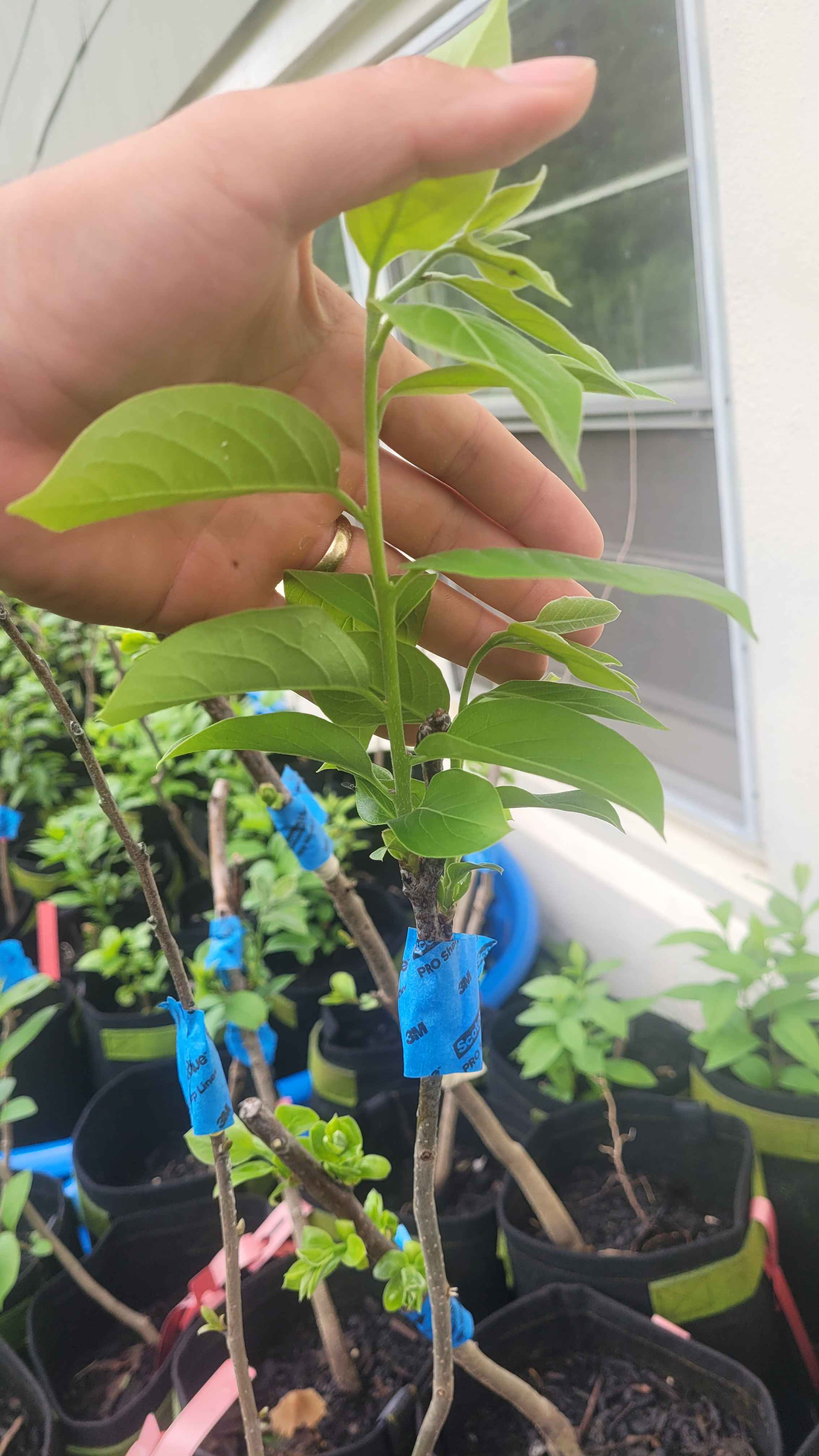
The trees had dormant persimmon psyllids, which I have been fighting since spring. They were infested, but I have been spraying and squishing as much as I can. Maybe consider doing a dormant spray on the bare roots to help with this.

This is a tree that has just opened up earlier this week. today is 7/29, so it is a bit late, some may say. I will be grafting more trees this weekend.
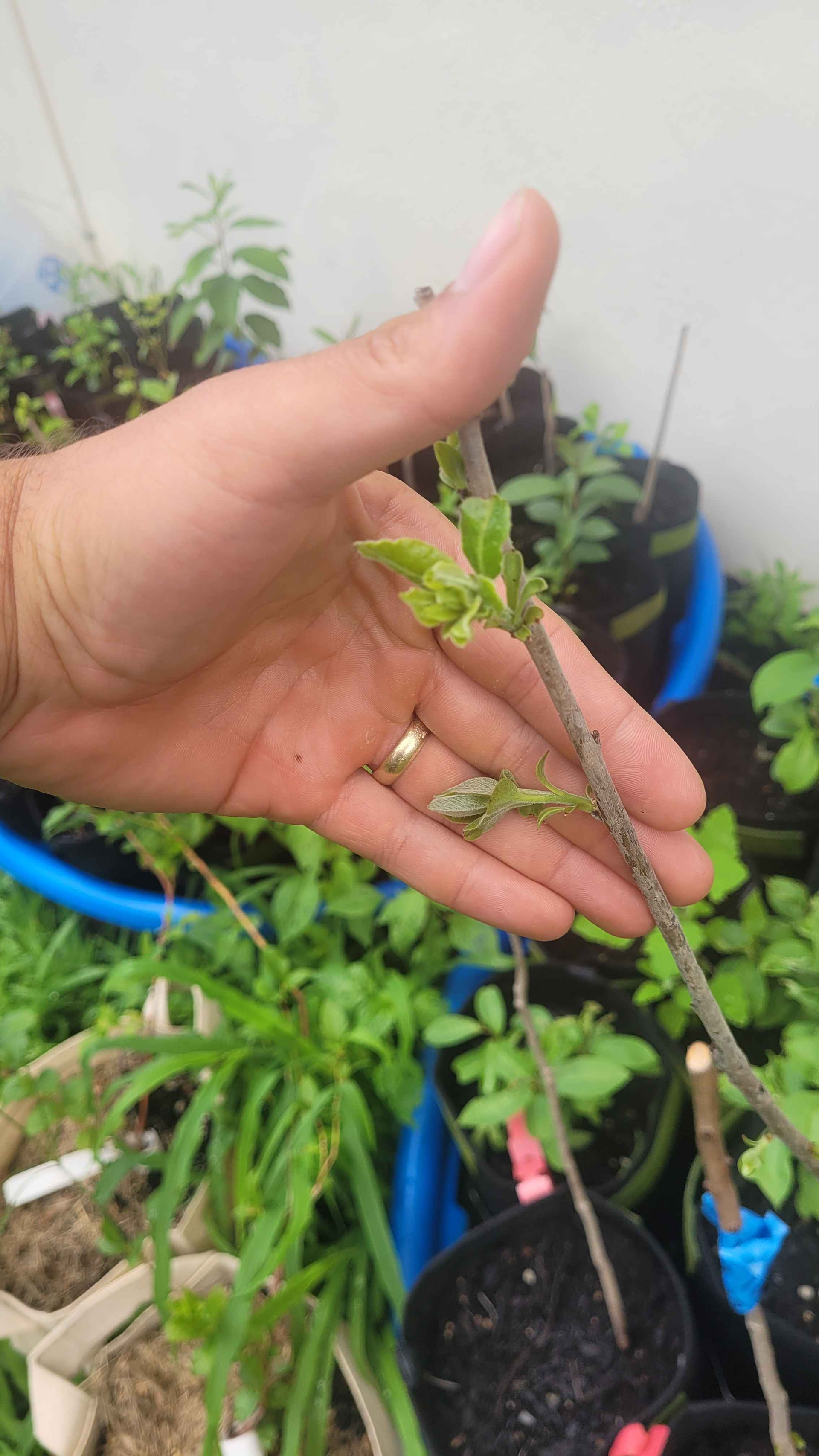
Here is a godsend of a product when you are doing container gardening, especially in grow bags. It is a surfactant that is a bit more forgiving than just using castile soap, and it lasts longer. if you are using grow bags, you should really try a surfactant like this or yucca, it greatly increases water retention and basically eliminates hydrophobic soil. I still used the kitty pools because the water demands were too high.
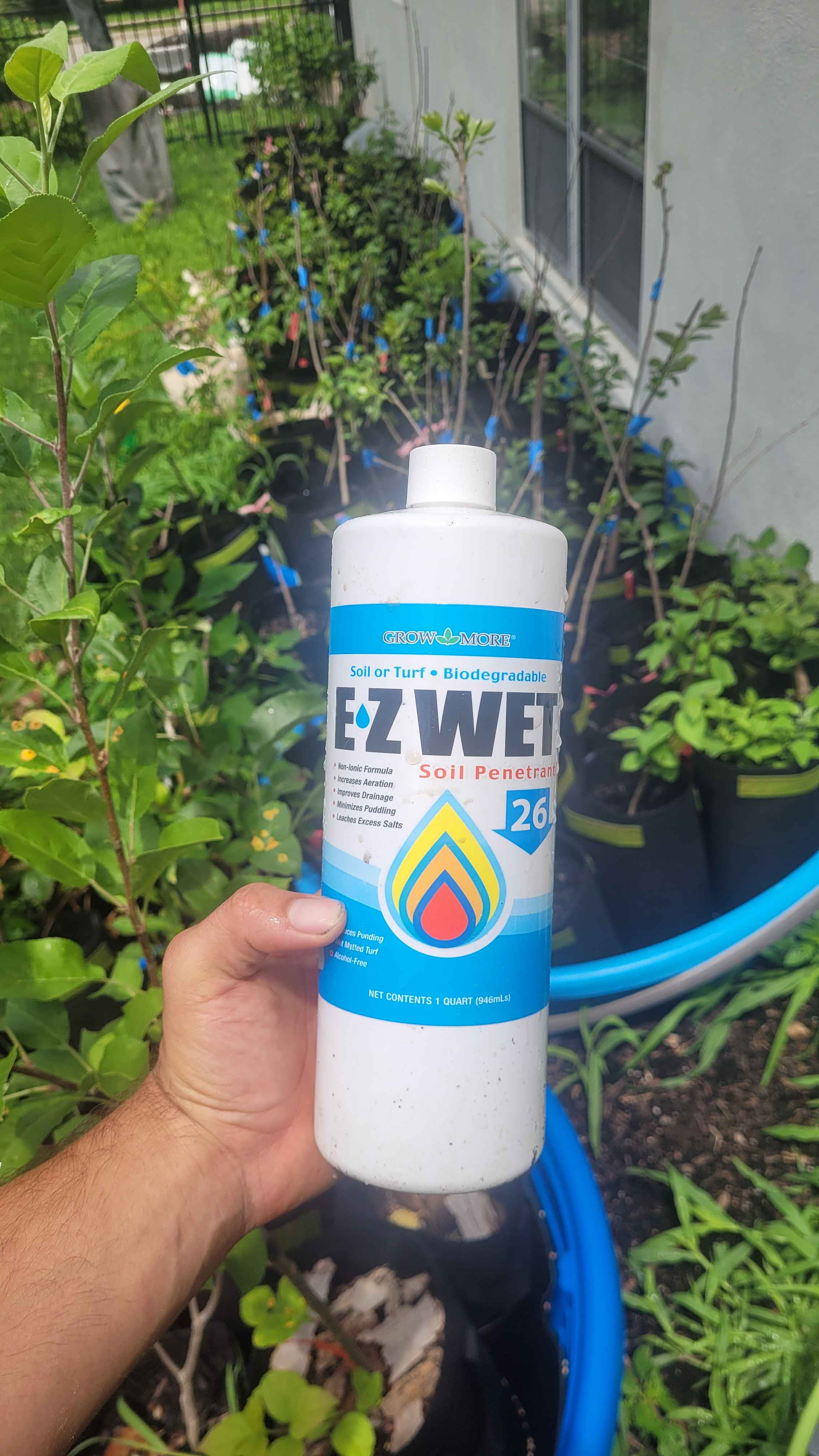
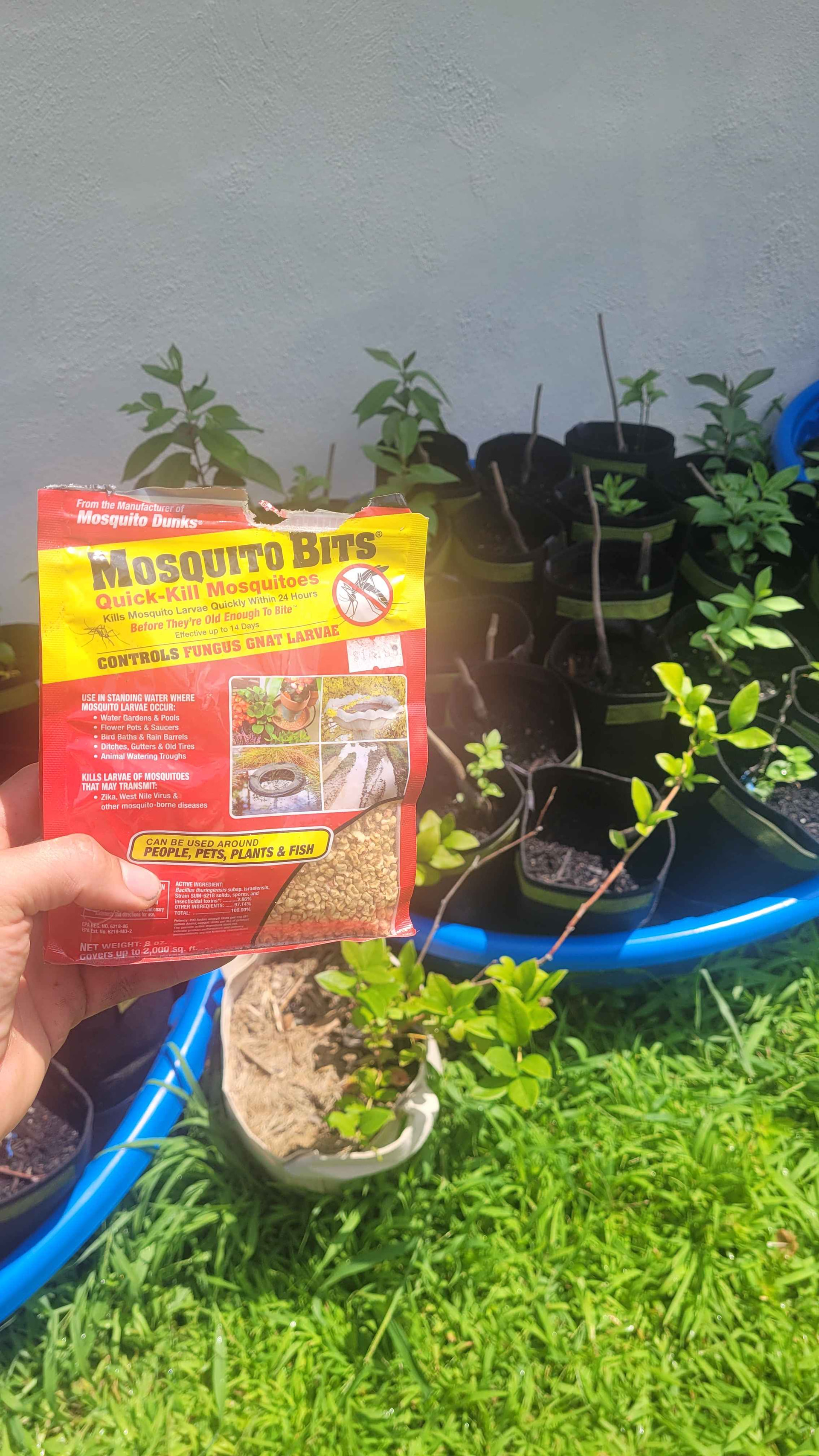
If you are using large water pans like this, you really should put some mosquito dunks in there every couple of weeks. these are mosquito utopias with all of the dirt and stagnant water. Though the pools dry up in a few days, each time it rains the mosquito eggs will rehydrate and make a new generation. on the plus side, this is probably killing more mosquitos than most traps would for pretty cheap.
Here is a PH and EC reading of the pool water after the last couple days of rain.

I have 8 of these
6 Likes
I made several grafts this year of Asian hybrids from England’s Orchard scion. I planted persimmon rootstock in the spring (D. viginiana) and once it leafed out I grafted these in the field. They took so long to leaf out that I figured they just failed and then went to check on them today and saw this awesome growth!
Does anyone have suggestions for insuring these survive the winter? Do I need to somehow protect them since the growth is so young and new? The varieties I have that are all like the picture below in size are Kassandra, Zima Khurma, UKR 15-9, Carmel Cocktail, Sosnovskya, and Sophie’s Gift. I’m good with protecting them one winter but don’t plan to after that. The whole point is to find cold hardy persimmons that will make the cut in my location.

4 Likes
You might get away with doing nothing. I want to say “Throw a tarp over it” but that can create a mini greenhouse that gets too warm, kicks the trees out of dormancy, then leaves them vulnerable to nighttime cold. This cure is worse than the disease.
What works – I’ve done it: Erect and secure a cylinder of wire (as pictured). Wrap it with one or two layers of foil-covered bubble wrap, which is sold in rolls with 4’ or 6’ width. Fashion a cap and tape it securely. Make sure that the lower edge is embedded into the soil or covered to a depth of 2-3". You want it to be airtight. [Any insulating and reflective material would serve as an alternative.]
Your heat source is the ground. You don’t want warmed air to escape so it should be airtight. Don’t worry about excess humidity; mold is not a risk on living tissue. The reflective cover provides very modest insulation, 100% protection from wind, and also prevents overheating by reflecting solar IR.
4 Likes
After the trees defoliate in fall fill the cages with leaves. As jrd51 said they should be fine with nothing, but the leaves will keep the dry cold winter winds off.
3 Likes
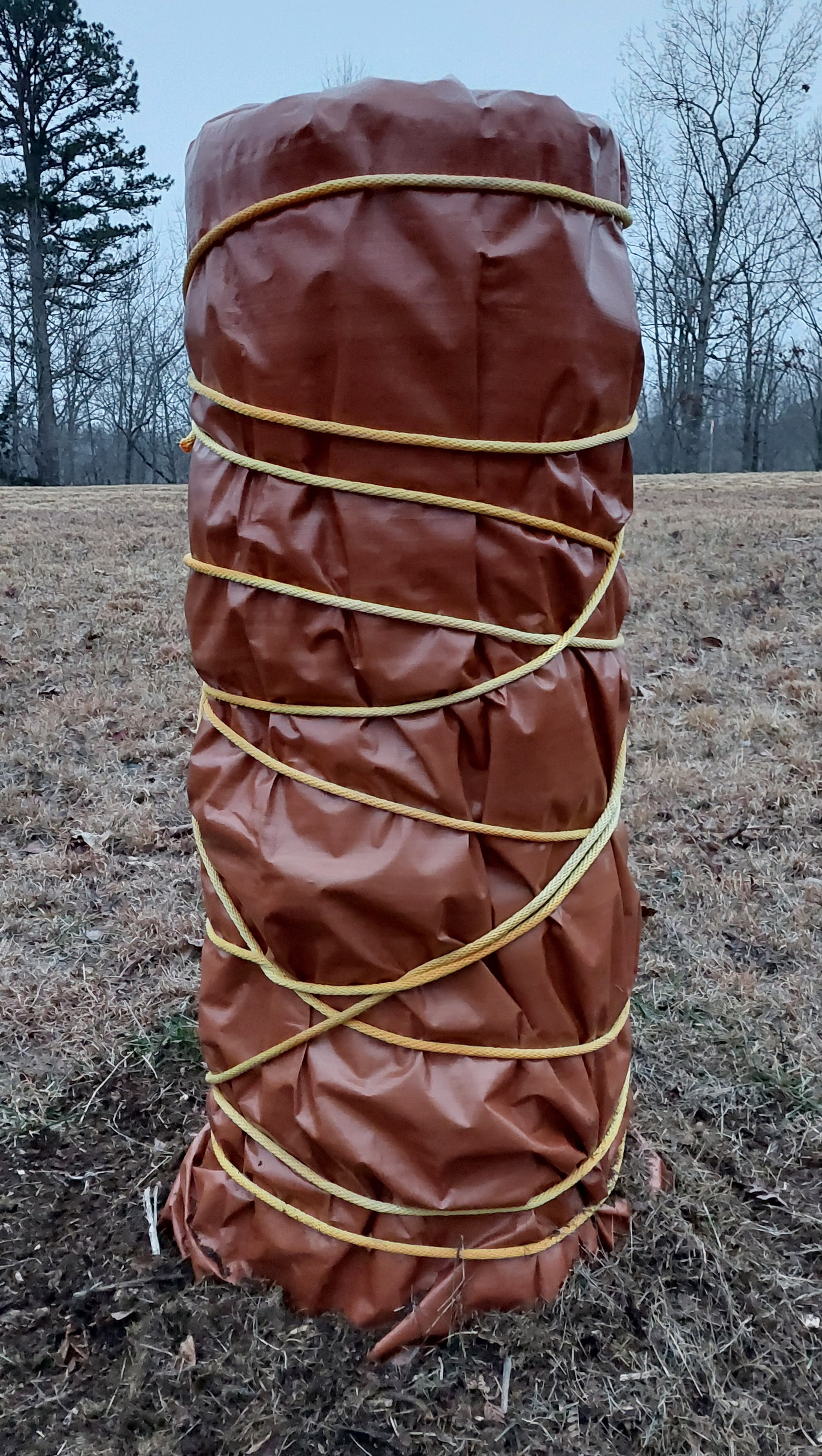
The first winter after I planted my IKKJ in my orchard.. it was still a bit smaller than my tree cage.. and we got a 2F night.
I covered the tree cage with a blanket and then a tarp and raked mulch up around the bottom.
It suffered no harm.
TNHunter
3 Likes
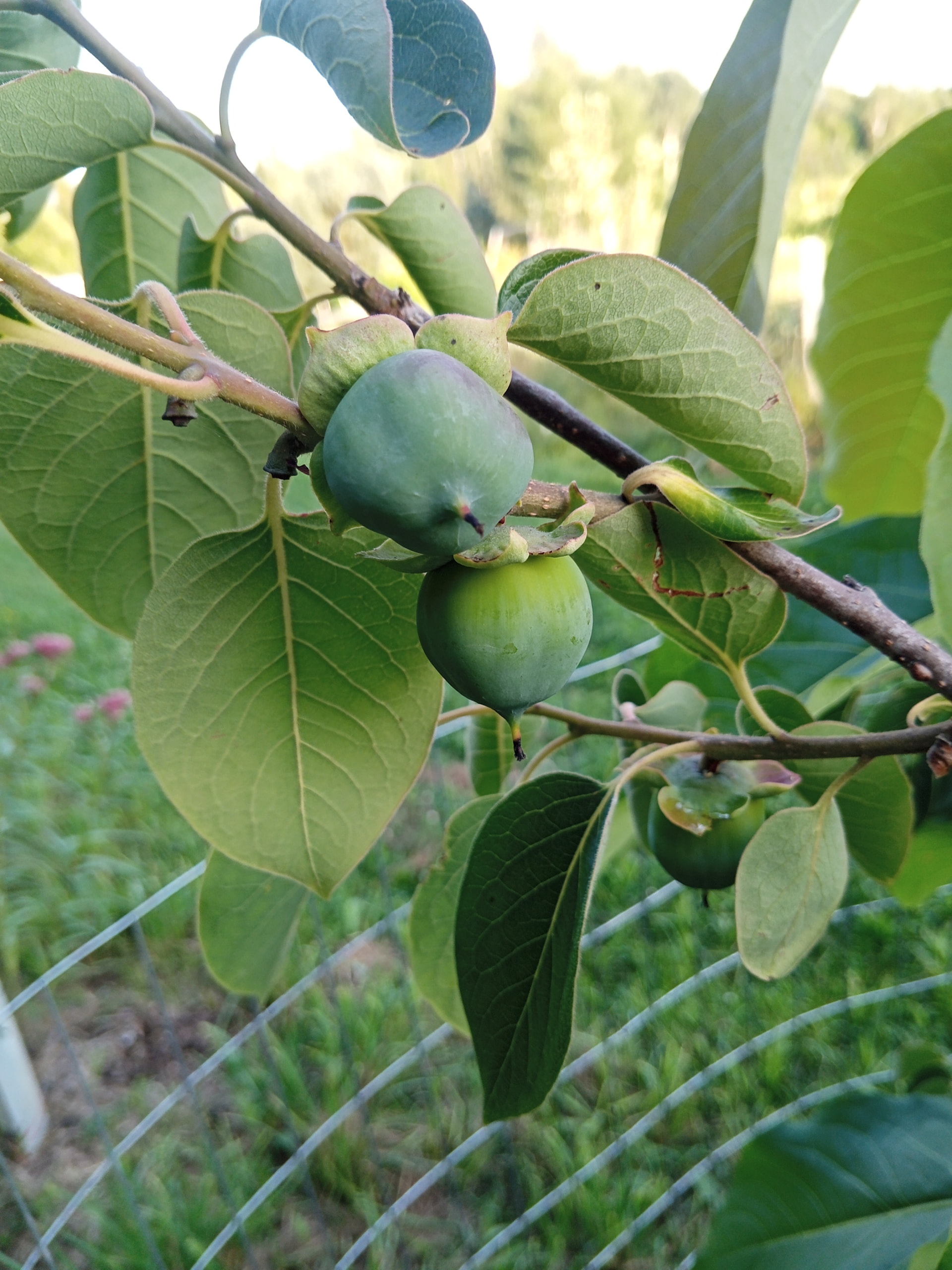
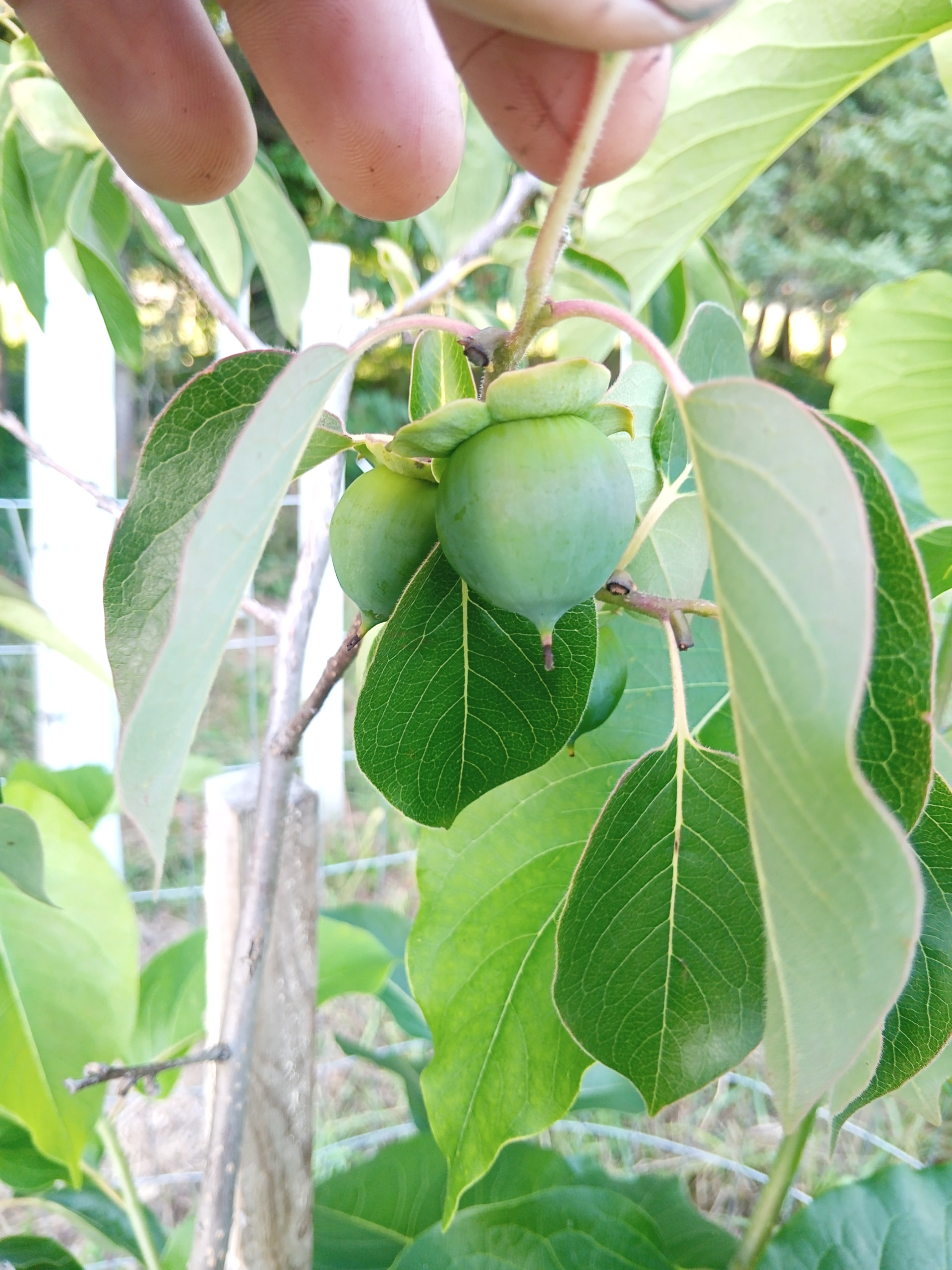
Does this look like the real Prok? My tree appears to be holding on this year to some of the fruit. Still got about 15 on it sizing up. I’m concerned because I got it from Stark Bros about 5 years ago, and I’ve heard some have gotten a false Prok from them.
2 Likes
Two notes: First, as the ground is your heat source, you’re best off with a big footprint. The wider the base, the better. So you can deliberately build a wire frame that is wider than the tree. Second, while this particular tree survived, I think Trev got lucky. I’m sure that a tarp – especially a dark colored tarp – can produce excess warmth on sunny days. If your tree pops out of dormancy and then endures a cold snap, it can die. Using a tarp is gambling that a string of sunny days is not followed by sub-zero nights. I recommend that you play it safe by adding an outer layer of some material that does not absorb much infrared radiation.
Edit: A layer of Mylar over the tarp would work.
2 Likes
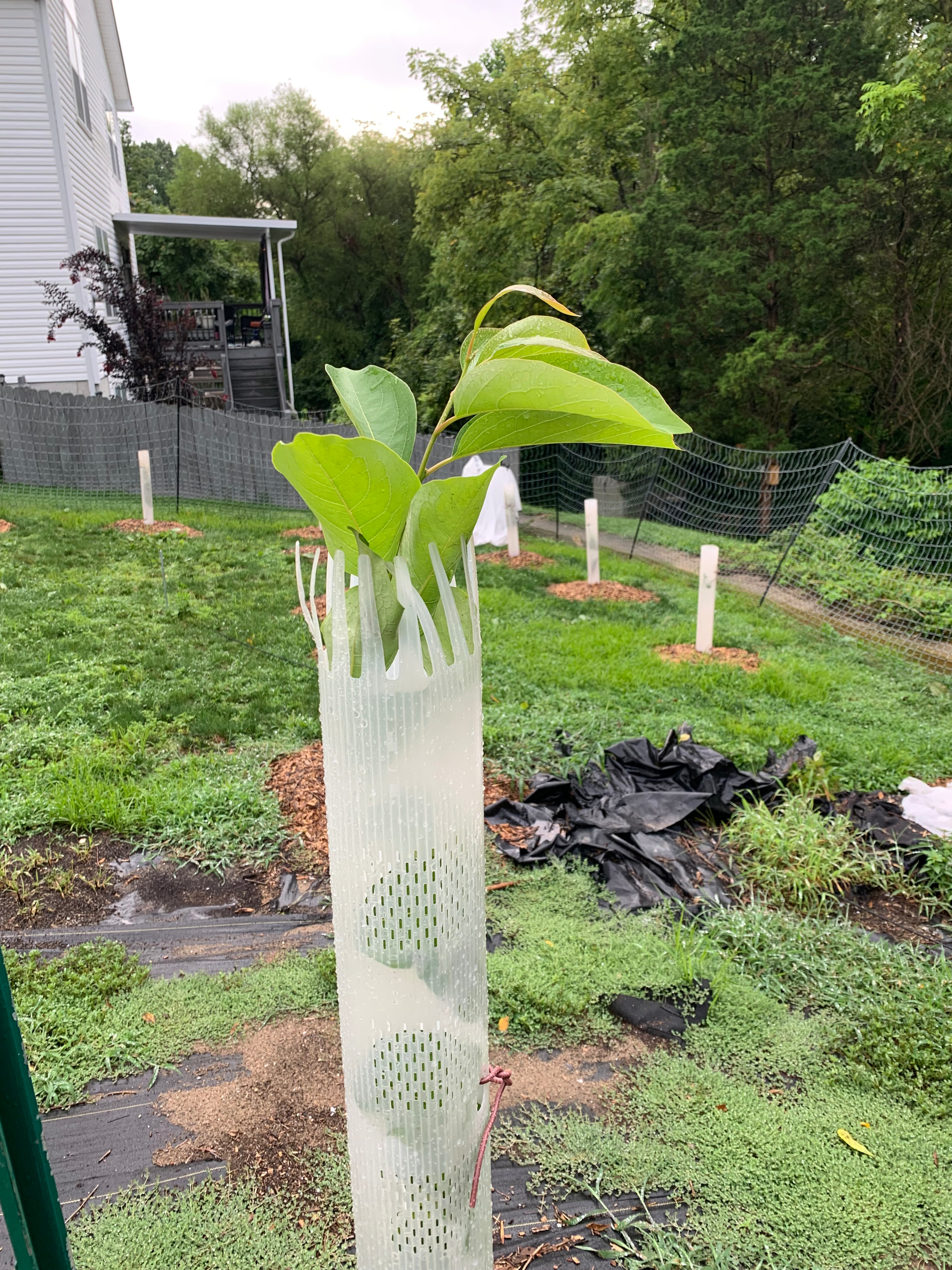
I hope everyone is having a wonderful day. I am hoping to get everyone’s feedback on shaping these two trees. The first pic is a Sosnovskaya and the second is a Pamyity Tetherice. They are both emerging from 5 ft tree tubes. Should I pinch the top off of both of them now so they will branch now? Should I wait until they grow taller and then prune them back to this point? I’m in zone 6b.

4 Likes
My two cents: At this stage, I try to grow the tallest, stoutest whip that I can. I’ll head the whip during the winter / early spring. The headed whip will then branch freely. Then gradually I’ll remove extra branches in order to leave 3-4 strategically placed scaffolds.
Branches that form this year generally won’t grow large and can be vulnerable to winter cold. Branches that sprout next spring will usually outperform.
I could show you 3 persimmons that I’m growing now that are at roughly the same stage. I’ve removed all side branches. I won’t head them until Feb / March. The prunings make great scions for grafts elsewhere.
3 Likes
I have a long hot season down here in southern middle TN.
I do a heading cut once the central leader reachws 4.5 to 5 ft.
But I have 3 more months of good growing season here.

At the end of season 1.. 8 ft tall, 4 scaffolds and a new central leader… that is ideal goal for me.
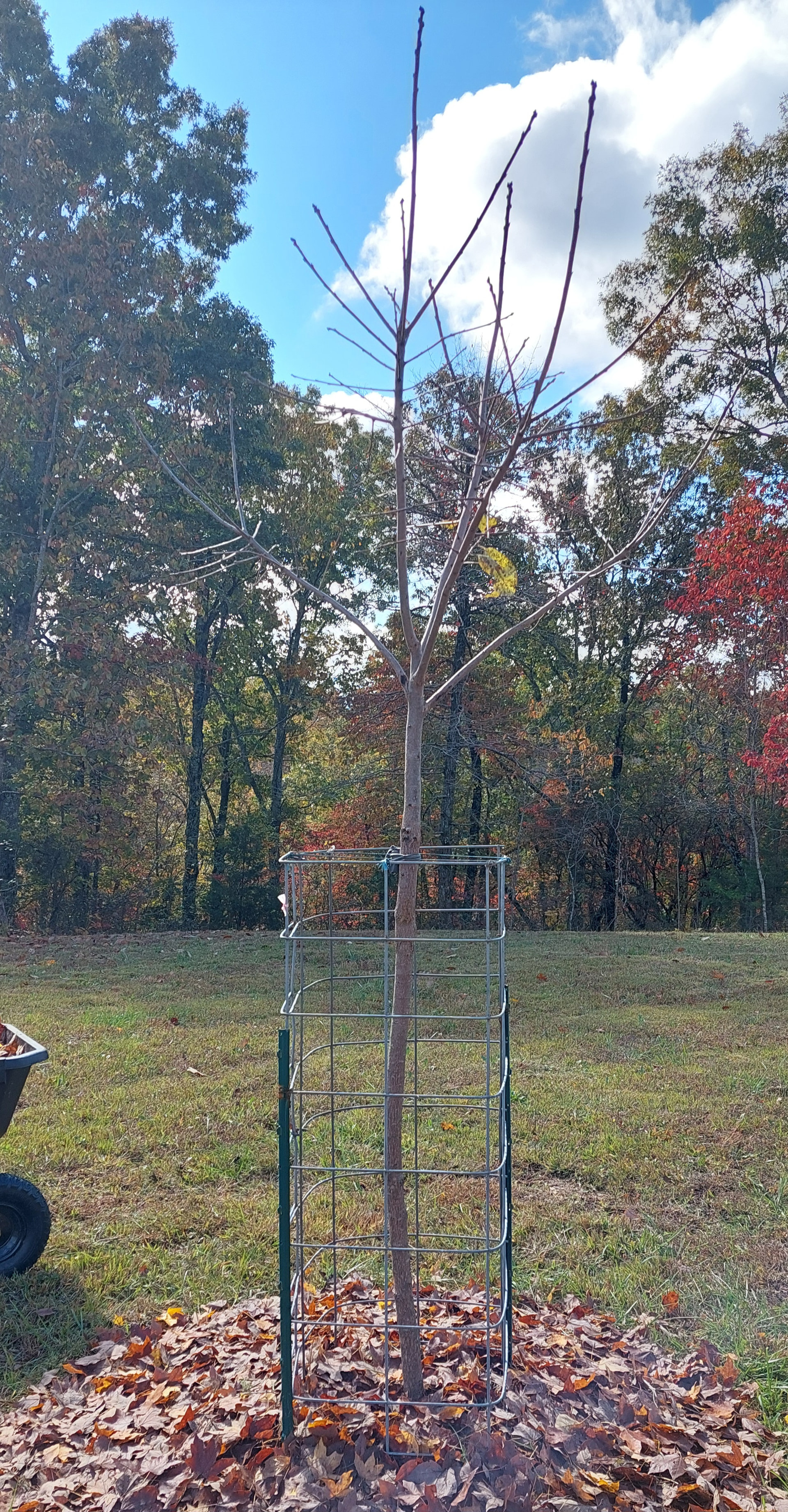
At the end of season 2.. I get this.
TNHunter
5 Likes