I picked up 2 blueberry bushes this year and I will have 3 more coming in the spring. I plan to pot them in grow bags and put them on drip line in my veggie garden in the spring (my whole veggie garden is grow bags on top of landscape fabric on drip line)
I see a lot of people use a 50/50 mix of peat moss and pine fines, with some DE added, but I’m having difficulty sourcing bagged pine fines. is this the same as pine bark nuggets, or does pine straw aka long pine needles suffice? does this not rob nitrogen from the plants when mixing it into the growing media?
Blueberries prefer a 50/50 mix of horticultural sand (DG is ok) and cured conifer bark – 1/4 size is ideal. For best results, this mix should be inoculated with Vaccinium mycorrhizae (any other kind is a waste). It’s usually a liquid with specific application instructions - read before making your mix. In my experience, once the container is opened the contents expire in 12 hours.
Most agricultural blueberry species and hybrids prefer moist soil but hate having their roots sitting in water. Many of them are also picky about the form of Nitrogen they receive. Most initially require sustained pH of 5.8 or lower. There are a few exceptions such as Monrovia Sunshine Blue. A portion of the hybrids can be weaned off their acid tendency, provided they are fed. O’Neal is one example.
In all my grow bags I use the same thing. Compressed pro mix organic gardening soil with the yellow color bag.
If I can get it for cheap, sometimes I’ll add in some coco coir and basically the cheapest organic fertilizer I can find.
For my fruit trees in ground, I add mycorrhizae and a layer of free mulch from chip drop. Easy peasy
In the past I’ve steered pretty clear from blueberries because they seem to have some very specific needs and I don’t really have the time and patience for that, but I’m taking a leap this year.
I plan to put them on the drip line so that they have regular supply of water. They won’t be watered regularly if they’re not on a drip line. I doubt they would have wet feet in a porous grow bag.
Is there any particular brand of horticultural sand you would recommend that would be easy to find? What is DG sand?
Is there any particular brand of cured 1/4 inch conifer bark you recommend that are fairly easy to find?
I did look into mycorrhizae specific to blueberries and I came up with one. Its a powder sold by pure AG. Is this the kind of thing you’re talking about?
I have pre-orders from ison’s for rabbit eye blueberries Vernon, krewer, and Titan. I got an Alapaha rabbit eye this fall and a random legacy.
1/2 cu.ft. (50 lb) bags of “All Purpose Sand” at Home Depot. Do not buy playground sand.
Decomposed Granite.
Wow, in powder form. Looks great.
Good plan. Give each plant enough tubing to ensure the interior perimeters of the grow bags don’t completely dry out.
“Cured bark” means kiln-dried bark.
The 1/4" size is available as 1/4" orchid bark stand-alone nurseries and sometimes home improvement centers. The latter often have untreated (no coloration) cured conifer bark as 1/2" pathway bark. This could be run through a shredder or (in smaller quantities) placed in a burlap bag and smashed with a sledge hammer.
The issue with conifer needles is two-fold: they are the wrong composition and have the wrong mechanical properties.
Cured pine (wood) fines could work if you filtered out pieces that are not about 1/4" diameter and 1/4" to 1/2" in length. Wood though, does not decompose in the same fashion as bark. This can be problematic with blueberries unless inoculated with their mycorrhizae.
Thank you, @Richard and @Bigmike1116 for posting this conversation! I had no idea blueberry mycorrhyzae existed! Would you recommend inoculating the soil with this product when planting blueberries in ground?
See if Hawkins delivers to you. I use them for all my bulk soil deliveries and just discovered this year that they have bagged pine fines. There’s a high minimum for bags, but if you’re also needing soil, you can likely just call and get them to add on a few bags below the minimum; they’re always really accommodating for me.
Just a note about container choice, I’ve only been growing blueberries for two years so take it with a grain of salt, but they need a lot of water and the grow bags dry out really, really fast. Consider plastic containers. I get the pro cals from Hydro pros - heavy duty and the shipping is really reasonable.
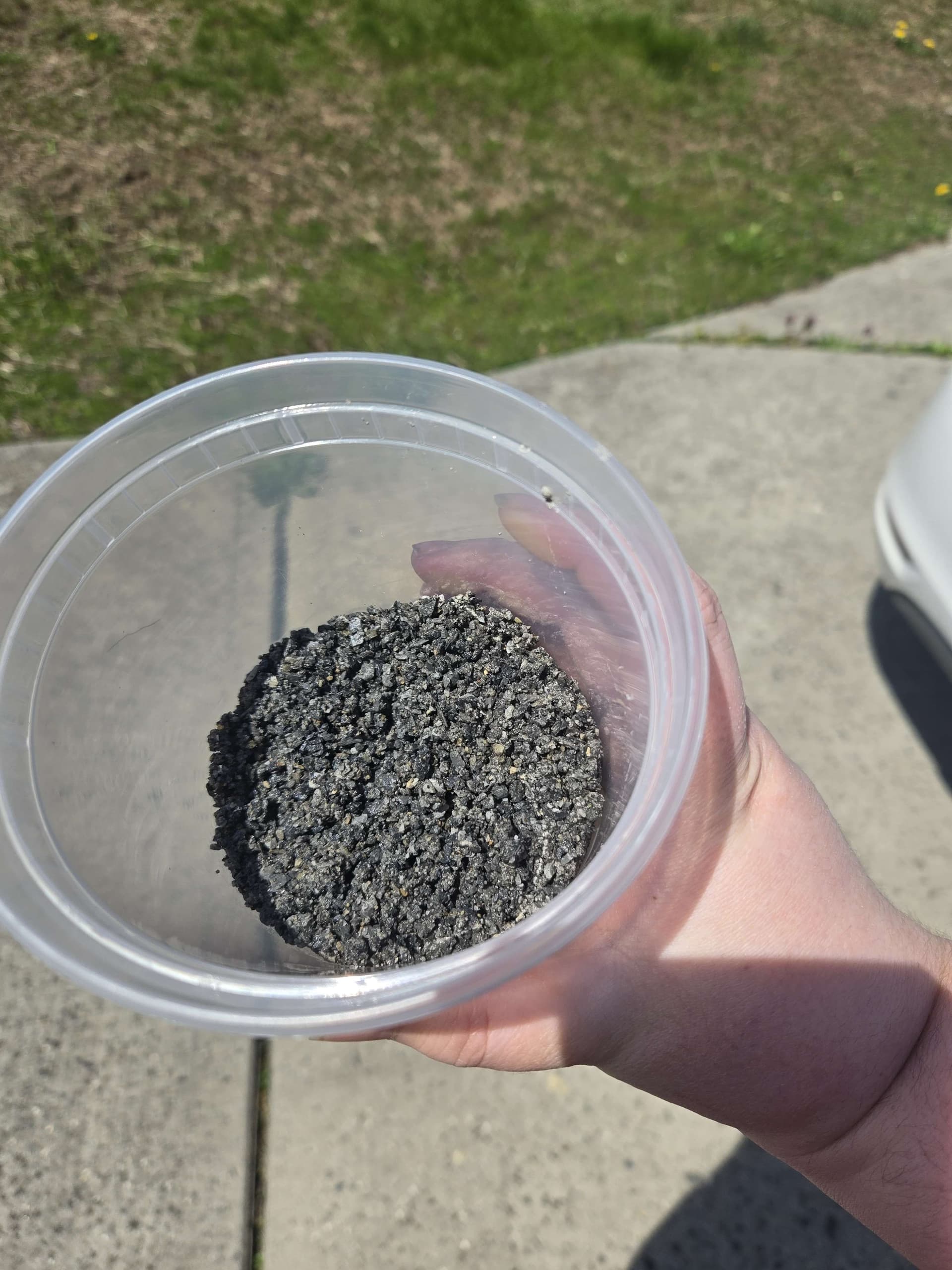
richard I guess youd be the question to ask, ive bought this sand before and it was terrible quality from my perspective. can you confirm if THIS is what sand is supposed to look like when you buy it? I bought it for amending some container soil and I was baffled. I know the color can vary by location depending what rocks they use to make it but like this looked like straight asphalt. Ive been scared to buy sand since
That’s not sand. Sand has a precise geological definition referring to grain size, those are “granules” or borderline “very coarse sand” (precise geological definition)
You were completely bamboozled
I’d need to look at the individual grains to tell what they are but if you’re just looking for some mass to add to soil for drainage it probably wouldn’t be TERRIBLE (assuming it doesn’t actually have asphalt chunks in it), maybe rinse it good if you are worried about reside on it
It may be native long island metapelites (metamorphic rock)
Maybe crushed dark micritic limestone, maybe literal old asphalt aggregate very weird though, never gotten anything but pure sandy “play sand” from home depot
It crops out in lots of places, all of central park is exposed metamorphics
Google the subway garnet
It has to become rock at some point, geological scale laughs at your 200’ of sand meaning all the way down, that’s the top of the surface of the outer layer
It seems pine fines are harder to find these days and the landscape supply company I used to get them from only has them in bulk now. I do see them sometimes at larger garden centers, but I’m not sure the people who work there even know what they are so you may need to walk around looking to actually find it. You can also use mini-nugget pine bark from a Home Depot or Lowes, etc. It is always a good idea to see if you can find a bag that already has a rip in it to make sure it is mostly bark, since some batches (or maybe just different sources) seem to have a lot more wood vs. bark which you don’t want.
I’ve grown my blueberries in 50/50 peat and pine fines for years, with a handful (per container) of acidifier and hollytone thrown in while mixing it up. I also top dress with a little hollytone at least one more per season and then top dress with the acidifier and hollytone again the next spring. If you are watering with tap water, which is probably pH 7.5 or higher, adding the acidifier regularly helps keep the pH in the soil from creeping up.
I absolutely agree with @Eme that plastic pots are better for blueberries here. Grow bags are good when you are worried about circular roots and want some root pruning, but blueberries have a very fibrous root system and will be happier with less drying out in the heat.
I don’t bother to sift out smaller pieces from the pine fines, but I make sure to put in at least 50% so I am sure to get good drainage even if there are some smaller pieces in the mix. Pine fines are fairly light when dry, so it keeps the containers from getting too heavy. I expect diatomaceous earth with peat would work just fine as well. None of these mixes have a lot of built in fertility, so you rely on fertilizing to maintain good growth and production.
I actually use pine fines in all my container fig, persimmon and other plant mixes when I’m going to have them in the same container for more than a year. It helps maintain good drainage after regular water and rain compress the soil. Plus it is sort of the hamburger helper for the ProMix BX I use as the base for most things, reducing the overall cost of my potting mix. I could just buy ProMix HP and get a similar effect, but the pine fines are so much cheaper per cubic foot that it really helps keep cost down when potting larger plants.
I haven’t used this brand, so can’t speak to the consistency or quality, but as long as it looks to be mostly bark I’m sure it would work. It actually looks like it is currently out of stock, but if you call them perhaps they’ll have it back in the spring.
Finding pine bark fines is hit or miss here. I only ever find them at Lowes, labeled as 'Soil Conditioner’s.
I bought and stockpiles about 10 40-lb bags of them this spring…used 3 bags planting 25 new blueberries last week.