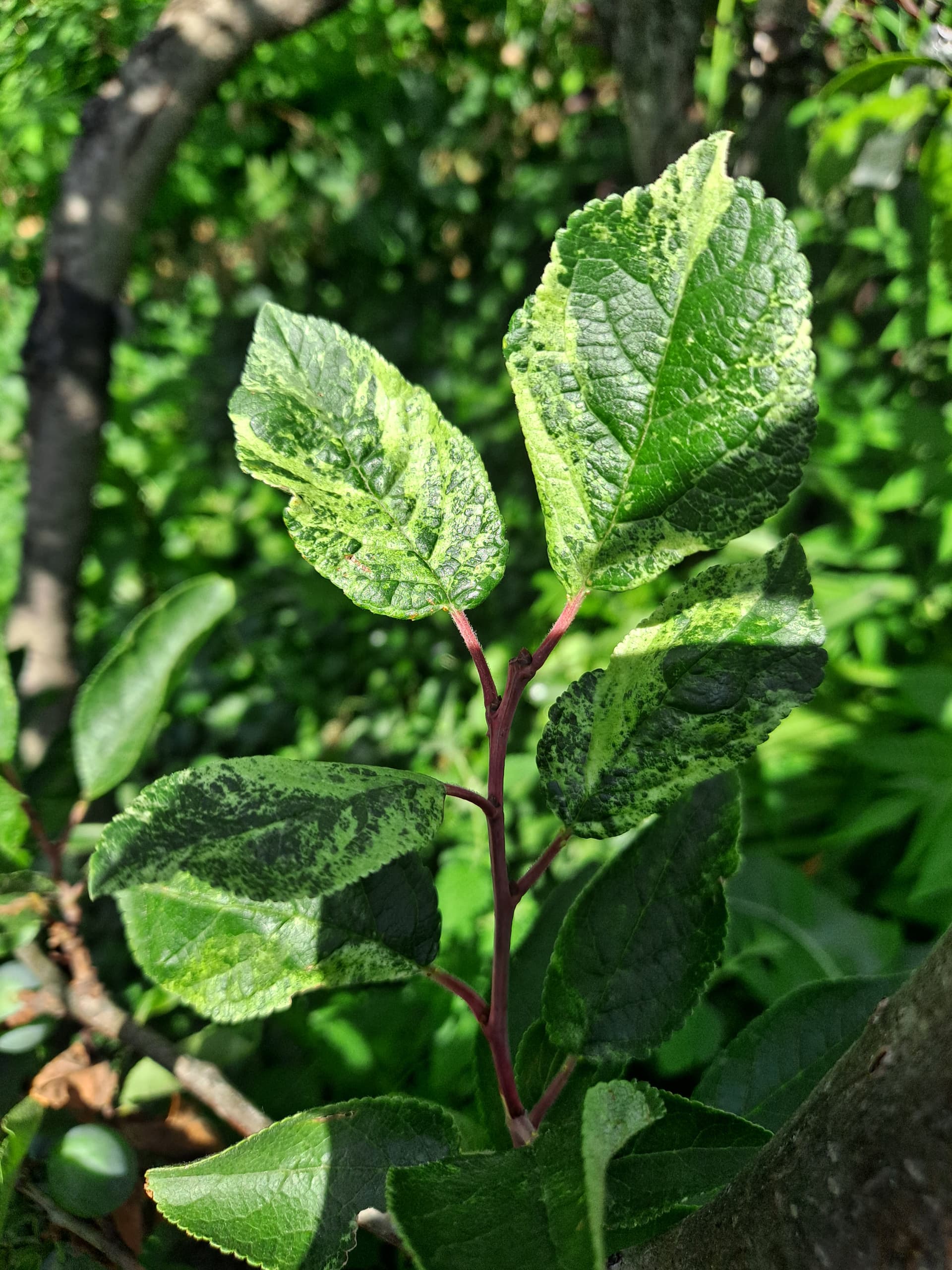
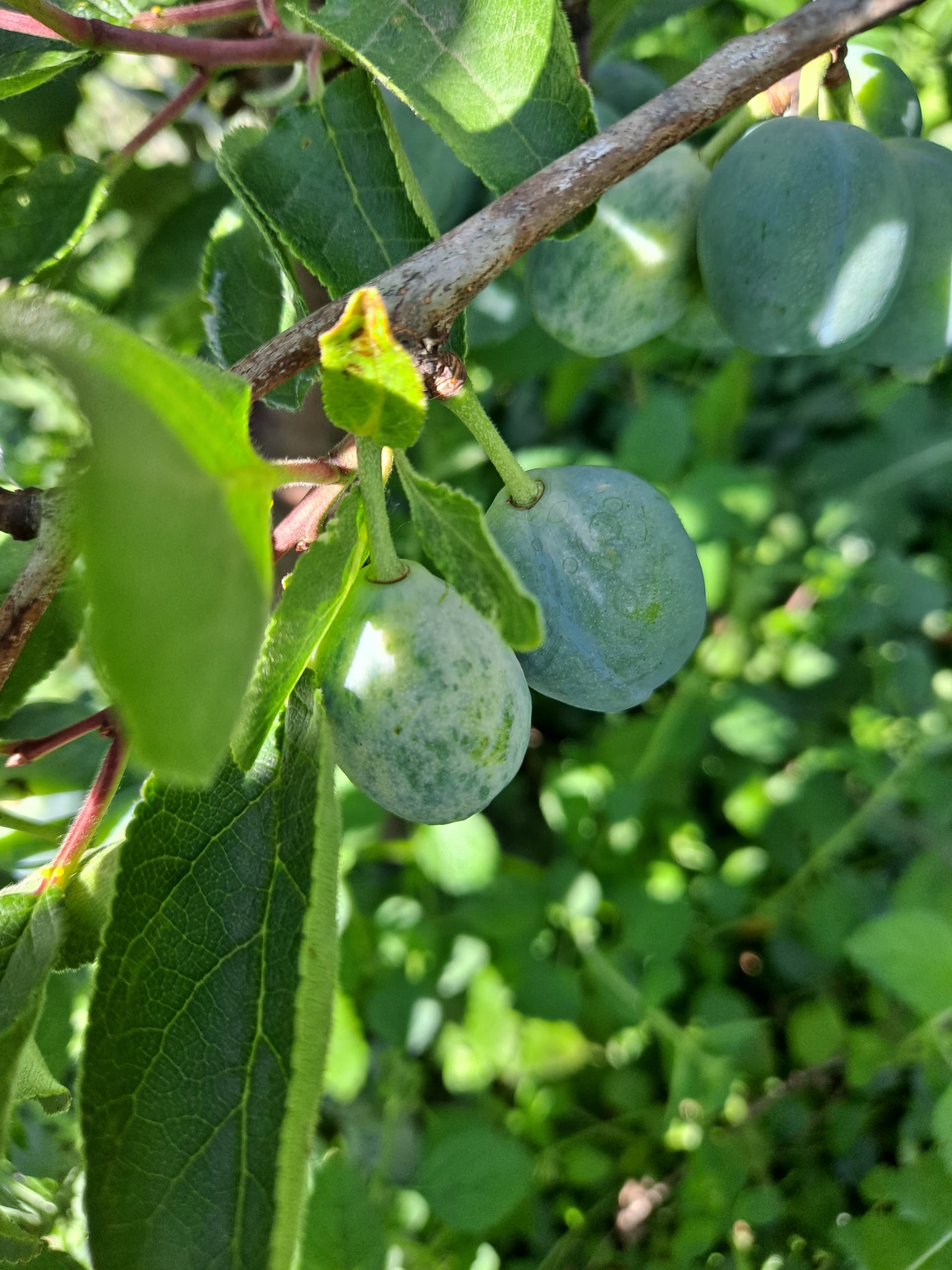
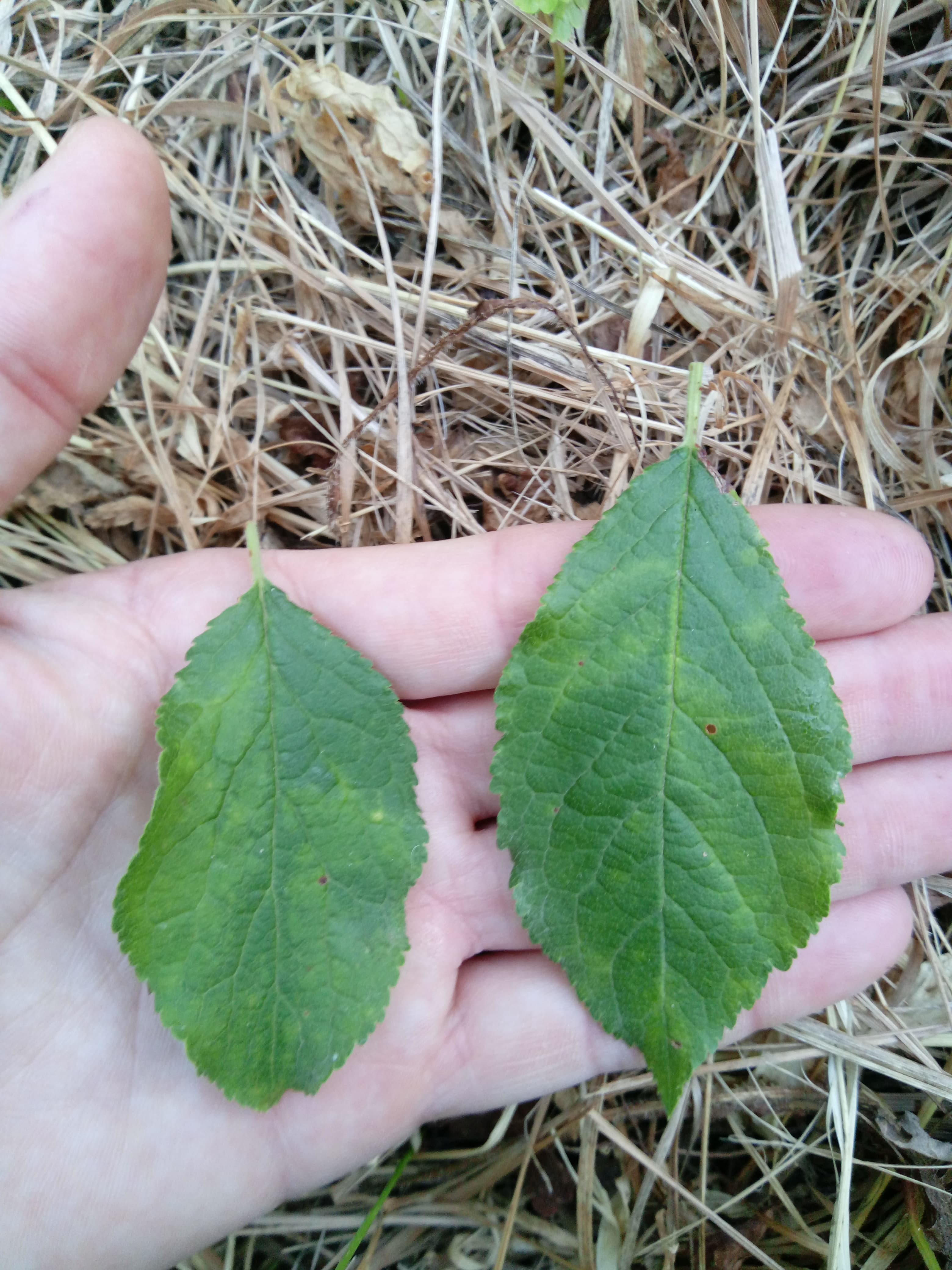
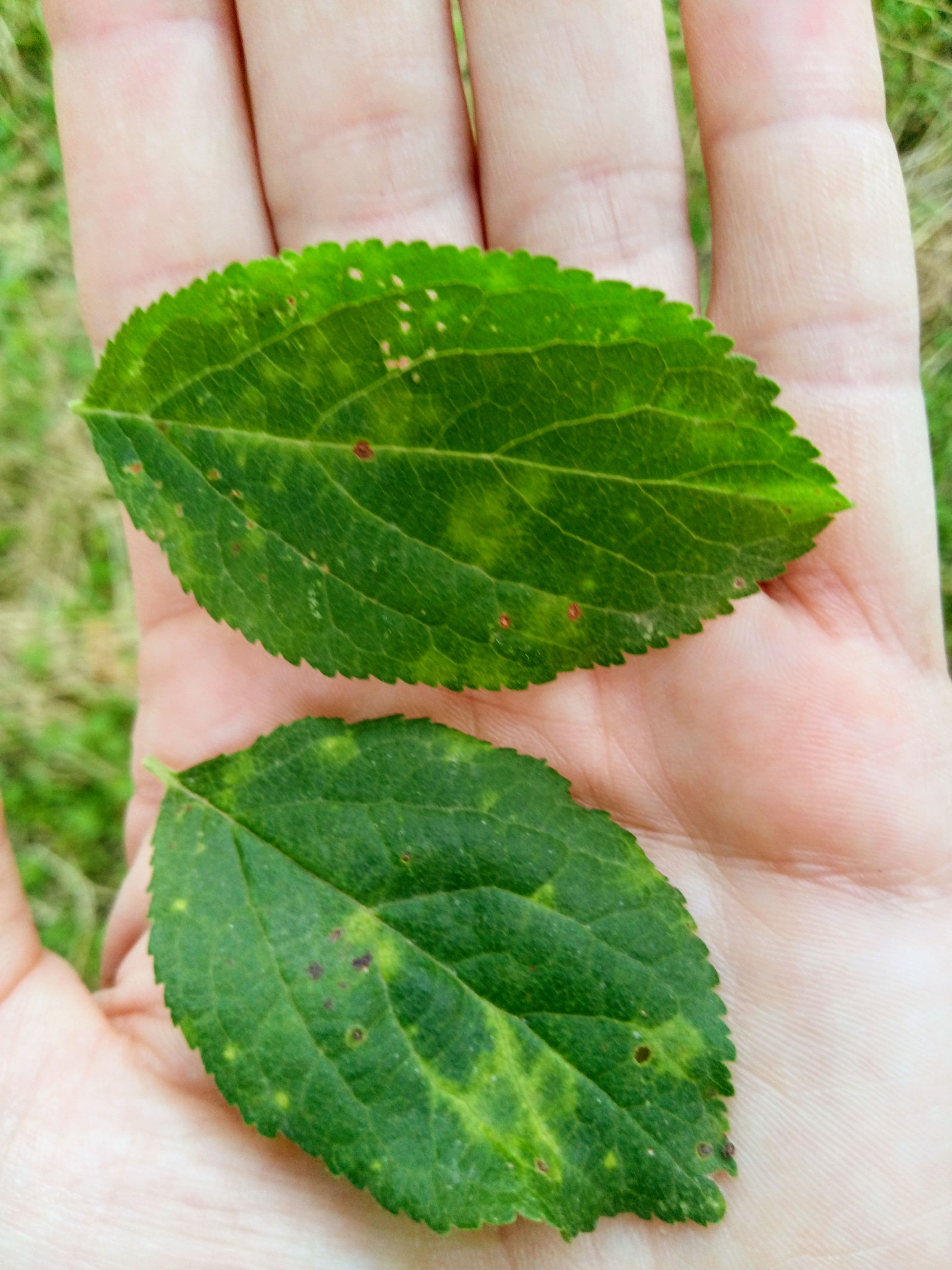
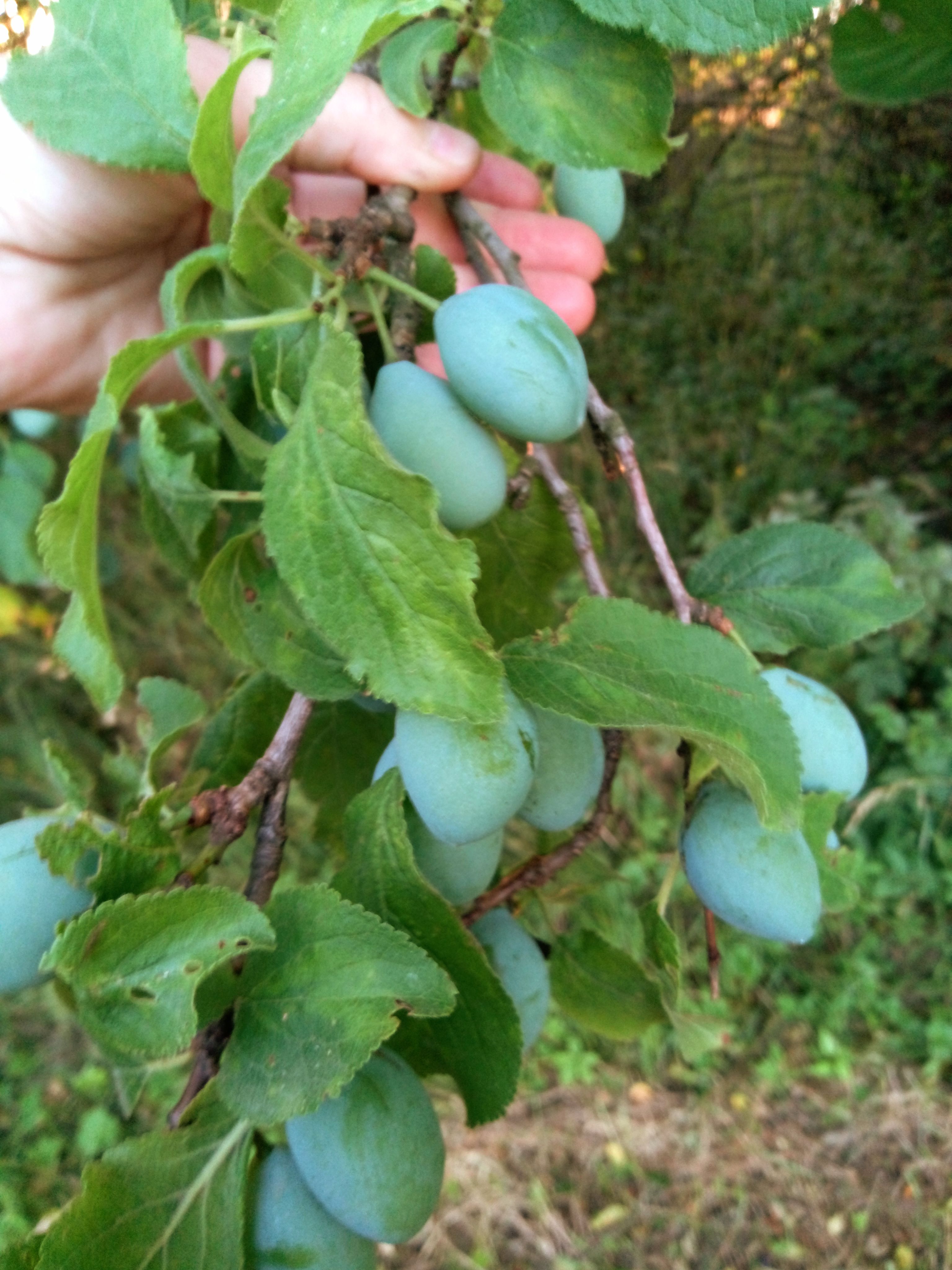
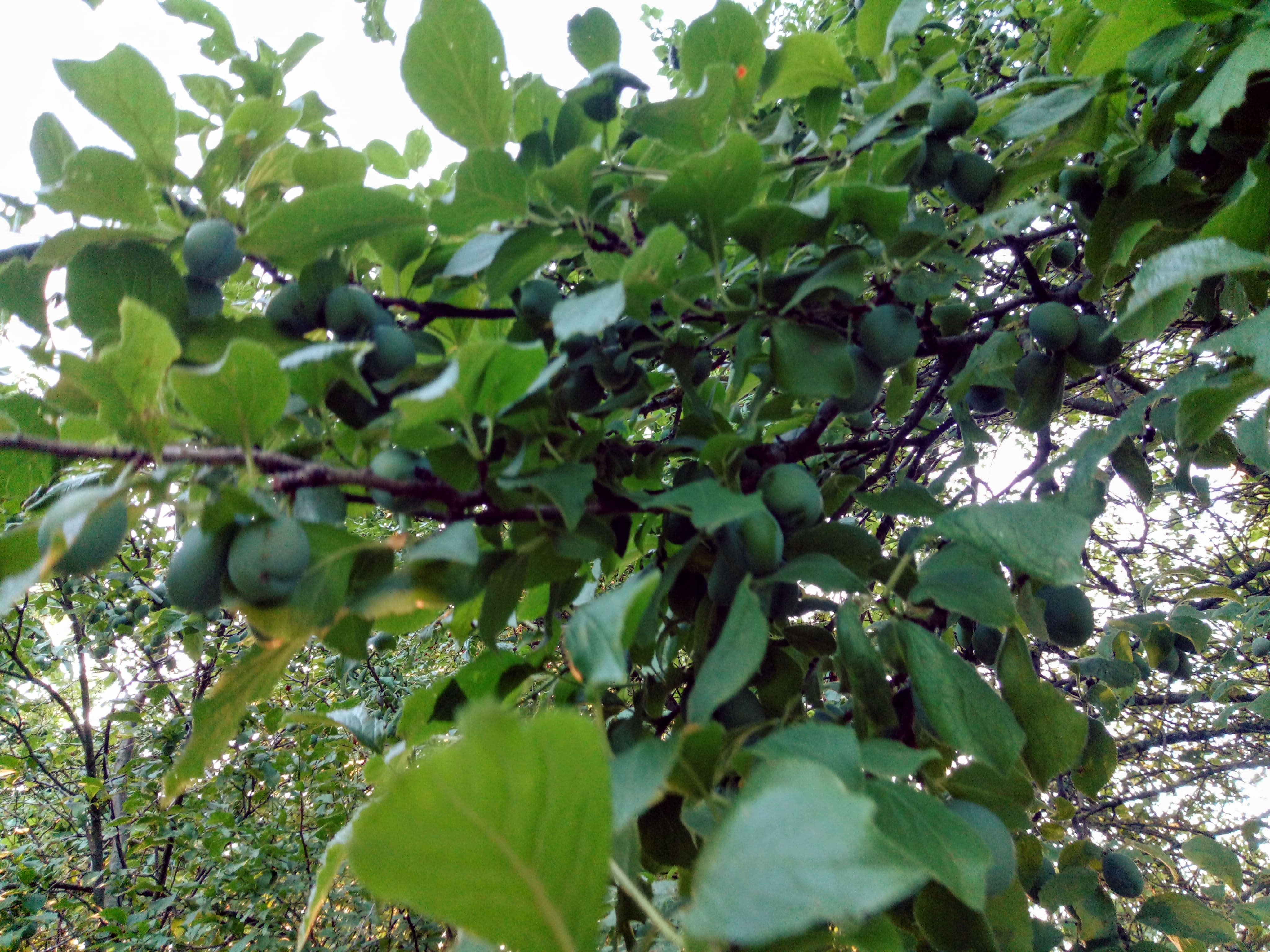
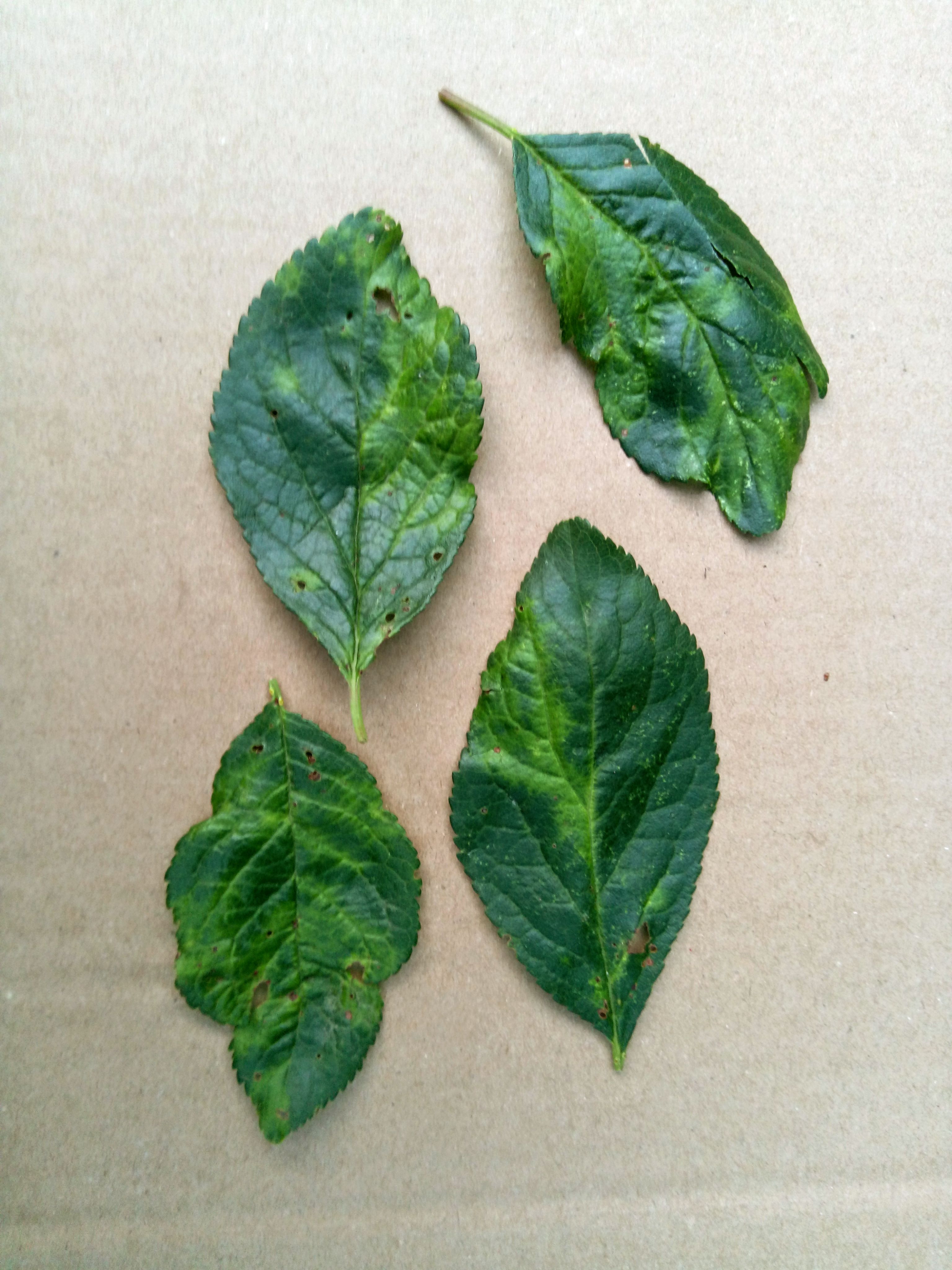
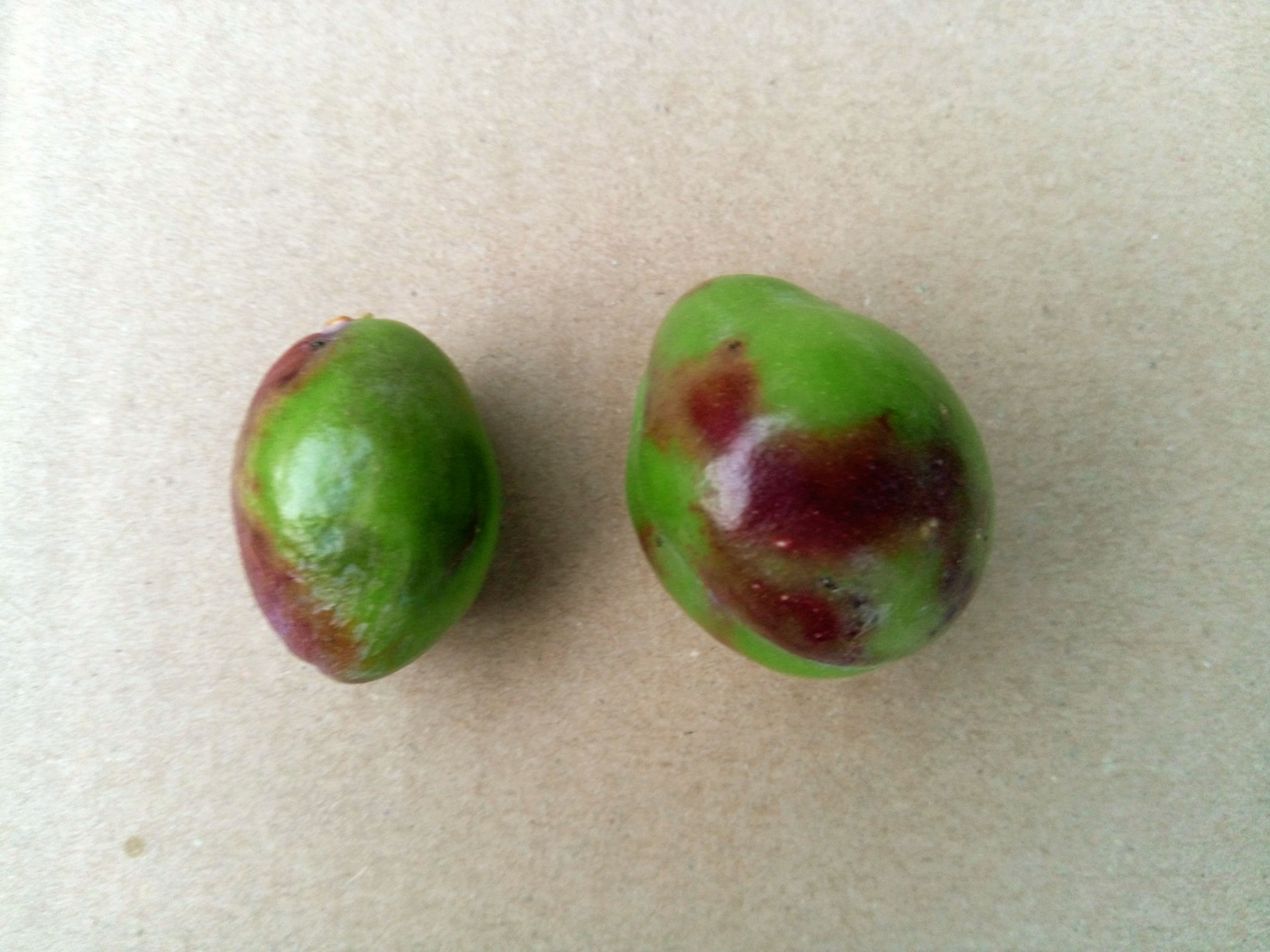
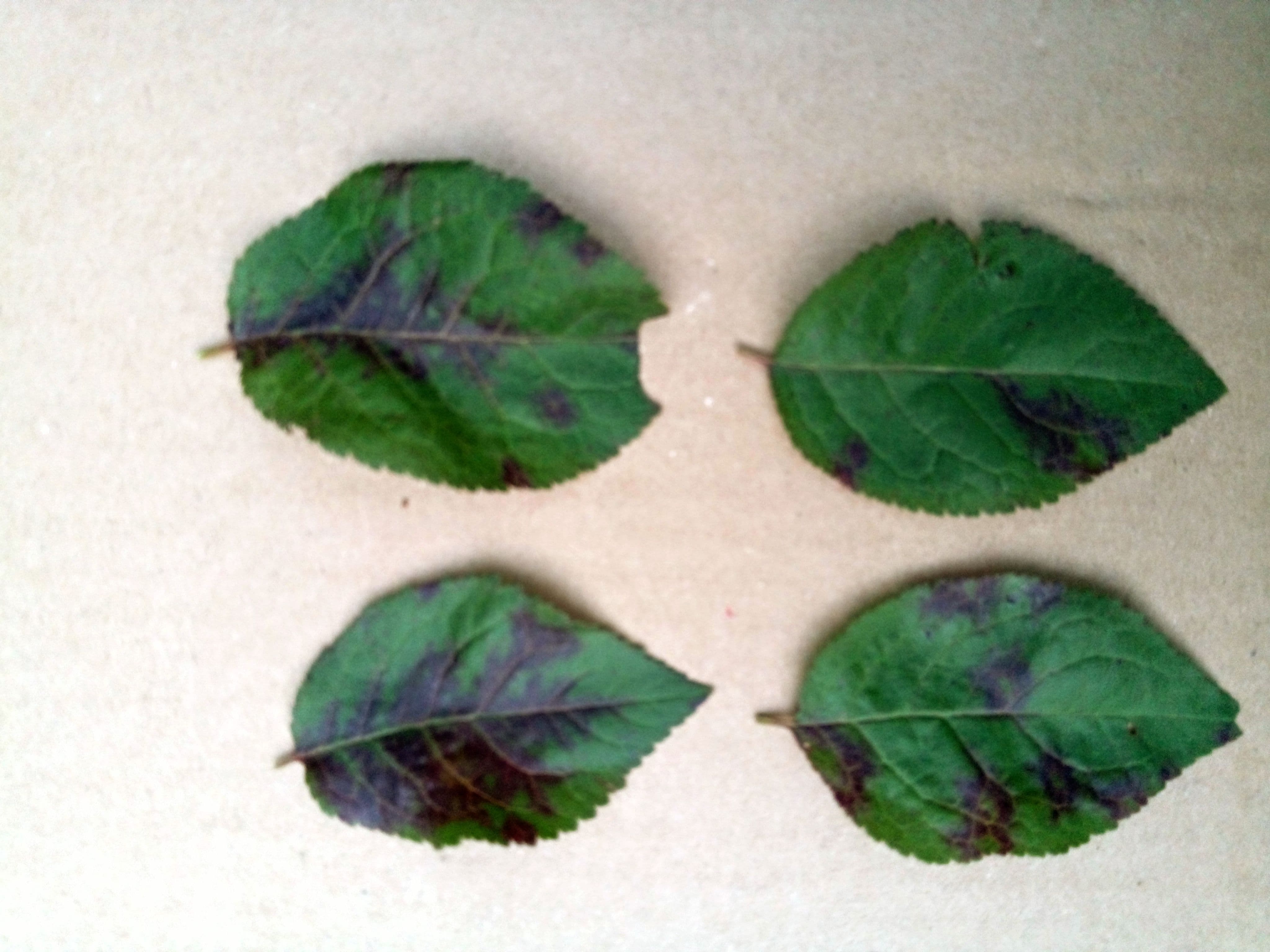
I noticed variegated leaves and fruits on my maribelle last year. It was suspected the plum pox caused the variegate. Besides the variegated leaves/fruits, nothing else unusual was on the plant’s growth.
This year, the variegated leaves and fruits appear again. I doubt it is plum pox, but couldn’t find a explanation. Is it possible the branch/buds just somehow mutated?
These are the pictures taken today
Is it just a single branch showing signs from when it first grew and the rest of the tree is normal? In that case it could be a mutated bud that grew a branch.
If it’s the whole tree that first had normal leaves and now starts having different leaves. It could very well be a virus.
It has variegated leaves and fruits in different places. They are variegated from beginning and stay variegated. No any fruits rot or leaves rot issues, or reduce productivity issue. Everything seem normal except some leaves and fruits are variegated.
Annie,
Have you seen Youtube video titled Plum Pox Virus in Pennsylvania? It shows good pics of infected leaves and fruit. You can just watch the first 5 mins of it so you can compare.
I read articles and watched the YouTube on the topics of plum pox. The leaves and fruits variegated color matches plum pox description. However, what didn’t convince me is that there’s no damage done to the tree or fruits. According to the article I read, the virus is supposedly causing damage to the fruits, making the fruits deformation. I have not seen any deformed fruits
2~3 years from infection to show symptoms. If it indeed the plum pox, it showed part of the symptoms last year( leaves and fruits variegated), therefore the infection could have been 5~6 years ago.
Don’t counting on extension services too much. I don’t know how the extension services run in your area, in my area, extension services is just a phone number and answering machine. UIUC did have extension services in the county where I live, they mostly serve local farms, ie commercial entities. I actually stopped by an uiuc extension services office last summer in nearby county, they are not very interested in fruit trees. Illinois is a corns and soybeans state. The extension services resources are focused on these areas.
In the video, it was the farmer in PA who brought his infected fruit to show people in Carolina (if I remember the state correctly). That’s how plum pox was identified and everyone started paying attention.
If you want to pursue this, you may have to reach out to the guy in the video or his office.
We have sharka all around the village. Generally the variegated leaves are also slightly deformed. Not always. Sometimes the fruit looks perfect and when you open it it has spots/ discoloration on the pit. Maybe you could open some? As I understand it, if a tree gets it, it will have it indefinitely. May look asymptomatic later on, though.
What do the villages do knowing the trees are infected with plum pox virus? As I read, it will stay on the tree and continue infecting other stone fruit trees
in some parts of europe sharka is endemic. Not much to do about it. You could plant tolerant/resistant cultivars. But this severely limits your choice in cultivars. If it’s not endemic i would remove infested plants. But that’s easy for me to say, since it’s not my tree that would get chopped down.
There are different strains of sharka/plum pox. They show different symptoms/severity and also depending on the host.
These are the endemic ones. The trees are fine and grow vigorously. The problem is mostly aesthetic. There’s a new large orchard planted for distilling purposes. As for new trees we do plant everything but also tolerant cultivars just in case, as there is no truly resistant one on the market. (Yes, I’ve seen the word “resistant” freely used in place of “tolerant”, like Jojo, but that’s sloppiness at best.) Tolerant means that the disease will stay mostly in leaves without affecting the rest of the plant. Like jojo’s fruit is pristine, but the plant will drop damaged leaves in extreme pressure.
In any case trees don’t die like in the 70’s or 80’s. Definitely not a real problem unless you sell fresh fruit (and that’s when you plant tolerant varieties). It’s a bit like herpes virus in humans.
Thank you all for helping me understanding this. It is a branch of maribelle, not a whole tree. I don’t have problem of removing it. But since it only affects the leaves, BTW, I like the variegated leaves. I will keep monitoring it for any further development.
And this is a reddish leaved myrobalan seedling next to an infected Cacanska lepotica tree. I bet this is sharka pattern. The red takes over where there’s less chlorophyl.
Tana, thanks so much for additional pictures and information. I appreciate it. I will monitor my plum, actually is mirabelle’s fruits and leaves development
Yes, a groundhog. I got rid of a couple of them every year but new ones have consistently showed up the following year. They are difficult to catch. Sometimes, it takes me months to catch one.
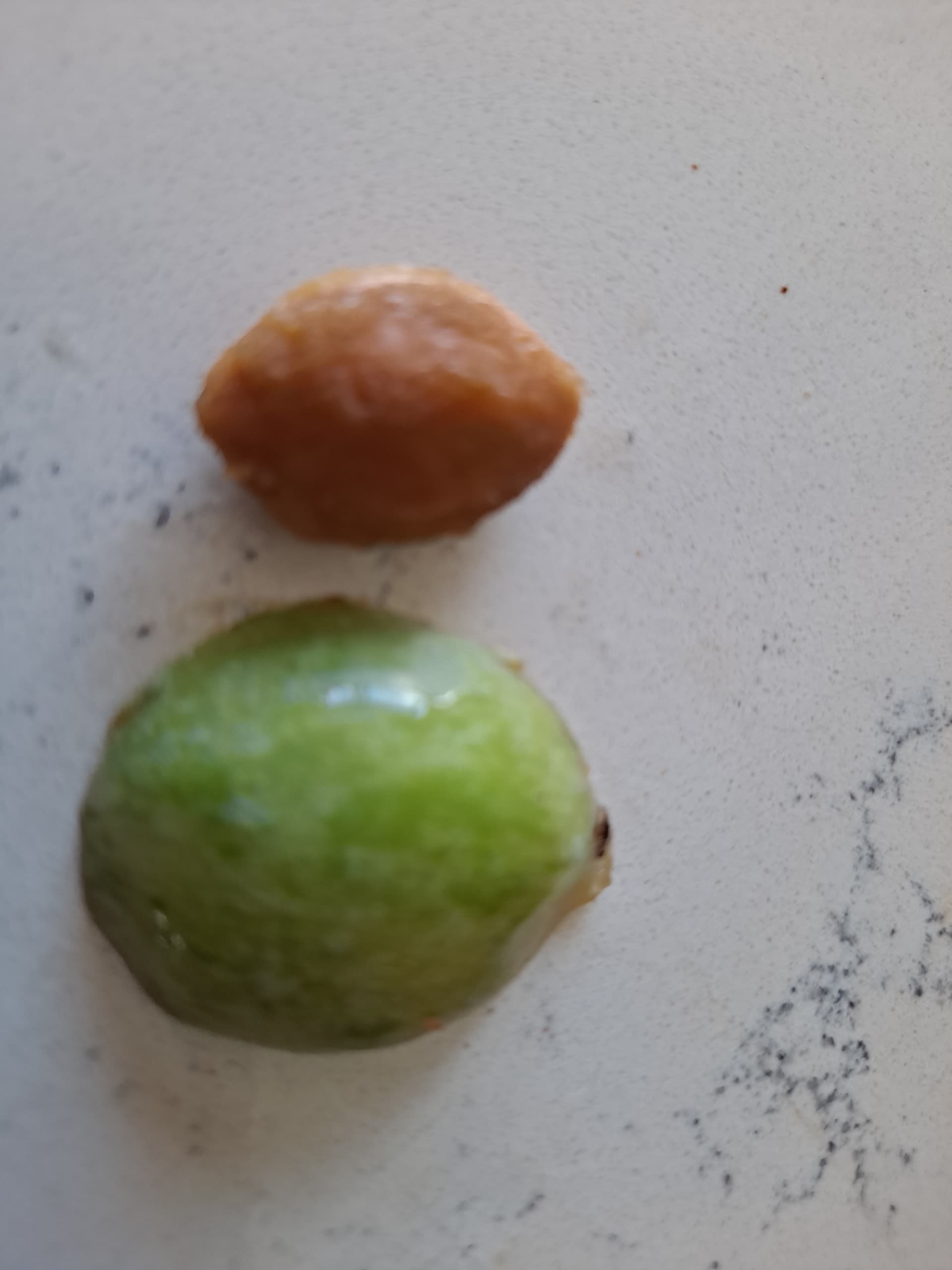
I cut open a variegated plum fruit. The skin of the fruit shows different degree of green color, but inside, the pit doesn’t show any color variations I was hoping to see some strips, or dots of white on the pit
I don’t think the colour of the pit would be affected. Pits seem to have mostly the same colour regardless of flesh colour. Just like with white currants and green (cyan-free) black currants that have light brown seeds as do their pigmented counterparts.