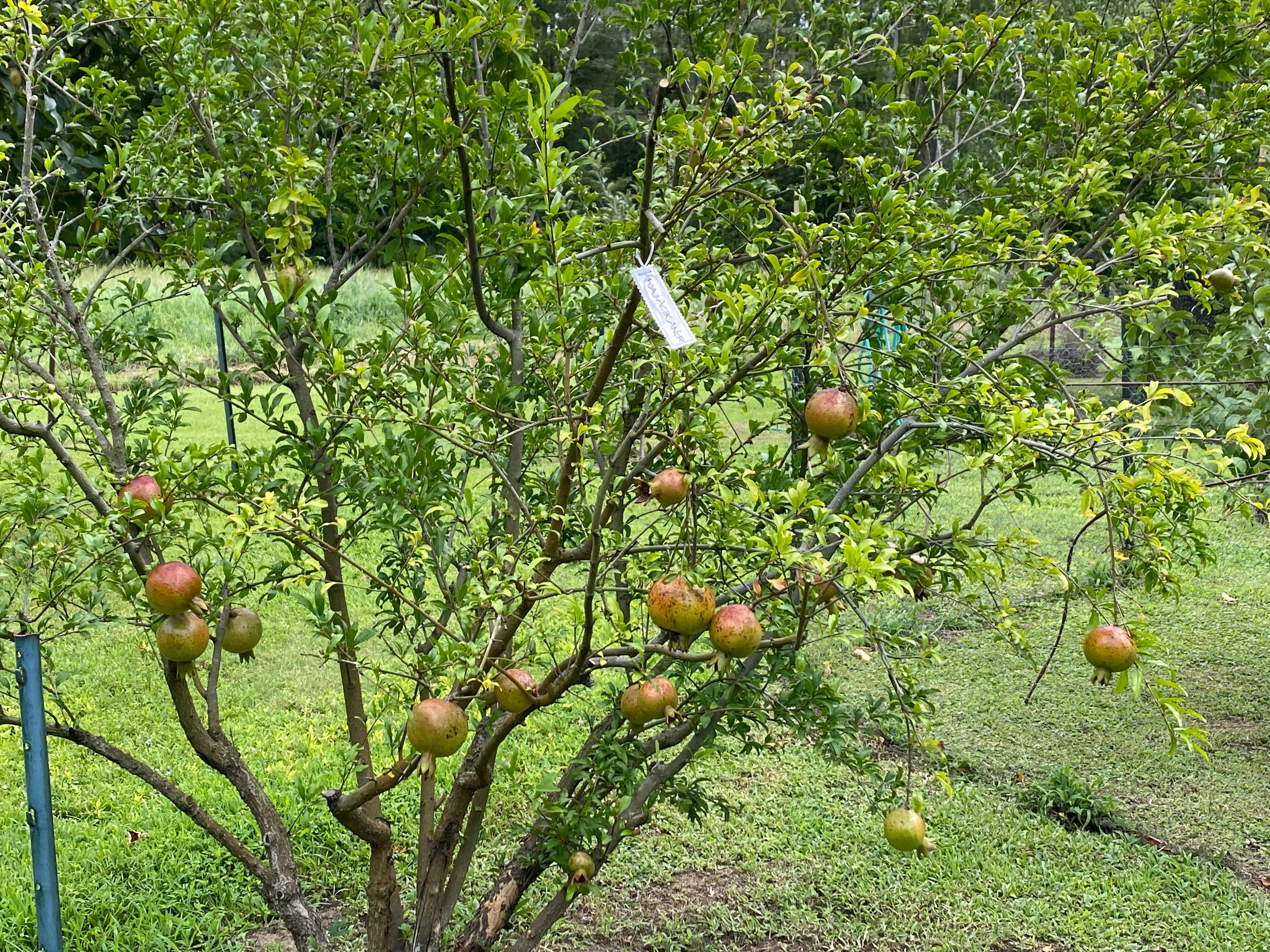
Pomegranates 2025

Hi Everyone! I am tired of looking at that ancient thread I started (my first on this forum). My “Success in Chesapeake” was short lived . . . because the fungus showed up the following year!
So I am going to offer a new shiny thread, so we can share what’s “Going on Pomegranate” in 2025.

I post this with great trepidation - knocking on wood (lotsa wood). I shared earlier about hand-pollinating my pomegranate trees - with much success.
So far . . . CLEAN FRUIT! I have no idea as to why. They are beautiful at this stage. I hope they stay that way, but we do have at least 2 full months (or more) before any will be ripe enough to pick. I’ve pulled only a few that showed signs of fungus at the bottom. And I have removed as many of the unfertilized or newly appearing blossoms. They won’t have time to mature at this late date - and they only serve as ‘fungal incubators’.

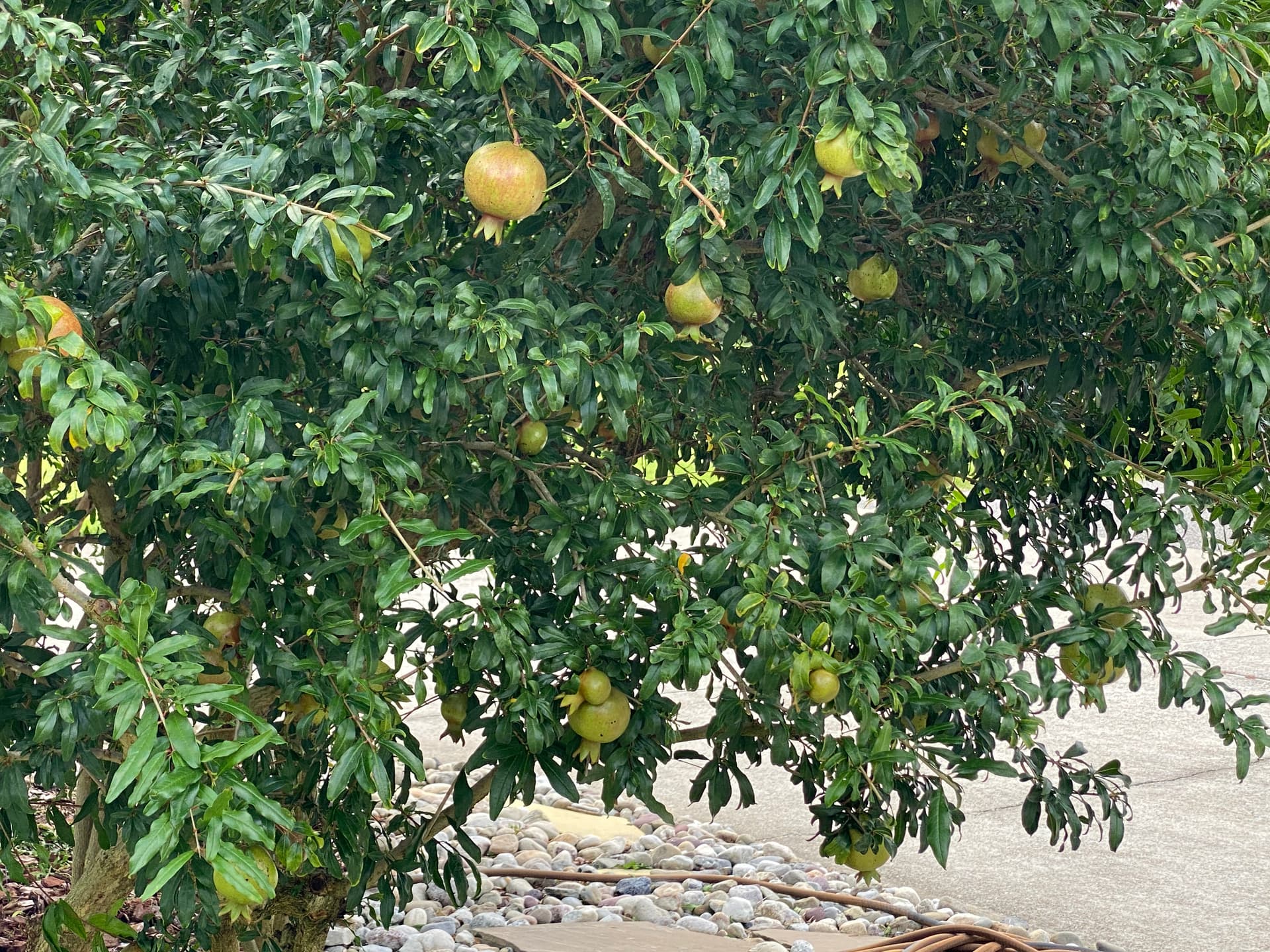
Here are pics of my 2 mature trees in front of my house. Wonderful, the oldest. Granada, 7 ? years younger.
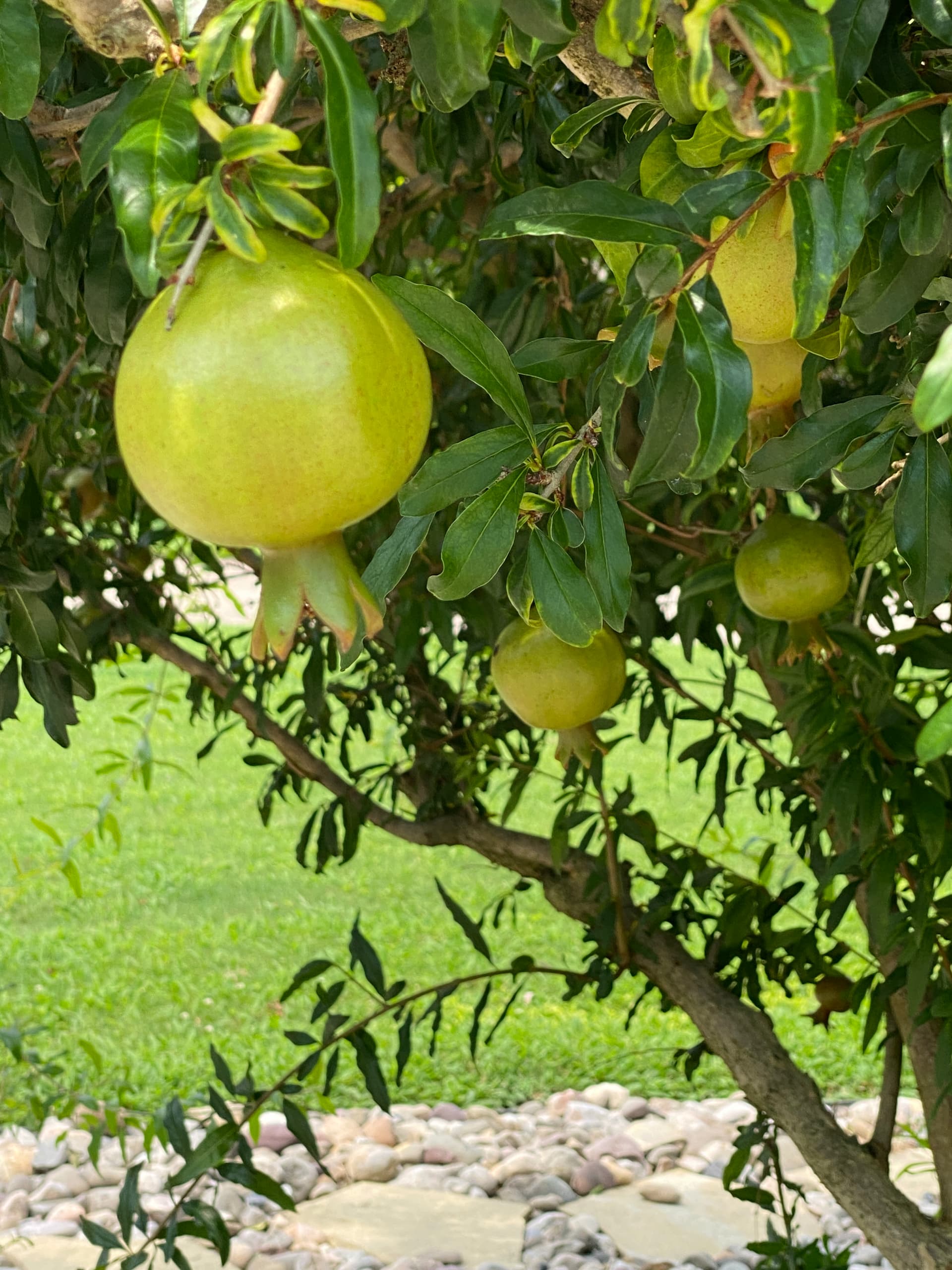

More fruit developing than ever before. And many at bottom of tree, where my little granddaughter could reach, with her pollination paintbrush!
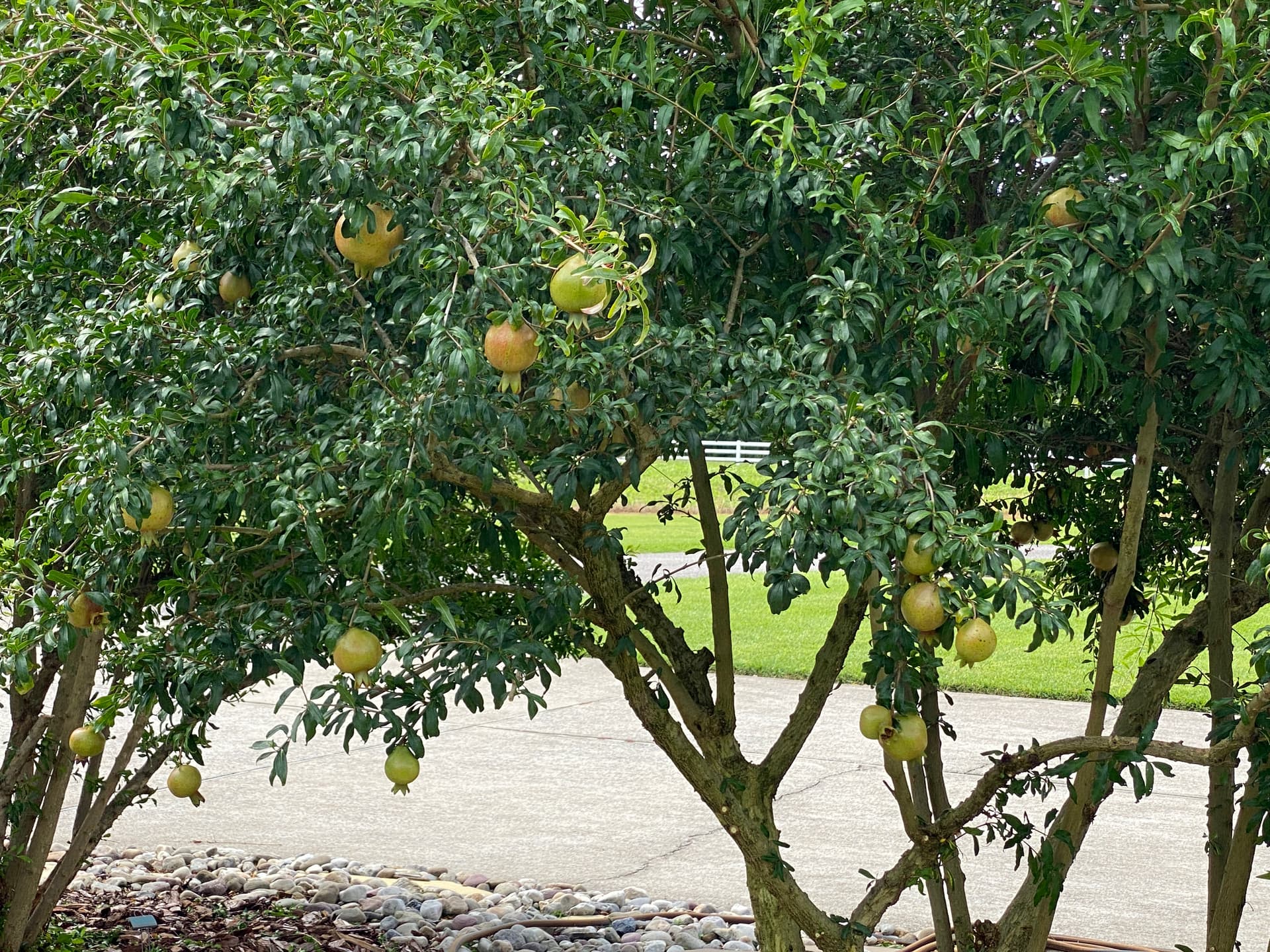
In comparison - these are younger trees out in the ‘field’. Planted 2018-19.
I started some from cuttings - like the Granada. The fruit on that Granada is farther along than the fruit on the very mature tree! More sun? Perhaps.

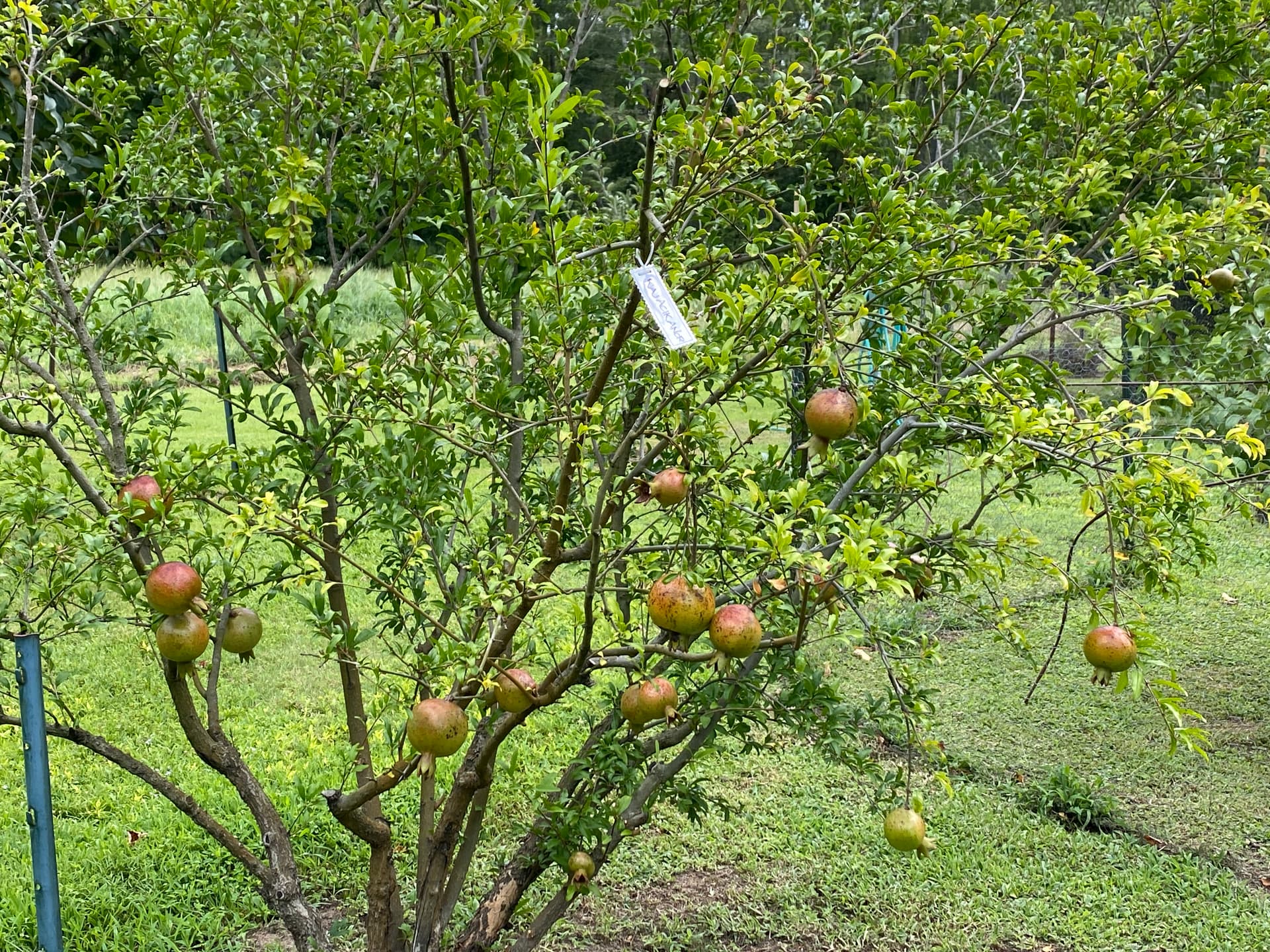
Individual pomegranates from trees that aren’t very productive. But, what fruit they do have, at this point looks pretty darn clean. Fingers crossed.
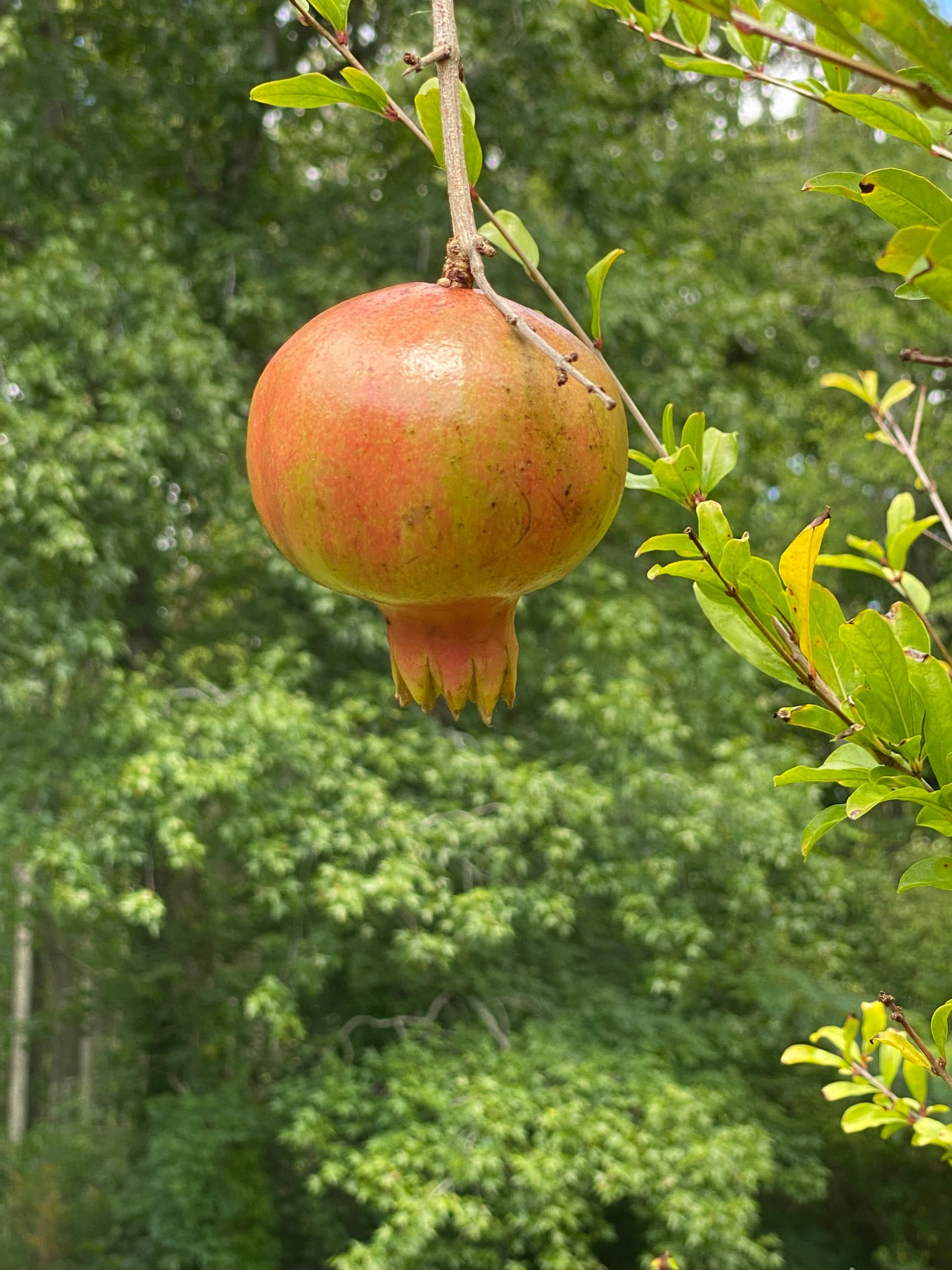

Sumbar - I think there are 2 on the tree!
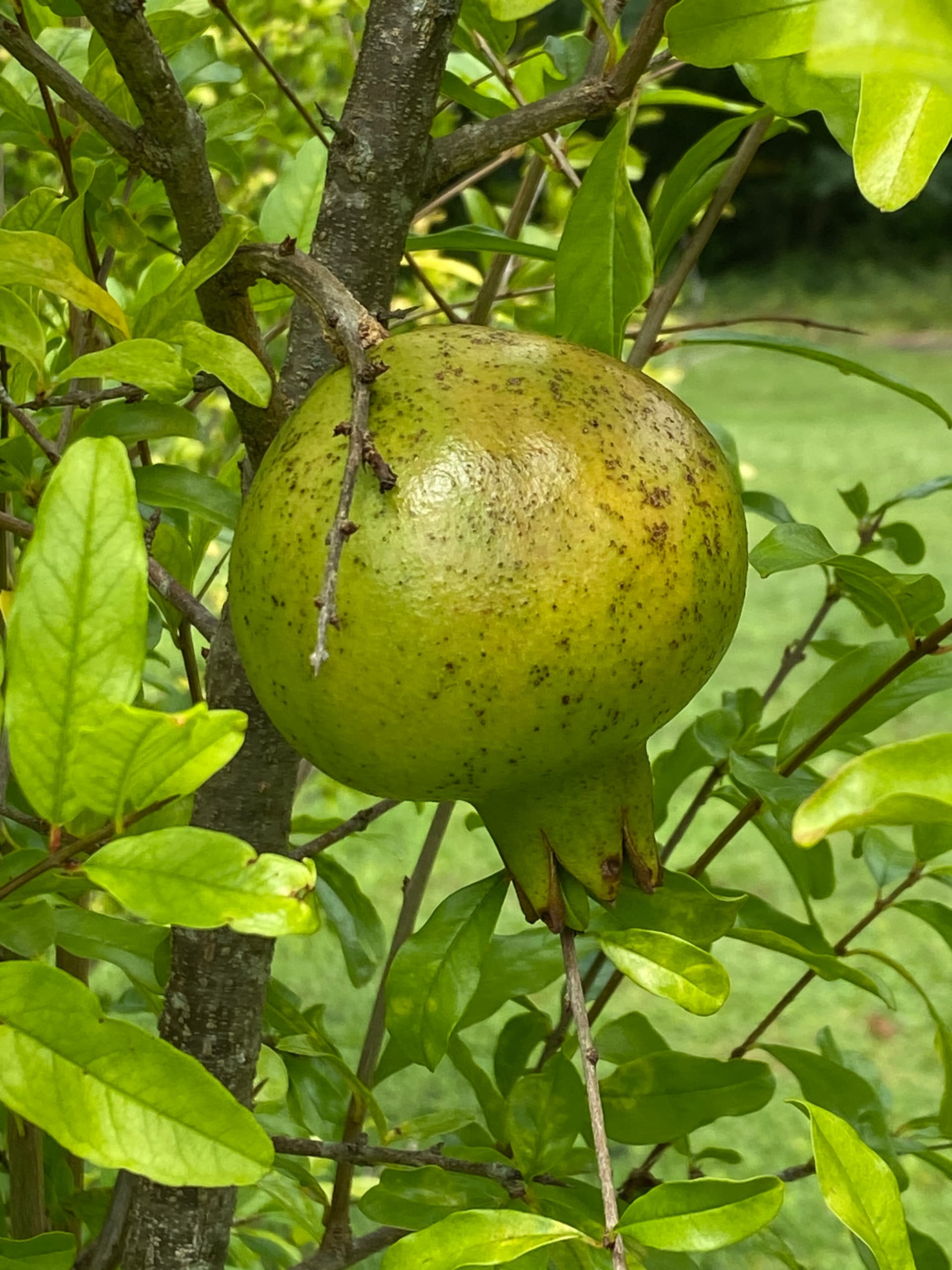

Serenevyi
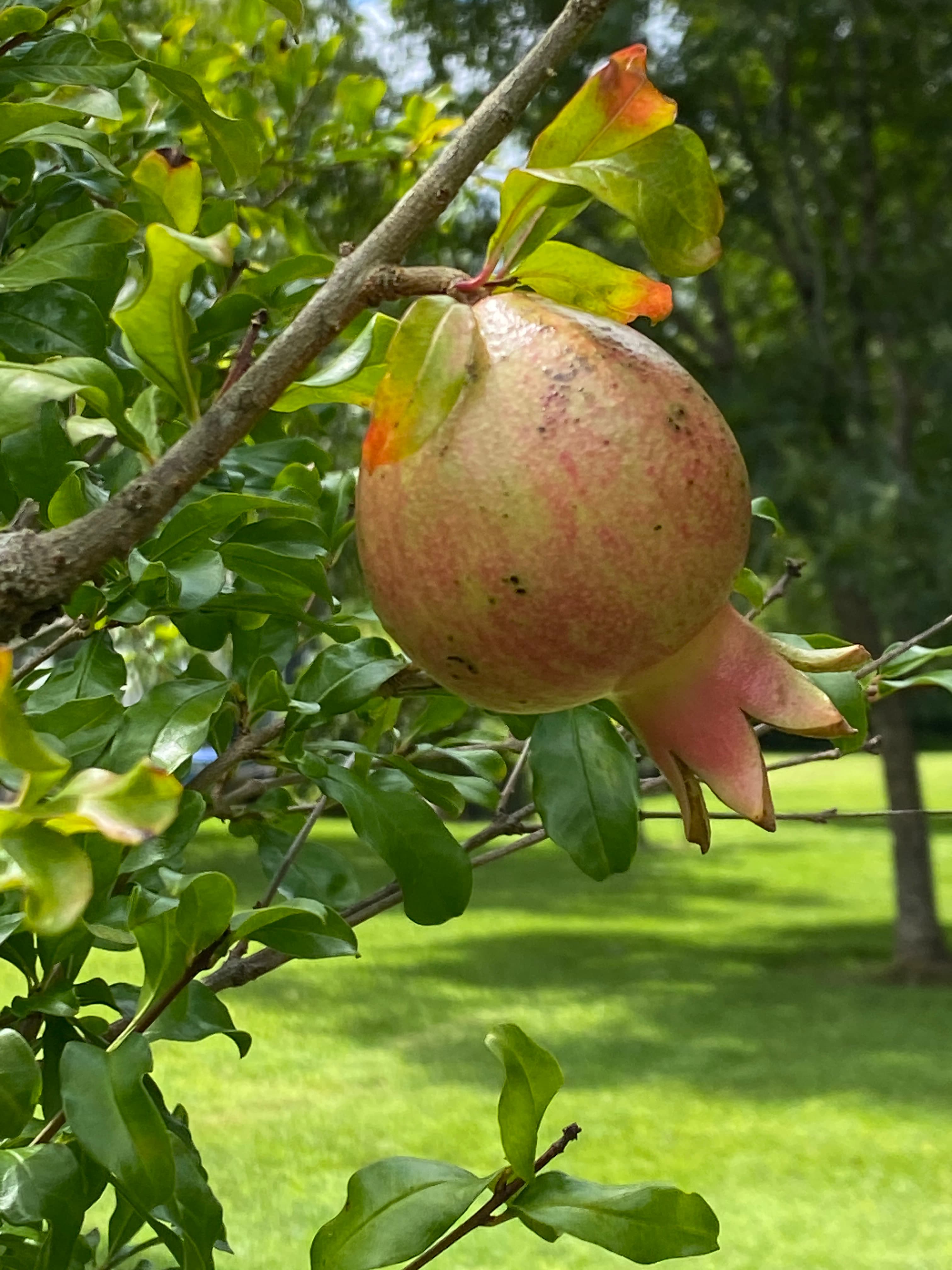

Suhr Anor
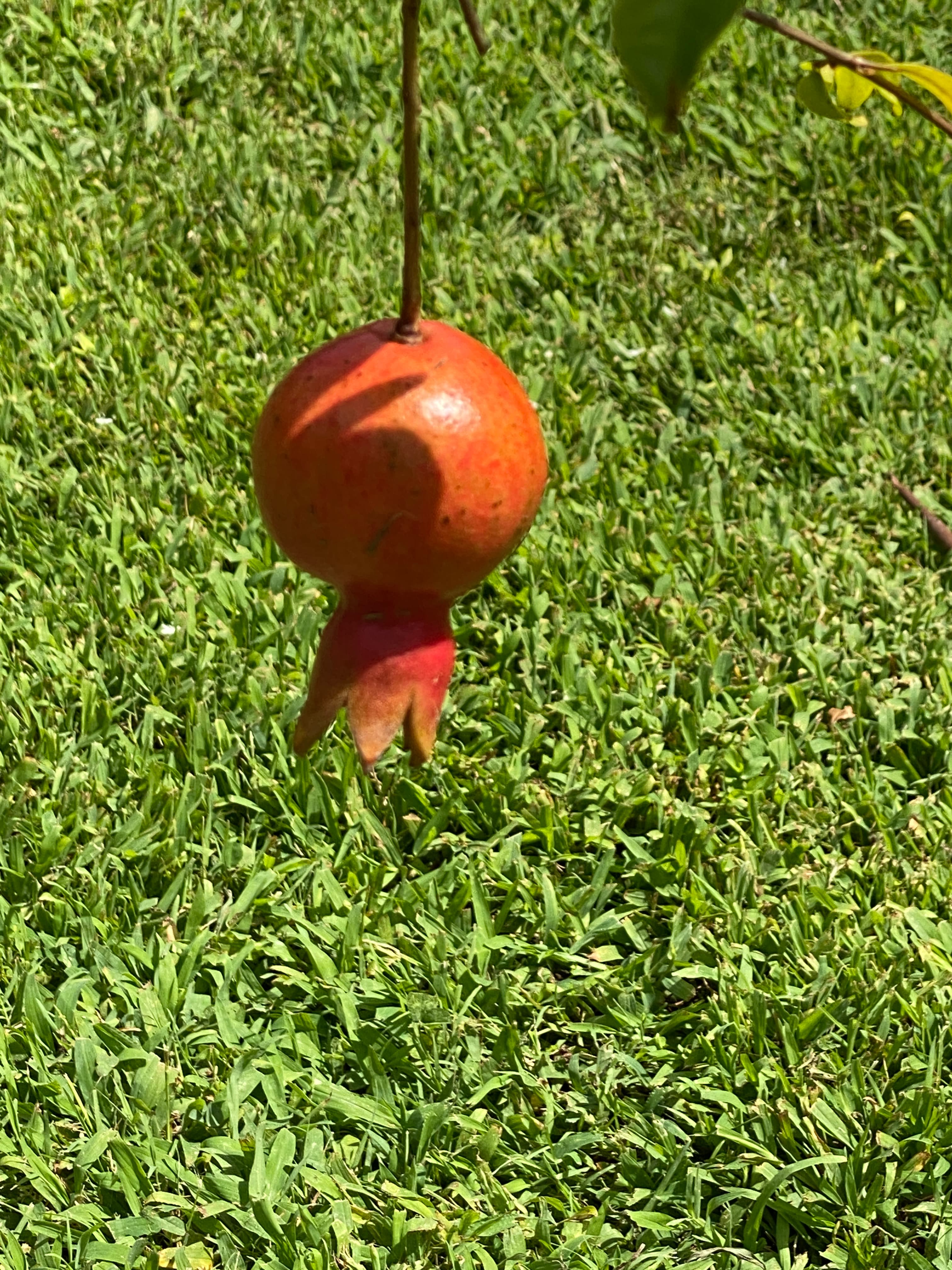

Nikitski Ranni is always a bright red! With a long calyx.


One Bad Apple :rage::rage::rage:

Everyone else please post ‘PomPics’. - Karen AKA Pomgranny

14 Likes

If you haven’t already … remove it. Critters can transfer fungal infection to other fruits.

2 Likes

Oh, don’t worry . . . that sucker is GONE!

2 Likes

Your fruit is beautiful! I’ll look forward to hearing that it’s delicious.

Looking to read experiences with any of the following varieties in terms of early ripening (nurseries claim they all might be), actual hardiness, success/failure, whatever:
Sumbar
Sumbarskii
Sverkhranniy
Sweet
Eversweet

And, the slate hill offerings:
Pink ice
Utah sweet
Alk pust ghermez

2 Likes

@Eme
Stella - I have a Sweet tree. Never produced a single fruit. And it’s very small. I had Utah Sweet and it bit the dust. Eversweet - the same. Sumbar is in my post. I think there are 2 fruits on it.

I listed others that I tried and lost, below in my post to @sharq .
Forgot to mention “Austin”. I tried planting that one on a protected south side of my house. It perished too.

2 Likes

I just got a Salavataski yesterday. It was recommended for South Florida because it fruits really early and it can hold its flowers in our weaker cold fronts in Feb/Mar. $12 is cheap enough that I am willing to trial it. I already have a Vietnamese type, which do better with the humidity, thats been in ground for a year now. Didn’t flower this year.

3 Likes

We have a Russian 26 and a Salavatski, both in the ground for about 2 years now here in Northeast Texas. Not letting them keep their fruit yet, but they both bloomed a bit this Spring. We’re planning to add a Surh Anor & another Salavatski this Fall.

We previously had a Wonderful and some nonspecific “Russian”, but Wonderful was not cold tolerant enough for our spikes of cold weather in the winter and it never woke back up after its first winter, and I think the Russian succumbed to root damage from fire ants in its first year.

4 Likes

Sorry I missed the sumbar ID on that picture, thanks. Any idea why some of the varieties you have never or barely fruited? Were the deaths of eversweet and Utah sweet winter?

1 Like

@sharq
Whaaaaat??? Salavatski is one of the ‘tougher’ varieties . . . misleadingly referred to as a ‘Russian’. Afghanski, as well. They are supposedly able to survive cold cold winters . . . I have never heard anything about these being recommended for hot humid long summer weather. ? We people who refuse to believe in something called Reality . . . LOL . . . and keep trying to grow pomegranates in humidity . . . well - we’re a little NUTS.
:crazy_face:
But, who knows? I’m ‘too far in’ to quit now.

Pomegranates can take a loooooong time to bear fruit. The plants grow quickly - but take their time setting fruit. Some varieties earlier than others, however. I know everyone is probably sick of hearing about Granada . . . but mine bore fruit, after starting from a cutting, in just 3 years. That’s quick. Others . . . I’m still waiting to see the first fruit from some plants that I put in the ground in 2018 !
Salavatski and Afghanski set fruit - but seem to be very sensitive to that fungus I deal with. I think I’ve only been able to taste a handful - if that. Others have had better luck with these.

And pomegranate fruit takes a long time to grow and ripen, once the blossoms are pollinated. You have short winters . . . and lots of long hot humid weather. Even more than here, in VA.
I think you are smart to search for the varieties that might do well in places like Vietnam (?)

Maybe other forum members have some ‘warm weather pom’ suggestions. I know that there are varieties found on old properties in Florida and Georgia . . . These bear fruit.

‘A respected southern magazine’ named some ‘southern’ varieties. Such as:

Ambrosia - Very large fruit with pale pink skin. Tart red seeds. (Bit the dust for me.)
Angel Red - Vivid red fruit, soft seeds, high juice content. (Ditto.)
Granada - Large red fruit. Often called ‘early Wonderful’. Ripens earlier than Wonderful. Less tart.
Utah Sweet - Pink fruit and pink, very sweet, soft seeds. (Mine died. Quickly.)
Wonderful - Most popular variety in US… Grown in CA for the POM Wonderful brand of juice and seeds. Large red fruit. Tart hard seeds.

Good choices in Zones 6-7 with winter protection. Have been known to survive temperatures of 5°F:
Afganski - Red fruit. Does well in the southeast, tolerates humid summers. (I doubt it!!! Not my experience!)
Salavatski - Has deep pink, semi-soft seeds, Among the best southern pomegranates. (I also question this - strongly!)
Parfianka - Red fruit and pink, soft seeds. (Mine died . . . )
Nikitski-ranni - AKA Crimson Sky. Tolerates humidity. Red seeds. Light pink fruit that resists cracking.

According to “One Green World”
Kaj-Acik-Anor (prounced Cray-a-keek-anor) WHO KNEW??? Good to know!
This one does well for me. Sets and holds fruit. This year I hand-pollinated for first time.

Incredibly cold hardy Russian pomegranate. Bears very large round fruits. Vigorous, upright, large bush. Fruit is very sweet. Excellent for juicing. One of the best tasting. High sugar content.

5 Likes

I know that Japanese Beetles LOVE some of the pomegranates. They burrow in the calyx of the developing blossom/fruit . . . and travel from tree to tree. On our property, they especially love Afghanski and Salavatski. ? And these varieties are always ‘consumed’ by the rot.
This summer we had extremely light JB infestation. Who knows why.
AND - perhaps the hand-pollinating helped dodge the spreading of the fungus??? Next year I hope to do the hand-pollinating as early as possible - to beat the beetles’ arrival. ?

3 Likes

I have Parfianka and Vina, both are loaded with fruit in their
4th year. I found that in order for them to fruit like mine are, they
need to be pruned, fed and mulched. Makes all the difference.

4 Likes

@rayrose
Ray - what do you use for mulch? And for fertilizer?
There is so much conflicting info. Some say to ‘fertilize early in the plant’s life’ - and then quit. Others say use compost to mulch.
I prune. And I fertilized as directed by most sites. And then lightly. (This year NO fertilizer.) I ‘mulched’ with wood chips. (But I expect that the chips harbored fungal spores.) I removed most of the chips - and sprayed ground with copper. One summer we put down squares of landscape fabric around base of trees. That was a job . . . and didn’t seem to help. Plus the mowers tore it all up.
Another year I spread some compost around drip lines of trees. And the fungus was horrid that year.
I see that you are in Columbia, SC. Hot and humid, right? Maybe not as cold as in Southeastern VA. I lost my Parfianka after a couple of years. I don’t know anything about Vina.
But, obviously . . . you are doing something right! "If it ain’t broke . . . "

2 Likes

I mulched this year for the first time. Bagged pine bark mulch from Lowes. Gave each tree a whole bag. Easy to put out and stays in place. Used 10-10-10 once in early spring.
Vina is a pink soft seeded variety. You have to keep pruning out the suckers.

2 Likes

Arils.

The Russian names are due to botanist G. Levin. Do not infer climate from them.

Yes. Earlier I noted ‘misleadingly’. But . . . never the less - this is how they are described.

Same with arils. For heaven’s sake . . . I know that they are arils. But this is what they are stubbornly called - and called in the articles in which I found these lists.

4 Likes

Or you could save them to share them with us :grinning:

1 Like

Our springs are surprisingly dry in Florida south of Orlando (especially so where I am on the West Coast). UF/IFAS recommended to the grower (in SE FL) because it doesn’t really go dormant in the area, and because of that it fruits and flowers incredibly early, and is done by Mid-May just before the rains pick up. I am in Central Florida and we are quite a bit colder, but dormancy is still mostly just a fad, so hopefully the same logic applies. Even the grower said its still in the trialing phase, but I am willing to trial something for $12 with no shipping costs. Plus it has pretty flowers even if the fruit never works out.

2 Likes

@PomGranny
Why use erroneous terms of sellers when you don’t have to?

1 Like

I don’t think you want my poop. :grinning: :grinning:

1 Like