I am in TX 8A. When talking about cold hardiness it is useful to know what cold here is. Usually about 7-10 days over winter will be below 25F, but bad cold snaps can get very cold but only happen every 3-4 years and will be for one night, or at most two that gets in the 0F-7F range. Perhaps every other year we get a regular cold snap in the 8F-15F range typically toward the warmer end of the range than cold, one to three times in winter, only at night. Half the winters I woul don’t get below 15F, the other half have either the regular or bad cold snaps. We have late freezes commonly and sometimes have early fall freezes the earliest I have seen is Oct. 31st.
Soft seeded varieties here get either top killed or completely killed so far over a 2-3 year period. Might be warm enough one winter, then get zapped the next winter with the cold snaps. Had a near perfect winter to test cold hardiness in 1-3ft tall soft seeded varieties with only one night hitting a 10F low and the rest of winter was above 15F. My observations for plants, all planted in ground, and specific varieties:
A.C. Sweet: This is not as cold hardy as nurseries claim. This was 3 ft tall, so maybe two years old, was top killed completely. Grew back from roots at a modest rate. This and other winter experiences also point to this variety not even being the cold hardiest of the soft seeded cold hardy varieties either. Nurseries need to stop claiming this is exceptionally cold hardy it is not in my experience, and it is not even particularly cold hardy for soft seeded types.
Fleischmans (aka Texas Pink): 1ft tall, killed completely.
Sverkhranniy: 1ft tall killed completely.
Sin Pepe (aka Pink Ice, Pink Satin): 1ft tall, killed completely.
Gissarskii Rozovyi: 1 ft tall, killed to the ground but grew back very robustly (maybe not killed to the roots? Perhaps the trunk survived? Came back fast and grew larger than it was when top killed.)
Parfianka (aka Garnet Sash): 1ft tall, killed to the ground, grew back from the roots at modest rate.
Gissarskii Rosovyi seems to be the most cold hardy of the soft seeded varieties I have grown (see below) as far as I can tell. When it is damaged it grows back at a very robust rate, whereas the other sort of limped back maybe not reaching their previous seasons size. The Incredible Pomegranate book (available free online) talks about 12F roughly as the cold hardy limit for soft seeded varieties, and my experience seems to see a similar thing with of course some variation by variety around that temperature.
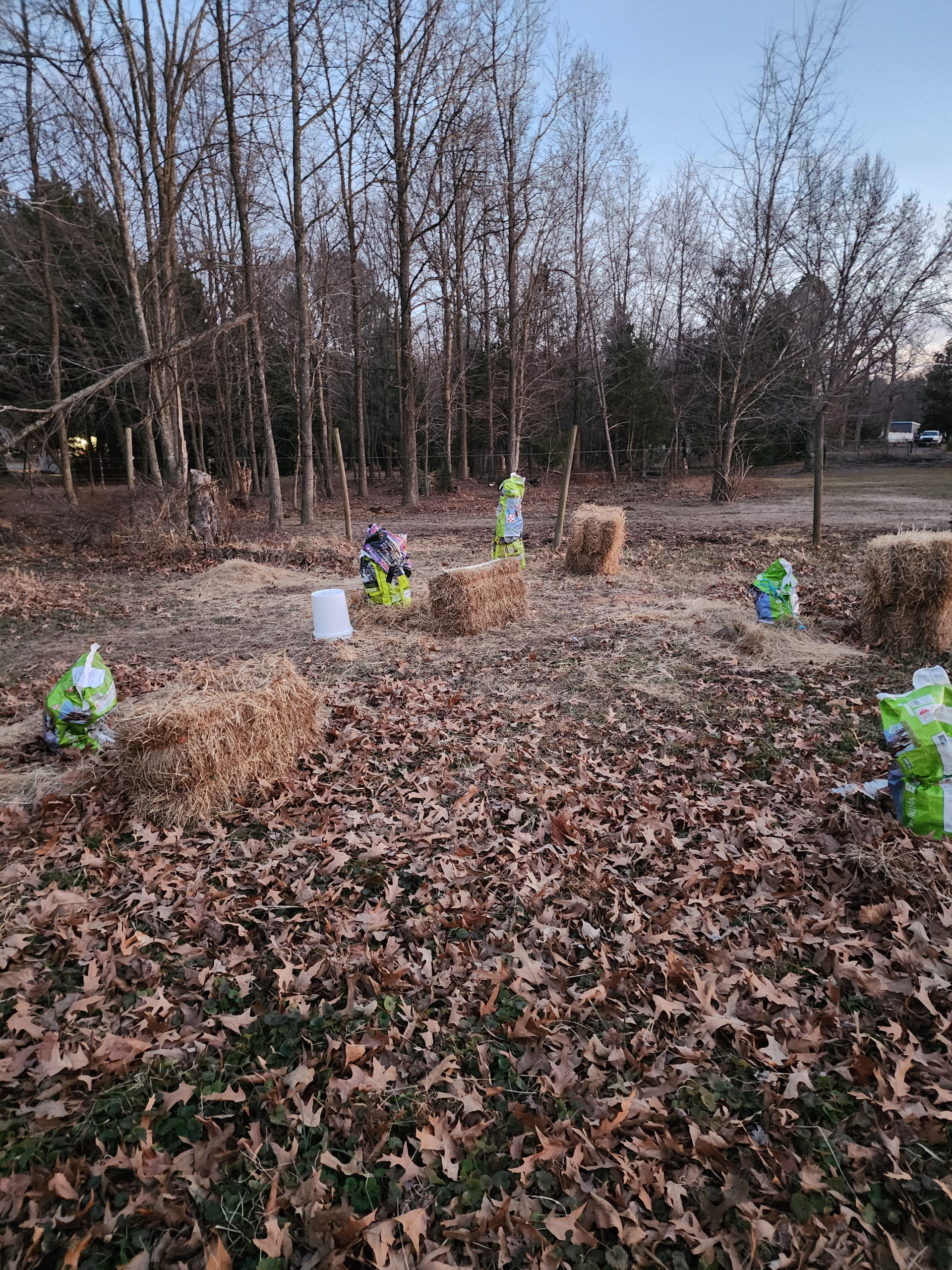
With that being my first attempt at these I replanted a lot of these in ground but used winter protection for the cold snaps. I also planted the most (as best as I could tell) cold hardy hard seeded varieties too. Depending on the temperatures cold protection might be a plastic trash can with an air tight cover put over the plant, if exceptionally cold I will put lithium ion battery hand warmer inside the trash can that supposedly lasts about 8 hours to hopefully increase the temperature inside a few degrees at least during the coldest part of night. This past winter I did not have enough hand warmers so for some small plants I bent their stems over and covered them several inches of compost burying them for the night. Since I do the protection now it is a bit harder to tell exactly what temperatures some are cold hardy at given the outside temperatures. Another thing is that larger more mature plants are supposedly a bit more cold hardy than small ones so I started buying larger plants about 3-4 years old to get around youthful cold sensitivity. With that understanding we get to this past winter where we hit 5F for several hours one night then back up to 15F for the day as a cold snap. Then we had a late freeze (about 30F at coldest that night) that hit the plants after they had started leafing out. And here is what I found:
Gissarskii Rozovyi: 2 ft tall, had put a trash can over it for the 5F snap but did not have a hand warmer for it as other plants got priority. To my astonishment it was not top killed, came through mostly intact. Then leafed out, put a trash can over it due to the late freeze, and amazingly not all leaves were killed, about 25% of leaves survived. Again surprised
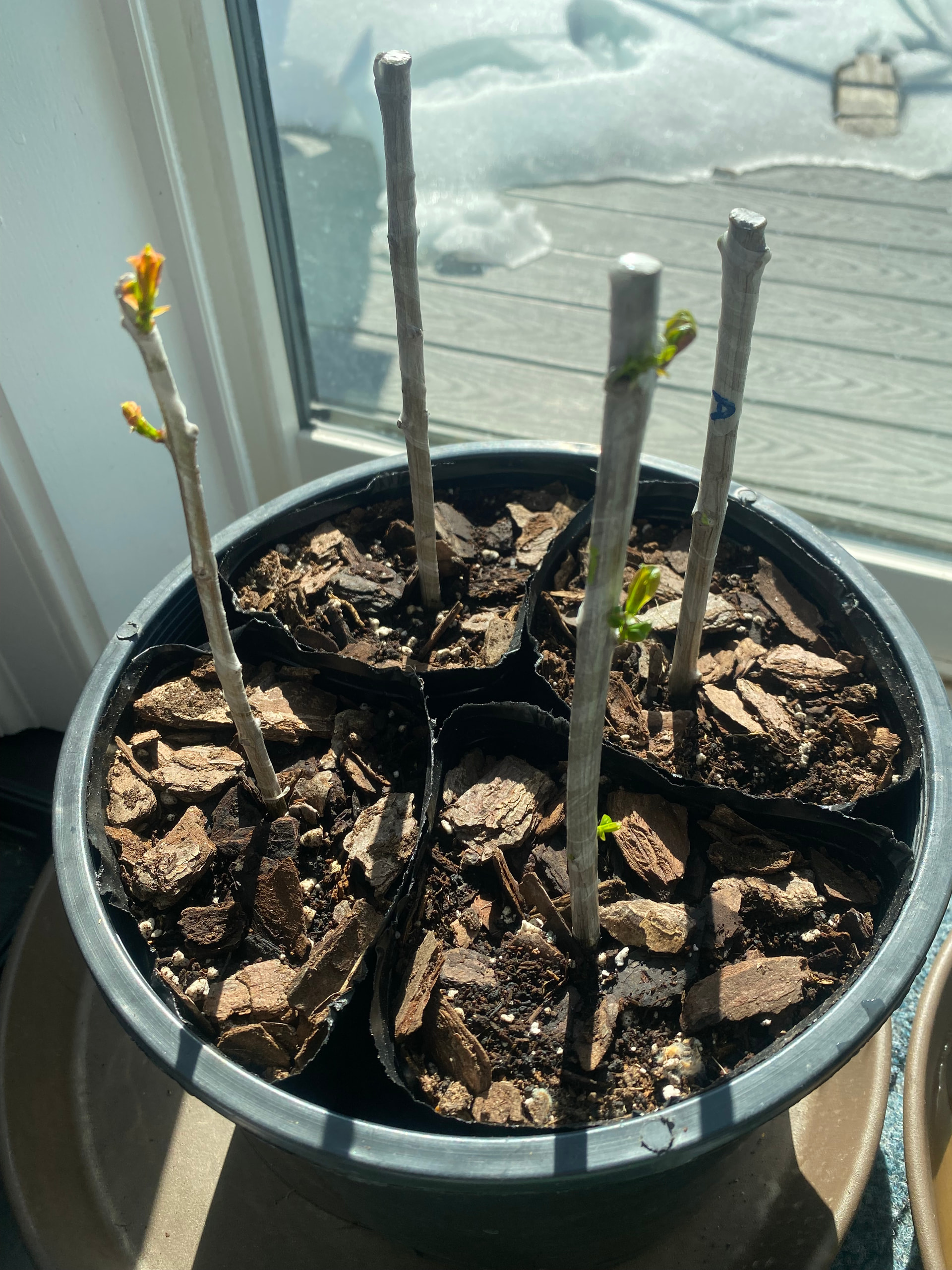
Alk Pust Ghermez Saveh (aka I2 in the GA growth study): One ft tall, new this year, for the deep freeze buried it under 3 in compost. It appears it has been at least top killed, may have been completely killed. Still too early to say as it could sprout from the roots. But it had not leafed out or sprouted from roots by the time the others had. I think it is dead. Surprised by this one.
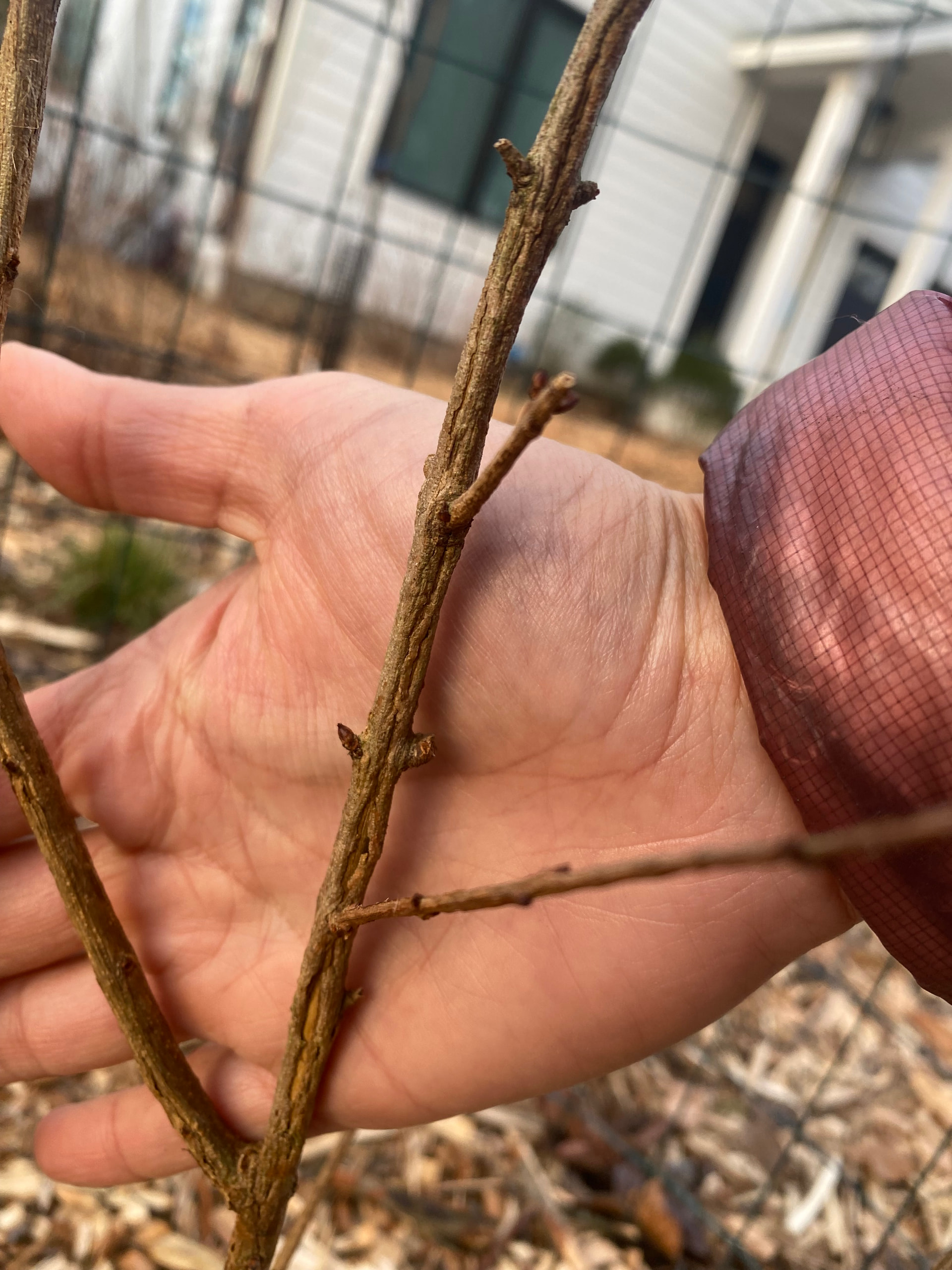
A.C. Sweet (second one in another location, with the original panted elsewhere): 2ft tall, for the deep freeze I could not bend the stem down so buried it 2/3rds up in compost and put an air tight trash can over the rest for the deep freeze. Heavily damaged by the freeze but the lower part survived and was starting to leaf out when the late freeze hit. The branches that were leafing out are now dead, and this may have killed it, scratch test is a little unclear, maybe there is hope not clear. The second A.C. Sweet mentioned in the above section had no protection during the deep freeze and may be dead too.
Kaj-acik-anor 3 ft tall plant and was planted last summer. For deep freeze put a trash can over it with a had warmer inside. Survived just fine. Leafed out hit by late spring freeze and took maybe 50% damage to leaves but is alive. This may be the most cold hardy one of what I have, or one of two.
Salavatski Planted two of these and bought them at about 5 ft tall or so, three to four years old I guess, planted in two different locations. For the deep freeze one I put a trash can over with a hand warmer, the other I ran out of stuff to protect with and had to let it ride it out exposed. Both were top killed. Supposed to be the most cold hardy I thought? Not for me. It is regrowing from the roots after the late freeze. Did not start growing prior to late freeze.. Kaj-acik-anor planted ten feet away in a worse spot did better.
Suhr-anor 1 ft tall planted in the last year. For the deep freeze I could only put a trash can over it as I did not have enough hand warmers for everything. Was not damaged at all. Started leafing out, late freeze hit with little damage and is doing fine. While cold hardy from the university growth studies it appeared a bit less cold hardy, but still very hardy, d id not expect this, survived completely. Candidate for most cold hardy or maybe the hand warmers are not doing anything, not sure.
Sverkhranniy 1 ft plant planted in the past year because I simply have not killed enough of these yet. For the deep freeze buried it in a pile of compost and survived but maybe with damage. Started to leaf out and the late freeze hit and I think it is dead. So no evidence of life, has not grown from the roots though I suppose there is a chance it survived.
Sumbar 1ft plant planted in the past year. Deep freeze, buried in compost, survived with some damage. Started to leaf out then the leat freeze did more damage. I think it is alive as the scratch test on the lower stems look green. But still no sign of growing back from stems or roots yet, so can’t be sure.
So where do I go from here? Getting another Kaj-acik-anor or Suhr-anor for one thing. Salavatski simply was not as cold hardy and it was the biggest most mature ones I had. Can’t explain that. I have yet another Sverkhranniy in a pot and since I am a Sverkhranniy serial killer I am going to plant it out yet again and try one more time. If Sumbar is dead I have another in a pot to replace it if need be. I am done with A.C. Sweet if it is dead. I will plant a Sirenevyi in its place if it died, or nearby if it survives. I have another Parfianka in a pot as well and will plant this one out too but I don’t think this is going to be quite cold hardy enough even with protection to make it. But I will try again. I have a Desernyi in a pot to plant out as well. For all these soft seeded ones I will have to do even more winter protection for them to survive, will need more hand warmers I guess. And that is where I am at here in Texas with my pomegranates.