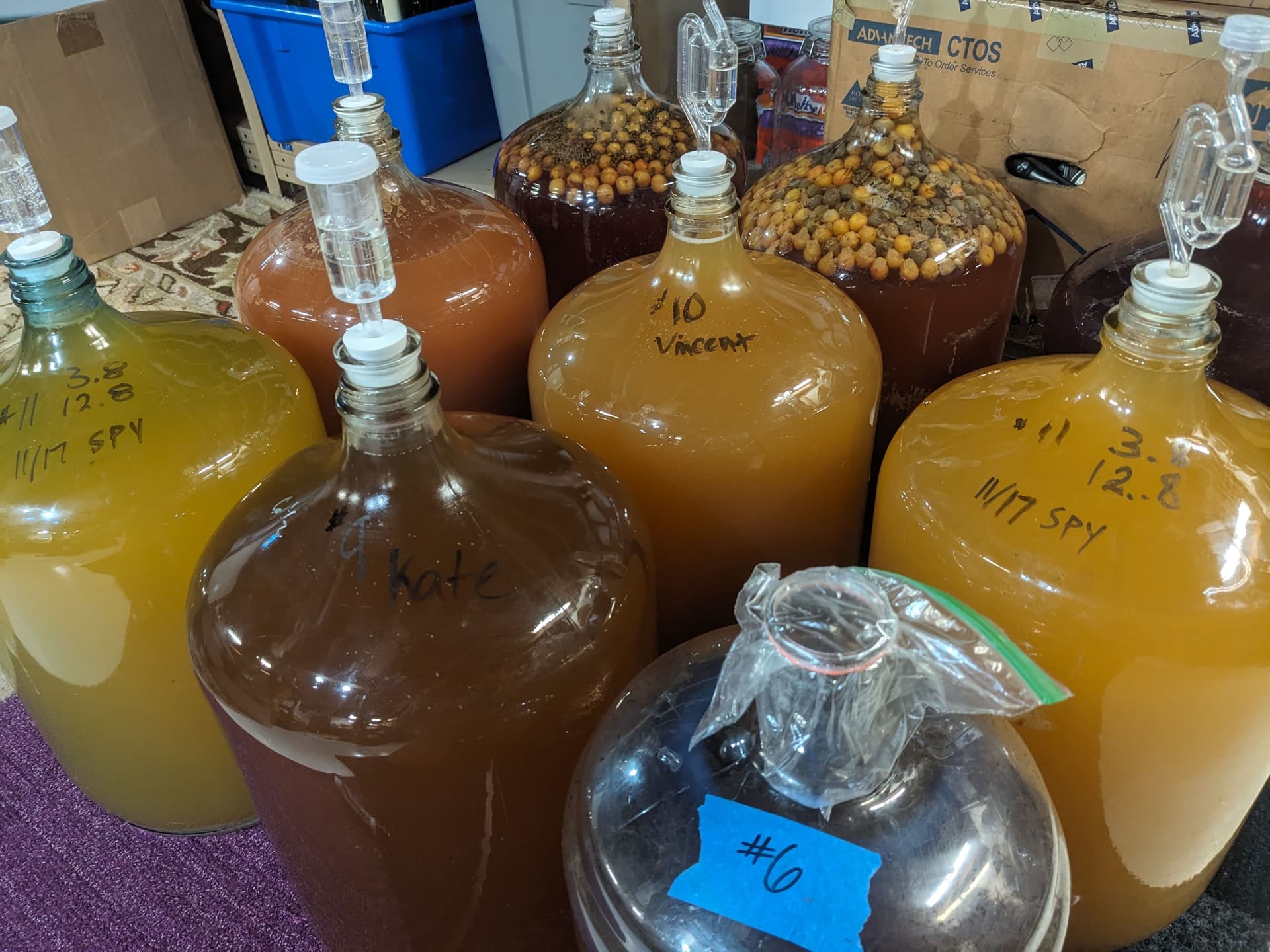
I’d not add anything when making cider (for nutrients). For flavor/alcohol/pH… tannins, acids and sugars (you can do this by taste). You want your fermentation to go slower so it doesn’t “blast” the flavor from your cider (your room will smell heavenly, but the cider will be flavorless) .
If making from apples you will need sulfite. If you go a half dose you will get a natural fermentation, a full dose you will need a wine yeast (sulfite resistant), if using pasteurized juice (like concentrates), you don’t need sulfite and can use beer yeast (which is inhibited by sulfite).
Air is your enemy, it turns cider to vinegar. I’ve got 2 5-gallons of the finest apple cider vinegar, from thinking cider has a normal primary fermentation like beer or wine… I don’t use open fermenters (i.e. buckets) for cider anymore.
I’m growing my orchard on less fertile land (my soil is best described as clay and boulder), using standard rootstocks, and no irrigation. I want the apples to be small, flavor filled, with as low of yeast nutrients as possible. This is to slow down the fermentation, if the yeast uses up all the nutrients before fermenting to dry, I’m going to take that as a win.
FWIW, I do use sulfite and a commercial yeast (Lalvin 71B).
My experience with mead taught me that when yeast struggle with inadequate fertility, it produces tons of smelly and/or foul-tasting sulphur compounds. I can get a tasty product that does not smell faintly like farts and does not need years of aging to decompose fusel alcohols if I dole out the nutrients gradually and maintain moderate/cool temperatures. I think “going slower” works if it is achieved by cool temps. In my experience, poor nutrition creates a poor product.
That is definitely true with mead. I’ve made some awful meads without nutrients- but honey provides no minerals (or acid or tannin for that matter). However, you can’t make a really good mead without a lot of aging. Cool temp in fermentation is generally a good idea, my secondarys are always in the basemen.
If your goal is sweet and syrupy (which is what most people are going for) that can be done pretty quickly. If your going for something more wine-like… I haven’t been able to get there in less than 3 years from primary. The old German lady at brew store would tell me that and I never listened, because the mead I wanted was sweet and syrupy (if I wanted wine I’d use grapes). However, with enough nutrients to get the mead to ferment dry and then age out the mead till it is delicate, you can make a good “wine”.
I make a totally dry mead. But in contrast to what you’ve written, I’ve found that if I dole out the nutrients gradually and keep the fermentation at cool temps (mid 60’s) throughout, I can produce a totally drinkable “wine” without aging. The fermentation of a 12% ABV mead takes about a month.
I’m sure a lot of fermenters will dispute me on this, but I think that aging is required only if the mead suffers various defects. If you can avoid the defects, especially (1) sulphur compounds, and (2) fusel alcohols, then you can skip the aging.
Like i said, you absolutely need the nutrients for mead. And you can make a drinkable mead in a short time. It all depends on your goals.
Not all wines are worth aging. But aging is the only way to bring out the subtle tones. When i was young I didnt appreciate what can be accomplished with aging wines. I also didnt know how to properly cellar a wine.
I’ve never used sulfite in 20+ years of cider making and never had a batch go bad. I’m not even a neat freak. I ferment at really cold temperatures (high 30’s F) which may be a factor.
One thing I like about cider making is there are many different ways to make a good cider. Lately I’ve been making Scott’s Stupid Simple Cider: put cider in fridge with an airlock, bottle the next fall when I need room for the new batch. No yeast no sulfur no nutrients no racking no nothing.
Whittled down from The Handbook, it’s my understanding that the need to sulfite is driven by the pH of the juice, the fruit integrity (molds, rots, etc), and whether you’re choosing to ferment wild or from a packet. A pH of 3 needs no, and a pH of 4 needs all of the tablets. Essentially sulfite is risk mitigation. The cider could be fine or it could be a petri dish, and sulfite helps ensure the former.
Personally/anecdotally I get the pH reading and then gut check. pH gets me in the ballpark and the fruit quality/integrity decides the rest.
Data points for the season:
Japanese Plums 3.2, no tablets in 6.5g
McIntosh 3.4, no tablets in 6.5g
Northern Spy 3.8, 5 tablets in 6.5g
Can most definitely make without sulfide, I wouldn’t ever reccomend it. Cold helps alot, fermentation lock and good container important. I have 10 gallons of nice vinegar so it can go south… i ferment at basement temps though, like 60f, wild fermentation and half dose of sulfide. I use 6 gallon carboys, so fridge is out for me.
True, pH low is fine for wild ferment (think less than 3), but most people only calibrate thier pH meters down to 4.0, so is a gamble. Sulfide is cheap.
If you plan to back sweeten you will want to make sure the yeast is no longer active. That is why you would use sulfites. The low pH is good for shelf stability. I.e. no spoilage organisms.
I no longer brew beer, make wine or mead. As a matter of fact I no longer drink at all. But I would let the primary ferment run until bubbles stopped in the airlock and check the SG. Then I would rack into secondary.
BTW its best to not let that juice to see any air oxygen at all and if you smell sulfur, racking through about a foot of sterile soft copper will rid the foul smell.
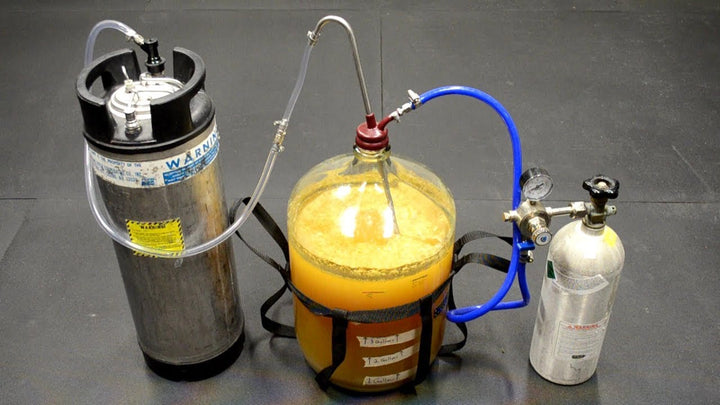
It is best to rack, keg or bottle with CO2 instead of racking cane and a bottling bucket. CO2 protects your wine and beer from oxidation and spoilage while maintaining its quality and flavor profile.
Its been over 5 years since I stopped drinking any alcohol. I still have all my brew gear including 6.5, 5 and 3 gallon glass carboys. A few cases of glass gallon jugs.The good ones not the ones made overseas. and I think 8 stainless korny kegs.
I’ve been meaning to get rid of some of it. I’m keeping my stainless 20 gallon kettle though but probably will get rid of the rest of my all grain set up. I also have cases and cases of old glass beer bottles also. The kind that were refillable by the brewery time after time.
I thought Potassium Sorbate is used to stop yeast reproduction. The commercial yeast I use tolerate pretty high doses of Potassium Metabisulfite, so I doubt that using sulfites would reliably stop yeast activity unless used in a dose higher than the taste threshold (e.g., >100 ppm).
My SOP when starting the fermentation is to dose with KMB to kill wild yeast (and other random microorganisms), wait a day, then pitch the yeast. The KMB does not stop fermentation with these commercial yeasts.
One option is to filter out the yeast. There are a number of options for filtering beer and wine. The plate & frame filter is probably the best. It has been a while since I browsed a homebrew shop, but they used to sell 3 grades of filter paper. The finest grade being a sterile filter and the coarsest grade of paper filtering out the yeast. If you use the fine sterile paper, you have to filter it first with the coarse and then medium grade. The easiest way to run it is between two sterile cornelius kegs. Filtering out the yeast would probably improve the efficacy of the preservatives. Sterile filtration can remove some of the protein from beer, affection foam retention and body to some extent.
The kegs can also be used to precisely carbonate your cider. You simply adjust the CO2 pressure based on the temperature of the cider and your desired carbonation level. Charts can be found with a search. After ~3 weeks, it should be carbonated.
There is a faster way to carbonate in 24 hours, but it results in a loss of foam retention in beer and works best if the cider/beer is nearly ice cold. Once you hook up the CO2, shake the whole keg vigorously for a full minute. Refrigerate or ice down the keg for 12 hours and then shake it for another full minute. Chill for another 12 hours and serve.