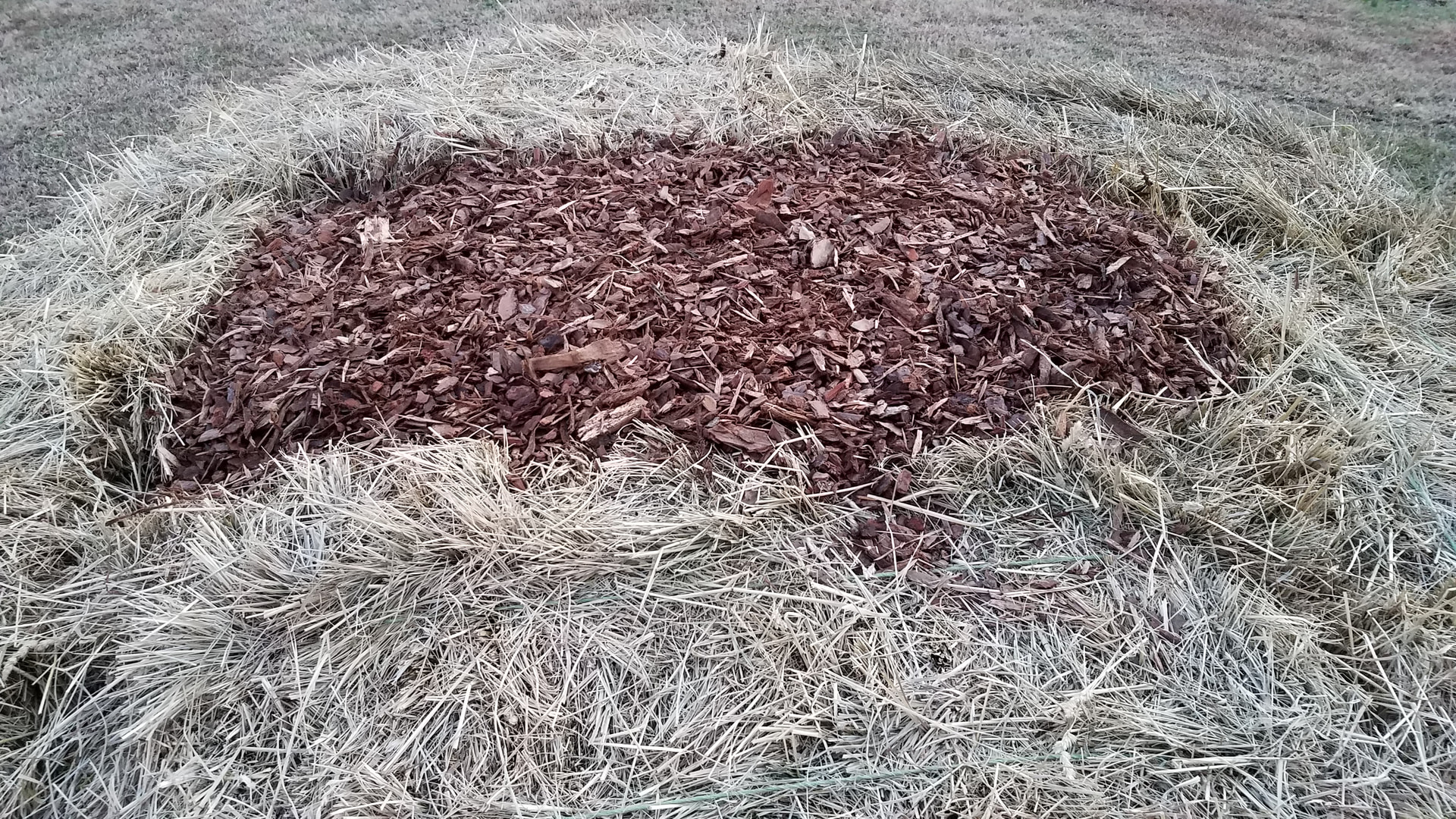
In spring I had an unpleasant exchange here about my method of cutting back fig trees and protecting them with cylinders of mulch. Another member rejected the idea of leaving as much wood as I do. I don’t know if his method is better, but this one worked out well with very little labor. I used to use leaves, but that’s a lot more work and probably less effective. It is the water in the leaves or chips that probably hold heat overnight and protect the trees. My figs survived
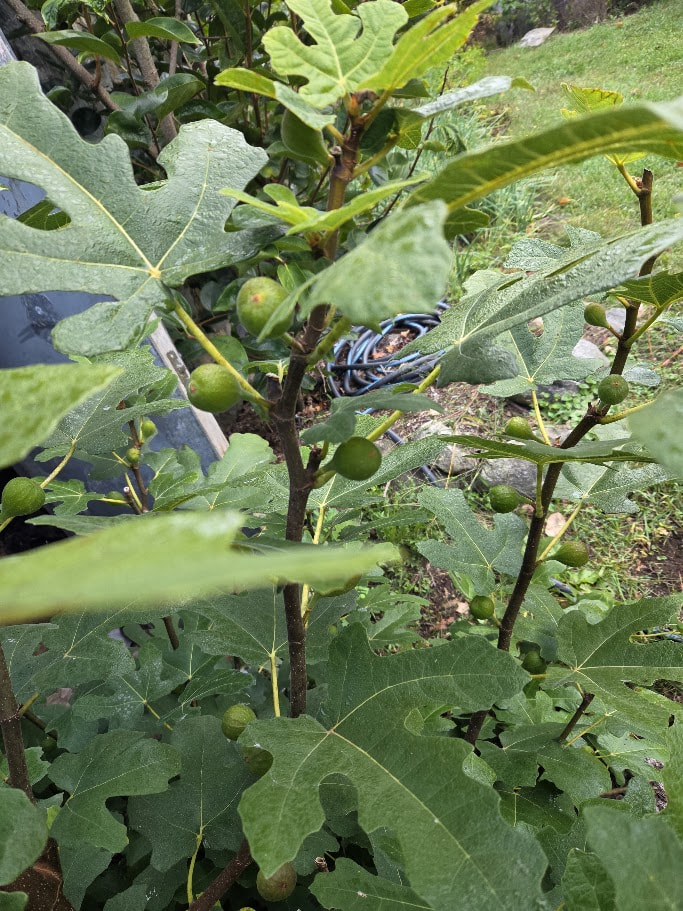
-9F and produced all the figs I could use. The tree in the photo is a variety that produced figs on almost every branch. I removed branches mostly to make room for the best branches. The other tree on my property I protected this way was somewhat less consistent and I could have used a few more productive branches. Half were almost blank and removed early.
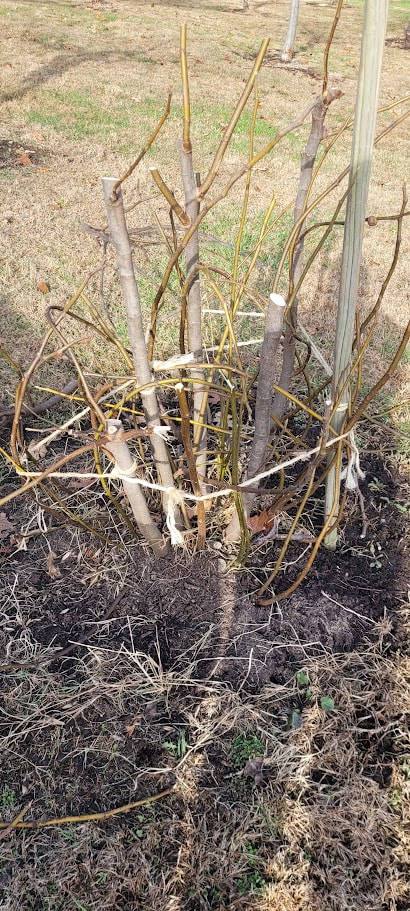
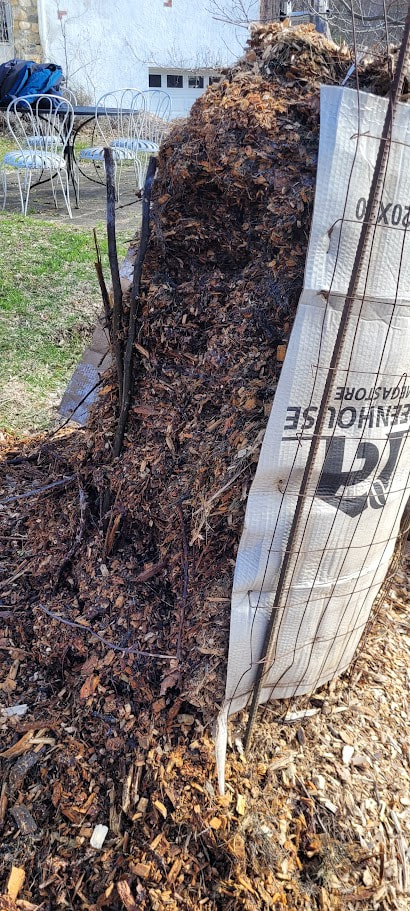
The 2nd photo is from this spring when I began to remove the wood chips. The 1st is of a different tree but shows how I tie the branches together.
I expect even better production next year because I left more healthy wood close to the ground. Not all the “canes” I leave produce figs so I keep only the ones that form figs early.
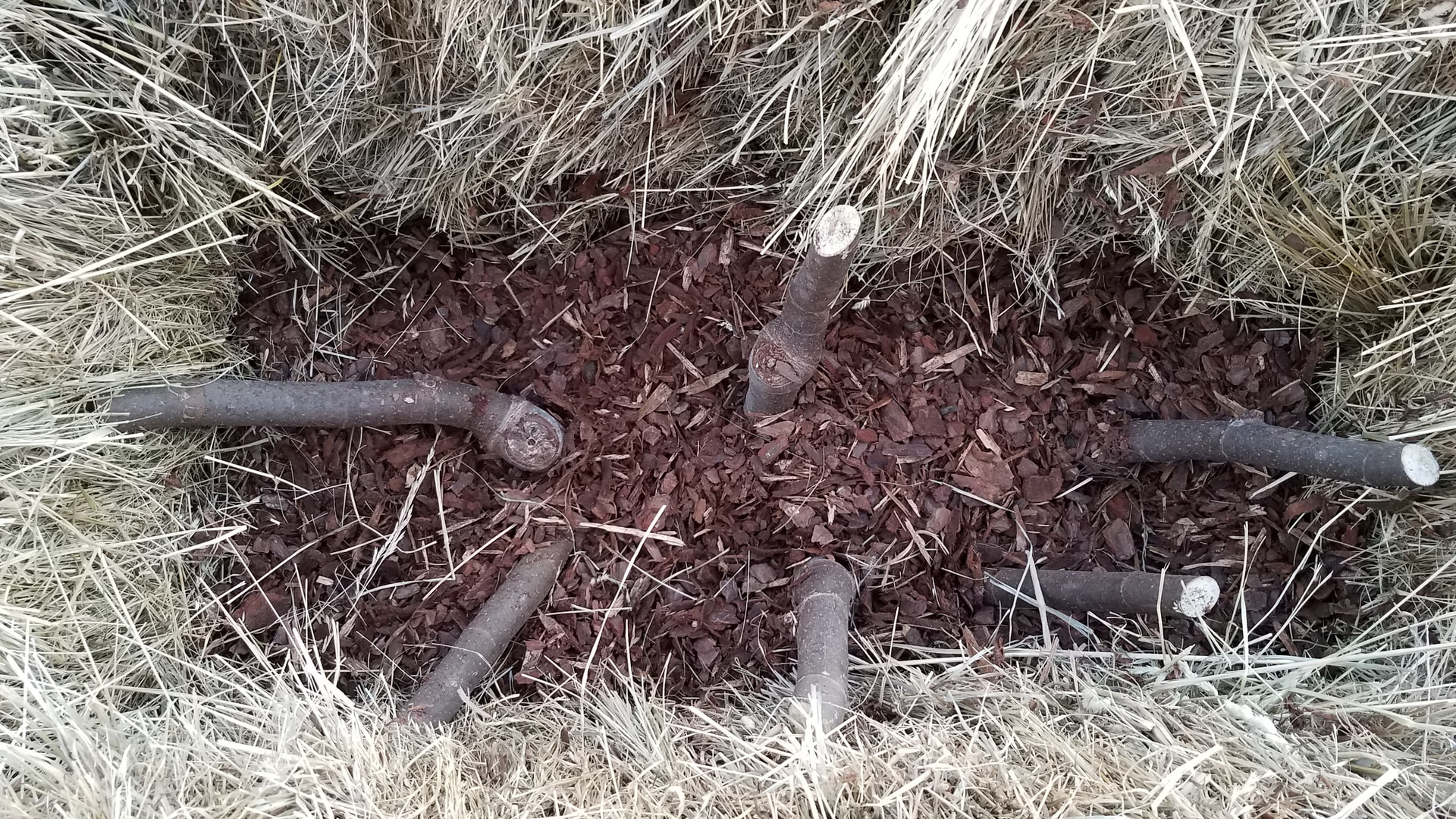
This is beautiful. Should work well (again). 6 stubs with 1-2 buds on each could produce 6-12 fruitng verticals, perfect for the space. Probably get a couple hundred figs.
A controlled study might reveal if cutting the figs to such short stubs is superior to leaving more wood, but both methods are reasonably easy. I get free woodchips but not free hay. I’ve also had fig wood rot when wrapped with a tarp and the tarp creates a perfect home for voles who love to girdle figs right to the roots. I like to place a poison baited feed station near any fig I’m protecting regardless, so that problem could probably easily be overcome. Just check the bait periodically.
I also think that results would vary with variety. Some might favor one approach over the other. Much as one fig grower might favor one method over the other.
If you aren’t selling them, yield per square foot is not important, I just want to do the least work possible for the least money and get all the fresh figs my wife and I feel like eating. Figs are the radishes of most orchards- the easiest of anything to grow.
Maybe I will cut one of my two trees all the way down to a few buds, but I doubt that will improve yield. No one can explain to me why it would.
Actually your method is not substantially different than mine- you leave longer pieces than I thought, just no thin wood. My problem is that one of my varieties tends towards some blind canes and benefits from thinning out the barren ones in earlier summer.
I’ve also used this method (I consider them basically the same) for the last couple years to protect an in-ground fig tree. I have used the wire cage and dumped whatever I had available - woodchips and/or leaves on top. The big downside to a larger amount of leaves in the mix was that they’d compress and I’d have to keep topping them off.
I’m going to be protecting three this year…
Questions:
I did not put a cover over mine but I am considering it. It sounds like the big benefit would be trapping more heat and keeping things dry so you don’t get rot. The cons might be creating a nice space for animals. What else haven’t I thought of?
I thought maybe I should encircle the base with 1/4" wire mesh to keep the chewing animals away. Do you think this would help or will they just dig under the mesh?
I am really short on woodchips this year. I’ve got leaves and straw. Can anyone think of an issue with using straw?
That it doesn’t hold enough water and water is what really creates the protection with my method. However. you may be relying on ground heat so it’s an equation I’m not familiar with but maybe TNH’s method is instructive- it has worked well for him for a lot longer than the time I’ve been using my approach. You can always use poison bait stations to control rodents, or even keep some spring traps covered with a tray adjacent to the tree. Rodents will always go for peanuts before they go for fig bark, I believe.
That survival at -9F is impressive. I’ve been using a similar chip cylinder method and it’s so much less faff than bagging up leaves each autumn. The thermal mass from the moisture in the chips does seem to make a real difference on those sharp overnight frosts.
Cutting down to a few buds will not improve yield per se. But you need only 1-2 buds per cane for fruiting verticals, so a shorter trunk is all you need. So re productivity, shorter trunks are just as capable of producing large crops. Moreover, shorter trunks would be easier to protect – you don’t need as much mulch.
My major quibble with what I see in the OP is all the thin wood. Come spring when it all sprouts, there’ll be a dense clutter of leaves creating lots of shade. This self-shading is what damages growth and yields. So the improvement of yield would come from opening up the center, as in @TNHunter’s picture in Post #7. If you admit sunshine, you won’t have to decide which canes are fruitful and which are not because they will all carry a fig at every node.
So if a grower wants to try this method, it’s OK to cut the major canes back to 2-3 buds. And the short canes are easer to protect. Optimal productivity depends on good sunshine. You get good sunshine by (1) limiting the number of fruiting vertical shoots to 1-2 per cane, pinching or pruning any others; and (2) ruthlessly removing thin wood that clutters up the center.
What about my main variety that tends to produce some canes that don’t form fruit? As far as a dense clutter, my pruning shears are my pocket knife and I’m constantly opening things up so light goes where i want it in my fig trees and really, throughout my orchard. Once fruit starts to form I make sure the leaves near it get plenty of light except on varieties where I want to harvest moderately thick annual wood to use for grafting- I leave some nice straight vigorous shoots towards the center of such trees.
I am still curious if leaving longer pieces of wood doesn’t lead to earlier ripening figs due to stored energy in the wood.
Tnhunter’s method seems to be about using heat from the ground- mine is using heat from the wood chips and that is what is unusual about it. The common method is to insulate from the outside and capture heat from within. Tn hunter’s method looks more labor intensive than mine even if his wood is shorter. It does look really nice and neat, but I don’t like using more tarps than I need- they end up in a landfill.
I believe if he just put a pile of woodchips over his shoots he would get the same results. Just do it right before temps fall below maybe 12F. I have protected dahlias that way, but for that it has been hit or miss- only works for my toughest dahlias, like tequila sunrise. But I’ve only tried that a couple of times- including last fall. The bulbs I dug up rotted because I was an idiot and put them in a medium that was too wet in storage that was too warm.
First, the main source of heat on any cold, cloudy day is the ground. When the air is 0 F, the ground a few inches below the surface is 28-30 F. Adding a big pile of mulch raises the ground level, bringing that relative warmth above the tree. Yes, the air above is cold but the ground is an infinite source of warmth.
Next, the tarp is a heat trap that easily overheats the figs on sunny days. This may sound good but it tends to push the fig out of dormancy early making it vulnerable to freezing temperatures at night and on cloudy days.
Finally, as you suggested, the tarp creates a nice warm spot for mice and voles to nest. It puts the bedroom right next to the kitchen (fig bark). The one time I used tarp over in-ground trees, voles demolished the trees.
Maybe the safest, simplest method is just a big pile of mulch surrounded by a cylinder of hardware cloth buried a few inches deep. Similar to your 1st picture n the OP but with (a) a lower pile of mulch reflecting trunks cut short, and (b) fencing with smaller holes.
May be just not a very productive variety if its open enough. Are you fertilizing at all? I find a high phosphorus fert some time in June helps form figlets.
As for the method, seems fine. I think best would be if you could use soil vs woodchips but that’s less likely to be laying around
I experimented last year with soil, or rather a sand-compost mixture and it was not more protective than straight chips and chips are easier to deal with and free. I think they need to be wet though.
Any fig tree can produce canes that don’t fruit. Usually this happens when new canes sprout from the roots. These canes are typically thin. Growing from the ground they tend to be shaded.
“Once the fruit forms . . . .” Maybe this is the problem. Figs are produced when the shoot has already received ample light for weeks. You want to prune to get light on the leaves BEFORE fruit is formed n order to ensure that fruit s formed, not after. Contrast the clutter and shade among the shoots and leaves in the pictures in your OP with the openness of the growth in Trev’s picture.