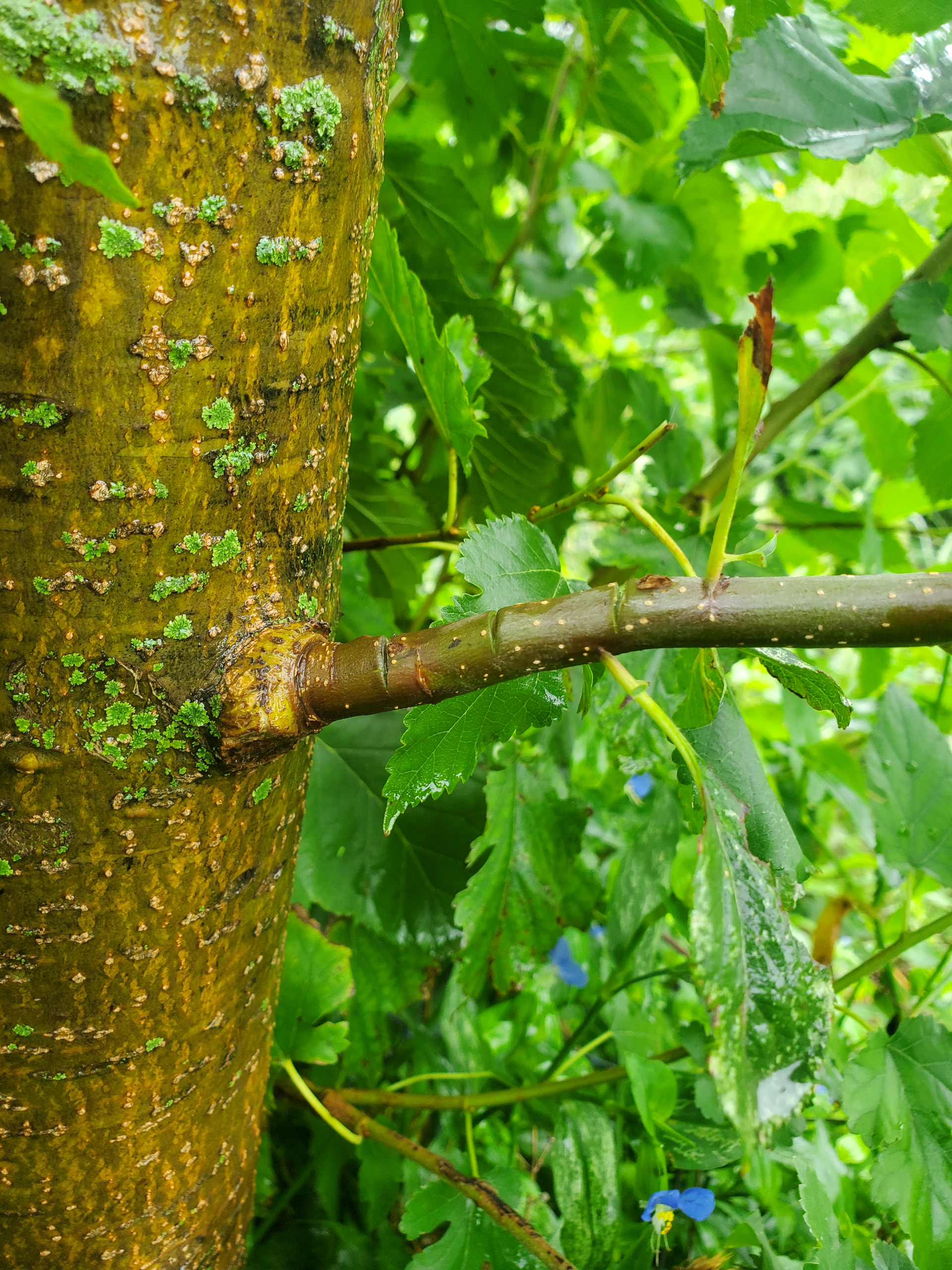
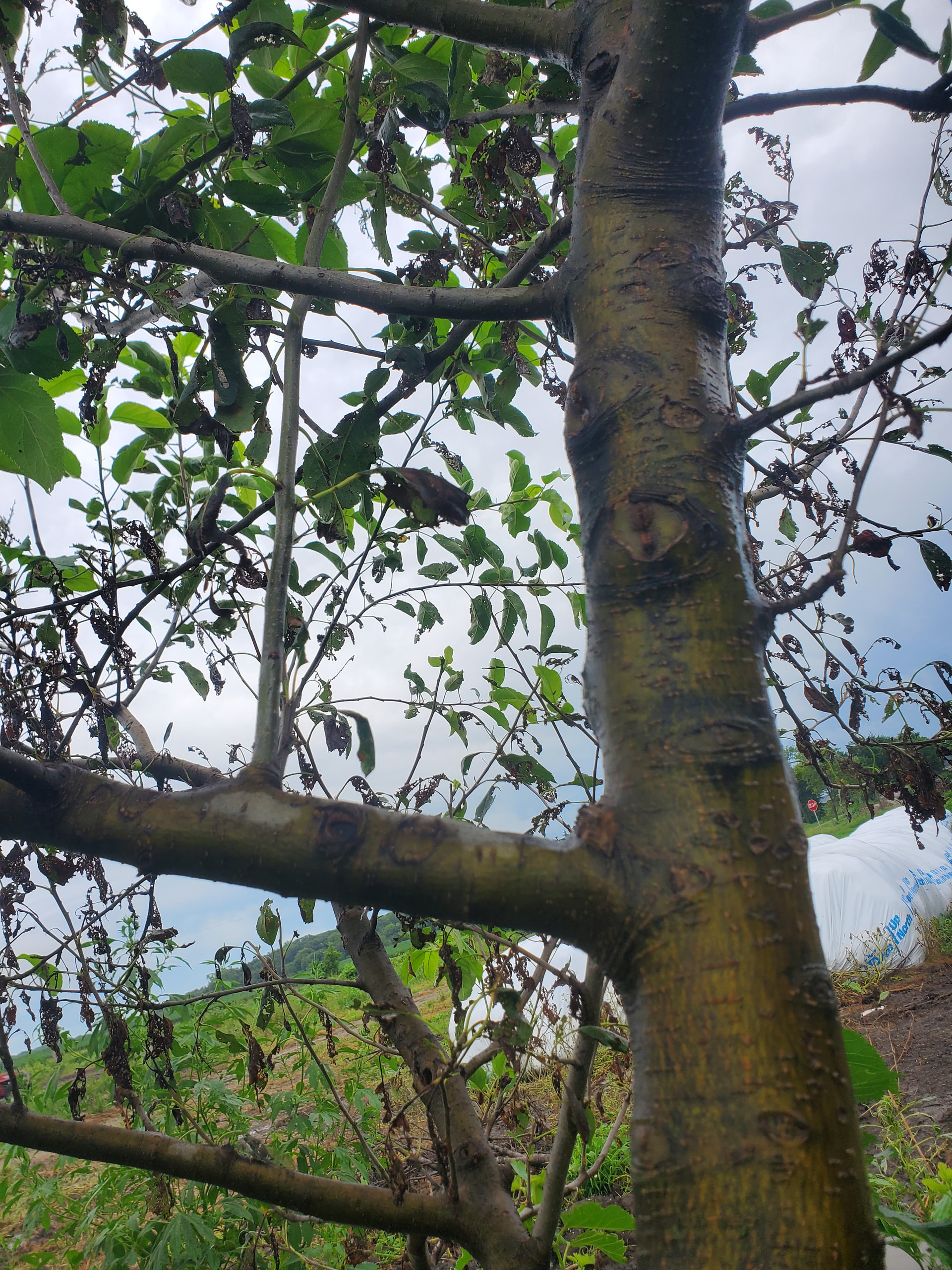
Would you keep all the growth on the Seckel section? or thin out next spring and only keep a few limbs of Seckel? I’m torn on how i want to train this. Going fot central leader… but i dont know if should i let it grow out and only thin when i need to, or just keep a limb every 6 inches up the tree? only keeping 2 or 3 scaffolding branches of Seckel.
1 Like
I would thin down to your branches you want to grow as your scaffolds next spring. For me I would do as you said and have every scaffold 6" apart on the trunk facing in different equal directions for a semi dwarf or smaller tree. If the tree is something that you’re expecting it to have 1’ or larger trunk I would space the scaffolds 1’-2’ apart going up the trunk. Your first 3 scaffolds will have the majority of the fruit your tree will produce, so if you’re wanting equal production between the two varieties I would advise to make the Seckel only have 2 scaffolds. When you’re training your scaffolds I would advise to try as hard as you can to make them come out horizontaly from the trunk for the first 1’-1.5’ before the branch starts growing back more up (usually you do not want the scaffold branchs ever to point straight up, always growing out and up from the trunk)
Choosing your scaffolds you you can have 4 main scaffolds each facing 90° from each other or 3 main scaffolds 120°. Ideally in my opinion as you train and prune your tree to the shape it should be, to keep all your scaffolds and the central leader part all the the same size (if you choose 3 main scaffolds, you’ll have 4 parts of the tree; if you have 4 main scaffolds you’ll have 5 parts of the tree.). Prune any part that is out growing the other parts too much more heavily to keep all at the part similar size.
Also early in your trees’ growing and training, prune it more heavily (shortening back really long shoots (in early spring) that even if they’re ones you like the spot and angle they’re growing) because when your tree is younger, it has a strong tendency, especially if it is growing vigorously, to lean and the branches to sag or even break, you want your tree to thicken up (every year your tree will add new growth rings with thickness proportional to the amount of new growth on the tree) and strengthen the trunk and the scaffolds right where they come and connect to the trunk, so they won’t break on you when you have some strong winds or a heavy fruit load.
thank you so much for the advice.
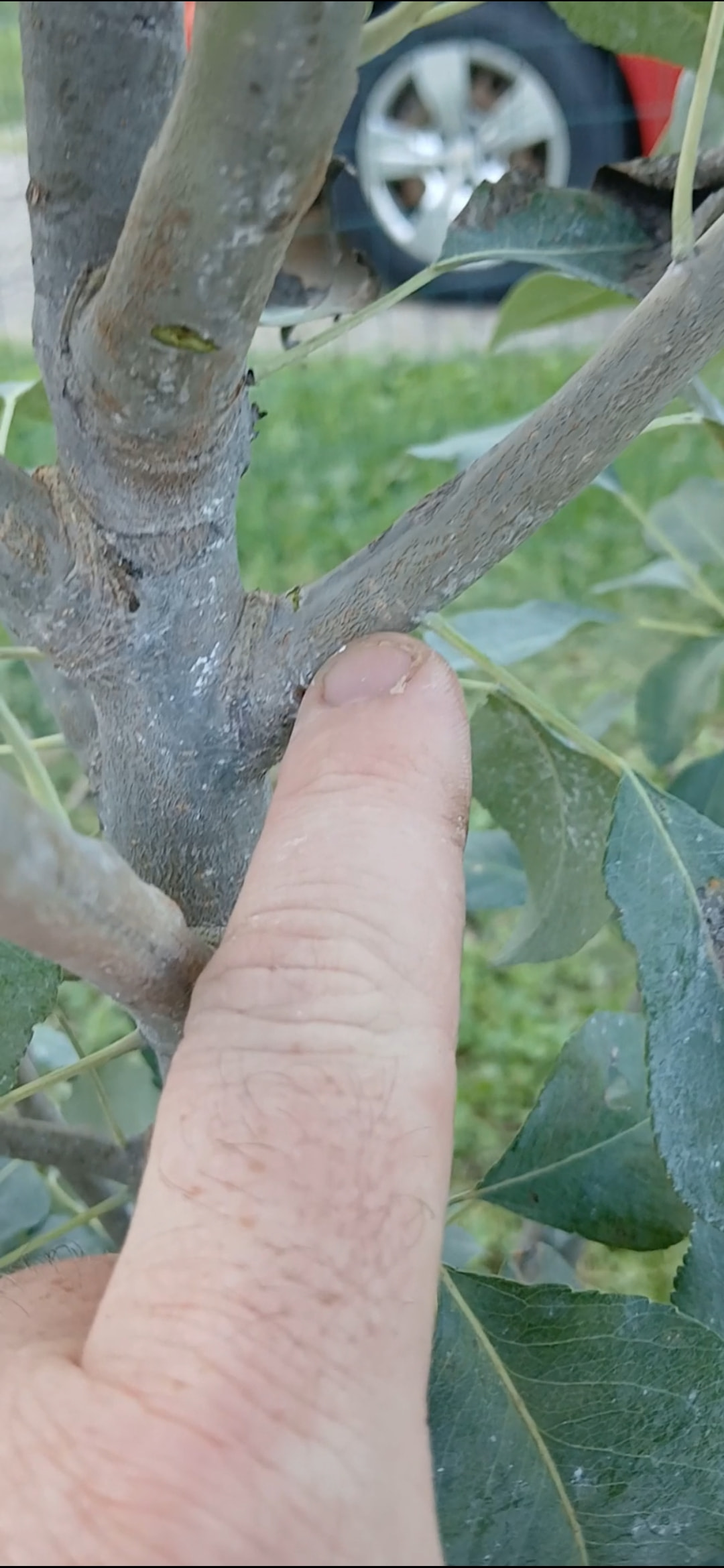
i trained some of the limbs out with tooth picks the best i could
last late winter i cut off most the limbs and applied PGR keiki paste to cuts made above a few nodes… and every node on the tree popped a week later… it was impressive…
Do you think i could get away with that again going into its thirdleaf? cutting off every limb except a few small to medium sized ones and applying PGR paste above a few nodes again.
Hopefully i can train and keep 4 limbs in 1 season if they all grow out evenly..
After thinking it over, itll most likely keep 1 seckel and 3 harrow sweet scafolding branches because i dont want the lowest scaffolding branch too low for deer to browse… id like to eventually take away the fence.
thanks so much for the advice. you save me time and money… so thank you!!!
1 Like
Yeah, I’d probably advise to cut off all your limbs on a tree that small unless it is one you are where your wanting it to be a scaffold, even the branches you’re wanting as a scaffold if they are 3’ long whips cut them back to 1.5’ to try get them thickening up and more permanent (if they are a acceptable angle). If the angle is wrong on your scaffolds (they look a little tight to me) you can hinge it down some (if you’re curious I can take some pictures of an example of how).
I’ve never used the keiki paste before (or any method other than notching above a bud to promote new growth there), but go ahead and try it again to stimulate growth of scaffolds where you want one started.
2 Likes
yes please, pictures of how you hinged down the limbs would be awesome. ill try to bend them to almost 90° when they are young next spring. the only issue i have is that when bending down the limbs other limbs shoot up…. i want to remove all the competing limbs but i fear it will hurt the girth of thetree in the long run if i eliminate competitive limbs in early spring only leaving 4 limbs to grow out at 90° angles.
1 Like
It’s raining right now, so probably won’t show you an example of how to do it right now (branches I did it to have no evidence of it now that it’s grown).
Yeah, they do like to send up a lot of other limbs straight up, especially on pear trees (which like to have every single branch grow vertical). I usually just make it a springtime chore to come to the tree weekly or biweekly and rub across the trunk around the scaffolds knocking off all the new sprouts just as they barely start, that way they won’t be robbing from the rest of it.
2 Likes
thanks so much. i now feel confident enough to cut off all the limbs, except maybe 1 seckel scaffolding limb ill cut back. allow 4 to 5 limbs to grow out, training them to almost 90° then rub off the rest of the new growth throughout the spring.
1 Like
Here are 2 methods of hinging.
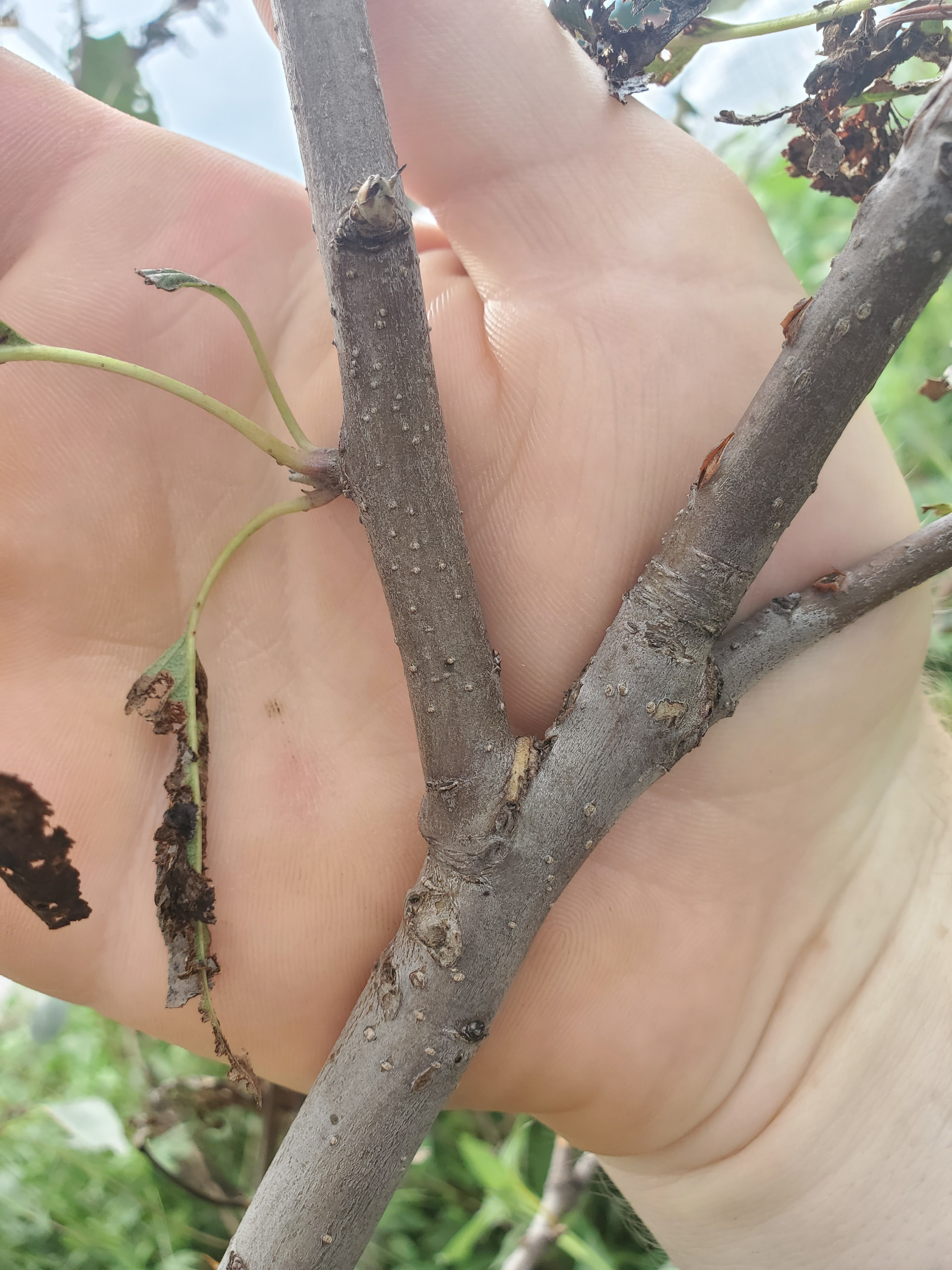
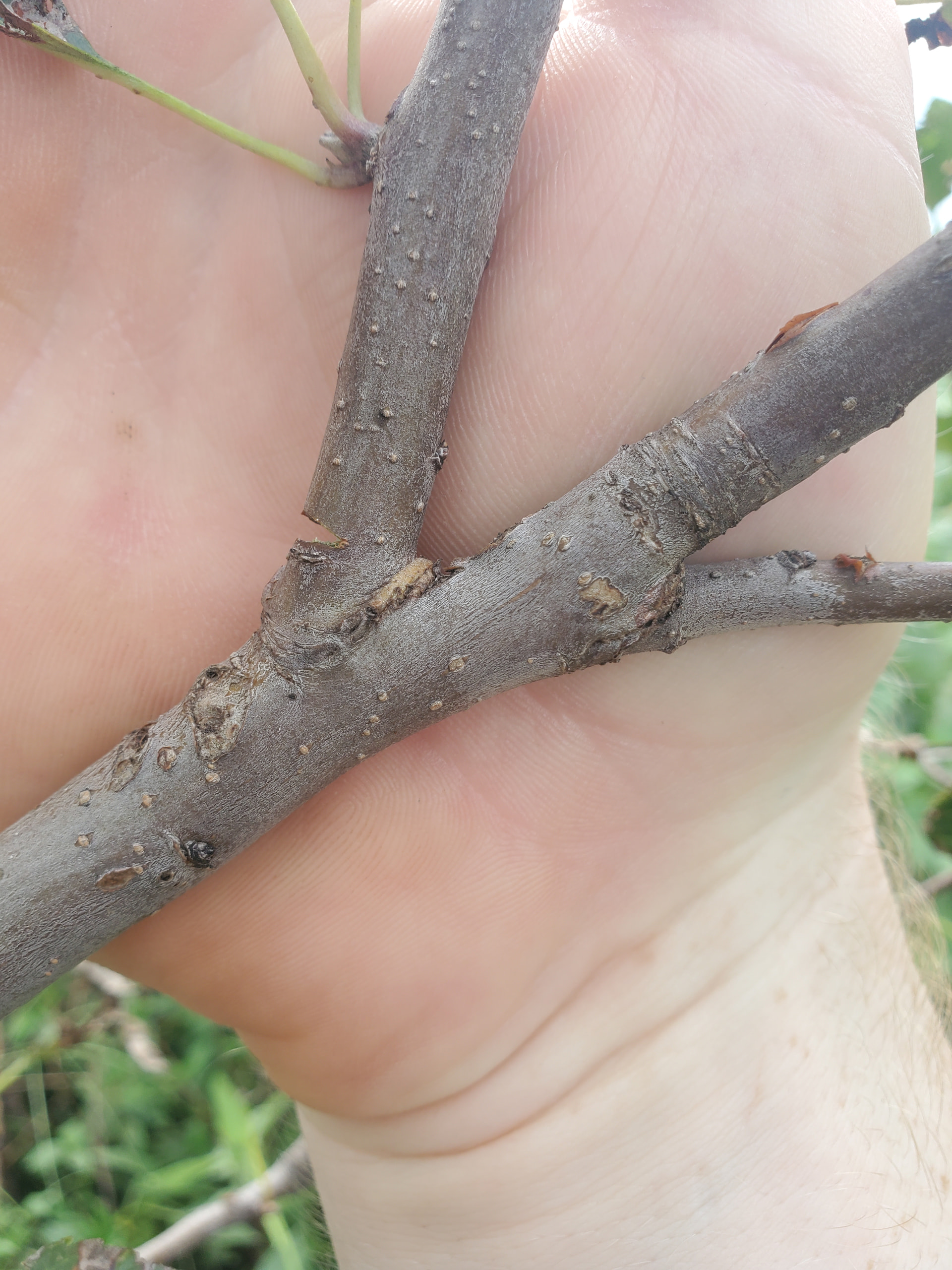
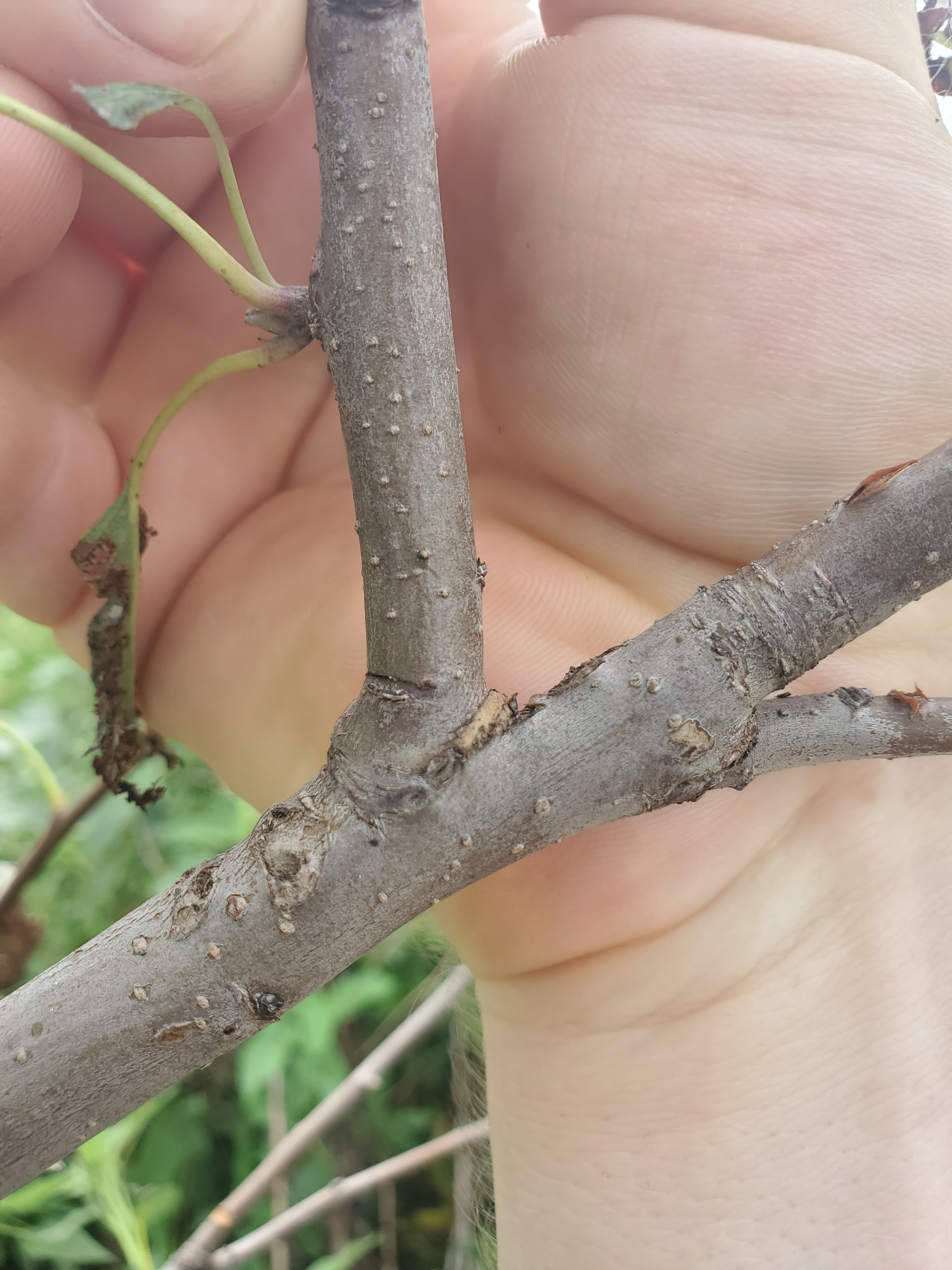
First way is to make cuts part way(1/3-1/2) into the top of the branch with a knife and then start pulling the brach down slowly and if it is wanting to hinge only on one or two the cuts, deepen the cut(s) that aren’t wanting to hinge. Then you can wrap the the cuts with grafting tape for a faster healing and to keep it from breaking there.
The second method, you have to be more careful with breaking it, useful for branches that need pulled down a lot.
Cut the underside and the branch half way through and another cut taking out a wedge (make sure to get as much of the wedge out as possible, so it isn’t like you cut out a trapezoid). Don’t get too greedy and try cutting too wide of a wedge out to make too sharp of a hinge anly at one spot, but you can do another hinge anothe inch or two out farther for even more of hinges the more you want to bend the branch. Avoid top cuts like from the first method near where you cut the wedges otherwise it can fracture down the branch and break. You can wrap too to help with a little bit of the stability and to keep water out or keep it from drying.
Always shorten the branch whenever you do hinges, because a hinge always weakens the branch for a little while before it heals, and you don’t want to have so much weight hanging on it or as much to catch wind.
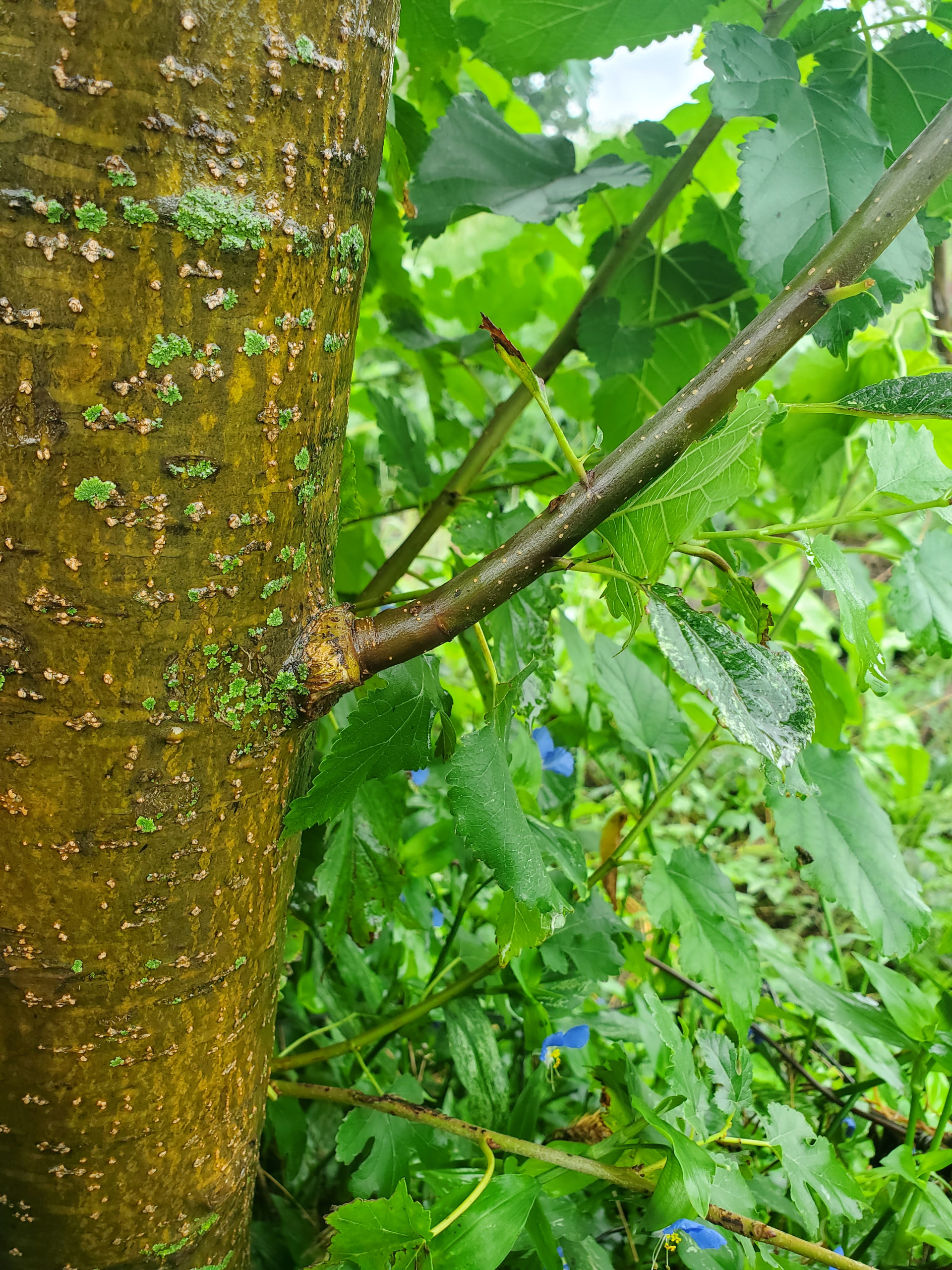
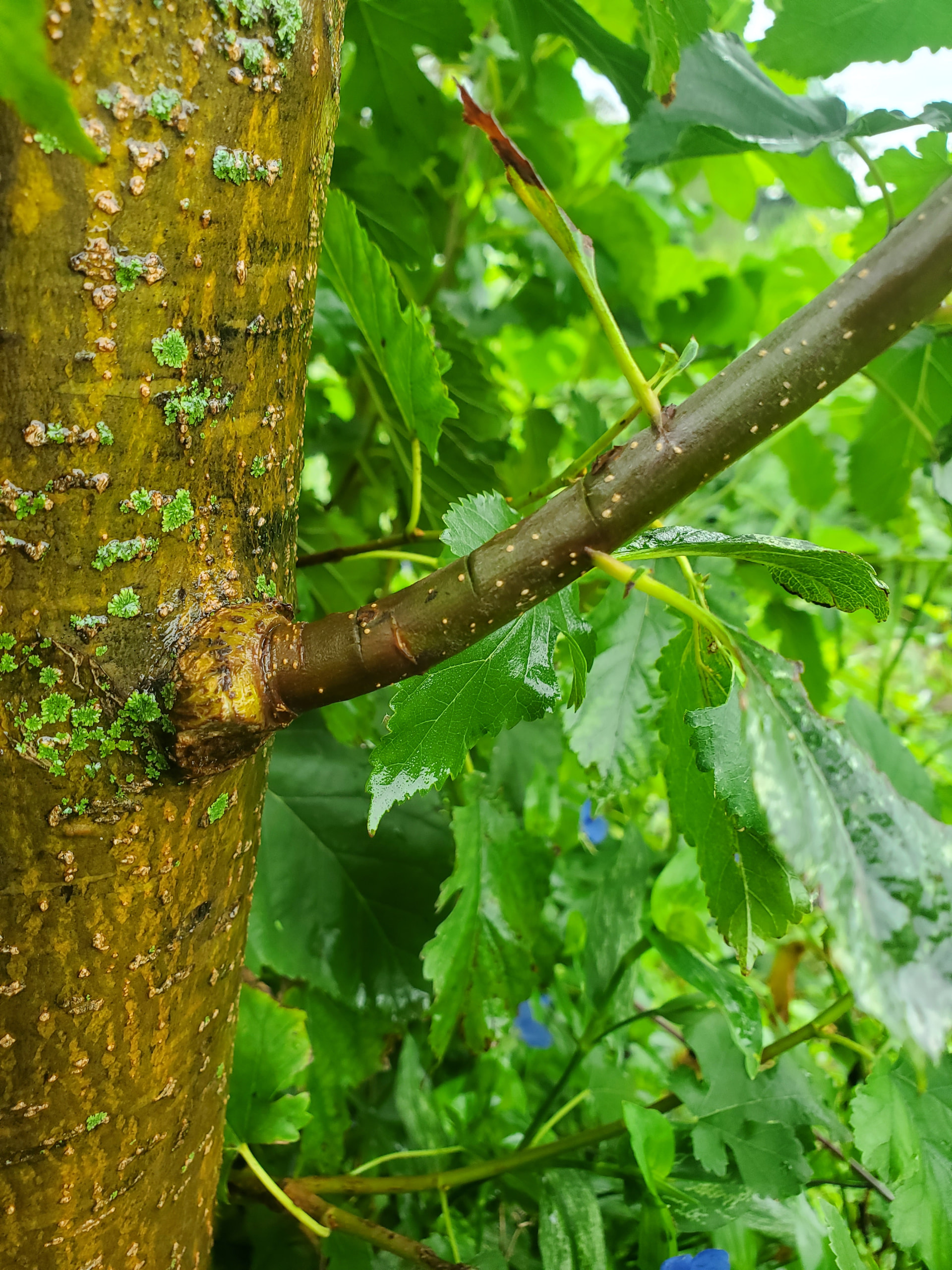
Here’s a branch that was hinged before. The tree doesn’t look pretty, because it has had several ordeals of cows wrecking it.
2 Likes
Ive seen this before with bonsai! especially the second method… but ive always been afraid to try. this is so cool. this thread is giving me the confidence to radically train some of my trees. thank you so much
1 Like
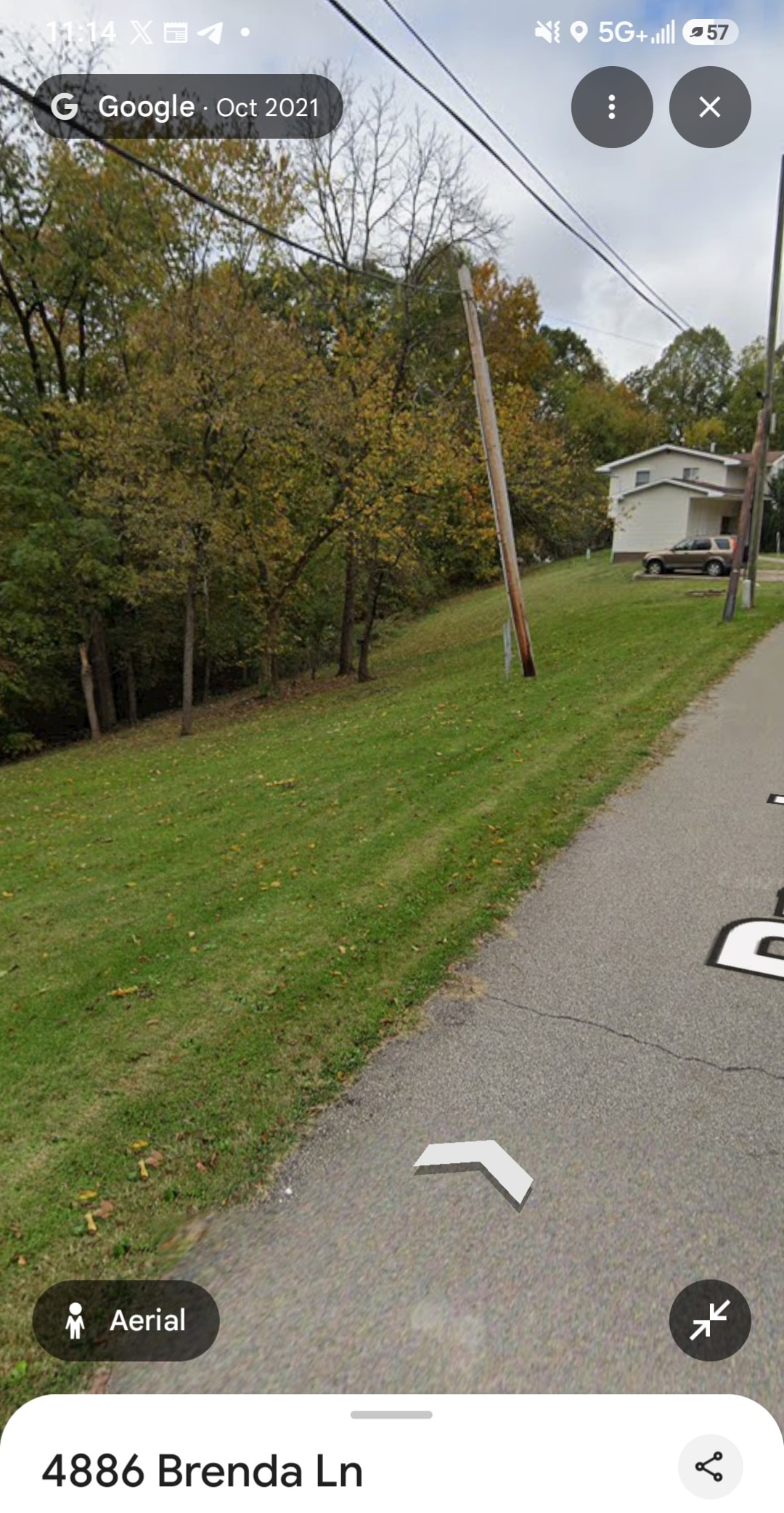
I just found out i own an extra acre. i think this is about half an acre on this parcel… needs a pear tree towards the front left, but after the power lines, and thorned blackberries along the tree line in the back. so much potential.
i want to make hinge cuts on a 3 year old green gages scaffolding branch thats fairly thick for its age. this plum tree is resilient and fast growing, but idk. maybe try with a limb i plan to cut off next year anyway to see how it responds.
3 Likes
Sounds fun, always nice to have more space to do things.
You going to try other fruit too, like persimmons, jujubes, and pawpaws?
Too old of branches can cause problems with hinging branches, especially if they’re ~3" diameter or larger, because it would take a lot more than one year of growth to thicken enough to not be a weak spot. (Though it could be done, I would recommend the earlier the branch angles are right, the better.)
2 Likes
I planted a prok persimmons but it probably died. id like to buy 50 American persimmons seedlings… but im not doing that unless i can get someone to ditch witch out a 300 foot trench in the rocky clay soil, because i cant physically dig that many holes in that soil. at best im digging 5 lol. this includes a pick axe 
i dont think paw paws will do well here because ive seen where they grow in WV and its always near a waterfall or river. too dry up here i believe.
im trying to root a jujube rootstock sucker rn in hopes of grafting honey jar to it. i did some research on airgrafting honey jar and saw consistent reports of them slowing down after 2 years never getting to any size and eventually dying. id love to have a Ridgeline overtaken with honey jar jujube suckers, but i think ill have to graft them.
* I never sent this message above, i saved it in drafts instead i just found out… i had a lot going on my bad
I plan to get Bell pear scionwood with my cummins order next spring, they are super vigorous apparently…
So im thinking, would it be too vigorous to be grafted to the top of my ohxf87 on seckel on harrow sweet. from what i understand you want a vigorous variety on the top so the varieties below dont out grow if unmanaged.
2 Likes
@Bogovich
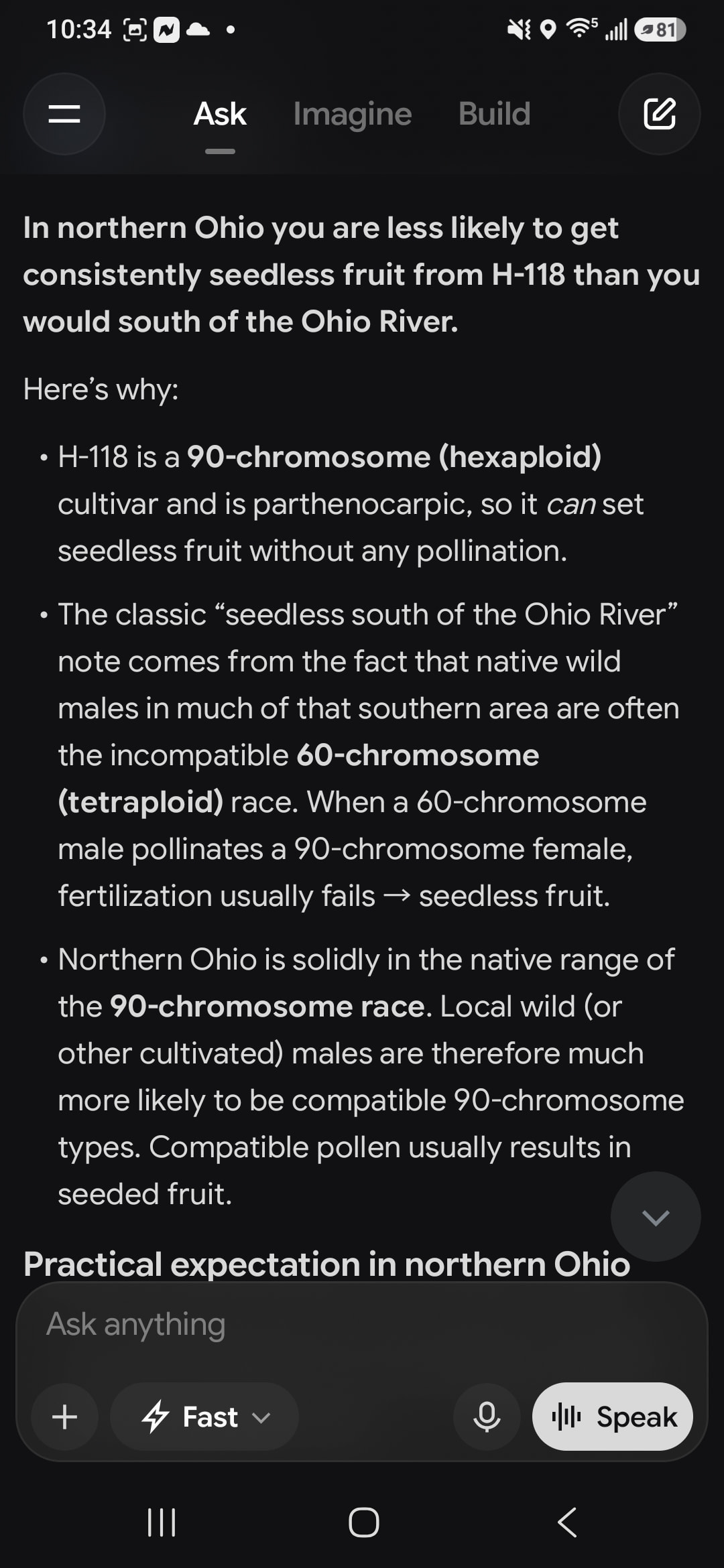
My soil is pretty bad here. Try H-118 persimmon it will do well for you on american rootstock. You can see why I put my greenhouse in this spot! It saves money on bricks lol it is harder than brick! Pears love this soil.
4 Likes
I would offer you persimmon seedlings from my air pruning bed, because you wouldn’t have to dig a hole deeper than 8" for them, but right now I don’t feel like selling them all, but next fall I could get you a hundred started for 3$ each.
But If you are planning on just letting them grow out and not graft (many), I would suggest poking around to try procure hybrid persimmon seeds.
1 Like
Thank you for the persimmons suggestion. In Appalachia ill be able to consistently get seedless persimmons, but not in Ohio… very interesting that location affects quality of fruit… I had no idea about any of this, im learning so much. thanks!
1 Like
that sounds like an awesome set up. Honestly id pay more per plant for way less quantity if i can graft onto them upon delivery.
With persimmons i think i want to graft prok and h-118 if possible, maybe next year a few seedlings… then eventually grow out the seeds i get off the prok trees and plant those seedlings in neighbors yards who hunt. play the long game with persimmons because at the end of the day id rather establish pears and apple trees first, then plant persimmons wherever there is room left, if the seedlings fail ill keep popping seeds until an entire section is covered with trees. planting that many persimmons at once would put me out of work for 2 weeks  the state ag department is super close and im about to ask them if they want to put some of their bee hives on my property because they have limited space. declare a parcel agricultural to save on taxes then look at grants and stuff for bees and trees for WV. (sorry if ive already said this, im a barber and i tend to repeat my stories)
fruit trees in black bear country sounds like a recipe for disaster, and i was nervous… but i forget, them boys who hunt my property would shoot that thing before it got to damage too many trees. id never have a persistant bear problem bc theyll have trail cams on those trees giving live updates
2 Likes
I just wanted to get your thoughts on this,
Ai tells me OHxF 97 is the best choice for WV mountain tops because P. betulaefolia roots arent as hardy for cold snaps on exposed rocky mountain tops
This lead me to the Russian rootstock P. ussuriensis. This seems like a rootstock that would produce monster sized trees with cold hardy roots.
i think ill buy both ohxf97 and p. betulaefolia so if a cold snap hurts the trees at least ill still have the 97s
2 Likes
Burnt ridge nursery sells 4 different seedling rootstock: BET, Euro seedling, Callery, and ussuriensis.
2 Likes
awesome man thanks. ive heard mixed reviews about them over the years but now that i know they have those rootstocks ive requested a catalog. thanks again
1 Like
I haven’t had a problem with them besides delayed shipping. I might order apple, BET, and Prunus cerasifera seedlings from https://www.willamettenurseries.com/
If you want any seedling rootstock from them, let me know. We could work out something.
1 Like