Sorry then haha what a disappointment with what I have, if this year all the grafts I did with my father are crown, if you can recommend me a nursery this year that sells me some quality cherry trees just like you told me the stromboli apricots that I already have 2 planted, I thank you that way I don’t waste so much time until next season. thank you Jose
1 Like
Raúl, good cherry trees are only sold to professionals for large plantations larger than 2 hectares. I have many friends and that is why I can get them.
But specialized cherry tree nurseries will not sell you “top” varieties in small quantities.
With cherry trees you can’t be in a hurry, since it is necessary to do things well from the beginning.
The climatic characteristics of our region are extraordinarily good for the cherry tree, even with the varieties most susceptible to cracking such as Utah Giant, however in Albacete we have calcareous soils with a very high Ph (I imagine that also in your town), so it is It is very important to choose the rootstock appropriately.
If you buy cherry trees in non-specialized nurseries, they will be grafted on Santa Lucia rootstock (prunus Mahaleb), and it is the favorite wood for feeding the big-headed worm (Capnodis Tenebrionis) that we have in Albacete, your cherry trees will grow adequately for 4 years and by the fifth or sixth year, when the larvae penetrate the wood of the tree, your cherry trees will die (this is not a hypothesis, it is a fact).
Of the standard cherry rootstocks, the one that works best is Marilan (Mariana rootstock with intermediate Adara plum graft), and even so it suffers from iron chlorosis and deficiencies of other microelements, so it is necessary to apply a chelated nutritional deficiency corrector via irrigation , and water once or twice a year.
If you want to do things well, I recommend the best rootstock for our soil, which is GxN 15 Garnem with an intermediate graft of Adara or Monrepos plum, it is absolutely wonderful.
GxN 15 Garnem is a hybrid of Nemared peach x Garfi almond, as this rootstock have a little quantity presence of amygdalin in the root, the big-headed worm (Capnodis Tenebrionis) does not attack it.
The two important characteristics of this rootstock are its high resistance to soils with very high Ph, and its extreme resistance to dry land (without irrigation), it is widely used in almond plantations without irrigation.
You know very well what summers are in Albacete, it’s like fucking Iraq.
The problem is that they do not sell this rootstock, and you have to prepare it yourself.
If you know how to graft using the English system (whip and tongue) you can prepare them yourself (I will send you Monrepos plum cuttings), and the following year cherry cuttings.
Best regards
Jose
P.S. : Raul is a friend from my country (we are both from Albacete, the same province), so I allow myself to talk about sending graft material to this friend
1 Like
Hi guys.
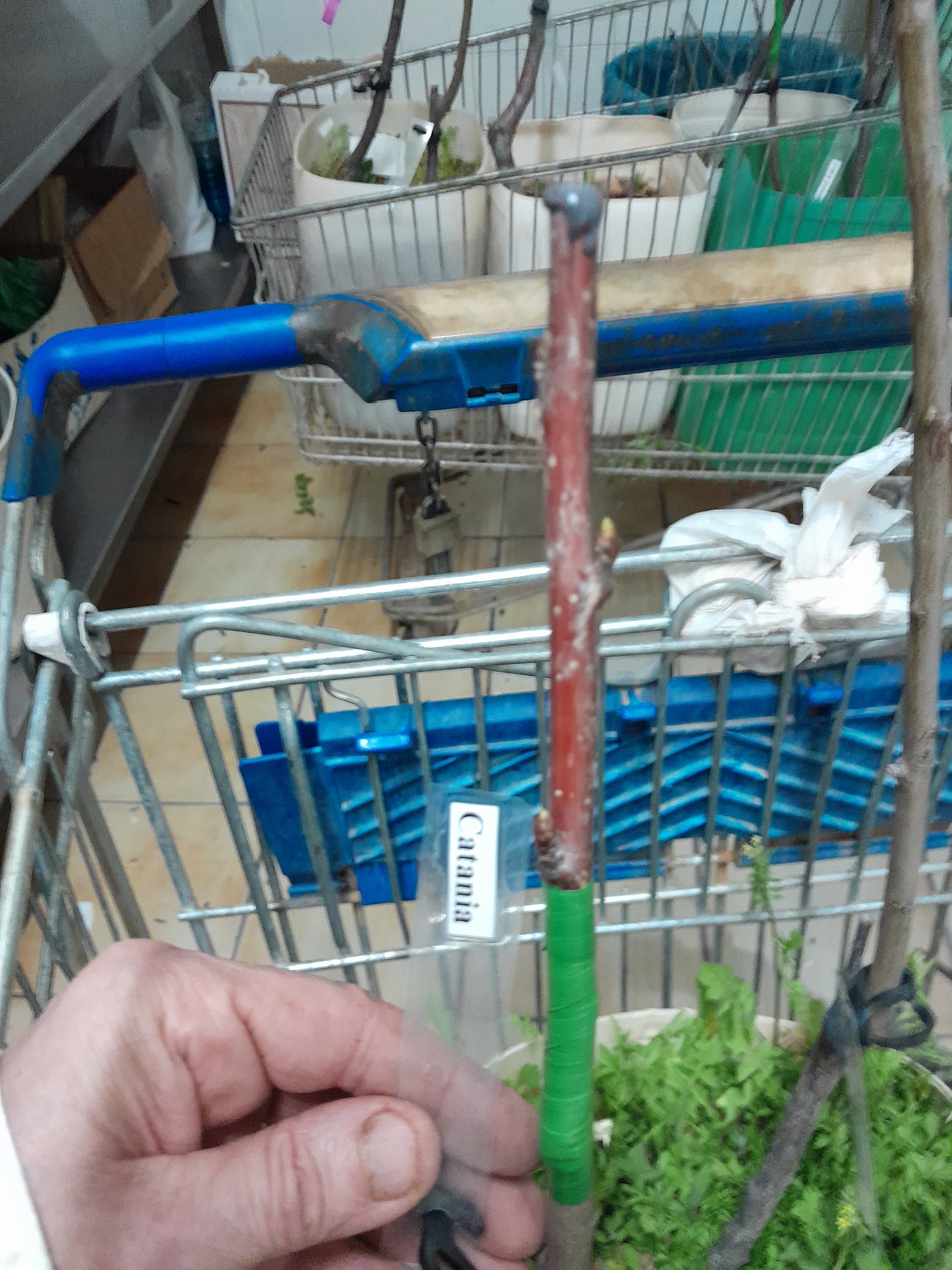
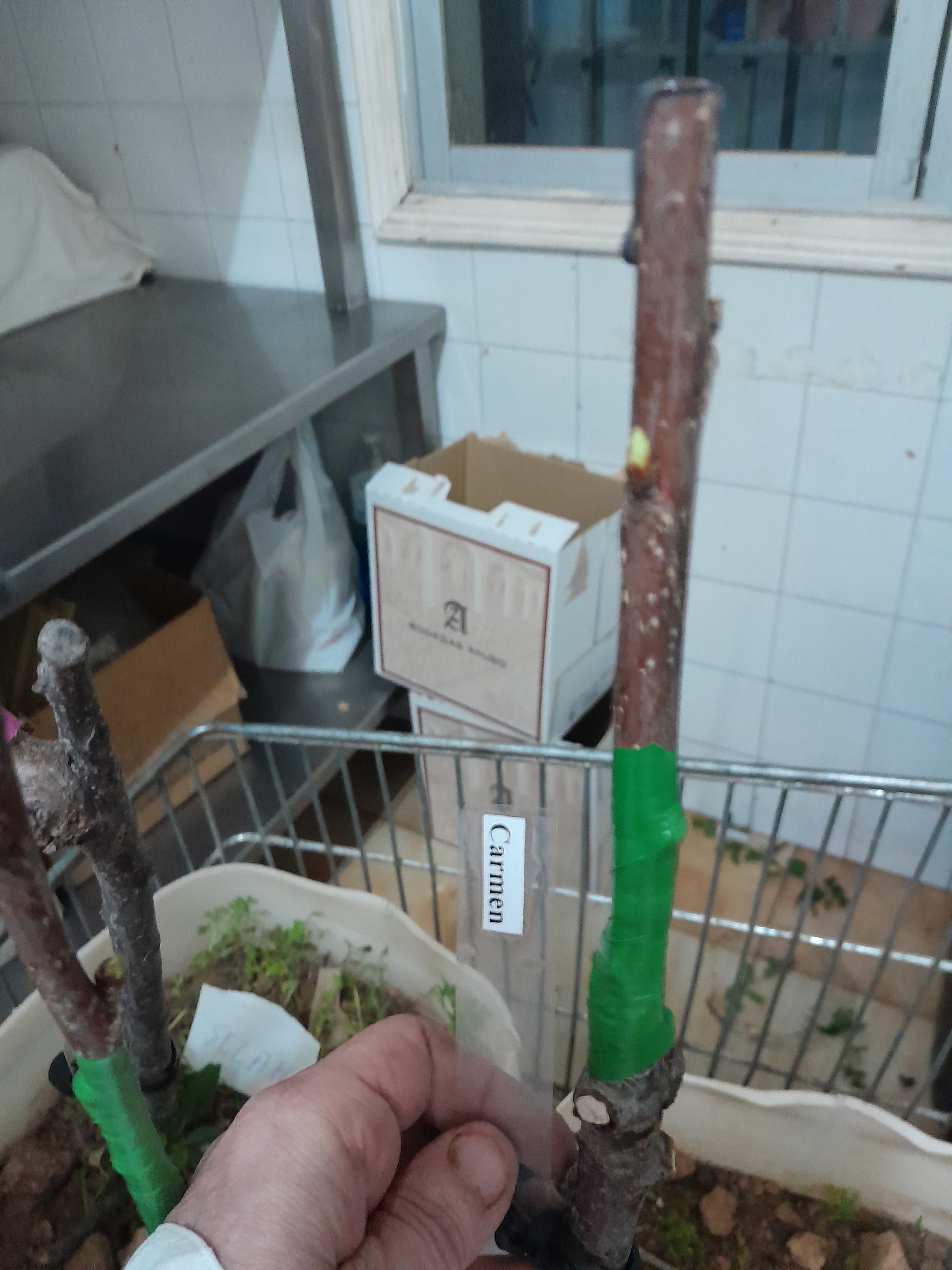
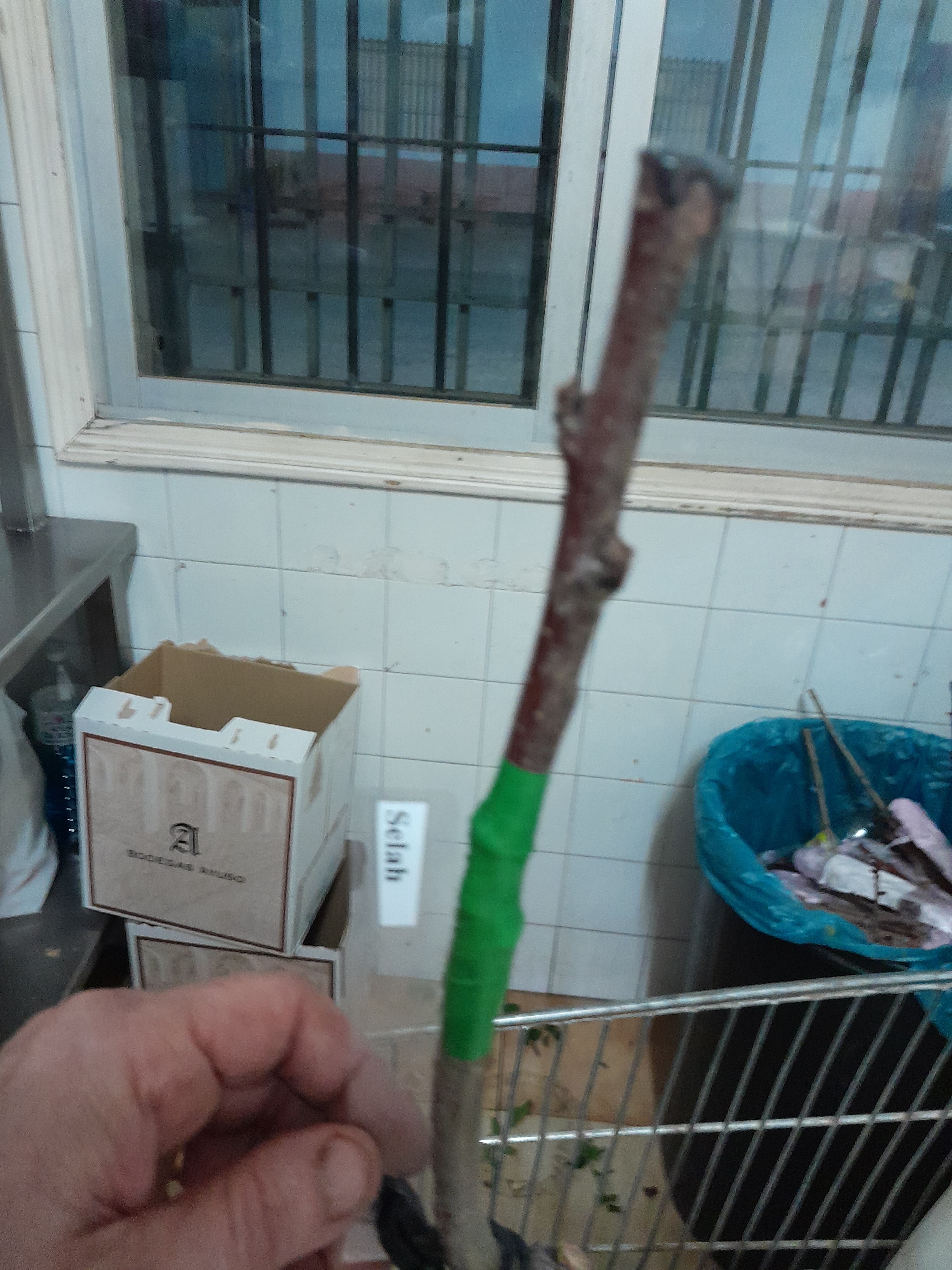
I still had 7 cherry rootstocks available, and although it is a little late, I grafted them today.
- 3 cherry trees of the Spanish Catania variety
- 3 cherry trees of the Hungarian Carnen variety
- 1 cherry tree of the North American variety Selah
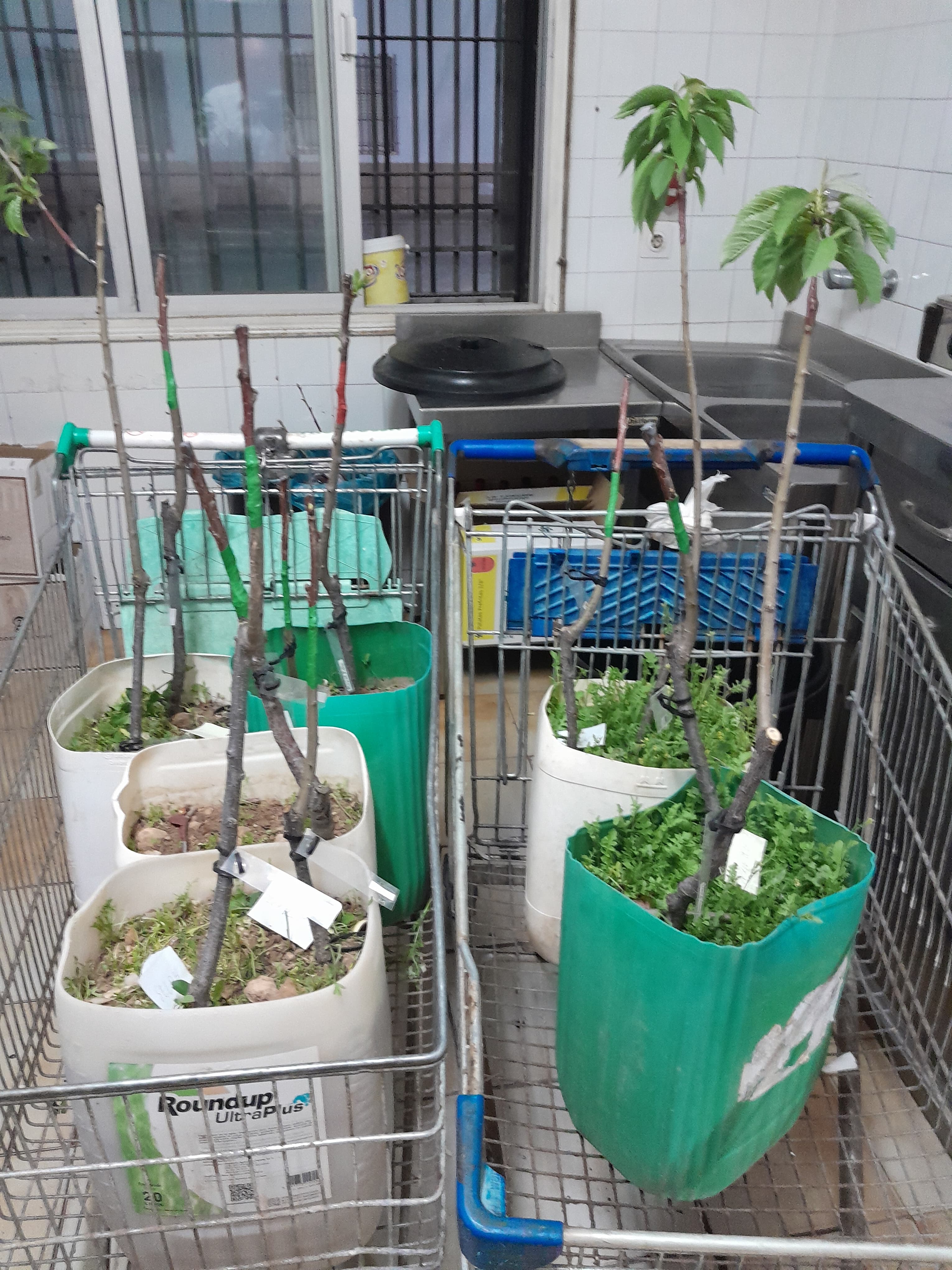
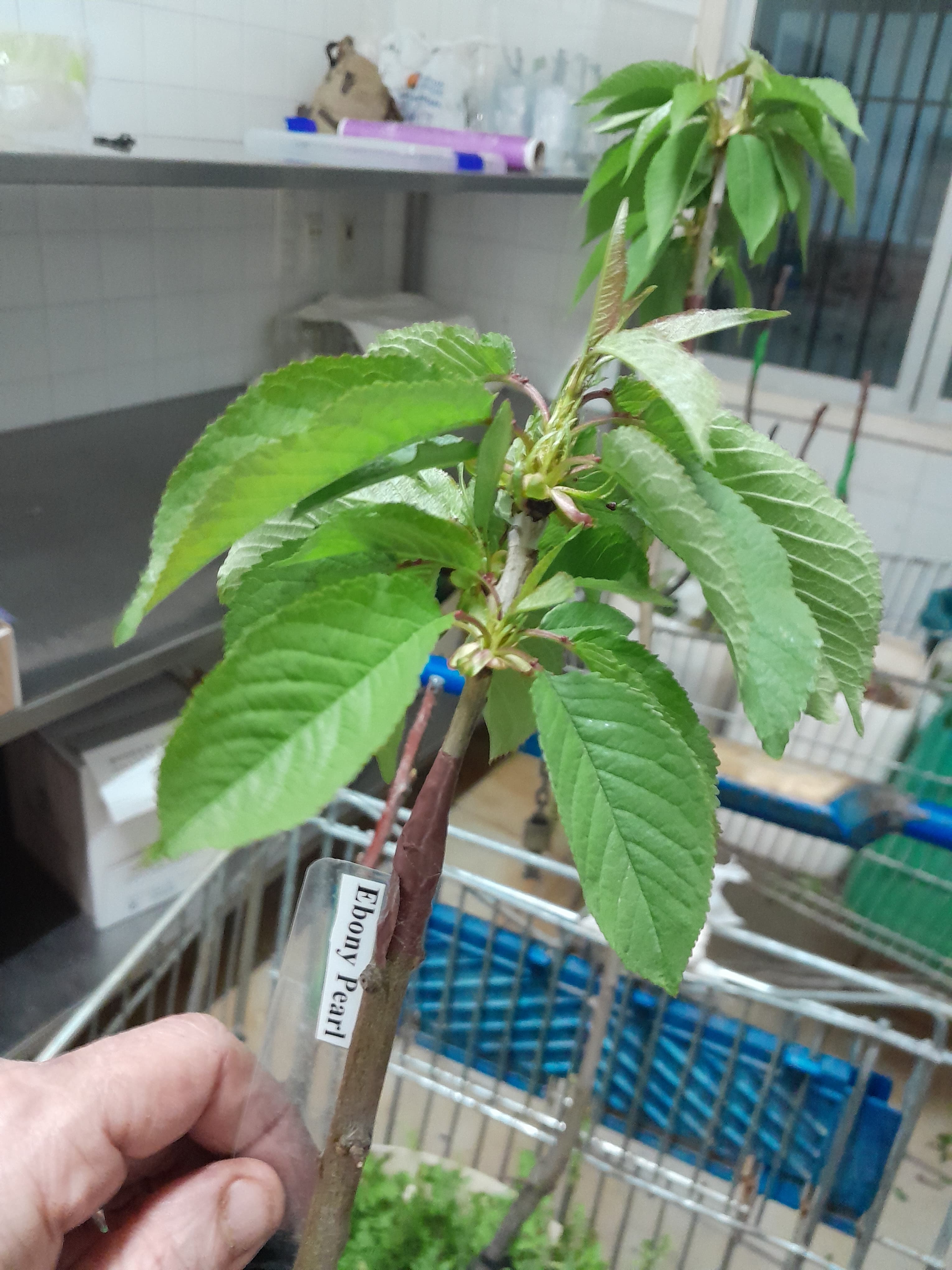
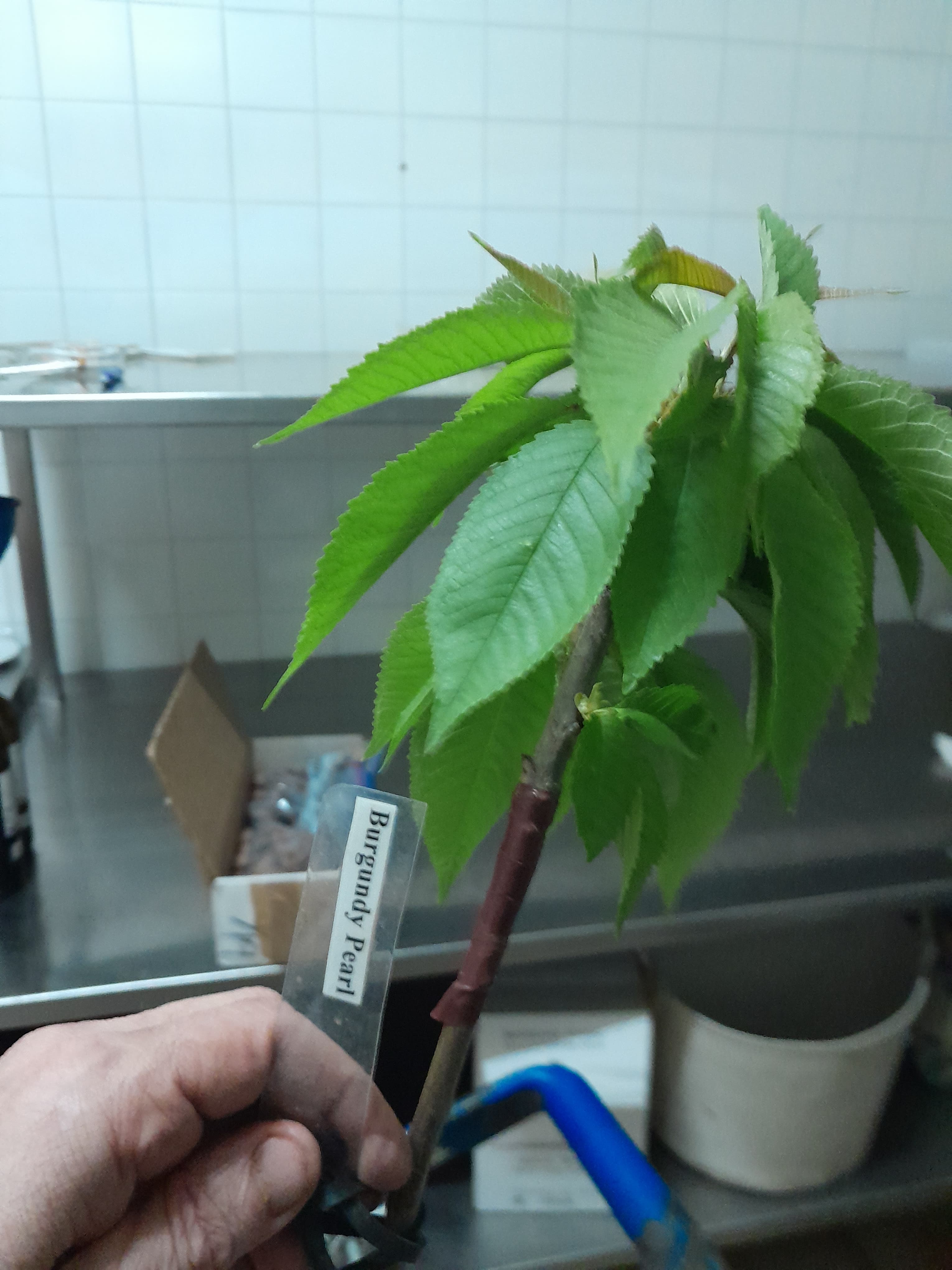
And these are two grafts made about 20 days ago of two incredibly good North American varieties.
- Ebony Pearl
- Burgundy Pearl
Best regards
Jose
3 Likes
Well, I do have a Bing. From what I read and from different nurseries, Brooks and Bing will pollinate each other. Sweetheart is the extra. It can pollinate itself or pollinate both. Sometime it depend on the climate and zone when the flower open. I will observe them closely when all 3 of them flowers. It could be next year or years ahead.
Hi smilemore.
Yeah :
-
Bing belongs to the group of mid-flowering cherry trees, with S3S4 alleles
-
Brooks belongs to the group of medium flowering cherry trees, with S1S9 alleles
Bing and Brooks are compatible in pollination and Sweetheart is self-fertile, so you would have your pollination needs covered.
If the weather of the year changes (colder or warmer spring), all cherry tree varieties advance or delay their flowering synchronously, and for this reason are used the flowering reference varieties (Burlat in Europe and Bing in the United States).
That is to say, Sweetheart “NEVER” despite being self-fertile and a universal pollinator of early flowering varieties, will never pollinate Brooks or Bing.
The story would be like this:
-
First variety to mature Brooks (9 days before Bing)
-
Second variety to mature Bing (9 days after Brooks)
-
Third variety to mature Sweetheart (16 days after Bing)
smilemore, never trust what a nursery says, always use flowering charts prepared by official centers specialized in cherry trees (I use the cherry flowering chart of the CITA de Aragon )
Best regards
Jose
1 Like
Hi Jose!
Why we did end to communicate privately?
Did you receive my massages at all?
BR
Ivica
I really believe that the best thing would be to steal 10 minutes of your precious time and visit you in your town, take a notebook and pen to write down all the advice and knowledge you can give me so that an amateur like me can have a decent fruit orchard, the quality you have is practically impossible to get it for many years, But it is true that you are a noble person who wants to teach others. Thank you and you will give me an appointment to visit you someday.
Raul I don’t kill you because I don’t have time hahahaha.
From your town to mine there are 135 kilometers (one hour by car).
My day off from work is Thursday and for me it is the best day.
I warn you that in one day,even if you make an audio recording of our conversation, it is not enough time, since it takes years to acquire certain knowledge.
But we will have a very pleasant day, you will eat very well in my restaurant, and you will learn many things.
Whenever you want we organize a “non-sexual” meeting hahahahaha.
Best regards
Jose
1 Like
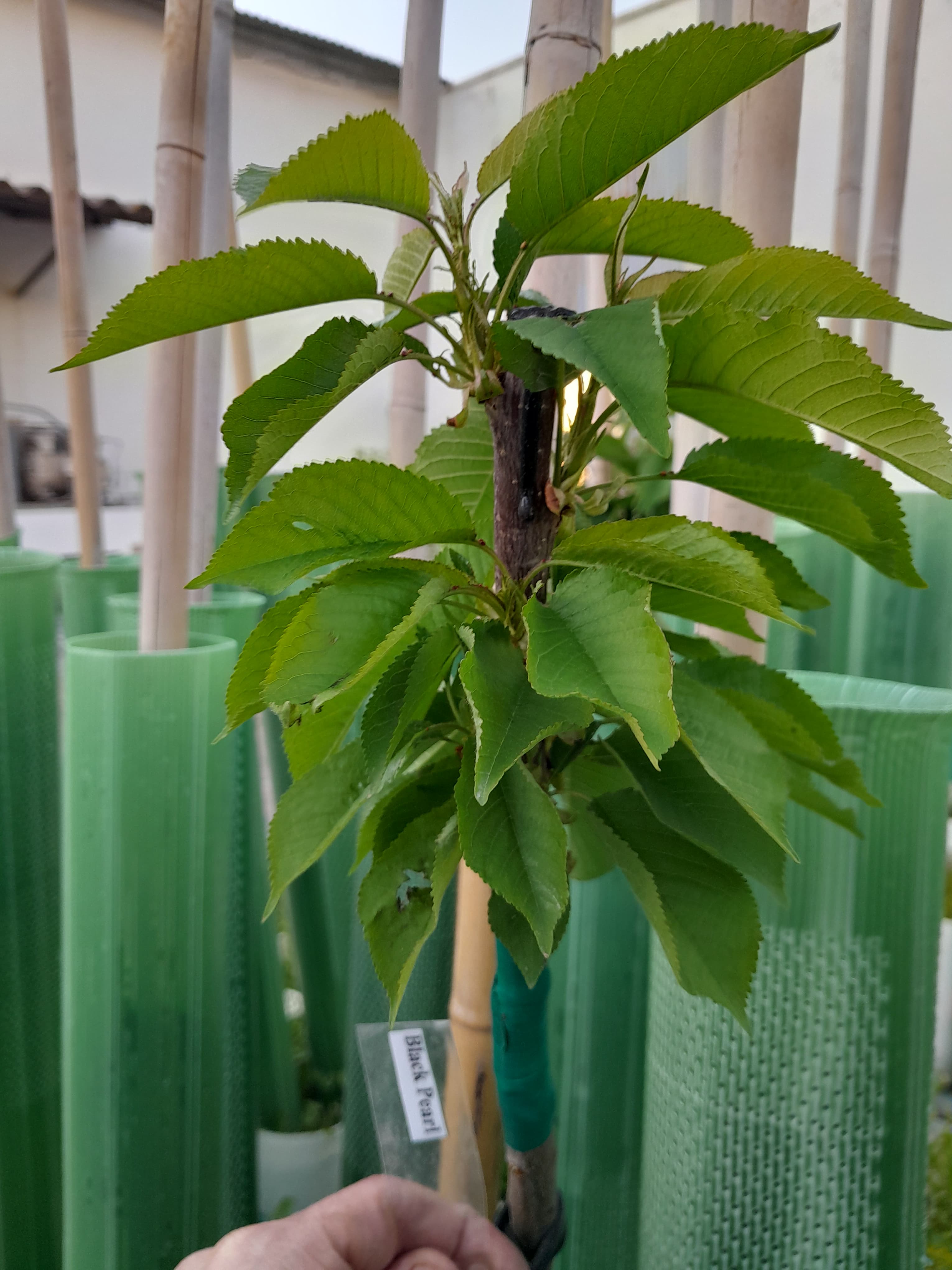
Hi guys, the other day I showed some photographs of two fantastic varieties of North American cherry trees (Ebony Pearl, and Burgundy Pearl).
Today I show you another of the varieties of this series
- Black Pearl
Since you sometimes think that I obtain varieties from the United States, I must tell you the story of how I obtained these varieties.
I had been trying for years to see if I could get them from some European country, but there was no way.
A good friend who is a fruit tree professional wanted to test these varieties to grow several hectares of each of them.
My friend has a cherry international consultant who brought these varieties from a “very rare” country hahahaha, from Uzbekistan, and that’s why I was able to get these magnificent varieties.
Regards
Jose
2 Likes
Looking at your scion in this graft, I can’t help commenting how thick first year wood is on cherry trees.
My Lapins is now sending out new growth. It also starts out quite thick.
Next I’d say Asian pears have thick new growth.
Plums seem to lag waaay behind on the caliper of new growth.
Just observations.
1 Like
It will be a pleasure to be able to visit you, it is that at an amateur level to meet a person with so many varieties and that you also worry about improving and being updated every day, it is very very difficult, I don’t know how many people in Spain there will be similar to your orchards, I hope you can call me on the phone this Thursday or whenever you can and we talk a little more and we have a day left to visit you. It will be a pleasure to see so much fruit. A question that differentiates there is from one professional variety to another that is not?
Hi Raul.
This Thursday I’ll give you a call by phone.
I have so many fruit varieties, since it is the fruit of a passion of more than 30 years, and keep in mind that I try many varieties in my orchard , and the varieties that do not meet my flavor expectations are replaced by others, so Every year I uproot or regraft trees to replace them with other varieties that improve characteristics, especially flavor.
When we refer to professional varieties, as opposed to free varieties, we are talking about varieties that are subject to royalty and nurseries do not sell to hobbyists in small quantities.
This does not mean that they are better, and you have a very clear example in the Cot Internacional apricots, which are varieties intended for large commercial plantations, and yet they are real shit.
This year I have regrafted all the varieties of professional apricots from Cot Internacional, to traditional varieties of Valencian, Murcian and Mallorcan apricots.
There are very good varieties intended for professionals, and very good traditional varieties, and in choosing the best from each of these worlds lies in virtue.
Best regards
Jose
1 Like
Hi guys, today you will see a variety that I have talked about before, and it is really good.
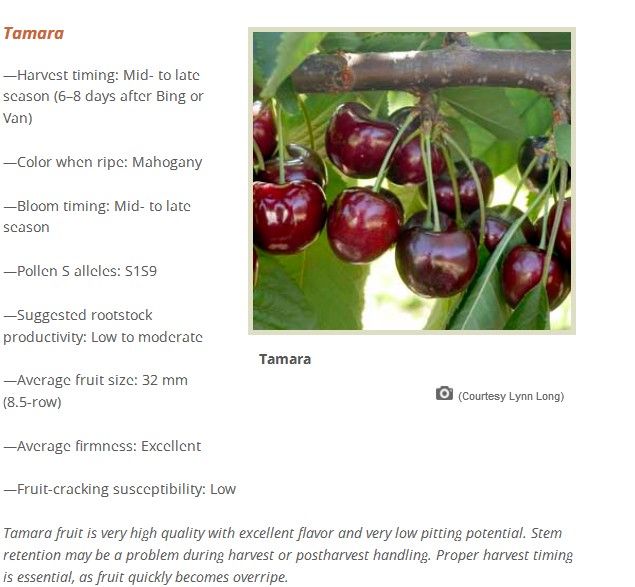
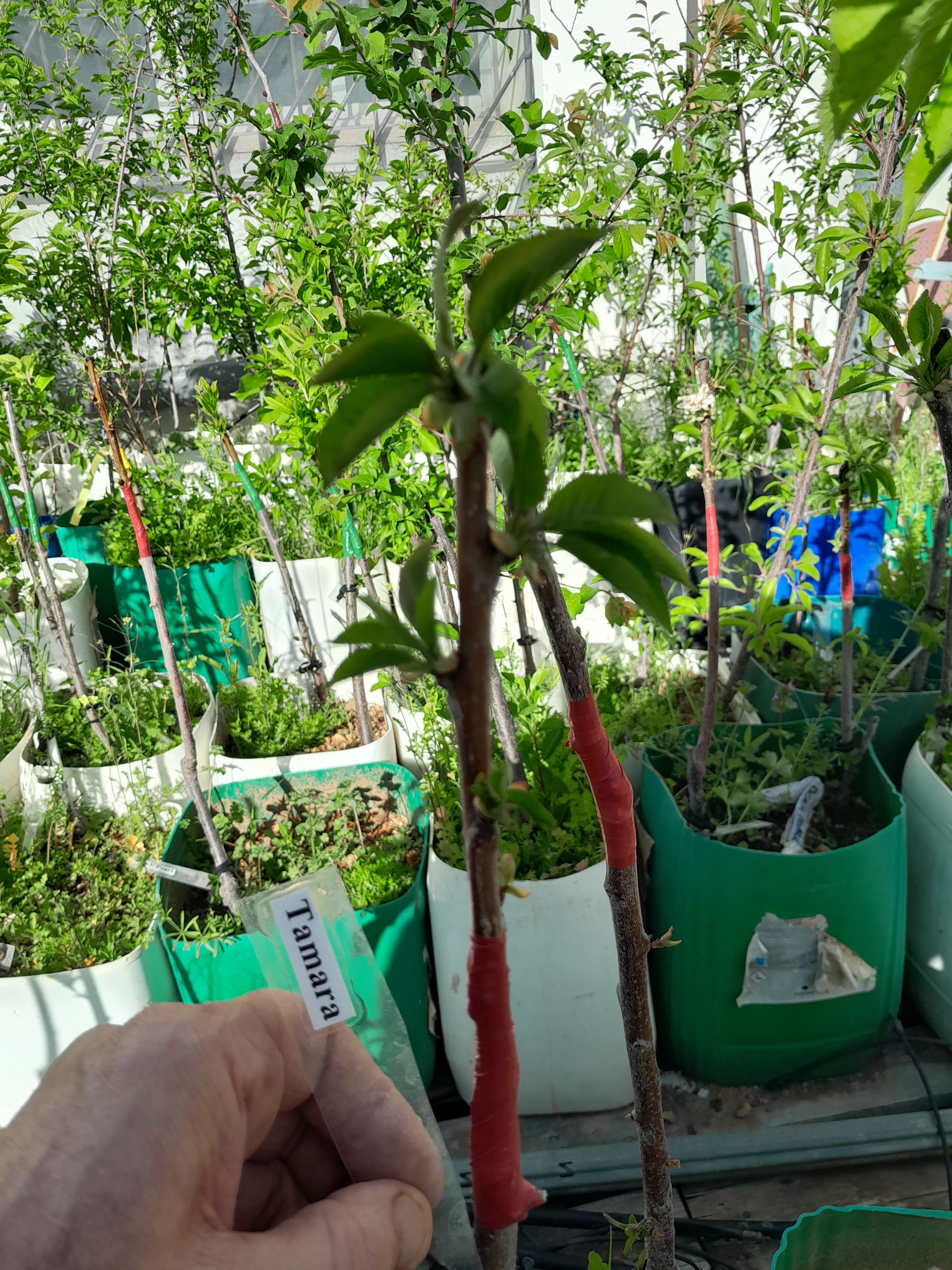
This is the Czech Tamara variety, obtained along with other very good varieties at the Research and Breeding Institute of Pomology in Holovousy.
Last year I forgot to do a photographic report on this variety, this year I won’t forget it because it is very good.
It has been tested in the United States and Australia with magnificent results, due to its quality and low incidence of cracking.
An article about Tamara, by the renowned Professor E. Lynn Long:
A photograph of one of the grafts.
It has its own website:
Tomorrow another interesting variety.
Best regards
Jose
1 Like
Thank you Jose I will wait for the call, a question that may come in handy to the people of the forum, how do you know when the cherry is at its sweet spot for picking? Thanks to you we play with an advantage in many varieties because your analysis of cherries makes you can correctly choose a variety that can give you what you are looking for, is the Tamara variety interesting, do you usually take 2 or 3 years to try it? or even faster. Greetings and good day
Hi Raul.
There are several concepts to answer in the question you raise about the ripening date of a cherry variety:
Cherries do not ripen on the same date every year, since the weather influences whether the harvest is brought forward or delayed, but all varieties advance or delay harvest synchronously, for this reason the ripening dates of a variety are not given on a calendar date, but more or less days away from the reference variety (in Europe Burlat, in the United States Bing).
This helps us choose varieties for our orchards and plan staggered harvests with different earlier or later varieties, to cover the entire cherry harvest campaign.
In my case, it takes a few years to test a variety.
Since I use the “Spanish Bush” tree structure formation system, in which very drastic pruning is carried out in a vegetative state for 4 years, and taking into account that the cherry tree bears fruit on wood from 2 years onwards, I would say that it can be Start testing a cherry tree from the fifth or sixth year, which is when it definitively enters production.
You know the “approximate” maturity date of each variety, but to harvest them at their optimal point, there is only one way and that is to go to the garden every two or three days and try varieties.
In my case, I take a walk through the orchard every three days, I test varieties, and the one that is at its optimal point, I tie a white plastic bag on a visible branch, when my employee Raydel goes to harvest cherries (every two or three days), he finds the trees marked with white bags, he writes down the name of the variety on each box, and he does not mix boxes of cherries from different varieties, in order to evaluate them correctly.
Tamara is one of the best cherry varieties at the world level , without a doubt.
Best regards
Jose
1 Like
This afternoon if I have time I will show you two new varieties, Top quality
Best regards
Jose
Thank you. So Big star would ripen next to staccato. Next I would like your opinion. Sequoia , Brooks and Celeste appear to ripen very close together on paper. Is there a stand out with flavor or size?
Hi Danm95356.
The dates you offer are correct.
Between the late-ripening varieties Stacatto and Big Star the choice is very clear, since Big Star is infinitely better than Stacatto in all aspects (much, much better).
Regarding the Glenred Sequoia, Brooks and Celeste varieties, they are only 2 days apart in ripening date, but I cannot recommend one better than the other, because all three are excellent, and it is as if you were asking me , what finger of my hand I prefer to cut myself.
It is essential in a large orchard to have all three varieties.
Best regards
Jose
1 Like
Hi guys.
Today you are going to see two truly spectacular varieties.
As you know, Zaiger, apart from the varieties of cherries that it has in its catalog for the United States, has countless more patented varieties, which it uses to satisfy the demands of European professionals (certain ripening dates, self-fertility , etc. …), and they are varieties of cherries that you do not see in the United States catalog.
Today I will show two of those varieties.
Of the two that I am going to show, Royal Lafayette has been in the catalog for Europe the longest (about 7 or 8 years).
-Royal Lafayette
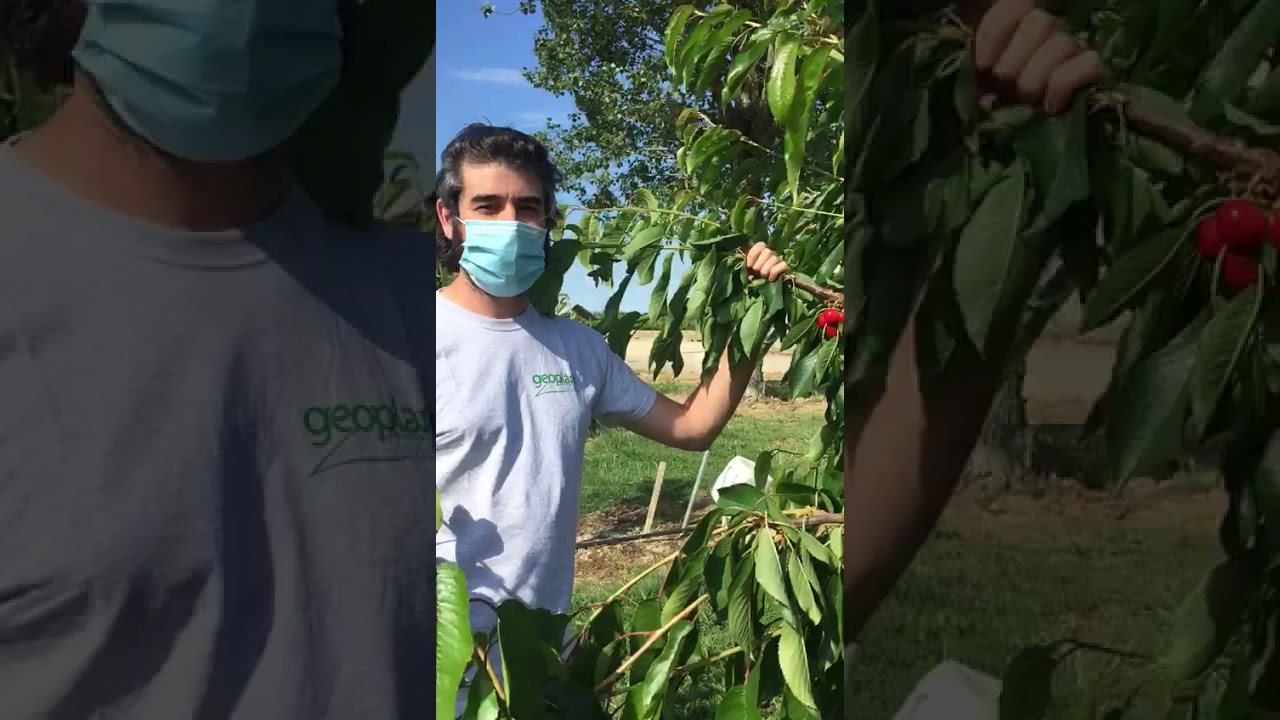
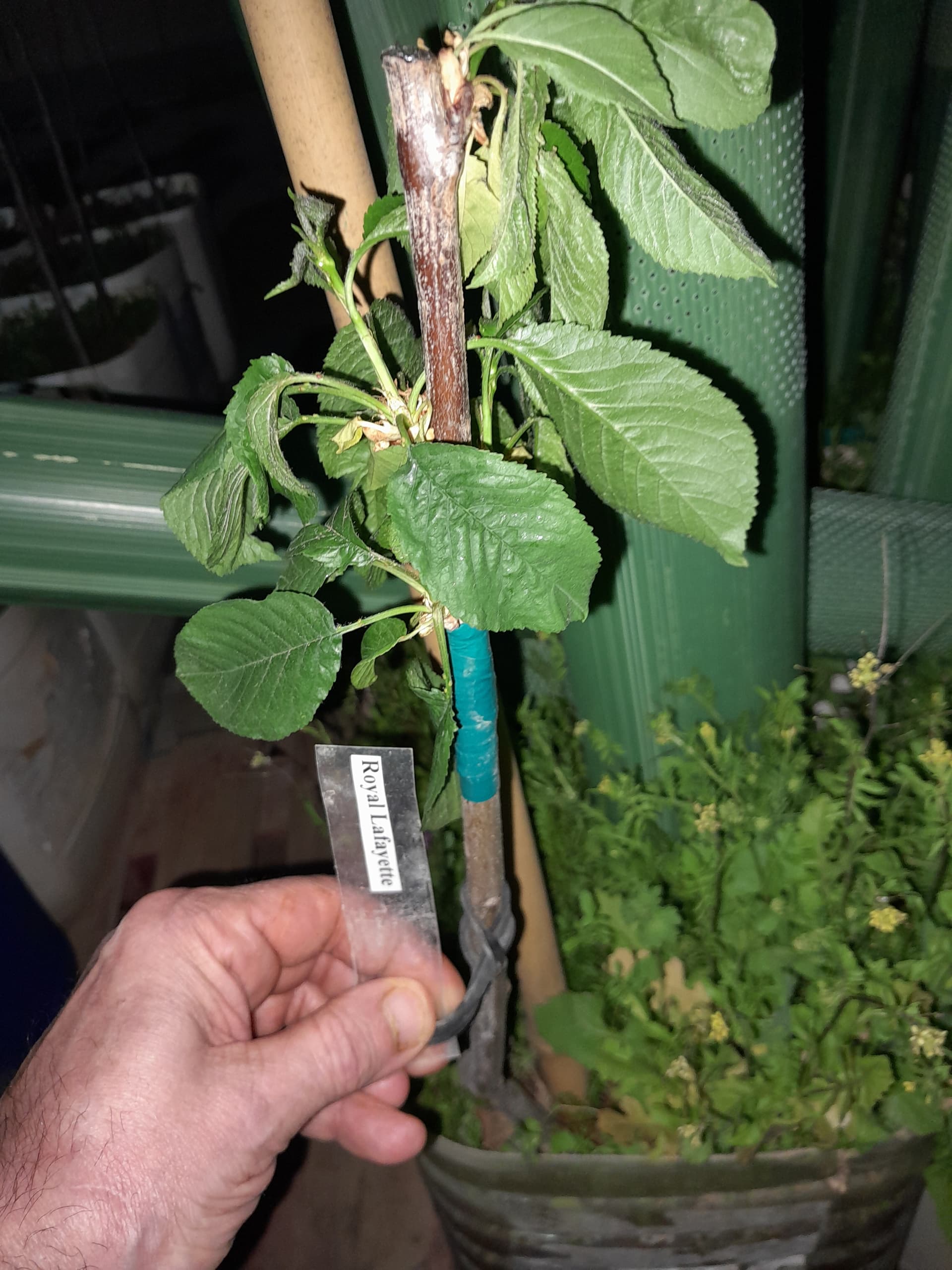
It is a variety with a large caliber (30-32 mm), very crunchy and very sweet, medium resistance to cracking and ripening date (14 days after Burlat, or what is the same 5 days before Bing).
A photo of one of the grafts of this variety:
The following variety is so recent that nurseries specializing in cherry trees are testing it, but it is not yet in the European catalogue.
-Royal Apache (IPS-108)
I give you information about it, from the Mariano Soria nursery.
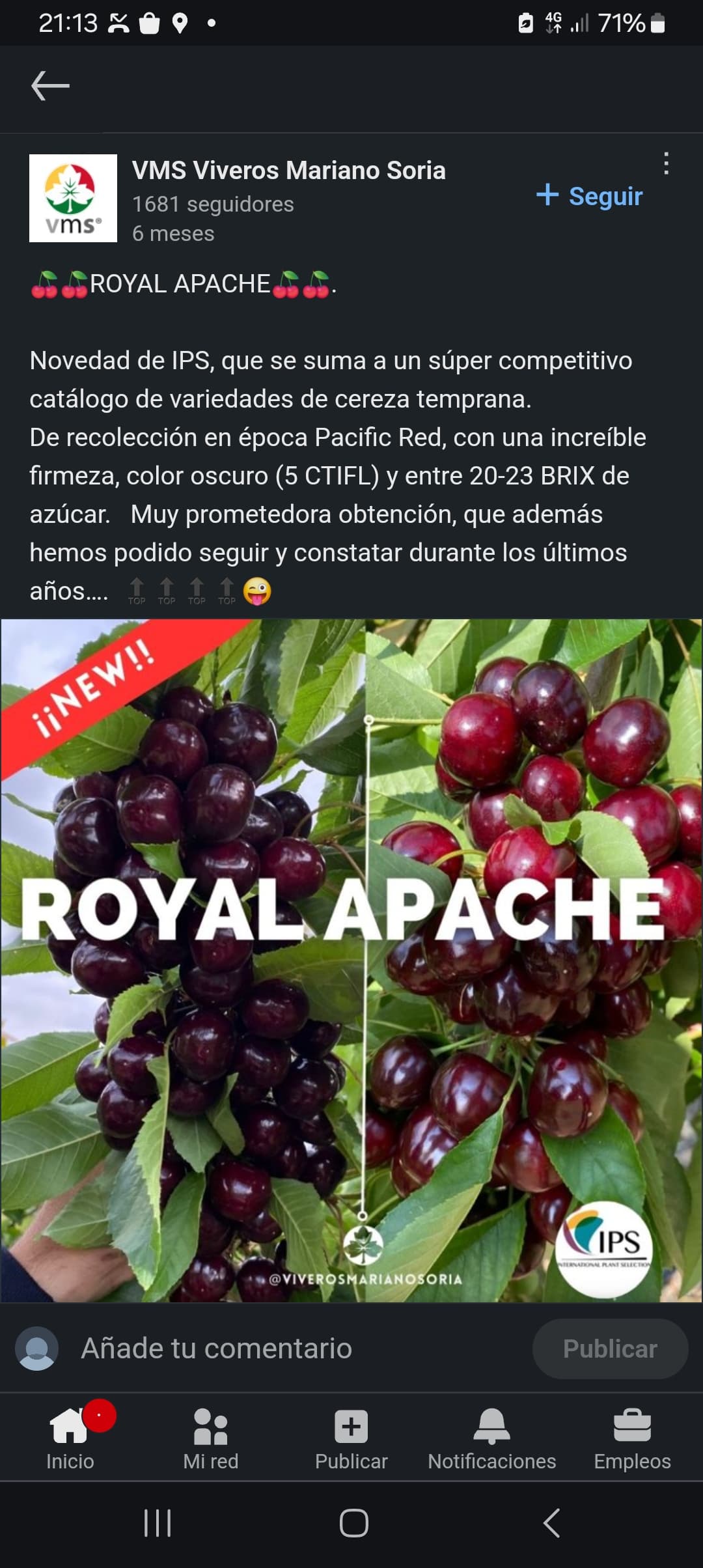
Translation :
New from IPS, which joins a super competitive catalog of early cherry varieties.
Harvested in the Pacific Red period, with incredible firmness, dark color (5 CTIFL) and between 20-23 BRIX of sugar. Very promising achievement, which we have also been able to follow and verify in recent years…
A photo of one of the grafts:
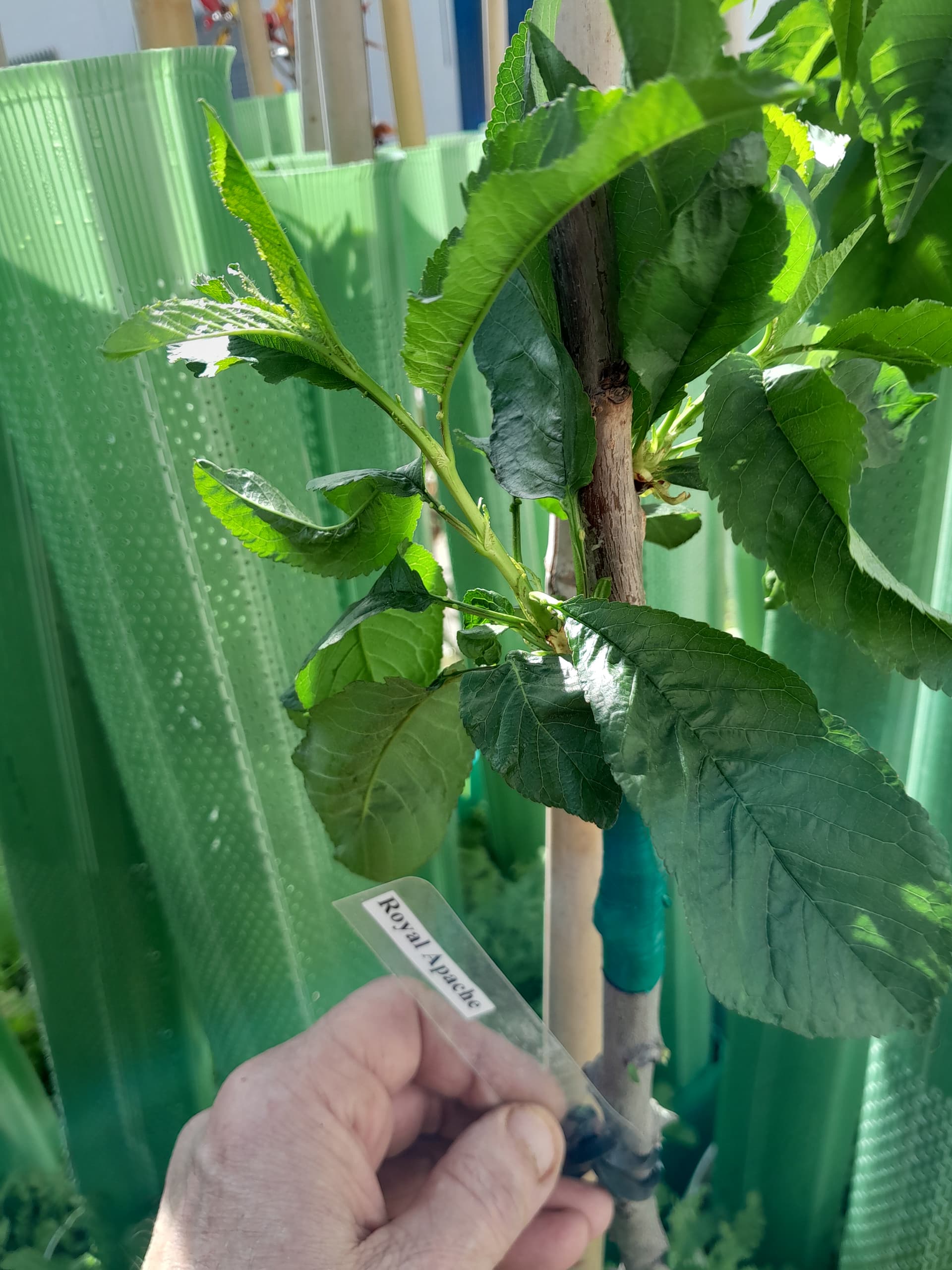
These two varieties are very exclusive.
Best regards
Jose
2 Likes
Good morning, you give us the long teeth with those exclusive varieties and especially with the degrees of brix that are presented, what do you think of the early varieties in our lands, I am one of those who is scared, you know that many years we have late frosts, I do not stop being surprised by the quality of trees you get, I was amazed by another message of yours that you uploaded on the prunus toscana, don’t stop teaching us and giving us keys to avoid mistakes, thank you Jose