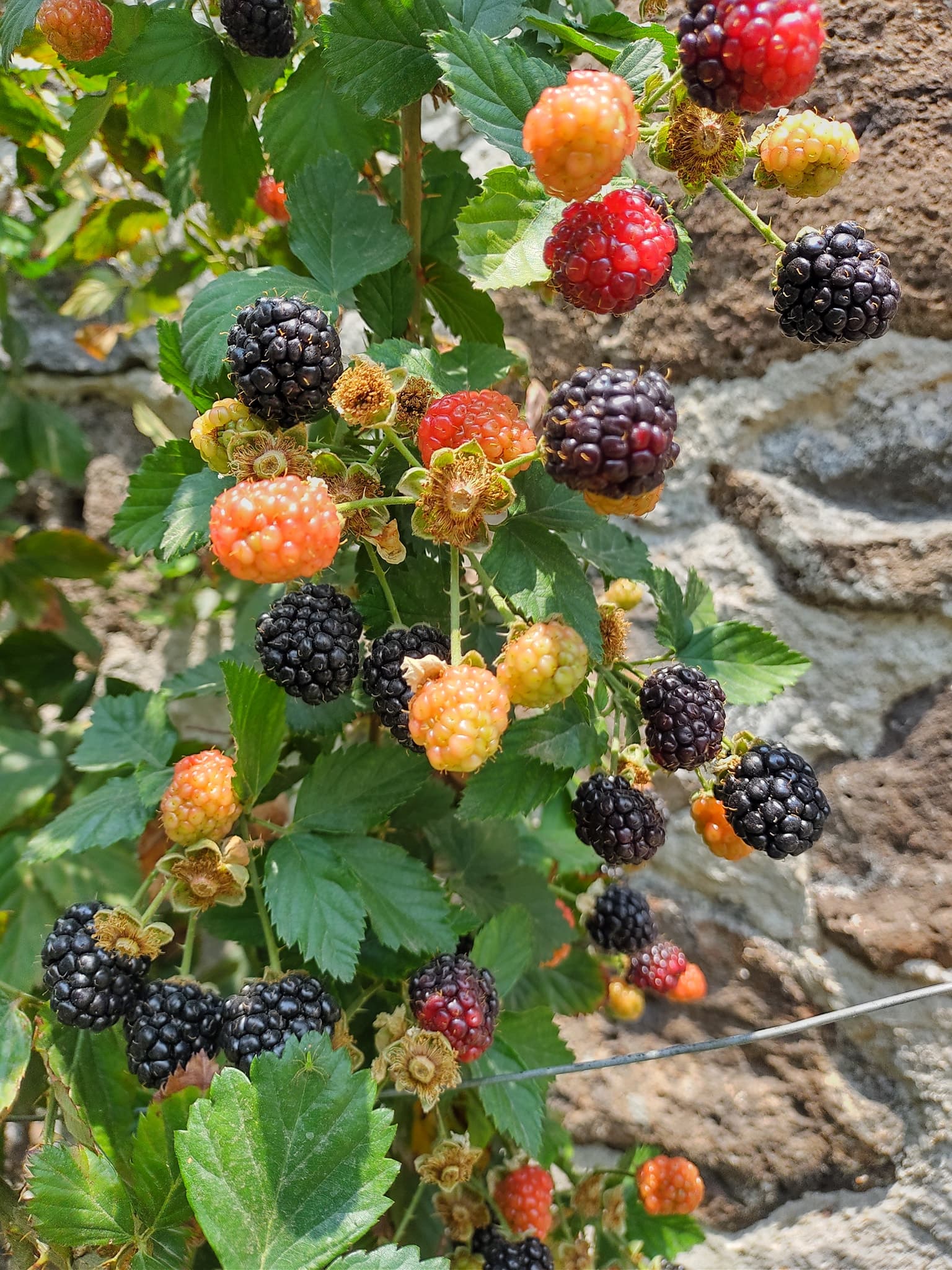
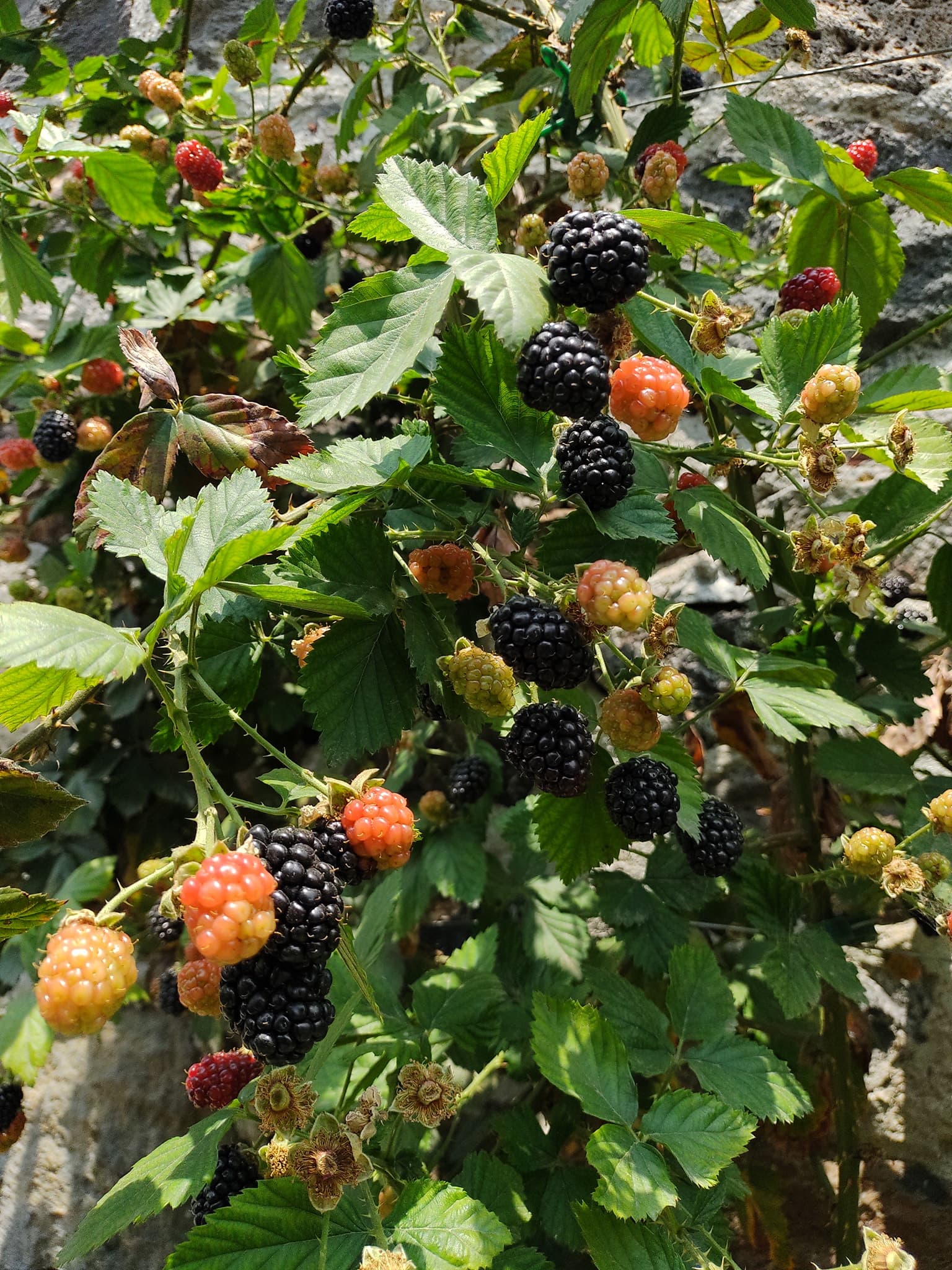
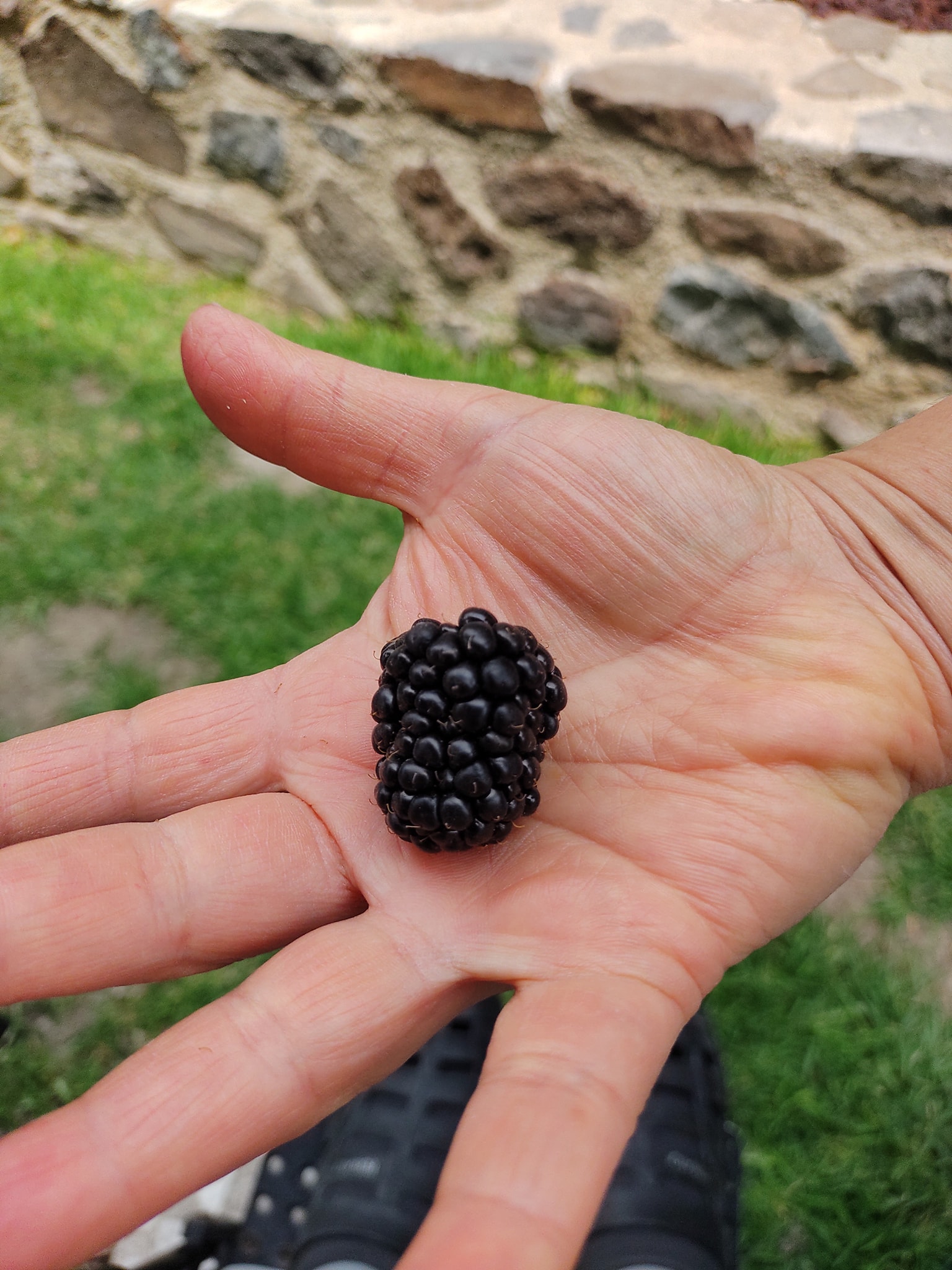
Recommendations for upright blackberry varieties

Someone mentioned in post on a permaculture forum that they had seen fields in France blocked from deer traffic with rows of blackberries and hazelnut trees. I’m looking for suggestions for attractive, upright, trellis-free, thorny blackberry varieties that fill in densely that I might try this with. Ideally they would be delicious tasting, too. I’m looking to put them along my sunny, sloping driveway.

I have no experience with growing blackberries, only raspberries and they are not dense or upright enough for this.

Thanks for your suggestions!

Here’s my Z7 thorned and upright blackberry notes

Thorned and upright

Prime Ark Horizon (extremely highly rated for yield, vigour, flavor, small thorns, have to top primocanes very short, 2-3’ like all ARKs)

Kiowa (giant thorns, very flavorful when left until berries lose glossiness)

Chickasaw (early and long harvest window, berries store well, unique red wine taste unlike most berries)

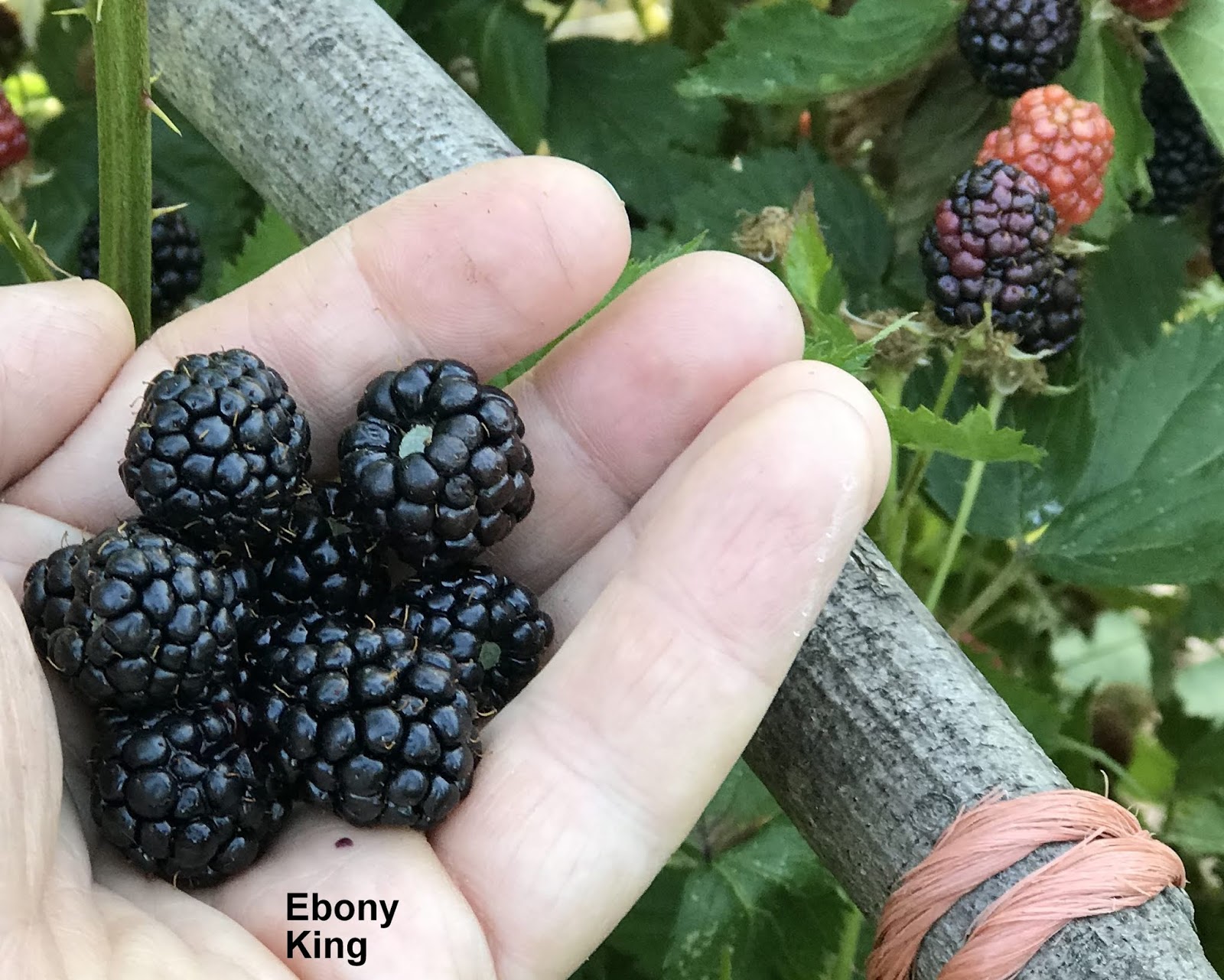
Ebony king (low maintenance, good for patches, higher berry quality than Clark’s, heavily consider)

Darrow (very hardy, old style sour taste, for processing)

Clark’s heirloom (mutant prolific, plant out everywhere if you don’t mind the thorns all over, consider the edge of the property)

Ilini hardy (doesn’t sucker, extremely thorny and hardy, with wild blackberry taste, hard to find)

6 Likes

krismorah on here grows some great blackberries with wicked thorns. he should chime in shortly. i grow nelson from fedco. its plenty thorny with good berries but they are on the small side.

1 Like

I have been enjoying Black Magic. Very large, very sweet and great flavor when ripe, when picked a little early, they taste like grapefruit, no bitterness!

Not only France but Europe does it pretty commonly to plant things that attract birds and wildlife as well as providing a natural fence. If you have ever watched Clarkson’s Farm he does it on his farm. So do you want a wildlife fence? or a personal hedge? I think in some circles they call the personal hedge a Fedge (fruting hedge).

To answer your question there are some cultivars that you can virtually walk away from as they need very little attention.

Healthberry- Clark’s Heirloom blackberry- 39th parallel nursery coined a good term in that its like a Little Shop of Horrors. He also said that it is clear evidence of Permaculture. A term that hasnt been used is that its invasive… i dont want that to be a negative trait but Himalayan blackberry is also invasive. I have tried to trellis this but it doesnt want to be trellised. My canes that were treated with care became the size of small baseball bats…and signals were sent to send up new canes 10 to 20 feet from its crown… Berries were fairly small but tasty. I gave up trying to tame it…it is now free to live out its life trying to take over.

Wineberry- is also ‘invasive’ but i think at this point with them selling them in stores it is also almost native. Very worth growing for yourself and wildlife.

Himalayan- I am growing it and have found it growing wild in my state in many places. Its a very adaptive plant that needs no attention at all and will grow in ditches or hillsides full of trash and rocks. I found a thicket of them a few years ago that was probably several acres… so at this point i think they are native. Nice sized tasty berries that are much better than the tiny wild ones that are technically invasive but are considered to be native.

Ebony King- is one of the few that needs very little to no attention and is a very worthy plant of growing I have posted pics of canes 15 feet or so long that the person got over 1000 berries off of one plant.

Highly bred cultivars do not seem to have the same ability to self sustain without eventual self destruction by disease etc. At least from what i have seen.

From what i can tell Amethyst purple would be a great addition to that hedge… it may be more vigorous than Triple Crown. Canes are extremely thick and strong enough to support any crop in its 2nd year.

Cumberland black rasp would probably fit in nicely. Its been around for over 100 yrs…

Hazelnuts- im growing several varieties but have planted the most Hazelberts. I got mine from Jesse on here and they are doing well.

YMMV but any hedge or fence like that here encourages wildlife…it does not form any kind of fence per se… my local deer munch on multiflora rose and thorns are part of their diet. My local deer prune all of my wild blackberries and raspberries in early spring which encourages laterals which in turn helps the plant. The birds and other wildlife disperse the seeds and create their own habitats.

I grow lots of things for nature to offset their desire to eat my cultivars. Such things like native elderberries have small berries that they prefer over larger berries like Marge.

As for hazelnuts- its hard to outharvest chipmunks. This in turn brings out my owls and birds of prey which keep things in check.

Is a hedge possible? yes… but you will either have to share or be very diligent in harvesting… it is a dinner bell for nature.
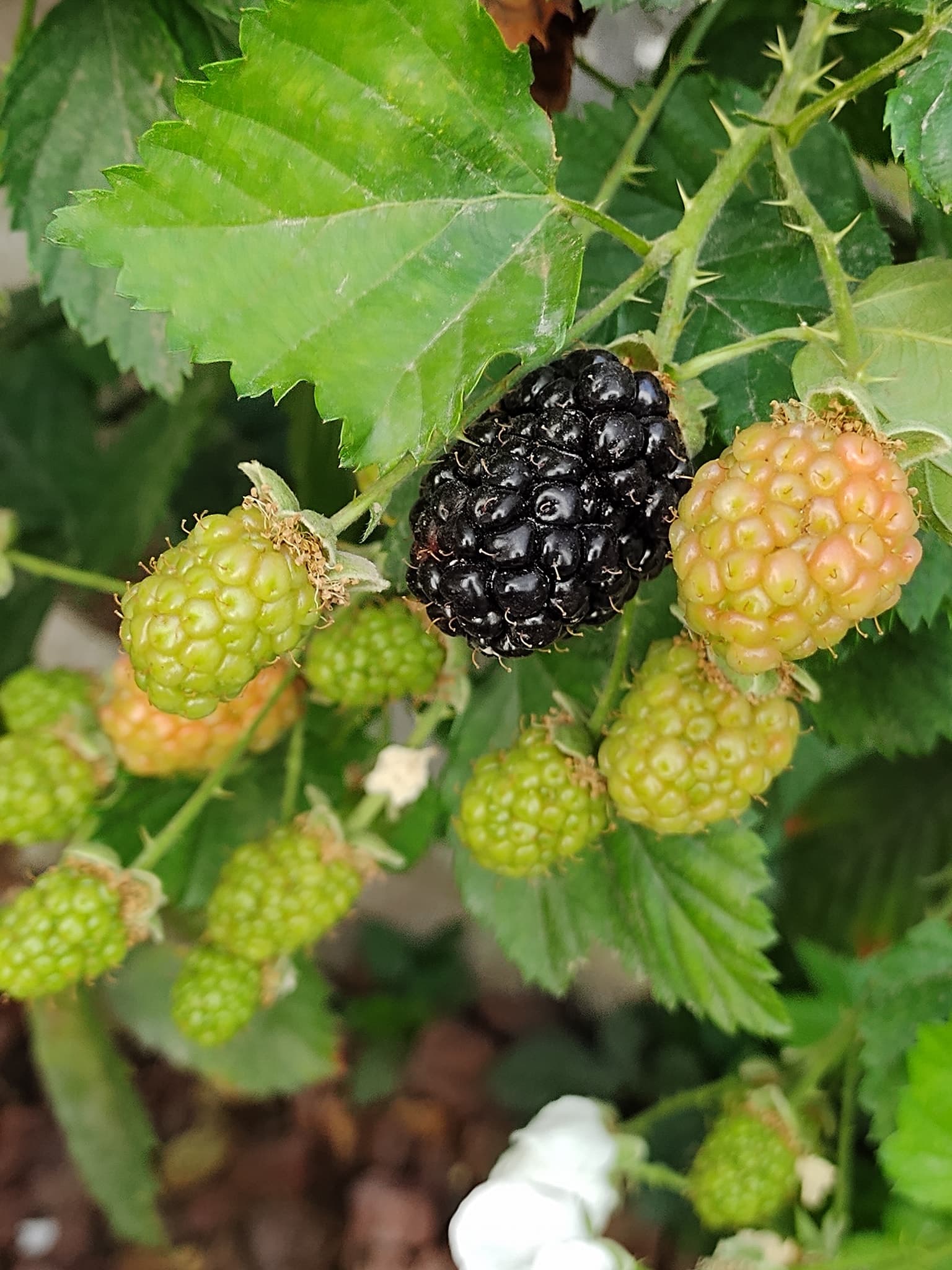
5 Likes

Wow! This is first hand knowledge is invaluable.

Do you how I can obtain/ buy Clark’s Heirloom? Do you think it could be pruned into something attractive without extensive support? I’m in the middle of suburban New York and only my 94 year old Italian neighbor is planting fruit in the front yard. I’ve actually never seen any blackberry plants irl, only raspberry and wild black raspberry. I was imagining something very bushy and self-supporting.

I have wineberry growing ‘invasively’ in my back yard and it’s tasty. It’s not very self-supporting, though.

This is my second year with Joan J raspberries in the garden for the kids to pick. I read some suggestions to remove wild berries from the property so that they don’t transmit disease to the bred cultivars. Not sure if the wineberries are a hazard to the Joan J’s.

Out of curiosity, how did you identify the wild patch of Himilayan blackberries? I used Picture this to identify the Wineberries, but it’s been wrong about a few other wild finds.

I got mine from 39th parallel nursery. Not sure if he still sells them or not… if not they grow easily by root cuttings…worst case scenario i could make them available. I try to support the nurseries unless they no longer carry things.

It would take alot of diligence to keep it ‘pruned’ let alone its desire to wander. The berries are fairly small but plentiful on my crop but they are very tasty and as noted are ‘healthy’… as they are probably loaded with antioxidants etc etc.

If anything this plant needs its own area to just let it do what it does. Even the soil below it changes… the roots become extensive and somehow network in every direction. Its desire to thrive is un’parallel’ed.

Im not sure it is right for a small yard…

the leaves are usually green and lush into late fall and most do not lose their leaves at all… mine are still on and still green even though there have been many killer frosts. The leaves have a whitish/silverish tint on the underside and there are spines on the undersides of the leaves. There are also hybrids here and there of these as they are evolving.

It is one of the only blackberries that can grow in flooded areas also. I did not know this myself and is why i planted mine in a boggy swampy area where they are thriving. An amazing plant that i really am fascinated with… but its not for everyone.

I posted pics of a guy that is growing them in the desert of Arizona in his backyard in volcanic stones… they look amazing and is really the only thing that can handle his heat.

It also grows in Canada and Alaska…

So kind of neat plant to have for an extremely hot summer or cold winter… from a desert to a swamp…it has desire to thrive.

So with all that being said… you should probably just go with Ponca, Caddo, Ouachita or Apache blackberries as they are all erect and need very little if any trellising. 4 t-posts and several lengths of the new and cheap baling twine is all that you really need to manage things… you can pull with all of your might and get the strings tight and just tie them off…they will last many years…if you dont want to fool with wire. Or not trellis at all and you should be fine.

These are the hazelberts that i talked about earlier… even though some folks say that im making up that name…they are worth growing.

Plants dont really spread disease to other plants like they talk about on social medias. Insects transmit disease from an infected plant to a non infected plant… there is no way to know if you have any infected plants or the insects that transmit them… and nobody really knows if those insects travel 100 feet or 100 miles.

Wineberries are in my regard native… as they are loved by birds and creatures that eat them. Removing them would just have those things that eat them eat your berries instead. They grow anywhere and need no care… and are pretty much bulletproof. Like i said earlier you can buy them online and ive seen them sold in box stores so they are becoming more native every day. Anyone that hates them obviously hasnt tasted them…they are delicious.

2 Likes

Im out in the PNW right now. Im sort of tempted to bring some himalayan home except that it covers acres of ground here, andcIm not sure ai care to unleash that on my own place. Probably it’s already been planted by someone near me at some point. I imagine its held somewhat more in check elsewhere? but in the PNW it is NUTS! Ive seen it scale a telephone pole, so ~20 ft canes are possible, and it makes the craziest HUGEST thickets. I figured it might not endure in my climate anyway. Hmmm, should I tempt fate?

Ive got a similar quandry with wineberry. Its not endemic where I live YET so I suppose the “responsible” thing would be to leave it be. Im curious about them though. I remember some years back Burnt Ridge sold them and actually had a quota. You could only buy 2 plants or something because they were special or rare. Come to find out its growing like crazy over large swaths of the US!

Ive hunted for Ebony King and no one seems to sell it. I see google hits for Home Depot and other box stores, but thats about it. It sounds like one I should really get ahold of.
Id be keen to swap if anyone has some to share with me.

1 Like

Not many people talk about them due to the spines… and not many people buy them for that reason. And not many places sell them for that reason.

This is Himalayan that has been tamed to a trellis. Pics were taken the first week of May and it flowered in April. Grown in the desert of New Mexico.

2 Likes

a small wineberry was growing in with a honeyberry i had ordered so i took it and planted it 2 years ago in my yard. last year, from early June until frost, that 2in seeding threw out 4 10ft. canes. i knew it was a Rubus but didn’t know it was a wineberry until i saw the red spines. this is just planted in my shitty rocky soil with no fertilizer. hope to taste the berries this summer. a bird must of planted it in that pot. got 2 for the price of 1! :wink: only hardy to z5 but the last 3 winters have been z6 . canes are flexible so i i was able to cover them for protection. got the tips of 2 of them buried to expand the patch. how productive and how big are the berries?

2 Likes

you have to be pretty quick to get a harvest of them… there are birds that know exactly when they ripen. As far as i know they should be hardy to Z4…they are not frost tender either i dont think. They are also one of the few that will ripen in the shade… i have some in my pawpaw patch that they barely get much sunlight. And have found many patches in gullies and ravines that get very little sunlight at all.

Edible Landscaping says that they are naturalized… and sell plants… as other nurseries also do.

Here is a pretty good description of them… he says that they do knot spread by root rhizomes which is correct…sort of. They will propagate by root cuttings…so if a vole or something severs a root there will be a new plant. But as far as i can tell they stay pretty much in their clump except when they naturally tip root. One thing that he doesnt mention…and im not sure if it matters is that deer do not seem interested in them at all. At least in my area and from what i can see on nature hikes and my adventures…i see no evidence of deer browsing.

They grow true to seed… and there is some evidence that the seeds may be stored or banked for up to 100 years… So highly doubtful that these are going anywhere anytime soon… Seeds are for sale all over the internet. So i see no evidence of anyone trying to control them.

Im pretty sure that Luther Burbank or someone like him brought these plants in or seeds for breeding… there is some tale of that being true. This was around 1890.

1 Like

i have them in a protected spot on the south facing wall of the garage. they should do well there. going to mulch them with manure to see if i can get them to set a decent crop this summer. not likely needed but seeing they are young, it cant hurt.

1 Like

@SoMtHomestead … or anyone else that has Black Magic blackberry.

Could you post a pic showing the thorns.

If its not pretty wicked with thorns… my deer will just eat them.

I started Kiowa last spring… Caddo, Columbia Giant… Caddo and Columbia giant repeatedly got munched down to short stubs.

Kiowa survived and thrived. I really need Kiowa level of thorns or better (bigger longer sharper) to get a blackberry that my deer wont mess with.

Are there any other primocane fruiting blackberries that have a nice berry, taste good ripen early (june) and have wicked thorns ?

Thanks
TNHunter

1 Like

IIRC, Shawnee would fit your description of thorny, large berries, and very productive.

1 Like

I have a small prime ark 45 that I’m going to be planting. It seems to have some pretty hefty thorns.

Outside of that I can’t comment much about it aside from what Google says.

Thorns on black magic are abt the same as PA Horizon here., small and sparse.

Ebony King has nasty thorns… nice big berries and a nice wallop of sweet and tart. Mid to late June ripening here. ymmv

3 Likes