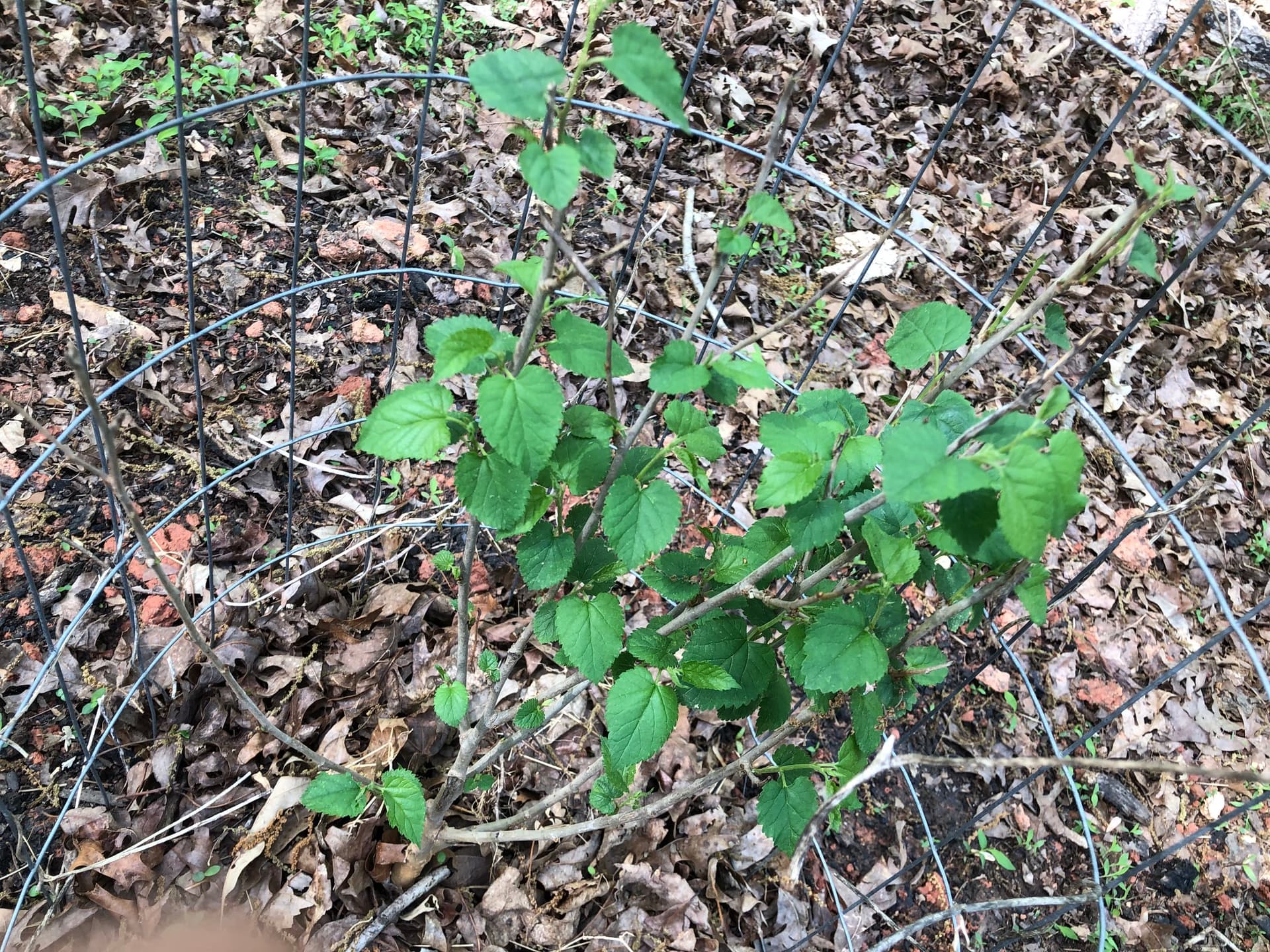
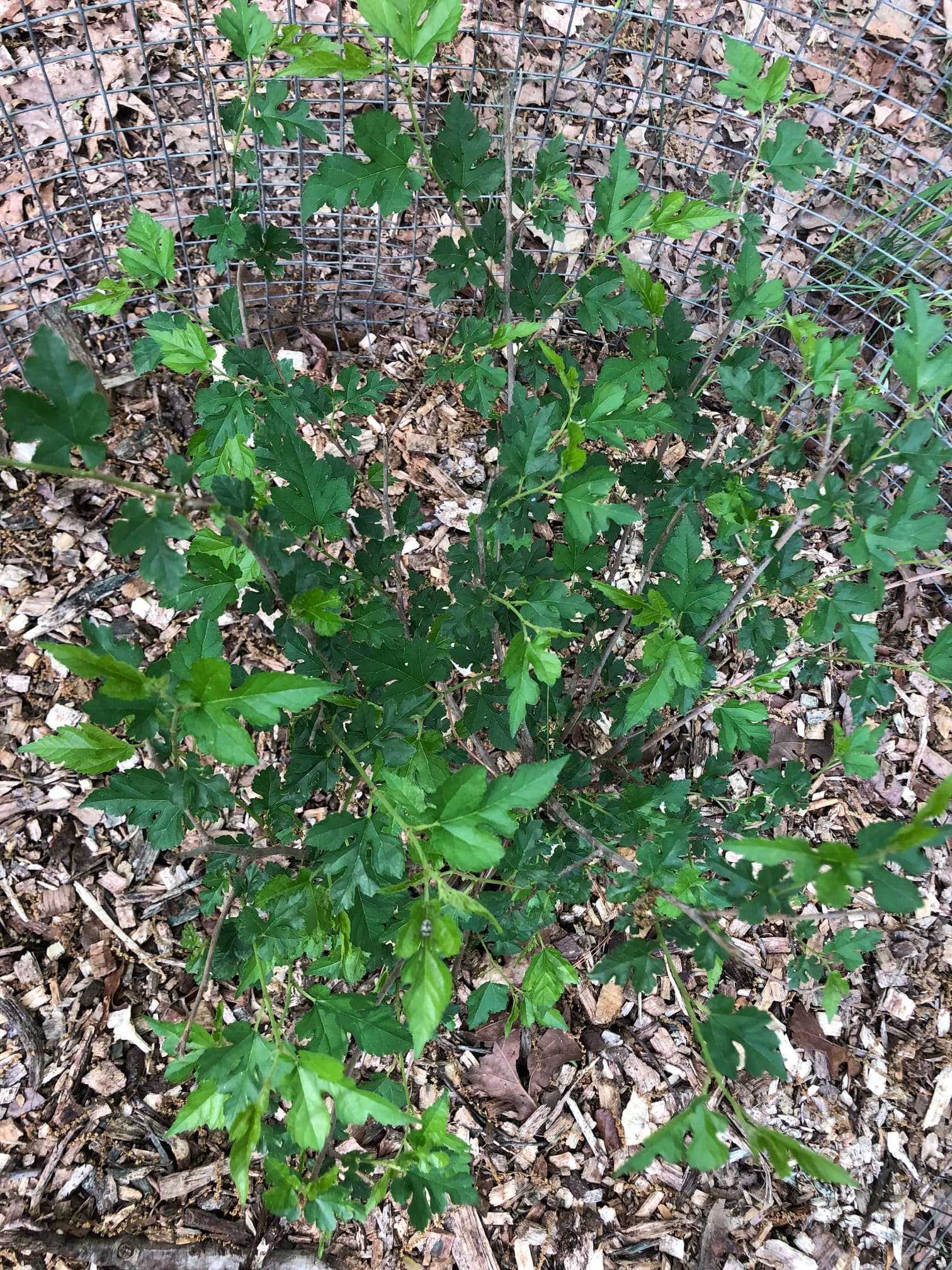
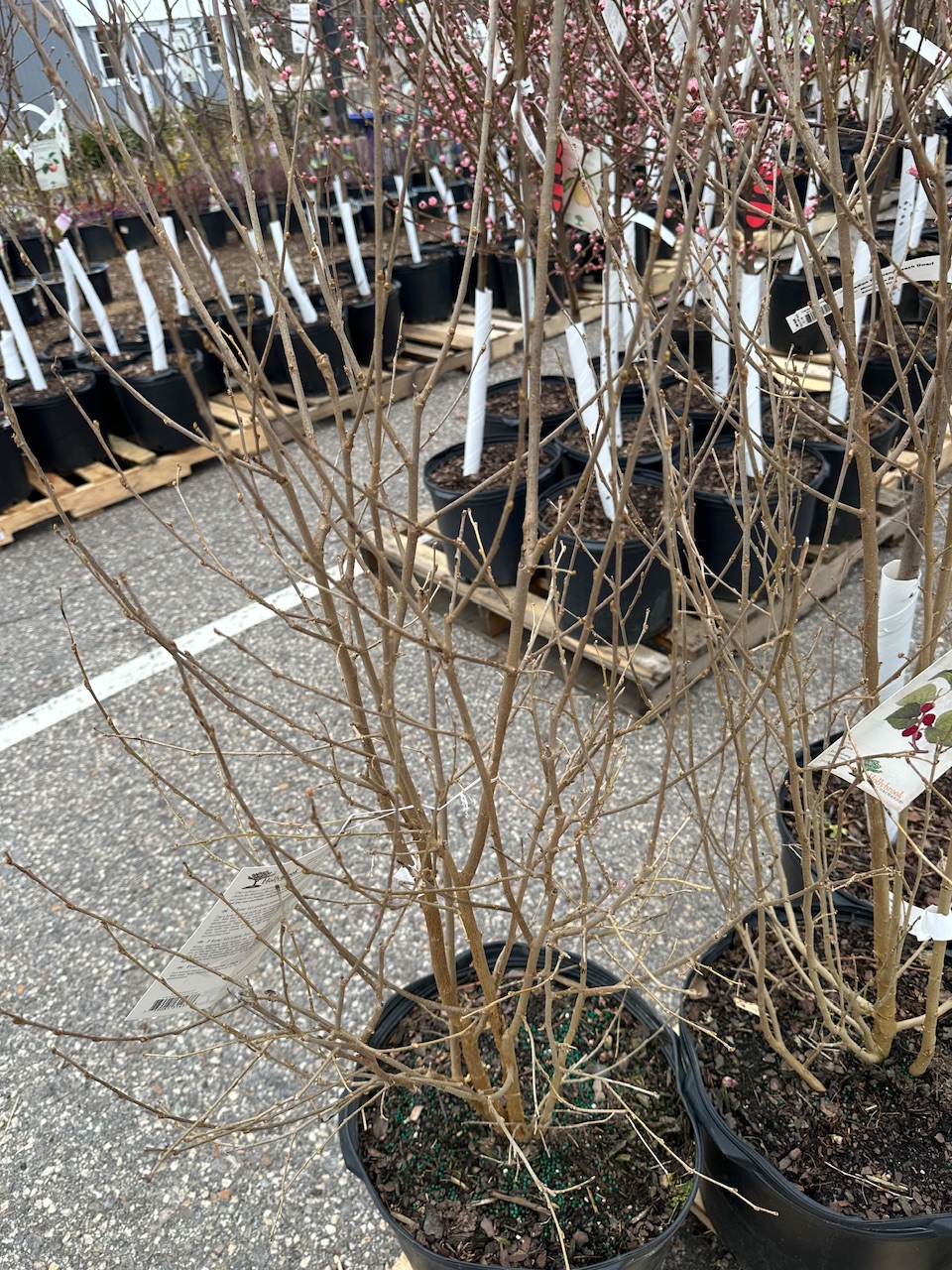
I got an order of Red Mulberries from MDC and am not wanting to plant white mulberries as they are invasive in my area. I’ve planted two so far but have 23 more and from what I can tell it looks like I might have a lot of white mulberry. Here are pictures of the two I planted. The others are all in pots. None appear fuzzy to me and most have multiple lobes. I can send more pictures if anyone can help.
I was planning to give away/sell the remaining ones I don’t plant, but don’t want to give anyone White Mulberries in my area.
Mulberry plants are widely mislabeled in the US. Further, there is no valid genetic test to distinguish M. alba from M. rubra.
1 Like
So does that mean just wait until they fruit to differentiate them?
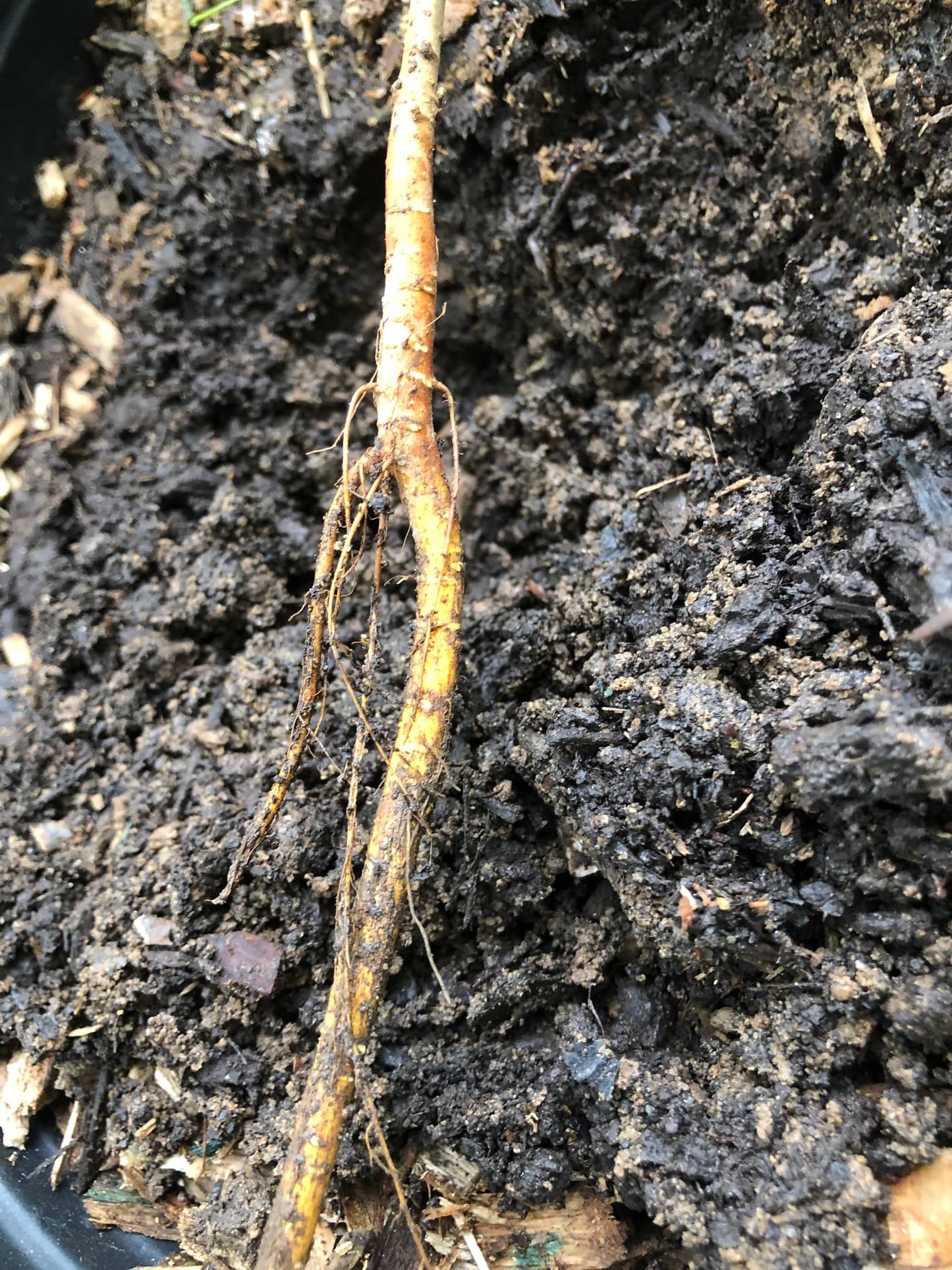
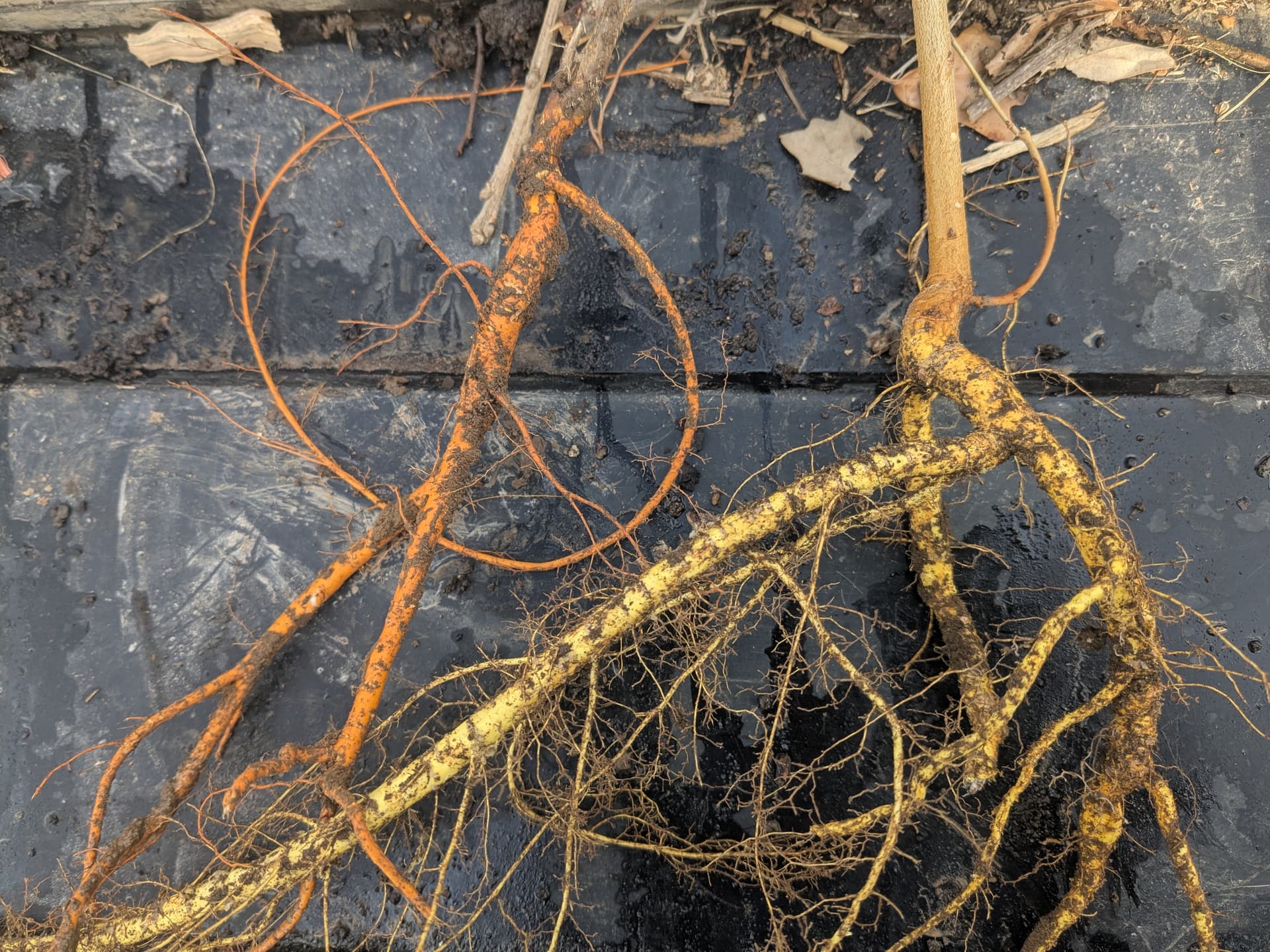
What color were the roots? Orange is alba or alba hybrid. You could graft them with known morus rubra and it would speed up fruit production
1 Like
That approach is unreliable.
Obtaining actual M. rubra is problematic.
2 Likes
Difficult but not impossible.
I kind of think it gets to a point where we should ask ourselves to what end should we really focus on “pure” rubra….if it walks like a duck, talks like a duck…
Nothing wrong with wanting the native species, but to what end.
1 Like
I was concerned with the invasive aspect. I guess I’ll just leave mine planted and see what happens. I mainly bought them for wildlife food anyway. Just don’t want to give the extras away without knowing what they are or how to explain them.
1 Like
Looks like most of them have some orange on their trunk or roots.
1 Like
If the bugs and birds can’t tell them apart then it’s fine. Mulberries are maybe the perfect example for this. If that’s your goal get the most productive and largest berries possible (which are hybrids)
People get so confused about speciation without understanding molecular phylogenetics…once you do have a grasp on it you understand how the question isn’t an actually meaningful question
If you replaced all the “pure” ruba mulberries with hybrids that produce more and larger berries the wildlife would STRICTLY benefit from this
1 Like
I think it’s more important to look for the red mulberry phenotype when looking at a wildlife restoration perspective.
The leaves tend to be larger and rough which makes them less likely to be herbivore food. Rubra phenotype also has a much better chance of competing with a forest canopy vs a hybrid or pure alba. The rubra berries are usually delicious, but plenty of albas and hybrids have small or mediocre fruit.
I don’t say this to be a contrarian or say that all albas and hybrids are bad, but it’s important to have both and in the appropriate environment.
I also disagree with mulberry being classified as being invasive, and I reserve that term for things like callery pear, honeysuckle, kudzu, etc. Albas have been on this continent for 400 years and have naturalized to a large degree. Even so, I think preserving Rubra germplasm is a worthy cause.
2 Likes
And that’s a bad thing?
Even when you take into account the disturbed ecosystems (where people are planting either one) are 300 years from a climax forest? Hybrid vigor would make them pretty competitive in a race to the top situation I imagine. I’m also not trying to be contrarian, just trying to understand
Especially when you square this with the observations by Lucky_P who claims that, in the south, once you get away from human settlements it’s pretty pure Rubras anyway
But we’re specifically talking about someone taking a known excellent fruiting cultivar and planting it. Presumably that tree is either sterile or contributing good tasting fruit and high productivity to the genepool
And also human taste versus animal taste. Not to mention (as I understand) most Rubras that are documented have significantly lower fruit production compared to most hybrids (or even albas?), so do birds care about eating 10 smaller fruits versus the one larger fruit a native Rubra would produce?
I’m not anti hybrid or cultivar. Just saying that Rubras are better adapted at growing in a forest. We have plenty on our farm in N KY.
I don’t think they’re inherently less productive. Most of the time they are not in full sun so they don’t make as much fruit.
Less palatable leaves is a good thing if you are a plant trying to survive and not become food.
Albas and hybrids definitely have a place in our country, and I am not advocating for their removal. When I observe the local alba hybrid population around me in the city/suburbs I wish those trees had more Rubra traits like bigger and tastier fruit. Some research even leans towards Rubra berries being more nutritious.
1 Like
In my experience, orange roots is more suggestive of M.rubra, yellow roots indicate M.alba or hybrid.
Several years ago, i purchased a bundle of 100 ‘Red Mulberry’ seedlings from the KY state forestry nursery. There was not a single M.rubra in the bundle - all were hybrids, with some appearing to be 3/4 or greater M.alba genetics. Some years later, i had a conversation with the state forester for our area, who had been responsible for sourcing seeds… And he admitted that he just gathered from any fruiting mulberry that he could find, with no regard to species or hybrid status.
Probable M.rubra seedling, Left; hybrid mulberry seedling, Right.
4 Likes
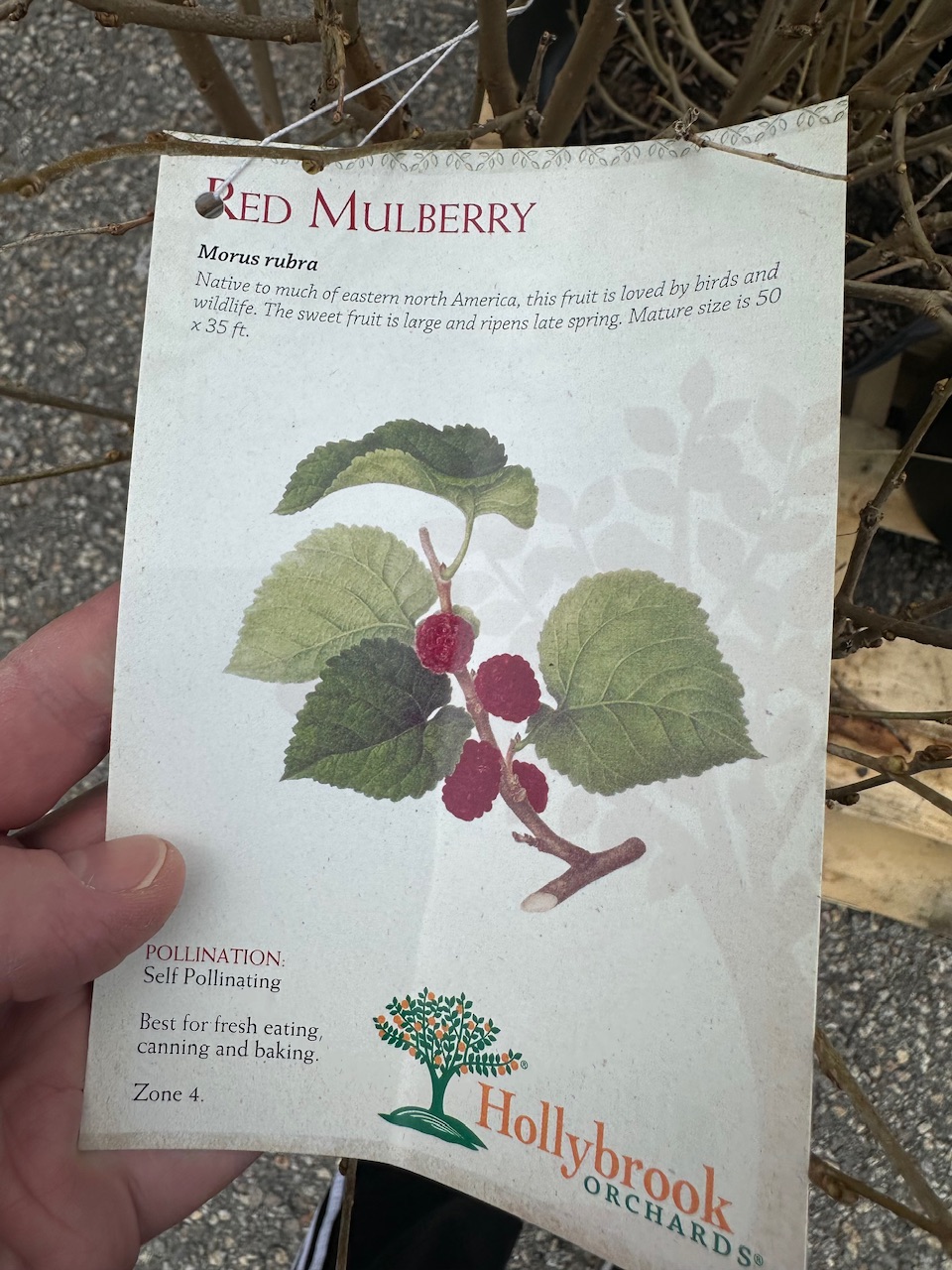
Had these come in at the local nursery this past week. I don’t have enough experience ID’ing mulberries, but when I see rubra on a tag I just default to hybrid alba at best.
2 Likes
That trashy growth habit screams ‘alba’ to me.
3 Likes