Have you tried parvifolius with Mysore? It seems those two are closer to each other than either are to red raspberry.
2 Likes
Thank you for bringing it up and for the information on how to care for it. Will do!
Of course! I’m happy I get to learn from the real experts haha. I’m also pretty new to Rubus.
1 Like
Hi No, I do not have pure parvifolius anymore and all my hybrids are fully male sterile, so I do not have viable pollen for a cross in either direction.
3 Likes
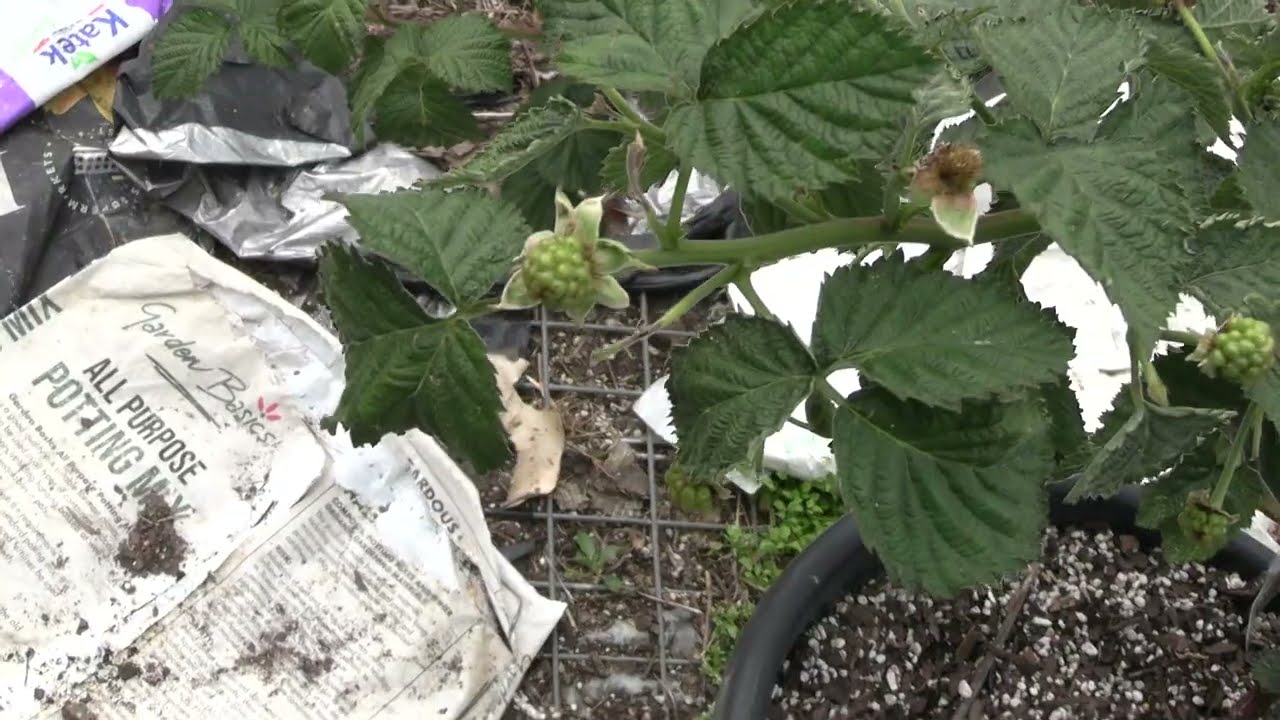
My Blackberry -Raspberry Hexaploid Hybrid(6x) had 2 laterals that started flowering in mid Winter. I emasculated the flowers and pollinated them with Raspberry pollen. They have set fruit. Should be BBRR Tetraploids.
see Video.
5 Likes
BU also has them: Dorman Red Raspberry - Berries Unlimited USA
1 Like
Chloroplast DNA Diversity in Raspberry.pdf (2.0 MB)
A Review of Interspecific Hybridization in Rubus.pdf (732.7 KB)
Edit: interesting that Brandywine has ‘Logan’ as an ancestor, but it’s not Loganberry.
3 Likes
Taken from Luther Burbank: HIS METHODS AND DISCOVERIES AND THEIR PRACTICAL APPLICATION:
On Himalaya:
After the usual decade or so of probation, during which every new fruit of whatever quality must wait for recognition, the Himalaya took its place, first on the Pacific Coast, and later throughout the northern and central states, as a standard blackberry. After it came to its own, so to speak, its popularity was so great that for several years the plants could not be multiplied fast enough to meet the demand.
It is a plant of extraordinary vigor. A single cane may grow more than twenty-five feet—sometimes even fifty feet—in a season, and attain near the base a diameter of an inch to an inch and a half.
The aggregate growth of cane of a single plant in a season may exceed a thousand feet—one fifth of a mile.
and:
The narrator adds this comment: “It is my opinion that if this bush were properly pruned, fertilized, and irrigated, as well as shaded from the extreme heat of the sun in July and August, it would bear between three and four hundred pounds in a season.”
On Phenomenal:
No such berries were perhaps ever seen before as those that grew on this second-generation offspring of the Cuthbert raspberry and the California dewberry.
Some of the berries were an inch and a half long and an inch in diameter. They were a dark rich crimson color, slightly downy, and glossy. In flavor they combined the qualities of raspberry and blackberry, both flavors seeming to be intensified. In a word the fruit was a blend between the fruits of the parent races. It was a new variety so markedly distinct from either parent as to justify the designation of a new species.
The new berry was originally called the Humboldt, but was subsequently rechristened the Phenomenal by the purchaser.
The new fruit was not altogether unlike the Loganberry, which was an accidental hybrid discovered by Judge J. H. Logan on his place near Santa Cruz, which was believed to be a hybrid between the red raspberry and the California dewberry. But the Phenomenal is far superior in size, quality, color, and productivity, and it is gradually displacing the Loganberry.
(it didn’t, although it did lead to Young→Olallie→Marion, which is important)
On Paradox:
Still greater interest attaches, perhaps, to a hybridizing experiment in which the parents were Shaffer’s Colossal raspberry and the Crystal White blackberry.
Some of the plants from this cross were of the most tree-like proportions. Most of them, however, were barren, though they bloomed freely. But there were exceptional ones that fruited, and selected seedlings were grown from these through a series of generations. In the fourth generation a plant appeared which was of such extraordinary characteristics that it was given the name of Paradox.
This plant was in all respects a most perfect combination of the two ancestral forms from which it sprang. The wood, bark, leaves, blossoms, prickles, roots, and seeds could not by any test be proved to be like one or the other. The fruit, produced in abundance, was an oval, light red berry of good size, larger than that of either progenitor, and of fair quality.
Many of the first generation descendants of the Paradox were partially barren, though blooming freely. Sterility as to fruit was often associated with gigantic growth.
But some of the seedlings were fertile, and they manifested almost every possible combination of qualities of the raspberry and blackberry. Some were similar to the Paradox, except that they had white berries instead of red.
By saving seeds from the white and the red varieties separately, I found that they bred true, each constituting practically a fixed species.
As to the vines themselves, there is very little variation, the canes and foliage presenting an exact balance between the raspberry and the blackberry.
The berries are not of great commercial value, as the fruit though large is soft. I hope, however, to harden the berry by selective breeding, and introduce a better flavor.
On thornlessness:
Then it chanced—in the year 1902 I think it was—that Mr. David G. Fairfield, of the United States Department of Agriculture, found in North Carolina a few plants of a wild dewberry, apparently Rubus Canadensis, that were nearly thornless. Mr. Fairchild had frequently furnished me specimens of one kind or another that he thought might be useful in my work. He now very kindly sent me a few ripe berries picked from the partially thornless dewberry.
The seeds were carefully planted in boxes in my greenhouse. Of the several hundred seedlings that these produced, probably about one or two in the hundred were nearly or quite destitute of thorns.
These few thornless plants were carefully selected, all the remainder being destroyed.
From the fruits borne by these selected plants, a second generation was raised, from among which it was possible to select a great number that were absolutely free from thorns—showing no sign of any spicules on either stems or leaves.
More than fifteen thousand seedlings were raised from the fruit of the best of these thornless plants, and out of that large number not a single specimen showed any tendency to develop thorns, every one being as smooth as the branch of an apple tree.
Thus by inbreeding and selection from fruit produced by a partially thornless wild dewberry, I quickly developed a race of thornless berries that could be depended on to breed absolutely true as to thornlessness.
If we interpret the facts of this development, in the light of later experience, we may infer that the condition of bearing thorns is prepotent or dominant over the condition of thornlessness in the blackberry. Thornlessness is, then, a recessive trait which will be submerged in a cross between a thorny bush and a thornless one, but which will reappear after the manner of recessive traits, in a succeeding generation, provided two individuals of mixed heritage are interbred.
and:
—The thornless blackberry is an accomplished fact, and the value of thornlessness in a berry producing vine is so obvious that the new product can hardly fail to supplant the old type of briar bush quite rapidly.
(it didn’t)
2 Likes
Burbank was a great breeder, I didn’t realize he wrote like a freaking snake oil salesman though.
2 Likes
Well, we have to remember that this was written in 1914 where basically everyone wrote like old timey snake oil salesmen. 
1 Like
I don’t think Burbank actually wrote the 12 volumes. I believe they were mostly compiled by others using his field notes.
Michurin’s books are even more over the top.
3 Likes
Love this! Thanks for linking.
Yeah, those names get tricky quickly. Great points here and with Cascade! Also, thanks for the papers. I found the interspecific hybridization in Rubus particularly helpful. While researching, I also ran across this paper (not sure if it’s been shared already) which discusses Tayberry and parent Aurora in more detail. I didn’t realize that Aurora itself was a hybrid, and that the other tetraploid raspberry parent was itself a hybrid (though with mostly raspberry DNA). This one also talks about the torus detachment issue with tetraploids (though it seems like it affects hexaploid hybrids too?).
Genomic characterisation and the detection of raspberry chromatin in polyploid Rubus.pdf (258.1 KB)
I actually quite like the taste of Himalaya. Interesting to read about it from Luther Burbank’s perspective!
Agreed 
3 Likes
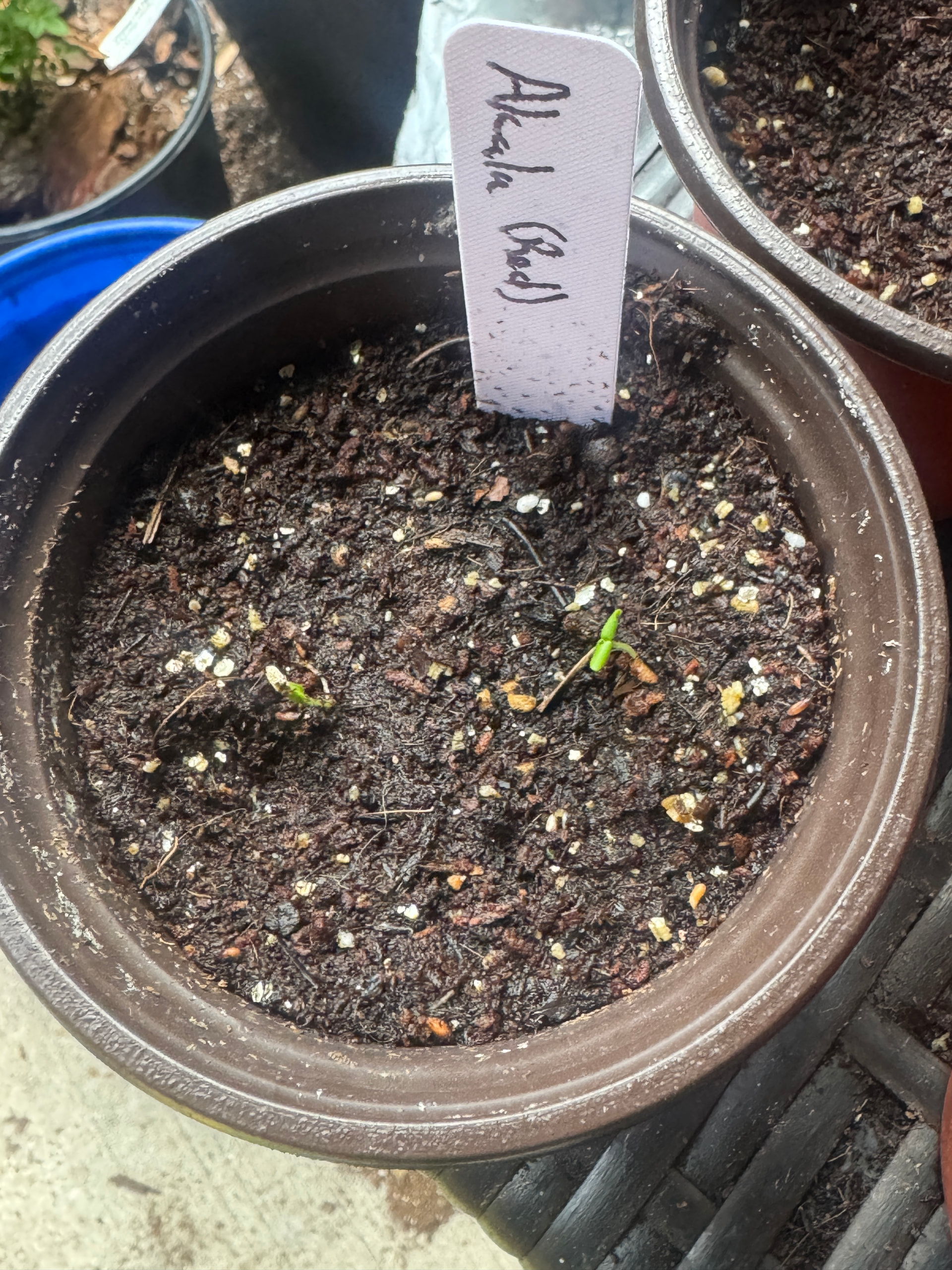
I’m pretty excited the Rubus hawaiensis seeds I got from Hawaii are starting to germinate, not sure if I’ll be able to grow it or keep it alive long enough to collect pollen from it, but it’s really interesting because of it’s large fruits, though they’re apparently bitter. It’s closely related to salmonberry (R. spectabilis) which has some literature in breeding, so I think there’s potential there.
5 Likes
Will be eager to see how this turns out!
Speaking of, I’m curious - do you guys scarify your seeds to help with germination? If so, how are you doing it? I made this germination SOP with the help of AI and it recommends scarifying. I haven’t done scarifying before, but my germination rates are usually pretty low (5~20 out of 100 seeds for a few wild type rubus plants, ie not hybrid or controlled crosses).
Germination SOP.pdf (338.4 KB)
1 Like
I had close to a 100% germination rates with scarifying creeping raspberry seeds with 50% bleach water for 8 hours.
2 Likes
I’ll do a soak in bleach for about 4-6 hours, followed by a rinse and then cold stratification in the fridge for 1-2 months depending on the species.
2 Likes
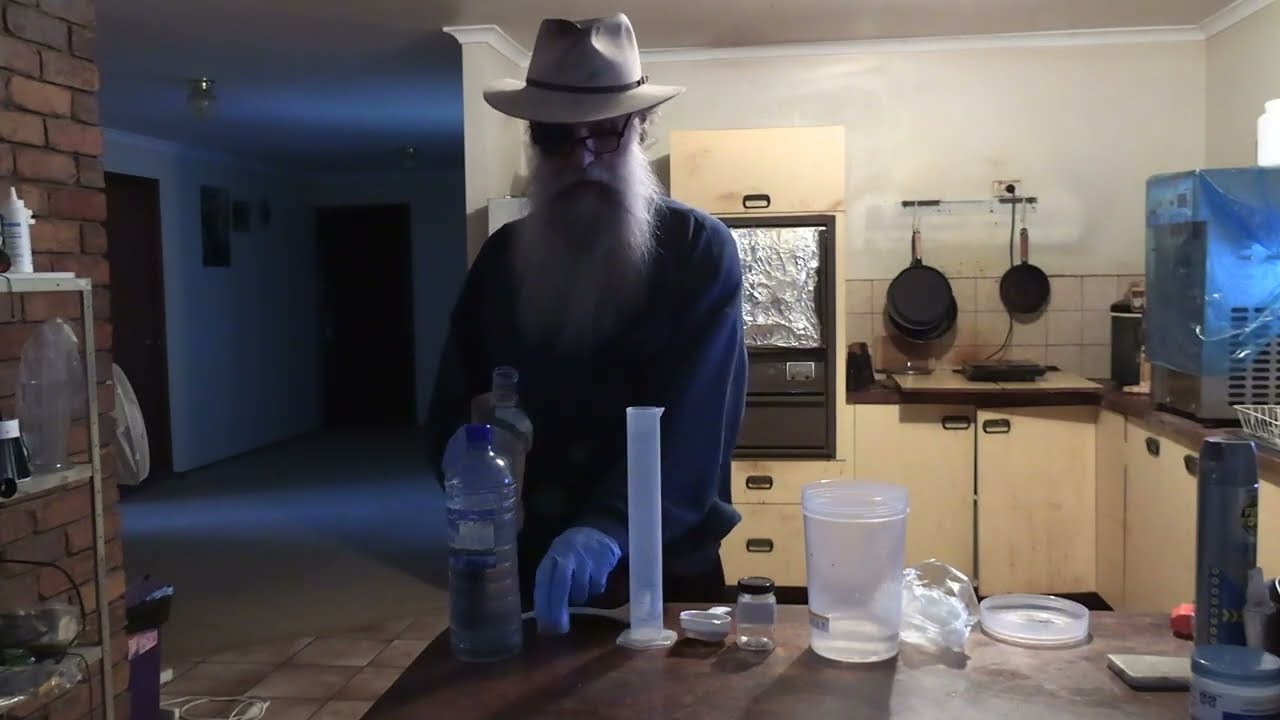
You could try using my rapid 7 day sclafy/stratify method. Always get very good germination.
see
3 Likes
Thanks! How do you think this would work for milkweed seeds?
These are great ideas, thank you! I’d much prefer to do it this way than mechanically scarifying each seed. I’ll try it out and share my results.
2 Likes
Hi, Milkweed only needs stratification, so a soak in 1% Hydrogen Peroxide for 2 to 4 weeks in a fridge, could work. I stratify grape seeds this way. Adding Potassium Hydroxide could kill the seeds.
1 Like