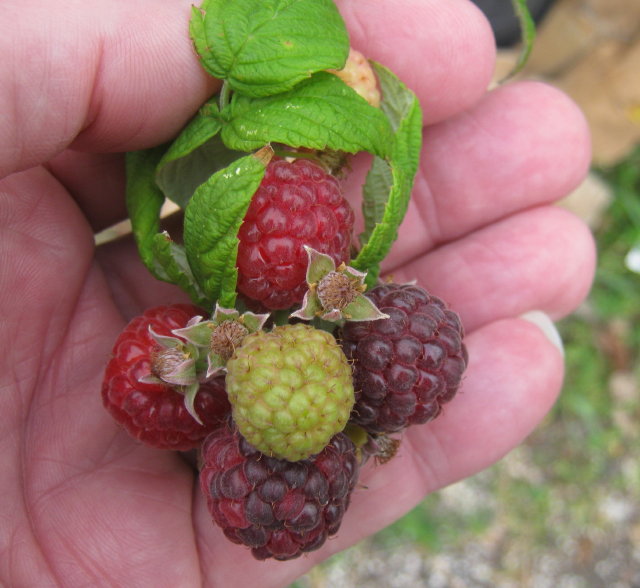
Hi, My Mysore x Red raspberry F1 x Purple, thornless primocane fruiting, hybrid has ripe berries. It was 100% male sterile, so I pollinated the flowers with a different Purple raspberry. If the seeds germinate, I will double their chromosomes to see if this restores male fertility. Google AI is not sure it will work and neither am I. I guess about 50% chance of success.
4 Likes
Beautiful fruit here! I wouldn’t trust Gemini too much, I work in software and these systems are mostly trained on data that’s widely and publicly available on the internet, and Gemini is one of the more skeptical models. I don’t know if it will restore fertility, but I hope it works!
2 Likes
The fruit themselves look fantastic, really a tragedy about the fertility. Maybe Rubus parvifolius could help restore fertility?
I’ve wondered about that clade. A different paper I saw placed R. phoenicolasius well away from R. niveus, towards the other end of the subgenus. If your crosses succeed then that’ll be pretty good evidence the group 20 clade is right. Curious why you’ve decided to try those two together? I actually ended up getting rid of R. phoenicolasius, though in hindsight I should have kept it just to have in case I end up wanting it for something.
1 Like
Also, at some point we need to get somebody working on the R. rosifolius, ellipticus, histurtus end of the subgenus. Some of those have really interesting stuff going on.
1 Like
Well for me, I’m in a very warm climate where traditional red raspberries can’t really do well. The wineberry and mysore are probably my most vigorous plants. I’m too far north in Florida for the mysore to survive most winters (I have it in a container so I can bring it in when it gets colder), so I’m trying to find something in the middle. My goal is a raspberry type fruit that can handle the variable winters we have (down to 20F some years) but also not struggle with the humidity of the summer (a couple weeks ago it was up to 97F). I’m really hoping for some kind of base I can use for future breeding.
2 Likes
Ok, so the wineberry is more for winter hardiness than anything else?
1 Like
Generally speaking yes. I haven’t tasted either yet, so I can’t comment, honestly I mentioned this before, I just got into this hobby of growing Rubus this year so most of my plants are primocanes. I have heard that wineberry is more tart and mysore is more mild/sweet, but I can’t confirm that.
3 Likes
That’s been my experience with them. But I’ve only been growing Rubus for just a few years, other than when I was a kid anyway.
Wineberry for me was pretty small, mostly flavorless, and quite tart, more tart than I’d like for fresh eating. The plants are kind of a pain to manage and I had issues with cane borers. I’m sure there are positive attributes that I ignored or missed, like the vigor, but overall I didn’t want to bother with them.
Mysore for me is also pretty small. It’s mild but does have some flavor from the anthocyanins, reminds me of blood orange. It has been moderately sweet. Very firm and not crumbly at all which is nice. Beautiful plants that are erect, sturdy, and very tough outside of a handful of pests, and of course the cold. Primocane flowering too which is great.
4 Likes
I much prefer Dormanred over wineberry.
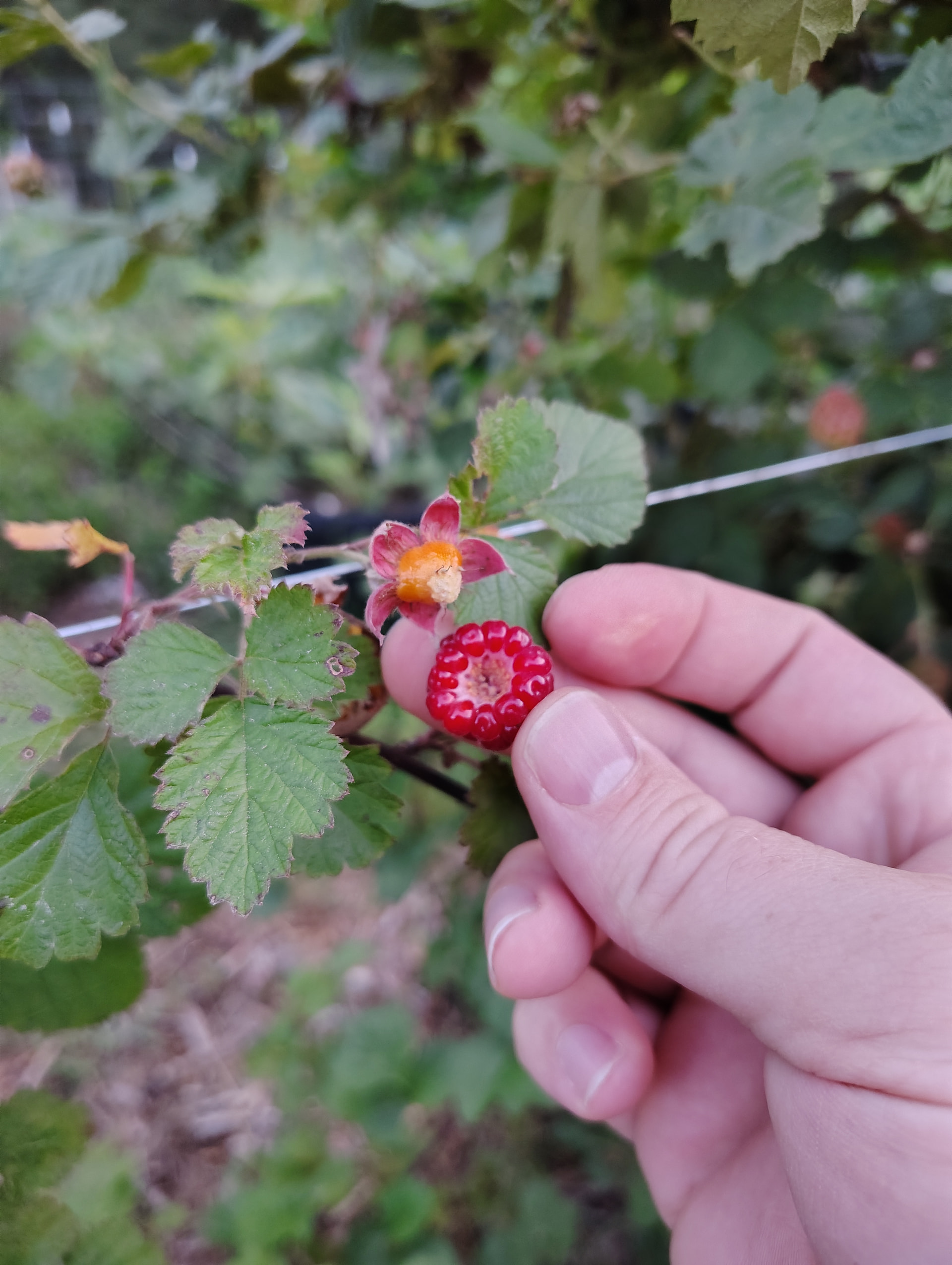
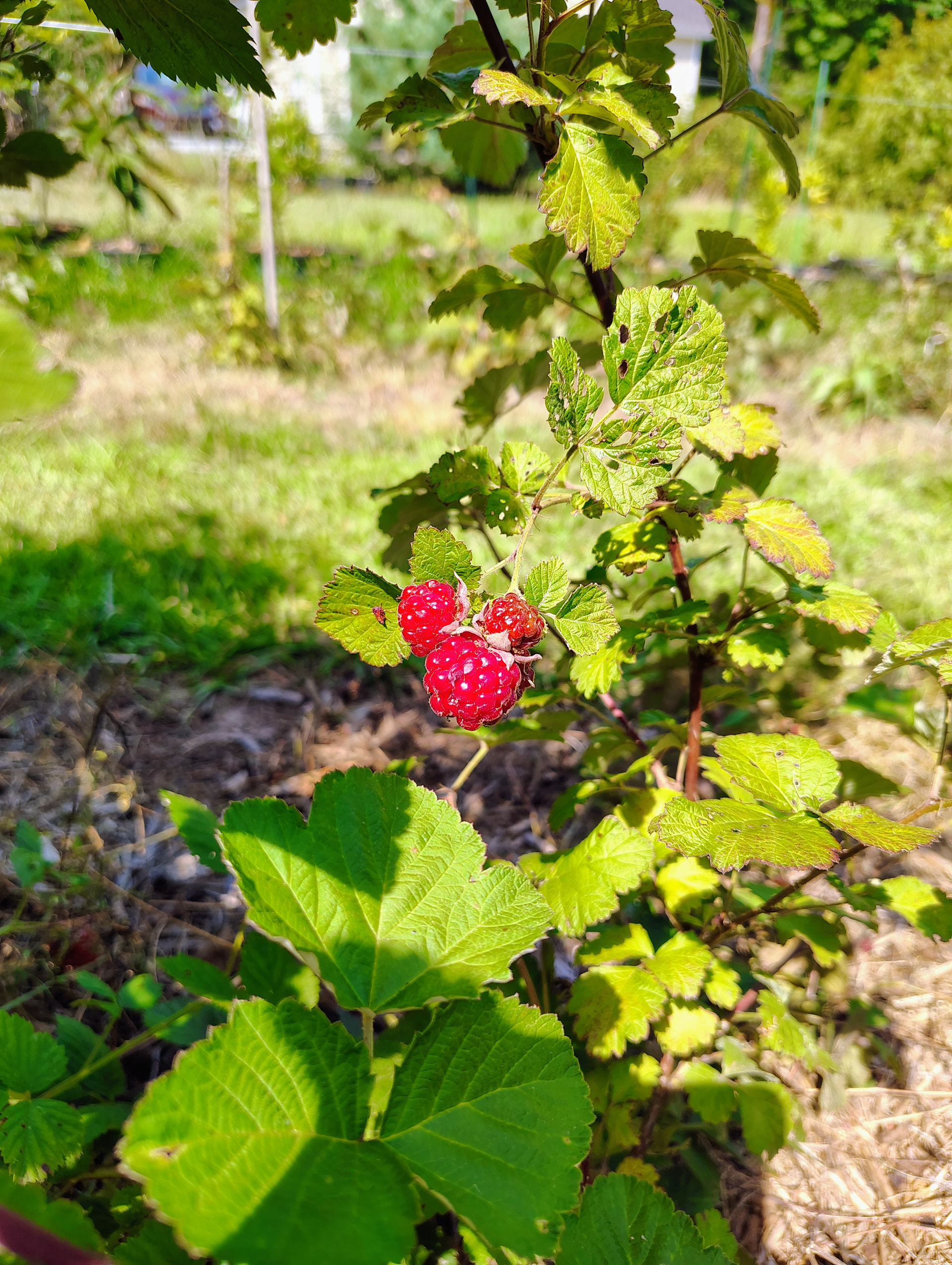
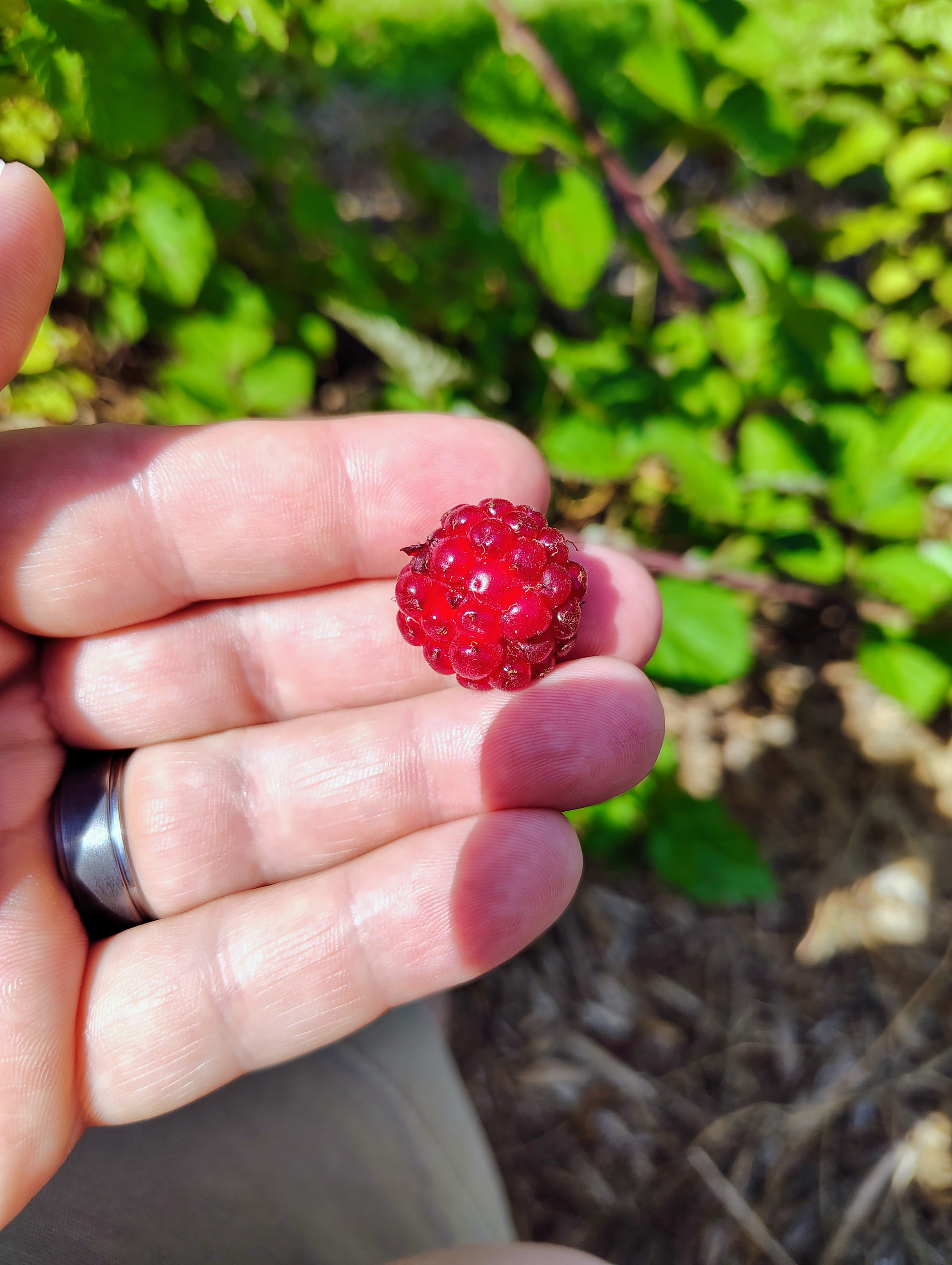
They have a long hang time after they initially color up but once ripe I think they taste pretty good. There’s a berry flavor there not it’s not raspberry. Interestingly, anthocyanin levels are pretty low but it has more carotenoids.
4 Likes
Has the mysore been able to survive the winters where you are? If so, maybe I’m being more pessimistic than necessary.
2 Likes
Keep them coming! It’s great to learn more about all the different species in the genus. Also nice to have some ideas for different crosses. Thanks for sharing these.
I’d never heard of Dormanred before coming to this forum. Those berries look delicious! Where did you source yours from?
2 Likes
The roots do…
I think you’re about right regarding above ground dieback. For spring flowers and pollen I keep one plant in a pot and protect it heavily over winter. My other plant is in ground.
3 Likes
Bob Wells nursery.
1 Like
Thank you - looking forward to growing those!
1 Like
It’ll be interesting to see how it does for you. Being bred in Mississippi from east Asian germplasm, my hunch is it likes some degree of moisture and humidity. But then again it does have reduced leaf sizes which suggests adaption to dry conditions.
It’s a trailing variety for sure. You’ll need to train the canes up off the ground, so definitely plan on a trellis or wires.
So far, mine seems to like just having a small number of very long canes. It doesn’t appear to ever branch on its own and the crown hasn’t put out more than a few canes at a time so far. But it’s only my second year growing it.
2 Likes
Ah okay, well for mine I’m not sure if it’s primocane or floricane flowering.
Thanks for starting this thread! I’m new to this too! I do agree @a_Vivaldi and @Favman have done impressive work, and I hope within the next few years I can share my results as well!
2 Likes
Hi, The fruit does look good. I am sceptical of Google AI, as I asked a question and it answered with an incorrect post I made on this forum. It seems nobody has bred a fertile Mysore x Red raspberry hybrid yet. If the infertility is due to poor chromosome pairing, then chromosome doubling will work, however, if it is due to cytoplasmic problems, then it will not work. Only way to tell is to do the experiment. To my knowledge, nobody has chromosome doubled a Mysore/red raspberry hybrid.
4 Likes
In my crossings with R. parvifolius, the red raspberry hybrids have been just as infertile as the Mysore hybrids, so I do not have any pollen to work with.
2 Likes
My thought is perhaps straight R. parvifolius could restore fertility to the Mysore hybrids. It’s a stretch, but given its closer taxonomic relationship, it might work.
3 Likes