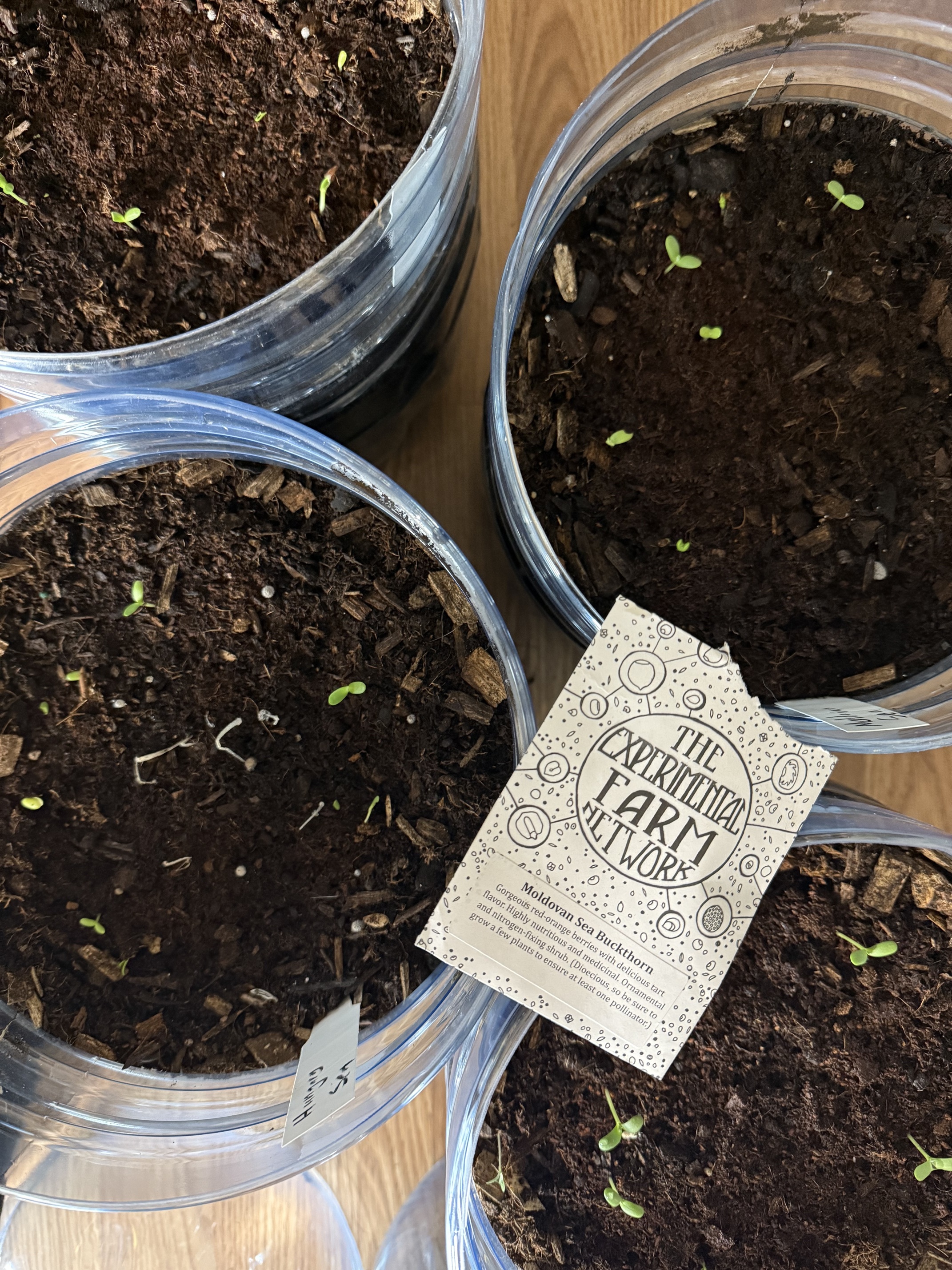
So I have started ~30 or so Seaberry from seed and I’m trying to get a handle on what kind of thorn situation I’m getting myself into. It might be telling that I choose to call them Seaberry so that I can will their thorns out of existence.
I just spent the day clearing out paths through a black berry, meadow rose, gooseberry thicket and don’t know if I’m ready to intentionally cultivate another thorny plant.
Anywho, what are the thorns like? Better than an average honey locust? Will they go through a cowhide glove if I grab a branch?
Please share your experience in relation to the thorns. My seedlings are at your mercy!
2 Likes
I would have to assume that with human breeding pressure the average named cultivar is less thorny than the average wild specimen. Some cultivars are even considered thornless. These seedlings could be quite variable in thorniness depending on what parent stock they came from.
I got 5 cultivars, one of which had thorns. The thorns were enormous, with thicker stems to the thorns than on buckthorn. Goats can eat buckthorn. Goats will not eat Seaberry. I am growing a natural forested area where mine should not become invasive due to shade. Seaberry becomes invasive if grown in areas without natural woodsy shade. E.g. it would invade prairie and goats could not be deployed to stop its spread.
Fingers crossed then that these Moldovan Seaberry were selected for human harvest traits.
I know the Canadian breeder Bill Schroeder had to select from 2500, seedlings to put out his thornless trio.
1 Like
I’m working on sprouting the Latvian seaberries from experimental farm network! I was wondering the same thing about these. how long did you cold stratify?
The seed from experimental I scarcified with sandpaper, soaked overnight, and cold stratified about 25 days. I removed them from the fridge with a set of Seaberry from Sheffield seeds that was cold stratified for about 35days. Tossed both sets onto a garden germination heat mat in clear shallow yogurt cups and in about a week saw radicle growth and potted them up into larger containers.
2 Likes
What was the spacing on the thorns like? Every 5 inches a thorn? Thorn length 1-2 inches?
I actually got the Moldovan seabuckthorn seeds from EFN too, and a different pack of the Latvian or Russian the previous year. From those I have 7 or so healthy plants that are doing pretty well. No nasty thorns yet, but they’re only up to my knees.
I also found that you don’t really need any special treatment for seaberry. The seeds I stratified worked well, but seeds direct sown into potting mix all germinated within 2-3 weeks in warm conditions. Cuts out the potential for mold in the fridge.
2 Likes
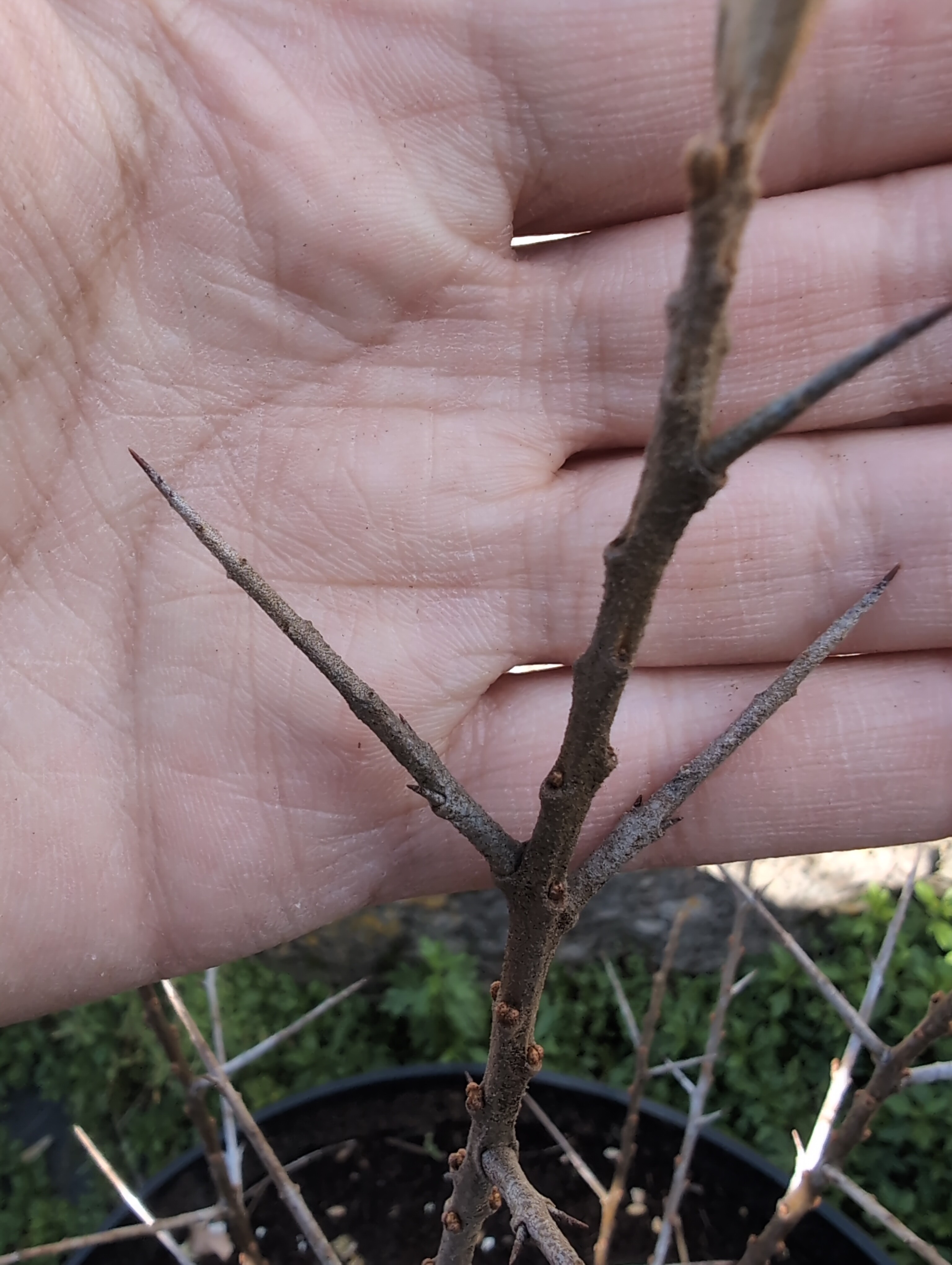
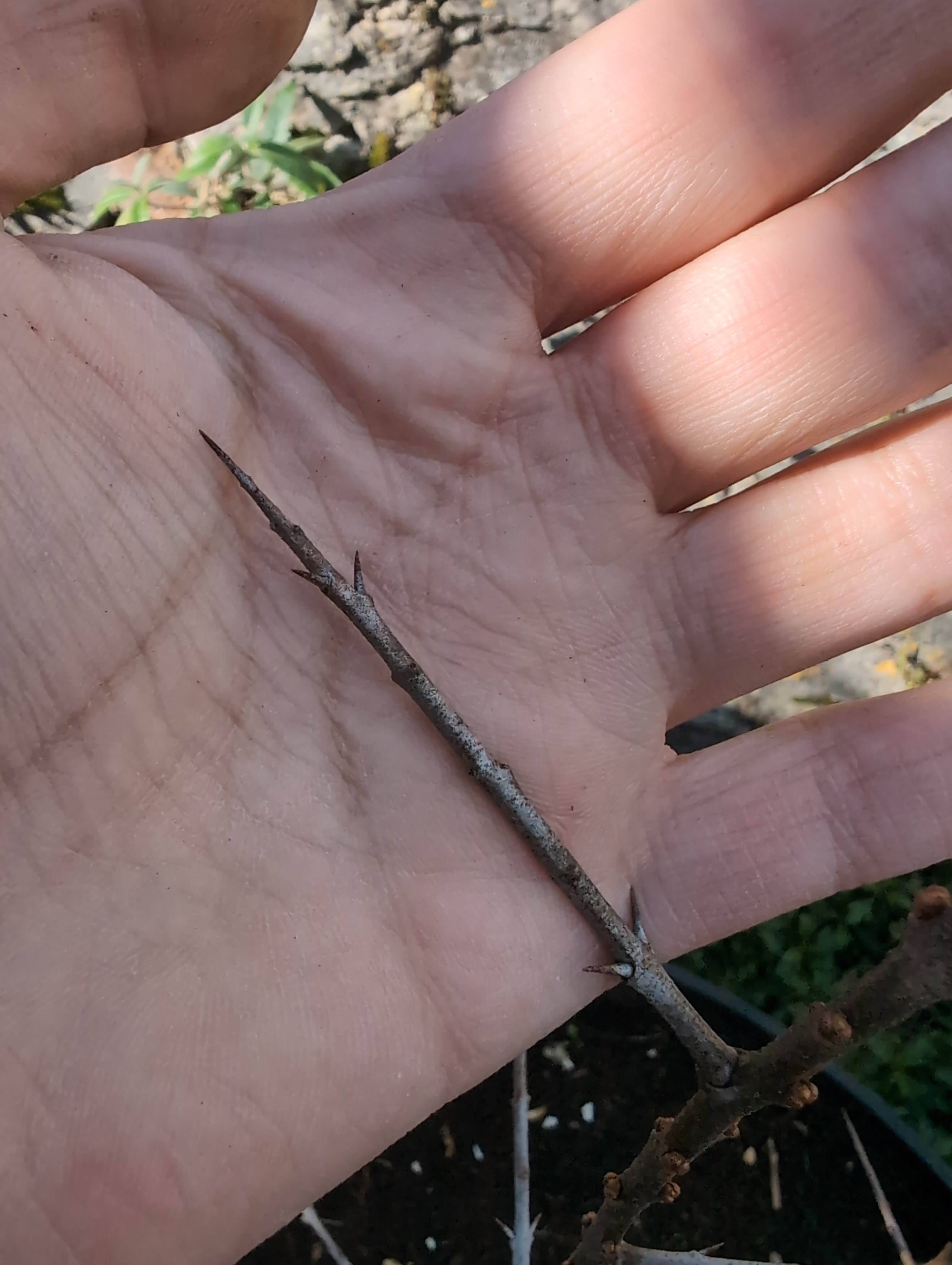
The thorns are about two inches, yes, but are not razor sharp like cactus needles are. Still, be careful…
They would puncture you if you are not mindful and forcefully hit against them… But otherwise, if you are gentle or wear gloves you will be fine. Just don’t stick your face into the shrub!
I have about 10 plants but I am getting rid of all and just keeping 1 plant. 
4 Likes
Wonderful picture, thank you @Schlecht. though I immediately saw a 3-4 inch palm sized thorn! Your picture helped me out immensely to understand why in some photos they appear to have massive thorns since it is the entire branch that originates and or terminates as a growing thorn?
I guess I have been lucky to have not run into Common or European Buckthorns so “buckthorn like” was lost on me as a description.
2 Likes
@Jabberwalks did or do you scarify? or soak your Seaberry seed?
This is only tangentially related but if anyone cares: thorns are modified stems, a spike from the epidermis is a prickle, and a modified leaf is a spine.
Botanists have exacting terms for everything
I believe these are in fact thorns in the case of sea buckthorn
3 Likes
I’ve tried imported Seaberry juice both from Latvia and Armenia. The Armenian was much superior in flavor to me. The Armenian brand name was Yan, but I don’t know where you’d find it. I assume it was made from Russian cultivars.
http://www.yan-natural.eu/?page_id=355
1 Like
I’m surprised to read that. My sheep seem more than willing to eat it.
2 Likes
During my several years of seaberry harvest (OGW original offerings in the 1990s: German varieties, plus males), the thorn locations became easy to predict, and I would spend a minute or so per harvested branch in pinching off the thorn tips. Then the fruit was easier to hand-pick.
1 Like
I did soak overnight in warm water with some siberian pea shrub I’m also germinating. So a bit of a soak may help.
1 Like