Calamondin fruit has a unique flavor and scent that I have never found in any other Citrus. The sweet peel is very thin, and the juice never sweetens. I can eat a few fully ripe calamondins out of hand, but they do “burn.” A dead-ripe Indio on the other hand is quite good. The sweet peel is thicker, and the acid levels of the juice fall to an acceptable level for my palate once dead ripe. I will pick a pocket full of ripe ones to munch on as I work in my orchard. Somewhat under-ripe they make a very good marmalade, stewed fruit (with sugar added), and I have also made pies from their juice (think slightly orange key lime pie). Of all the Citrus I grow (100+ cultivars), I get the most requests for scions from Indio and Golden Grapefruit.
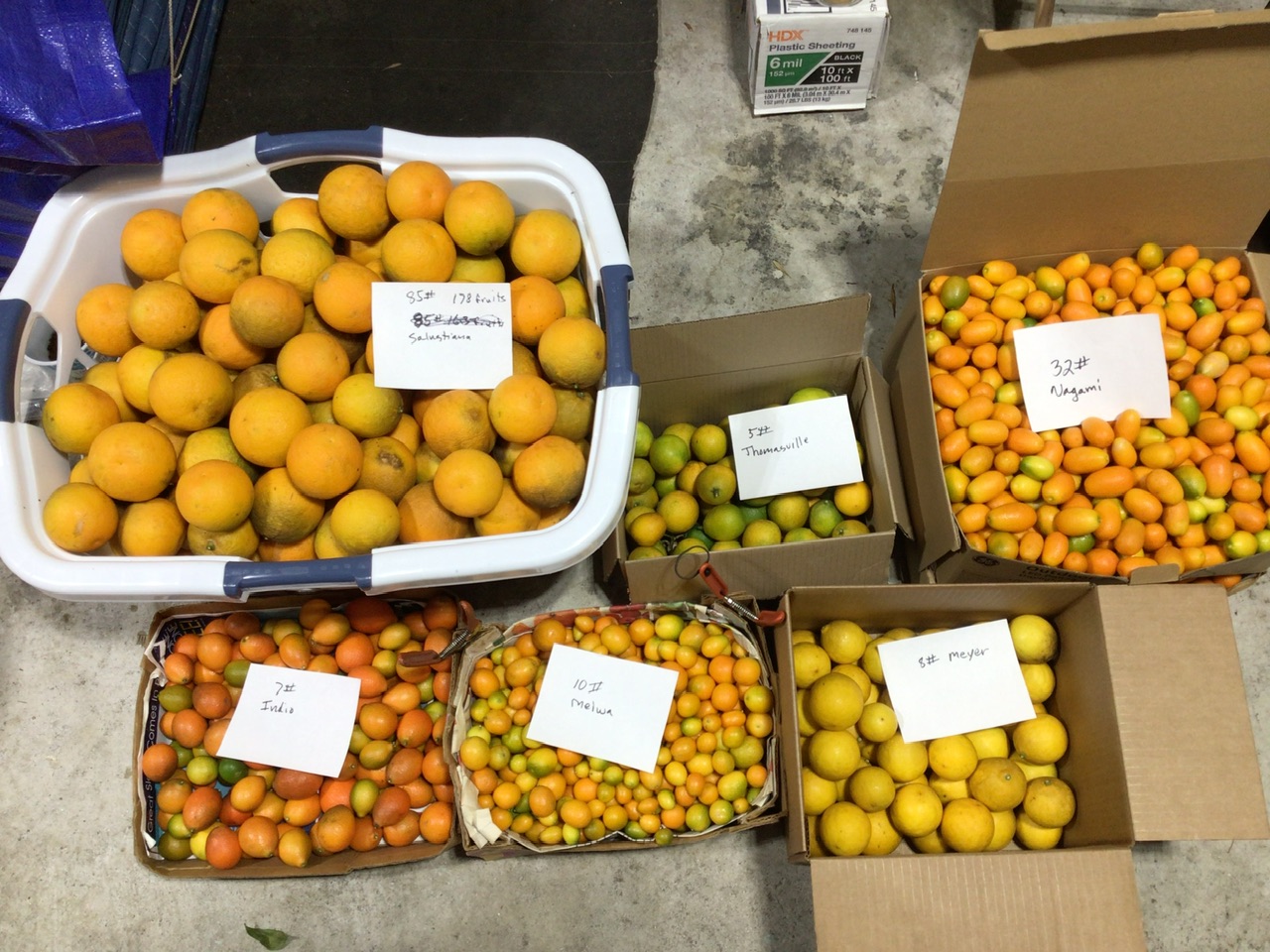
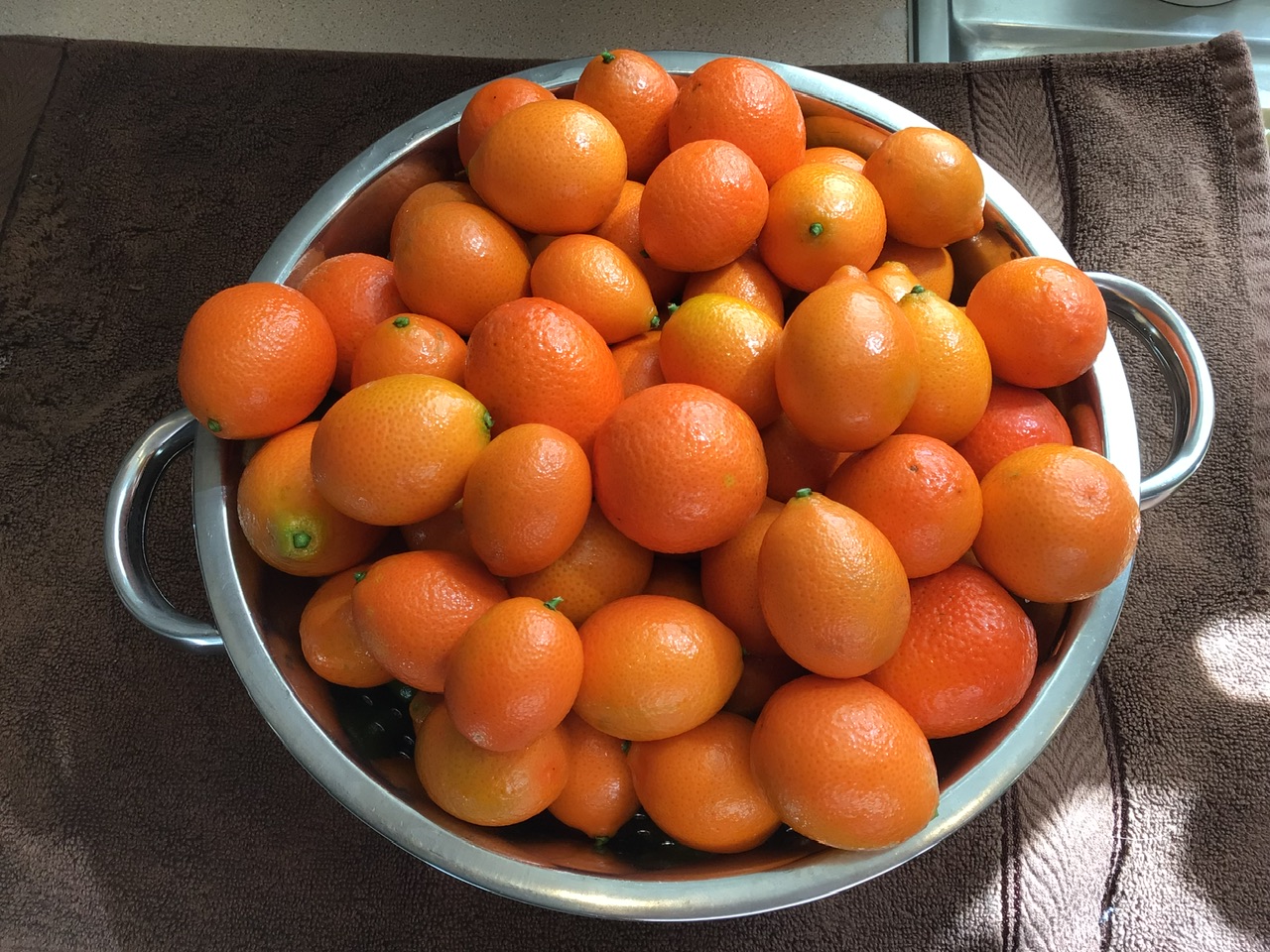
I would say that Nippon Mandarinquat is basically inedible (too tart and sweetens too late to avoid hard winter freezes), but Indio ripens much earlier and is an excellent tart Citrus choice. I have one Indio tree about 10’ tall and it produces around 20 pounds of fruit every year. I picked the last 7 pounds of my Indio fruit (along with the remainder of my other citrus) in mid-January just before our 20 F freeze and snow. Here is that final harvest of Indio:
Thank you for the correction, I had the two mixed up, it’s the Nippon I’d heard was basically inedible, not the Indio. To me the calamansi tasted pretty good, but it was on the tree ripe for a long time before I found it. I’ll know better soon since it has a ton of fruit ripening on it
@anon47724557 got picked up some of my Indio fruit a few weeks ago for making a batch of marmalade. Perhaps he can weigh in here on Indio (or other mandarinquats) versus calamondin.
That’s a bummer. Unfortunately, you chose the least scenic, most polluted and poorest climate region in the entire state. I’m a native Californian, been here 4+ decades, and the consensus opinion amongst most Californians is that the Central Valley between Fresno and Bakersfield is one of the armpits of our state. Luther Burbank was based in Sonoma County for a reason. He is famous for saying ‘I’d take 5 acres in Sonoma County rather than 5000 acres anywhere else.’ Luther Burbank bred all of his famous fruit and vegetables at his experimental farm in Sonoma County. Some of his more widely known creations are the Santa Rosa plum, the Burbank russet potato, a type of cold hardy avocado, some lemons, and countless other wonderful creations. I’m sorry you had a bad experience in California. I really have to say that it’s a different world north of the Bay Area: far less polluted, gorgeous and a stellar climate. I’ve been in this region for nearly 30 years, and while I’m in Oregon part time for a few more years, I wouldn’t live anywhere else in California outside of Sonoma or Mendocino Counties.
I understand what You are saying. My place was on the Kings river about 10 miles east of Fresno in the beginnings of the foothills. It was scenic and a great fruit climate. The central valleys are the best climate in CA for many things. That’s where the stone fruit industry is located.
My neighbors moved there from Santa Barbara because the coast had too many clouds and June gloom for them. I went to Santa Rosa one time looking for property. It was June and cloudy, foggy and cold. I moved on.
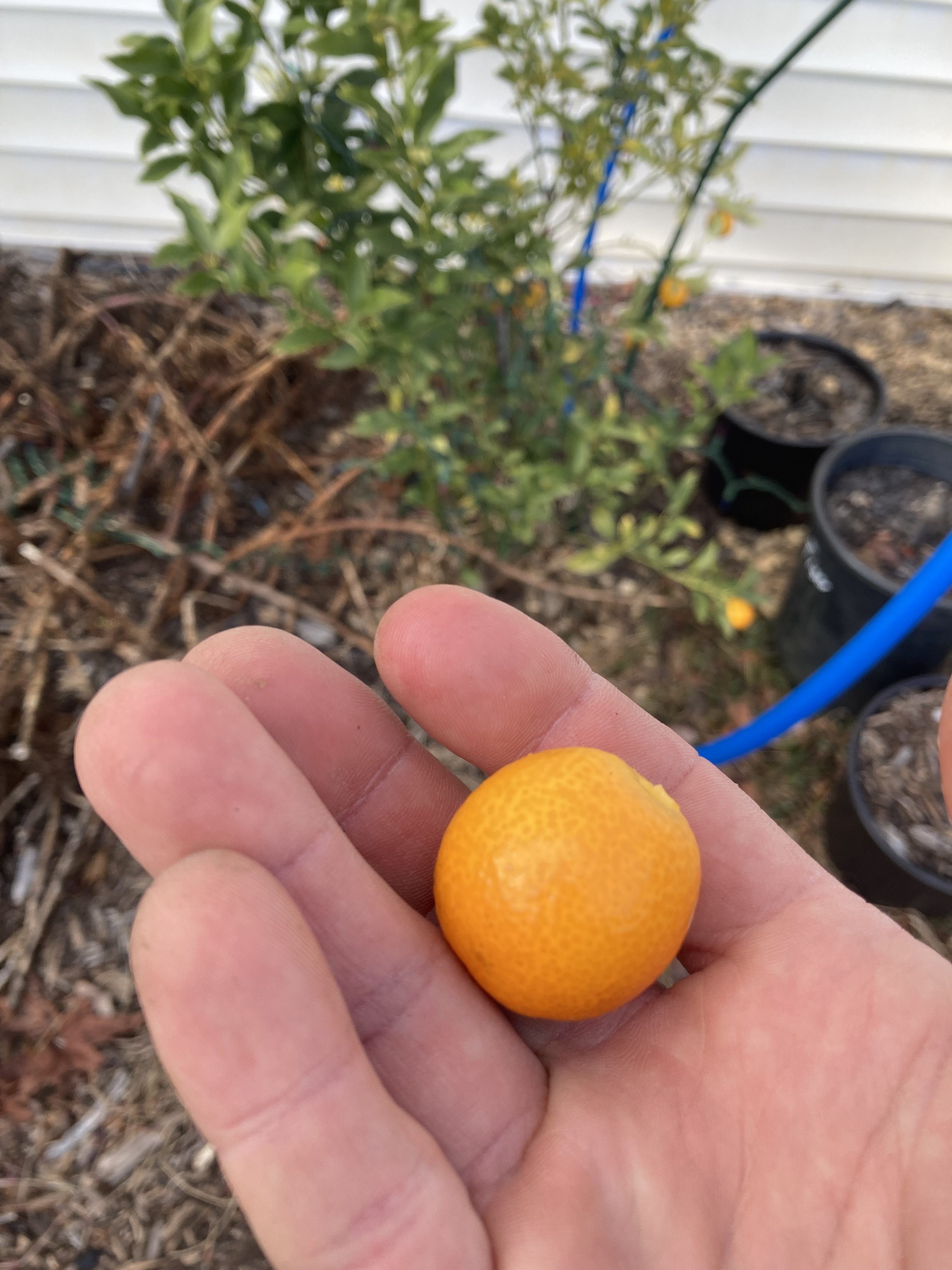
How sweet are those Marumi?
I’d say blindfolded taste test the same as a Meiwa. I think I prefer the marumi because it’s smaller, but hard to beat either. It’s a long drive for trying them but next fall you’re welcome to make the drive to try some, or I could send you a few.
Also I can send a scion or two if you want
I should be tasting my own next fall. My plant set a few this year but too late to ripen. Given how much kumquats like to bloom, I’m sure I’ll get some this year.
That’s good news! I wouldn’t have expected as sweet as Meiwa.
Bummer that you visited during a cold cloudy day in Santa Rosa. A typical day in June there is 78 with sunshine. Santa Rosa gets nearly 300 days of sunshine a year, and only 60 days with measurable precipitation. It rarely drops below 32, so obviously almost never snow or ice,. It’s usually sunny and mild.
So your neighbors thought Santa Barbara is too cold? I suspect they wouldn’t be happy unless they lived in the tropics. The climate of Santa Barbara is even warmer and sunnier than Santa Rosa. The place in Europe most similar to Santa Barbara is southern Spain. It’s frost free and almost never below 50. Walk around Santa Barbara, admiring the amazing gardens, and you’d swear it’s the tropics.
I have two Seto Satsumas in the ground in Jackson, Mississippi. They haven’t fruited yet, but they are alive and growing.
Anyone have a Seto Satsuma? Most things I’ve read online say it should be ready to be picked before my average first frost date, but I came across one place where it said it has a later harvest.
What’s the harshest weather they’ve endured so far?
My Seto ripen (near Houston) sufficiently in November, and start to “puff” in mid-December.
What does it mean for the fruit to puff?
Thank you for the help and intel.
They experienced temperatures around 10 degrees in January 2024. They were covered, and I had some pine straw and 5 gallon buckets under the cover with them. They had some die back, but put on a good bit of new growth in the months that followed.
It got down into the teens a week or two ago. They were covered again, and I again put pine straw and 5 gallon buckets of water under the cover with them. One of them seemed unfazed by the recent cold snap. The one that was unfazed had a stake keeping the cover off the tree for the most part.
They are a few feet or so from the southeast side of my house.
I have an Owari satsuma that I’m tempted to put in the ground.
I also just ordered an Early St. Ann Satsuma and Brown Select Satsuma.
Last week (The Woodlands just north of Houston) we dropped to 20 F and none of my Satsuma trees (about 10 different cultivars in total) had any protection whatsoever. They have no freeze damage at all. In January 2024 we dropped to 17 F on two consecutive nights. My Satsumas had banked hardwood mulch on the lower trunks (my “insurance policy” when lows in the teens are forecast), but no other protection. Many of them partially defoliated and there was no Satsuma fruit production this past year. In December 2022 we dropped to 12 F and my Satsuma trees that were banked with mulch and covered with tarp. They suffered complete defoliation and significant twig die-back. In Feb. 2021 we dropped to 9F (our worst freeze in over 30 years). Every Satsuma tree that did not have both a moving blanket and tarp over them froze back entirely to the banked mulch, including trunks 3” in diameter. Those that were covered by moving blankets and tarps (and mulch banking) had very little or no damage.
When Satsumas in particular, and a few other Mandarins, get over mature, the peel becomes very loose (“puffs”) and the flesh dries out badly (the term for this is “ricey”). They are virtually inedible. While most Citrus will keep better if left on the tree once ripe, Satsumas should always be harvested completely once they reach acceptable ripeness. They will store for many weeks in a fridge. They may still be quite green at full ripeness, but should be harvested then anyway. I always start sampling my Satsuma fruit in late September (Houston, TX area) for adequate ripeness, then harvest once sufficiently ripe to my liking. BTW, Brown’s Select is an excellent Satsuma choice.
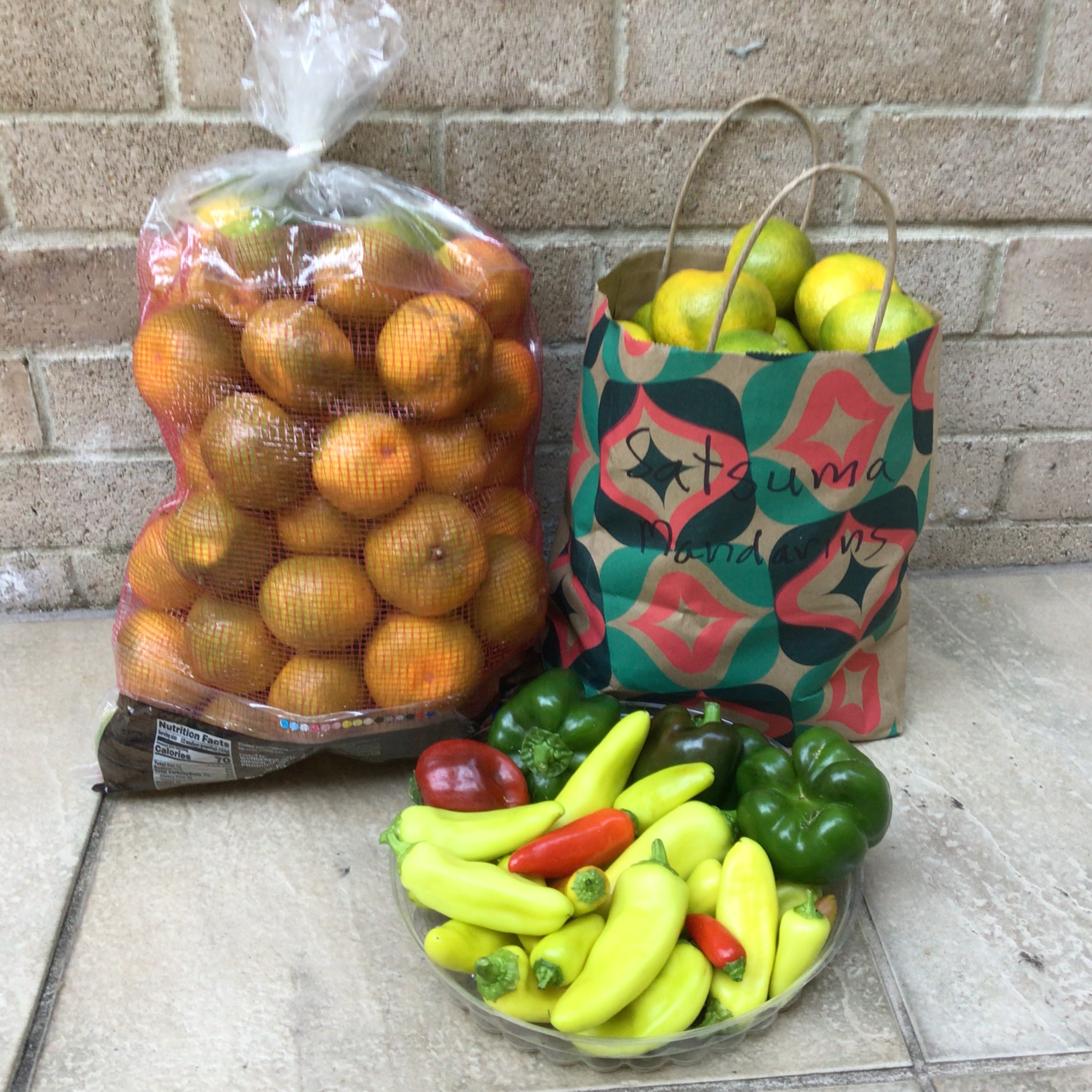
Here are a couple of bags of Satsuma fruits I picked on Oct. 23 last fall. Note the residual greenness in the peels. These (and the peppers) were a gift “basket” from us for our local priests.
Thank you for the information
Obviously you’ve experienced defoliation in the past. What has that typically done for fruit production the following growing season?