I’m not looking to start anything from seed either. just grafted plants with documented success.
Lots of great cultivars and breeders put there. KSU, Neil Peterson, Jerry Lehman, Blake Cothron, and of course Cliff England. by making the picks I made and the considerations going forward, If I tried to get all of the best cultivars from all breeders I would be surrounded by a monoculture of pawpaws - a fruit I’ve never even tried before.
I wouldn’t say that “approachable with no bitter aftertaste” are most important, although I don’t plan on ever buying any with a bitter aftertaste, approachable was my goal for at least one of the two first cultivars I purchased and I completed that purchase so going forward I will likely weigh other considerations as well
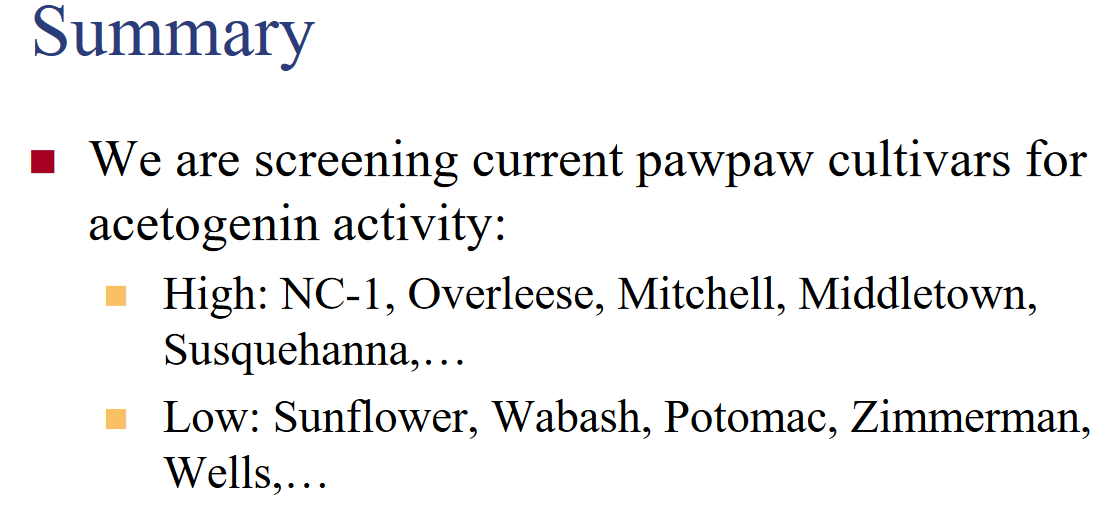
Also worth keeping in mind that any pawpaw with a detectible bitter aftertaste is likely a bit higher in acetogenins than is advisable to eat on a regular basis.
I have seen all Michael Judd’s videos.
If you decide to expand beyond those 2 varieties, then new things coming from KSU over the next few years will be good as they have been making a lot of new Susquehanna hybrids!
As for me, I decided to grow from seeds & simply plant a hundred times as many as needed.
Then select the best of the best of what grows.
Best to try one first before getting carried away buying. Trust me pawpaw are not for everyone and most people find it hard to eat a lot of it. Personally I think the white varieties are the best tasting and each is unique. The darker ones are good, but they all offer the same basic flavor profile.
wayyyy too late to tell me not to get carried away. I have purchased 5 cultivars of haskap, 10 of gooseberry, 15 fig (and another 27 cuttings this winter), 3 jujube, 1 goumi, 1 Asian persimmon, 2 cornus mas, and the 2 pawpaw all without ever tasting the fruit. I guess you could say I’ve tried fig, but just the generic under ripe stuff you get in the grocery store, and just a hard persimmon once. most of my plants are in a juglone free zone but since pawpaws are juglone tolerant I have plenty of property to sacrifice to them. if I don’t like them I’ll just grow them without care as decorative trees.
I wonder if you have a reference to this. It appears to be right.
I’m very sensitive to the bitter metallic taste in pawpaws. I can’t eat the wild ones at all. The Cliff England and Peterson varieties are easiest for me.
Susquehanna has the intense pawpaw flavor without the metallic after taste. However for me, Shenandoah is easier to eat more of. Shenandoah also has a lower acetogenin content.
I don’t, but I’ve heard acetogenins described as tasting bitter, and if you ever accidentally eat a bit of pawpaw skin it has a strongly bitter taste. I know that’s where the acetogenins are most concentrated. But it’s certainly possible that pawpaws produce other bitter compounds, too. I wish someone would systematically analyze all the major pawpaw cultivars for acetogenin levels. I think Richard was pondering that as a project, but not sure if it’s something he’s still pursuing.
And I’ve had some very good non-bitter “wild” ones in ancient looking groves in Maryland and Virginia that I suspect may be remnants of pre-European-contact domesticated varieties. Some of those trees are 6 ft diameter trunks, larger than any I’ve seen anywhere else.
Maybe only 5 ft? Large enough that two normal sized adults couldn’t reach each others hands around the trunk. The largest I’ve ever seen is in the Patuxent Research Refuge along the banks of the Little Patuxent River. It’s in the middle of a large grove with at least three genetically distinct varieties in the grove.
There are also some very large trees with tasty fruit in Sky Meadows State Park in Virginia, but not that large.
If you haven’t already, check out Elk Neck State Park’s paw paws. They are the biggest non-commercial paw paws I’ve ever seen. There are miles of paw paw trees from Rogues Harbor Marina out towards the park entrance. I have tons of paw paws growing wild all around me in Patapsco State Park, but they are half the size of the ones at Elk Neck.
No, it was a single trunk. It looked ancient! I wish I had photos of it. You have to venture slightly off the path along the stream bank, but here is where it is roughly located:
Yes, looks like American Chestnut.
I have no doubt there used to be, and are, 5 and 6 feet diameter chestnuts.
But I have not seen a Pawpaw even as big as a 5 gallon bucket…even old ones dying. Be
interesting to see such a 5’ tree…must be in the perfect spot and have the best genetics.
I’ve seen cucumber tree magnolia perhaps 3 feet thick. And serviceberry 15 inches thick and 73 feet tall. And buckeyes 30 inches diameter and 50+ feet tall. Sugar maple at least 4 feet diameter.
It’s very common to see pawpaw trees larger than a 5 gal bucket along the banks of the Potomac River near DC. They are usually near the center of large clonal stands, likely the original seedling that gave rise to the trees around them. There are a few good examples (that produce mediocre/small fruit) along all three segments of the Billy Goat Trail:
I was suggesting that if sodium, potassium or calcium was high in the soil, that American Chestnut tree leaves, can loose their spiky leaf perimeter, looking more like a pawpaw.
And that might explain the 5ft or 6ft diameter Pawpaw?