It’s Waypoint Analytical in Richmond, VA.
I ordered a test kit from Double A Vineyards (NY) whom I bought my grape vines from.
The test kit (a small bag and the paperwork) was $30 plus about $10 to send the sample to the lab from Louisiana…
It’s Waypoint Analytical in Richmond, VA.
I ordered a test kit from Double A Vineyards (NY) whom I bought my grape vines from.
The test kit (a small bag and the paperwork) was $30 plus about $10 to send the sample to the lab from Louisiana…
You can get the full test package direct from Waypoint for $17.50 if you don’t need the personal interpretation from a place like Double A.
Here’s an older list of approved labs by the Virginia Dept of Conservation & Recreation that are in the eastern half of the USA.
I just sent mine into Penn State AG. Once I get the results, I will post here.
Ok. Get a bag of Potassium Sulfate. You will need a bag of Urea, or some other relatively inexpensive N source too.
For the fruit trees I would apply the K early in the growing season at least a few weeks before any N.
Excessive amounts of either can inhibit the uptake of the other. Try to avoid either, but favor the one that helps fruiting wood at least in your initial application or two in Spring.
No micro nutrient test? Worthwhile in my experience. Mine was totally missing a couple of easy to supply micros. ( Copper and Boron.)
The tests aren’t cheap, but knowing, for example, that your Phosphorus needs are next to nothing, mitigates the cost considerably.
Tri-phosphate tends to give a quick boost of P to the plants, but quickly (like in a month or so) gets bound up with the Ca in the soil. Depending upon the test, that P may still show up but it is largely unavailable to plants. Really all depends upon the testing that they do as to what you will see.
I have been using waypoint in TN
I asked them to display it in #/A which I find easier to digest. Ask for both printouts.
This coupled with the optimum value which they supplied (I can’t find the digital version) makes it easy to determine adjustments. I put it into a spreadsheet so I could calculate what was the cheapest way to adjust.
Important to get the PH of the area where the Blueberries will go down ASAP.
A pelletized sulfur will reduce PH and is easier to work with than powdered sulfur. It takes a good while for the sulfur to work. The rate required to get the PH down 1 point varies depending on soil type but something around 10 pounds/100 square feet would be a good start.
Pete Moss and Ground Pine Bark mixed well into the planting hole really helps too.
When we sold Blueberry Plants from the farm, we noticed that many folks tried to grow Blueberries in fertile garden soil where they grew Tomatoes. They complained about the quality of our Blueberry plants when they died. The problem was the soil PH not the plants.
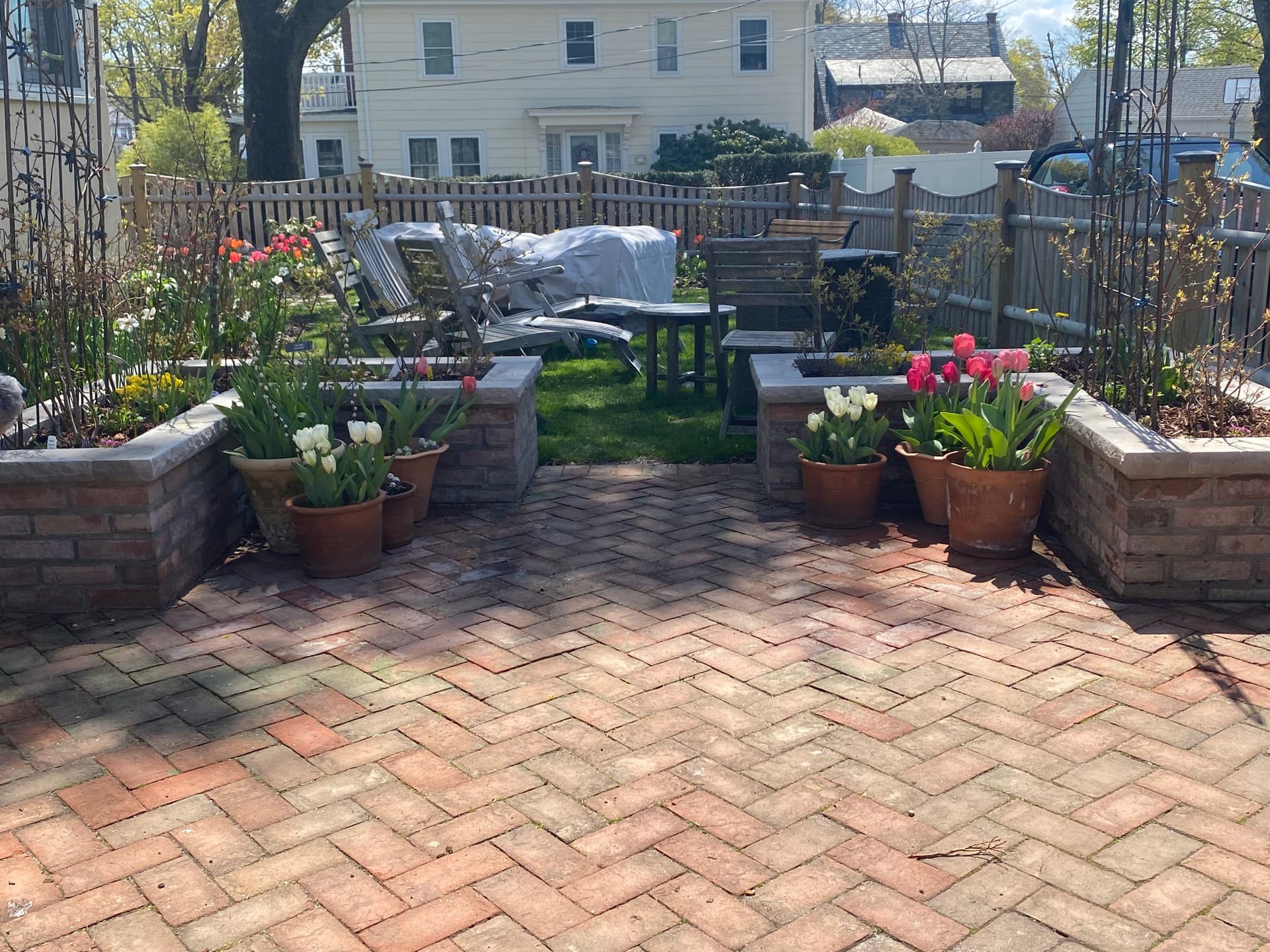
Love your name on here! Yes, so, these planters are not huge. But 6’ deep. The problem seems to be the limestone caps. I am going to attempt to seal them with walnut oil.
The original solid recipe for these planters I got from this wonderful website. I followed it very strictly, see below:
Blueberry soil for containers: “I use 3 parts pine bark. I use the mulch or often pine bark is sold as soil conditioner… Pebbles if small would be ideal, but it is hard to find any. If 1/2 inch or less diameter will work just fine too. The mulch has a lot of powder, which will work, less drainage, and already composted, so will soon breakdown. Pebbles ;last years. But it is impossible to find the right size. I can only get large chunks of pine bark. Putting them through a chipper would make a perfect product!
2 parts Pete moss, 1 part is OK too. But regular pete only. Coir is not the best choice, pH is not low enough.
1 part DE which is slightly basic, but I still use it. That’s it. This mix has a pH of around 5.0
The best DE to buy is Optisorb oil absorbent. 100% DE.”
That was three years ago. Since then, I have worked in compost and Espoma acid. I am not at all good at math. I can tell you the square footage for the blue berry area is 6’ per planted. Not including the depth of the planters which goes below ground level about 5’. My only regret is not putting something alarming like a fake skeleton below before filling it with all that pine bark!
My vegetable garden is in part of a pasture where our beef herd was wintered for 5-6 months every year, for over 25 years, with hay feeding - and for the last 12 years, hay + DDG… Soil test a year or two ago revealed that P and K are sky-high, due to all those years of DDG-influenced pee and poo. I’ve not used any fertilizers whatsoever, for the past 4 years, other than some Osmocote in planting holes for tomatoes/peppers, but may go to providing some N for some plants in the coming year.
Many labs in areas with rainfall don’t bother with nitrogen measurements because n will leach out and be gone anyway. You find the n requirements of plants and provide it through the growing season. You feed the plant with n, not the soil. If Texas lab said zero n, n probably leached out both to the atmosphere and below sampling level.
For nitrogen it is also important what was growing (e.g. corn consuming nitrogen or nitrogen fixing soy beans.) Also if there is a lot of composted material a lot of nitrogen will be consumed. If you are going to plant a nitrogen fixing crop such as clover you don’t want to add nitrogen since it encourages competing weed growth.
Our county extension agent has bags and directions. Put the soil in and list the plants or trees. Thea send it back in a few days email or hard copy. Complete report on everything. Just a few bucks each. They will also do mid summer leaf analysis.
How does leaf analysis work?
It is really petiole analysis. Collect a zip lock bag of leaves with the petiole stem, cut off the leaf and submit petioles. They can determine any actual nutrient shortages in the growing plant.
How much is required?
It really depends on what you are growing. For a crop grown by the acre a sample of ten or even twenty five is not extreme. If it is a garden or home setting ; don’t destroy your plants . A couple in a paper sack will suffice .