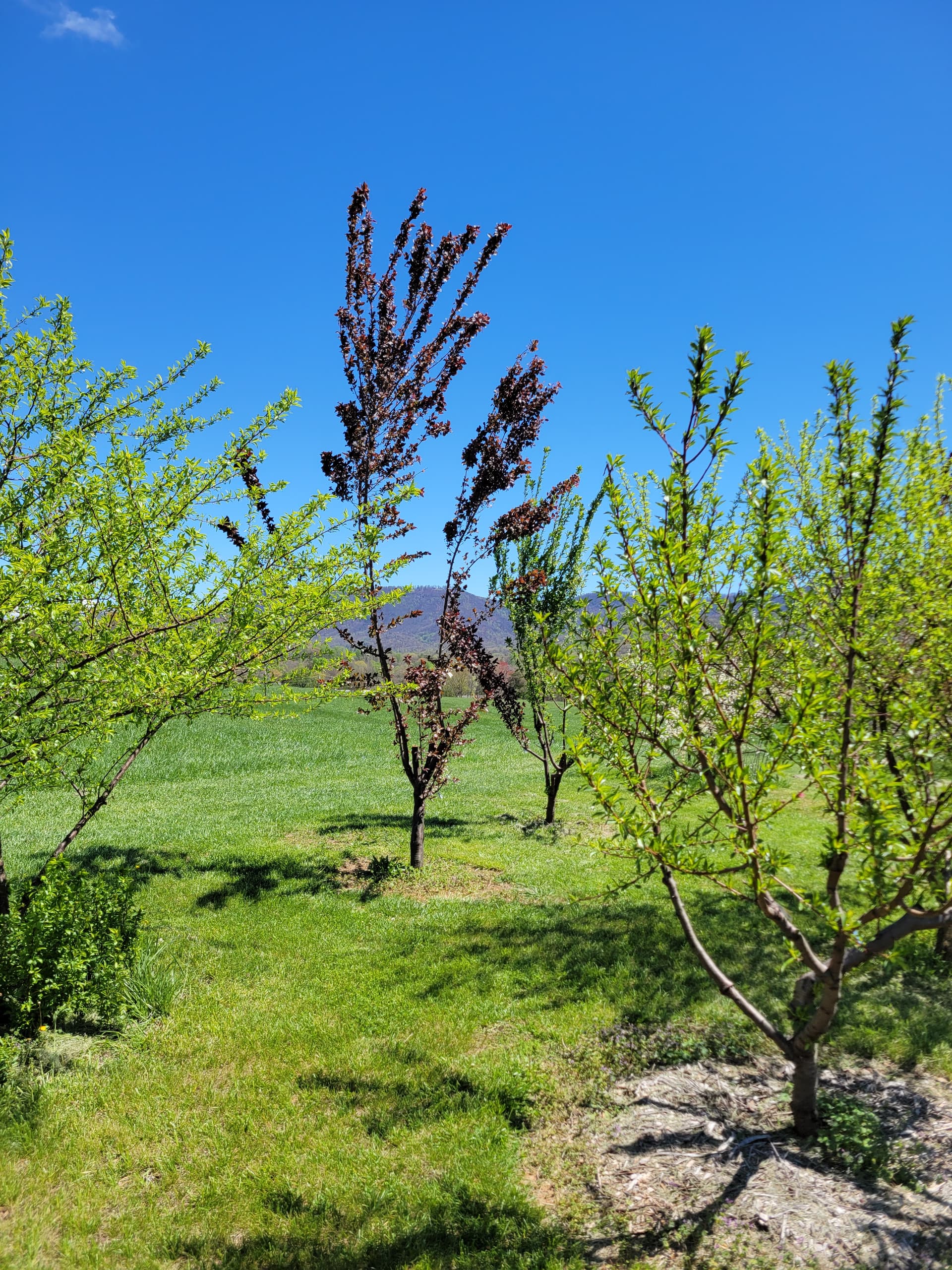
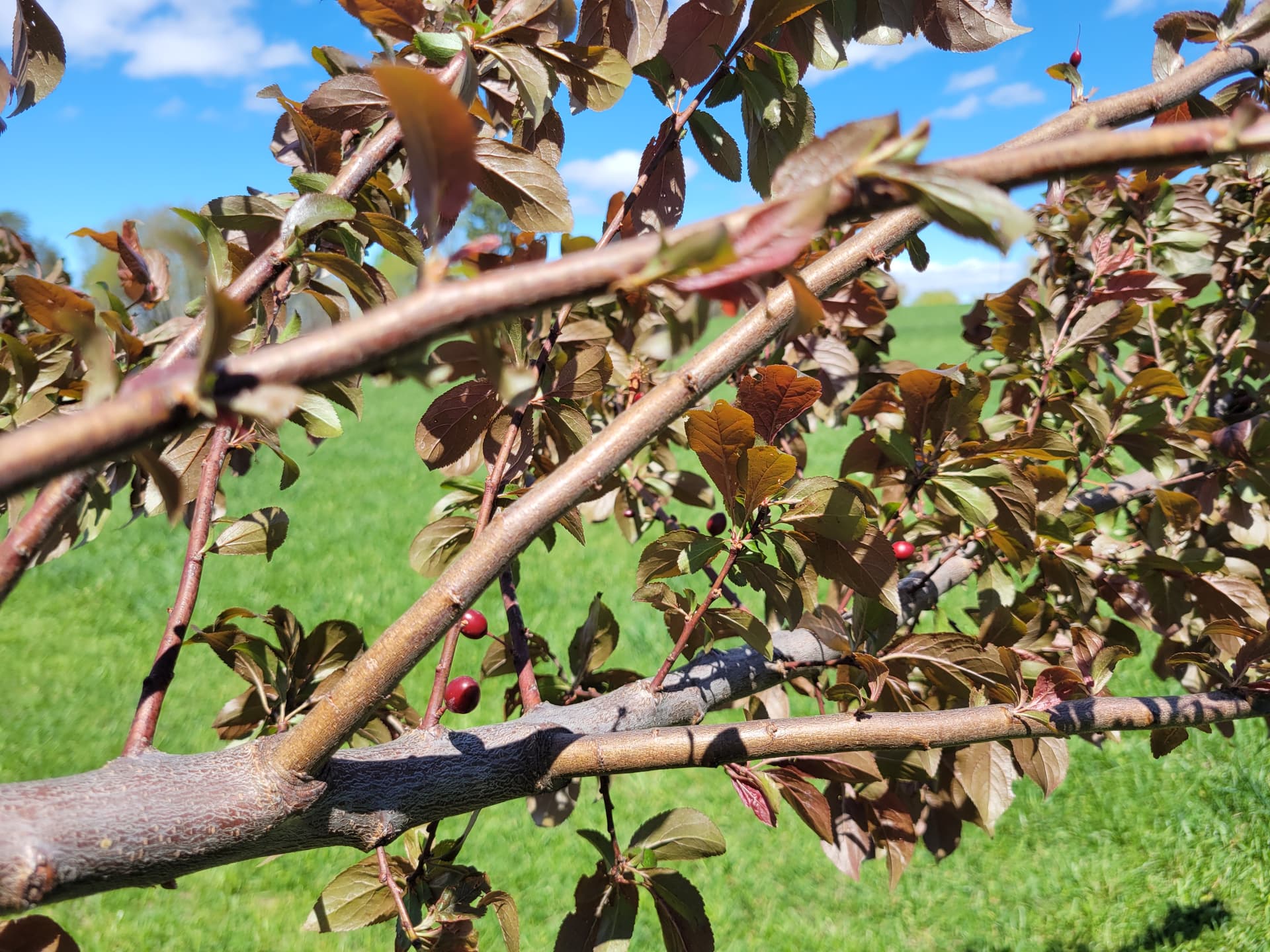
I planted out some bare root stone fruits - japanese plum, peach, apricot, all on semi-dwarf stock and all varieties selected for latest bloom times. These are a bit high risk for my area due to late spring frosts in our mountain valley (NE CA). I understand that convention would have these pruned to an open center, although I saw a video out of Utah, and an article out of Ontario where the peach orchard pruned to modified central leader.
It’s my intuition that if I choose to train these (somewhat unconventionally) to a modified central leader with a slightly higher lower scaffold and and let them get a little taller than what the books say, I might create a microclimate within the tree that protects the blossoms slightly better from late spring frosts. I’m happy to trade the use of a ladder at harvest, or slightly lower fruit quality from whatever sunlight reduction the MCL has over open center for the possibility of fruit setting at all.
I’m interested to hear thoughts on if this would be a reasonable approach. What would be the downsides? The only ones I really hesitate on is are the japanese plums because their growth seems notoriously vertical…
Open center trees are more essential in areas with lots of clouds and rain in summer. In CA with nearly nonstop sun for 6 months in summer, open center isn’t as relevant. I grow most of my fruits trees as a bush. We aren’t quite as sunny in summer as CA but still it’s harsh sun most of the summer. With some renewal pruning and by keeping the tree pretty small the center doesn’t shade out. Interior fruit isn’t inferior.
The trees in the Utah video aren’t tall enough or dense enough to provide much if any frost protection. In a frost pocket, a 30-40ft tree would help.
I have some plum shoots (blue ribbon) that grew straight up over the last 3 years. The fruits near the top didnt get zapped as bad as the ones at eye level or lower. Loss at 12 ft was around 96% of flowers vs 100% loss at 6ft. The limbs are still limber enough that I can pull them down for sun capture and harvest after the danger of frost is past. I imagine results would vary widely with your location and the type and severity of your frost event.
If you have a large enough orchard look into installing windmill(s), they are used with good effectiveness in the Columbia river gorge growers in OR and WA.
We are in a frost pocket/valley and with the late frosts the cold air flows down the slopes until it reaches a certain level. Like a river and a lake. Usually the current is about 2-3m deep anywhere so the trees can have any shape or form and everything below the cold air flood gets damaged unless it is a resistant variety. so our neigbours jojo plum with almost identical height and pruning (full center) as mine of the same variety just planted 2m lower in altitude had zero fruit, while I had a nice harvest.
We have one Stanley plum that is a poplar at heart (grows 150cm a year until it reaches 6m if you prune it) and that one always has fruit, though it is a hassle to pick… I have noticed this same “strategy” in some wild cherry plums.
We also had rain coming at -4 Celsius and that caught all almonds and japanese plums&hybrids in flower regardless of the shape.
Was an interesting read for extreme cold weather fruit cultivation. An option presented here was using a very low growing or “creeping” shape for the trees. This made them easier to cover and created a microclimate like you say. This would not work if it were at the bottom of a hill though.
Wow what an amazing article. That’s crazy they kept the cirtus so small - just a foot off the ground! It’s a good point that lower trees are easier to protect - either by covering or sprinklers. I use overhead sprinklers for effective frost protection in the vegetable garden, and might employ that in the orchard as well.
I appreciate all the responses. I suppose perhaps the frost pocket that I’m in might benefit more from lower access for tarping or adding sprinklers rather than the marginal gains from an extra meter or 2 in height. Anyone have good tips or photos for sprinkler setups to ward off frost? We only have about 12 trees right now, so management is pretty easy. I was even thinking the misters (like these) that are used to keep outside areas cool in the middle of summer might work well, with 2-3 wrapped into the tree with 1/4" tubing. I had read also that misting during warm february/march days reduces the heat units on those hot days and can delay blooming a little bit. Appreciate all the insights