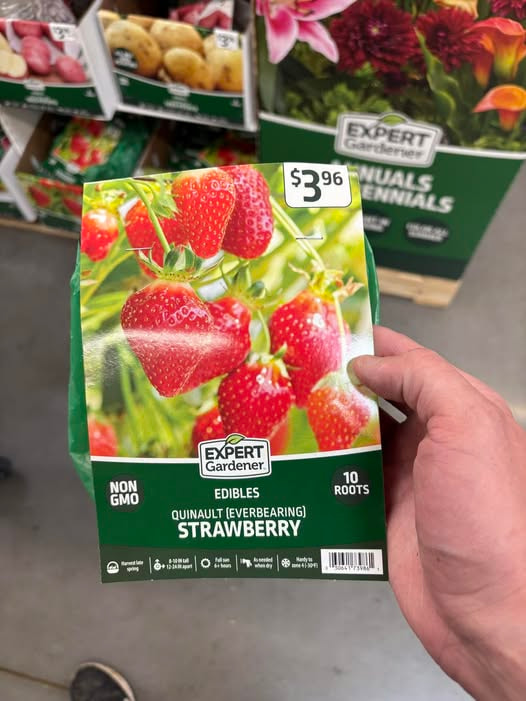
If you could ask questions to one of the biggest strawberry bare root producers in the United States and Mexico, what would they be?
I have an interview on strawberries coming up with them and am in need of strawberry questions from the collective .
I’m having writer’s block and can’t think of much to ask so I figured I’d do some community outreach for questions and give everyone else a chance to ask as well.
They’ve been doing this for over 40 years and have hundreds of acres of bare roots that they ship out each year in the United States and in Mexico. Through my chronic online status in the Facebook groups and berry gardening niche, I’ve been able to get connected with some amazing people and they’re giving me the opportunity to pick their brains for social media so ask away!!..
The interview will be later in December and posted possibly in January or early 2027.
I would ask if the trend in the semi-ornamental red flowered strawberries will continue. They look amazingly healthy and vital. Though the blocky long fruit will take some getting used to. I see a number of new varieties are out, Will we see other color flowers?
They do both day neutral and June bearing equally.
From what I can tell, the focus with commercial growers has been swaying towards day neutrals being more popular lately and for the foreseeable future.
Here in Washington state, the June bearing farms have been slowly going out business. From my observation with just the farms in my state, they have to replace them as soon as the season is over and there’s a lot of maintenance involved and then crop rotation to green beans and other veggies in their place shortly afterwards. The only strawberry growers I’m seeing that doesn’t have a bad outlook in the future, have been transitioning to day neutrals to extend the season. Even then, rising costs of everything have been eating up profits for a lot of growers.
I’m definitely adding your top 2 questions to my list! I haven’t thought of those.
They’re not the ones selling these or this brand. They sell to commercial farms and nurseries.
Their roots are harvested with machines and shaken off with machines. They use workers to pack, ship, and store but everything is done with machines so they’re picking up thousands of roots per hour vs limited by man amounts.
When i asked them why not fruits, they told me they have the bare root process down so well that the fruits would have to be another business in its entirety. But of course I’m going to ask again and whether or not it may be in their future lol.
Personally, i don’t think so but a lot of farms are trying this. I’ve tried it myself and nothing can compare to just soil.
Hydroponics is great however they take a lot more electricity, water, and getting the nutrients right is very hard lol.
There’s also a very big difference in quality and how the fruit comes out when doing hydroponics as well. I don’t think anything can override soil in this aspect but i could be wrong.
I’ll ask this if they plan on anything with hydroponics though, that’s a good question i didn’t think of as well.
i’d be curious about what they see the future being like. labor, equipment, future of ag in north america in general.
they aren’t breeders, so they may not be able to offer insights re: what traits or techniques are seeing more use or focus, but they may be closer to that end of the pipeline than others.
Correct, they aren’t breeders but they do work closely with breeders and the universities as well. They do have videos here and there where they’re actually in the tissue culture lab and mass production areas of some breeding facilities to inspect and pick out varieties if I recall correctly. With that, they do have some voice in it.
 .