In your experience, is Sunflower early, mid, or late season for a pawpaw?
Mine is producing nicely this year (nothing ripe yet), and I want to use it to time my foraging hike appropriately, since it’s a bit of a drive.
In your experience, is Sunflower early, mid, or late season for a pawpaw?
Mine is producing nicely this year (nothing ripe yet), and I want to use it to time my foraging hike appropriately, since it’s a bit of a drive.
I don’t have experience with it since I just grafted Sunflower this year, but I’ve read that it’s one of the later varieties. There’s a chart on here (KSU variety trials) http://www.pawpaw.kysu.edu/PDF/Pomper%20et%20al%20--%20April%202008.pdf
that shows GDDs, harvest peak, and harvest durations for a lot of the common varieties.
From my experience with picking wild pawpaws in zone 6a, they typically start around 9/9 and reach their peak (most ripe fruit falling) around the 18th. Next week should be the ideal time to be able to find the most ripe fruit in my area. They have been very consistent date-wise here over the past 3 years. For you, in 6b, anytime within the next week would probably be best. Good luck!
Thanks. I also had next week marked off based on last year’s hike, but I figured my own tree would be an even better guide once it go going. I’ll forage next week, and compare ripeness.
My Sunflower is ripening right now in 6b Kentucky—started about a week ago. Wild ones around here usually start around the same time.
For my future reference, the Sunflower ripened today, September 16. Dropped all its fruit to the ground.
And it was good.
Had brought this pawpaw up in another thread as a Kansas variety. @39thparallel does grow this and many other Kansas type fruits. I thought someone might want the back story.
"


Show navigation
Phonetic Spelling
ah-SIH-mi-nah try-LO-bah
This plant has low severity poison characteristics.
See below
Description
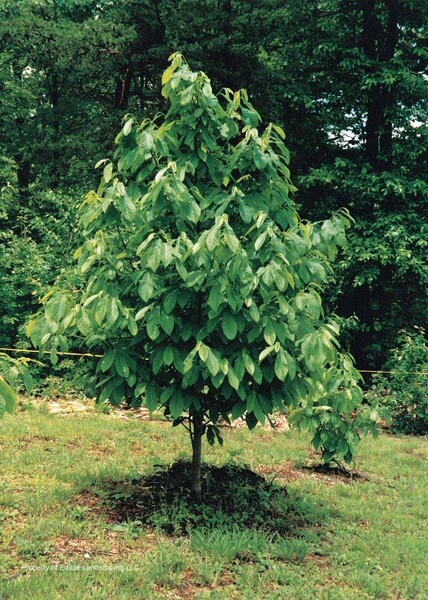
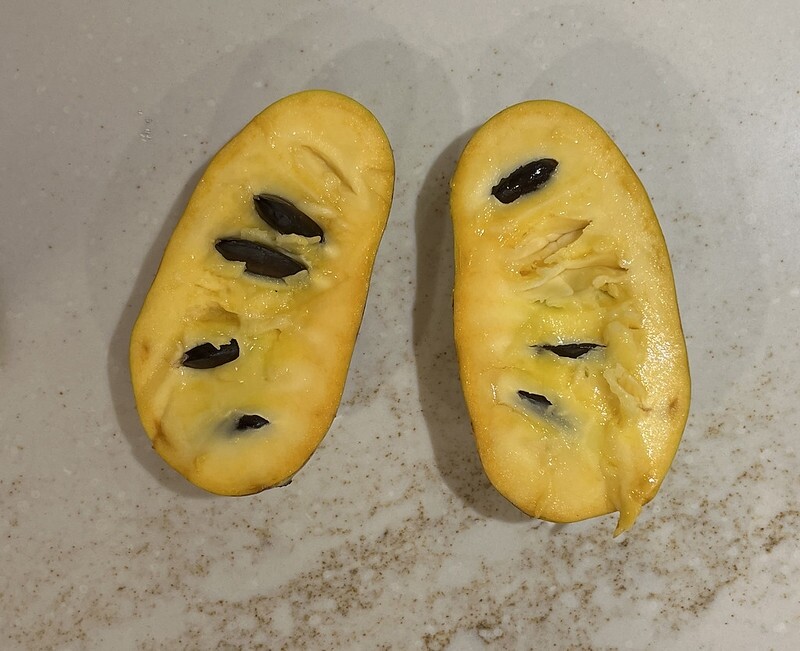
Pawpaw, is a native, understory deciduous tree in the pawpaw family (Annonaceae). The cultivar ‘Sunflower’ is noted for its large yellow fruits with butter-yellow flesh. This is a high-yielding cultivar.
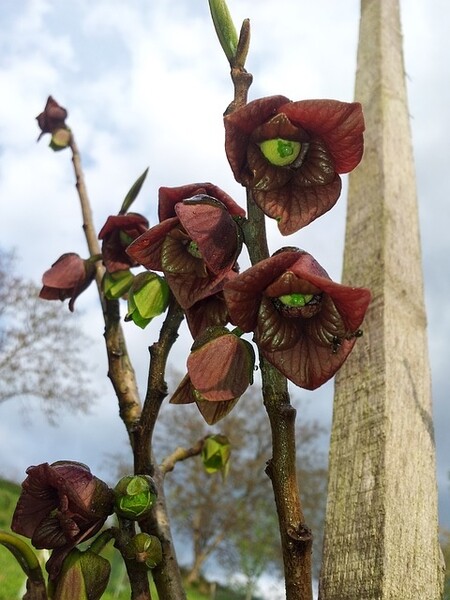
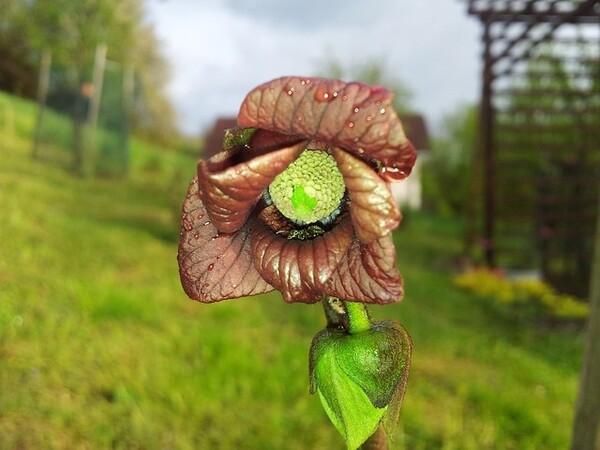
It typically grows best in well-drained, slightly acidic, fertile soil. The bark is smooth with wart-like lenticels. The leaves are alternate, produce a pungent odor when crushed and display a bright yellow fall color. In spring, 6-petaled, purplish-brown flowers mature. Flowers have both male and female parts but are self-incompatible. A genetically different pollen donor (a pollinizer) is needed for fruit production. Plant at least two cultivars that can act as reciprocal pollinizers. The tree produces a 2.5- to 6-inch fruit that matures in late summer to early fall. Hand pollination can lead to heavy fruit set, but fruit clusters should be thinned to one fruit per cluster to maximize fruit size and flesh-to-seed ratio. Wildlife eagerly seeks out the fruits and often beats humans to the harvest.
‘Sunflower’ is a late-season cultivar that was selected in Kansas in 1970. The fruits have a good flesh-to-seed ratio and good flavor. Fruit size averages 5.5 ounces, and production averages 75 fruits per tree.
Diseases, Insect Pests, and Other Plant Problems: No significant problems. The pawpaw peduncle borer (Talponia plummeriana) is a small moth whose larvae burrow into flower stalks. They can destroy large numbers of flowers. This pest is in NC. The zebra swallowtail butterfly larvae feed on young leaves, but they seldom do permanent damage, nor do they affect fruit yield.
VIDEO Created by Elisabeth Meyer for “Edibles, Bulbs, and Houseplants” a plant identification course offered in partnership with Longwood Gardens.
More information on Asimina triloba.
Profile Video:
See this plant in the following landscape:
FormEdible LandscapingCC BY 2.0Download Image
‘Sunflower’ fruitScott ZonaCC BY-NC 2.0Download Image
FlowersCC0Download Image
Close up of flowerCC0Download Image
"
"
First discovered in 1970 in the wild near Chanute, Kansas, by Milo Gibson, and is one of the few pawpaws reported to be self-fertile. KSU reports, “Large fruit; yellow skin; butter-color flesh; few seeds; ripens early to mid September in Kentucky and first week of October in MI. Fruit size large, averaging 155g/fruit and 75 fruit per tree at KSU.” Derek Morris reports that Sunflower “tends to grow more wide than tall.” Additionally, it produces the largest single fruit in Morris’s orchard each year. He says that although the flavor of Sunflower is generally very good, he has noticed a slight bitter finish in some of its fruits. “One other feature of this variety is that it is among the latest ripening, so late that growers in far northern areas may not get ripe fruit.” Morris adds that Sunflower “is the favorite among many growers and a variety I would not want to be without. It always ranks high in taste tests. It also has nice thick flesh/texture and relatively few but large seed[s]. It has been noted that seedlings of Sunflower make especially strong rootstock for those who want to do their own grafting.” Sunflower won Best Fruit at the Ohio Pawpaw Festival in 2006 and 2010. “It is one that I always recommend to growers,” says Ron Powell"
See this link
For those who dont know sunflowers are the state flower in Kansas.
Thank you.