It’s too late for that. The spores are now in the ground, etc.
1 Like
You let the infection go too far. You should have removed the leaves
from the tree, when the rust was controllable. That’s the only way to
cure rust. But you can still correct the problem, if you keep the tree and the ground clean.
I disagree. One spore is all it takes. Removal of material at any stage is too late. When you see it: apply copper. In the winter: apply copper to the area around the tree and the tree itself. In the spring: reapply.
2 Likes
Yeah when I had it last year I decided after awhile to leave the leaves, as it just kept coming. The figs needed some sugar! Mine are in pots, so in the winter spraying them and the soil worked, no rust at all this year. I don’t think this organism normally lives here, it was on a purchased fig and spread to my other figs. So not sure my spraying did it? Or the organism just perished over the winter?
The copper I use is very powerful too, not the weak liquid stuff. A Kocide generic copper hydroxide.61.3% Great stuff! I have never even seen peach leaf curl on any of my peaches or nectarines, not one leaf. Also half the battle is a good sticker too, I use a pinene product, best sticker ever!
2 Likes
We don’t need it out here in our rainfall deficit climate, but I believe it’s well worth it in yours.
2 Likes
Yes, why I post my zone and place of origin if you click on my name. All my comments unless specified otherwise refer to my climate.
2 Likes
LOL. Yes, Drew … you are doing great in that respect. But also (as demonstrated in this thread) we have newbies who for one reason or another ignore regional differences. 
2 Likes
Rust in the South is different than what you guys experience. All we do
is remove the infected leaves and the tree replaces them with healthy ones.
It’s a quick fix. I don’t know of anyone that sprays.
1 Like
The rust may be different, as removing leaves did nothing, the infection continues till all leaves are gone.Last year it ended when the last leaf on all my trees fell off. Happy not to see it this year!
1 Like
Good info guys, in 30 years I’ve never had this problem. Also this is the wettest August we have ever had. I purchased two new figs this year. They show no symptoms but maybe they brought the rust.
2 Likes
With the heat we’ve had this week, the figs on each of my two trees are ripening about a dozen a day. We also harvested 30 apples today. 
7 Likes
Is there a schedule calendar for the time of the year to spray for insects and disease and also when to fertilize? It looks like you have to spray mostly for prevention so you have to know when to spray before problem occur. It’s like I’m always 1 step behind.
1 Like
I find that rust can be very variety specific. Of all of the varieties I grow, only
one( Noire de Barbetane) seems prone to it. But, once again, all I do is remove
the infected leaves, It’s purely cosmetic and does not effect the fruit, nor the
quality of the fruit. In fact, the figs I’m currently picking from Barbentane are
delicious, and the tree has lots of rust,
My problem is all leaves fall off before any can form and the figs have no way to gain sugar without chlorophyll sugar production. It is quick and total. My trees were 80% bare this time last year. Wicked organism for sure.
1 Like
Could there be different fungi in different regions contributing to rust on fig leaves?
2 Likes
I tried pulling off the infected leaves with no good results and all my fig varieties are infected, we had lots of rain in July so maybe next year l will spray at the first sign.
Do the large commercial growers stick to a regular yearly scheduled or do they just spray when insects and disease show up?
1 Like
They do with insects but few fungicides, or fungi can be stopped once seen. Dormant sprays are always done. I can’t say for commercial fig operations as in California rust is not a problem. And few commercial operations are outside of CA. Figs are so new to pest companies, for whatever reason, few to none pesticides are labeled for figs. It costs millions to test for the companies, as big brother requires a lot to approve such sprays… So us backyard growers used other products used for rust on other plants and it seems to work. Sounds like you have the rust i had, it is aggressive.You could see if it reoccurs, if you go that way, as soon as you see it remove all infected leaves and spray. I would be curious as I’m sure from future acquisitions I’ll get it again and it would be nice to know if the spray was actually needed or is it that the organism could not survive weather (winter) or good cultural practices. Of course I have to spray anyway so for me it’s no big deal to hit the figs too.
2 Likes
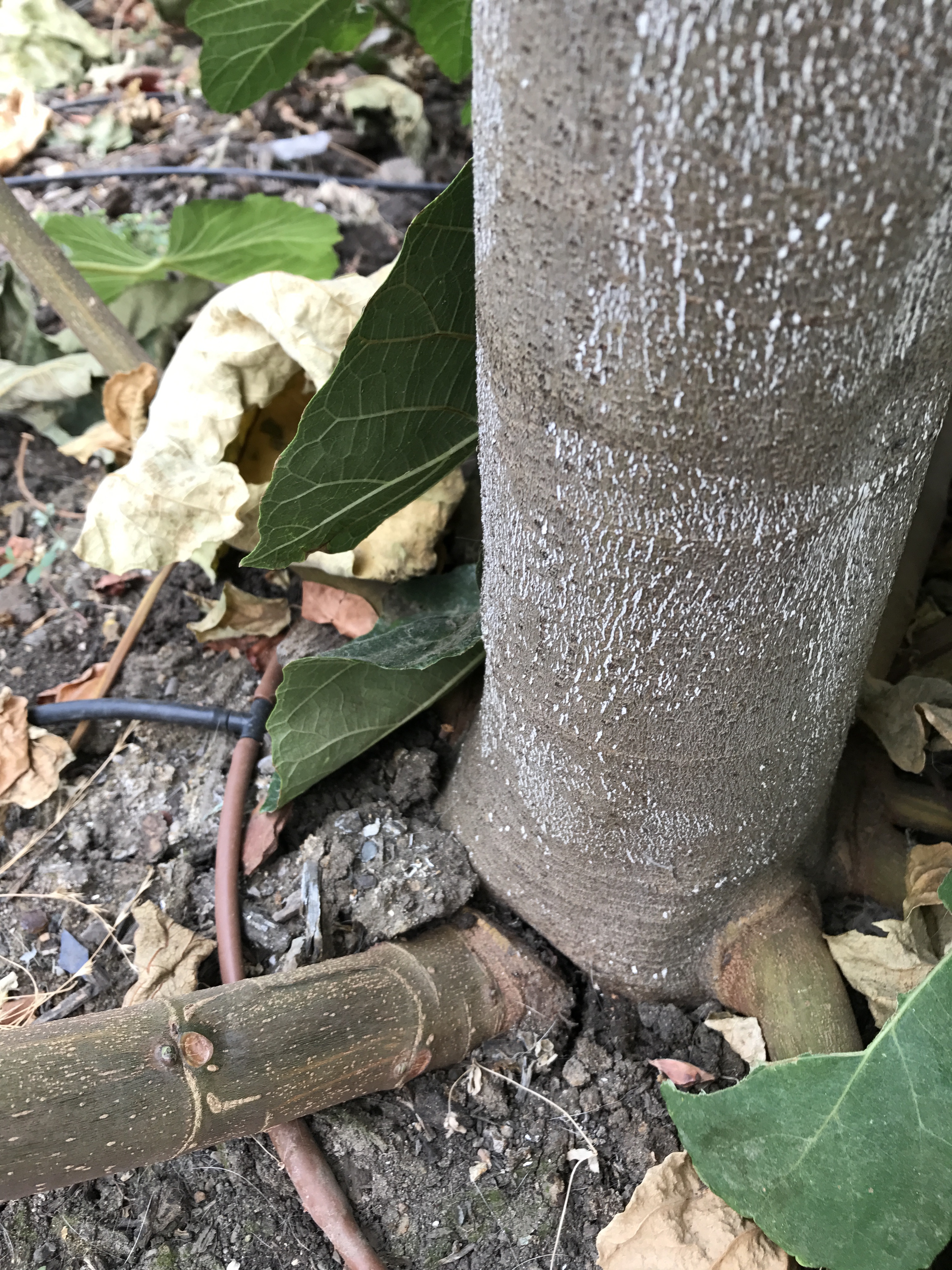
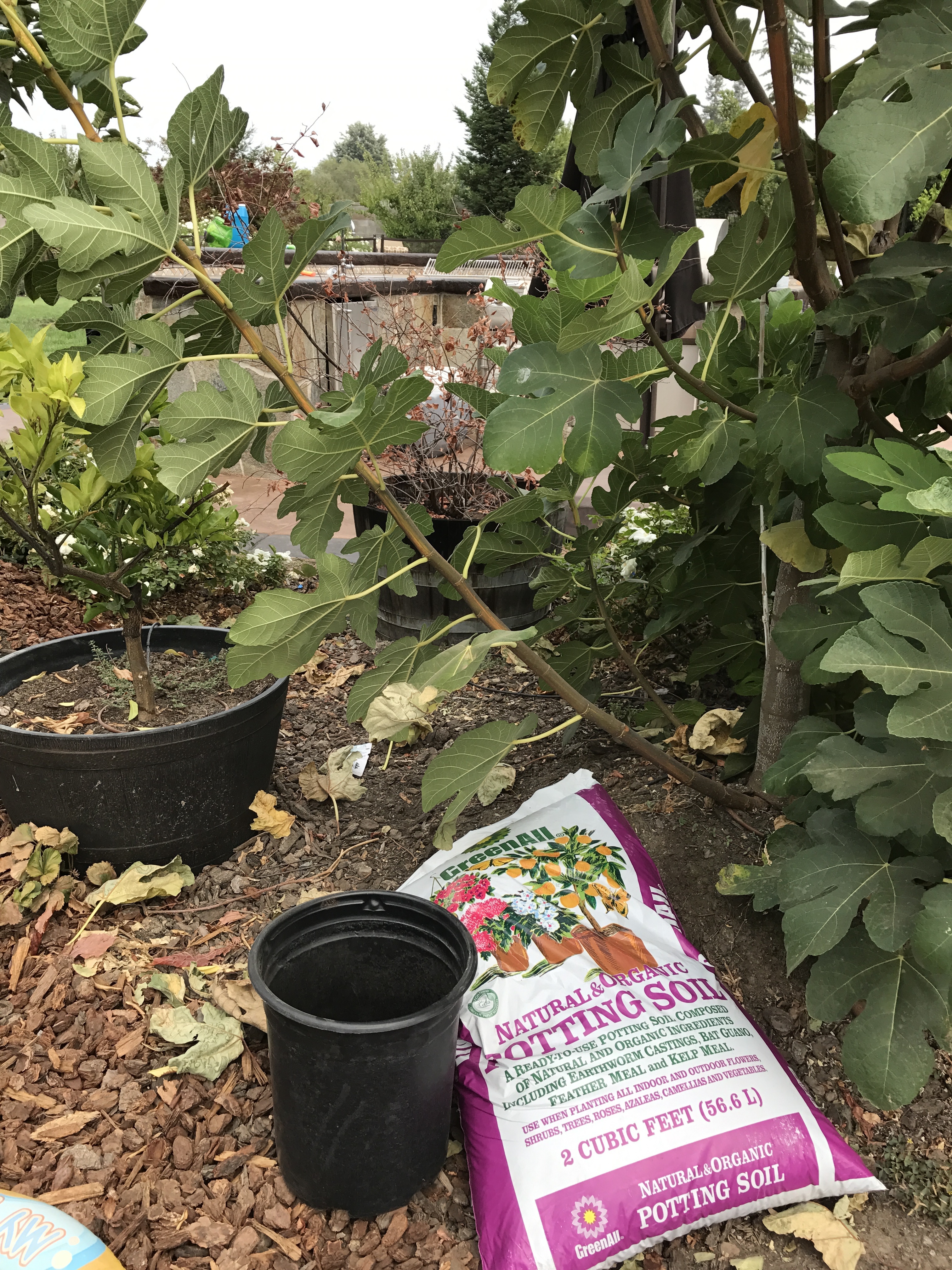
Richard, I would like to plant this sucker assuming it has some roots, in a #5 pot, with the above potting soil. I put a little pressure on the top and it broke free.Where should I prune it to and is the above something I can do with figs. I plan on using it as rootstock for accumulating different fig varieties. Any thoughts or tips? Thanks!
3 Likes
Not Richard here but I’ll give you my take and he can straighten us both out. If you cut it out now it’s going to drop all it’s leaves. But if you cut it back to a few buds with no leaves it may survive. I’d cut right where that crease is and dig out as many roots as possible. Further I’d wait until about Febr to cut it out. That would up your chances of survival. If you do it now, and everything goes well, I don’t see it gaining much over waiting.
3 Likes
Thanks Fruitnut, unfortunately I pulled it off and planted it. The wind came up today and blew the break more and the leaves started wilting so I pulled it and planted it. There were some very small roots, maybe half inch long so probably won’t make it but oh well, was just going to prune it off this winter. I need to learn more about figs, they are an awesome fruit! I did prune it to 3 buds, should I prune more and remove the 3 leaves? Thanks!
1 Like