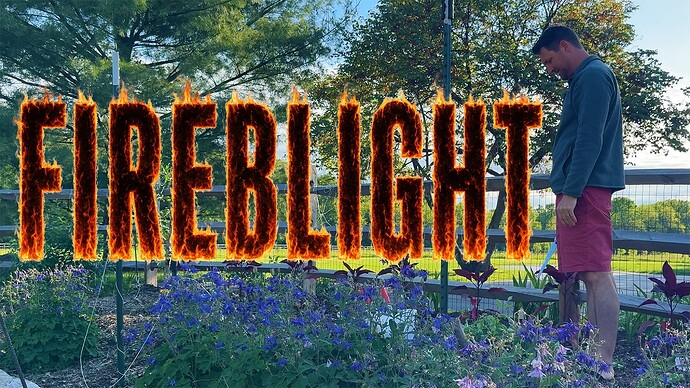
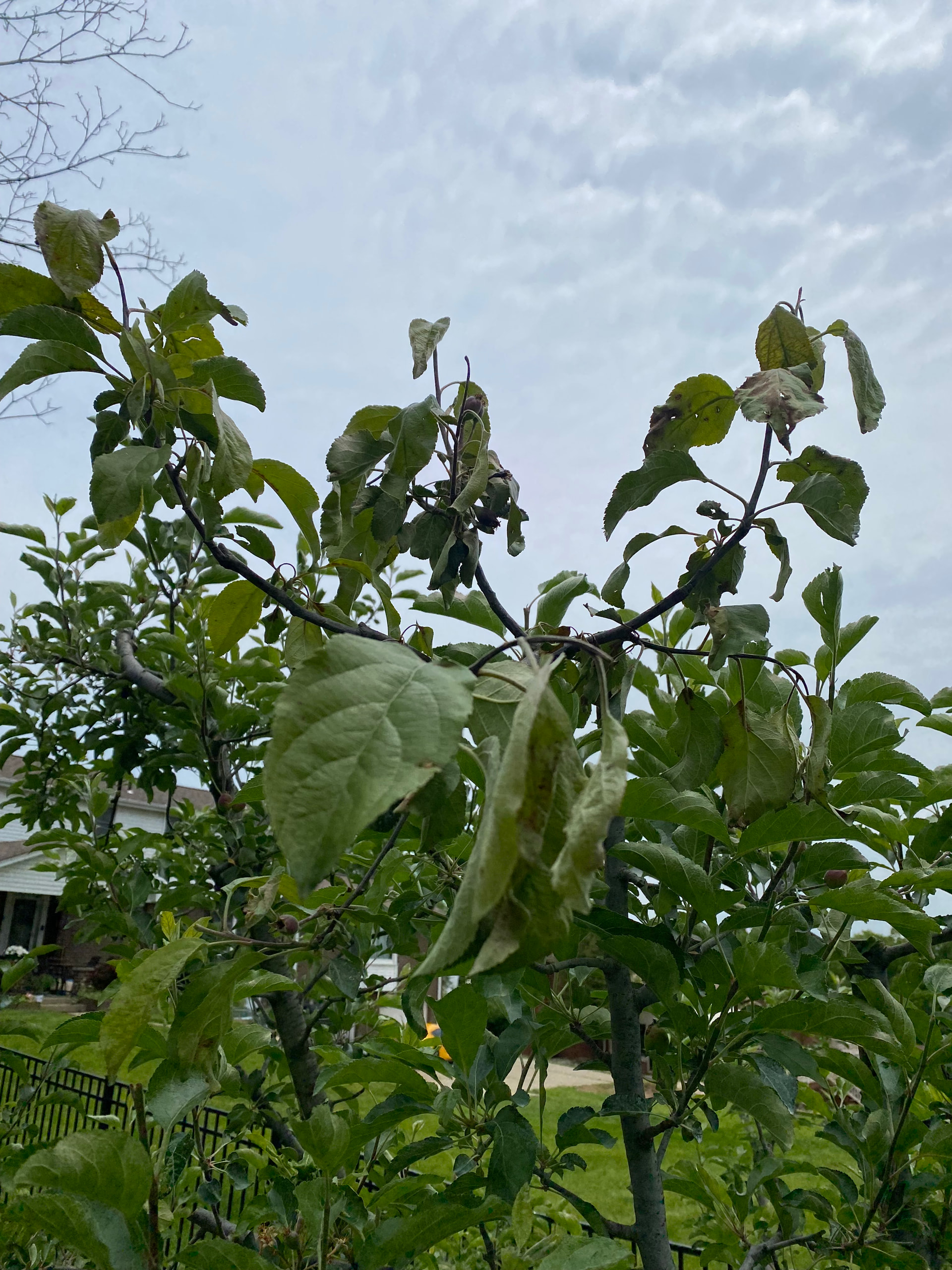
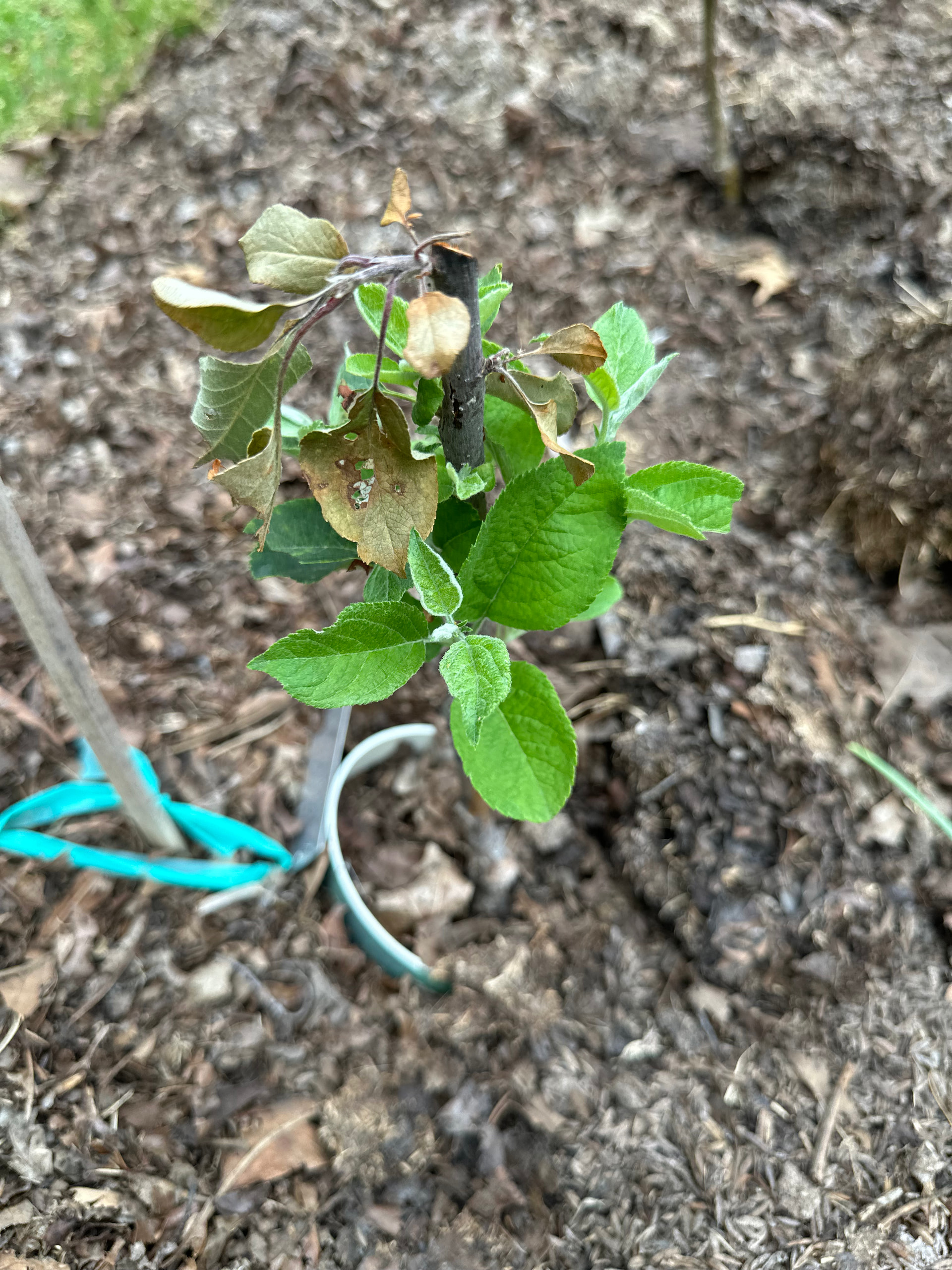
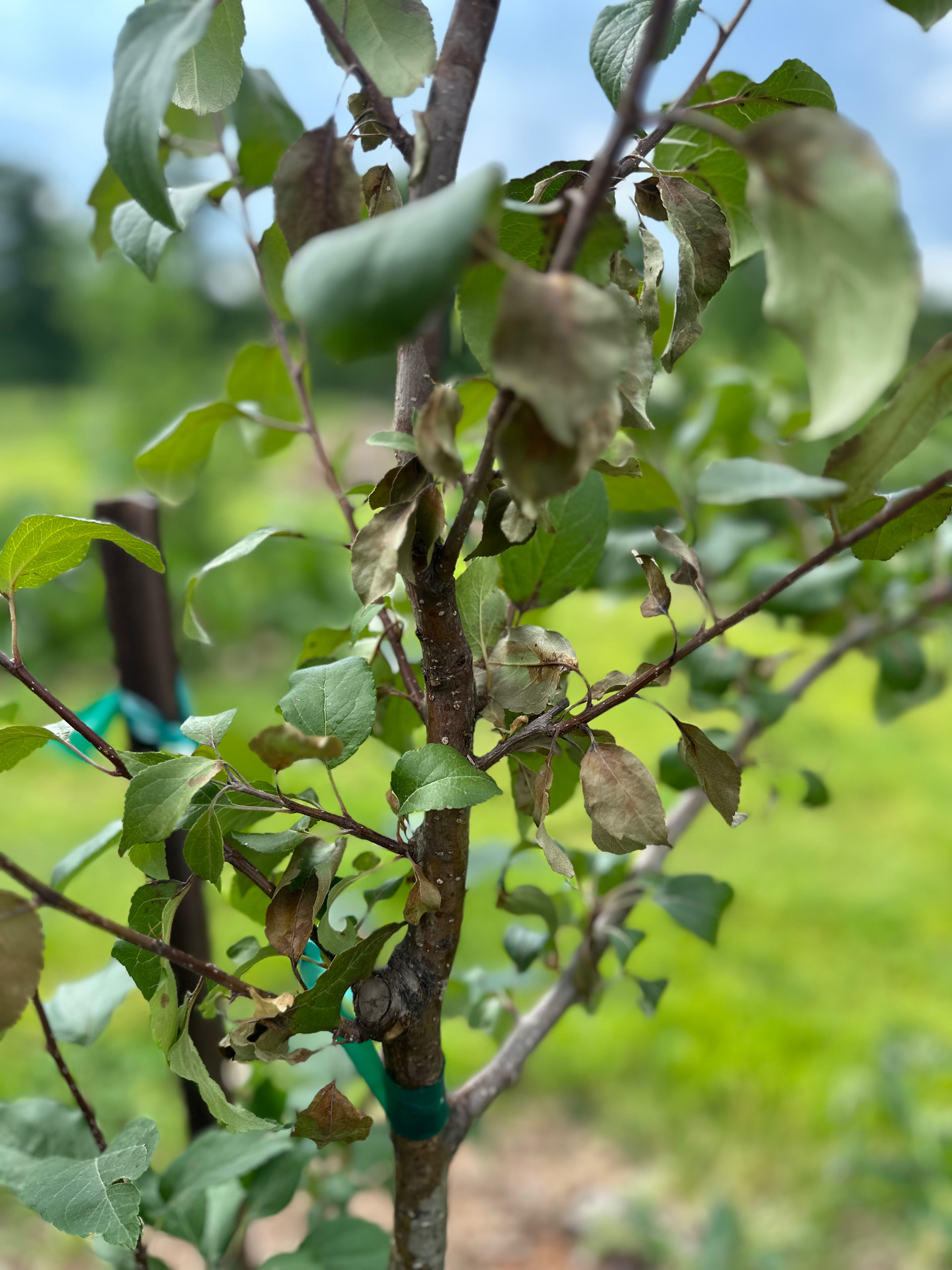
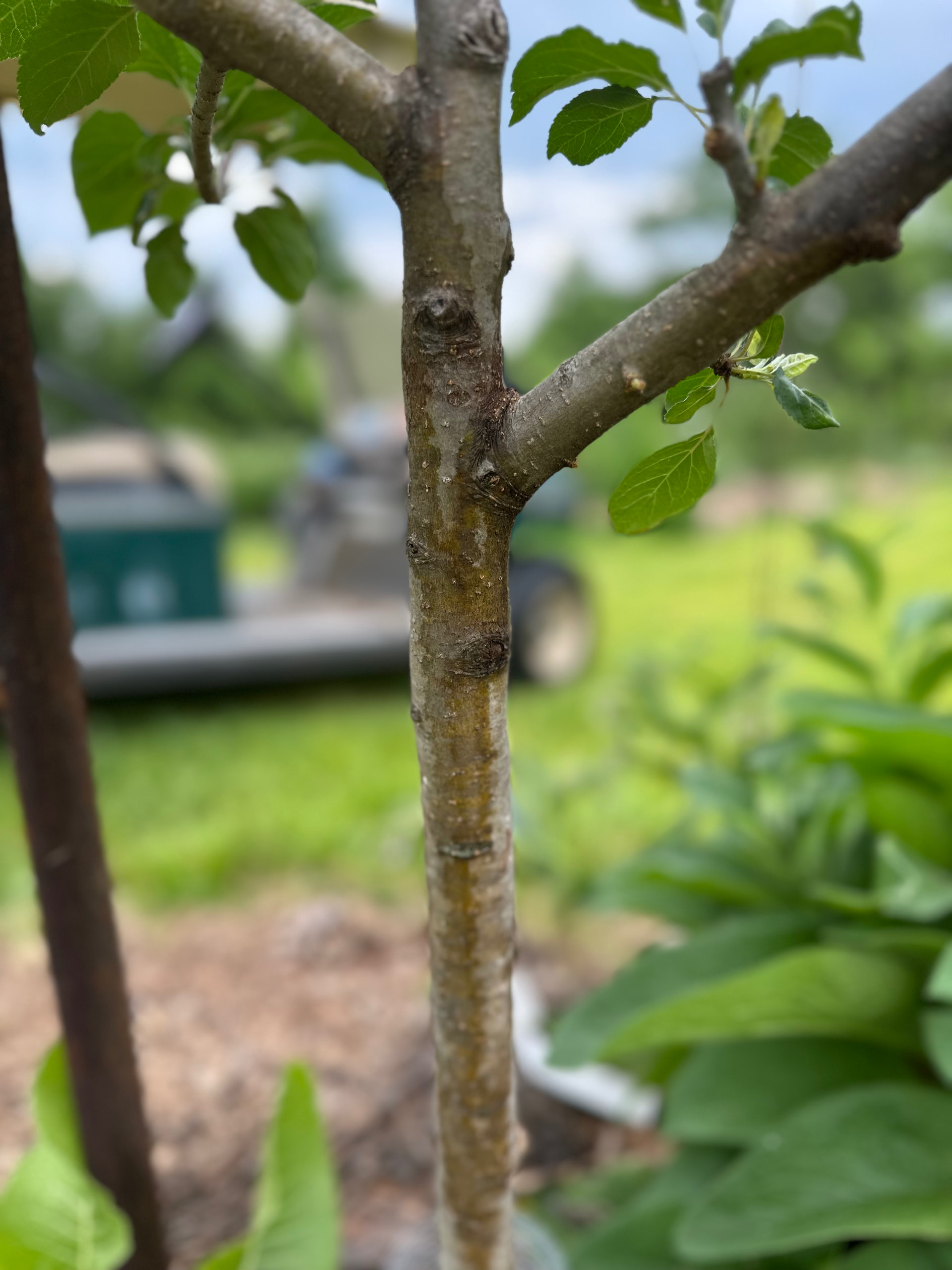
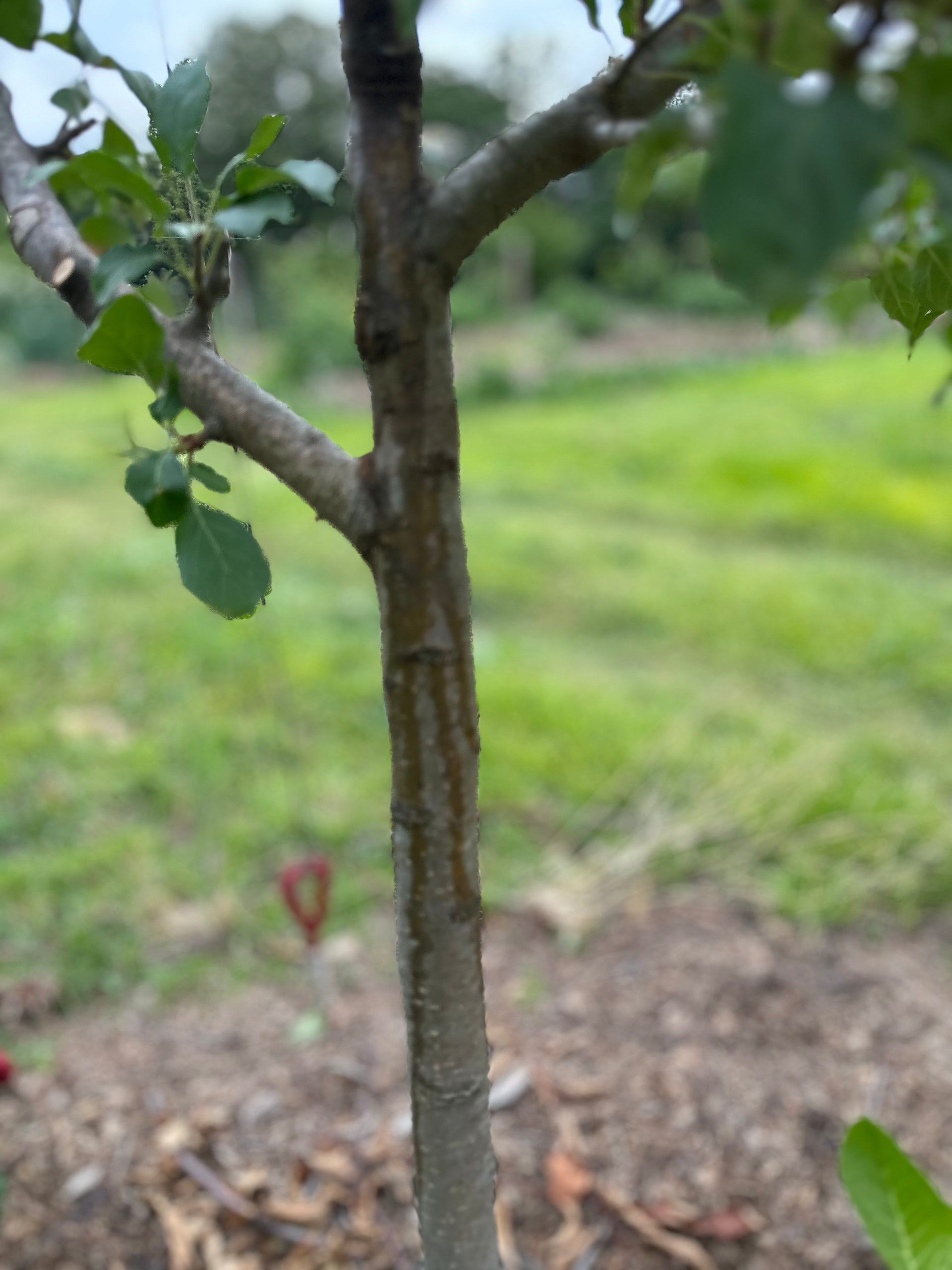
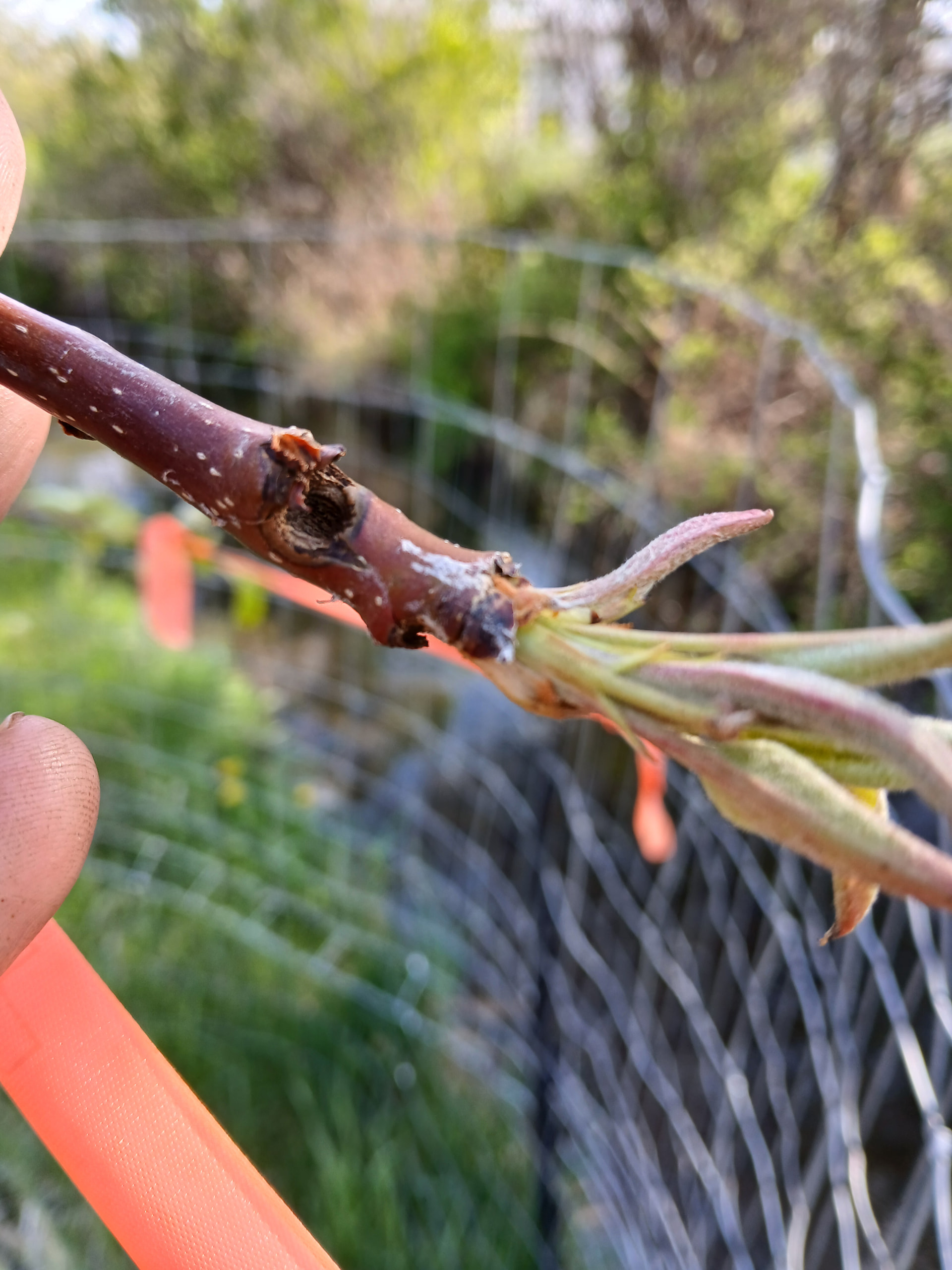
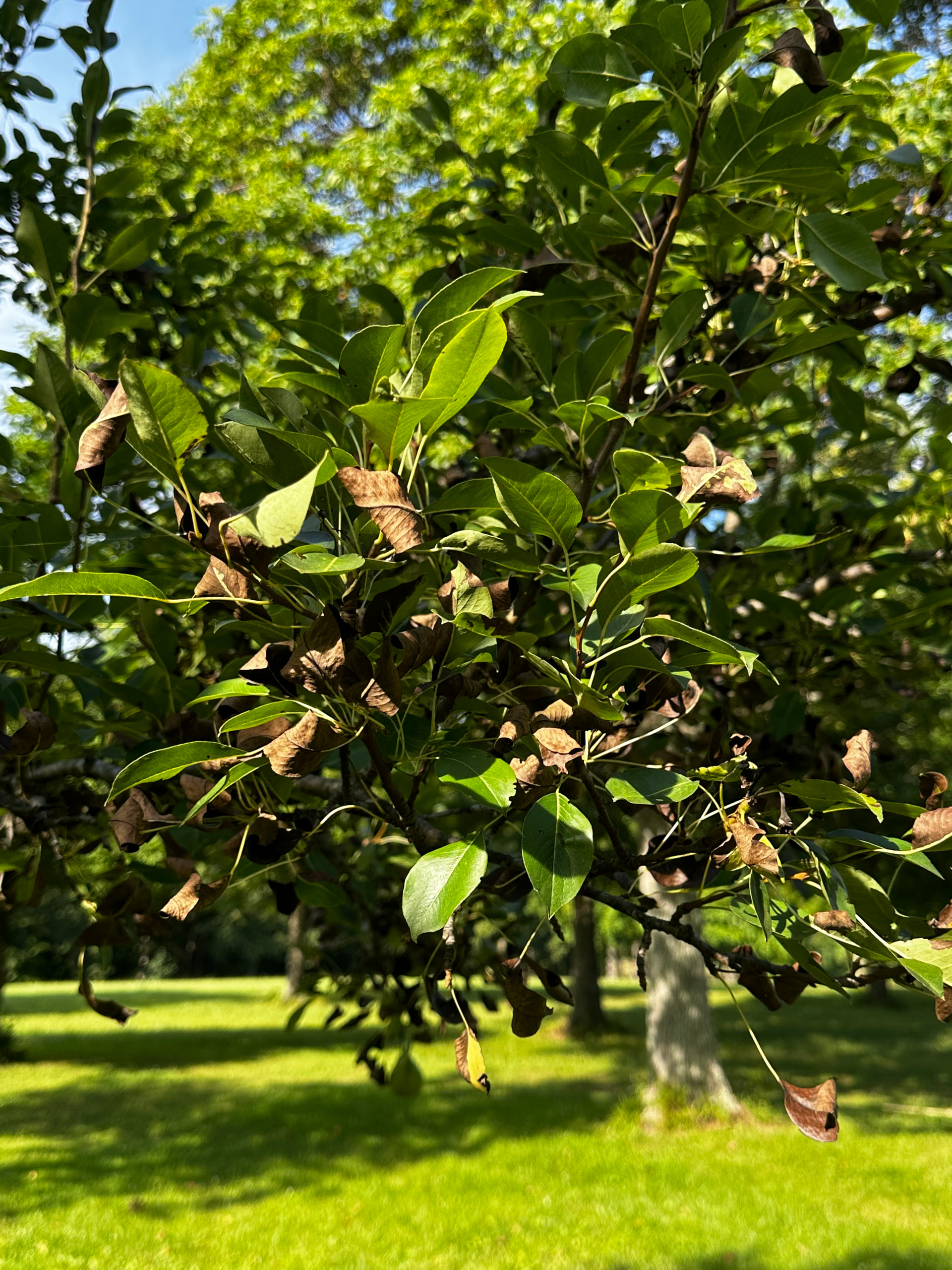
Apple orchard got hit very hard in SW Ohio. Most varieties were marked resistant to fireblight but still were heavily damaged. 3 out of 10 were cut down almost completely. Here is a video about it. At around 5 minutes I show each variety and what degree of fireblight damage it has. Hope your orchards fared better than ours.
I watched your video and you have a very pretty garden! Sorry to hear about the trees.
I noticed you had info on the posted susceptibility of the trees by the places you bought the trees from. However, if you look at those places and what they mean by “resistant” you might be surprised. They don’t mean the tree won’t get fireblight. They mean it is less likely to kill the tree or that less of the tree is likely to be affected.
I don’t think it’s malicious on the part of people selling the trees. I think the research is flawed in a way and they’re relying on the studies to tell them how well the tree performs. I’ve started to become annoyed with these ratings because I believe they’re not really measuring some of the things we care about. Then they condense the ratings into “resistant” and “susceptible” without being clear on what it means.
Does it mean the tree is less likely to get strikes and if it does they won’t progress much? Does it mean the tree is unlikely to get strikes but if it does, the tree is likely to succumb? Does it mean the tree is likely to get strikes but they’re not likely to progress much?
Many of the ratings come from studies where they purposefully inoculate the trees with fireblight. I see two problems with this:
Trees don’t get fireblight by having a leaf cut off and fireblight bacteria painted on. Or by being injected. Trees get fireblight from insects carrying the bacteria from nearby trees to flowers, shoots, or wounds. Maybe a particular variety has leaf petioles or stoma or whatever that are particularly good/ not good for transmitting fireblight. They’re not testing whether the tree is more likely to get it - they’re testing whether the tree can fight it off. What to do with this information is really situational and complicated.
They’re using one controlled strain when they inoculate. We now know there’s lots of variability in fireblight strains, even just in the U.S.. Even if the tree is “resistant” to the one strain they used, it might not be resistant to your local strain.
One place all this showed up very clearly was when they tested Bud-9 rootstock. When it’s inoculated, it is very susceptible to fireblight. However, the NC-140 rootstock trials found that in the field, it did much better. Statisticians call this a lack of ecological validity - we’re testing the trees in conditions that aren’t the same as the ones they’re actually in when they’re growing in the field.
Peter, thanks for your time and effort putting together such an informative video tailored toward backyard fruit growers. I made similar mistakes myself - I blamed late freezes in SW PA and ended up removing the whole tree because by the time I realized what was really happening, it was too late to save it - it can be seen @ Dead 3rd Leaf Apple Tree Dissection
Great info. My goal wasn’t to imply the companies were being deceptive but just to show that even varieties marked as resistant are not as resistant as you would think. One of the things I love about this forum is it gives you more nuanced info about what types of trees do well for people in more real world terms. Whole heartedly agree with all your sentiments on real world vs testing situations.
Tough year for me in the orchard but trying to gain knowledge and spread it when I can!
I would add one more thing. Many assume a variety of tree they procure, and plant will be the same tree tested if it’s purported to be the same variety. Most folks don’t pay attention to sport mutations and are not keyed in to subtle differences. One of these differences could be blight susceptibility.
Ark Blacks are described as late bloomers. I have one that blooms during P2 and has done so for 15 years. This is a subtle difference but a difference nonetheless.
Folks are waiting too long to intervene by weeks. Tall spindle growers running dwarf rootstock should inspect flowers daily during the course of the bloom in the south. There is way too much focus on the shep’s crook and nearly all the focus should be on the pistil and flower stem. When a flower stem turns any shade besides green, one must get rid of it immediately.
Pruning or cutting back requirements are not the same for every tree. If quantifying FB resistance on a scale 1-10, anything 5 or under like a Williams Favorite, Spitz, Blue Ridge King, Golden D, will need the 8 inch buffer since the blight moves quickly in those trees. Trees that rate 7 and above like the Ark Black, Victoria Limbertwig, or whatever simply require a pinch of the finger for young trees. My VL, Williams Pride, Swiss LT did not see any blight at all.
My father once experienced an epic FB year back in the 80s and his Earliblaze saw blight down to the root. The trunk split wide open. The tree lived, healed and I don’t recall ever seeing blight on the tree again. Not all trees are the same and should not be treated as such.
@thegardenfamily, the Ark Black I’ve grown was very slow to produce. It would bloom well but would only produce a few apples until it was about 9-10 years old. The Winesap behaved the same as well. Both are on M111s. The tree growth was perfectly normal.
Talk to me about the Dayton apple flavor. The name is rather uninteresting, but the flavor description is intriguing.
Is the apparent discharge running down the trunk a source of infection. Should I wash this with a bleach solution if I prune in this area, or do I need to be below this.
My Clark’s crab grafts have also been pruned back to one bud. It’s grafted to Eliza’s Choice crab that apparently it is more resistant since there is no sign of FB on it. It bloomed and has a few clusters of fruit.
All the strikes are on tips, I saw hardly any strikes from flowers, then again they are young trees and the late frost took care of most of the blossoms.
That’s rough. Sorry about your FB. Im having a rough time here. Lost all 4 of my Clarke’s Crab grafts and a bunch of wood. One tree is still showing a ton of shoot blight. I guess I’d bleach the place you plan to do a cut if there is ooze running over that area. Good luck.
I’m right there with you guys, chopped my Clark’s down to a single whip - doesn’t look like its going to work in VA. Several other trees have blight as well this year, but none as bad as clarks unfortunately. I may try to graft a branch on a dwarf tree rather than trying an entire tree on m111 like i have now.
This is the first year I’ve seen the disease in person, just not in my orchard. There are a couple century old apple trees a mile northeast of me, one has a few upright shoots that have suddenly gone completely brown. I go by them twice a week when I pick up produce waste from restaurants. The other tree right next to it has no strikes I can see.
Fortunately, it is very rare for wind to come from the northeast.
Dreading next week here in MD- rainy, 60’s but if blight takes out my Sweet Sixteen it might be a blessing: it reliably bears one dozen apples, blights at drop of a hat and defies my efforts to pick it at optimal taste.
I grafted into it Monty’s Delight; Red Cinnamon; Kittageskee and Hawkeye, will favor those when I prune this winter.
Sorry for the poor pictures, but it is difficult to capture.
Stems appear normal.
I planted the tree 30+ years ago, I have long forgotten the variety. It bears fruit every year and the deer, squirrels, hornets and the occasional ground hog consume all the fruit. It has been totally ignored until the last couple of years. I have never sprayed the tree with anything.