the more the snow, the more desperate they get.
1 Like
and it sounds like we are about to get a lot more of it. I just went outside, shoveled the snow away from all of my trees, and added 4’ protection on everything. It’s a wet snow right now, but in the brief interim tomorrow before that snow starts, I’m going to go cut some scion, and then wait until the bark is slipping (per above) to try and bridge.
4 Likes
I had an issue with girdling last year. This was in a 12 year old orchard and it had never happened before. It looked really bad, but thankful the trees survived. I have only seen minimal damage this year. I’m praying that they won’t sustain additional damage this year.
1 Like
Does anyone have any experience with tree wound sealers like e.g. Tree Wound Sealer & Dressing, 500g Tree Pruning Sealer for Cut, Damaged Bark, Grafting – Effective Tree Repair Sealant for Shrub, Bonsai, Rose, Orchard | Horticulture Grade Seal Formula: Amazon.com: Tools & Home Improvement ?
I’m trying to figure out if this would be a good thing for my partially girdled tree, and/or if it would even help my fully girdled trees or if they still require a bridge graft.
edit: it looks like most university extension websites say this is bad to do.
I would avoid any sealer on those wounds. For the wounds that still have sap flow, I would cut a clean, regular edge to those wounds with a very sharp knife, that will make it heal faster.
5 Likes
You should be able to bridge graft in April in your zone. I agree with hambone, don’t use any tree wound sealers. Cut and store your scion now and cut it long so you can cut it to length with fresh edges when you do your grafting.
2 Likes
I am in zone 6b =) too.
I just learned how to graft recently (3 years ago) and I remember when I was overwhelmed by the number of options and terms. Pear is really easy to graft though, so it’s definitely worth trying at least that one.
For right now, you should grab some scions by cutting off some sticks that are growth from the most recent summer. They should be approx 4" longer (or more in case of mistakes) than the gap in bark you need to bridge.
Hopefully, you can find something about pencil sized but a bit smaller will be okay. You could even use a different pear tree for the scionwood. If you don’t have anything like that, message me and I can send you some. I have a bunch of Asian and other pears with wood to spare.
The scions should go in a plastic bag in a part of the fridge close to freezing. I have a cold drawer.
For the actual grafting I like J sacadura’s videos. They’re very clear and calming. Here is the one on bridge grafting:
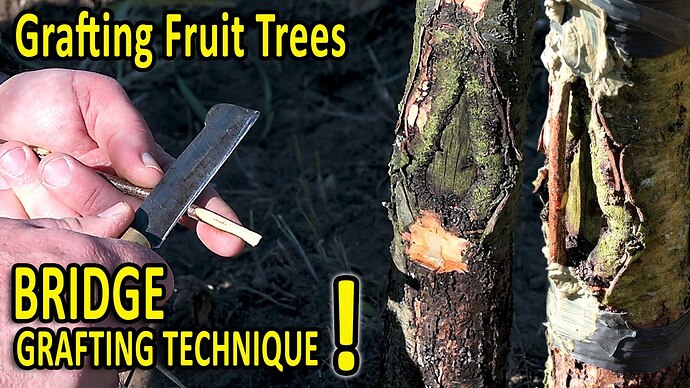
He did the grafts while the bark was NOT slipping. You can see in the video how difficult it is to peel the bark back to insert the scion. When it’s “slipping” the bark peels easily.
The tools he uses in this are pretty simple. To secure the grafts he uses nails and electrical tape. He uses a grafting knife but my first grafts were using an old pocket knife. Since then I’ve switched to a box cutter. I may upgrade this year to a grafting knife (which is only sharpened on one side making it easier to make the bevel cuts on the wood).
You don’t want water to get inside your graft and J. Sacadura uses a resin based mastic to paint over the gap where water could get in. You don’t need to use anything that fancy.
I’ve used latex exterior house paint, latex house paint +elmer’s glue, modeling clay, melted beeswax, and a melted lavender scented soy candle my step mom gave me. They all worked. I would not use toilet bowl wax as the wood under it can rot since it’s all sticky. The others I listed all peeled or flaked off after a while.
He also mentions that for peach trees you may have to use two-year old wood which was a nice touch.
I think persimmons are kind of tricky to graft so they may need some extra attention - but I’m sure there’s a thread on it.
Hope something I said is helpful!
My favorite bridge graft ever posted here.
7 Likes
Thanks - this is all super helpful.
Yes, I plan to grab some long scions once this blizzard is over. I have to figure out the largest size I can fit in my minifridge in the basement (used for seeds, scion, and prescription meds).
I think I’ll have enough pear wood but thank you for offer. Persimmon will be tough because I don’t have as much and also because that tree is the most damaged I think.
I found sacadura last week and they were great videos! I’ve bookmarked them. Thank you for explaining to me about him doing it when the bark wasn’t slipping; I think that was part of what confused me.
So for keeping water out — is that grafting tape + then some kind of clay or wax over the tape? Having trouble with the concept.
@hambone @AndySmith - thank you. Local tree guy in town also suggested a ‘bark trace’ which I think is what you are talking about for things healing faster. By ‘still have sap flow,’ I assume that means my one pear where it isn’t a 360 degree girdle; the persimmon and the other pear are 360 degree so I may still trim but I assume those are where I have to bridge graft or cut down.
Also emailed UMass extension for advice.
BTW, the town FB group — where I also posted about this — is now going bananas as more people go out to check their yards and realize their fruit trees, roses, berry bushes, and other prizes things are all gone to the ground.
2 Likes
Can anyone offer suggestions for where I could get about 50 g890 and 10-25 ohxf87 rootstock at this point with respectable shipping?
Grandpa’s orchard is in stock but it’s $114 for shipping which seems absurd to me for just rootstock. Shipping last year with Copenhaven was $41 for similar.
I’d do Copenhaven again, but their smallest size available for g890 is 7/16”. I really don’t want to work with something that big.
How is Willamette with shipping?
Well, the snow is all gone, so I went outside today to look at my trees.
I think I’m presuming the persimmon is a goner. I’m currently planning to cut it back and graft to the top.
I’m still hoping to bridge the two pears, even the one that is 100% around the ring. I went to go bark trace today but was really confused by it and felt like I was doing more damage. So I ended up just wrapping loosely in burlap to protect from whatever cold weather we have.
I’ve already taken and stored scion from both.
Everything is covered in rabbit turd btw.
1 Like
I grafted to G214 on 7/16” from Copenhaven last year and liked it so much I ordered 25 more for this spring (I didn’t have a single failed graft). I also liked that with 7/16” their bundles are 25 instead of 50, so I didn’t have to order as much. I can’t speak to Williamette’s shipping rates, but Treco is another one to check.
1 Like
Winter 2015 my Cormus domestica was girdled, attached is a photo after I protected it with wire. I didn’t think it was going to survive but it did. The damaged area had healthy tissue form over in the next two years. Your pear might recover as well.

2 Likes
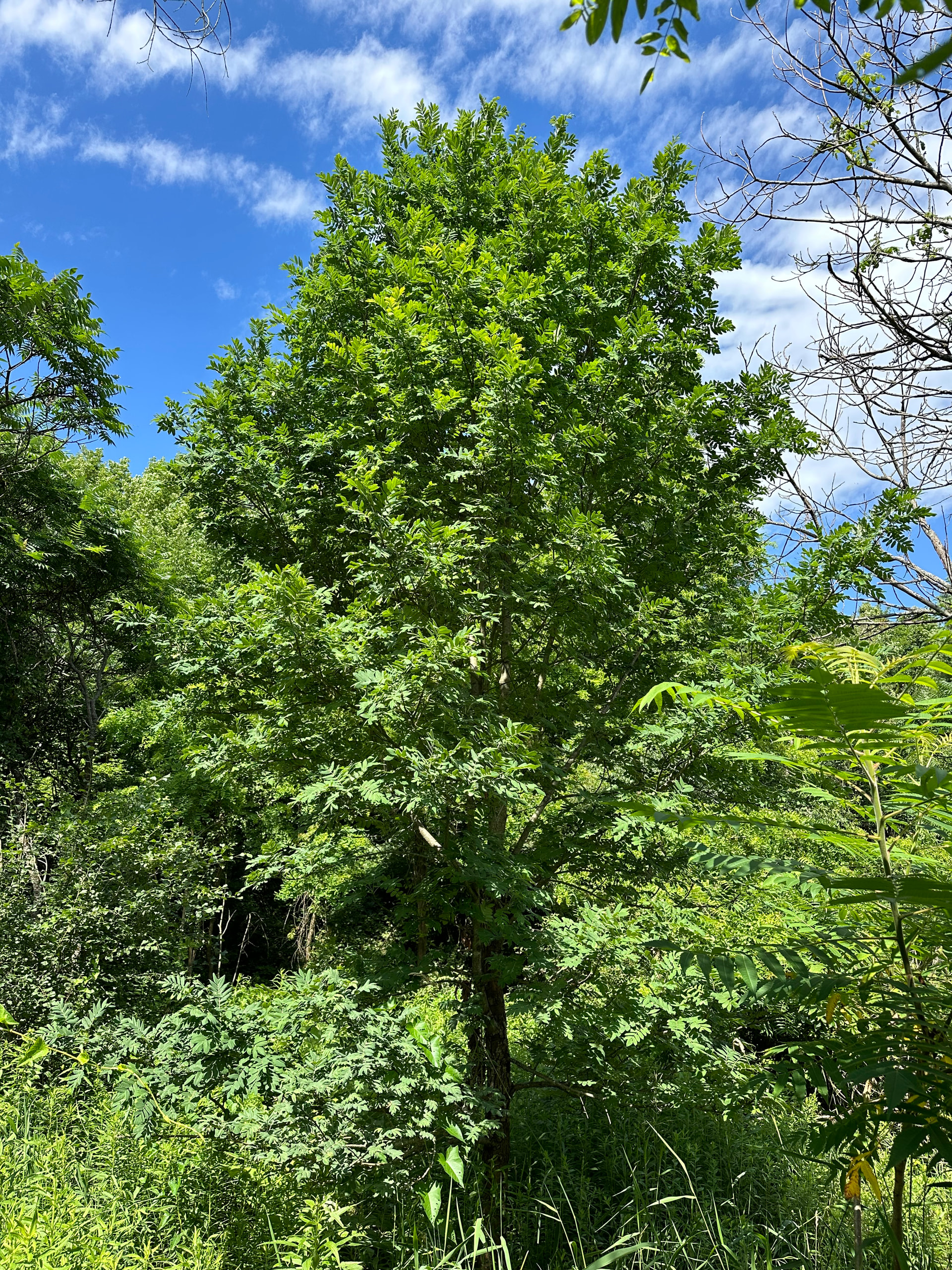
Wow — I’m extremely surprised that survived. This is what I find so stressful. A tree like yours looks like it should be dead for sure, but survives. But I understand if my tree doesn’t survive, it will kill the rootstock as well, and then I’m starting completely over. It feels totally uncertain.
1 Like
I had a similar girdling a couple of years ago. Five trees were chewed all the way around, above and below the graft. This was in the autumn of the year they had been planted out, after being grafted and grown for a year in nursery beds.
For three of them, the top growth died over the following year, but it took until August (during a record breaking drought) before that was obvious. One of them flowered and set fruit.
For all three the rootstock sent up suckers which I protected and am planning on grafting to this spring, so it wasn’t a total loss.
Two survived. Perhaps a strip of cambium survived somewhere though they looked about the same as those that didn’t make it.
2 Likes
Interesting, so the rootstock survived?
Yes. All the trees where the top died had suckers sprouting earlier in the year, before the leaves wilted. It was one of the signs that they weren’t going to make it.
Looks like you have a little strip of bark going down on the left side of the girdling?
I had a young goldrush apple that was chewed up quite a bit the previous winter and that one survived as well.
I ended up going with Grandpa’s. Shipping was pretty cheap once they made the adjustment.
How do you graft those 7/16” stocks? Cleft?