Nice — do you have any pictures of what it looked like under the tape? Our trees are of similar size so I’m curious how you were able to get under bark, and what the growth was like.
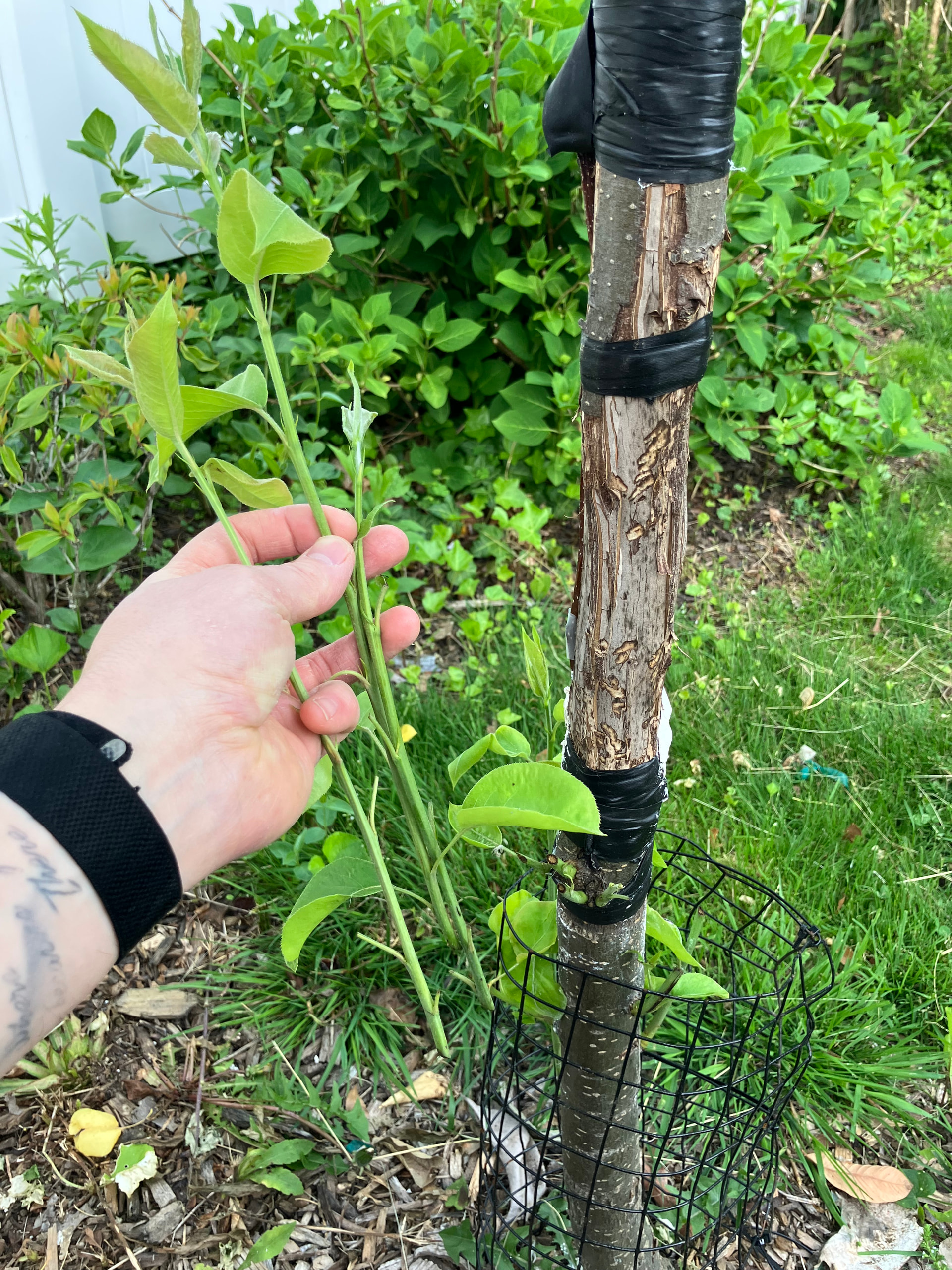
I don’t but I will take pictures on the next one for you. I have more to do! I make the cut with a grafting knife and lift up the bark similar to t budding. If the bark isn’t slipping a chisel out a square and then make a vertical cut in the middle. Secure with a nail then parafilm and tape
2 Likes
I’d love pics or a video. All I’ve seen shows much larger trees with deeper bark.
1 Like
I should have posted here
I, also, live in Eastern MA, and had the same problem. It occurs to me that i have a random apple rootstock i bought years ago, decided i didn’t have any use for, and potted up. It lives in the shade, and has never gotten very large. But this afternoon I’m going to see if it’s large enough to use as a bridge graft here. I’ll also look around and see if i can find any volunteer apple seedlings. That’s what both the scion and the root were on my damaged tree. Maybe there’s one i can dig up on my property. Or on the priority of a neighbor who wouldn’t mind my removing a junk seedling in their lawn.
For what it’s worth, i didn’t protect this tree. The ones I’ve protected look fine. I’m a big fan of aluminum window screen. I used to be able to get it free from a hardware storm that fixed screened doors and windows, but it closed.  I still have some, though. I’ve also used hardware cloth. Both work, in my experience. But i can cut the window screen with kitchen shears and affix it with an ordinary office stapler. The hardware cloth needs to be cut with tin snips, bit by bit. I need to protect my hands from getting cut while i do that. And then i tie it in place with either baling wire or zip ties. It ends up looking nicer, but it’s a ton more work.
2 Likes
Welp, it’s not large enough. It’s not tall enough, and also, the two twigs emerging from the root are small, and probably wouldn’t carry a lot of nutrition. And I went looking for random seedlings to dig up, but they were all deer-eaten to the ground over the winter. Many are sprouting and will probably recover, but they are currently about 4 inches tall.
Should I go to a big box nursery and buy whatever small apple tree I can find, and sacrifice that?
Alternatively, I found a small shoot growing by the roots of the parent tree. That tree was also chewed on by rabbits over the winter, but has a better chance of surviving, because there’s a strip up one side that was protected by a dead branch, close enough to the main leader that the rabbits couldn’t get in there. (The dead branch was a competing leader that failed, and died.) From the foliage, the small shoot is coming from the same roots. It’s also on my neighbor’s property, but they let me cut grafting wood, and I bet they’d let me dig out the shoot. (If I can – the ground is very rocky there. And by “rocky”, I means it’s mostly ledge with some cracks the tree is growing in.) So maybe I should just start over with an own-rooted version, and protect it more carefully.
There are a lot of seedling crabs around that are too large to consider moving. This is the ONLY ONE that was eaten by rabbits. I guess it is not only prettier than the others, but tastes better, too.
I went out to do more bridge grafting but the remaining trees were fully dead or had no graft-able material. I followed the videos posted earlier in this thread though if you want to know the process. Best of luck!
Wow, dead from just this year?
Yea the damage was extensive and we had sub zero temps with almost constant wind so it was quite desiccating to these younger trees
Not being able to find anything on roots that was suitable, I cut off a long branch from the rootstock and grafted both ends of it, one below most of the damage, and the other above.
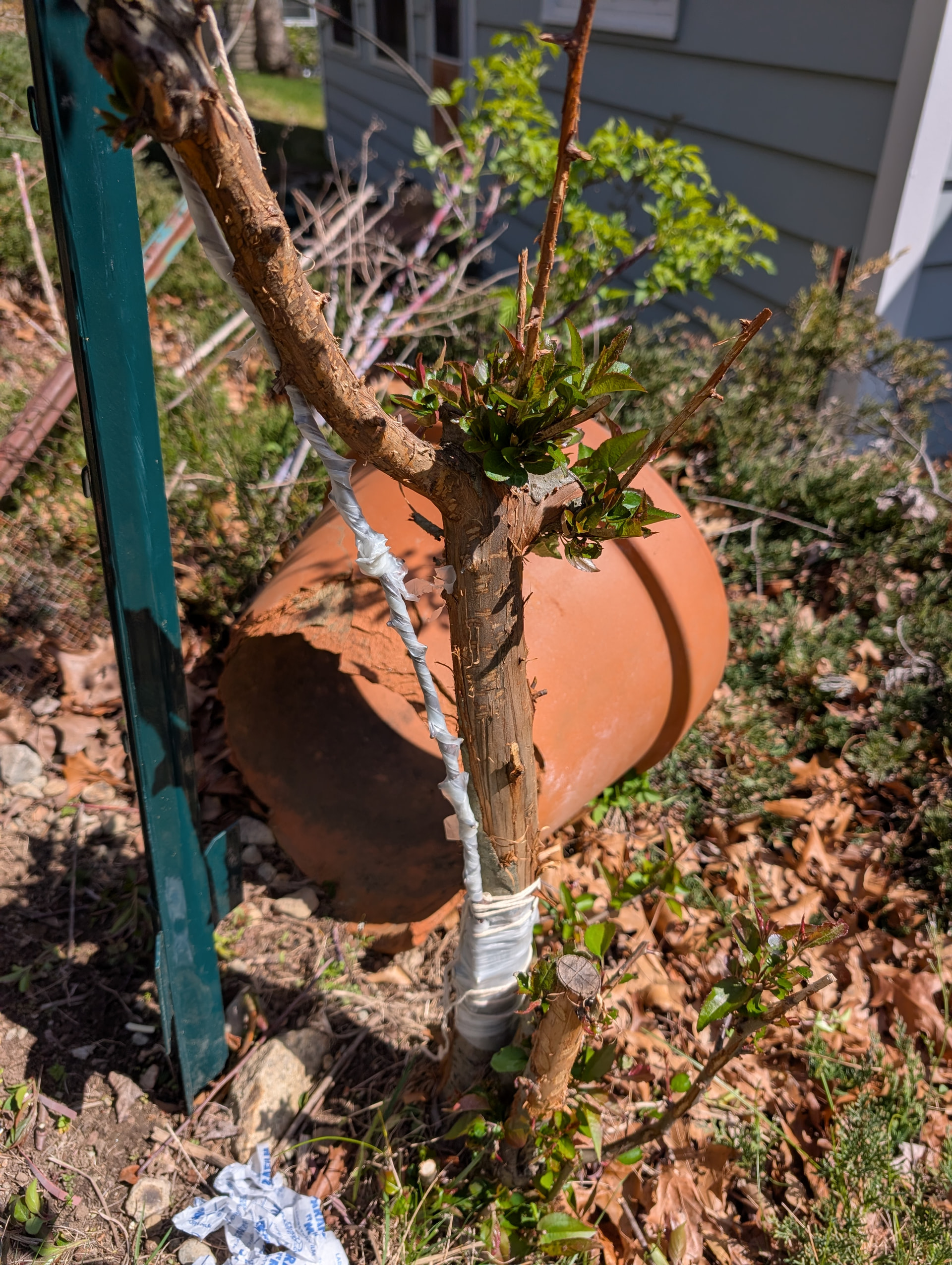

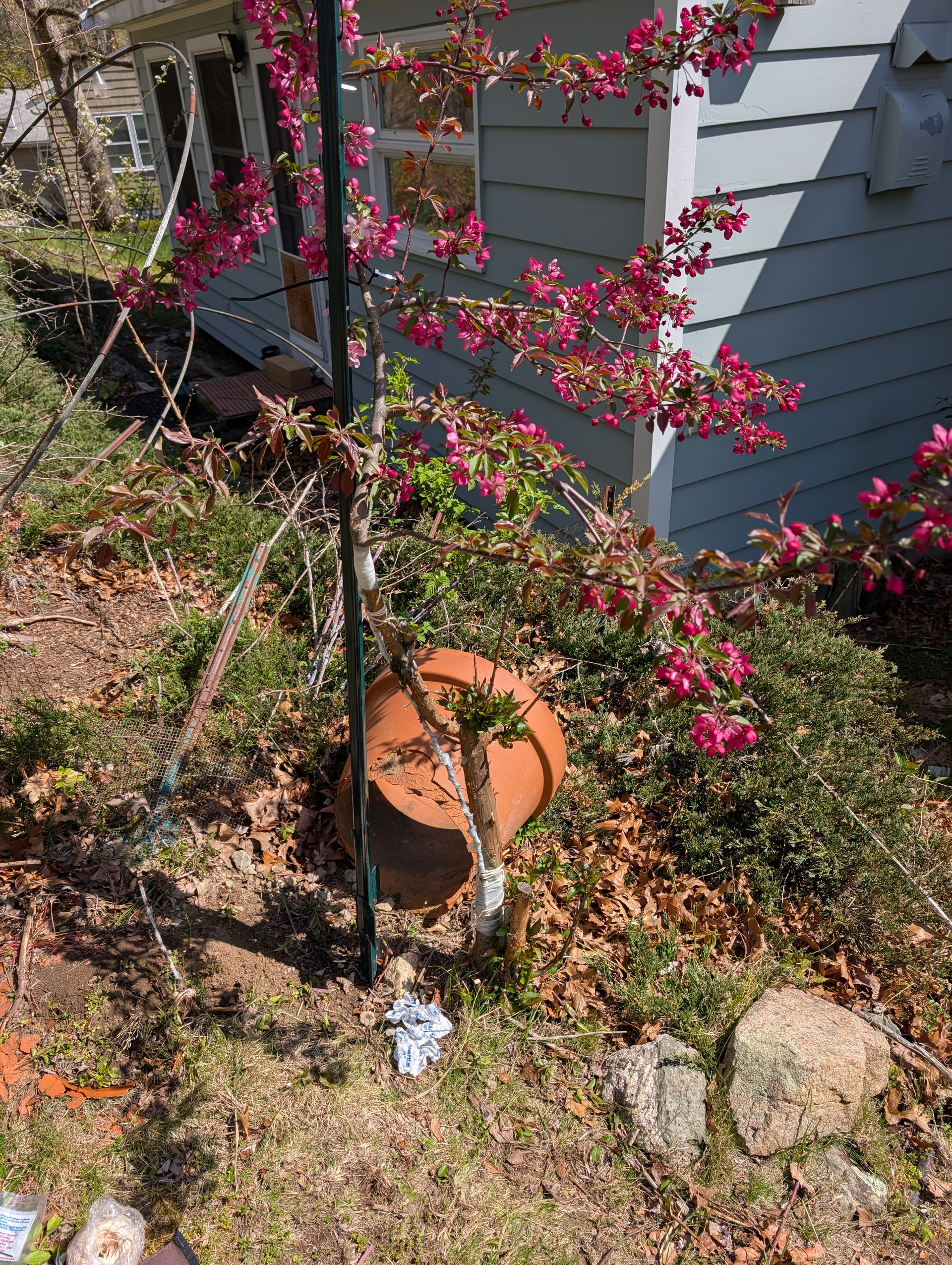
Rubber bands weren’t going to hold these pieces together.
I nailed the bottom to the base of the tree to hold it in place, covered everything with parafilm, and tied it in place with kitchen twine, so i wouldn’t put too much stress on it when i grafted the top. I tried to nail in the top, too, but it was too small, and i just made a mess of it. Oh well, maybe that exposed extra cambium. After trying a few more things, i ended up just wrapping it really tightly with parafilm, and then tying some kitchen twine over it.
I guess time will tell.
I got permission from the neighbor to dig out the “small shoot”, but it turned out to be emerging from a beefy root (branch?) running along the rocky ledge it’s growing out of. Also, something ate most of the top growth.  Not that it mattered, immediately, but that might have been insurance for the parent the.
So… I’m not going to prune out the growth from my stump this year, and if the top dies, I’ll try starting over with a new graft. I think the neighbor’s tree will survive, and there’s now enough of it growing into my yard that i can just take some scion wood from my property. (Not that i think the neighbor would object, since it’s really hard to even get to that corner of her yard from the part she uses. But it’s simpler not to have to coordinate.)
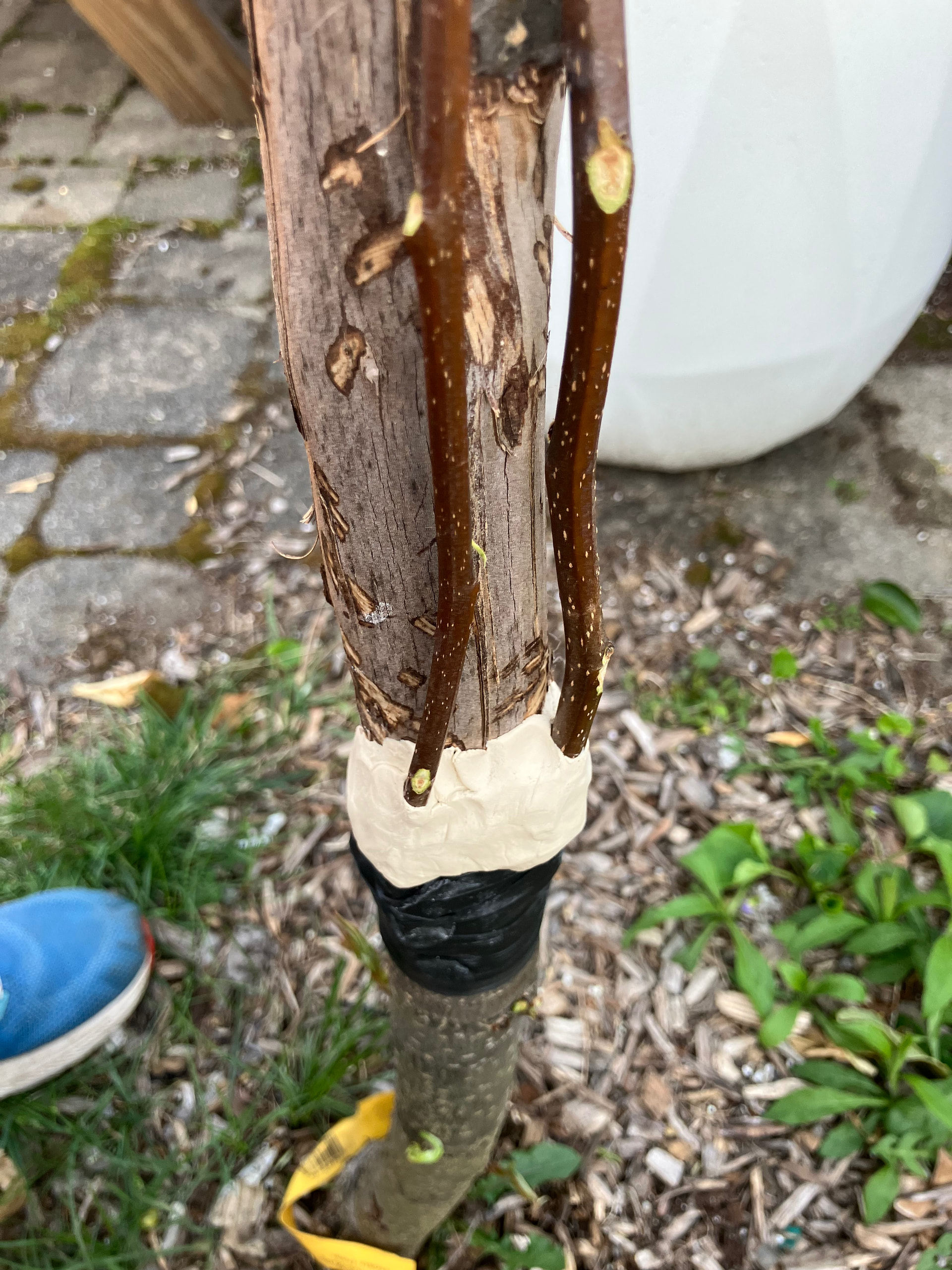
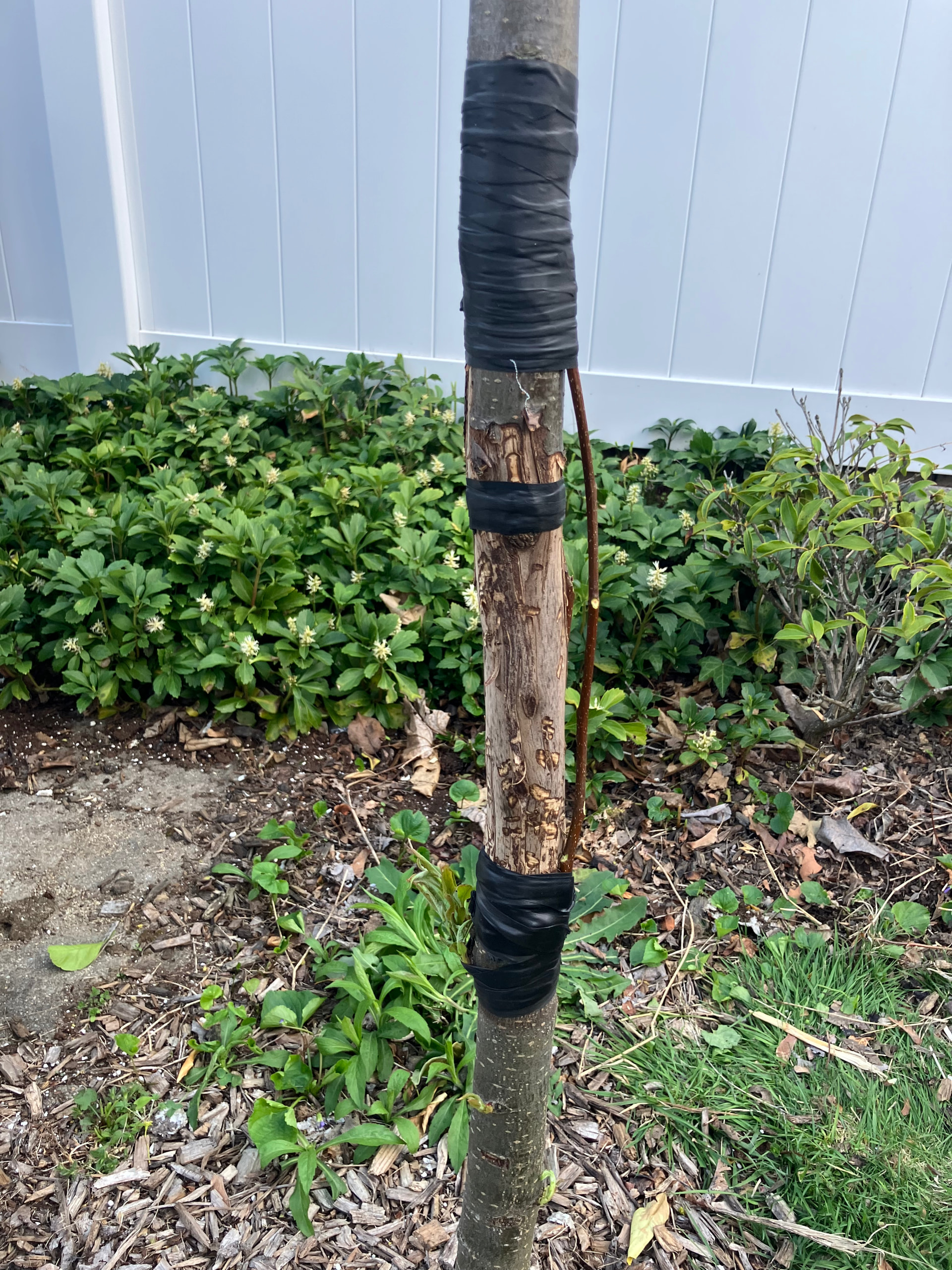
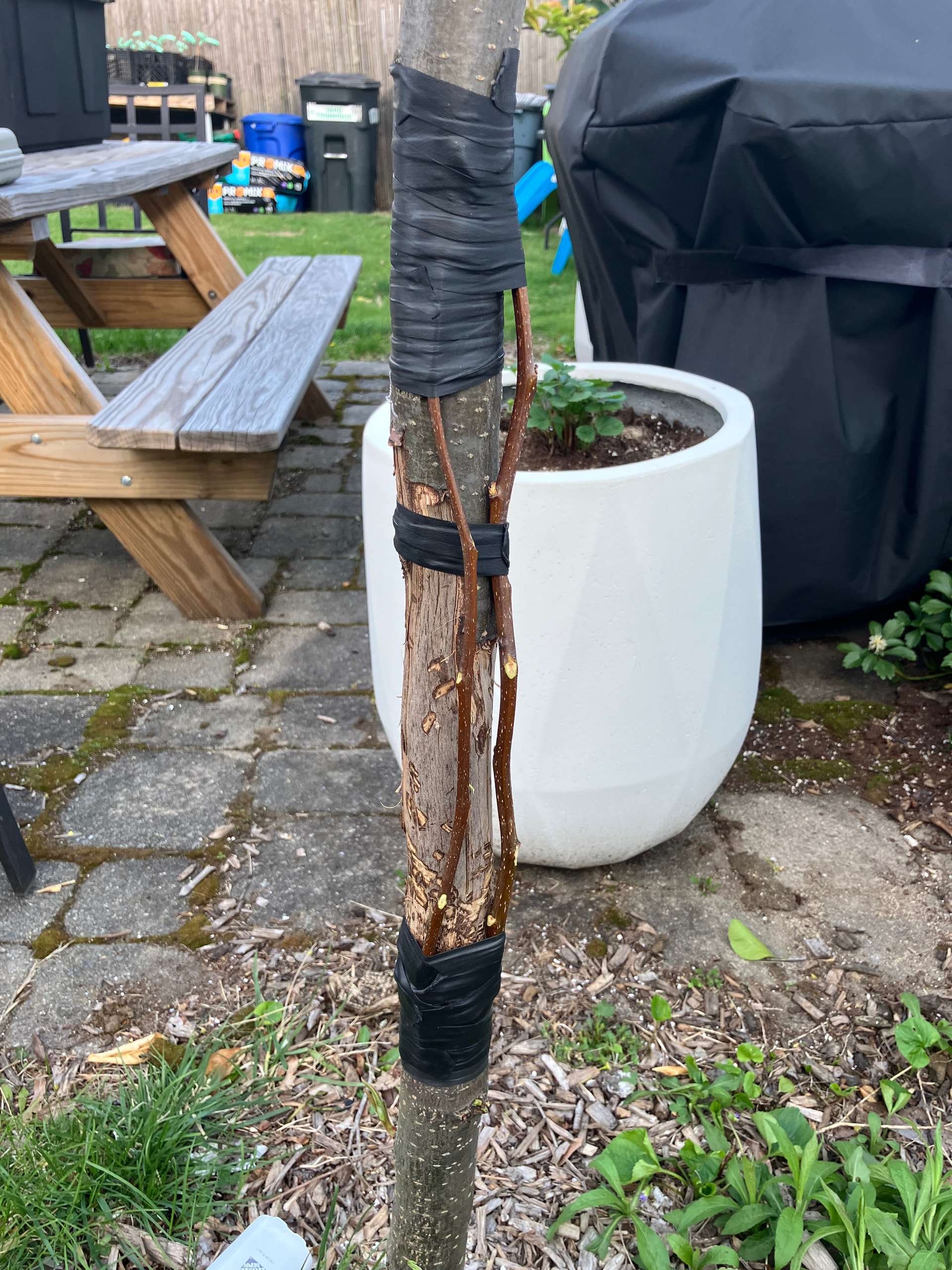
If the bridge graft didn’t work, how soon will it die? I’m surprised it’s still looking vigorous, but have no idea what to expect.
Apologies to those who have seen my pictures like this in a dozen other places. I just saw this thread and realized that I did not follow up here, which is the most appropriate spot.
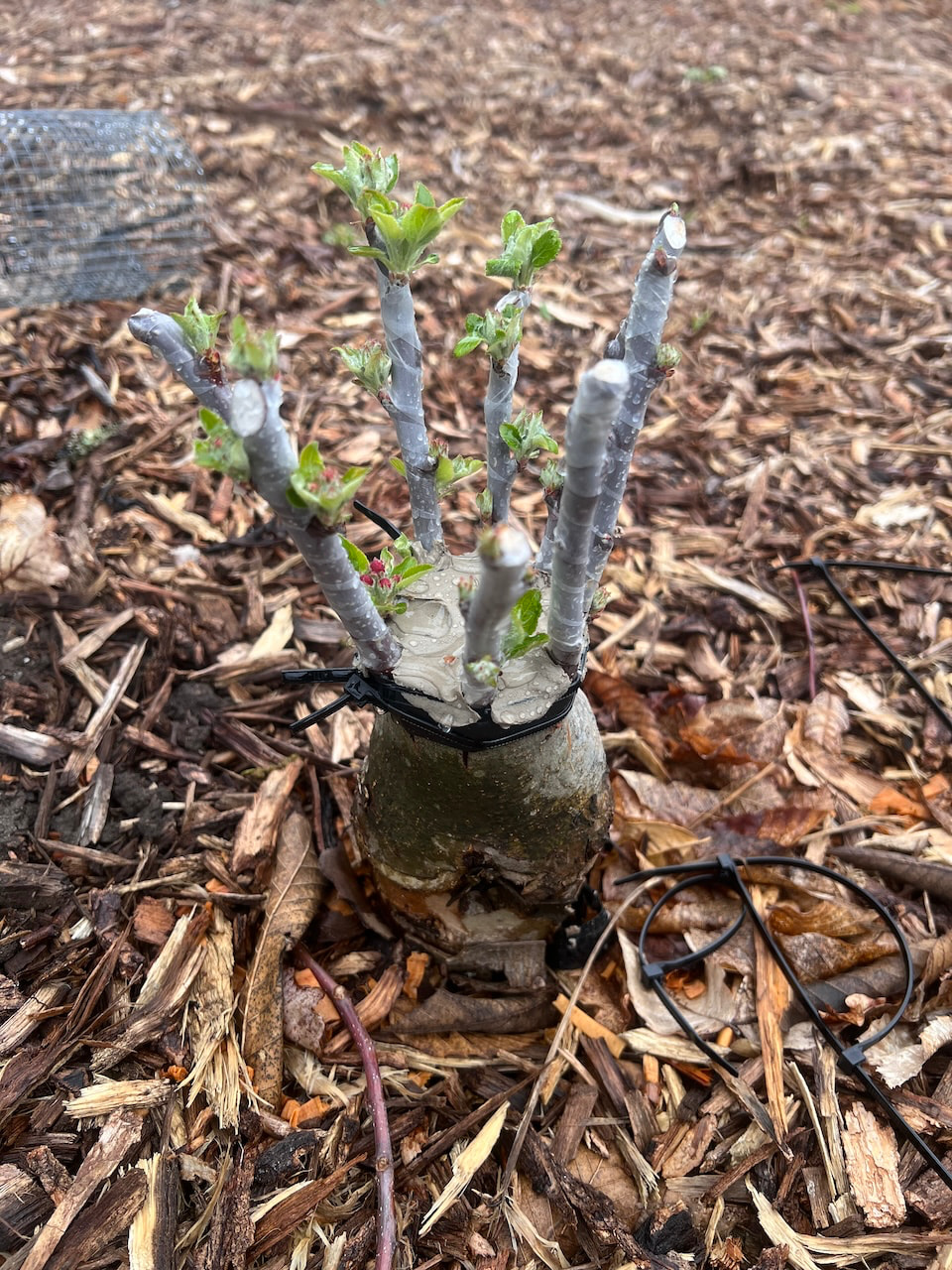
For almost all of my girdled trees, I ended up using the same strategy: When I noticed the damage in February, I saved scions. Then when sap started to flow in April, I coppiced each tree just below the damage. Then I executed a series of bark grafts around the perimeter of each trunk. Here’s a recent picture of one such trunk.
My hope is that the growth at the base of each graft will expand and coalesce, covering the hardwood and preventing rot. Then somehow I can either (1) thin the topgrowth to eventually leave one trunk; or (2) force the topgrowth to coalesce into a single trunk, kind of like a bunch of bridge grafts with no trunk to start with.
3 Likes
My girdled trees took until the following mid-late summer to be obviously dead. The top continued to grow a bit, and flowered and even set fruit. The first clue was suckers coming up from the roots. The top growth looked a bit thin and paler than the nearby trees, before suddenly turning brown in about August.
Though some of the other partially girdled trees that have subsequently survived also suckered from the base. I left them as an insurance until the second year when it was clear the top had survived.
This was in a hot dry summer for the UK, but obviously you might have a different experience in other climates. I’m sure I read somewhere here that @clarkinks had a similar experience in Kansas.
1 Like
Kansas definately gets those type of years. Kansas climate is very windy and typically hot or cold now but nothing in-between most of the time. When i.was a kid we learned where to go hang out during times of the year or times of the day. In the heat we headed for the north side of structures or woods. In the cold we headed for the southern slopes and stayed off the hilltops. Survival here is about being good at it. There are plenty of houses here now but once in awhile I miss my childhood when it was just us with few people here. The animals were plentiful and restrictions were few. Now new people have came here and tell us all how they think we should live on a land they know nothing about. Given time Kansas becomes a desert and then turns into a flooded area with an abundance of water. The weather pattern rotates back and forth every 5 years. All My life I have seen people come and go from this land. Rabbits girdle trees when they need to. Typically that is only when everything is under snow here. The rabbits in the photos above are following the rules of stripping bark when they can’t get to grass because of heavy snow. If you understand a rabbits behavior you know what they will do. I would have cut them some branches or trees that they would not starve. See the thread below.
2 Likes
A year and a half? Or half a year?
I’ve had suckers coming out the root every year, so i don’t think that means anything. Also, i plan to leave the suckers alone this year, because it’s still a good place for a tree, and I’ll try grafting to one of them if the top dies and the scion’s parent survives.
1 Like
Half a year, though my trees were girdled the previous November so they seemed alive for about 8 months following that. I agree on leaving the suckers, that’s what I did this spring.
1 Like
Very good suggestion. I pruned my apples in December before the snow cover, and did not get a chance to clean up. In April, after all the snow was gone, I found the big branches on the ground have had all their bark eaten, but none of the trees were touched. This was the work of voles though, as my orchard is fenced and no bc rabbits get in.
2 Likes
I am bedeviled again. My trees had really nice growth below the damage. I left it on, thinking that it would get the roots some nutrients, and I could either bridge graft them next year OR just let them grow as new leaders if I had to cut it down.
Last night they looked great. This morning, almost all cut off, with a clean diagonal slice. Rabbits? Squirrels? Insane neighbor with a razor? No clue.
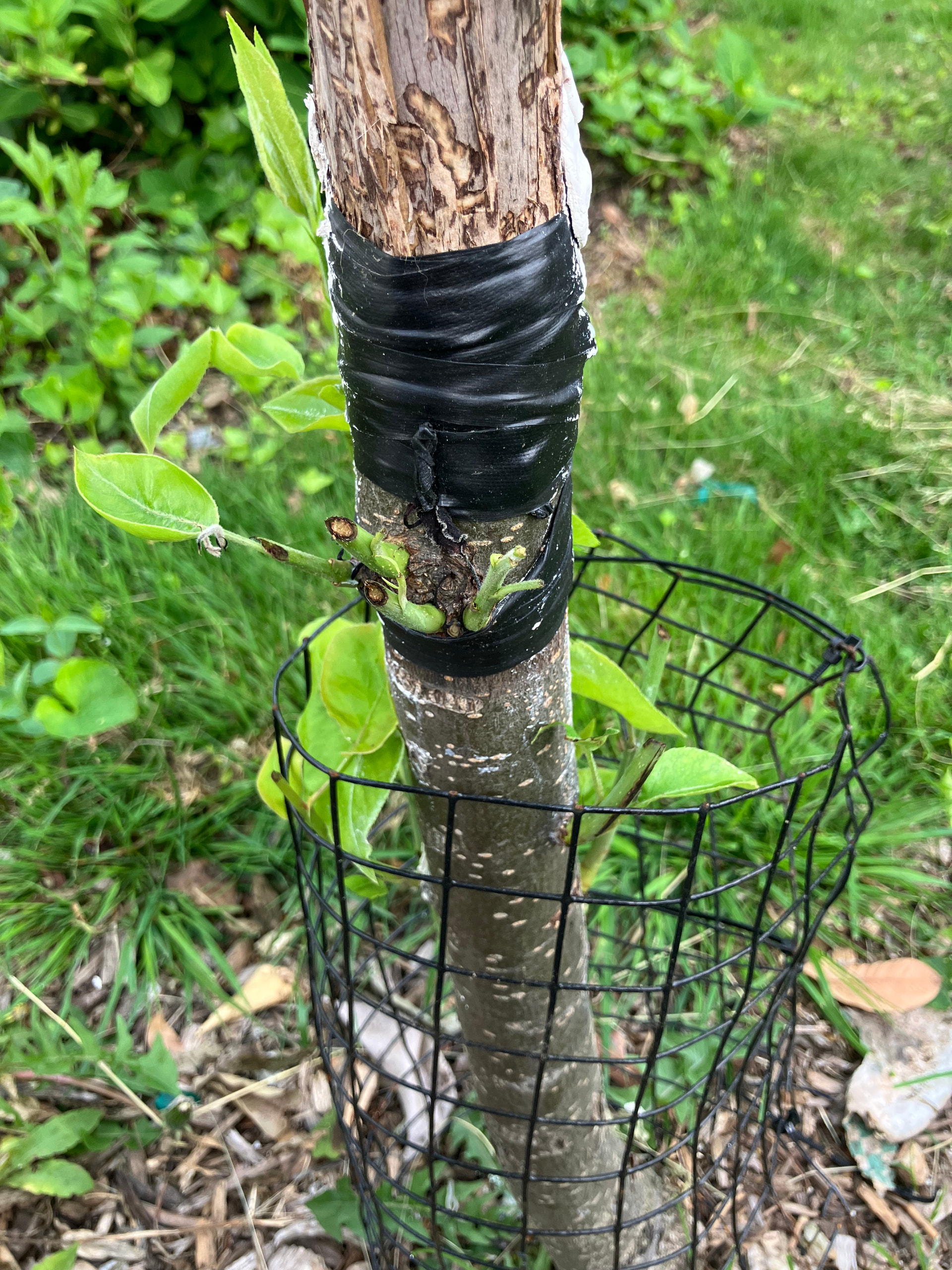
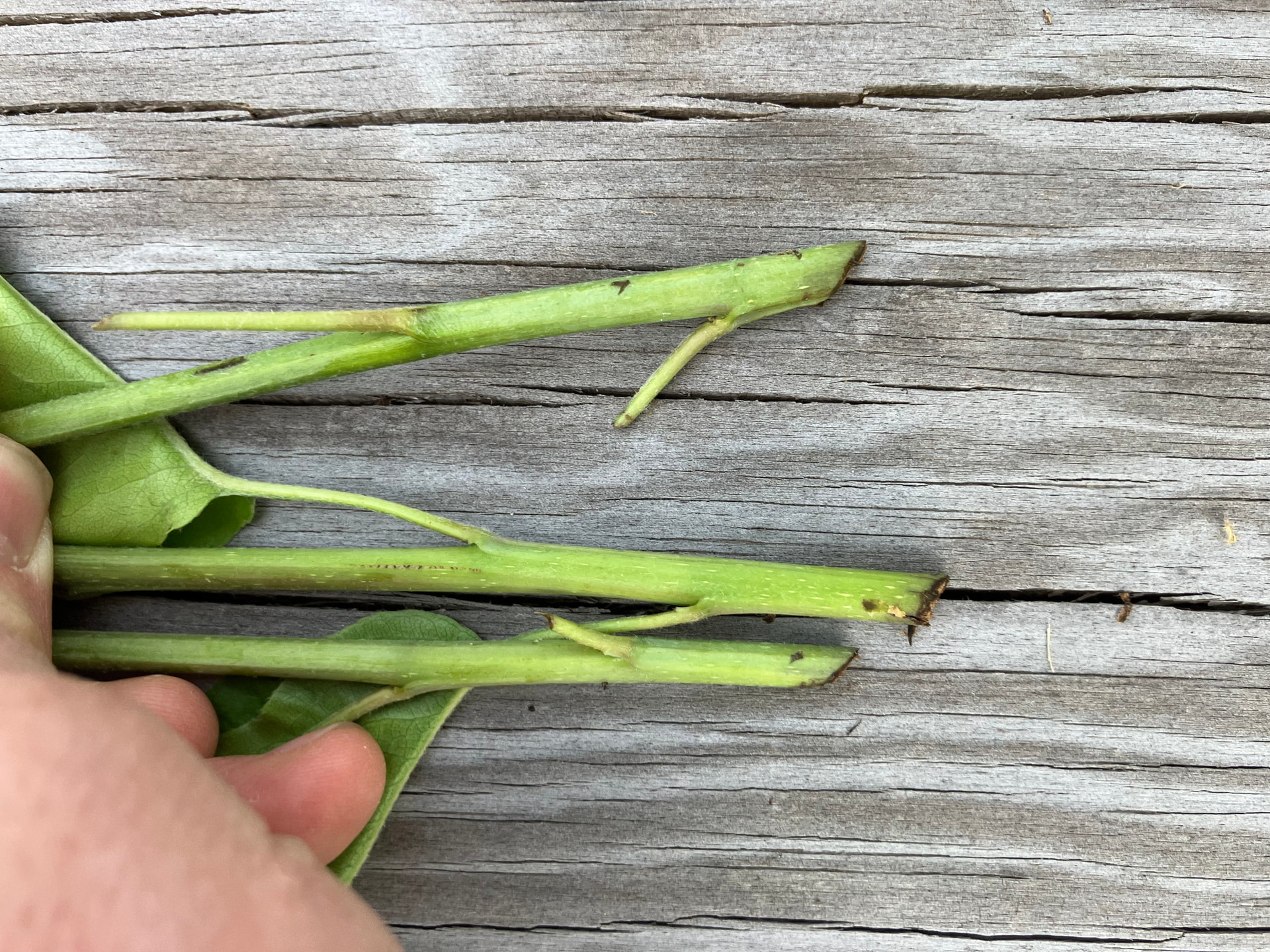
Clean diagonal slice = bunny
2 Likes