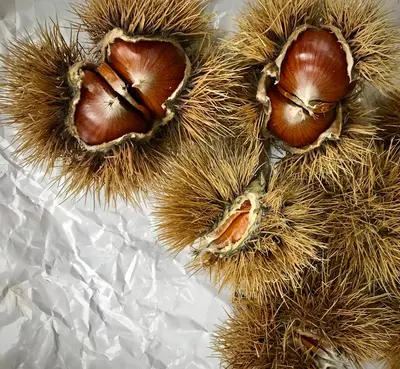
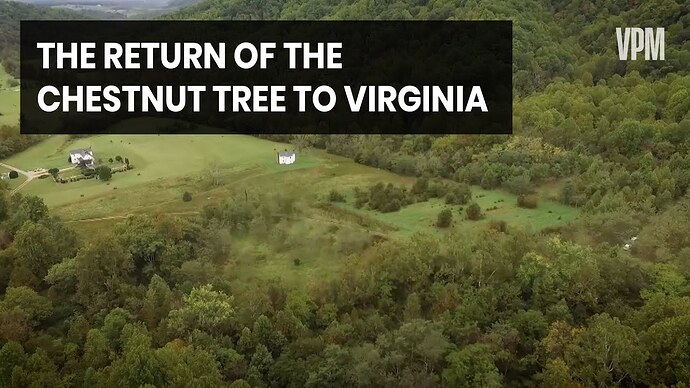
A remarkable American-Chinese chestnut hybrid that brings back the beloved American chestnut with blight resistance from Chinese genetics. These fast-growing trees produce sweet, large nuts that roast beautifully and offer the authentic chestnut flavor that was nearly lost to disease. Dunstan chestnuts are perfect for wildlife food plots and home orchards, combining nostalgia with modern disease resistance.
I think the Dunstan project was a bit of a mistake, someone told me there was an analysis of the original tree that Dunstan discovered, and it was a European chestnut that had leaves similar to an American Chestnut, and the whole program was a bit of a mistake that turned into something like a scam, because they’re marketing a European Chinese hybrid as an American Chinese hybrid, maybe some of the following generations have some American genes but I hear they’re mostly European, then Chinese, then maybe American.
I think these are the guys to follow for the American Chestnut restoration!
Not that I’m against hybrid chestnuts, and actually I’m so against the GMO American Chestnut that I’m kind of happy people are scammed into thinking that Dunstan chestnuts are mostly American, because they seem to be some Chinese a lot of European and a little American, but the forests will sorry out the winners, my forest has Japanese chestnuts and Japanese European hybrids and my orchard has a Dunstan, Chinese hybrids, and a European Japanese hybrid, squirrels probably will be planting Dunstan crosses all over.
I have planted five Dunstans and another half dozen other chestnut trees over the course of about 11 years. None have grown much. I keep hoping they might surprise me some year with a sudden growth spurt, The fatalities were a Chinese and a Layeroke, and maybe another one or two. They are east of St. Paul in former pasture, zone 4a.
Actually another great “replacement” for the American Chestnut, certainly in terms of feeding wildlife, great for timber, maybe as good as American chestnut, is the Castanea Henryi (one of the two trees known as Chinese chinquapin, the other grows like a hazel bush), it’s got very similar nuts to American Chestnut and it’s a competitive forest tree, one of the big downsides is it’s only hardy to zone 6.