Plant Delights grows lots of stuff that isn’t cold hardy enough for my location let alone theirs. They have to be extremely picky about finding special microclimates to keep some of their in ground plants alive and I’m sure they rely on a lot of greenhouses to keep much of their potted stock through winters.
3 Likes
I expect keeping them in pots would definitely make them a lot more tender. The freeze-thaw cycles might even be cracking the corms or otherwise weakening them in a way that lets pathogens or rot get in. I gave a bare bulb to a friend and they decided to store it in their garage, thinking it needed cold to stay dormant, and after freezing it turned to mush.
I have A. konjac growing in two patches in my 7B yard (previously 7A) and have given them to others as well who have done well with them. With clay soil here, the most likely issue is rotting over the winter if they are staying too moist. This happens here with gladiolas and some other tuber type plants that can rot over winter if the drainage is poor. Amorphophallus may be particularly vulnerable to rot because the tops of the corms are concave so it can hold water. While I’ve lost a few to rot, mostly they survive and I know people grow them in ground into zone 6, so they can be quite hardy.
Here is one patch behind some peppers in my front garden with pretty good sun (direct for about 6 hours). Last year a few bloomed, but after that, they seemed to send out a lot of offsets so there are quite a few smaller ones that weren’t big enough to bloom this year. There and another patch in the same bed that is under a persimmon.
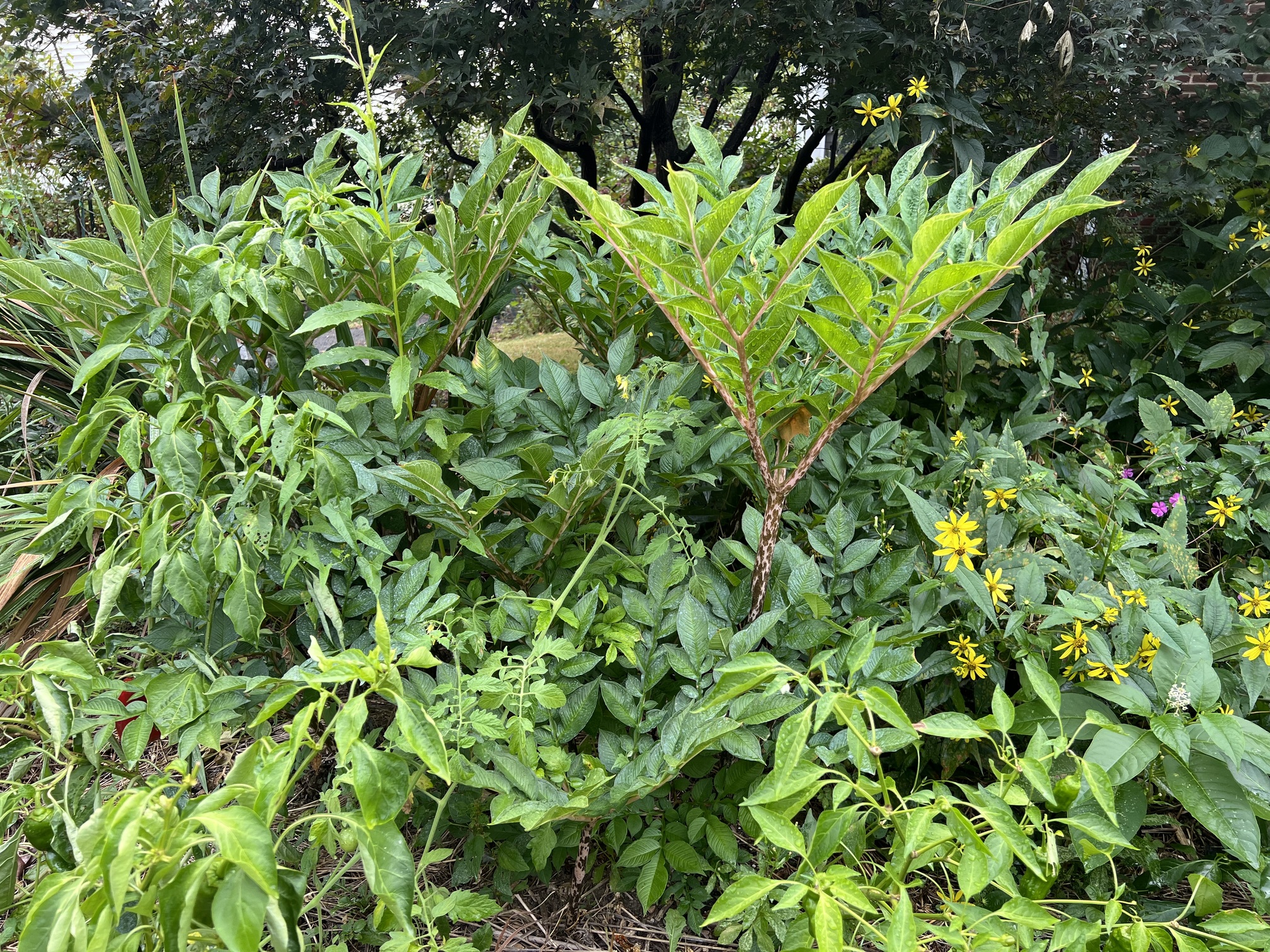
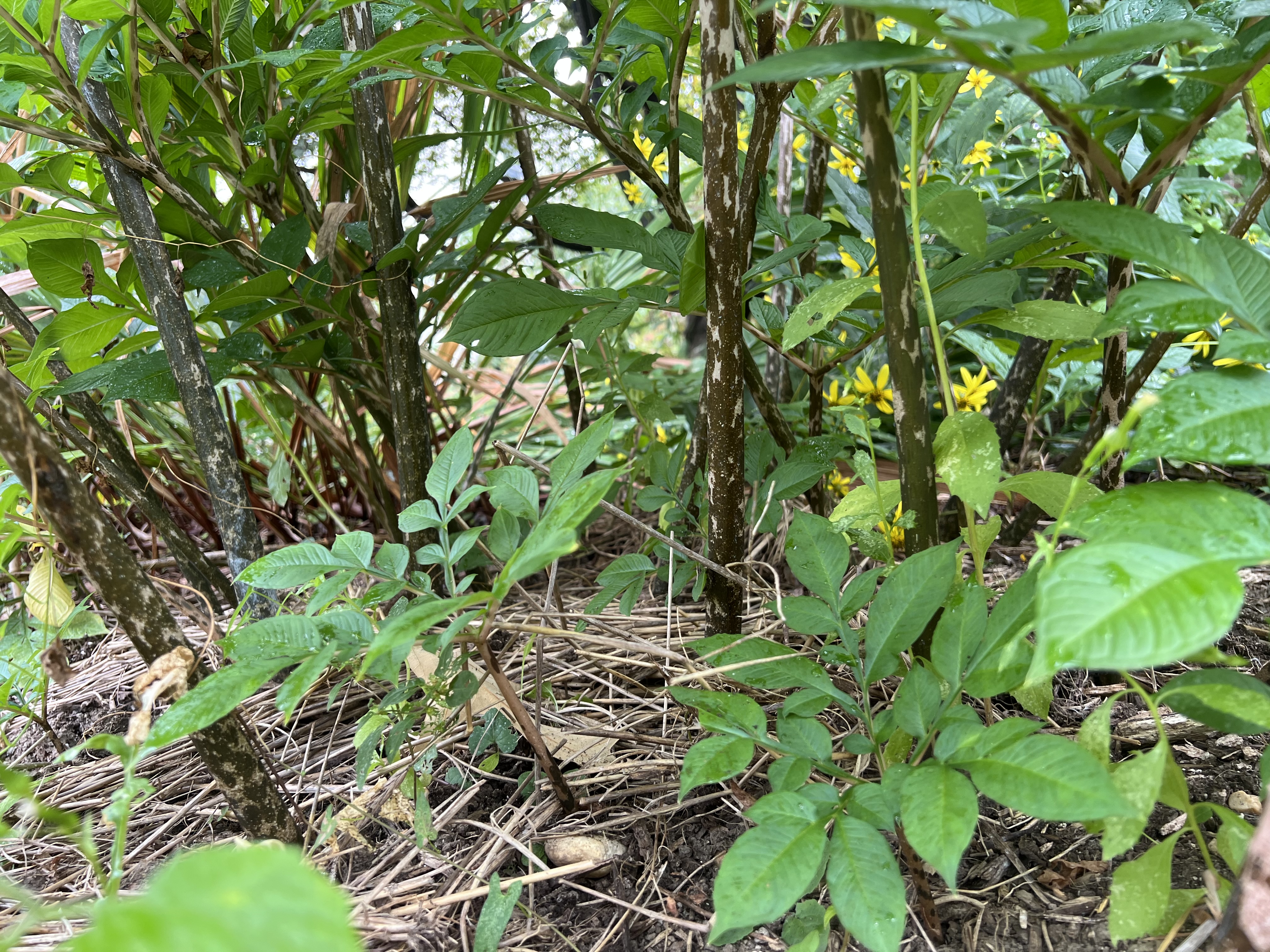
And here is a patch I have on the north side of my house, mostly under the shade of a dogwood, so it gets very little sun. I’ve pulled some larger tubers from this last year, but there is one pretty large one (about 4 feet tall) growing this year that is probably big enough to flower next year, unless the lack of sun keeps it from setting a flower bud. The flowers (if any) come up first and then when they die back the leaf comes up.

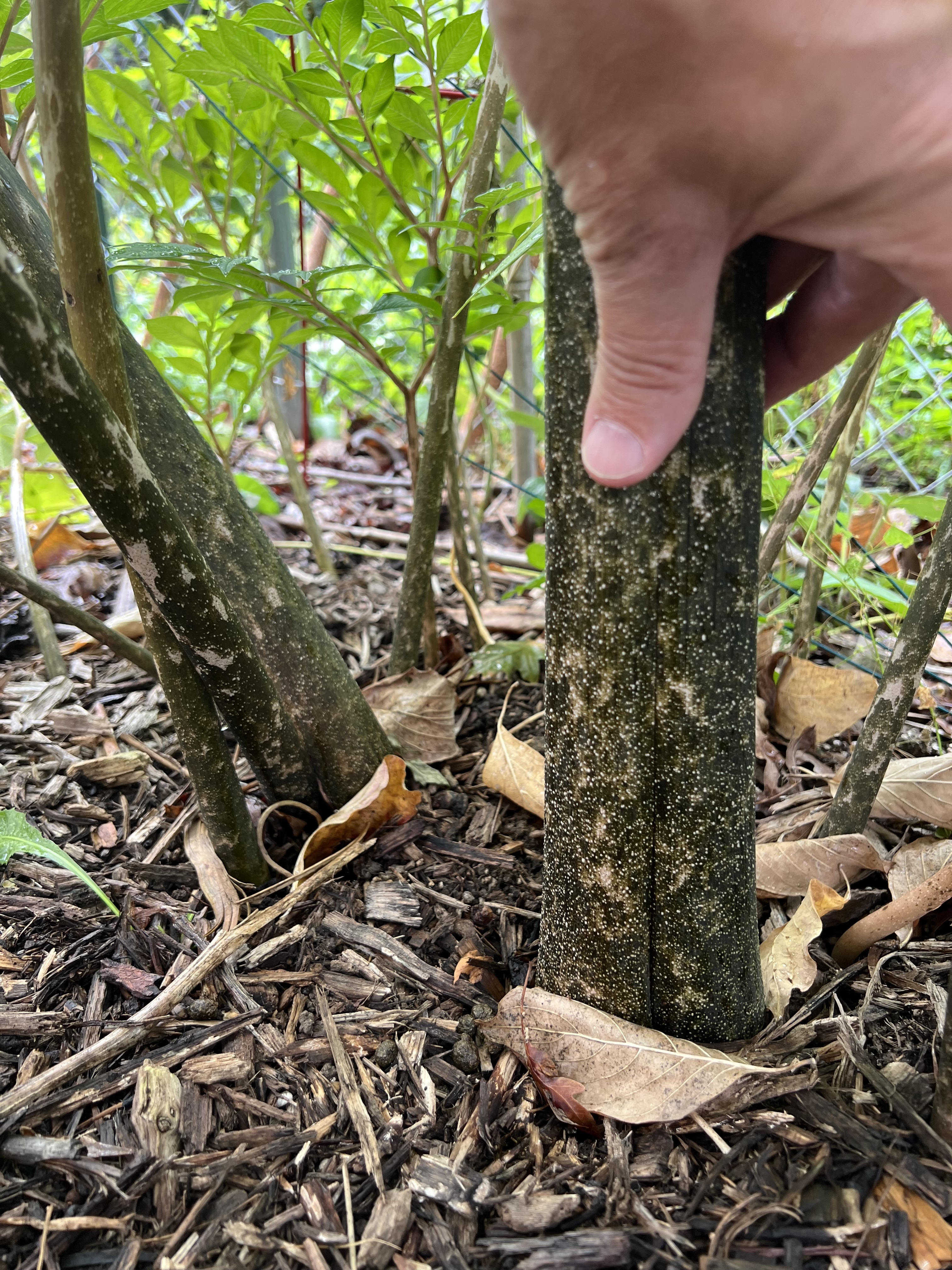
This patch with less drainage is more likely to have rot, so I usually lose a few each winter, but there are enough that overall the patch keeps going.
I also grow Amorphophallus bulbifer, but just have 3 of these right now. It is hardy here as well. I’ve had them bloom, but this year they came back smaller after blooming in 2024. Only 1 of the three is still up with the other two already going dormant for the year. You can see one of them is yellowed and lying on the ground to the left in front of this one. The markings on the stems of these are very varied and the three each have a different pattern … sorry I didn’t take a picture of that earlier this year.
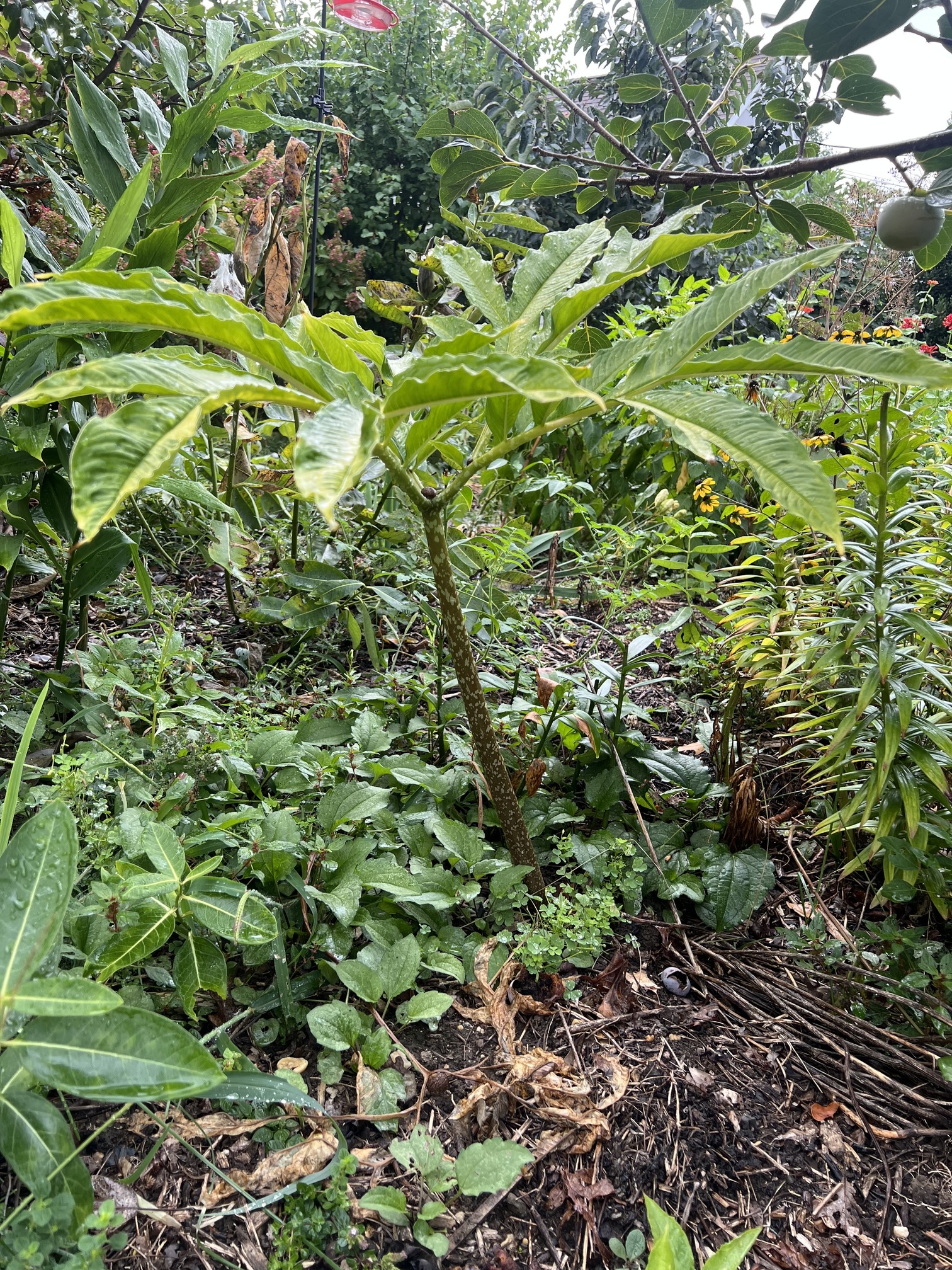
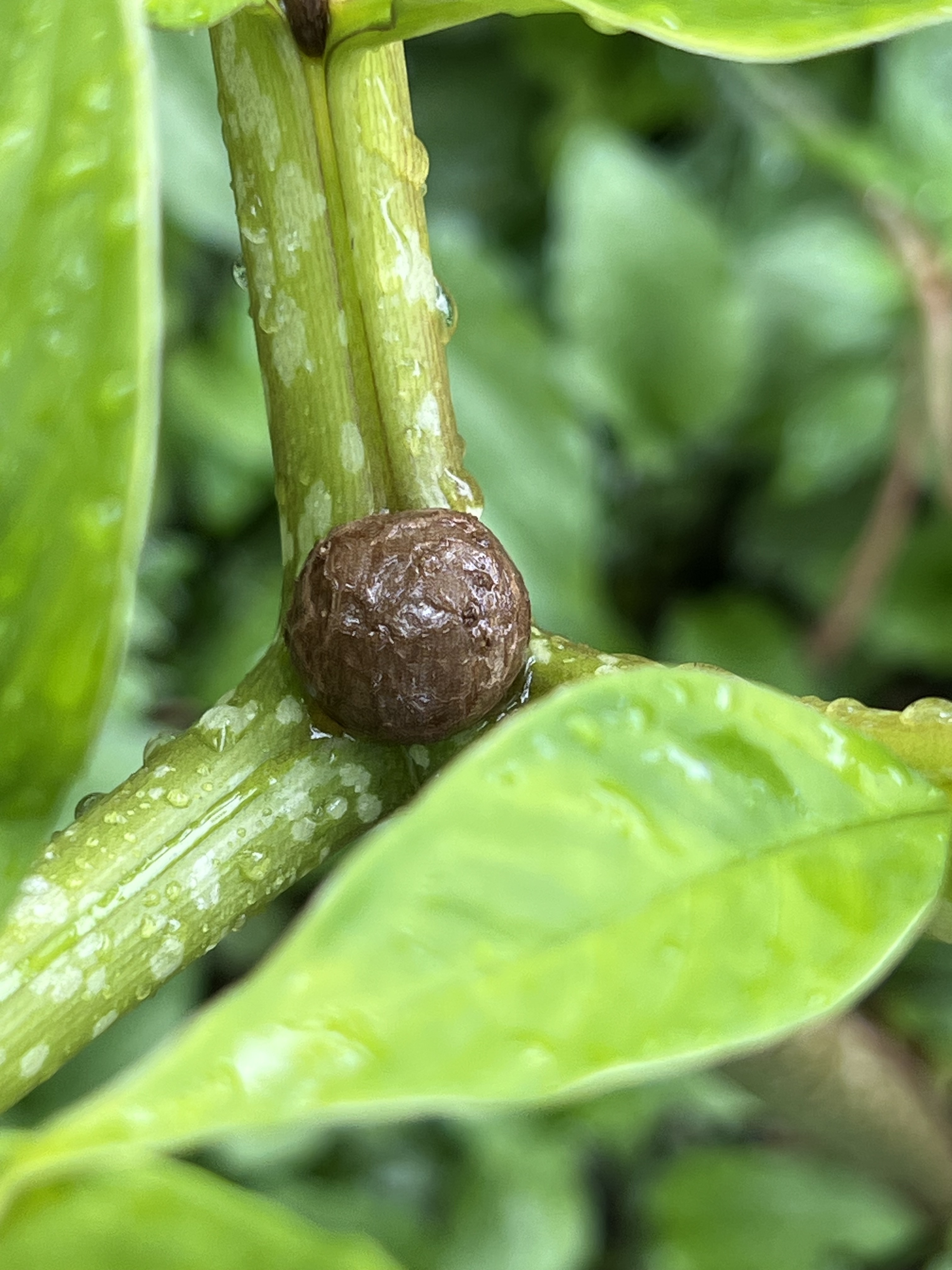
It gets its name from the “bulbs” it sets on the leaves, which drop at the end of the year and are another way this variety can reproduce vegetatively besides offsets from the corm underground.
Finally, I also keep a more tender variety that I have to bring in each year called Amorphophallus maxwellii. The one on the left came up this spring, but the one on the right I received as a corm last year that didn’t wake up until september so it needed to be babied inside for months before it went dormant. It is slightly ahead of that this year, with a small offset coming up mid summer and the main one starting to emerge late August and most of the way up now. But I’ll still need to keep it inside under lights for until it goes dormant this year as it hopefully adapts to the correct seasonal pattern.
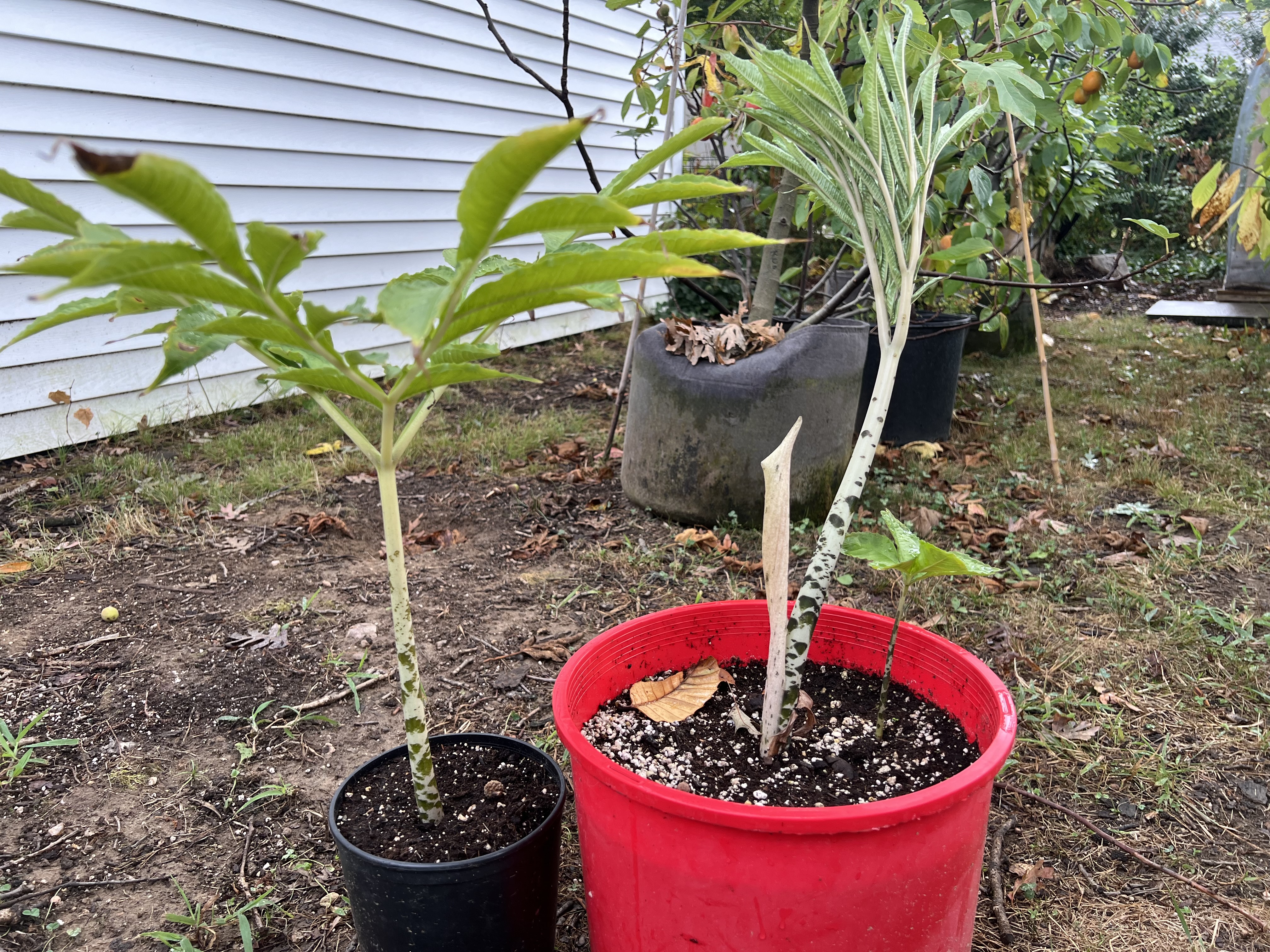
While Amorphophallus species need dormant time, they sometimes go dormant early, like my A. bulbifers are doing this year and don’t seem as firmly bound to actual temperature changes. Over winter you can store a bare bulb at room temperature and it wakes up in the spring with no adverse effects to not being in cold storage that I can see.
As you can see from my A. konjac patches, I have enough that I’ll be digging some up to keep them from spreading too much so I should have some for trades, etc.
6 Likes
Foodwise, the two Amorphophallus that I know that are regularly eaten are konjac and paeoniifolius.
A. paeoniifolius is grown throughout southeast Asia and is sometimes referred to as the elephant foot yam. They get much larger than konjac, but they aren’t nearly as hardy. Perhaps this was the one you were referring to @ramv ?
A. konjac, which is from Japan, is usually used in a noodle form and takes a bit of processing to get there. Unlike paeoniifolius, konjac is actually a relatively low-carb food and is sometimes sought out by people who are eating “keto” diets as an option for noodles. It also produces a feeling of fullness and satiety, so combined with the lower carbs and lower calories, this makes it useful in dieting. You can buy supplements that are basically powdered konjac that has been cooked to remove oxylates and dried. I have no idea if the dose is enough to make any difference in an actual diet, but of course anything that might help one lose weight is sure to sell! This one has a 4.2 rating on Amazon.
After reading some of this from the NIH and seeing that is appears to could help regulate blood sugar, LDL cholesterol, oxidative stress and inflammation, etc. I think I’ll get some noodles to cook this weekend.
3 Likes
That’s a great into dump about Amorphophallus, and looks like you’ve got a solid collection of them!
Good to know they can be that hardy. I have to imagine the duration of cold spells is the most important factor since the corm is underground so random nights that drop to 0 F probably don’t matter as much as weeks below 32 F. Any idea what the hardiness of Amorphophallus paeoniifolius is?
2 Likes
I was just looking into this because of this thread. They are rated to 9a so I assume they will be about as cold hardy as Katuk, if it gets below 20° and they don’t have a mulch blanket they’ll probably die
2 Likes
Kinds looks like it varies by cultivar. Some blog I saw said zone 8, Dave’s Garden and another source said zone 10, Plant Delights lists some cultivars as zone 8 and some as zone 9.
2 Likes
I don’t grow it, but I do know there is a bit of diversity in various strains (some have bumpy petioles for instance and some are smooth), so it might be worth trying to get different ones to try out and see what survives. I wonder if you might get away with zone 8 if you piled a ton of mulch on them overwinter to insulate them better. Definitely grow on a wide mound or otherwise insure good drainage if you try the mulch since that would probably retain more moisture and might encourage rot.
There is a very active Amorphophallus group on FB that includes experts from around the world, so if anyone wants to really go down the rabbit hole I would definitely suggest giving that a look. Much different than many FB groups that have a bunch of uninformed comments, etc. that make it hard to get good info.
Another variety that is hardy here (it grows in the Japanese garden by the Bonsai at the National Arboretum) is A. kiusianus. It is another very attractive type and one I plan to add at some point. The corms are smaller and I don’t know anything about them being edible or medicinal.
4 Likes
I let most of my A. konjac stay in the ground over the winter, but usually dig a few up for trades and to make sure I don’t lose them all if we have a super wet winter. It seems wet that leads to rot over winter is more of a problem than the actual lows here in 7B.
Besides 20 ranging from marble to softball size, I pulled this one lunker out to keep it over winter inside. It is just shy of 5.5 lbs. From the tall bud I can tell it will bloom in the spring, so hopefully it doesn’t start too early and I have to try to keep this stinky beast inside.
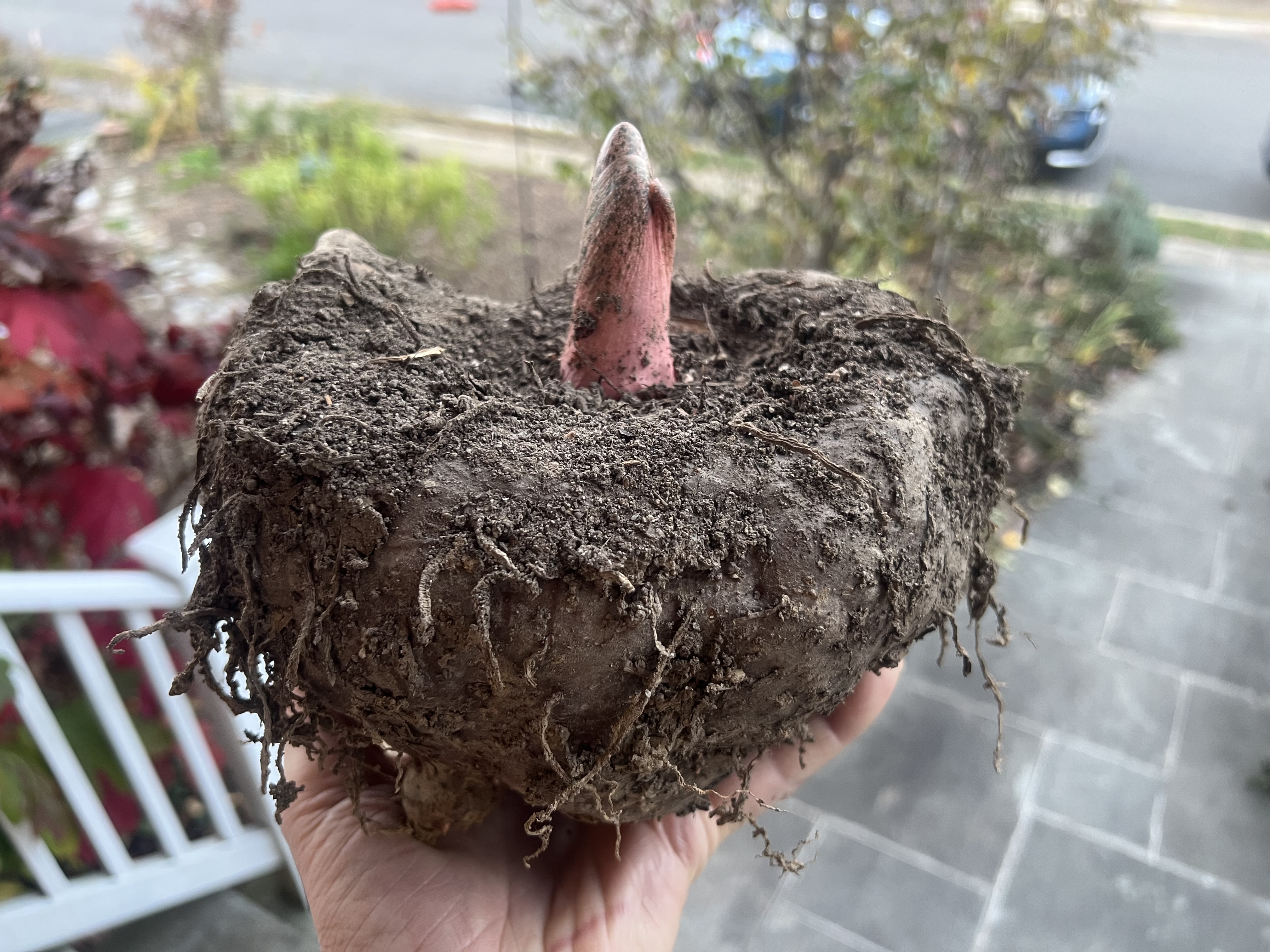
This other one is about 1.5lbs and has a flower bud as well, so I’ll have at least 2 in flower in the spring, plus possibly others that are still in the ground.

And here is a dish I made from store bought konjac noodles a few weeks back. Very tasty and definitely left me feeling very full.
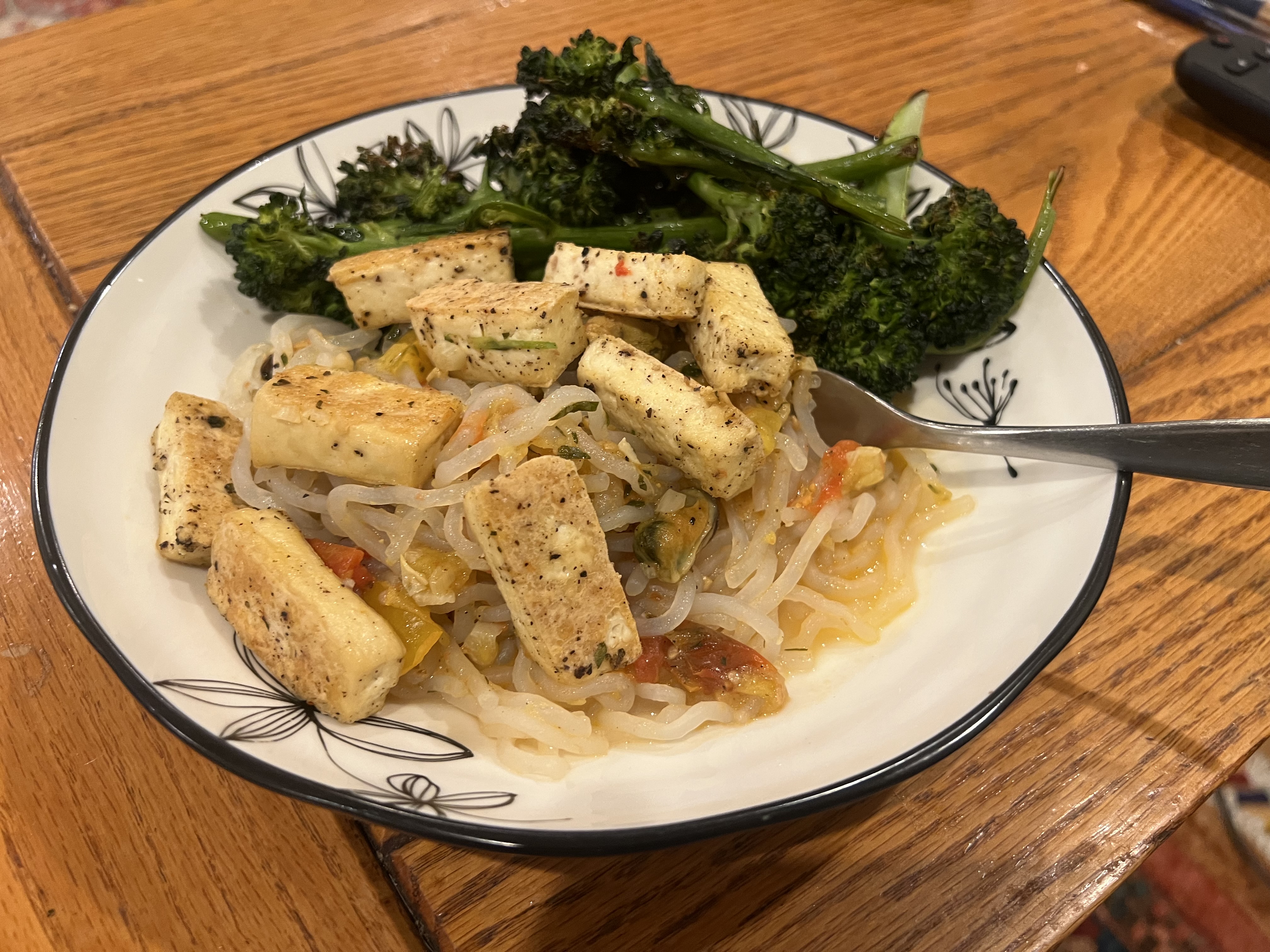
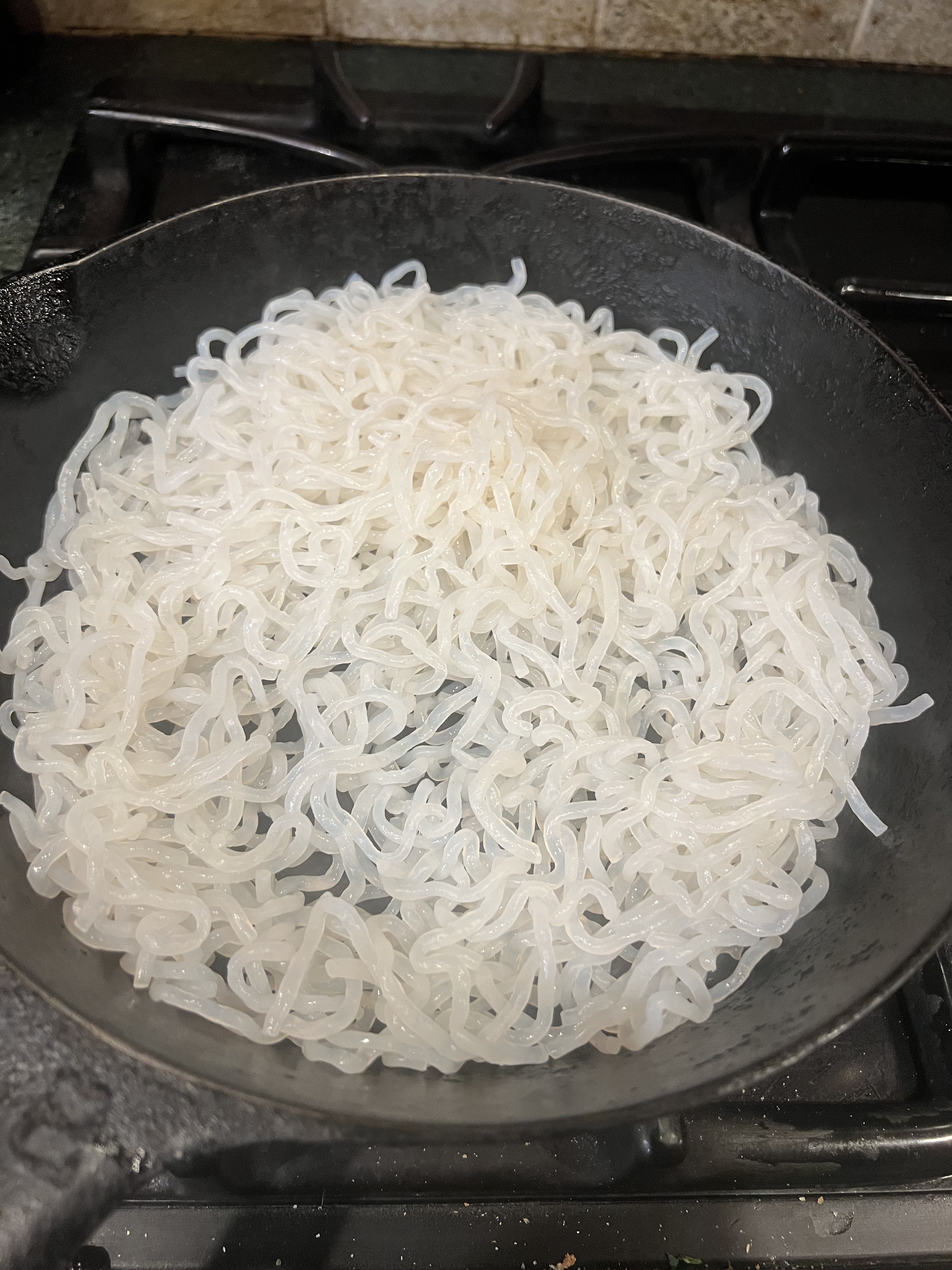
And what the noodles looked like as I was dry frying them before tossing into my stirfry.
9 Likes
Really cool. Are you eating yours or growing it for the flower?
Currently just growing them for fun. The leaves are very interesting and beautiful and the flowers are pretty amazing. When they are outside you pretty much need to put your nose near them to really get the scent - and then you can’t forget it for hours, lol.
If I have them flowering I usually put a message on our neighborhood list to let people know if they want to see them. The big corm will probably produce a flower that is close to 18" tall on a stem 3 feet high, so very unusual for a garden around here. I’ve given corms to several other people who’ve asked, but never heard back if anyone else has gotten a bloom yet.
I may go ahead and try to make noodles from them at some point, but unless I had a ton of large corms it doesn’t seem worth the effort since I can buy the noodles on Amazon, etc.
3 Likes