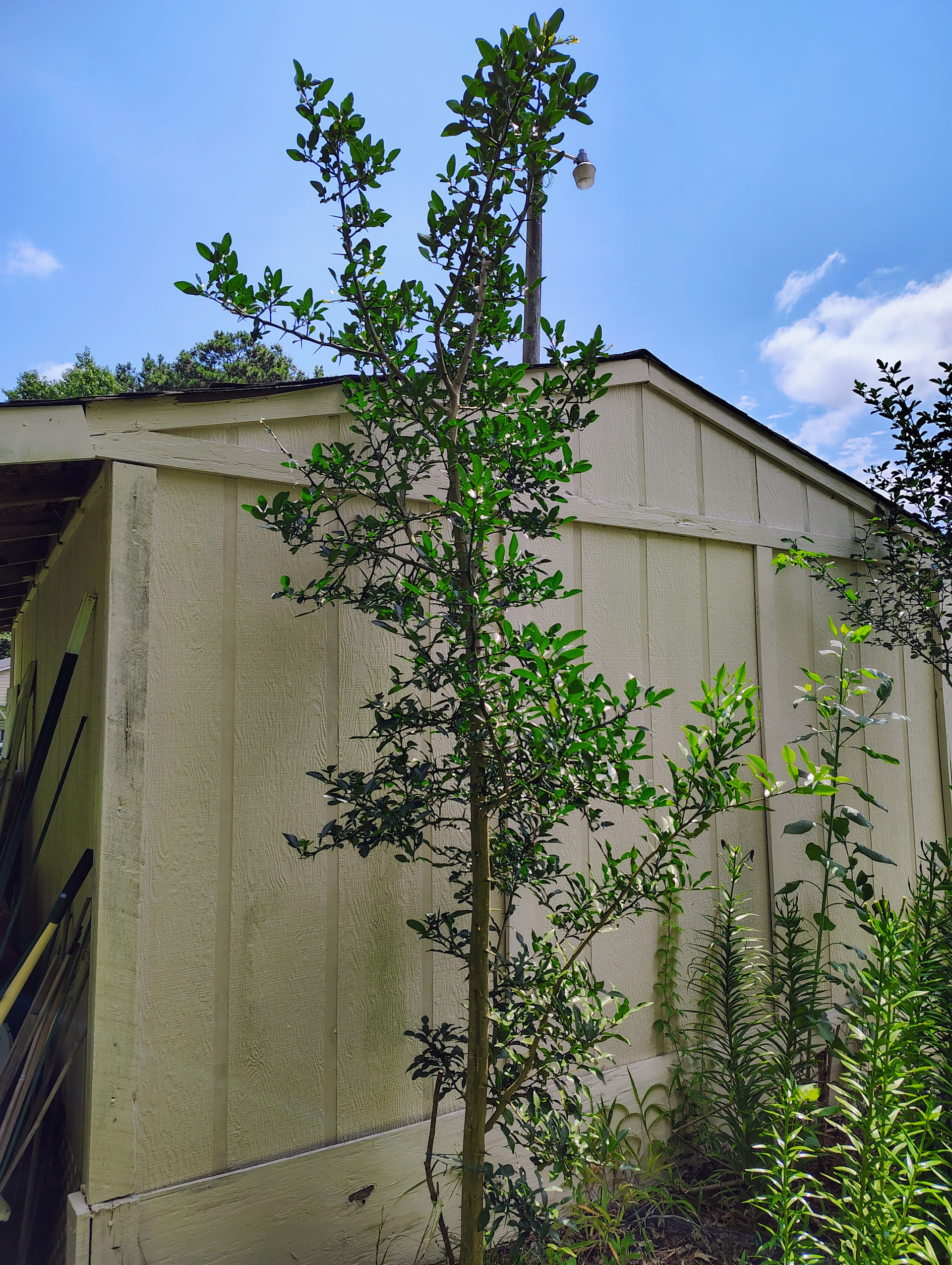
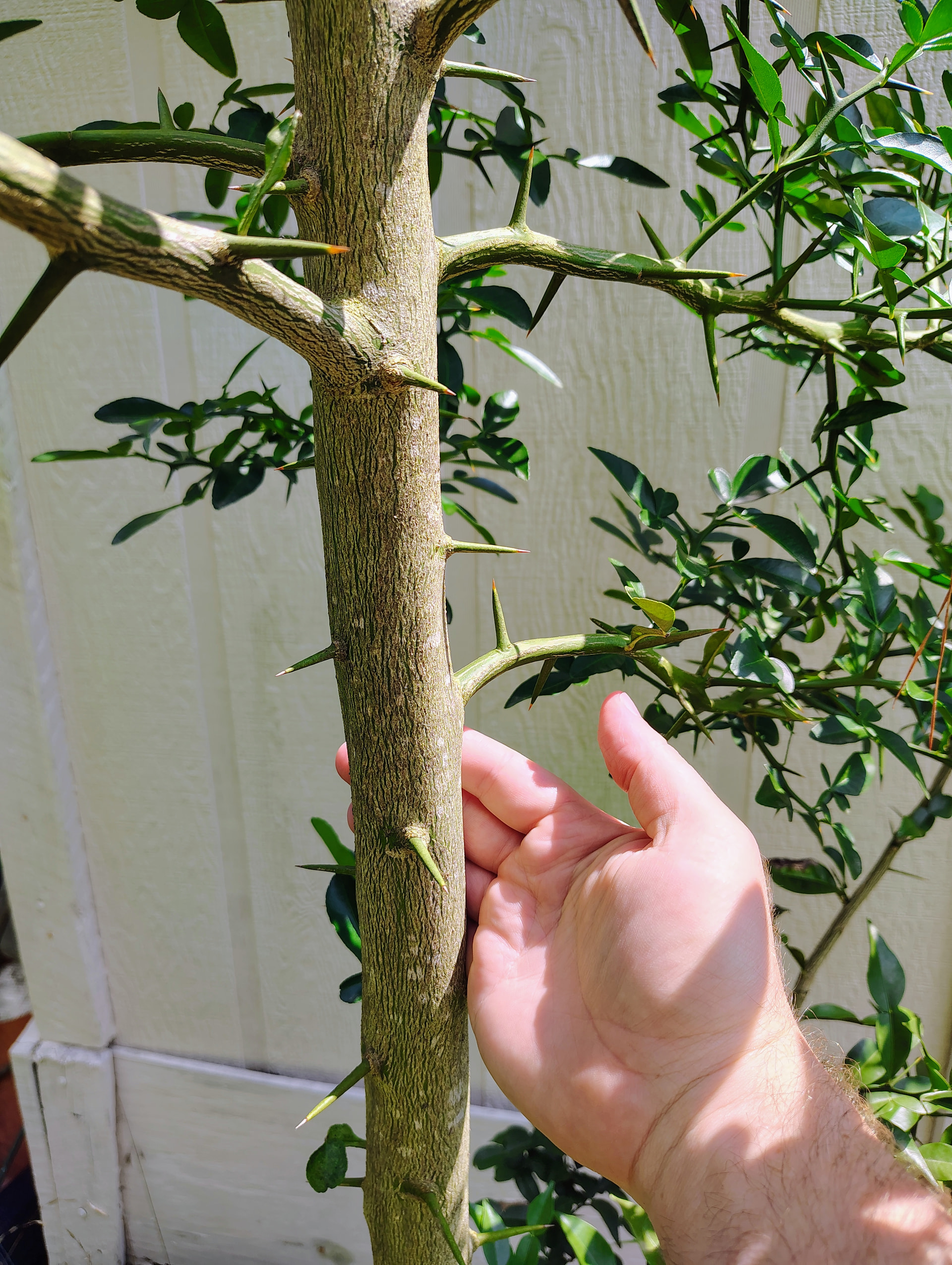
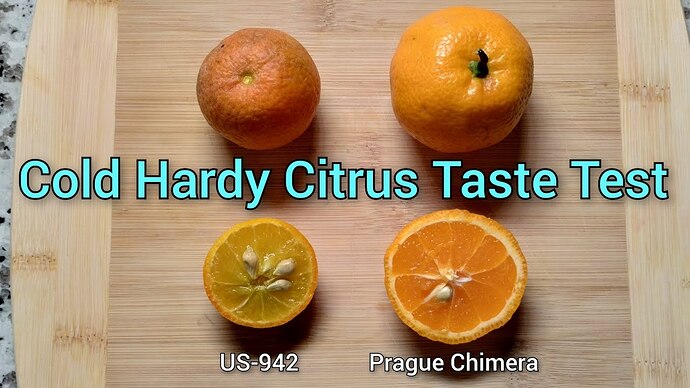
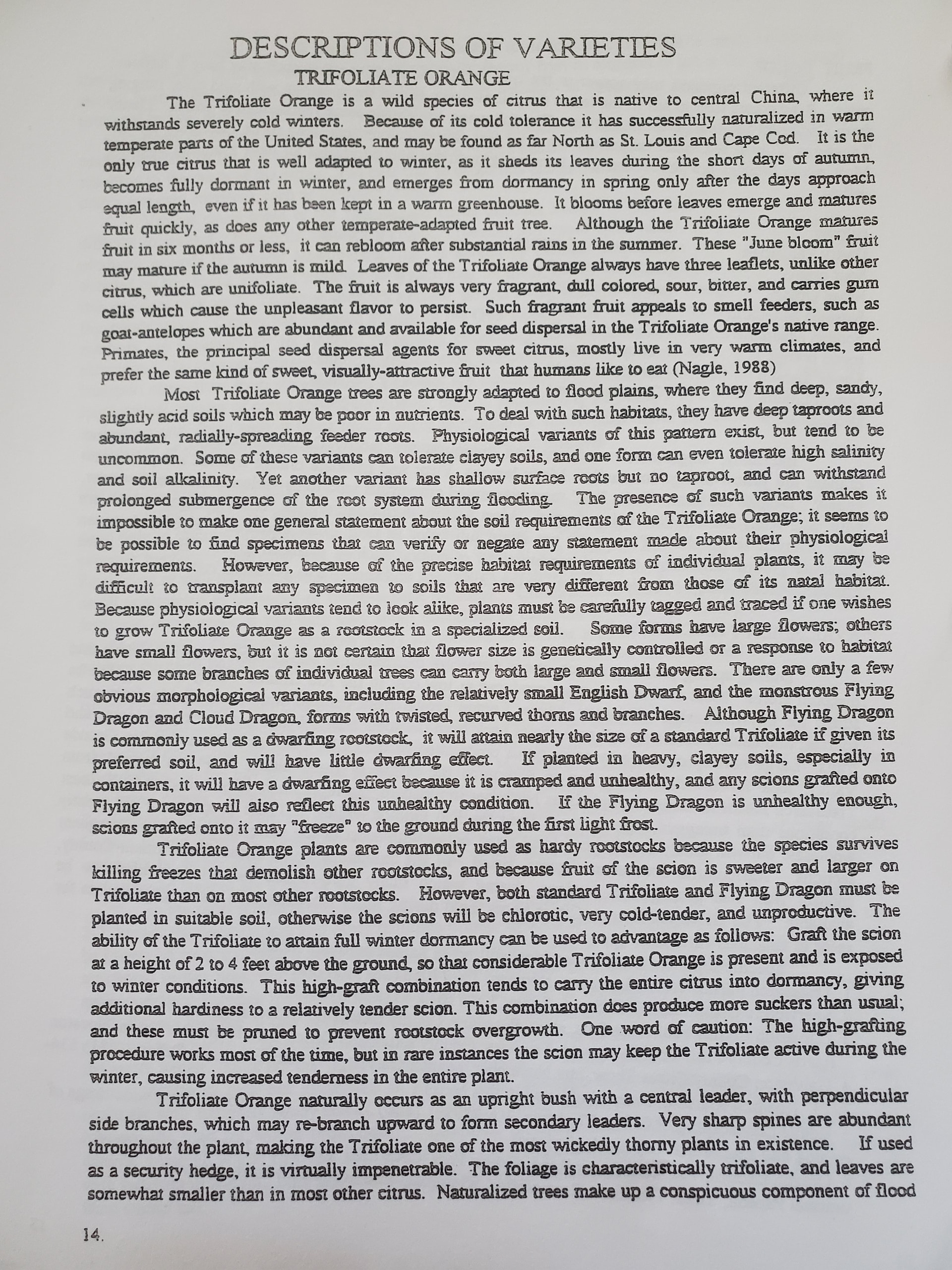
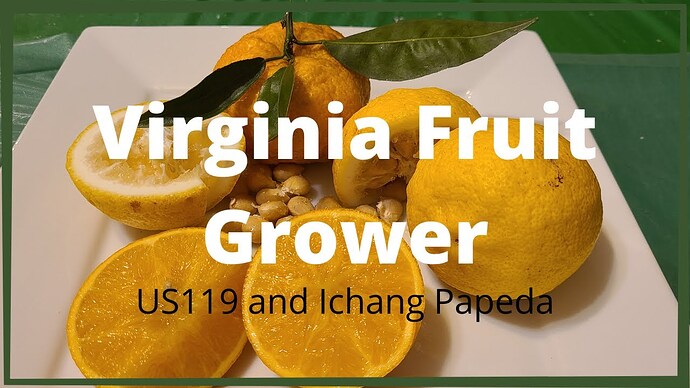
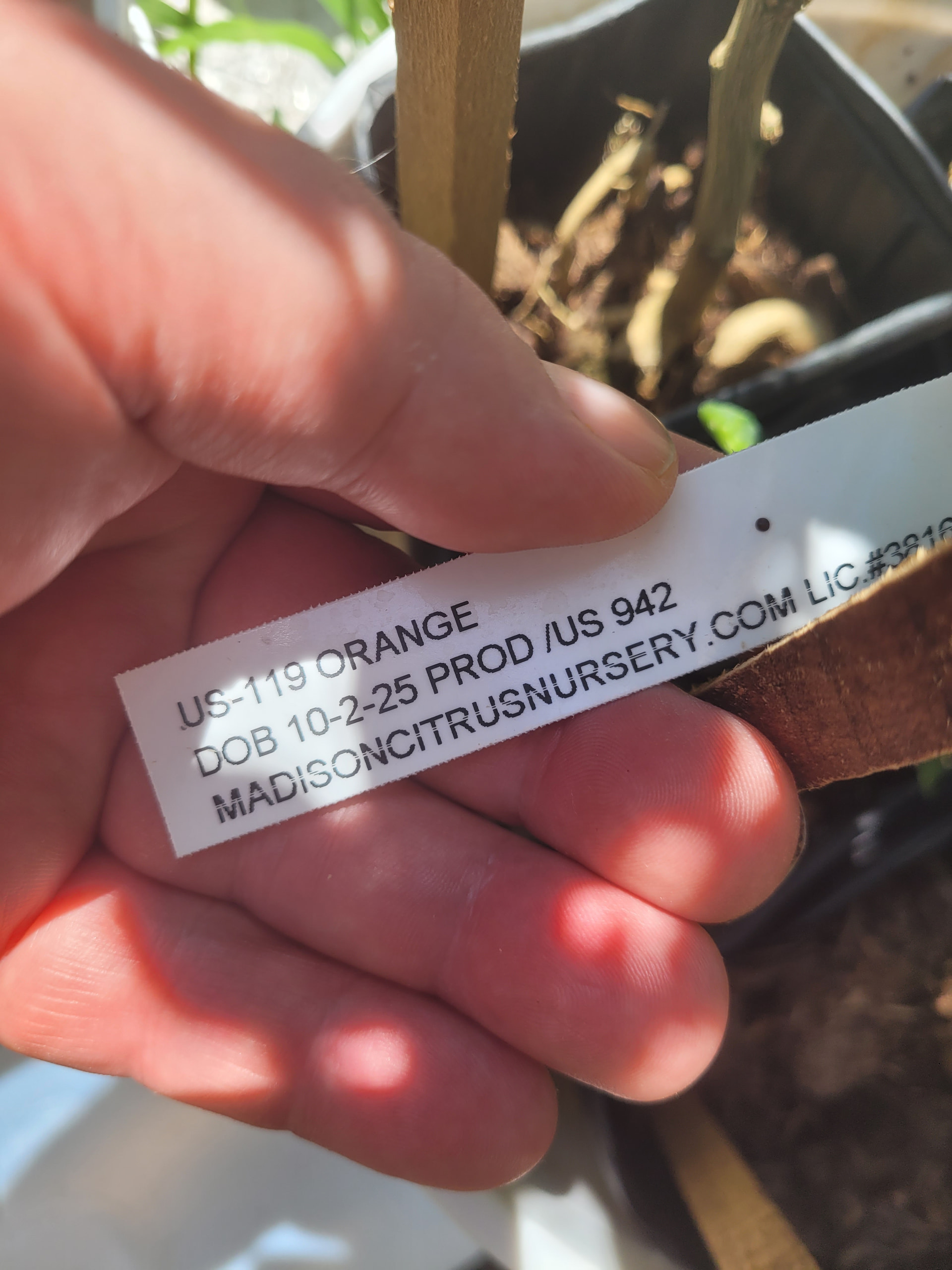
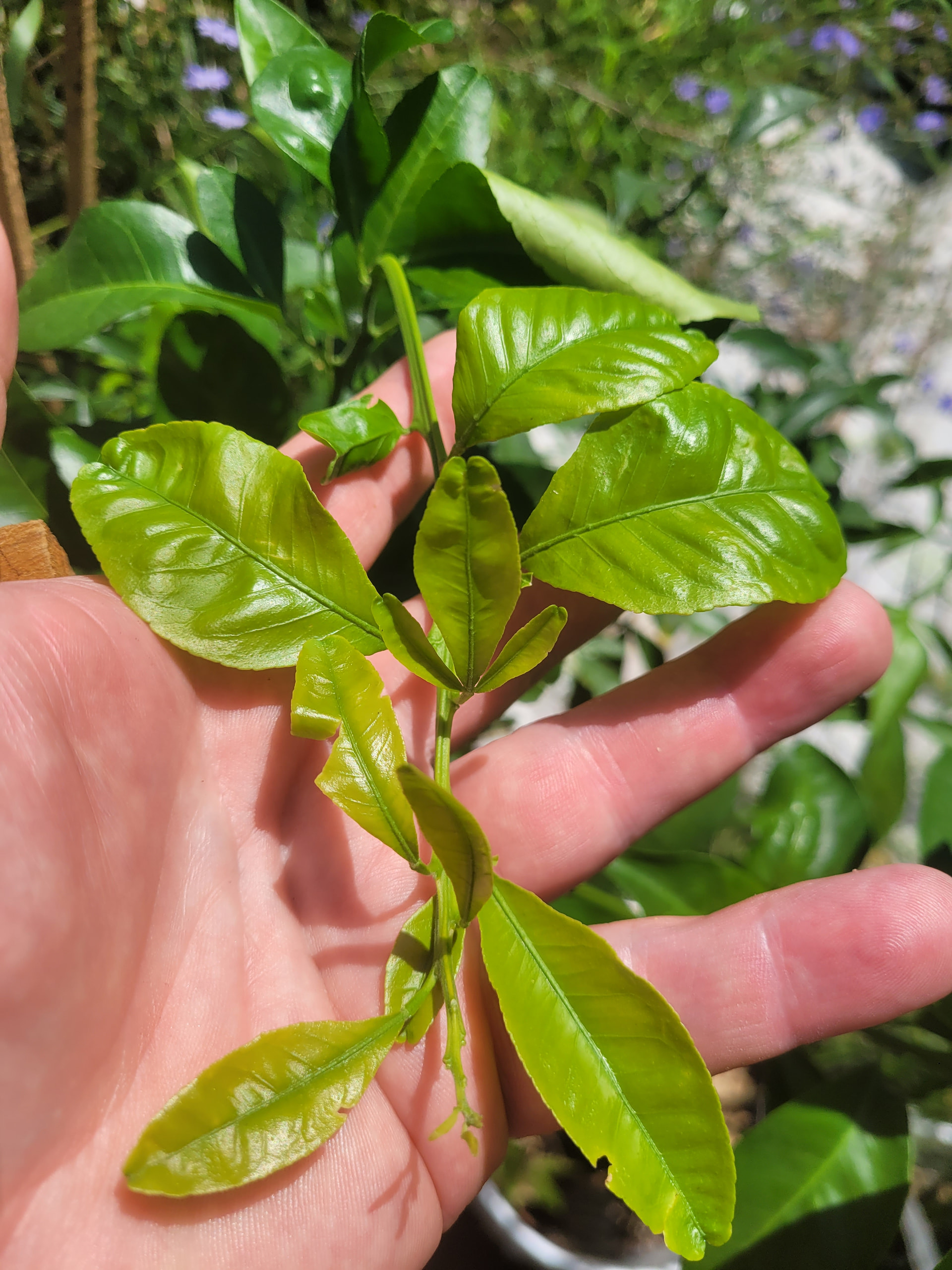
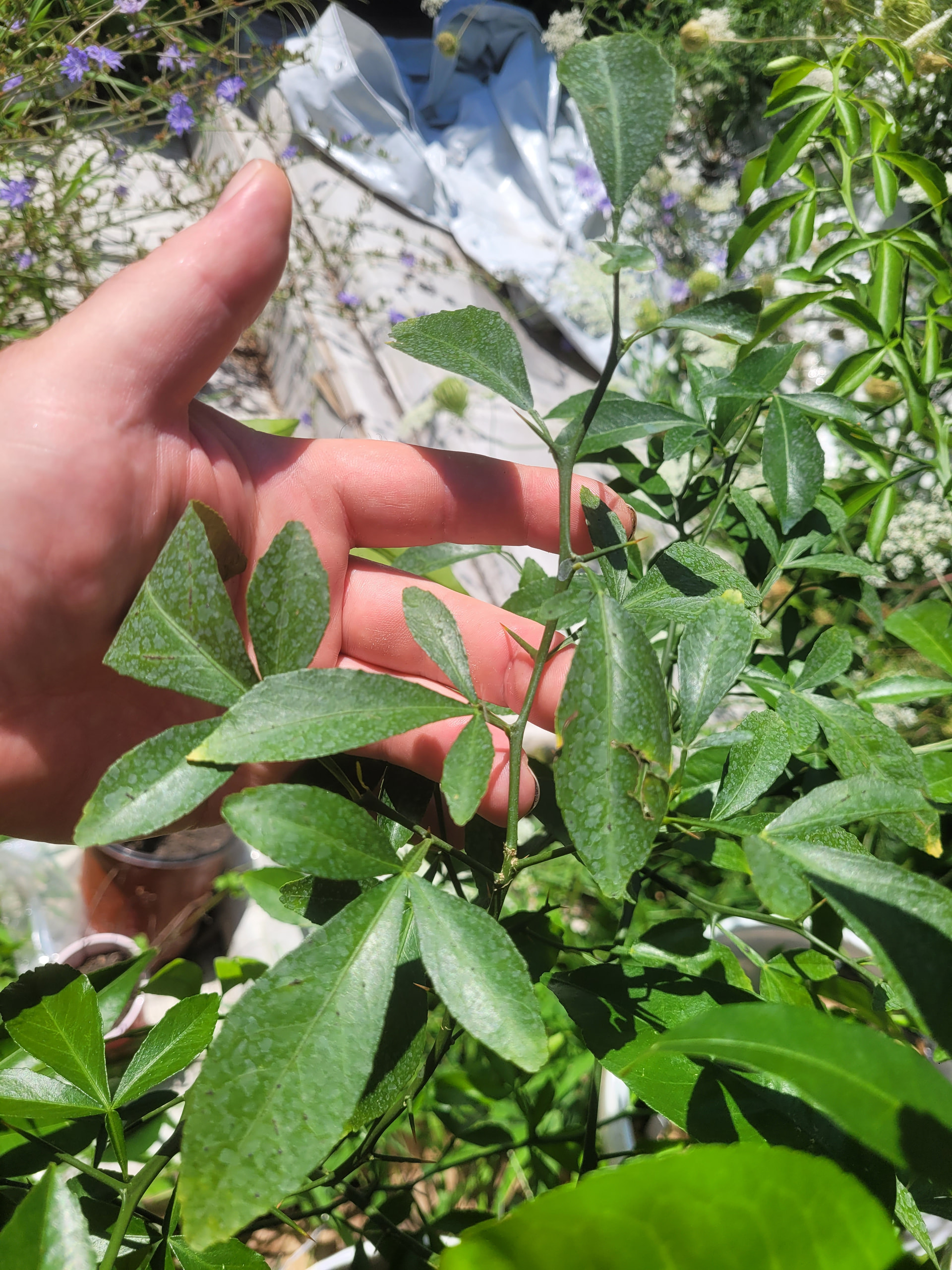
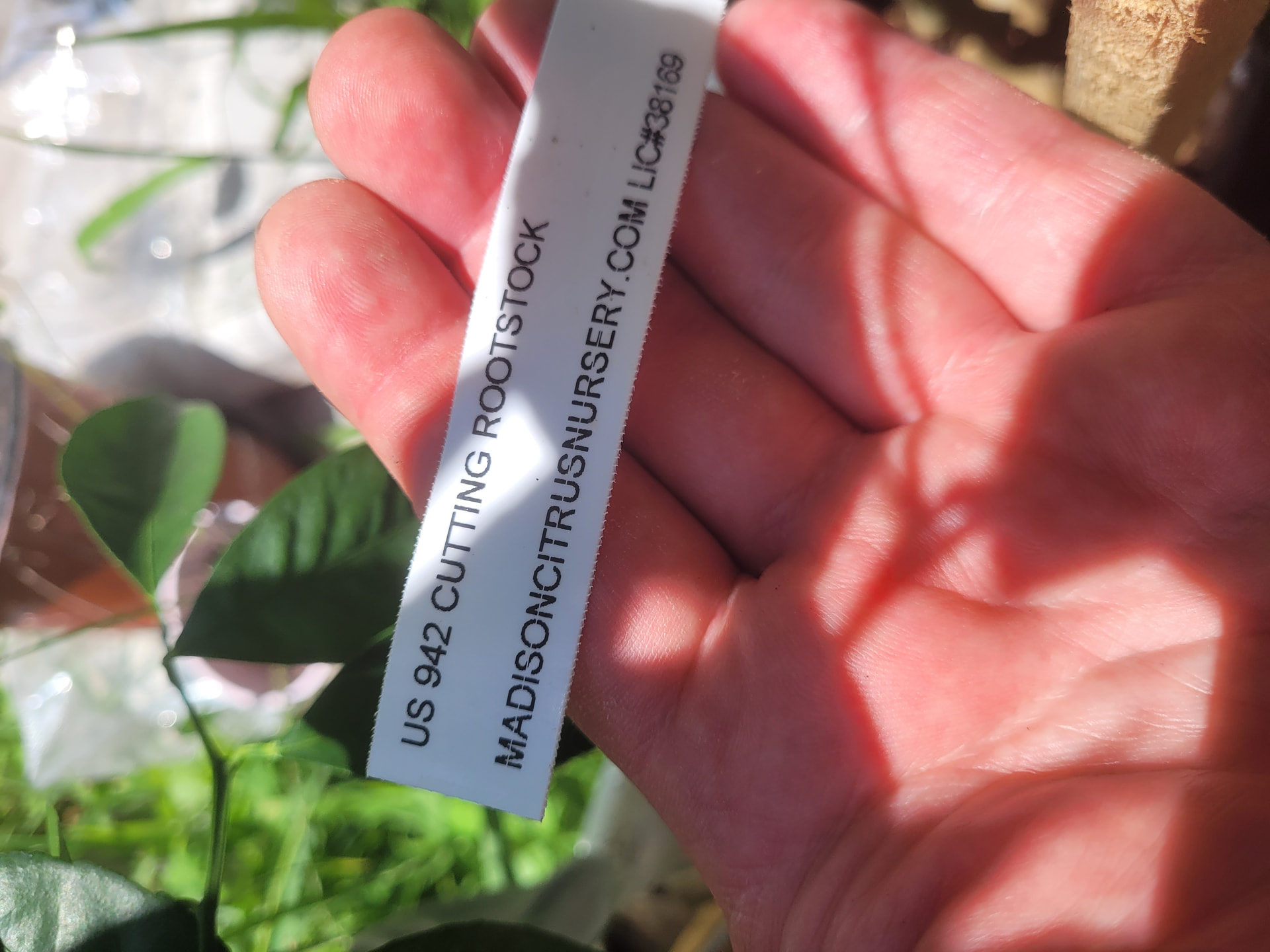
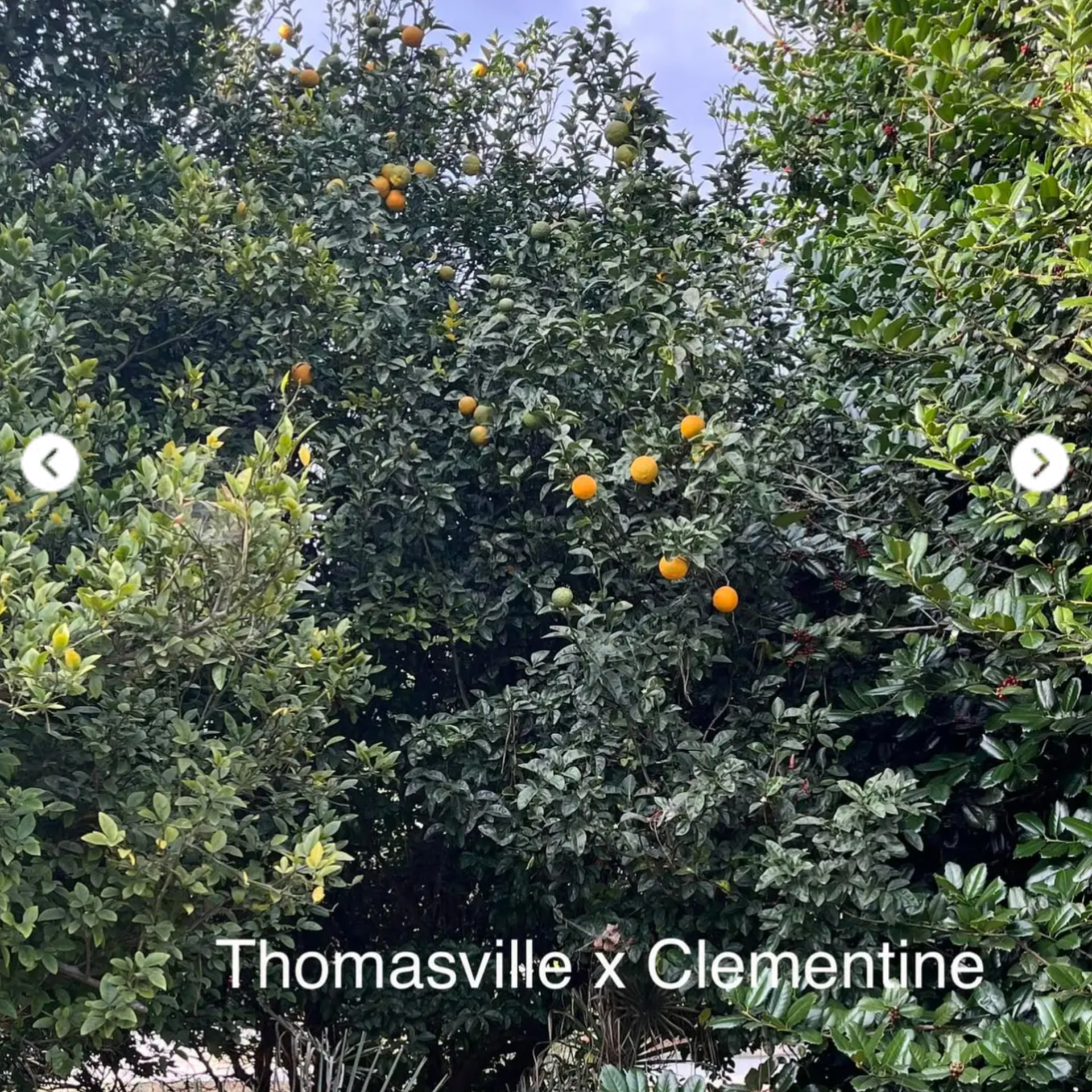
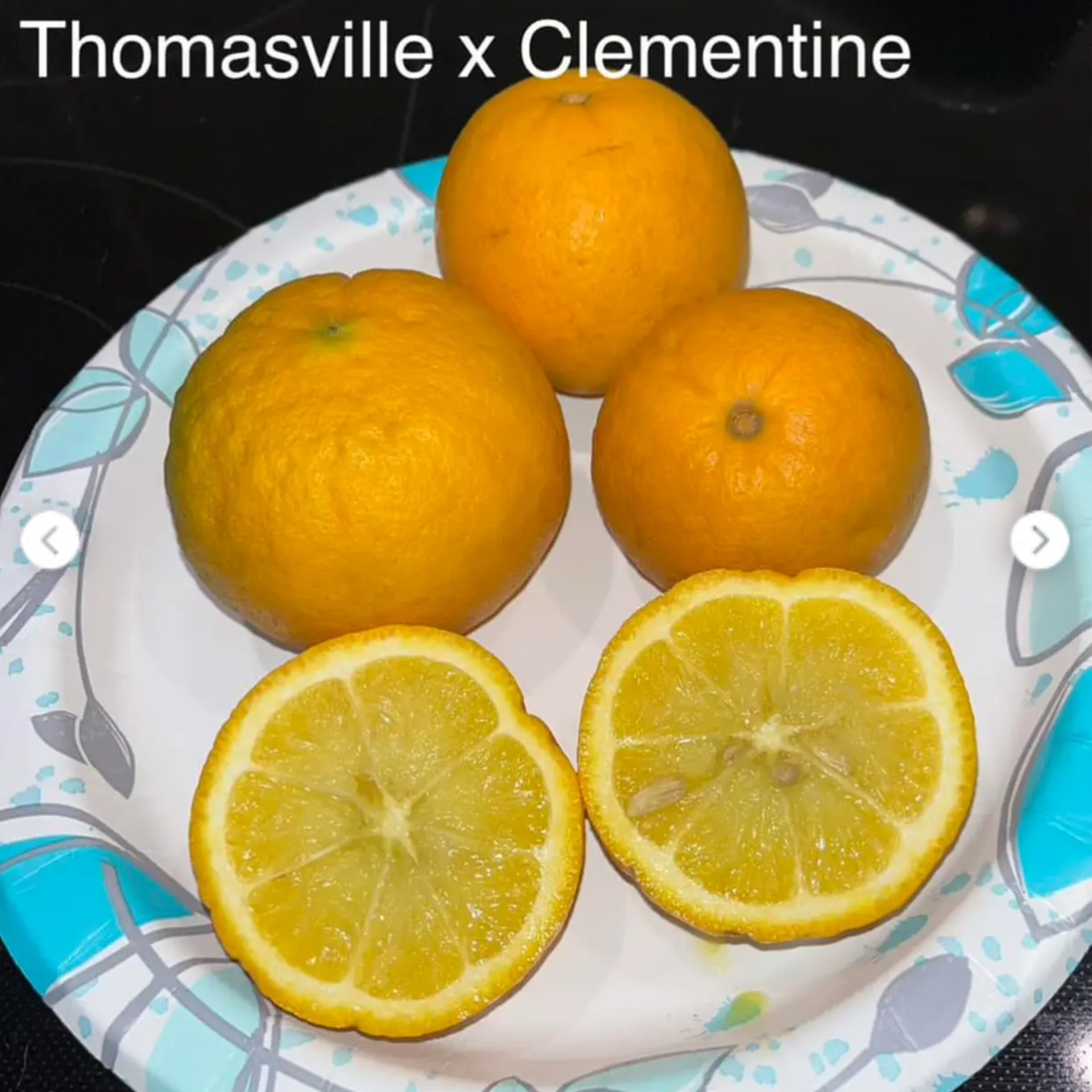
A rootstock that may prove useful in our colder area. According to worldofcitrus it contains trifoliate genetics. We know it should have cold hardiness.
“ Notes
Released rootstock from the USHRL program that has been extensively evaluated in Florida by USHRL personnel as indicated in the source history. More information on these evaluations is available from Dr Kim Bowman of USHRL. It has also been included in some trials in California conducted by Prof Mikeal Roose of the University of California, Riverside.
According to the Release Notice, "In all field avaluations, US-802 rootstock yielded vigorous and productive trees that were tolerant to endemic disease and pest problems and exhibited excellent survival. The major positive attributes of this new rootstock are resistance or tolerance to citrus tristeza virus, citrus blight, Phytophthora palmivora, and Diaprepes root weevil, induction of high vigor and good fruit productivity on grafted scions, and ease of seed propagation. Notable negatives may be the tendency for trees grafted on US-802 rootstock to become very large and produce fruit with intermediate or low soluble solids concentration.”
Parent - 1 Siamese Acidless Pummelo
“An essentially acidless variety of pummelo. The tree is small in stature with drooping branches. The fruits are oblate with a slightly rough yellow rind. The flavor is insipid. Siamese Sweet pummelo has been used extensively in breeding programs and is the seed parent of Oroblanco and Melogold pummelo-grapefruit hybrids, Chandler pummelo, and Cocktail pummelo-mandarin hybrid. It is mature in the winter and holds well on the tree.
The clone known in the United States was introduced by the U.S. Department of Agriculture in 1930 and was received by the Citrus Research Center, Riverside, California, under the name Siamese Sweet (CES 2240).
The tree is typical of the Siamese group in all respects—dwarf and drooping, with round-pointed leaves and densely pubescent twigs and new shoot growth. The fruits are oblate to broadly obovoid, with large, crisp, easily separable juice sacs lacking in juice, and insipidly sweet with a trace of bitterness.”
Parent 2 - Gotha Road #6 Trifoliate
Official Selection of Poncirus Trifoliata - no notes
Origin
Florida, USA
1970·Kim Bowman - USDA
Submitted by
Brady Mitchell •@cascadiaadmin
Colwood, British Columbia, Canada
Submitted on: January 1, 2026
Here is a discussion of rootstocks

“
1999 - USDA released ‘US-852’ citrus rootstock, which supports highly productive, medium-sized trees.
2001 - USDA released ‘US-812’ citrus rootstock. This hybrid rootstock produces healthy medium-size trees with a wide range of scions, and consistently yields large quantities of good quality fruit. ‘US-812’ also exhibits resistance to citrus blight and has the CTV resistance gene ctvR.
2007 - USDA released ‘US-802’ citrus rootstock. This hybrid rootstock has field tolerance to the Phytophthora-Diaprepes disease complex, resistance to citrus tristeza virus, and good fruit productivity. The rootstock ‘US-802’ combines high vigor and large tree size with the other positive attributes.
2007 - USDA released ‘US-897’ citrus rootstock. This hybrid rootstock has field tolerance to the Phytophthora-Diaprepes disease complex, resistance to citrus tristeza virus, good fruit productivity, and good fruit quality. The rootstock ‘US-897’ fills a much-needed niche as a dwarfing rootstock well adapted to Florida conditions.
2010 - USDA released ‘US-942’ citrus rootstock. This semi-dwarfing hybrid rootstock produces healthy small to medium-size trees with a wide range of scions, and consistently yields large quantities of good quality fruit. ‘US-942’ also exhibits field tolerance to the Phytophthora-Diaprepes disease complex, resistance to citrus blight, and has the CTV resistance gene ctvR.
For additional information, contact kim.bowman@ars.usda.gov.”