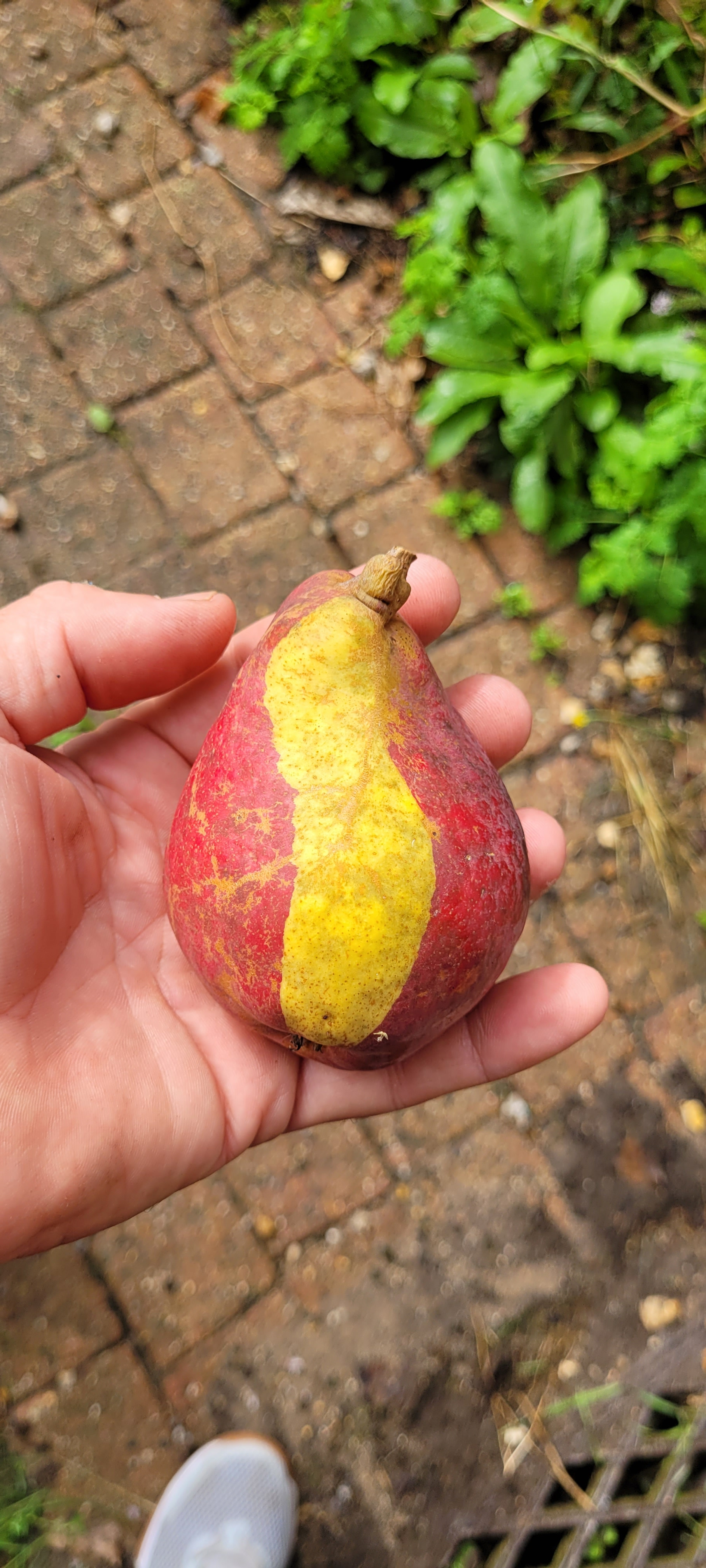
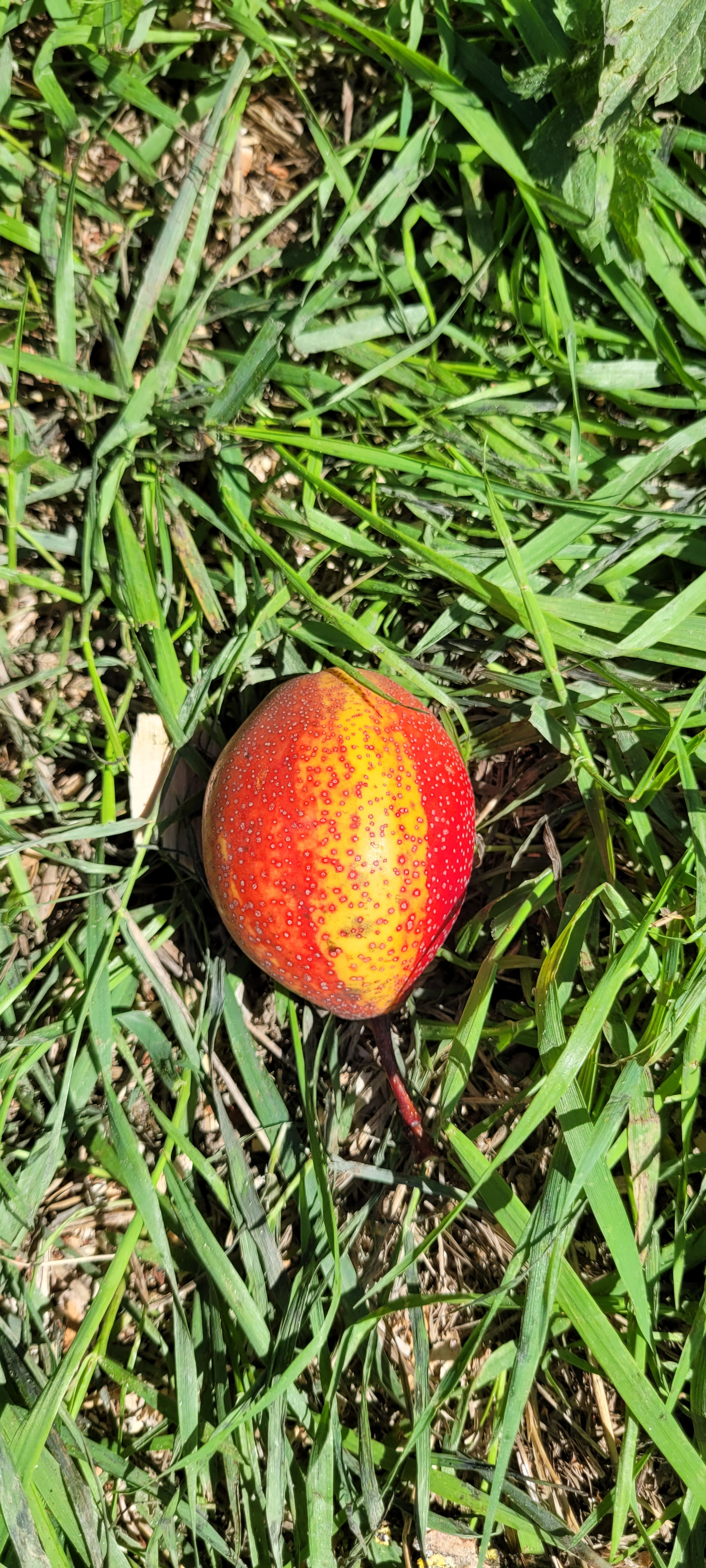
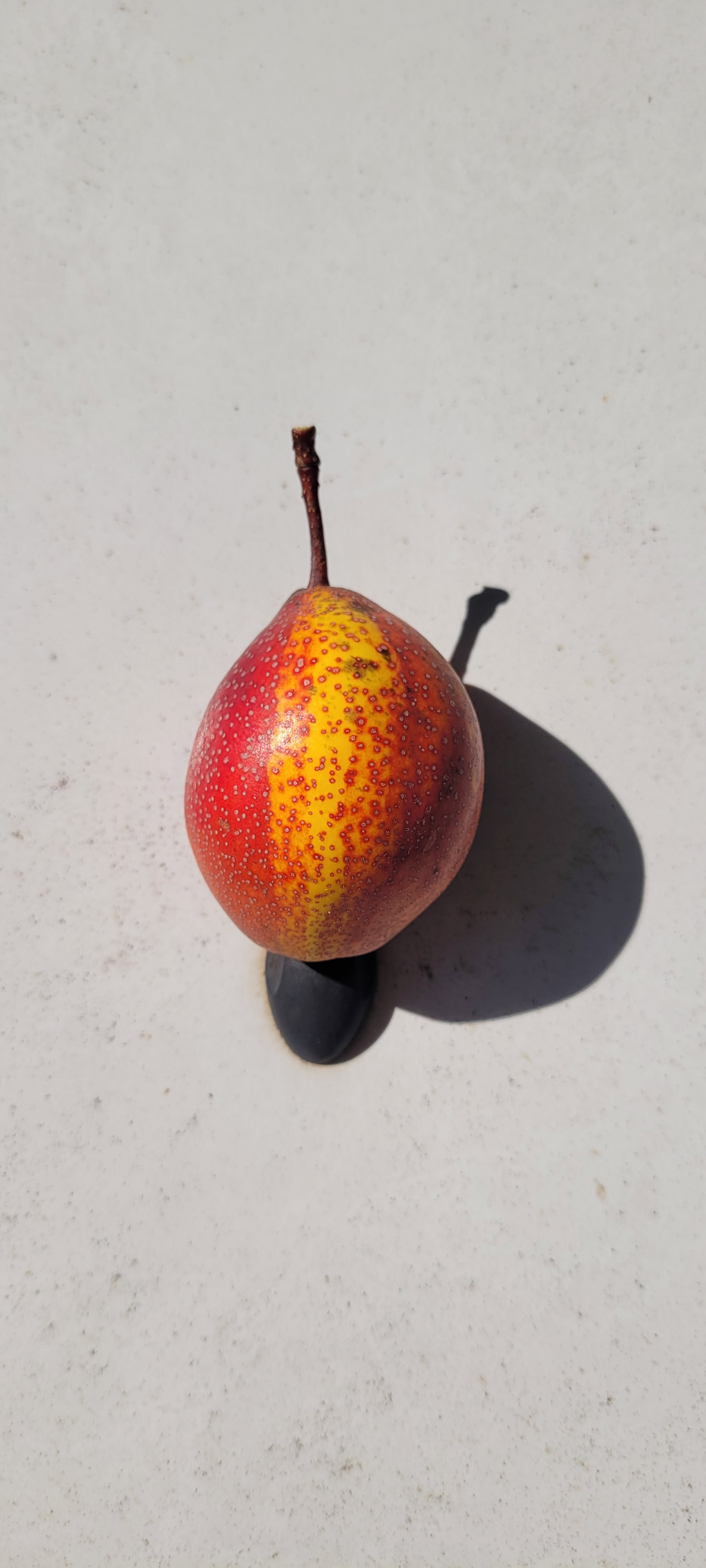
I wanted to cut off this ‘Aohong No. 1’ branch, but I’m going to wait since it’s producing variegated fruit.
The red Asian pear doesn’t seem stable if they all produce variegated varieties
.
I wanted to cut off this ‘Aohong No. 1’ branch, but I’m going to wait since it’s producing variegated fruit.
The red Asian pear doesn’t seem stable if they all produce variegated varieties
.
Hello my friend. Thats not Aohong n1. This variety is all red and fruit form is large, not long.
Concur, not Aohong no 1. It is not Early Crisp Red Stripe due to the elongated shape. Looks like Juhong Red Stripe (aka Yuhong red) to me.
The red color is from methylation/demthylation of the myb10 gene. Since it is striped, it is a chimera with some methylated cells and some demethylated. Red color is not stable often flipping from green to red and then from red back to green. Interestingly, methylated is inheritable as shown by the variety Ooharabeni which inherited red color from Max Red Bartlett.
This pear definitely comes from an Aohong tree. Normally, the fruit is solid red and shaped more like a Redchief, but this particular one appeared on a single branch.
I’m familiar with these pears; I’ve distributed Aohong stock to several other people who are also getting red fruit. This case is different, though. I also have other variegated Chinese varieties grafted onto a single tree to compare them (Ju Hong, Yu Hong, Yu Hong Ri, Rainbow, Zaosu Red Striped, and another one).
Before getting your replies, I was wondering about the cause—so I asked an AI. Statistically, I seem to be seeing far too many mutations or chimeras. I wanted to know if environmental factors like pollution could be behind these changes. According to the AI, drought and the repeated heatwaves this year are the likely culprits.
The AI also points out that my own eye plays a role—I notice things that others might not have spotted or selected.
Still, just this year, I’ve had this pear, a Hayward variegata (a variety that doesn’t exist elsewhere), a variegated mutation on an apple branch, my Red Williams chimera, and a variegated feijoa. Statistically speaking, that’s a lot for one person to encounter.
Hello again. You are making a big confusion. Ju Hong, Yu Hong, Yu Hong Ri all this are just one variety Ju Hong.
Regarding Aohong n1 of course you can get a natural mutation on your trees, but not regarding strips and form/size at same time. Maby you got a revertion? The true Aohong n1 is very diferent from what you are showing.
I’m not confusing them at all; that’s precisely why I grafted all these varieties onto a single tree. The reason is that a variety I consider unique can actually show variations in shape and size depending on who is growing it. Putting them all on one tree makes it possible to compare them and spot the differences.
I actually wonder if these red Asian pears might be more unstable than our European pears.
I really didn’t expect to see this happen this year. By the way, the ‘Aohong’—the one that’s completely red—doesn’t taste very good.
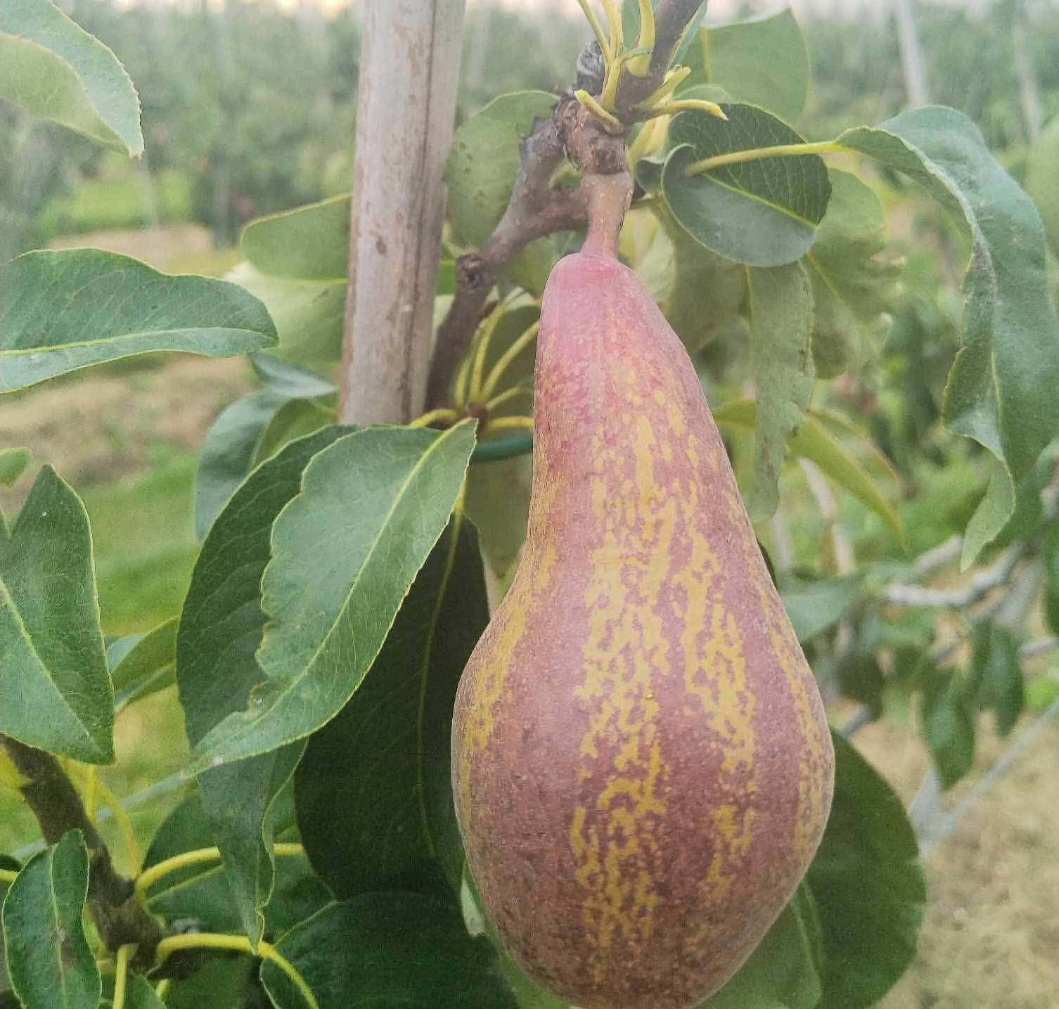
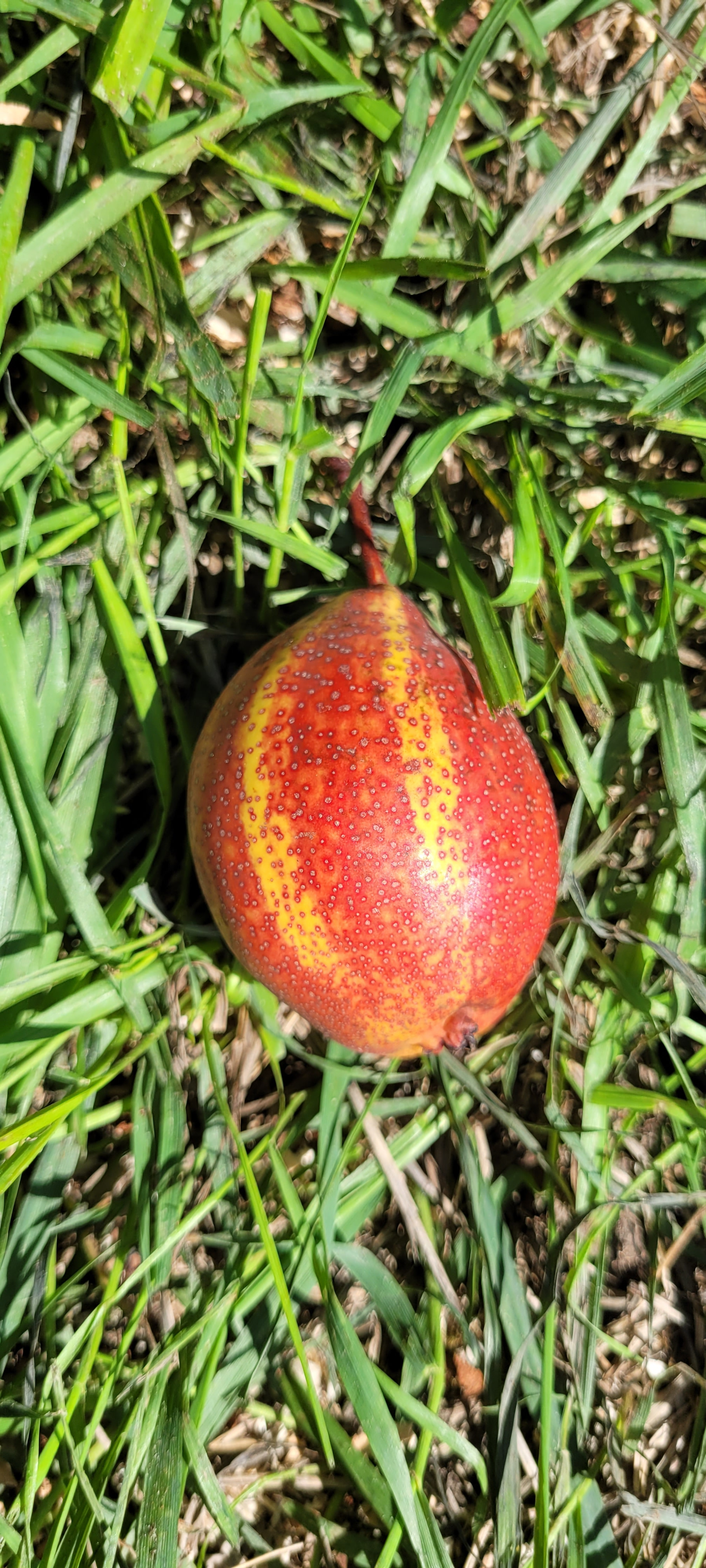
Incidentally, as you can see, this type of pigmentation isn’t unique to Yu Hong pears; this is a mutation of the ‘Red Conference’ variety that I managed to stabilize.
As for the shape, you shouldn’t judge it based on this year’s crop. You can see the fruit is poorly pollinated—it’s a young tree that endured a lot of stress (heat and lack of water). That stress might be the cause
.
You cant compare european with asian pear varieties. Yes asians are more unstable. One of my Yulu scions got variegated and fruits are diferent from those on normal scions. I think what you are seeing is revertion not new mutation.
Arhus, please look at the pictures on this website and translate it so you can read the text. One of them in the upper right on the page looks very close to the pear you have.
I suspect mutations on trees are a lot more common than most realize, because I’ve seen a couple instances of sports on apple trees and I wasn’t even looking for them at all, also have seen it on wild plums before too.
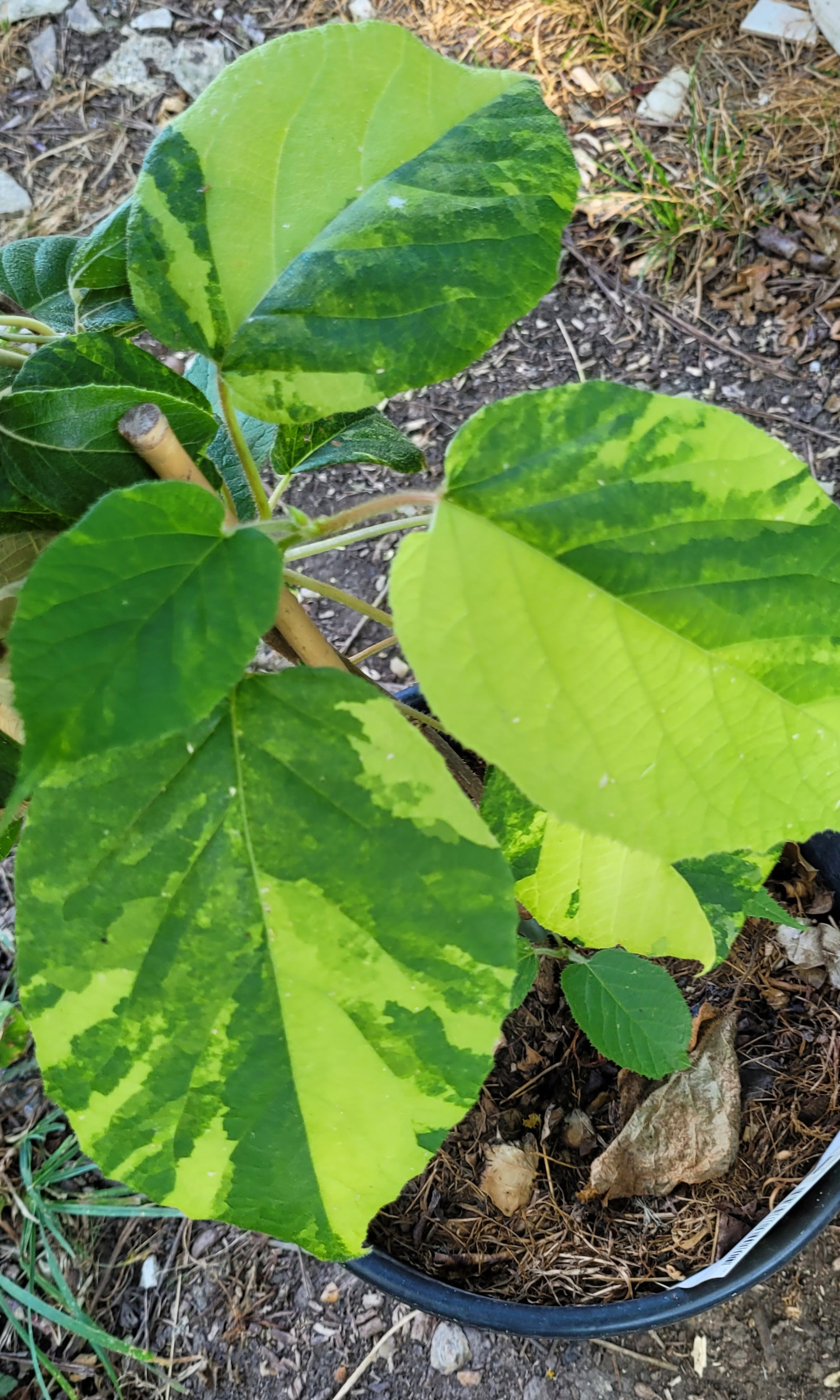
I was offered another variegated Asian pear last winter—a green pear with fine red stripes—but I only took the kiwi.
In fact, all trees and varieties possess genetic codes that remain unexpressed—either because people fail to notice or select them, or because climatic or environmental conditions do not allow them to manifest.
Red pears, for instance, often result from unstable color mutations, meaning they are prone to reverting to green. I have a photo somewhere of a ‘Red Conference’ pear tree trained in a U-shape: the less vigorous side produces entirely red pears, while the more vigorous side produces entirely green fruit. That is reversion.
However, things get interesting when only part of the bud reverts, resulting in variegated varieties. The challenge then lies in stabilizing the chimera.
It seems like you’re exactly correct and have plenty of evidence to show that your opinion is the most reasonable one here. Lots of people just love to argue and insert their opinion where they don’t have any experience. I, for one, believe you and I think that you’re right about everything so far here!
And all of those pears are so beautiful! It would be a shame if the became pure red.