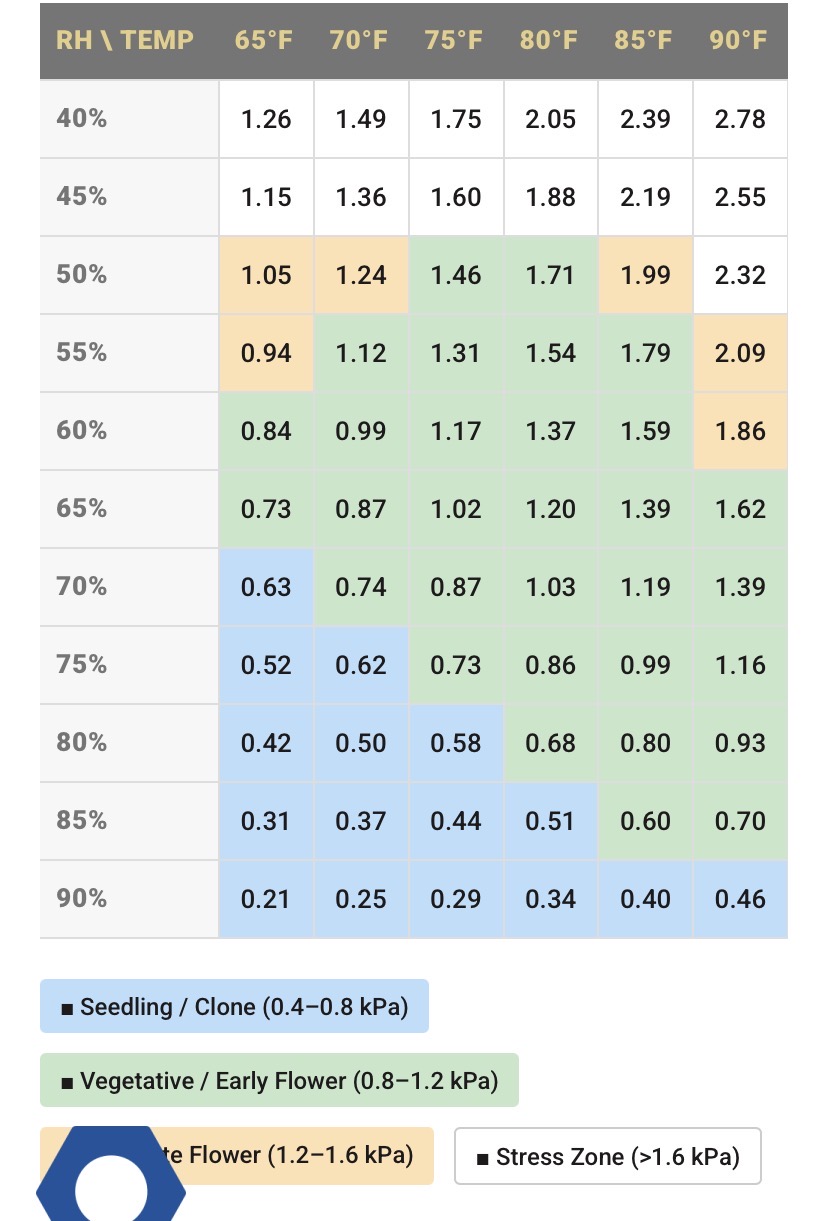
I’m trying to learn about VPD as I quickly make adjustments to my new grow tent. I’m a distinct F not a T, so this type of stuff is un-fun and hard for me. I’ve watched videos and read what AI and other forums say and grow tent websites have explained, but I’m still not sure what number I should be shooting for. I know there are many, many people here with greenhouses: should you be a T and enjoy explaining these things, would love a synopsis. VPD is barely mentioned on this site. My grow tent is primarily citrus, but I have plants in all stages- seedling, relatively newly rooted cuttings, newly grafted, flowering, fruit ripening. No idea what number will be the safest for them all.
This chart on gorilla grow tent website is the most helpful thing I’ve come across. I’ve learned that during the day, the lights drive up the temperature and that causes the VPD to soar since I’m not changing the humidity. I’ve been keeping the humidity around 50%, opening all the doors at night when it shoots up (very cool to see how much plants transpire at night). I will let humidity increase during the day if I need to have the VPD at 1.2 or less. I don’t currently have the exhaust fan and it was very stuffy after the first night where I let humidity go up to 62%.
I think you’re in a pretty safe place generally. The important thing to grasp is the correlation between temperature and Rh in that higher rh leads to less of a stress response at high temperatures.
The warning zones of high rh there on your graph are more to do with canna flower going mouldy which is hazardous for the end user obviously but less of a big deal with citrus as long as no unwanted specifically negative microbes/fungi/pests settle in.
Top watering/over watering can be a bit impact in managing the vpd. As can airflow. Once your black Friday extraction comes in you may find things a lot more straightforward. Unless you also have an intake fan that’s stronger than the extraction you will then have negative air pressure (I’m assuming the tent has a passive air intake vent? ) and negative air pressure will likely keep the rh lower and also result in much less condensation from overnight transpiration.
Early on in life I was construed as intp (off the scale i) but vibed myself up to infp as life went on. If such concepts are to be believed
I found blumat drippers very helpful with managing rh spikes from top watering.
Also new to citrus/hardy citrus over here and finding it a fun learning experience too. I’ve got a bunch of seedlings in a relatively dry south facing kitchen under lights but also lots outdoors to see if they can hack it - including several in a cheap thin panelled polycarbonate greenhouse and the morning condensation there has been crazy! We had our first frost this morning so curious to see how that goes.
Thank you! I am still trying to understand relative humidity as well, but I see the take-home message is higher humidity at higher temperatures, lowers stress.
I am planning on just using the fan as an exhaust, no active intake. I have an oscillating fan in there now just to aid in movement. There are vents near the bottom of the tent that I have open but given the lack of exhaust, I also opened a pot of top ports to help circulate out the hot air. At least, that was my rudimentary thinking. The temperature is staying about 70 at night and up to 76 during the day.