“don’t kill” is a pretty reasonable rule, but as gardeners we all have at least a few exceptions to this rule. the other day I spent hours in the hot summer sun killing countless perfectly healthy seedlings…
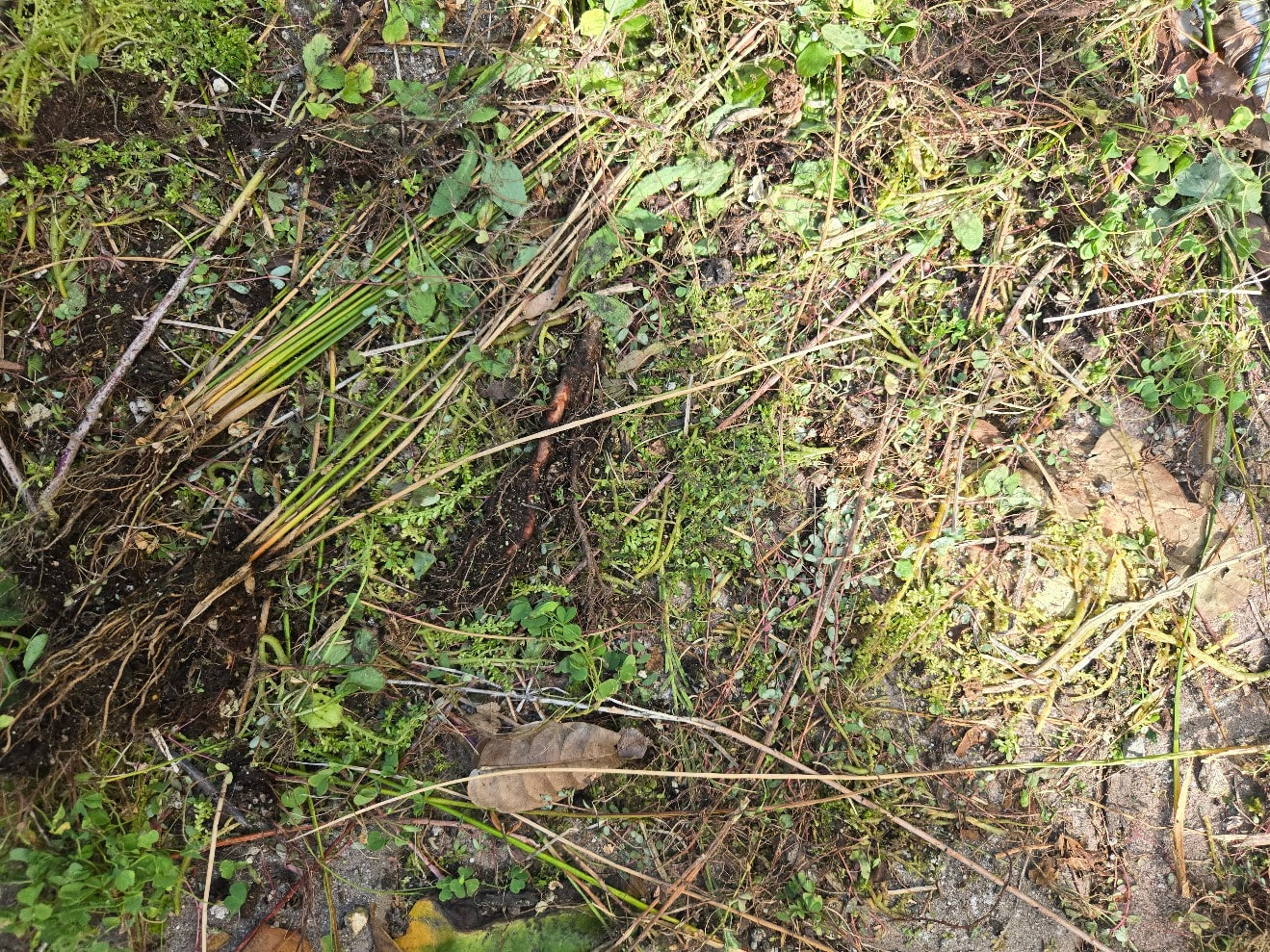
in my defense, they were all “weeds”.
typically i’m super lenient when it comes to weeds, but these particular ones had been solely occupying small pots in spaces that I needed to free up for seedlings of my fig hybrids.
did I feel bad killing these weeds? not really. but i’m sure that among all the plant people in the world, there must be at least a few people who would have wanted them. if I could have snapped my fingers to magically re-home all these weeds then I certainly would have.
the topic of destroying perfectly healthy seedlings came up in the thread “breeding plans that fail”. Richard referenced fig breeders culling thousands of seedlings by destroying them. I basically made the case that one person’s trash is another person’s treasure. @SethDoty replied that the logistics of sharing large amounts of unwanted seedlings are impractical. rather than run the risk of derailing that thread, I created a new one to share my sincere and civil attempt to get to the root of the matter. let’s bark up the right tree, yes?
if someone offered me a few flats of poison oak seedlings for free then i’d decline, not sure how politely. I might question their sanity. from my perspective, they were barking up the really wrong tree. it would be a completely different story if someone offered me a few flats of garcinia seedlings for free. in this case i’d perceive that they were barking up a really right tree. basically, if doty had trouble finding new homes for his unwanted hybrid grape seedlings, then the core issue is that too few people see them as treasure.
personally, on more than a few occasions i’ve dumpster dived for plants. nurseries regularly throw out perfectly viable plants for all sorts of reasons. the same goes for homeowners and landscapers. on youtube I subscribe to two channels dedicated to rescuing treasure plants from the trash… this guy in Florida and this lady in Brazil. i’ve often wondered if it was viable to have a salvation army specifically for plants. unwanted plants could be dropped off, given some TLC, and sold.
getting back to breeders, here’s an example of what can happen when people perceive a breeder’s culls as treasure…
Also, I recall reading a post somewhere a few years back written by someone who said he knew DW, and went on to describe how DW had thousands of hybrids, and saved the best, and discarded (believe it or not!) MANY of his “rejects” into a canyon off his property. The story goes, he did this until he caught wind that others were scrounging his castoffs in that canyon, after which he started destroying them instead. - Spination, A couple more new to me hybrids
dw stands for dick wright, an aloe breeder.
his primary motivation in destroying perfectly healthy seedlings was likely to protect his reputation and sales by associating his name only with premium hybrids, demonstrating how a breeder’s commercial interests can directly clash with those of consumers.
trade secrets represent a primary conflict between breeders and consumers, with Luther Burbank serving as the best example. that links to a thread in this forum that I replied to. coincidentally, doty also replied to what I wrote. in that case I didn’t respond. my bad. hopefully this response will make up for it.
Burbank really didn’t make it easy for other breeders to stand on his shoulders. my approach to breeding is the complete opposite. here’s a list of most of my ficus trade secrets. traditional financial logic dictates keeping them secret in order to limit competition. while sellers naturally desire a monopoly, monopolies harm consumers. by sharing these secrets, i prioritize my interests as a fig consumer over my interests as a fig seller, ranking community growth and the rapid diversification of the fig hybrid supply above personal profit.
the fundamental issue is how we define “treasure”. if anyone uses my #1 trade secret and it works for them, will they fairly compensate me? the chances are slim to none. in a perfect world there wouldn’t be any trade secrets because anyone who freely shared valuable information would be correctly compensated. the more valuable the information, the larger the compensation.
here in this forum we use the heart button to define “treasure”. but no nursery accepts “hearts” as payment for plants. nurseries only accept money. if we want to go home with a fruit tree, we first have to use our money to adequately define it as “treasure”.
every nursery is essentially a survey that asks the question, “which plants should we supply?” people participate in the survey by spending their money on the kinda plants they want the nursery to supply. if you want the nursery to supply fruit trees, you spend your money on fruit trees. if someone else wants the nursery to supply flowers, they spend their money on flowers. the nursery pays attention to people’s survey answers and adjusts its supply accordingly.
the question “which plants should we supply?” is essentially the same as “what should we grow?” in order for a plant to be supplied, naturally it first has to be grown. if we ask “what should we grow?” nobody will reply, “poison oak”. except for perhaps a few really hardcore native plant enthusiasts. I just checked and evidently there are a few nurseries that sell poison oak/ivy. there’s no more perfect example than one person’s treasure being another person’s trash.
where things get interesting, is if people tell doty that he should grow hybrid grapes, but then they aren’t willing to buy his seedlings. even worse is if they aren’t willing to take any seedlings that he freely offers them. in this case, are his seedlings trash or treasure? according to people’s words they are treasure, but according to their actions they are trash.
actions speak louder than words…
If a woman told us that she loved flowers, and we saw that she forgot to water them, we would not believe in her “love” for flowers. Love is the active concern for the life and the growth of that which we love. Where this active concern is lacking, there is no love. — Erich Fromm, The Art of Loving
“demand” as in “supply and demand” is not a function of people’s words, its a function of people’s actions, specifically paying money. however its certainly the case that words can influence actions.
prior to covid, ecuagenera sold 90% orchids and 10% miscellaneous plants including aroids at southern california shows, but during the pandemic they flipped to 90% aroids and 10% miscellaneous. stuck at home with time on their hands, new growers turned to instagram, where aroids won the popularity contest because their large, striking leaves garnered the most heart clicks. style triumphs over substance when “hearts” define “treasure”. personally though, as a lifelong epiphyte enthusiast who has grown some aroids for a few decades before covid, I couldn’t complain that much about the sudden flood of species i’d never heard of and numerous brand new hybrids.
but this one guy sure did complain…
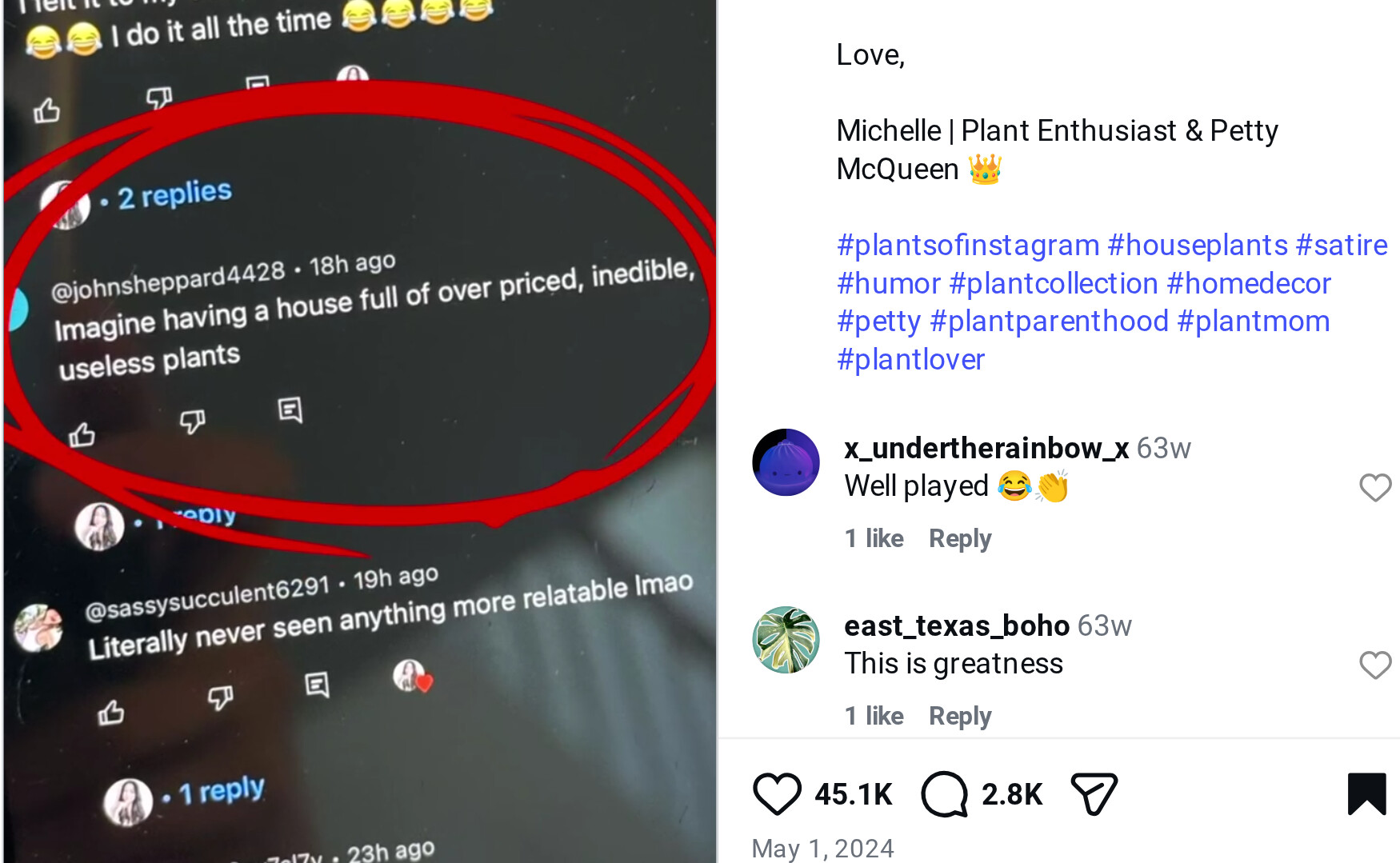
johnsheppard4428 wrote, “Imagine having a house full of over priced, inedible, and useless plants.” if he had written it here then i’m sure he would have received a few heart clicks. but he wrote it on the Instagram post of a plant influencer. she responded by posting a video of her stylistically replacing all her fancy plants with veggies and fruits from her kitchen and fridge. no surprise the video was quite popular, it was all style and no substance.
sadly she squandered the opportunity to highlight the fact that one of the most popular aroids, monstera deliciosa, isn’t only style, its also substance, as we can clearly see in its name “deliciosa”… meaning delicious. the fruit is larger than a corn cob and tastes like a mix of banana and pineapple…
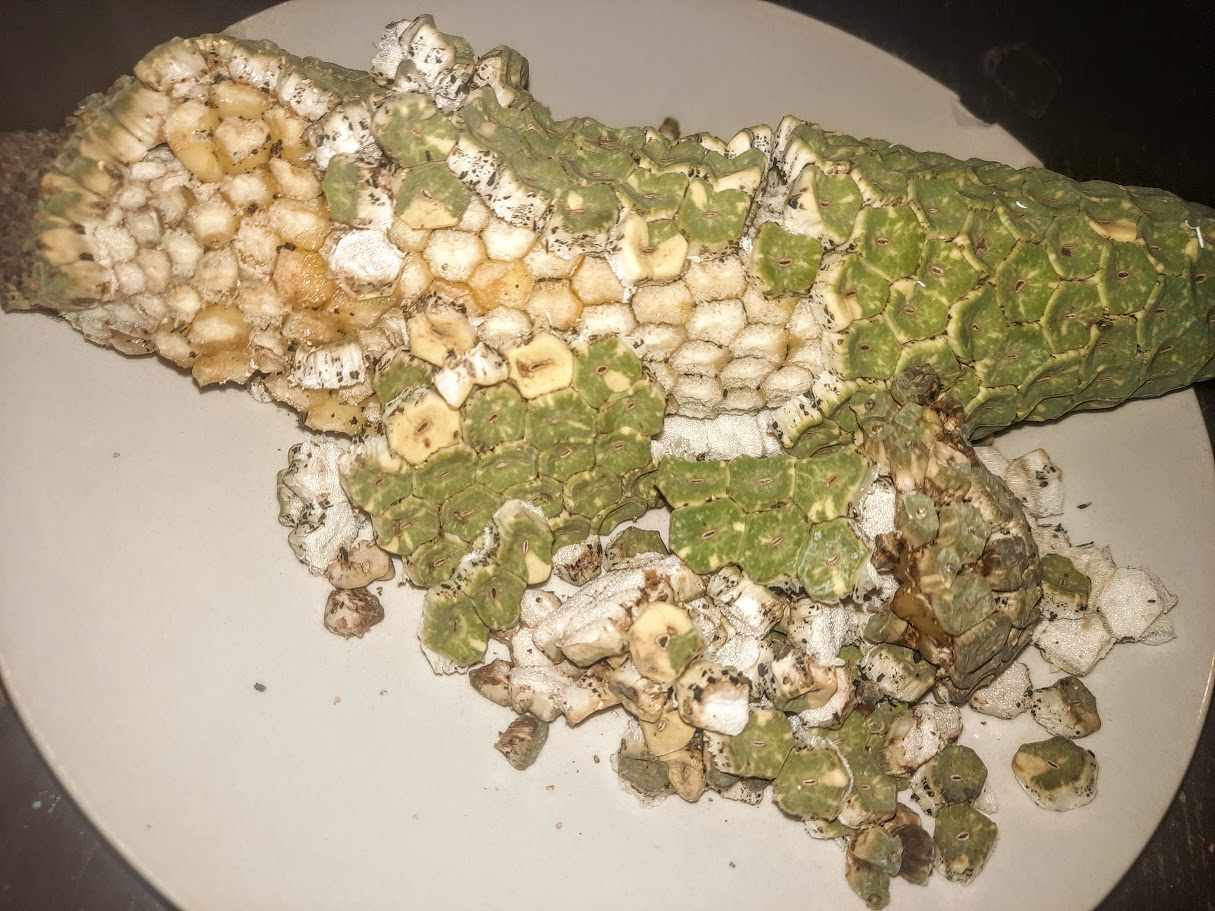
the fruit ripens sequentially, and you can only eat the portion under the outer shell that easily falls off, otherwise its like eating fiberglass.
honestly I wish that all unripe fruit was painful to eat. this would highly discourage squirrels from biting and ruining unripe fruit. if only I could rehome squirrels with a snap of my fingers.
monstera deliciosa isn’t the only edible ornamental (“edimental”) aroid. in theory all anthurium berries are edible, if they are ripe enough for the same reason as monstera deliciosa. here’s a plate of anthurium scandens berries…
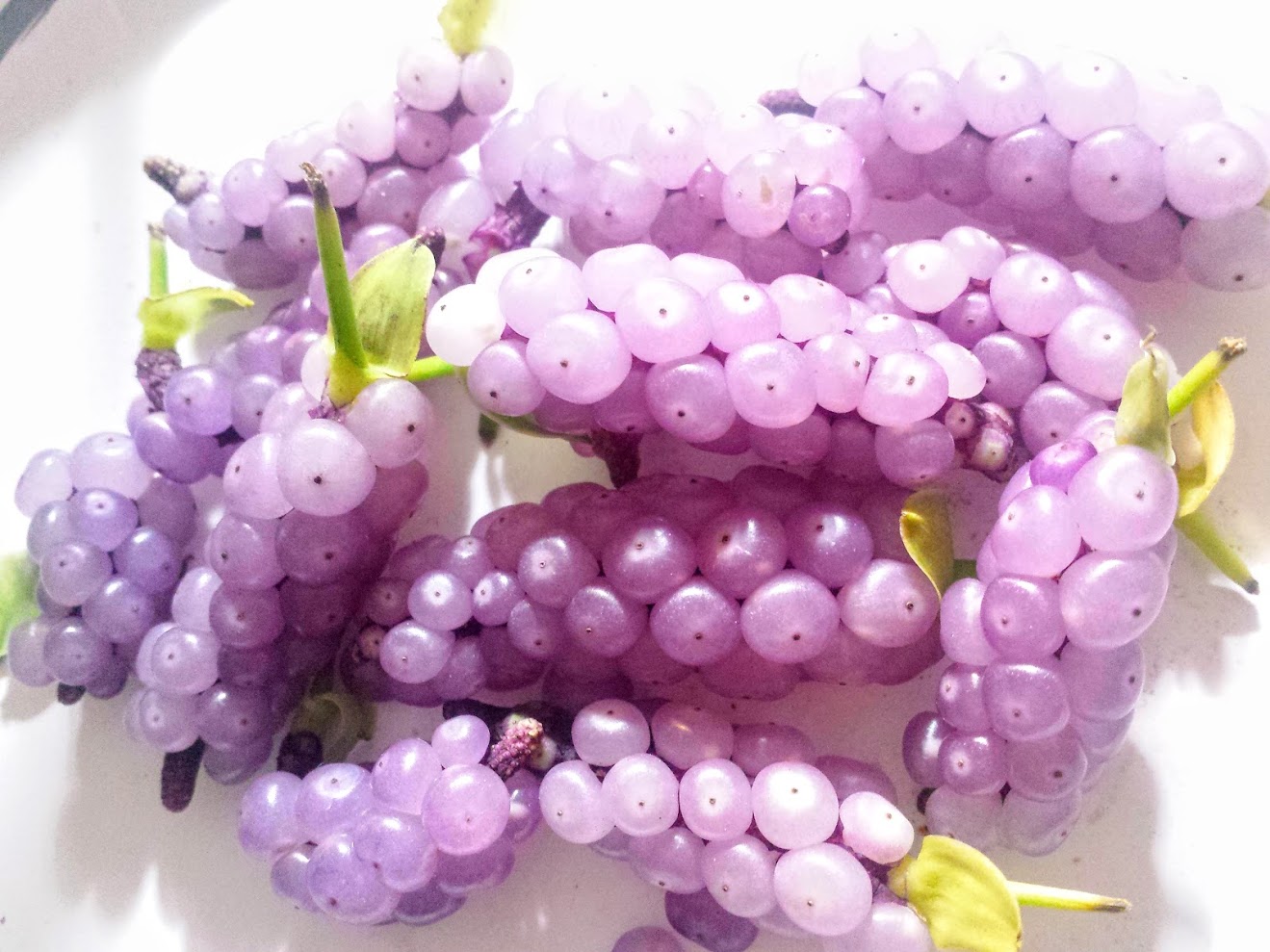
not very large or sweet, but imagine them after a couple decades of serious breeding for fruit quality. they would easily rival grapes. and since anthurium scandens is an epiphyte, a jacaranda tree could magically be transformed into a jabuticaba tree with showy flowers. rhipsalis also have the same incredible potential.
one of my fav edimentals is chrysophyllum imperiale. sadly I don’t personally have one, yet. here’s a small one growing in a friend’s yard here in socal…

its in the same genus as the star apple and produces a similar fruit. the list of edimental plants is quite long. the list of ones that can be grown as houseplants is admittedly a bit shorter.
in a nutshell, Instagram uses “hearts” to define “treasure”, and this catapulted aroids to the top of the rankings, which skyrocketed the demand for them, and ecuagenera quickly pivoted accordingly. its important to note that ecuangera didn’t pivot based on aroids trending on IG. it pivoted because it noticed the increase in its sale of aroids. this was only possible because it initially sold some aroids. if it hadn’t initially sold any aroids, then it wouldn’t have noticed the rapid change in demand for them until it became obvious to everyone. it would have been behind the curve instead of ahead of it. at the curve?
when a nursery overlooks changes in the demand for plants, who does this benefit? it certainly doesn’t benefit consumers.
all of us have had the experience of leaving a nursery empty handed. maybe they had what we were looking for but it was too expensive. but in most cases they didn’t have what we were looking for. no nursery in socal that i’m aware of carries chrysophyllum imperiale. sure, I can tell all the nursery owners, “i really wish you carried chrysophyllum imperiale” but these are just words. what nursery owners pay the most attention to are actions, how we actually spend our money. so its a catch 22… we can’t spend our money on a plant that the nursery doesn’t have. but what if we could?
imagine at the top of every nursery homepage was the question, “which plants should we carry?” below this question would be a list of consumer suggested plants, sorted by donations to the nursery. initially i’d only have to donate a penny to put chrysophyllum imperiale at the top of the list. but then somebody would donate 2 pennies to put “red flesh apples” at the top of the list. and then somebody else would donate 3 pennies to put “goumi berries” at the top. and then somebody would donate 4 pennies to put “native plants” at the top. and then i’d donate 4 pennies to put chrysophyllum imperiale back on top. and so on. and so forth. the rankings wouldn’t be determined by “hearts” or votes, so it wouldn’t be a popularity contest. it would be a value contest, since the rankings would be based on personal sacrifice.
if we appreciate that every nursery is already a survey on what should be grown, then it should be easy to grasp just how counterproductive it is to limit the survey options to the relatively few plants that the nursery has in stock.
what about botanic gardens? are they also surveys? the south coast botanic garden has a clear donation box just inside its entrance…
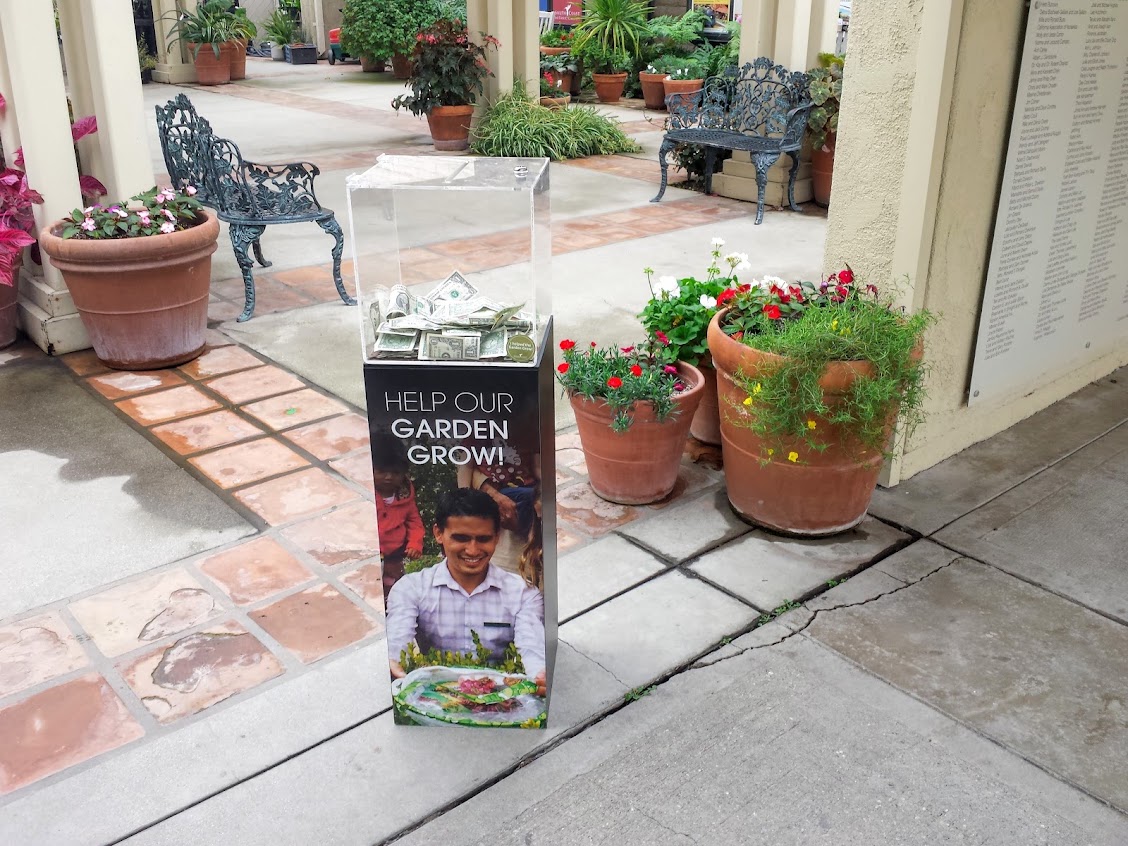
as you can see, the box says, “HELP OUR GARDEN GROW!” we know what they mean. they mean grow as in, “Love is the active concern for the life and the growth of that which we love.” if we love the garden, we can help it grow by putting money in the box. but the important question is, help their garden grow… what? poison oak? imagine if the box said… “HELP OUR GARDEN GROW POISON OAK!” i wouldn’t put any money in the box. would you?
naturally it matters very much what the garden grows. so let’s picture 2 donation boxes instead of one…
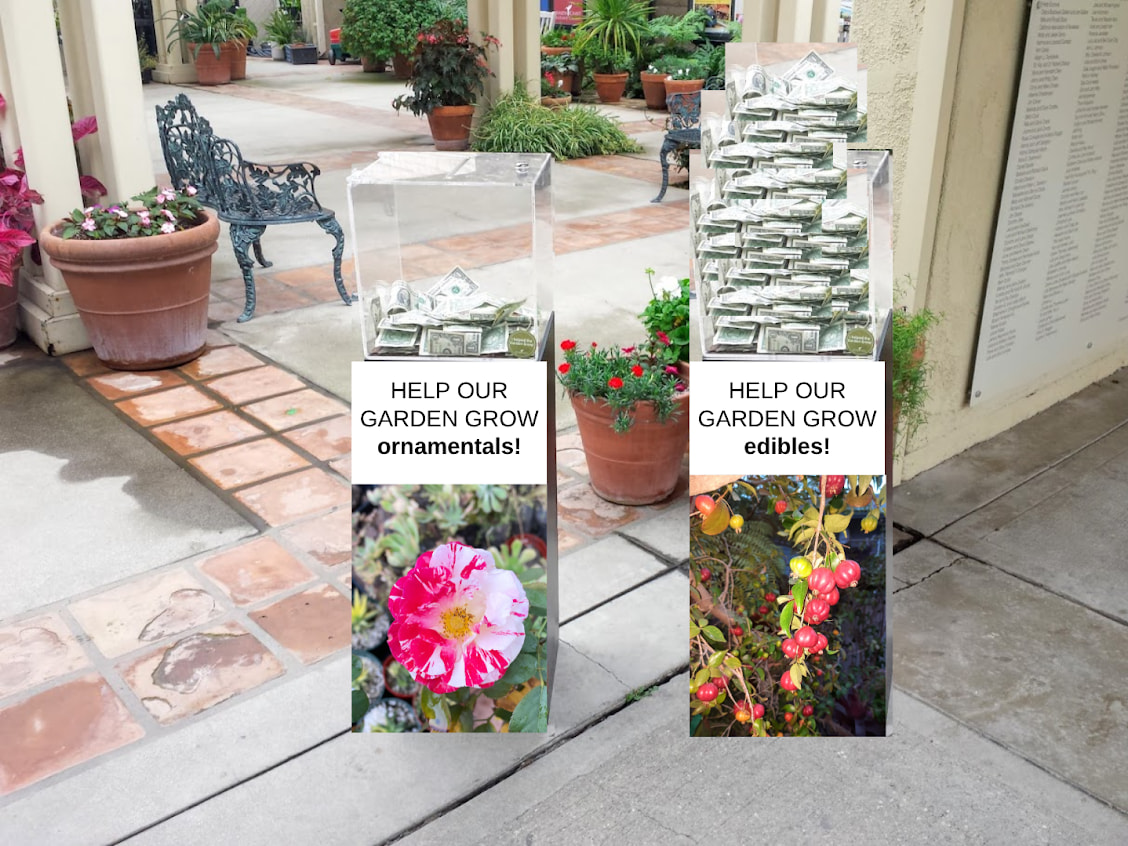
now the botanic garden is obviously a survey. this survey isn’t a cheap talk survey. its not based on “hearts” or “thumbs up” or votes. its based purely on money. sacrifice. personal sacrifice. this is what makes it a value contest rather than a popularity contest. its tug-of-war instead of a show of hands.
instagram and YouTube both prove that with popularity contests, style wins over substance. this is the problem with using “thumbs up” and “hearts” to define “treasure”. what rises to the top isn’t edmond albius, its baby shark.
with value contests, on the other hand, substance has a much higher chance of winning over style. from google search, here are some historical examples of plants that made it high up in the value rankings…
- Sugar (Sugar Cane): Once known as “White Gold” in Europe, it was an incredibly rare luxury used as a status symbol by royalty. Colonization and massive plantation systems turned it into a ubiquitous, low-cost commodity.
- Pepper and Spices: Black pepper, cinnamon, and nutmeg were so valuable that they drove the Age of Exploration. European powers sailed the globe to control their trade. Today, black pepper is given away for free in paper packets at fast-food restaurants.
- Tea and Coffee: Originally restricted to elite ceremonial use or high-society coffee houses, global cultivation turned them into daily, mass-market stimulants.
- Chocolate (Cacao): Aztec nobility used cacao beans as currency and drank it as a sacred, bitter luxury. Industrial processing (like the invention of the cocoa press) democratized chocolate into a cheap candy aisle staple.
- Vanilla: True vanilla comes from a delicate orchid that must be hand-pollinated on the single day it blooms. Historically, it was an incredibly rare luxury confined to Aztec royalty who mixed it with cacao. While synthetic engineering successfully democratized a cheap imitation (artificial vanillin) into 99% of mass-market foods, authentic vanilla pods remain a volatile luxury, ranking as the second most expensive spice in the world.
more fruits…
-
The Pineapple:
- The Luxury Era: In 18th-century Europe, a single pineapple could cost the modern equivalent of thousands of dollars. They were so valuable that aristocrats didn’t eat them; they rented them for the night to carry around at parties as a status symbol.
- The Commodity Era: The rise of massive colonial plantations in Hawaii and Central America by companies like Dole industrialized the fruit. Today, cheap canned and fresh pineapples are standard grocery items.
-
The Banana:
-
The Luxury Era: In the 19th century, bananas were an exotic luxury wrapped in tinfoil and eaten with a fork and knife in upscale restaurants.
-
The Commodity Era: Giant fruit conglomerates built vast shipping networks and standardized the crop around a single, easily transportable clone (first the Gros Michel, now the Cavendish). The banana transformed into the cheapest fruit per pound in the entire supermarket.
-
-
Oranges and Citrus:
-
The Luxury Era: For centuries in colder climates, oranges were a rare, winter luxury. Children of the Victorian era famously received a single orange in their Christmas stocking as a precious, high-value gift.
-
The Commodity Era: Modern irrigation, massive orchards in Brazil, Florida, and California, and concentrated juice processing turned citrus into a daily breakfast commodity.
-
-
Strawberries and Blueberries (Berries):
-
The Luxury Era: Berries were highly seasonal luxuries that spoiled within days of being picked. Eating fresh berries in the dead of winter was once impossible unless you were incredibly wealthy.
-
The Commodity Era: Thanks to plastic clamshell packaging, cold-chain logistics, and hyper-efficient global sourcing (e.g., shipping from Peru or Mexico during the US winter), berries are now a permanent, stable fixture of the modern produce section.
-
historically, turning rare luxury items into everyday commodities followed a highly predictable pattern: wealthy individuals dangled massive financial carrots in front of farmers, setting off a slow-moving, gradual wave of new supply that ultimately ended up benefiting the broader public. however, this crucial transformation never happened overnight. for oranges to transition from an ultra-rare, high-status luxury item into an accessible mass-market staple took far too many generations—largely due to the inherent limitations of pricing.
prices don’t do the best job of revealing demand. even if a billionaire was willing to shell out $100,000 for just a single orange, nobody would see this enormous demand if zero oranges were available for purchase. and when there’s only a tiny handful of oranges available for $10,000 each, all the demand above and below that price would be hidden. observers would only see the tip of the economic iceberg.
today, it is obvious that widespread, universal consumer demand for oranges exists globally. yet, does that exact same widespread demand exist for an exotic specialty fruit like yangmei? inside china, the answer is an absolute yes. within the united states, however, nobody knows the truth for sure—because if that demand were already proven, we would already witness american farmers aggressively clearing out and tearing up their existing avocado, peach, and citrus groves to plant far more profitable yangmei trees instead.
this fundamental flaw with prices is precisely where the revolutionary power of donation ranking completely changes the entire game. unlike traditional commercial markets, a donation isn’t constrained or bound by the strict, rigid boundaries of pricing or inventory. regardless of whether yangmei is entirely impossible to buy anywhere or just outrageously expensive, anyone can donate any amount of money to signal its worth. an everyday student can chip in a single penny; a billionaire like elon musk can contribute a cool million dollars. by empowering everyone with the opportunity to collectively enlarge that crucial “dangling carrot,” we can completely bypass the historical friction and limits of standard pricing, which drastically decreases the time required for a rare luxury crop like yangmei to become abundant, widespread, and affordable for the general public, provided that adequate underlying demand truly exists.
in summary, when “hearts” are used to define “treasure”, then aroids win. but when money is used to define “treasure” then fruits win. so for those of us who truly love fruit, nothing is more important than putting a donation survey on the homepage of every nursery, botanic garden and public park. everyone can chip in to make the most important dangling carrots much larger, and this will drastically reduce the amount of time it takes for the rarest best fruits to become abundant and affordable. and it will ensure that the seth dotys of the world breed the plants that can be rehomed most easily.
while a foundational rule like “do not kill” serves as a reasonable moral starting point, it clearly doesn’t mean that we should make equal sacrifices for common garden weeds and rare fruit trees alike. there is obviously an elevated, higher-order rule guiding us here—something along the lines of: “we should make the greatest sacrifices for the most beneficial plants.” the central puzzle then becomes how we actually calculate that true benefit. solely measuring purely personal self-benefit is inherently selfish and antisocial, given the timeless truth that no man is an island. consequently, the urgent economic requirement is to accurately quantify the broader social benefit of each and every plant candidate—even theoretical varieties that do not currently exist, such as countless potential interspecific fig hybrids.
voting is completely useless for solving this problem because the vast majority of the general public does not even realize that crossing figs is even possible. grab a random person on the street and ask them about a rare fruit that already exists, such as yangmei, and you’ll get a completely blank stare; ask them about baby shark, on the other hand, and they’ll immediately start singing it. prices are equally useless here, simply because nobody can buy something that doesn’t exist or isn’t for sale. this brings us right back to the unique utility of donation ranking. these credible signals aren’t meant to directly fund new hybrids; rather, they reliably prioritize all the fruit trees that breeders could possibly bark up. putting these important trees on so many lofty pedestals will greatly improve random people’s answers to questions about substance.
so there you have it, my most important PSA about fruit PSAs.