I don’t. I am about 100% protected from skin contact with the earth. I use plastic gloves, insulated shoes, I have pants on and kneel on a rubber mat. I never go barefoot. (I got planters warts from going barefoot when younger and they were hard to get rid of.) I don’t go to the beach or lakes. My hands are prone to roughness and splitting, so I use surgical gloves extensively to protect them.
AI
According to the Cleveland Clinic, earthing is about having direct skin contact with the Earth’s surface, which can include your bare feet, your hands, or other parts of your body. [1]
Common ways to achieve these benefits without standing include:
Gardening with bare hands: Touching or playing with the soil is a recognized earthing technique.
Kneeling or sitting: Resting your knees or other body parts directly on grass, sand, or soil facilitates grounding.
Localized grounding: Some proponents suggest that placing the grounded contact point near a specific area of pain, such as a sore knee, may offer more targeted relief.
Indoor grounding: For those who cannot go outside, specialized products like grounding mats can be placed on a desk to touch your hands and arms while you work.
Key Considerations for Effectiveness
Surface Type: Grounding works on natural surfaces like grass, soil, sand, and unsealed concrete. It is typically blocked by asphalt, plastic, and finished wood.
Duration: Experts generally recommend grounding for at least 10 to 30 minutes a day to begin experiencing physiological benefits like reduced inflammation or improved mood.
Skin Contact: While some products can work through thin layers of natural fabric (like cotton) due to moisture, direct bare skin contact is often considered the most efficient method for electron transfer.
.
Are you insulated from the earth or do you make regular skin contact with the earth?
I played in the dirt as a kid and still do when gardening, although I do sometime wear gloves to protect my hands from cuts.
Biodiversity Hypothesis may or may not be accurate. There is the problem of research showing associations, not proof of cause-and-effect.
Biodiversity Hypothesis
The biodiversity hypothesis is an environmental microbiome theory proposing that reduced contact with diverse natural environments and their microbial communities can negatively affect human immune function and health. It links ecosystem degradation and urban living to increased allergies, asthma, and inflammatory diseases through loss of beneficial microbial exposure.
Key facts
Introduced by: Ilkka Hanski and colleagues (early 2010s)
Core idea: Microbial diversity in the environment shapes immune tolerance
Health focus: Allergy, asthma, autoimmune and inflammatory conditions
Environmental link: Biodiversity loss and urbanization reduce microbial exposure
Origins and theoretical basis
The hypothesis builds on the Hygiene Hypothesis but shifts emphasis from cleanliness to environmental diversity. It posits that natural ecosystems—soil, plants, animals—harbor microbiota essential for immune system education. When humans have less contact with these microbiota, regulatory immune mechanisms may weaken, predisposing to inflammatory diseases.
Supporting evidence
Studies comparing rural and urban populations, especially in Finland and Russia, found that people in biodiverse rural settings had more diverse skin microbiota and lower allergy rates. Environmental exposure to microbes from vegetation, soil, and livestock correlated with better immune regulation, supporting the theory’s ecological-immune link.
No gloves here. I love getting my hands in the soil. Rough and cracked are how I like my hands to be. I’m not a barefoot guy though. Too many rocks and thistles around.
As far as gardening, I wear very little clothing. I’ll usually throw on some sandals. I grew up on a farm and only wore PPE when necessary to prevent physical injury (building barbed wire fence, cutting firewood, welding, etc).
If I’m just walking around the yard or garden in spring, summer, or fall there is a non-zero chance that I’ll be nude. I do wear a hat to protect my head from the sun.
If I’m working extensively outside, I’ll throw on some light clothes to ensure I don’t sunburn. I don’t run around barefoot too much, but I have been known to lay in the field to watch the clouds, star gaze, or take a nap.
I don’t personally subscribe to the idea of plugging a blanket into an outlet to “ground”, or whatever the current terminology is, but I do get satisfaction from spending time outdoors and observing nature. To each their own.
Being in touch with nature is a positive thing, but there’s a lot of pseudoscience surrounding earthing. It’s surprising how many people believe you can get the same benefits from a mat or other device plugged into an electrical outlet—on the premise that the outlet’s ground, being connected to the earth, allows electrons to transfer into the body.
I’d strongly suggest that anyone interested in this idea simply spend time outdoors instead: get your hands dirty in the garden, go for a swim, or lie on the beach—and skip buying anything marketed as a way to “connect” with nature.
even with bad psoriasis on my hands i still love dirt contact. i even handle composted manure bare handed. i wear gloves when shoveling etc where i dont want to tear my psoriasis callouses open. i wear crocs in the summer so theres always dirt getting in them. i just hose the inside out. ive had a few infections where something pricked my foot causing infections needing antibiotics. doc tells me to wear boots in the yard. i cant stand them in the summer so im doing it my way. just building up my immunity like people have for millenia. if the man upstairs wants me, he will take me despite what i do.. my father used to say ‘‘ what doesnt kill you
only makes you stronger’’.
my wife thinks im wierd. i wont swim in a public pool, but i love swimming in a lake or river. id rather swim with a little fish poop than with the chemicals they put in a pool.
I garden barefoot, even tried a lil barefoot jogging, That was before I got some glass in the ball of my foot. Dug most of it out. Cut out the jogging. Still gardening with dirt between my toes.
The only time I wear shoes is when I am slopping out the compost tumblers. Actually, my garden crocks. Garden hose required after…just like @steveb4
I can answer all over the map here, but bottom line is that I never where gloves for dirt or plants. I have them and pretend I will for the thorny things, but it’s more annoying to get them to let go of the gloves. I am prone to poison ivy (as in saying it probably just gave it to me) but playing in the dirt minimizes how long it lasts and how much it itches. Playing in the dirt also makes my fingernails grow fast. (Alas, it’s localized, so it does not help my receding hairline.)
I will say that the myth about wild blackberry thorns increasing joint pain appears to be true. That has not changed my pattern. I find some seeming truth in the notion of eating things from your own yard to reduce some allergy responses, too, although the molds are what hit me the hardest, and it doesn’t seem to change that pattern.
Ringwork and ticks are a thing here, so I’m almost always covered from waist down and tuck my remaining hair, which is still long) into a gardener’s hat. I’m reaching the age where at least a t-shirt seems a kindness if I’ll be near the road.
(Not to mention if the local rednecks see skin AND long hair, they take a beat too long to notice the beard as they fly by It’s a whole thing and kindof amusing. It’s just a taste, but I don’t envy you ladies dealing with the full dosage.)
As a sidebar, I recall one young lady on a beach in the Dutch Antilles who was taking the whole “earthing” thing waaay too far. I’m sure she had sand in places that took weeks to get out, and that stretch of beach was not in a state I would consider sanitary. It is probably when I first heard the term and it took me quite a while to realise that it also included healthy practices and was not just some weird fetish. I’m with the crowd that says enjoy nature and don’t be afraid to touch it, but don’t fall for the capitalization aspects. And, use a little bit of common sense. Rub an apple on your shirt before biting it, but don’t eat berries out of a bird’s nest kindof logic.
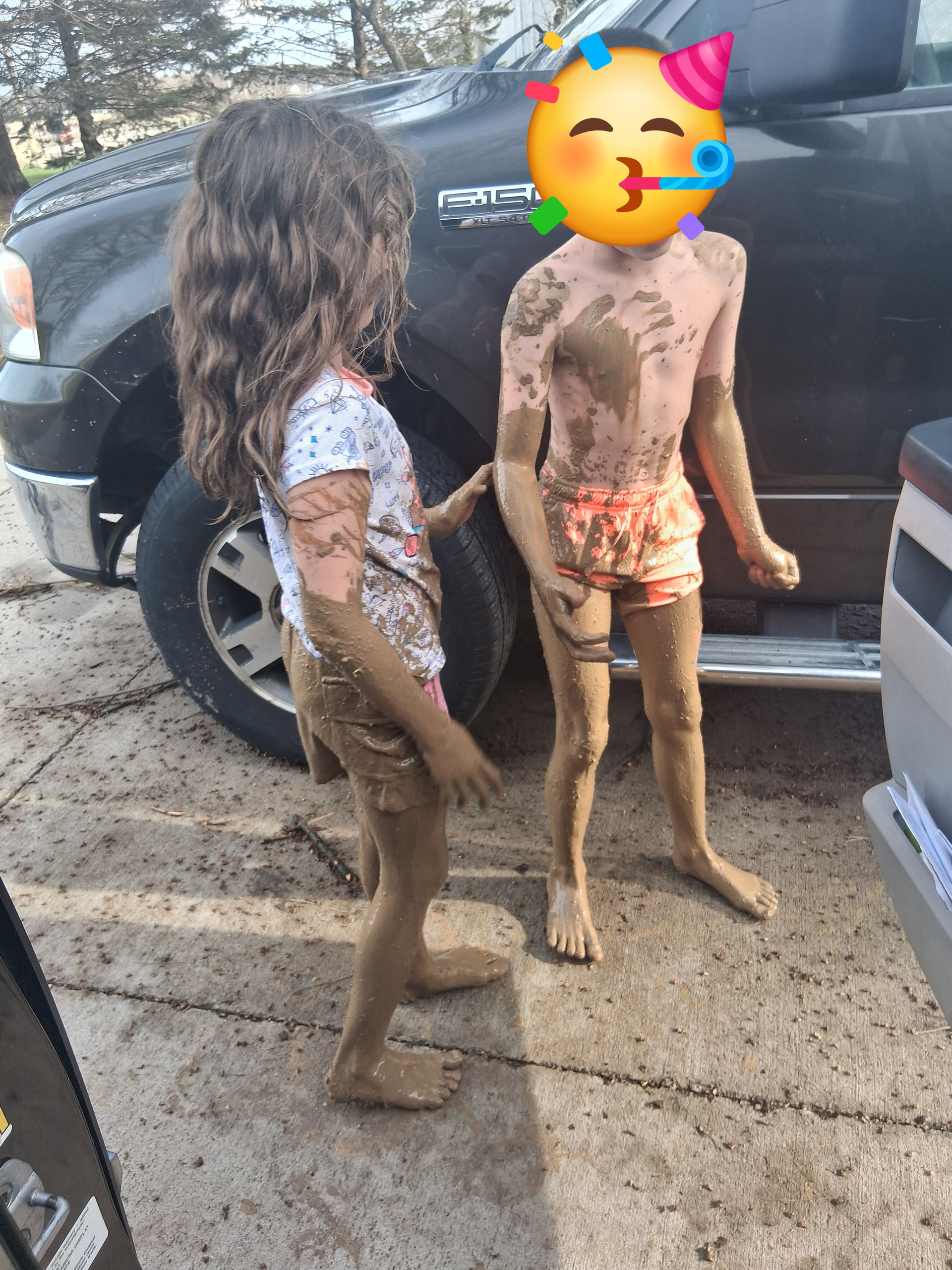
My kids and I rarely have shoes on unless there is snow on the ground. As someone with high anxiety, I do feel like its been helping some now that its warm enough to be outside and walking in the grass and through the garden. The kids were playing in a mud hole yesterday and really getting their grounding on lol