Last winter I applied a 12-16” layer of arborist woodchip to my side yard, mainly to build soil and protect it from getting baked in summertime.
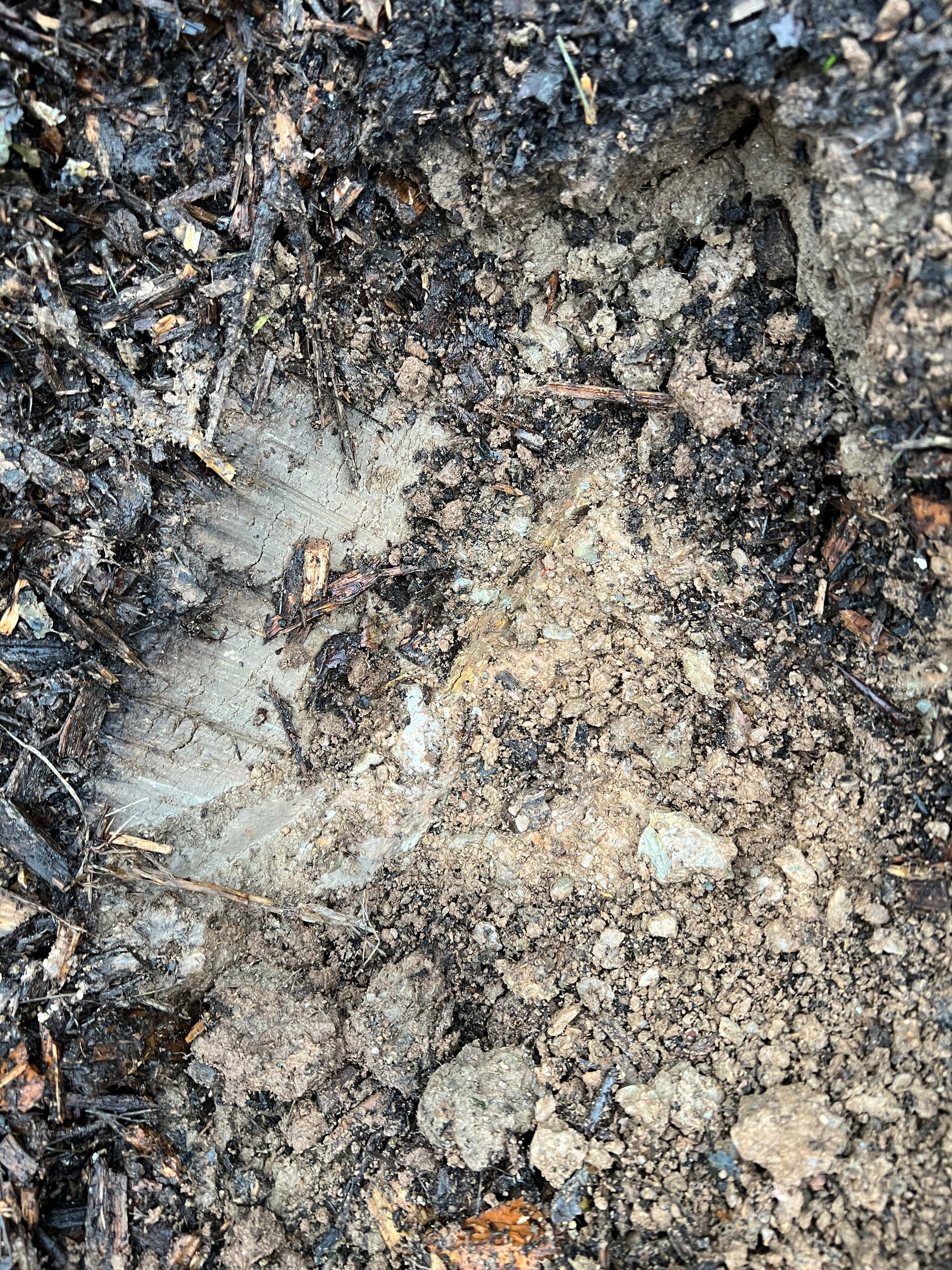
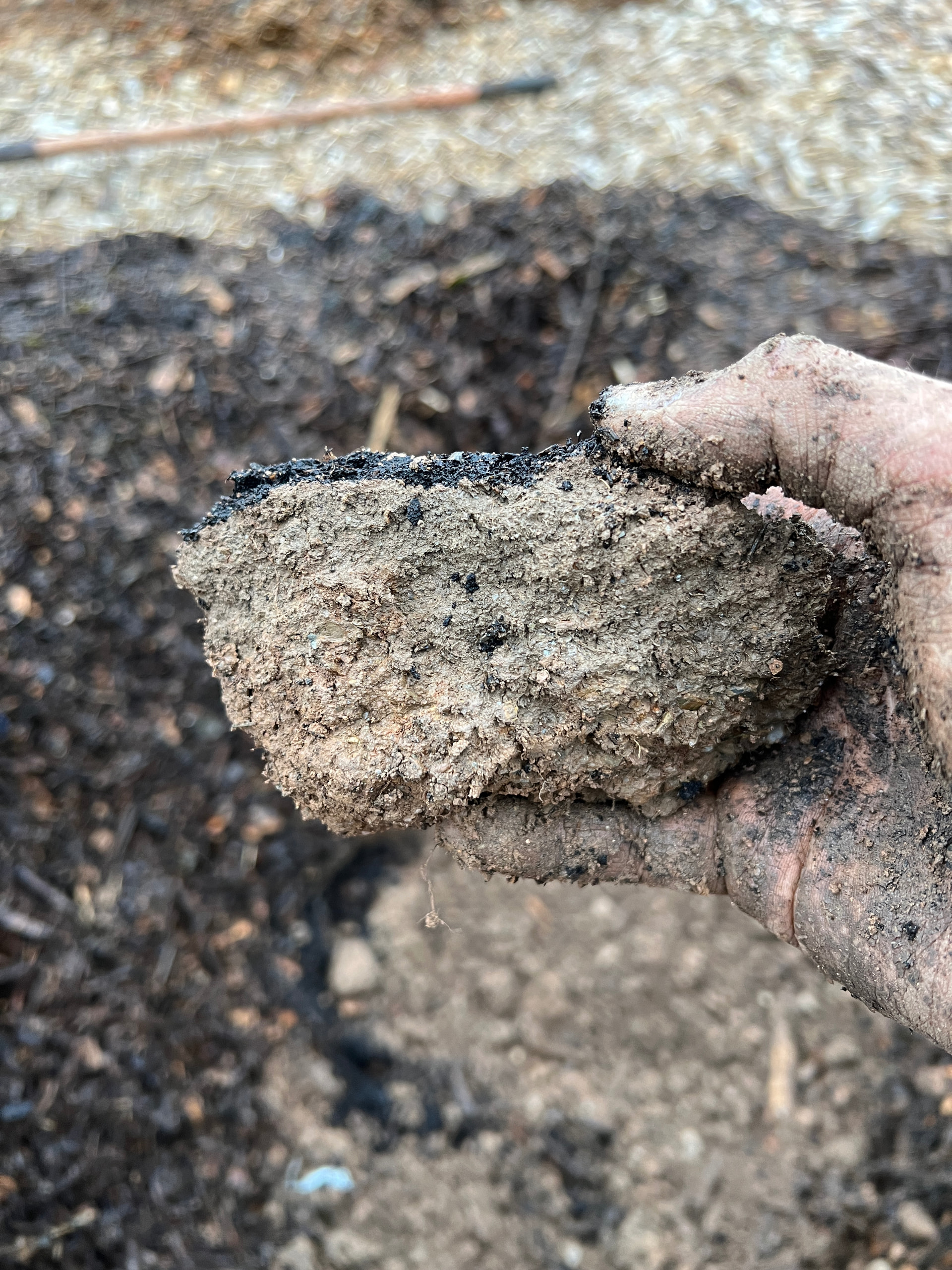
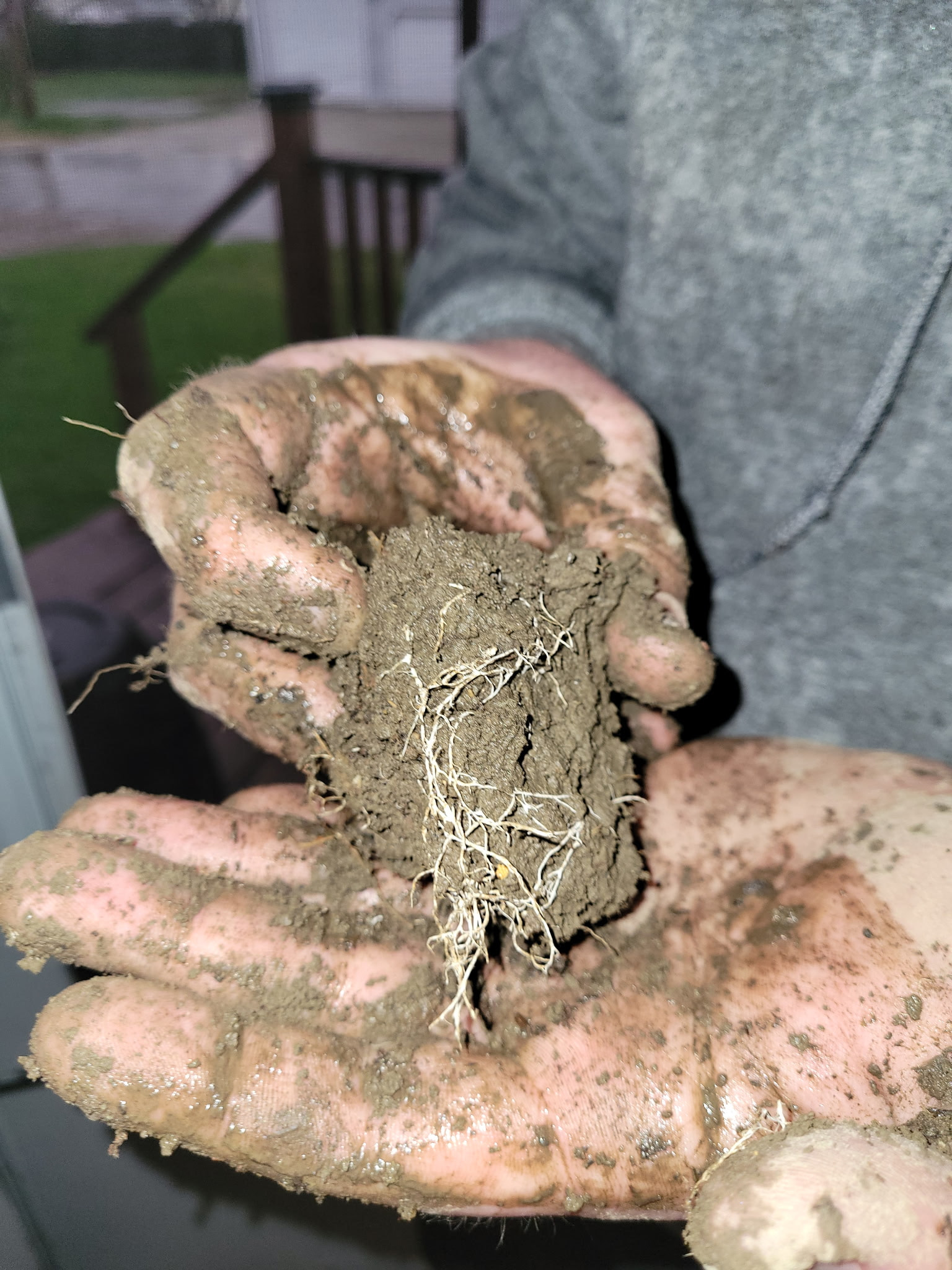
Little did I know that this would cause patches of that soil to turn gray and foul smelling when I went to plant apples in this area. I think eventually it would compost down, but I have never seen woodchips do anything anaerobic before.
What I did was in the smelly areas, I dug an extra wide hole (3’) for the trees, took the gray soil layer and put it aside, and lastly I refilled with leftover normal soil from other places instead of the gray stuff. This way the apples will grow in normal soil while I fix the rest of the area.
Next I think I should remove about half of the chips and aerate the soil somehow, I’ll probably use my fork since that’s what I have. Feel free to share your suggestions about this.
if it were me id remove mulch leaving only 4 to 8inches max, aerate with a pitch fork, make my own LABS (Lactic Acid Bacteria Serum) and water the remaining aerated mulch with the diluted LABS to help suppress smell and promote the right bacteria. then id introduce winecap mushroom spawn in the bed, it will eat tge wood and go into the soil, assisting your trees. labs Isnt crucial but beneficial and super easy to make. im just a barber though. best of luck.
if it were me id remove mulch leaving only 4 to 8inches max, aerate with a pitch fork,
This was my thought as well - reduce the problem and reintroduce air while the tree roots are growing.
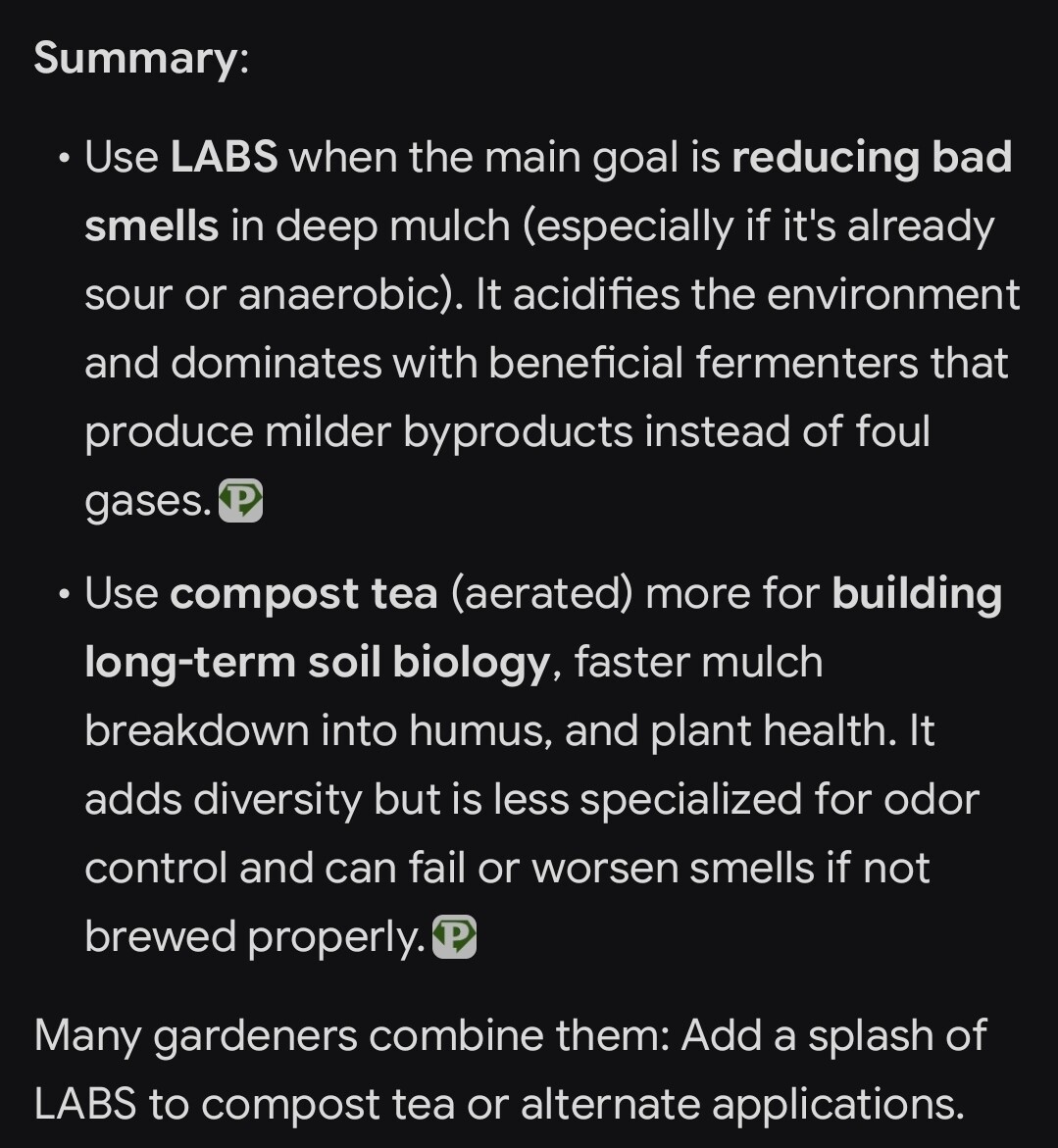
make my own LABS (Lactic Acid Bacteria Serum) and water the remaining aerated mulch with the diluted LABS to help suppress smell and promote the right bacteria. labs Isnt crucial but beneficial and super easy to make.
I have a huge pile of compost nearby. It will probably be easier to make compost tea with that. What do you think of that?
then id introduce winecap mushroom spawn in the bed, it will eat tge wood and go into the soil, assisting your trees
This is a really good idea. In some places the native fungi are already doing this to the woodchips. I’ve been meaning to get winecaps anyway to speed things up.
At that point you’re talking about a compost pile. I was looking to do a slower decomposition with fungi and I think I just overapplied given the timeframe I was gonna put trees in for.
making labs is super easy, you just wash off rice and save the water, cover with paper towel and let sit for a few days. it will ferment and start to smell like yeast and bubble at the top. when it gets to that stage dump into bigger container and add milk. 1 part rice wash water to 9 parts milk. cover with papertowel and let sit for 3 days. the cheese will separate, strain liquid. the liquid is your LABS. put 1 ounce per gallon of water. research ‘chris trump LABS’ on youtube for more instructions. super easy and has many uses. its im yogurt that you eat. best of luck
*id monitor soil ph. labs can affect the soil if applied too heavy. ive done it before lol. a little goes a long way.
That’s why I was going thicker, to try and suppress violets, poke, etc. as much as possible and eliminate the predominant grass. I have put a foot of compost on areas before and it’s very effective, so I just swapped compost for chips.
I suspect that adding the already stable OM is much friendlier to the ground than the fresh brown woodchip with very little leaf content.
Yeah I learned this the hard way too. Went way too deep around some young apple trees and the soil underneath went anaerobic within a couple months. Pulling it back to 3-4 inches and letting air back in sorted it out but it took a while for the trees to perk up again. Thinner layers topped up more often works much better than one big dump.
I’ve been doing the same thing anymore. I weed selectively in mulch beds now, pulling out problematic and nutrient hogging plants like grasses and sheep sorrel, while leaving native ground-covers and leguminous plants like violets and clovers.
I think I’ll be able to fix my soil relatively fast without much harm to the trees, since they have just been planted.
I agree with thinner layers of wood chips now.
I know Paul Gautschi did a 12-18” layer all at once and he ended up okay but during that winter his soil was waterlogged. But in his case the soil was already compacted and he just went through with the process.
I was rewatching this video Tom Spellman did on backyard orchard culture and it dawned on me that part of my issue is the mulch being too fine. Fine is great for composting because it gets eaten faster by the life forms, not so great for a thick mulch where the soil needs to breathe some.
A good mulch to me is…really biodiverse. It’s lots of different types of wood products, it’s lots of different sizes of wood chunks. It’s anything from six inches long down to little microchips. That has biodiversity and that has the ability to breathe well. All those chips and chunks of wood fall at different angles and that the soil can oxygenate well. It doesn’t create an anaerobic condition where water stays on the surface and isn’t allowed to move freely through the soil.
The woodchip areas with more long shreds tend to breathe better than those without. The areas that were done with the new fine woodchipper tend to be the worst off (by fine, I mean that I could sort buckets and buckets of sawdust out of the woodchips). I still think my application was too thick, but it’s a helpful bit of information nonetheless. Timestamp is 13:39.