Young apple tree training. A Study of the Framework of the Apple Tree

For those interested and who have not seen it. This is the summary of the study carried out in the growing seasons of 1924-1927 in Illinois orchards. The conductors of the experiment wanted to come up with an easy and fast way to establish a framework of branches to eliminate harsh pruning late in life that would lead to decline, and to have a way to easily produce a modified central leader tree with all its framework in one or two growing seasons. Minimal pruning is the goal to achieve fruit sooner.

The full text is available for free on Skillcult.com under Free Stuff.


8 Likes

Follow up with results of using this system.
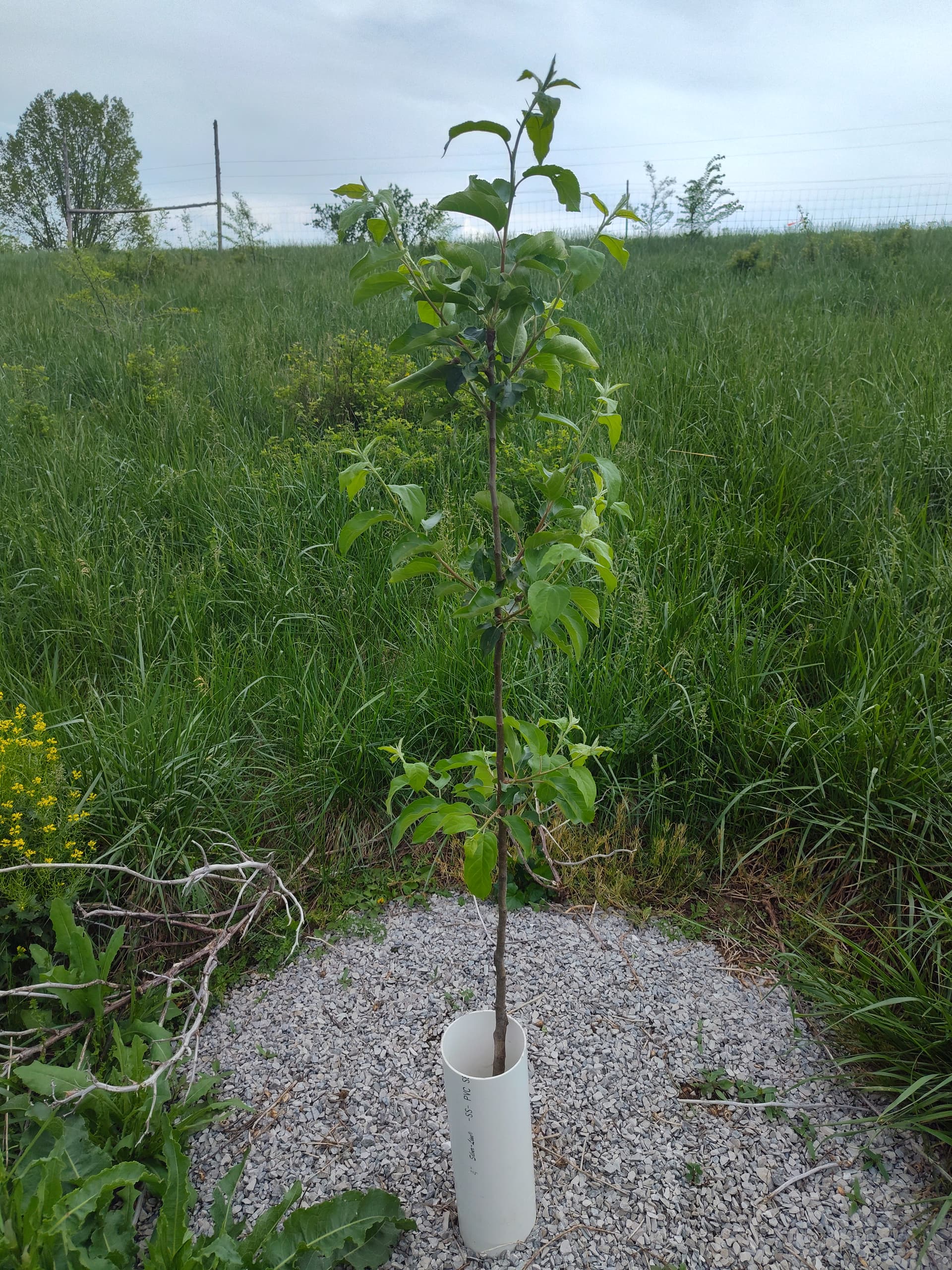
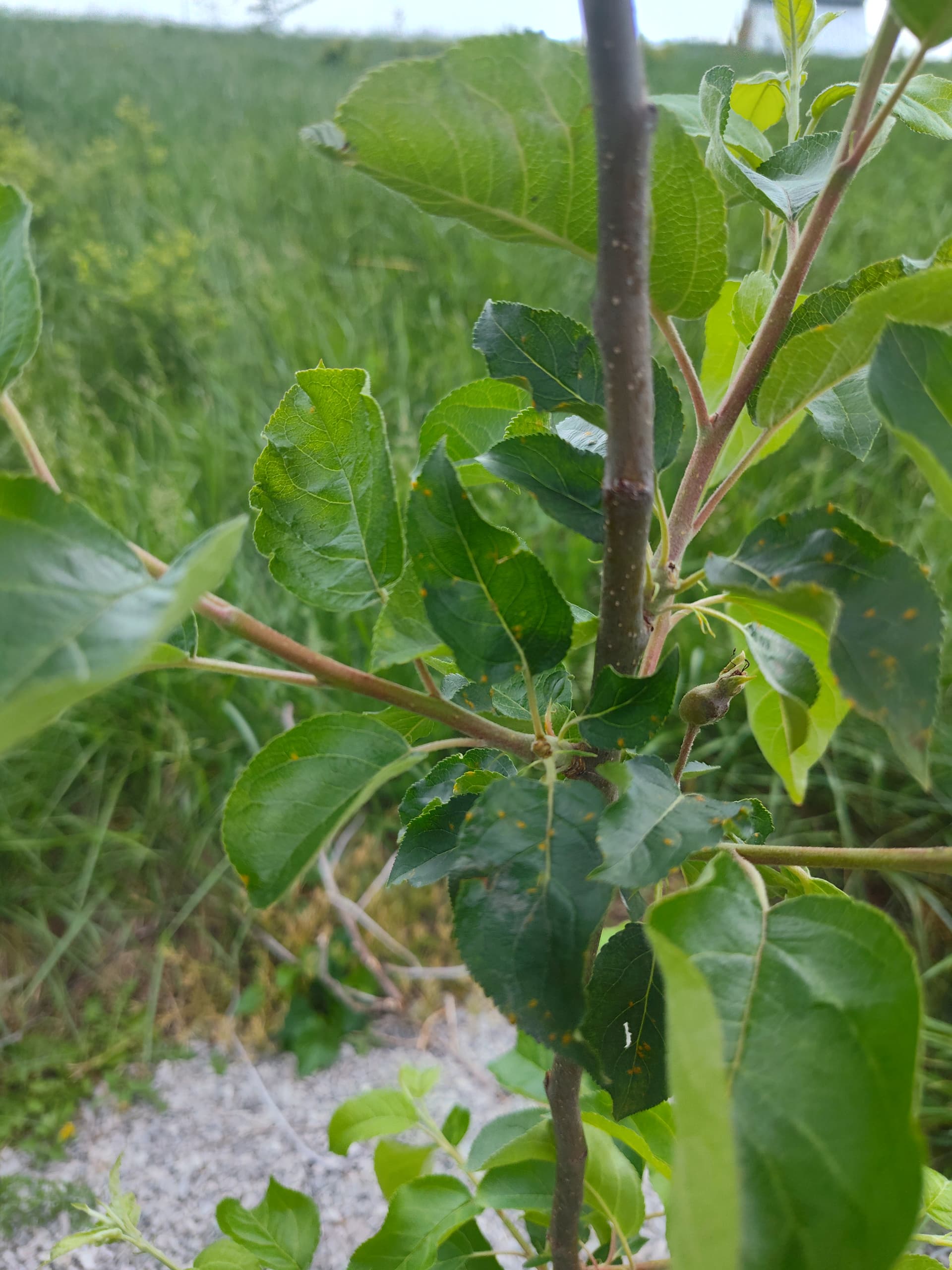
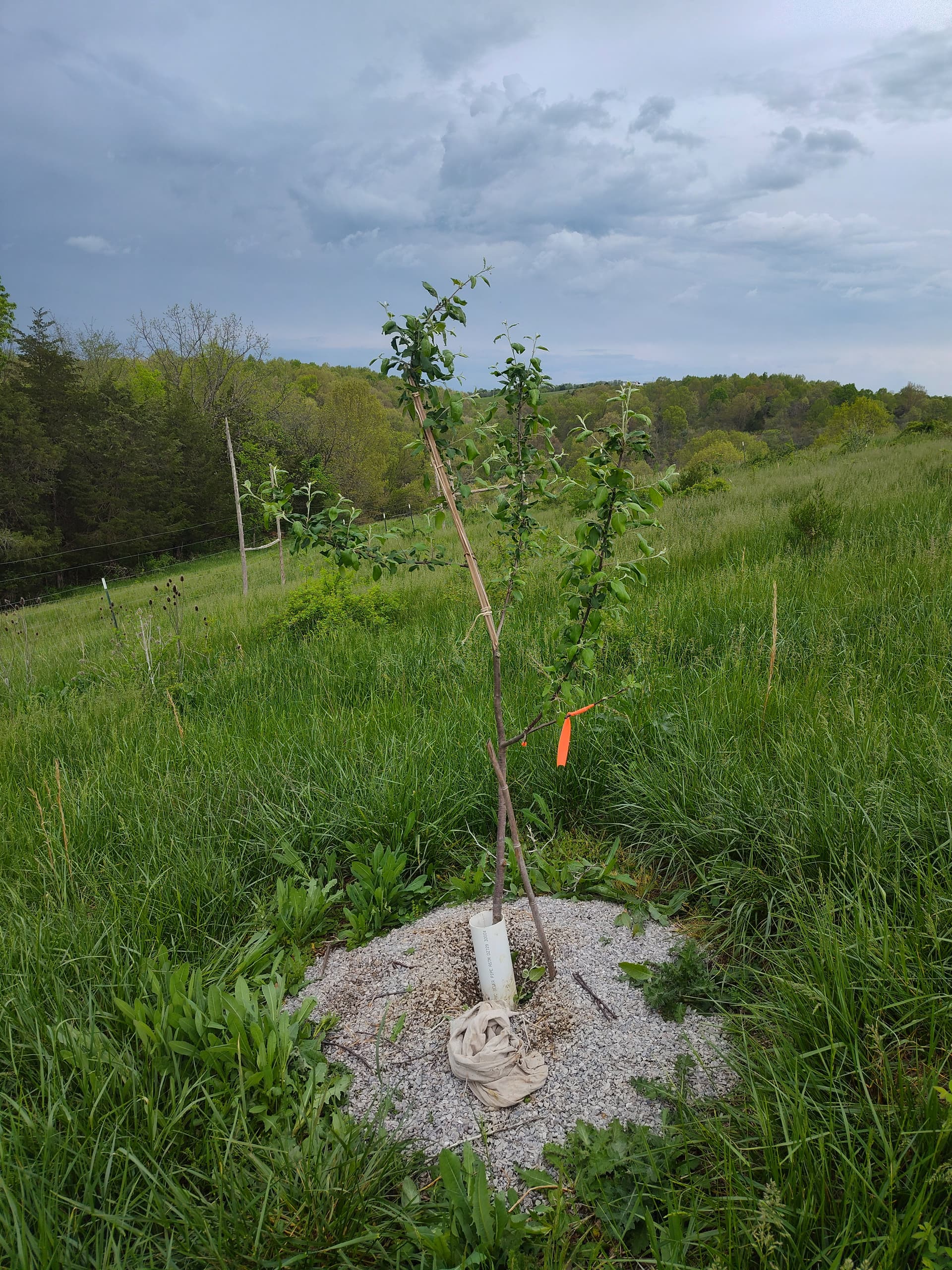
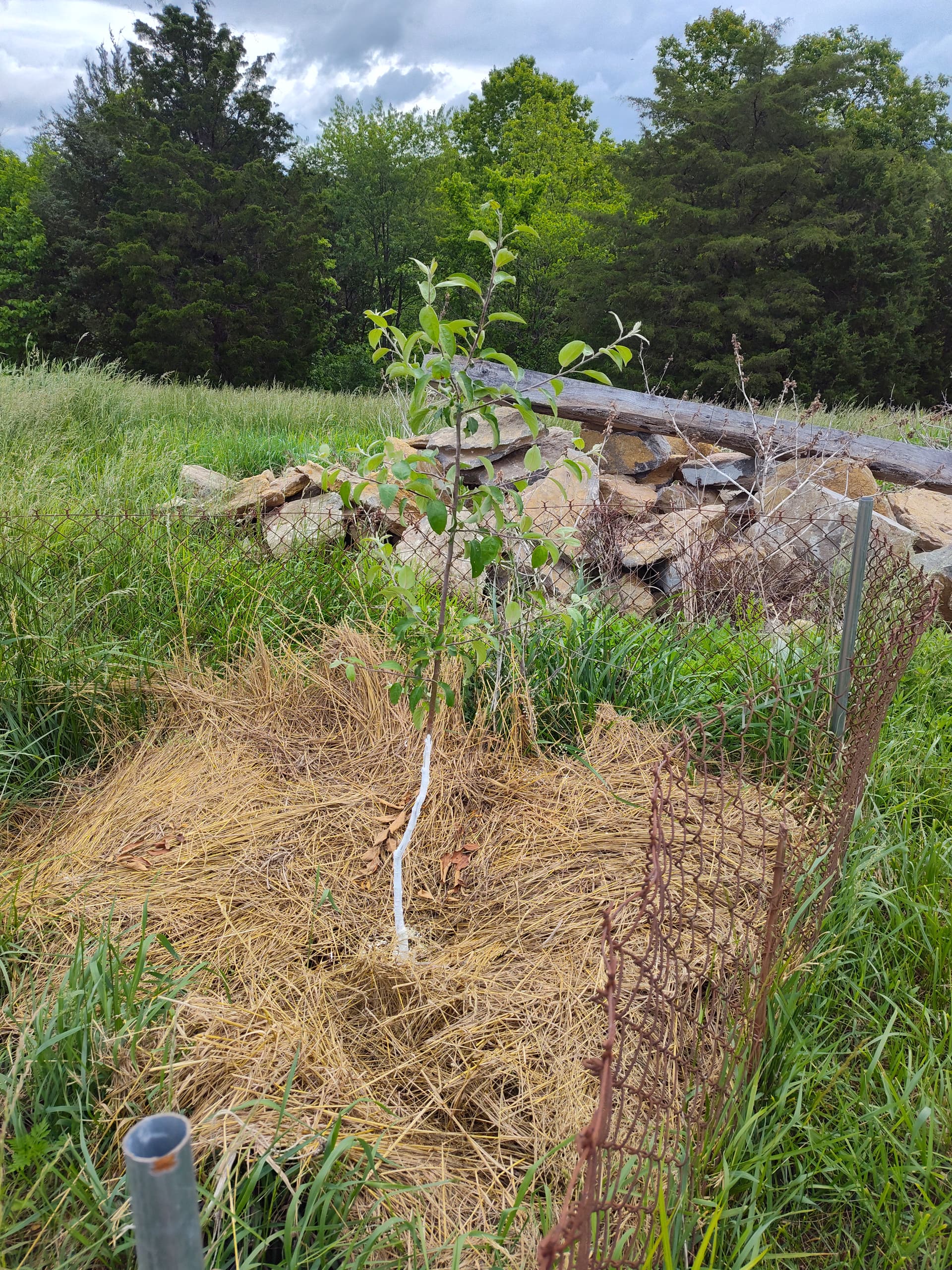
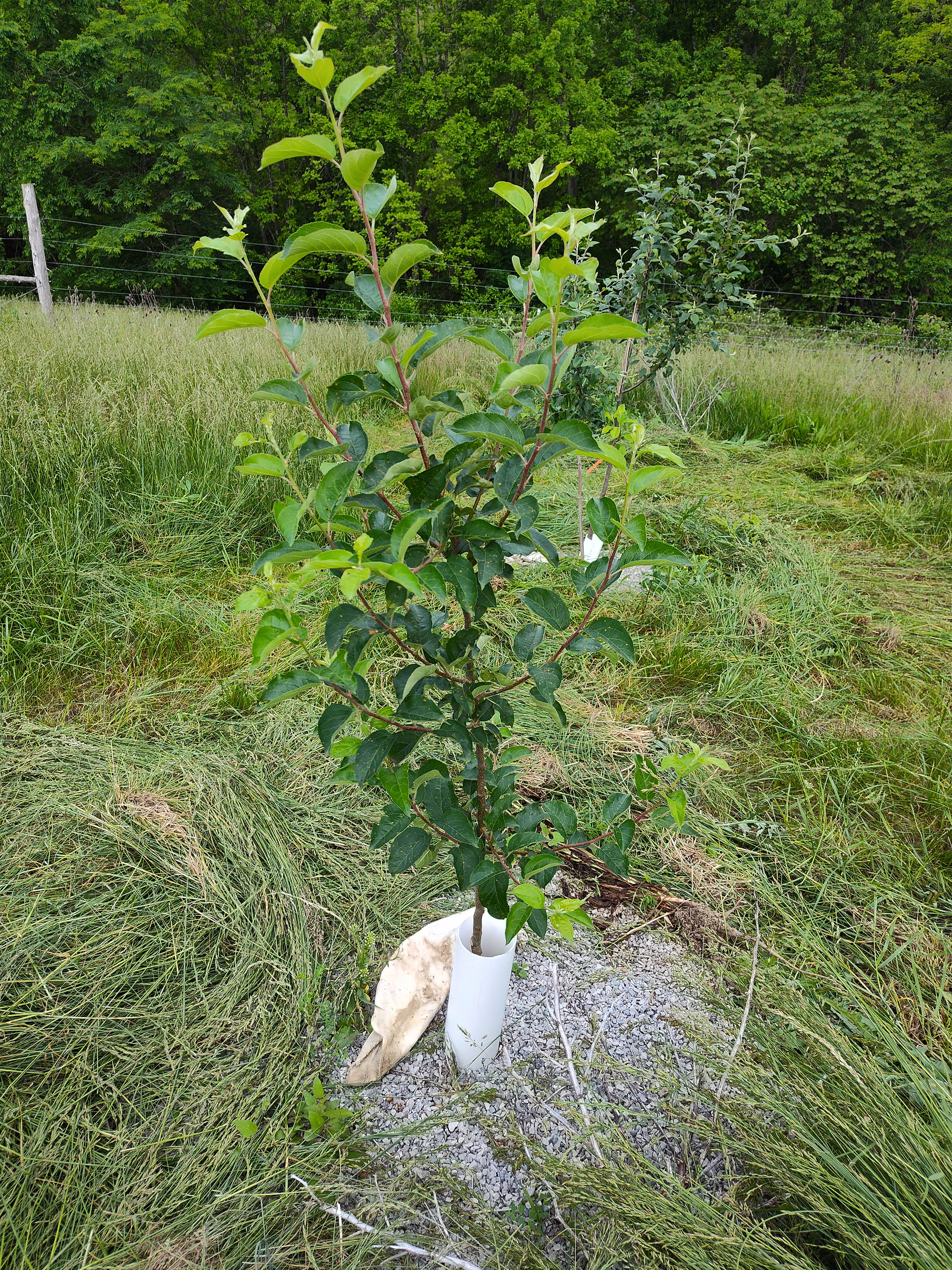
Below is a Wickson tree. It was disbudded to a set of 4 buds per tier of what will eventually be pruned to one framework branch. As the study shows, light heading back of a maiden (whip) and disbudding induced good branch angles all the way down the tree, and because the tree is growing from fewer points, it will establish its final branches by the end of this season in a modified central leader form.


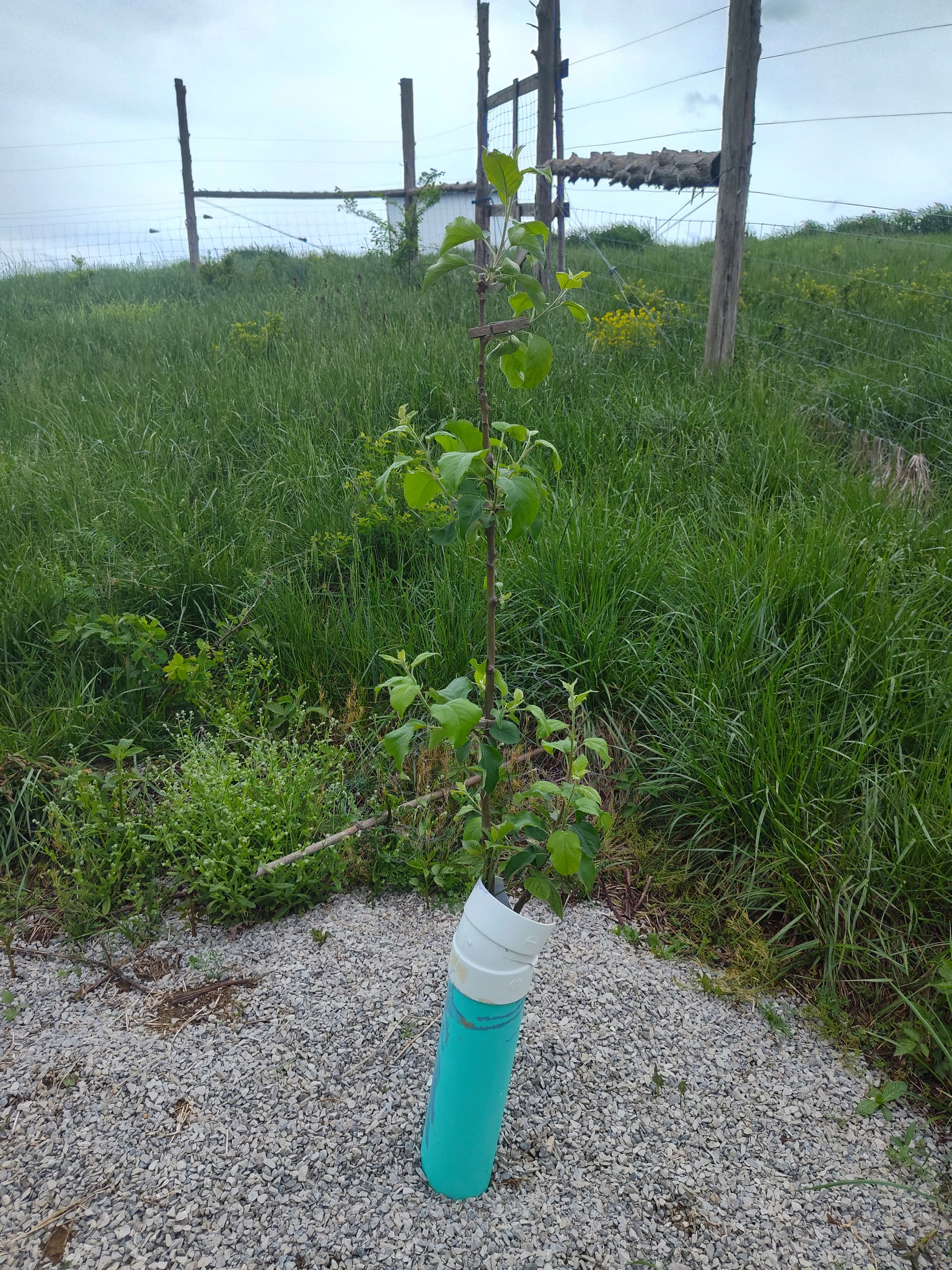
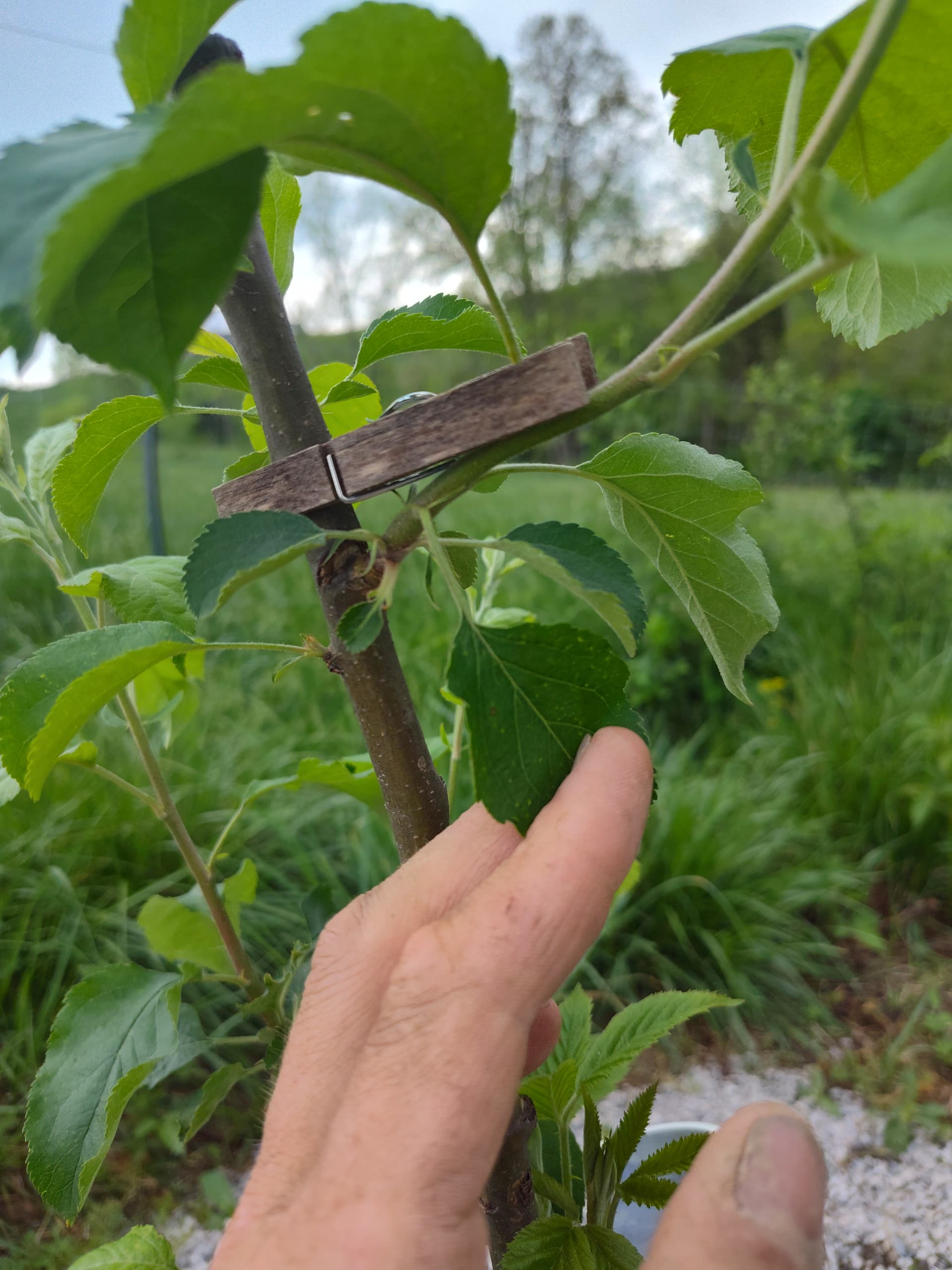
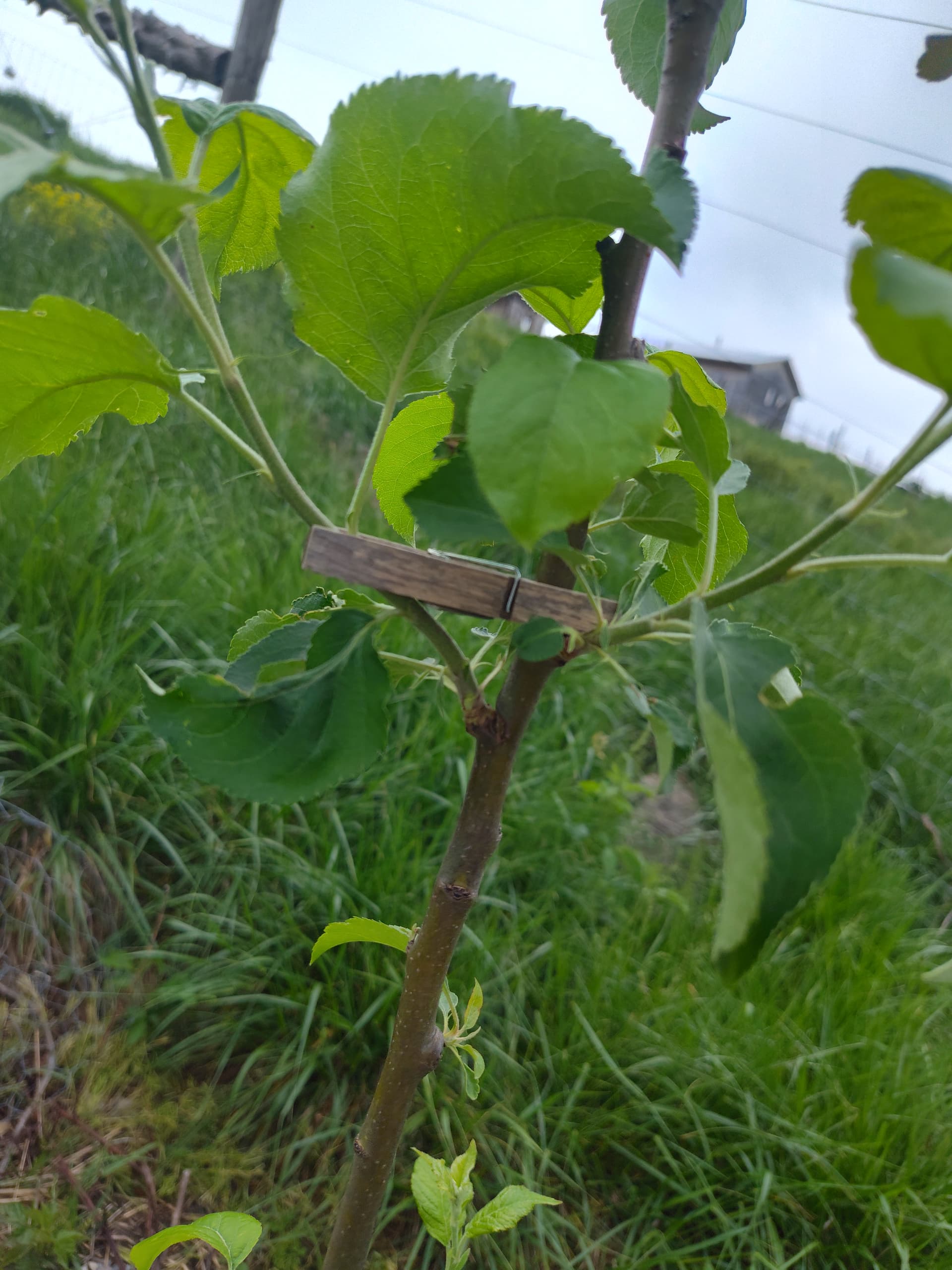
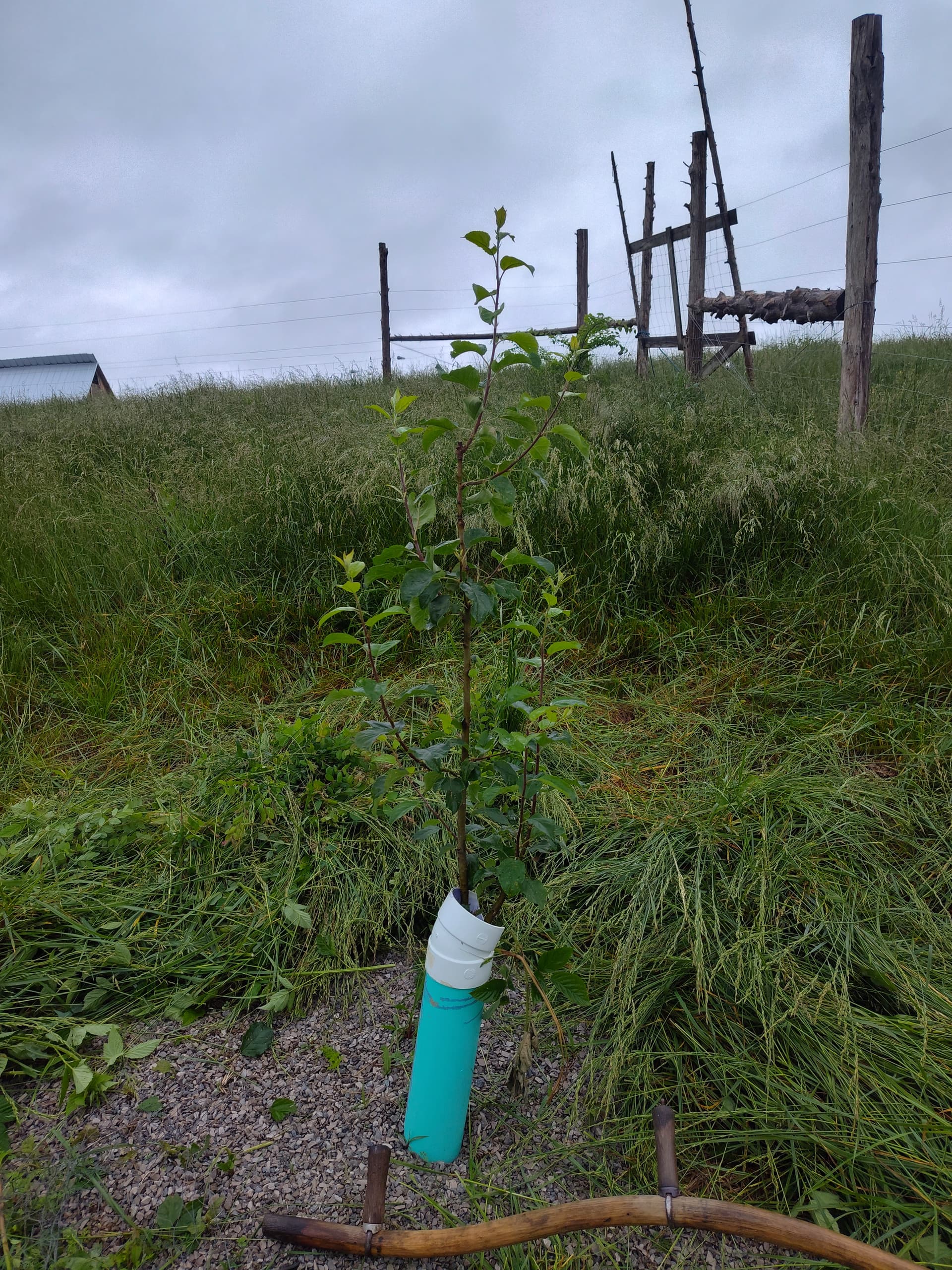
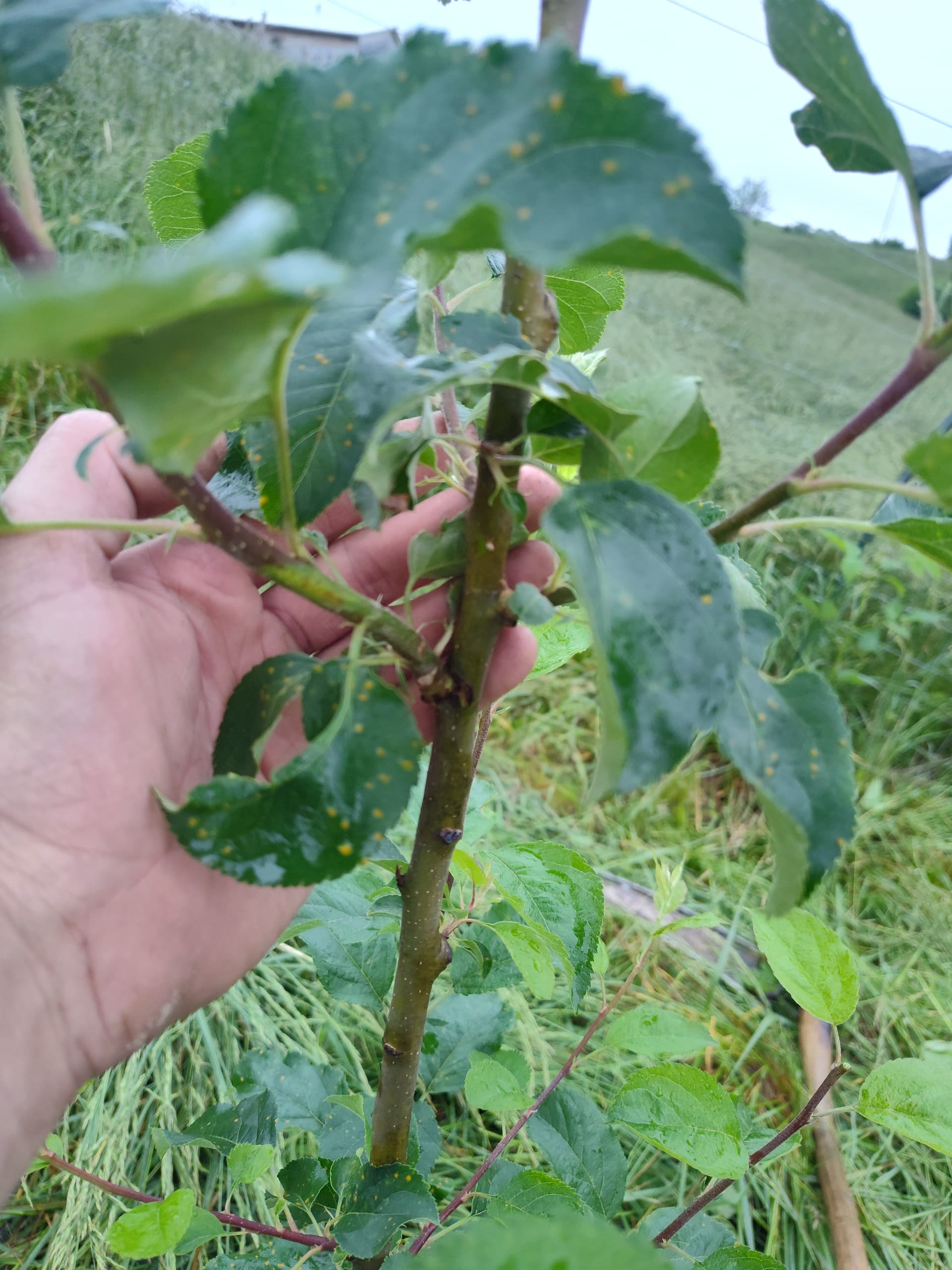
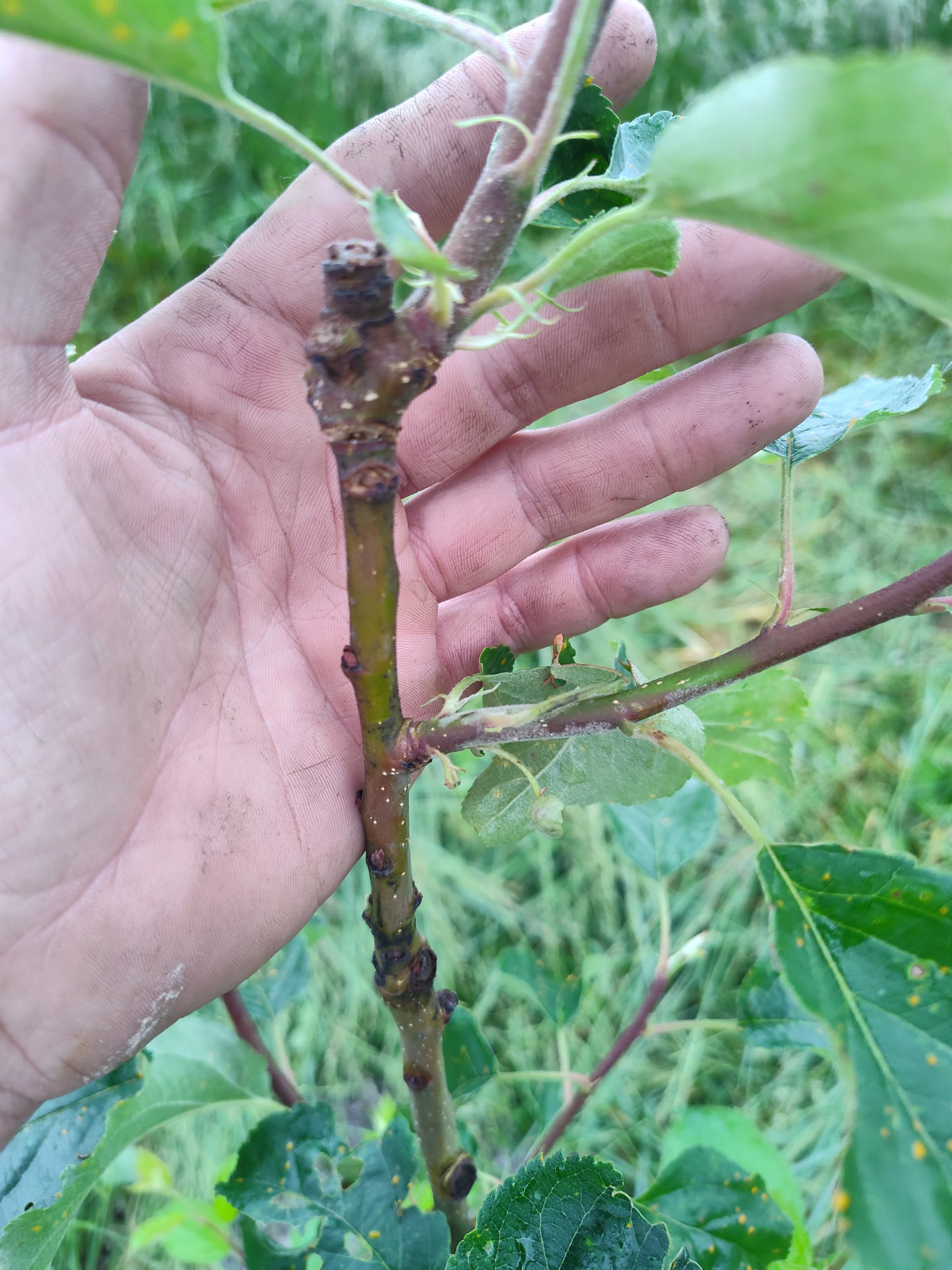
Below is another experiment. I disbudded as before, and pinched back about two inches of the top, but this time I cut into the bark above the specific buds I wanted to be my branch. It’s working very well. The only complaint I have with this modification to the system is the angle of the branch that results after notching the bark is extremely narrow and must be manually trained to a good angle. Not such a big deal on a small scale but when you plan on planting 50-100 trees it becomes cumbersome.


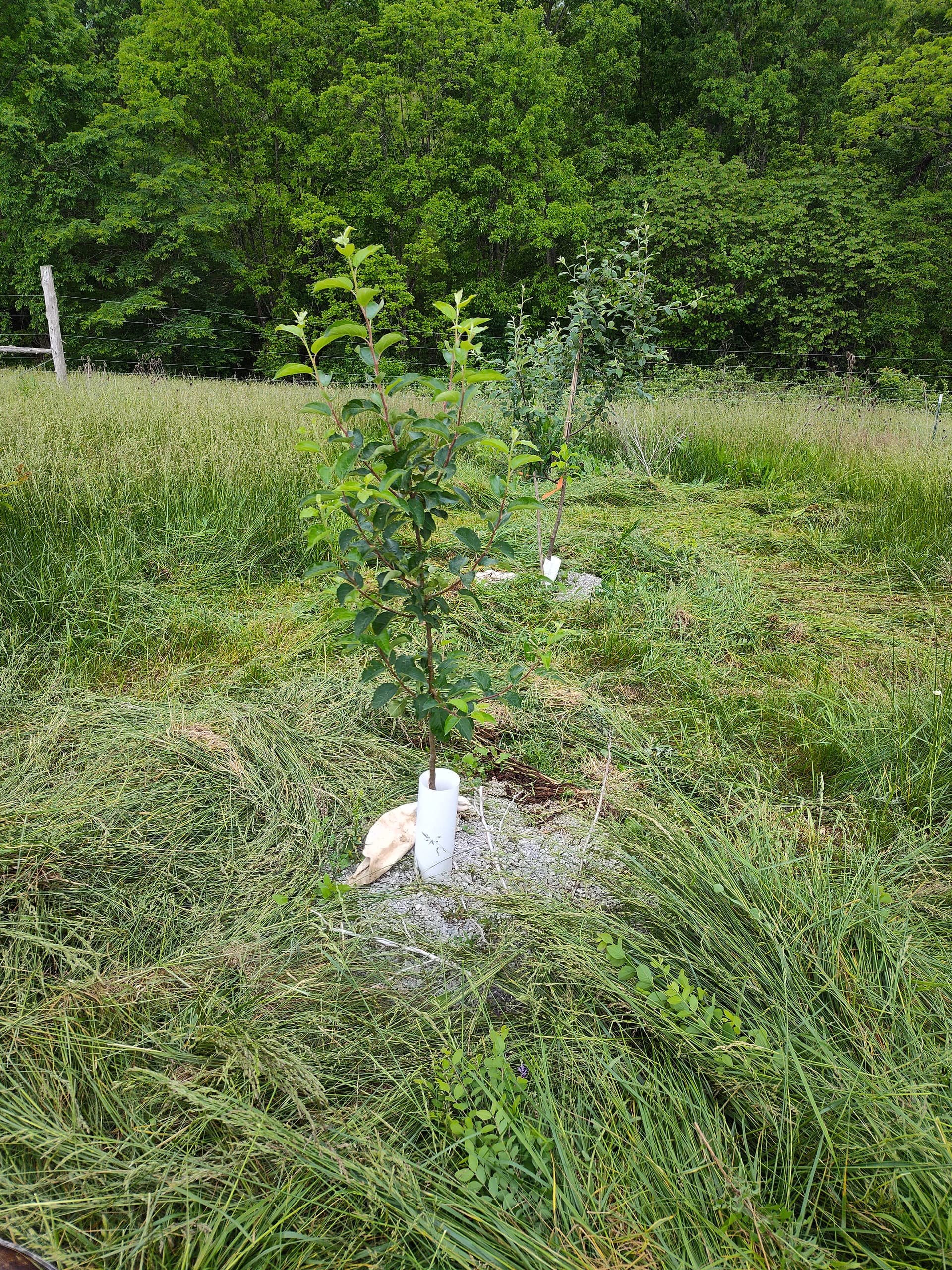
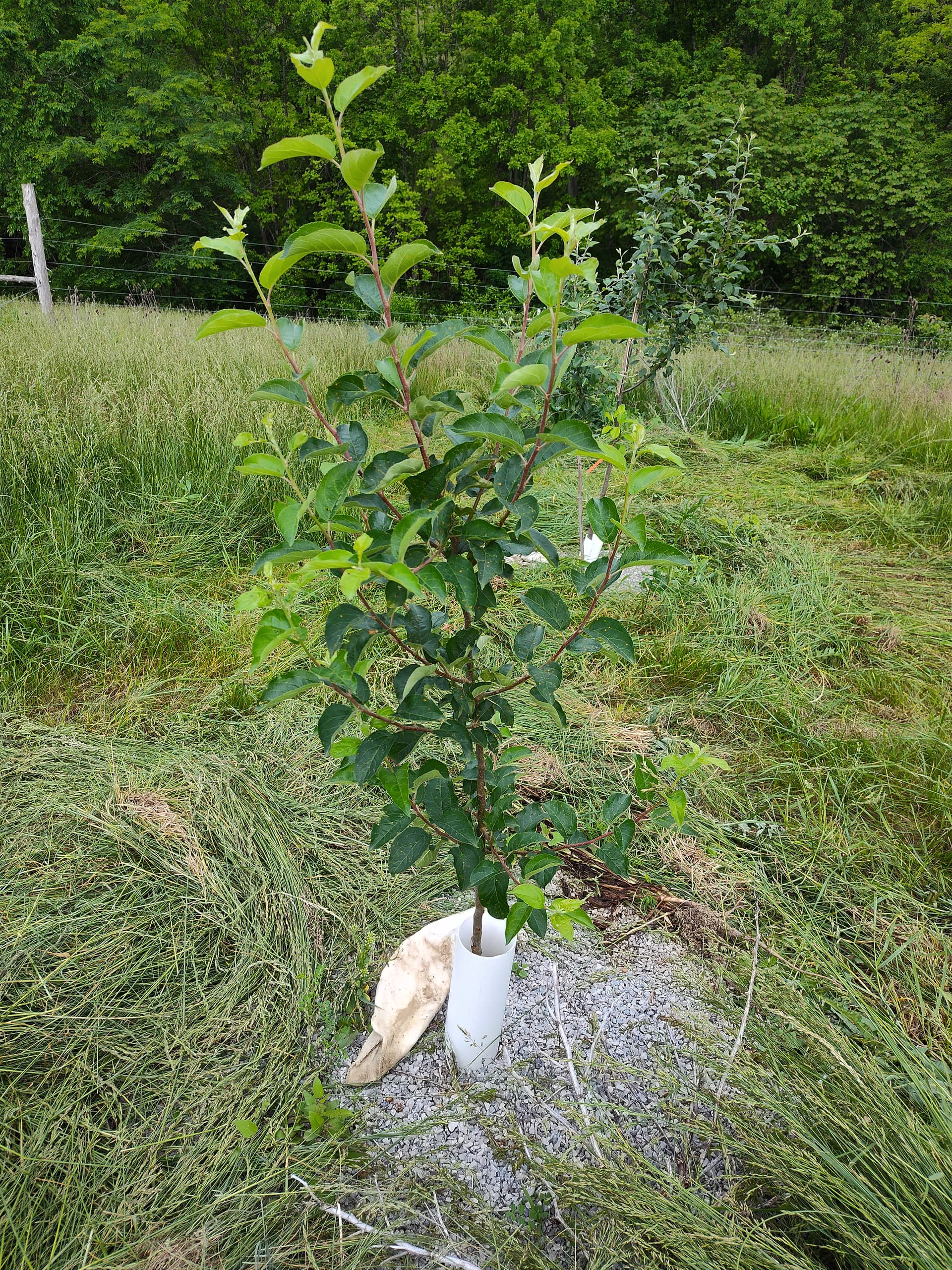
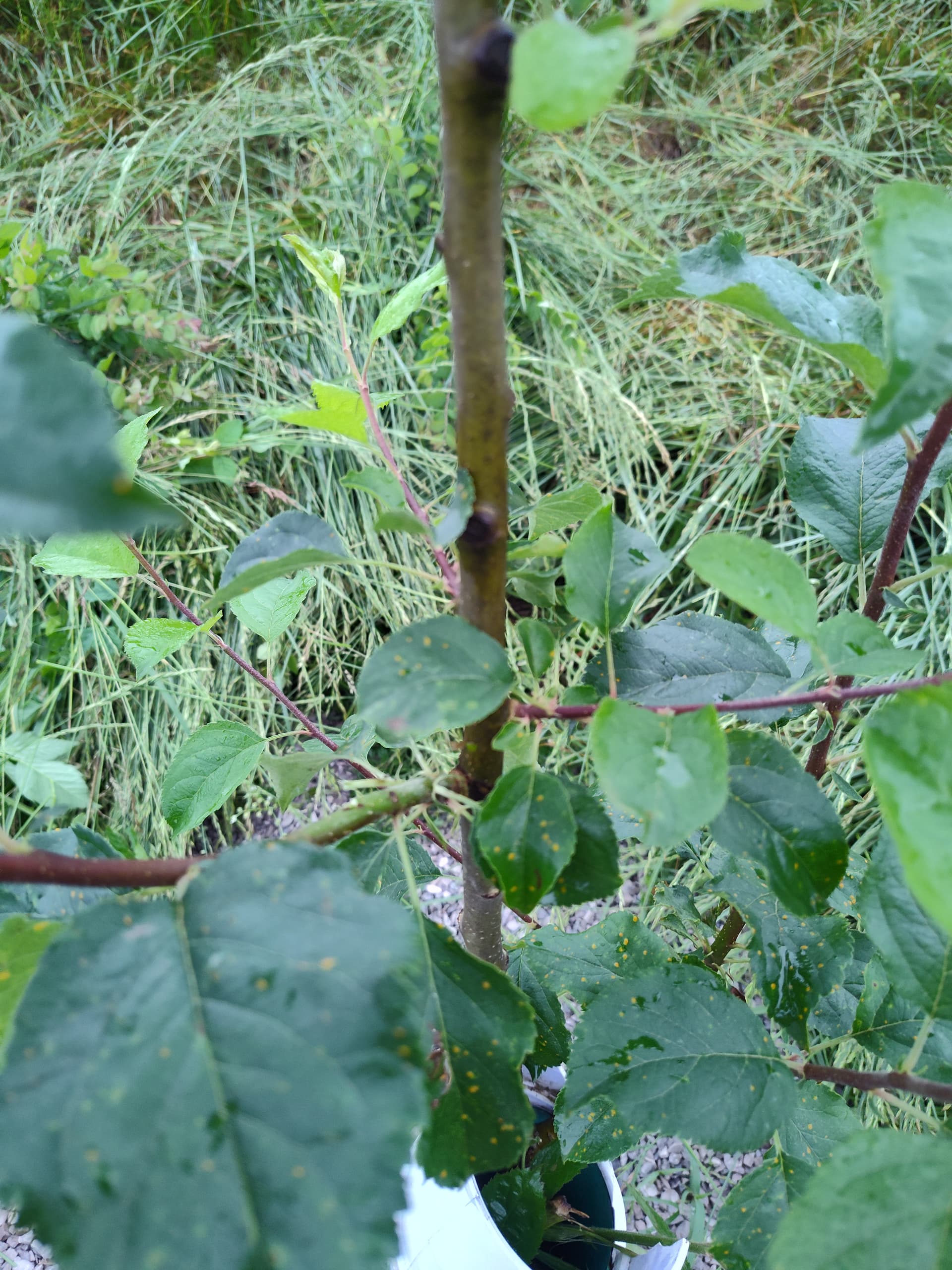
Finally is a tree that has grown much better. You can see the final form is nearly perfect in terms of a modified central leader. This system is very effective. All the trees have been in ground since October 2022, and neglected until now aside from the training. The first and second examples were trained this year. The last one was trained last year because it grew faster. Cherry crush is an extremely vigorous tree.

I have never made any heading cuts on these trees, and probably will never have to. And had i cared for the trees when they were planted with mulch and careful fertilizing, they probably would have had their final forms by the end of the first year in the ground. The above tree has a “splint” because it was growing in an “S” shape at the top.
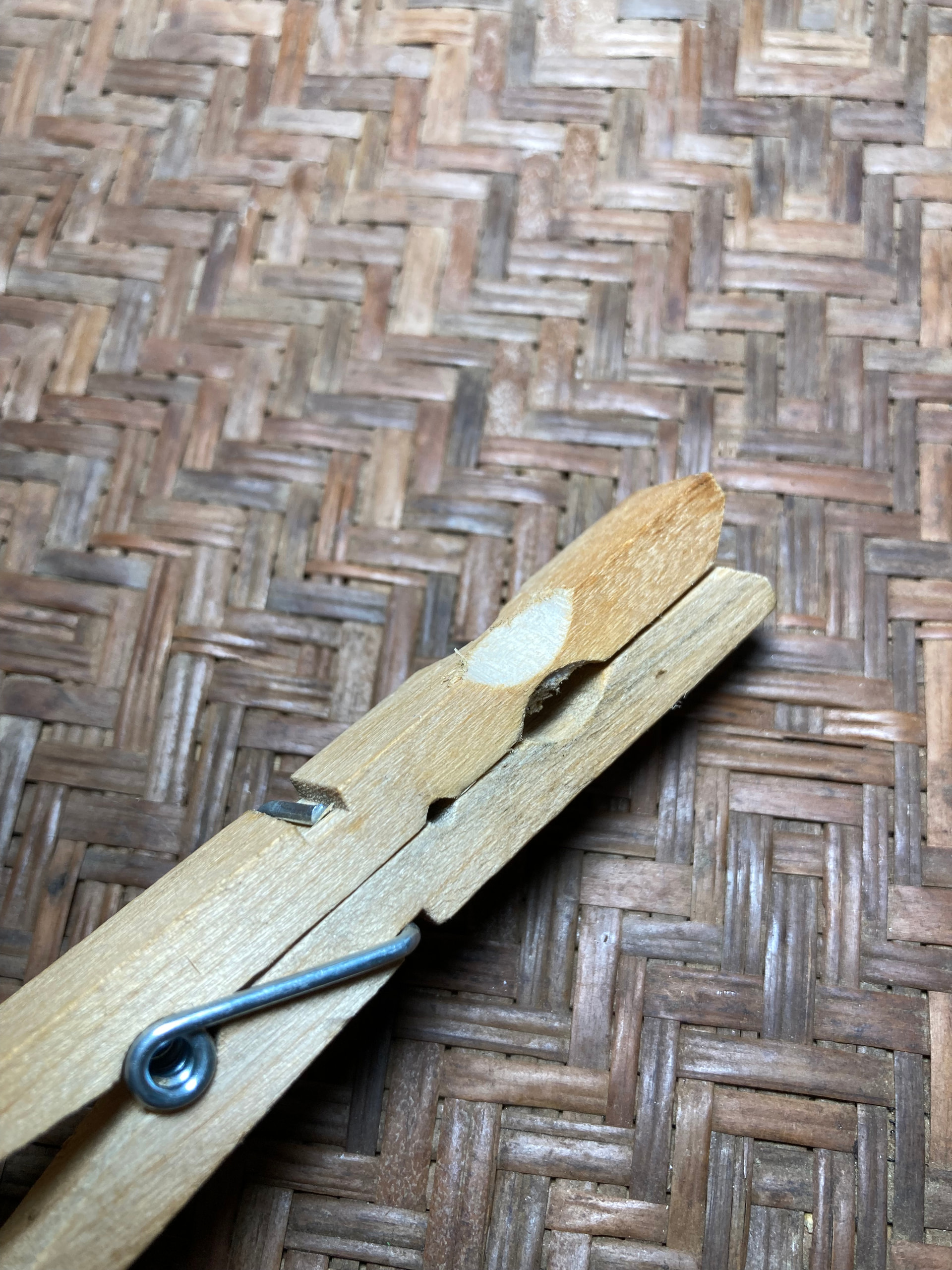
@SkillCult, here’s some more anecdotal evidence of these tree training systems in action. Very effective methods. I think I prefer the method without the notching, simply because the induced branch angles are wider. But it’s not too hard to stick some clothes pins on a couple shoots.

4 Likes

Some notes.

Heading back severely (as is usually recommended at planting a bare root tree) induces vigorous branching, typical only near the cut. The branches tend to form at a narrow angle. In my limited opinion this is because the top most buds all go into a vigorous vegetative mode (the leader is gone and needs to be replaced), and they go straight up typically. I’m not sure why, but heading back very lightly as the study states (2") and disbudding only induces the top few buds to grow upright. These probably ought to be thinned down to one if a MCL tree is desired. The lower buds that were selected branch out at wide angles in the natural fashion of the tree, see below:
-Each year a tree grows and stops at a certain height. The following spring when growth resumes, the apical bud continues straight upward, while the buds immediately below grow outward in a whorl. Think of how a pine tree grows. Again, I’m not sure why a light heading back induces buds all down the trunk to branch out this way, but it does. This is pretty much the focus of the 1924 study it seems

Now, notching the buds accomplishes something else. When a bud is notched, only that particular bud gets the signal to grow vigorously upright, as its basically received the signal of a severe heading back. The cool thing is you can select whatever buds you like and they all act the same usually. It’s very reliable. The only downside as stated is the branch angles are no longer wide and need to be trained very early. Easy to do with clothespins. In the notching method there is zero need to pinch back the top bud. This method might be the quickest and most reliable way to get a permanent framework, with branches not only at the heights you want, but pointing in the direction you want.

These two methods might look similar but I think they are in their own category, based on the reaction of the tree. The second method, which is coined by Steven Edholm as Smart Fruit Tree Training, is more labor intensive, but probably faster and more reliable.
The first, in the 1924 study, is less labor intensive, and you are somewhat at the mercy of whether or not the tree is willing to give what you want in terms of direction of branches. Easy to correct if done early enough. Both seem to work very well.
We will be planting 50-100 trees in the next two years, half seedling and half m111. I will be doing this to most of them, and will have reports on efficiency and effectivity on a larger scale.
Thanks for reading, and thanks be to God for giving us such a creative role in His holy work. It truly is a wonder.

5 Likes

Further follow up.
All trees are m111.
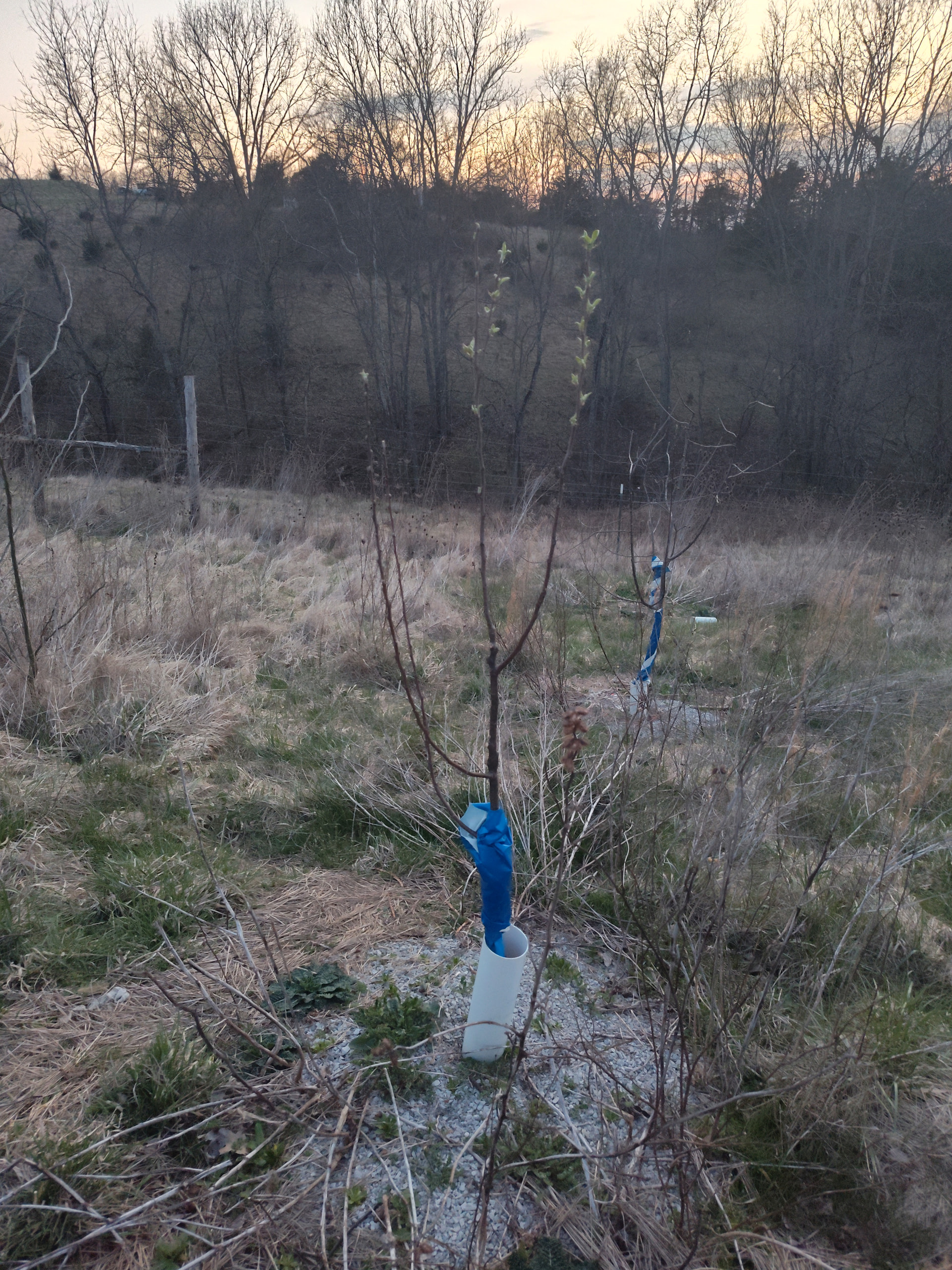
These first three photos were all trained using the above stated system of training developed in 1924. (Disbudding, pinching off the tip) Good branch angles formed, and I will have my pick of final framework branches in the spring. All branches will be allowed to grow to feed the roots. The heads will be thinned in the spring and all growth will be directed to the 3-5 chosen branches. This site is exposed to lots of wind, so some trees are leaning. I can stake if I want, but the study states that any leaning was self corrected. I’ve read that wind reaction from a tree is to thicken the truck at the expense of upward growth. (Possibly size controlling the tree a bit? We’ll see.)


This final tree was trained using the clothespins and branch notching method. The branches show the expected and desired apical traits of thickened and upward growth. Hopefully the branches all compete and the tree is size controlled this way.


1 Like

This study from 1932 contradicts my own practice, which eliminates unwanted shoots quickly. So I checked more recent research and found considerable evidence that favors early removal. The reasons include:

  1. Better energy allocation to target shoots.
  2. Enhanced apical dominance of target shoots.
  3. Easier healing of small wounds, with less stress on tree.

In these more recent studies, the recommended method is for (1) immediate removal of any unwanted buds, with retention of buds only as needed to provide a selection of shoots to serve as eventual scaffold branches; then (2) removal of excess / redundant shoots as soon as possible after selection of shoots for scaffolds. For example, ideally there might be four shoots that point NSEW, spaced vertically, with acceptably wide crotches and suitable vigor…

3 Likes

Not sure if you’re in agreement or disagreement, what you’ve laid out there sounds like the same goal as the framework study above accomplished, albeit a different intervention maybe?

The above stated study is centered on early removal of growth. The whip is reduced to 12-15 viable nodes by mechanical removal of the unwanted buds (with a knife or fingers). The only time you will have extra branches are the first year of training, to feed the root system and allow for suitable branch candidates. After this year, in accordance with the study above, I will remove all unwanted shoots except for my 3-5 main scaffolds. And the tree will be into maintenance pruning with the permanent scaffolds already established. No wounds will be grater than 1/4 or 3/8 inch.

Something to note is that this study is intended to be useful for orchardists with hundreds or even thousands of large trees. So the idea is to be a simple, effective and repeatable system, not necessarily the fastest and most perfect system possible. And they were not necessarily expecting fast fruit, they wanted trees that produced well and were healthy for half a century.

2 Likes

Stay tuned, later this year when I prune you might see something in these little trees that look familiar to your own system of training I think. I plan to have 3 or four branches spaced 8-12" apart in each cardinal direction with wide crotches. It seems to be working well.

The goal is the same, but the route is somewhat different. Let’s assume I start with a 1-year old whip, i.e., an unbranched tree 3-5’ tall, grafted last year. At the start of this season:

  1. I would head the whip. Removing the apically dominant tip encourages branching. The 1932 article says to leave the whip unheaded and train the top to function as the topmost scaffold.

  2. Assuming I want 4 scaffolds, I would initially (e.g., May-June) remove enough buds / shoots to leave 8 or so. The 1932 article says 12-15.

  3. Once these ~8 shoots have grown a bit (e.g., June-July), I would reduce to 4 in the desired locations. No wounds would be greater than maybe 1/16" – the width of a new shoot. The 1932 article says to leave the 12-15 shoots for the entire growing season, removing them next year.

I see your rationale that leaving extra shoots in the 1st year will “feed the root system,” but this seems based on a misconception. The roots supply water and nutrients to the shoots. With fewer shoots, this water and these nutrients go only to the shoots that will form permanent scaffolds. These resources are not wasted building branches that will be removed in the next session of dormant pruning.

Let me ask a simple question: Imagine three trees. At the start of the season, they are pruned to 1, 2, and 3 green shoots, respectively. Which one will have the single longest shoot at the end of the season?

1 Like

Interesting. Sounds similar enough to cause me confusion. So essentially what I would do in the system you use is remove the unwanted shoots now instead of in spring? I have no issue with it other than the possibility of losing a desired branch and having no back up. I did “head em back” but only an inch or two. Just the growing tip. This was actually one method used in the study.
Well it just so happens that I’m in a place to try both. On the Wickson tree I’ll select shoots to keep tomorrow, and the other trees I’ll leave it be till next spring. That way I can see what difference it might make. I think another idea of leaving the shoots is to help thicken the tree. More leaves means more photosynthesis I guess.
The above study did mention a heading back, but used different words. However it seems that it didn’t make it into the summary and recommendations section. They simply pinched off the top two inches which induced the branching down below.

I will be doing the same thing to all my trees, 125 in total, and I will have 5-10 of each variety on seedling or m111 stock. So I will use what you say here, along with the framework study recommendations, to maybe get a truly scientific result. Assuming I can make all other things equal as possible.

Yes, but I need to clarify so I’m sure you understand and don’t inadvertently mess up the tree. Starting with a whip that is beginning to branch, now I would remove enough buds and shoots so that there’re roughly 8 remaining shoots in positions that could be OK. Then after another month or so, I’d remove 4 of those shoots, leaving 4 in your preferred locations.

Yeah, but just maybe the products of that extra photosynthesis go into the extra branches that you just cut off and throw away. I don’t think it’s obvious that the leaves on the extra shoots can grow both those shoots and the central leader too.

One final consideration: Leaves are solar collectors. The more leaves, the greater the chance of self-shading – There’s a significant change that multiple shoots, competing for the ideal locations on the central leader, will shade each other. The implication is that growing twice as many leaves does not ensure producing twice as much carbohydrate via photosynthesis. Quite the contrary, more leaves implies less photosynthesis per leaf.

1 Like

Something to remember as well, I could be wrong, is that the sap and sugars made by the branches don’t stay there, they get sent to the roots in winter, so it doesn’t necessarily go to waste when pruned.
But Sounds like the only important differences between the two systems is a heading back and removing branches mid summer vs later in spring. Ultimately I’m not sure if there’s any gain when performed on a tree that takes a decade to be in production by doing one system over the other. Maybe a grower would gain an earlier year of production. Splitting hairs comes to mind. The important thing in the end is an established framework by year 2 or three in ground, co dominance of all branches with the leader, and no shading of lower branches. But we will see. I will be planting mainly Wickson, king David, ashmeads kernel, Arkansas Black, and wolf river. Maybe 10 of each. It should be a good opportunity to test this stuff out.

??? I use this approach for apples, persimmons, mulberries, figs. The figs produce well by Year 3, the persimmons and mulberries by Years 5. For apples, the dwarfs produce by Years 3-4, the semi-dwarfs by years 4-5.

OK, that’s the sap at the end of the season. What about the sap produced June through November? The carbohydrates carried by that sap are used to build the branches that are pruned away. All the energy required to grow those branches does go to waste.

Look, I’m just trying to help. I don’t need to waste my time debating. Take what you can from what I’ve told you.

1 Like

Understood.

To clarify things, I’m planting an orchard consisting mainly of seedling stock.

1 Like

OK, if you’re talking standard trees then 10 years might be right. I won’t ask why.

1 Like

My purpose here on this particular thread is to showcase, start to finish, this method of tree training. Because it seems all recommendations from the tree industry are still the same as what the writer and conductor of the above study was dealing with a century ago. And he (and the orchardists he worked with) directly blamed that method of training of severe heading back at planting for early decline of production apple trees, particularly seedling trees it seems. I like seedling trees, we’re planting a low density production orchard that, God willing, will outlive us and produce beyond our lifetime. So this study is particularly useful to us.

It also seems to me that the world of forums tends to leave things unfinished. Lots of discussion is good, but I’ve had trouble finding a true “start to finish” style of documentation on this sort of thing, so I’m doing it myself for the sake of saving time for others.

I’ve applied your advice to one tree so far @jrd51. In a year we will be able to compare the two methods. If they survive to production then even better. But my main focus will be on the methods above. I have no intention of arguing or debating the topic so I apologize if I’ve come off that way, forgive me.

Thank you

2 Likes

No worries.

To be clear, I was not defending any method in common use prior to 1932. Specifically, I am not championing severe heading. But I do advocate some heading (e.g., at 3-4’) because it promotes branching.

Also, I advocate early removal of redundant branches because it promotes the growth of the remaining 3-4 branches as permanent scaffolds.

I wouldn’t take these positions if (1) they hadn’t worked well for me and, more important, (2) they weren’t supported by more modern research. I think I understand the appeal of a paper published almost 100 years ago. I just can’t take it as the final word.

2 Likes

Understood. And I’m a new grower, have never bought a bare root tree (all our trees are grafted onto nursery rootstock), never harvested fruit and this is the first year I’m actually able to try this stuff out. So I’d like to document it all.
The full study is worth reading, it’s extremely detailed and uses the scientific method well (controls, variables, etc.). They actually do experiment with heading back lightly (about 2 inches was the figure I believe) for the exact reason you stated, to induce vigorous branching in the selected areas at healthy crotch angles. I also applied this technique this spring, and it worked well. Having read the full text it seems the only thing they differed in compared to your personal experience is by not removing the undesired branches in the first summer. They waited till spring to select these. In The third year of the study (starting again with maidens) they determined that the effects of the pinching back of the leader was, for their particular application, unnecessary. They induced branching simply by disbudding to 3-4 buds per desired branch area and leaving it be. The results were satisfactory and predictable.