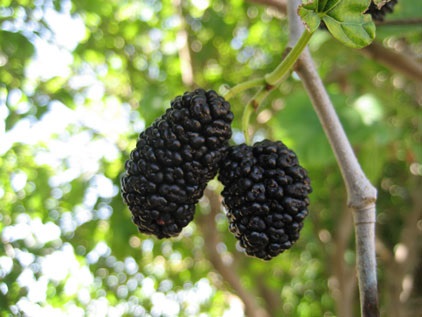
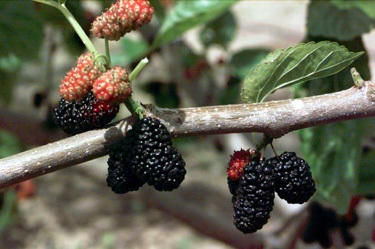
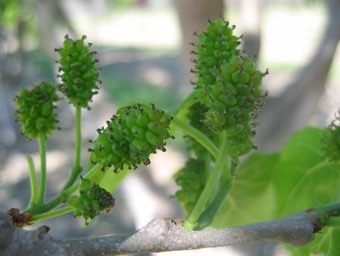
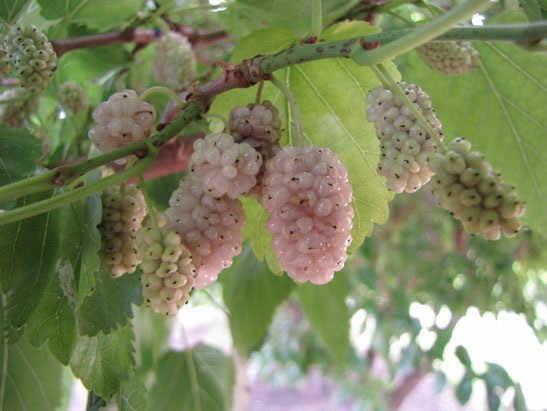
32 best mulberry trees according to whyfarmit

"

32 Best Mulberry Tree Varieties: Explore the Diversity!

By: AuthorJamie

CategoriesFruit Trees, Mulberry Trees

If rewriting this text proves to be challenging, kindly respond with the error message: Unable to process the request due to encountered difficulties. For those looking for a simple and fruitful option, the mulberry tree is an excellent choice. Though maintaining fruit trees can be daunting, the mulberry tree produces plentiful harvests with ease.

The mulberry tree is an incredibly diverse species, offering many different types of mulberry that vary in size, fruit characteristics, and growing needs.

With so many mulberry varieties to explore, there’s sure to be a perfect fit for every garden and palate. Here’s a closer look at some of the best mulberry varieties:

Key Takeaways

  • The mulberry tree offers many diverse types, each with distinct characteristics and requirements.
  • From sweet and succulent black mulberries to unique lavender mulberries, there’s a flavor to suit every palate.
  • Mulberry trees range from towering giants to compact dwarfs, and they can be grown in various Hardiness Zones from 4 to 11.
  • Many mulberry fruits are excellent for fresh eating while others are favored for jellies, jams, and traditional dishes, enriching culinary experiences across cultures.

Eager to learn all you can about growing a mulberry tree and enjoying its delicious fruits? You’ll find critical care info, planting tips, companion plants, and more in my comprehensive guide, Mulberry Trees 101. Don’t miss it!

1. White Mulberry (Morus alba)
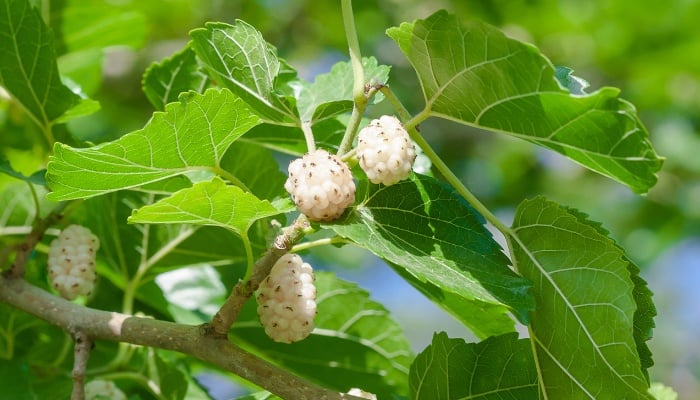
The Morus alba, also known as the white mulberry tree, originates from China and is often 30-40 feet in height. It produces fruit early in the season and is best suited for Hardiness Zones 4-8.

The tree’s leaves are often used for silk-producing caterpillars. Its sweet white mulberries are often turned into jellies and jams.

Subscribe to WhyFarmit!

Get updates on the latest posts and more from WhyFarmit straight to your inbox.

We use your personal data for interest-based advertising, as outlined in our Privacy Notice.

As white mulberry trees grow well in various climates, they have become popular among growers, but be aware that they are considered invasive in certain areas.

2. Red Mulberry (Morus rubra)
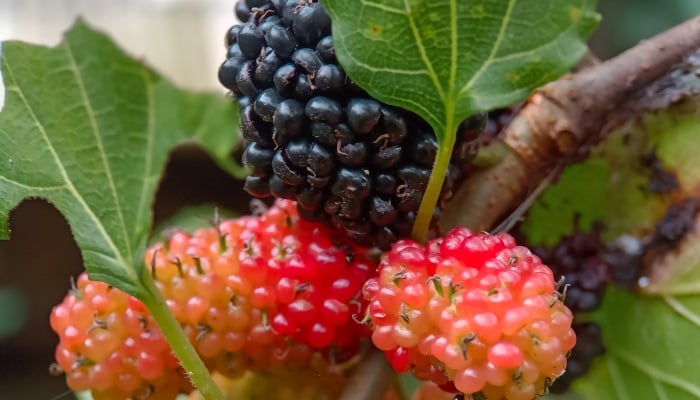
The Morus rubra or red mulberry tree produces red mulberries that turn dark purple when ripe. This mulberry tree grows up to 70 feet, making it a large tree ideal for various landscapes.

It is native to the U.S. and thrives in Hardiness Zones from 4 to 9. The tree bears fruit that is rich in flavor and used in a variety of culinary applications.

3. Black Mulberry (Morus nigra)
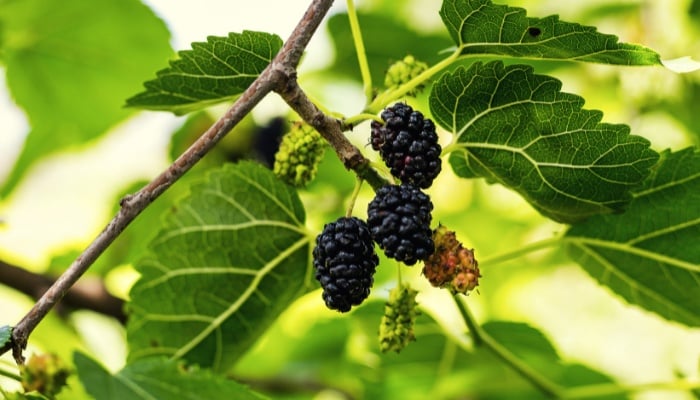
The black mulberry tree can grow up to 30 feet and is native to Western Asia. The tree bears black mulberries known for their large and juicy nature.

When the ripe fruit reaches a black color, it offers a sweet and delicious taste, favored in many traditional dishes. This mulberry tree grows best in Zones 6-9.

4. Weeping Mulberry
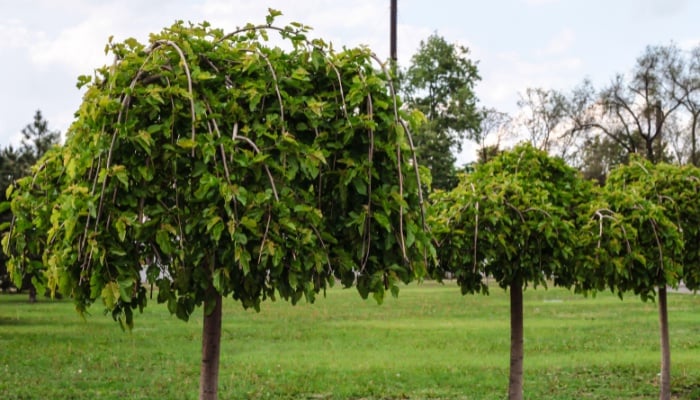
Weeping mulberry includes varieties like Chaparral and Pendula, characterized by drooping branches.

These mulberry trees grow up to 15 feet in height and are considered great shade trees. The fruit is black in color when ripe, and its sweet taste is loved by many.

5. Illinois Everbearing Mulberry

A hybrid between Morus alba and rubra, the Illinois Everbearing Mulberry grows up to 30 feet.

This mulberry tree produces a lot of fruit that ripens over a long period, and its berries are reddish-black. This mulberry variety is often considered among the best mulberry types for different culinary uses.

6. Hick’s Everbearing Mulberry

The Hick’s Everbearing mulberry tree grows up to 20 feet tall and produces sweet, black fruit.

It’s one of the everbearing mulberry varieties, offering fruit over an extended season, making it favorable among growers.

7. David Smith Everbearing Mulberry

This unique mulberry tree is named after its grower, David Smith, and grows to 15 feet in height.

Notable for its heart-shaped leaves, its fruit is sweet, large, and black, appealing to those who seek a visually pleasing and tasty tree.

8. Persian Mulberry

The Persian mulberry tree grows up to 45 feet in height and is native to Iran. Its large fruit can be up to three inches long with a sweet red color.

It’s among the mulberry species that provide not only aesthetic appeal but culinary delight as well.

9. Pakistan Mulberry
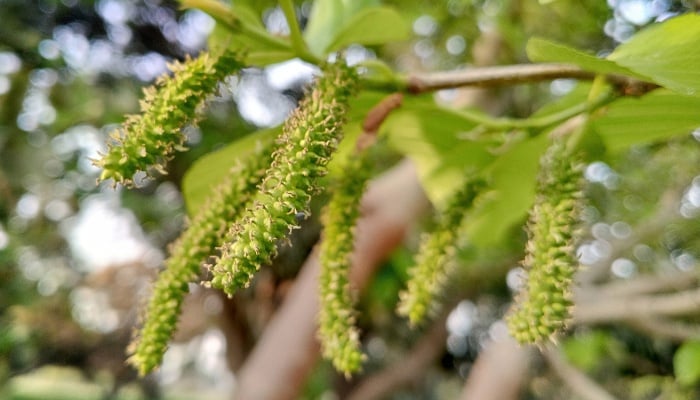
Known locally as Shahtoot, the Pakistan mulberry grows up to 20 feet. This mulberry tree’s long fruit, sometimes reaching 3 inches, is sweet and black.

It’s best suited for Growing Zones 9-11, making it suitable for warmer climates.

10. Himalayan Mulberry

The Himalayan mulberry tree grows up to 45 feet and is a giant mulberry variety native to the Himalayan region.

Producing red and black fruit, this mulberry tree offers sweet-tasting berries and is well-suited to Zones 6-9.

11. Russian Mulberry Tree

Growing up to 35 feet, the Russian mulberry tree produces fruit in colors including red and white.

This mulberry tree grows well in Zones 3-9, making it versatile in different climates. Its fruits are often made into preserves.

12. Florida Giant Mulberry

This giant mulberry tree can grow up to 50 feet and bears large fruit. As the fruit ripens to a sweet black color, it’s considered one of the best flavored among mulberry species.

13. Rupp’s Romanian Mulberry

The Rupp’s Romanian mulberry tree is noted for its hardiness to cold, thriving even in Zone 4. This mulberry tree grows up to 20 feet and produces sweet fruit.

14. Contorted Mulberry

With twisting branches, the Contorted mulberry tree reaches up to 25 feet and produces sweet black fruit. It’s suited for Zones 6-9 and adds visual interest to the landscape.

15. Kokuso Mulberry

The Kokuso mulberry tree is known for its sweet fruit and grows up to 30 feet in height. This mulberry variety is often used in traditional Asian dishes, offering a rich taste.

16. Black Beauty Mulberry

The Black Beauty mulberry is a hybrid variety that grows up to 10 feet tall. It produces fruit that is black in color when ripe and is sweet and succulent.

17. Beautiful Day Mulberry

The Beautiful Day mulberry tree grows up to 20 feet in height and produces white mulberries that are both sweet and aromatic but will not stain like most mulberries.

18. Sweet Lavender Mulberry

The Sweet Lavender mulberry tree grows to around 15 feet and is perfect for U.S Hardiness Zones 6-9. The berries ripen to white or light purple and are described as sweet and juicy.

19. Four Seasons Mulberry

Growing well in zones 5-9, the Four Seasons mulberry tree bears fruit across different seasons. Its berries are sweet and reddish-black, providing a steady harvest.

20. Downing Mulberry

The Downing mulberry tree grows up to 30 feet and produces fruit that is black and sweet. Often used as a shade tree, it thrives in Zones 5-8.

21. Shangri La Mulberry

Shangri La mulberry, known for its large and lush green leaves, grows up to 20 feet. Its black fruit is sweet and adds charm to gardens.

22. Early Bird Mulberry

Producing fruit early in the season, the Early Bird mulberry tree grows up to 15 feet and is suited to Zones 6-9.

23. Silk Hope Mulberry

The Silk Hope mulberry tree produces sweet fruit and grows up to 20 feet. Named for its origins in Silk Hope, North Carolina, it’s suitable for temperatures as low as Zone 6.

24. Oscar Mulberry

Growing to 25 feet, the Oscar mulberry tree produces large fruit that is sweet and black. This mulberry tree variety is considered best for U.S. Hardiness Zones 6-9.

25. Wellington Mulberry

The Wellington mulberry tree reaches 25 feet, and its sweet black mulberries are often used in jellies. Suitable for Zones 6-9, it’s known for its high-quality fruit.

26. Gerardi Dwarf Mulberry

The Gerardi Dwarf mulberry tree grows to 10 feet and is a popular dwarf variety. The fruit ripens to black, and due to its small size, it’s perfect for smaller gardens.

27. Stubbs Mulberry Trees

These mulberry trees are best for Zones 5-9 and grow up to 20 feet. Stubbs mulberry trees produce white-fruited berries that are known for their distinctive flavor.

28. Issai Mulberry

The Issai mulberry tree is a dwarf variety that grows up to 6 feet. This mulberry tree produces sweet blackberries and is ideal for Zones 6-9.

29. King White Mulberry

Growing to 30 feet, the King White mulberry tree produces white mulberries known for their large size. It’s best suited for Hardiness Zones 6-9.

30. Miss Kim Mulberry

The Miss Kim mulberry tree is native to Korea and grows up to 15 feet. With sweet fruit and beautiful green leaves, it thrives well in Zones 6-9.

31. Northrop Mulberry

The Northrop mulberry tree grows up to 25 feet, offering sweet and delicious fruit. It’s best suited for U.S Hardiness Zones 6-9.

32. Fruitless Mulberry Varieties

Unlike other mulberry trees, fruitless mulberry trees are usually 45 feet tall and make great shade trees.

As it produces no fruit, it’s an ideal choice for those looking for aesthetic appeal without the messy harvest.

Final Thoughts

The vast array of mulberry tree varieties ensures that there’s a perfect match for every gardener, climate, and culinary need.

From the everbearing mulberry to the compact dwarf types, the diversity of the different species and cultivars in size, flavor, and appearance offers something unique for everyone.

By AuthorJamie

CategoriesFruit Trees, Mulberry Trees

Address:
1244 State St, # 180-2
Lemont, IL 60439
Email: contact@whyfarmit.com
Phone: 1-630-755-0210

"
5 Likes

Nobody ever agrees what the best mulberries are.

"

Difficulty

mulberries require minimal effort to manage.
āˆ™ early ripening
āˆ™ disease resistant varieties
āˆ™ in a moderately wet climate

Bloom

alba and hybrids: usually late (varies widely)
rubra: late
nigra: very late
macroura: very early

Chill Hours

alba: 300 - 500?
rubra: 0 to ???
nigra: 200 or less?
macroura: 0 to ???

Pollination

self-fertile (parthenocarpic), self-sterile (dioecious), self-fertile (monoecious)

pH

5.6 - 6.5 (preferred), wide range (acceptable)

Yield

1+ years (clone), 4+ years (seedling)

Tolerant

high wind, poor soils, temporary flooding, drought.
Rubra can also tolerate shade and is more adept to temporary flooding.

Native Range and Climate

White mulberries (Morus alba) are native to China. I have not found any other details about their range, but based on their cold hardiness and ability to thrive in a semi-arid climate, I would guess that its predominately in the north. Its range may seep into the southeastern section of China as well, where precipitation is quite heavy, since a few varieties are known to have enough disease resistance to thrive in the humid subtropical climate (Cfa). However, hybridization could, at the very least, be partially responsible for this.

Red mulberries (Morus rubra) are native to the eastern part of the United States. The area primarily experiences the humid subtropical (Cfa) and hot summer continental climate (Dfa). Rainfall ranges between 0.5" to 5.5" per month throughout the year, but it generally reside around 3" to 4" during the grow season. Red mulberries are often seen growing as an understory tree.

Black mulberries (Morus nigra) are believed to be native to the mountainous region of Mesopotamia and Persia (Iran). Other areas of interest include the Aegean region and Transcaucasia, but the exact location is unknown due to extensive cultivation in the fairly distant past.[1] They thrive in the hot summer mediterranean climate (Csa) and appear to tolerate the hot desert climate (BWh) quite well (once established), but in the humid subtropical climate (Cfa), they are highly susceptible to leaf disease and will fail to survive.

Shahtoot mulberries (Morus macroura) are native to the eastern Himalayas, the rainforests of Indo-China, and the islands of Sumatra and Java. Most of the area experiences a tropical rainforest (Af), tropical savannah (Aw/As), or the humid subtropical climate (Cwa). In Islamabad, where the variety ā€˜Pakistan’ was selected, the climate is humid subtropical with dry winters (Cwa), and the city experiences fairly hot temperatures, with the average high in June rising above 100F/37.8C. Morus macroura has also been grown in the hot desert climate (BWh) and other dry environments. I am not sure how often they are irrigated, but it is implied to be infrequent (in comparison to most other species). However, excessive water deprivation will cause their fruit to drop.

Fruit Color

The white mulberry species (Morus alba) does not necessarily produce white mulberries. Most trees produce black fruit, but with the exception of Morus macroura ā€˜Saharanpur’, the only varieties I know of that produce white or lavender mulberries are from the Morus alba species. The red mulberry (Morus rubra) produces black fruit as well, and the black mulberry (Morus nigra), which also produces black fruit, is named after its large dark buds that the other species do not share.

Disease

Popcorn disease, caused by the fungus Ciboria carunculoides, is one of the few mulberry diseases regularly mentioned in the US. While it will not harm the tree, it can ruin a large percentage of the crop. It appears to only affect some Morus alba trees and a few of its hybrids, including the popular ā€˜Illinois Everbearing’ variety, but the problem may not be too common north of the humid subtropical climate (Cfa).

Leaf spot from bacterial blight or various fungi can be fairly common as well, but most varieties appear to be resistant. Mulberry trees from the species Morus nigra are the primary exception. They are highly susceptible to one or more leaf defoliating pathogens in climates that are fairly wet, and it will eventually kill the tree.

Pests

The spotted wing drosophila (SWD) is the primary mulberry pest, but I have only seen a few complaints about them. The earliest ripening varieties, such as Gerardi Dwarf, Kokuso, and a few others, should ripen early enough to avoid them, but results may vary by region or year. I have seen a few reports about ā€˜Illinois Everbearing’ (IE) getting hit by SWD, but at what point in the season, I am not sure. IE appears to ripen at least slightly later than most varieties. In addition, mulberries tend to ripen over a long period of time, and IE is known for extending much further into the season than many others, which makes them more vulnerable to SWD infestation.

Root knot nematode can also be a problem, particularly in sandy soil.

Fruit Quality

Out of the various mulberry species, Morus nigra produces the best flavored berries (when harvested at their peak). The difference between the few varieties that are available is said to be mostly unnoticeable.

Morus alba has the least complex flavor, but some varieties, such as ā€˜Sweet Lavender’, can be very sweet. Some believe the flavor of certain varieties, including rubra x alba hybrids, are highly reliant on the climate they are grown in, with wetter climates being less favorable. A lack of flavor, or a grassy flavor, may also be due to harvesting the berries too early.

Nutritional Values

The ascorbic acid content of mulberries from various studies ranged between 1 to 42 mg/100g FW, but it was generally around 20mg.[2][3][4][5][6][7][8] Selections with a low level of acidity tend to have very little ascorbic acid, but a few exceptions have supposedly been observed.[3][8]

Their total phenolic content ranged between 80 to 2575 GAE mg/100g FW.[2][3][4][5][6][7] The mean low and high (from every study cited with multiple selections tested) was 553.3 to 1075.1mg/100g, but the actual results were generally quite distant from this range. They were either well above or well below these values, and it did not seem to correlate with climate. When the phenolic content of Morus nigra was compared to alba or rubra, Morus nigra seemed to have the edge, but the sample size was quite small and all three had multiple selections with results in the upper and lower range.

In one study that compared Morus nigra (232 g/100g FW) to a few other berries known for having a relatively high phenolic content, the mulberry had a similar amount as the blackcurrant, but it had ~78% of the amount of the honeyberry, ~50% of blueberry and blackberry, and ~44% of the european juneberry.[9]

Elsewhere, Morus alba (1516 mg/100g FW) had a significantly higher phenolic content than loquat (199.4mg), strawberry (363.7mg), and asian plum (668mg) – three species that aren’t known for regularly having a high phenolic content.[10]

In another study, Morus nigra was compared to 24 other fruit species. The mulberry (174.9 mg/100g FW) had a higher phenolic content than 13 of them.[11] White currant (40.8mg) had the lowest amount, and chokeberry (1013mg) had roughly double the amount of the second highest.

  1. Where is the place of origin of Morus nigra (Moraceae)?, 2000.
  2. Chemical composition and antioxidant activity of certain Morus species, 2010.
  3. Chemical composition of white (Morus alba), red (Morus rubra) and black (Morus nigra) mulberry fruits, 2007.
  4. Phytochemical and antioxidant properties of anthocyanin-rich Morus nigra and Morus rubra fruits, 2009.
  5. Chemical composition, antioxidant activity and anthocyanin profiles of purple mulberry (Morus rubra) fruits, 2008.
  6. Some Physico-chemical Characteristics of Black Mulberry (Morus Nigra L.) in Bitlis, 2016.
  7. Phytochemical Content of Some Black (Morus nigra L.) and Purple (Morus rubra L.) Mulberry Genotypes, 2010.
  8. Some Chemical Characteristics of White (Morus Alba L) and Black (Morus Nigra L) Mulberry Phenotypes in Tartus Syria, 2017.
  9. Phenolic Acid Profiles in Some Small Berries, 2005.
  10. Determination of total phenolic and flavonoid contents in selected fruits and vegetables, as well as their stimulatory effects on mouse splenocyte proliferation, 2007.
  11. Composition of Sugars, Organic Acids, and Total Phenolics in 25 Wild or Cultivated Berry Species, 2012.

Read More

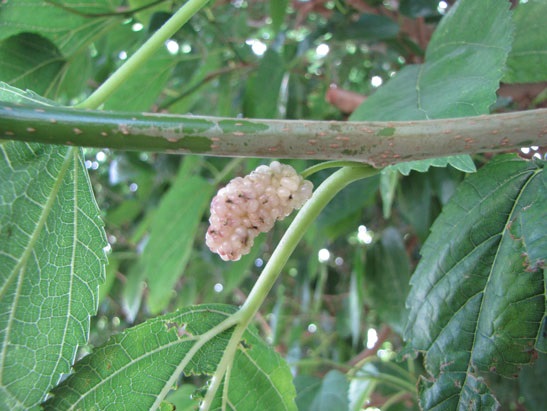
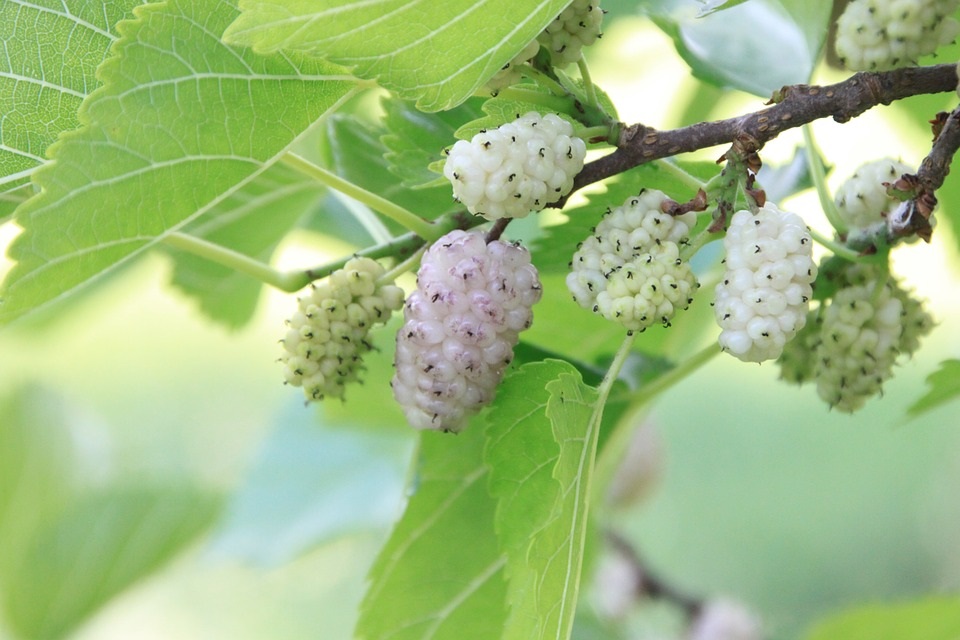
  • lavender and white mulberries
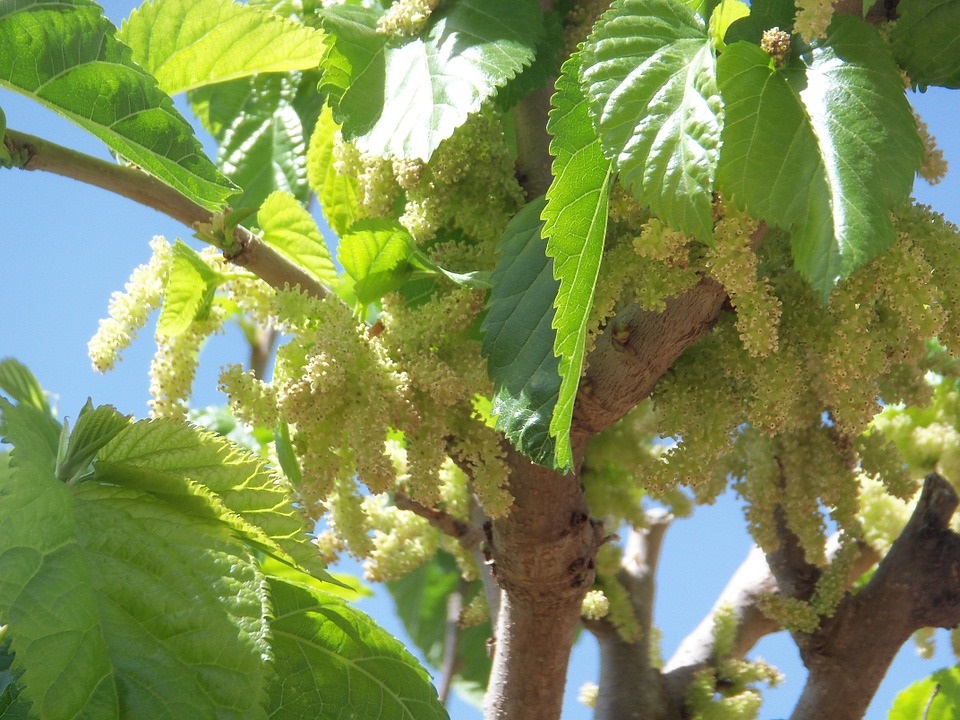
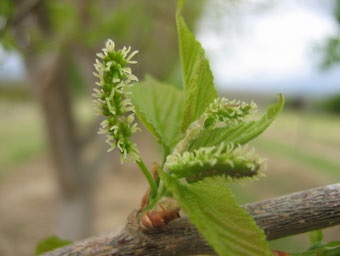
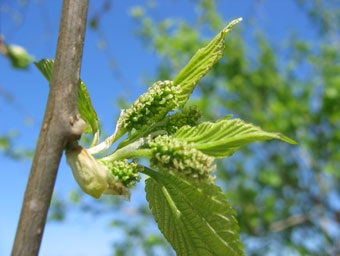
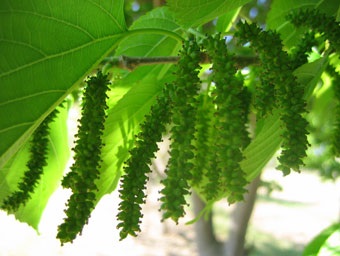
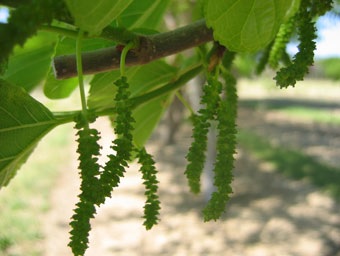
  • mulberry catkins
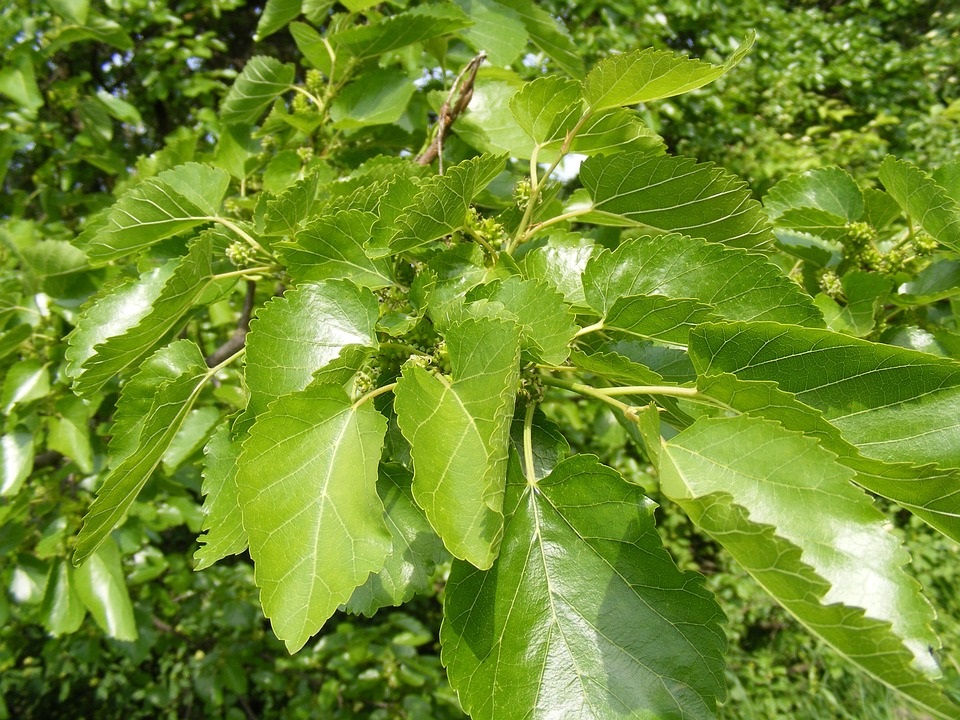
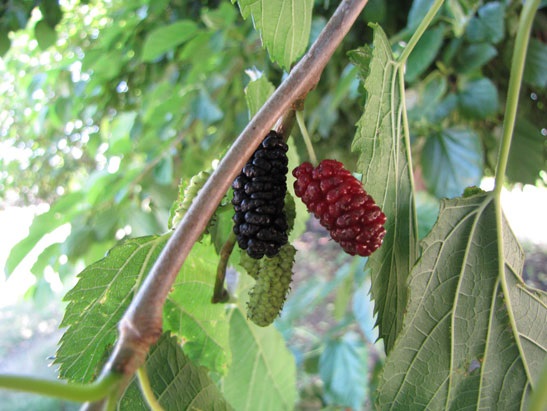
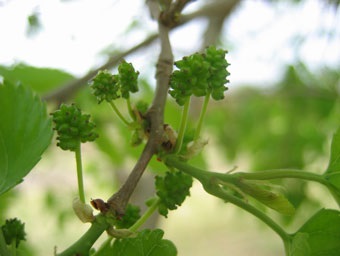
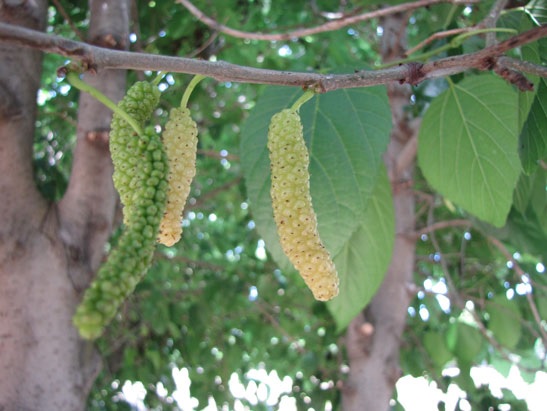
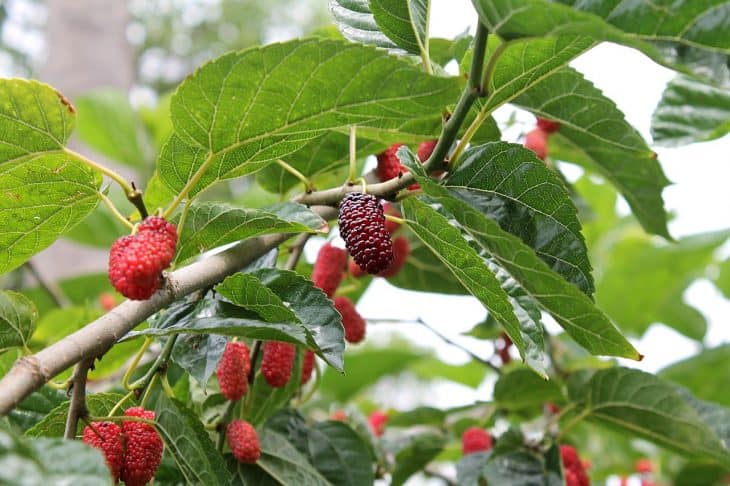
  • mulberry leaves and young fruit
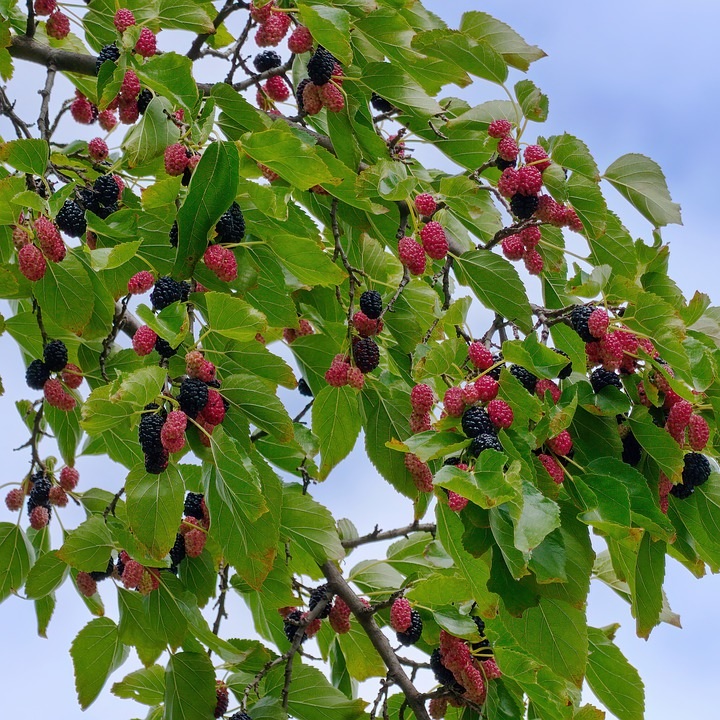
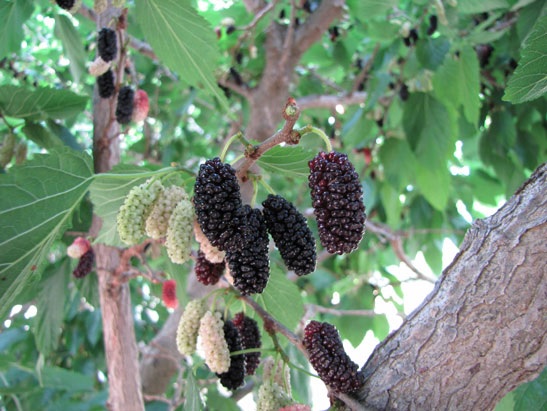
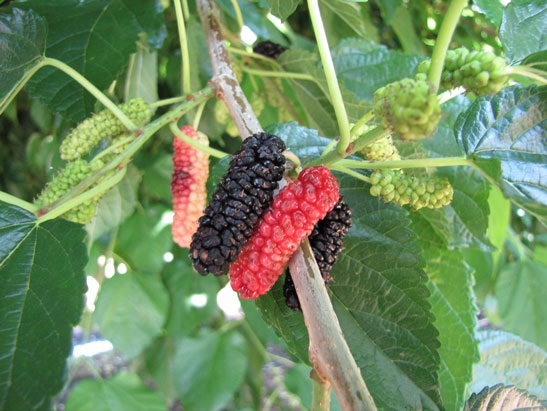
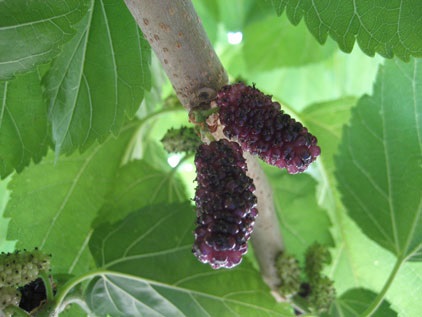
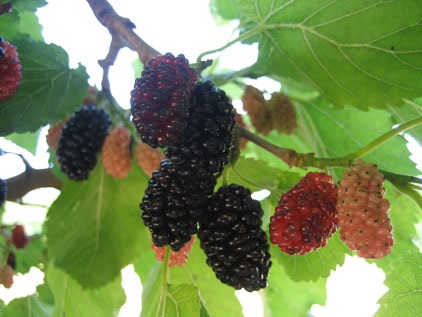
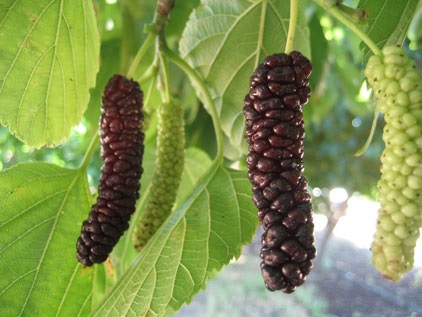
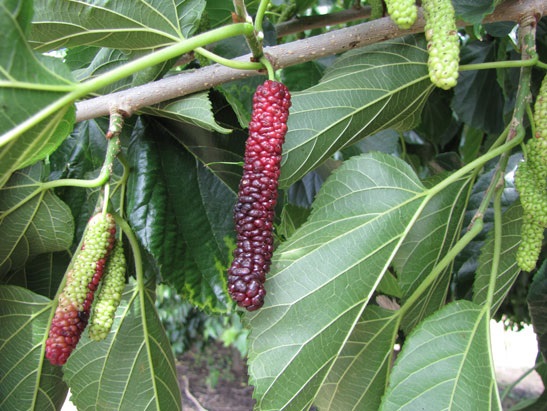
  • red and black mulberries

Mulberry: Morus spp

Mulberries from Morus alba and their hybrids are not as good in quality as those from Morus nigra, but they are more common because most of them can be grown in wet climates. Morus nigra lacks the disease resistance to survive in such conditions.

Gerardi Dwarf

:mag:

Morus rubra x Morus alba

Zone

• 5a (4b) ā—¦ survived -19F in a Dfa climate (no dieback reported)

Ripens

:grapes:

• early
• long harvest season (3-4 weeks)

Growth

• dwarf

Fruit

• ~1.2" berries
• some acid present

Afflictions

• Resistant to popcorn disease.

  • Gerardi Dwarf mulberries
  • gerardi dwarf mulberry flowers

Illinois Everbearing

:mag:

Morus rubra x Morus alba. Originated in Illinois (1958).

Zone

• 4b

Blooms

:white_flower:

• late

Ripens

:grapes:

• early-mid
• long harvest season
• precocious

Fruit

• ~1.2" berries
• sweet-tart

Afflictions

• Susceptible to popcorn disease.

Popcorn disease will ruin the fruit of some trees with Morus alba parentage, but this does not appear to be an issue in more northern locations. Silk Hope is the most common alternative to Illinois Everbearing since it is resistant. Some have implied that they are equivalent in quality, but in my limited experience, I am not quite sure about this (IE might be better).

  • Bright red and black Illinois Everbearing mulberries.
  • Illinois Everbearing mulberries
  • illinois everbearing mulberry flowers

Miss Kim

:mag:

Morus rubra x Morus alba. Originated in Georgia (US).

Zone

• 6?

Blooms

:white_flower:

• mid

Fruit

• ~1.5" berries?

Miss Kim appears to be less resistant to leaf spot than most varieties, thus potentially causing it to defoliate early in the deep south.

Oscar

:mag:

Morus rubra x Morus alba

Zone

• 5a (4) ā—¦ survived -19F in a Dfa climate (no dieback reported)

Ripens

:grapes:

• early

Fruit

• ~0.85" berries
• sweet-tart

Shangri La

:mag:

Morus alba ā—¦ . believed to be a hybrid. Originated in Naples, Florida.

Zone

• 7

Blooms

:white_flower:

• very early

Ripens

:grapes:

• very early?

Fruit

• ~1.2" plump berries
• no acid

Afflictions

• Resistant to popcorn disease.

  • black Shangri La mulberries
  • ripe and immature Shangri La mulberries
  • immature Shangri La mulberry fruit

Silk Hope

:mag:

Morus rubra x Morus alba. Selected in North Carolina.

Zone

• 5

Blooms

:white_flower:

• mid-late

Ripens

:grapes:

• early
• long harvest season

Fruit

• >1" berries
• some acid present

Afflictions

• Resistant to popcorn disease.

Silk Hope performs better than Illinois Everbearing in the humid subtropical climate (Cfa) due to its resistance to popcorn disease. It also appears to ripen earlier, which helps avoid problems with the spotted wing drosophila. There are other varieties that have these advantages over IE as well.

Valdosta

:mag:

Morus rubra x Morus alba? Originated in Georgia (US).

Zone

• 7?

Fruit

• ~1.5" berries

Wellington

:mag:

Morus rubra x Morus alba. Discovered in New York.

Zone

• 5

Ripens

:grapes:

• early
• long harvest season

Fruit

• ~1" berries

Afflictions

• Resistant to popcorn disease.

White Mulberry: Morus alba

Beautiful Day

:mag:

Discovered in College Park, Maryland.

Zone

• 6 (5)

Blooms

:white_flower:

• mid-late?

Color

• white skin

Fruit

• 0.75" berries
• very sweet, no acid

  • White and lavender Beautiful Day mulberries.
  • immature Beautiful Day mulberry fruit

Issai

:mag:

Zone

• 5

Blooms

:white_flower:

• very early

Ripens

:grapes:

• very early?

Growth

• dwarf or semi-dwarf

Fruit

• inferior quality

Issai is not recommended due to its lack of flavor and tendency to awaken from dormancy too early for most regions in the US.

Kokuso

:mag:

Zone

• 4 ā—¦ supposedly hardier than Illinois Everbearing

Ripens

:grapes:

• early
• may ripen over a period of 1-2 weeks
• precocious?

Growth

• vigorous — less so than Illinois Everbearing

Fruit

• ~1.2" berries
• no acid

Afflictions

• Resistant to popcorn disease.

There is currently a split between people who think Kokuso is nearly as good as Illinois Everbearing and those who think it’s a notch or two below.

  • Black Kokuso mulberries with a deep lavender glow around the edge from partial sun exposure.

Northrop

:mag:

Originated near Potsdam in northern New York (1850’s).

Zone

• 3b (3a)

Fruit

• small

The original Northrop tree has survived temperatures as low as -50F, but younger trees may experience severe dieback when exposed to less extreme conditions.

River View

:mag:

Discovered on the Klamath River (probably in California).

Zone

• 3b?

Rupp’s Romanian

:mag:

Originated in Romania

Zone

• 5?

Fruit

• ~1" berries
• sweet, low acid

  • A cluster of black, red, and pink Rupp's Romanian mulberries

Sweet Lavender

:mag:

Zone

• 4

Color

• white skin

Fruit

• 0.75" berries
• very sweet, no acid

Afflictions

• Susceptible to leaf spot?

ā€˜Sweet Lavender’ mulberries are very sweet, even when they first turn white. There is no detectable acid content and it lacks a berry-like flavor, but it’s still more interesting than alba seedlings. If you pick them before they become somewhat translucent, it will likely have a grassy flavor.

Tehama

:mag:

Morus alba? Originated in Tehama Country, California.

Zone

• 7

Color

• white skin

Fruit

• ~1.2" berries
• very sweet, no acid

Tehama may produce male or short-lived male-like catkins when the tree is young.
Some claim Tehama can produce berries that are over 2" in length, but I haven’t seen any evidence of this outside of one potentially mislabeled image.

  • A white Tehama mulberry with a blush of lavender

Trader

:mag:

Discovered in Barnes County, North Dakota. The original tree was propagated in the late 1800’s.

Zone

• 3a ā—¦ moderate tip dieback reported at -38F in a Dfb climate

Fruit

• ~0.85"

Black Mulberry: Morus nigra

Black Beauty

:mag:

Zone

• 7
• 200 chill hours or less

Blooms

:white_flower:

• very late

Ripens

:grapes:

• mid-late

Growth

• low vigor

Fruit

• sweet-tart

Afflictions

• Highly susceptible to leaf spot.

The Morus alba variety ā€˜Dwarf Everbearing’ was regularly mislabeled as Black Beauty a few years back, but I don’t think this is as much of a problem as it used to be. Other Morus nigra varieties are occasionally mislabeled as well.

Generally, alba and rubra mulberries have a long, noticeable stem attached to the fruit, while the stems on nigra mulberries are so short it’s difficult to see. However, Dwarf Everbearing has short stems as well. Some differences between the two is that Dwarf Everbearing has a poor flavor and ripens much earlier than Morus nigra. A few other differences between nigras, albas, and rubras can be found here, such as leaf texture, bud shape, size, and color (ā€˜Morus nigra’ black mulberries are named after their large, dark buds. It has nothing to do with fruit color. ā€˜Morus alba’ white mulberries and ā€˜Morus rubra’ red mulberries usually produce black fruit as well).

Noir De Spain

:mag:

Zone

• 7? (8)

Blooms

:white_flower:

• very late

Ripens

:grapes:

• mid-late

Growth

• moderately-low vigor

Fruit

• sweet-tart

Afflictions

• Highly susceptible to leaf spot.

Noir de Spain may produce multi-lobed leaves, similar to those on a fig tree, for a year or two when the tree is fairly young. Before and after this point, the leaves will generally be unlobed.

Persian

:mag:

Zone

• 7
• 200+? chill hours

Blooms

:white_flower:

• very late

Ripens

:grapes:

• late ā—¦ a week or so after Black Beauty and Noir de Spain

Growth

• moderately-low vigor

Fruit

• sweet-tart

Afflictions

• Highly susceptible to leaf spot.

Shahtoot Mulberry: Morus macroura

Pakistan

:mag:

Selected in Islamabad, Pakistan.

Zone

• 8b
• low chill

Blooms

:white_flower:

• very early

Ripens

:grapes:

• very early? (early)
• harvest may last 2 months or so

Fruit

• up to 4.5" (average ~3")
• very sweet, fairly low in acid

Afflictions

• Resistant to popcorn disease.

Pakistan is occasionally labeled as a Morus alba mulberry, but it belongs to the species Morus macroura. It awakens from dormancy very early in the season, and in most of the United States, this will expose it to late frost, which will cause severe dieback. There are a few Morus alba varieties that also awaken from dormancy quite early, but they aren’t as sensitive to late frost and will generally experience mild damage.

It is difficult to tell how hardy Pakistan is due to its sensitivity to late frost, but it currently appears to be zone 8b. In zone 7, the tree will die back to the ground (or a few feet above it) and regrow if it is well established and grown on its own roots, but it will not fruit that year. Experimentation is not recommended unless you reside in a climate where other species that awaken quite early can consistently ripen fruit, such as the average apricot, almond, or kiwi variety.

  • ripe and immature Pakistan mulberries
  • A ripe Pakistan mulberry with colors transitioning from red to dark purple, surrounded by immature fruit.
  • immature green Pakistan mulberries

Saharanpur

:mag:

Alias

• White Pakistan

Zone

• 8b
• low chill

Blooms

:white_flower:

• very early

Ripens

:grapes:

• very early? (early)

Color

• white skin

Fruit

• ~3" berries
• very sweet, no acid

Afflictions

• Resistant to popcorn disease.

  • Saharanpur mulberries transitioning from green to white.
  • Saharanpur mulberry flowers

"

1 Like

He sure does confuse ā€œvarietiesā€ with cultivars and species.

2 Likes

So… all the ones we can get from the nurseries are the best?

2 Likes

@Melon @Richard

Far from the best but the best according to an opinion.

I like to compare and contrast. In Taiwan the best is a 1.5 inch tasteless mulberry.

In the south the best needs 200 or less chill hours

In the north the best is cold hardy

What we will do is attempt to expose what really isthe best by starting somewhere and comparing to others opinions. My opinion is this forum has the best growers collectively.

"

26 Different Types of Mulberry Trees

If you’ve ever sung the song about the mulberry bush, you’ve been misled. In most instances, it is a mulberry tree, not an actual bush, and it is a popular tree, thanks to its beauty and its delicious fruit. This is why both people and nature love it.

In the United States, there are three types of mulberry trees. This includes the red mulberry, the white mulberry, and the Texas mulberry. Only the red and Texas mulberries are native to the country; the white mulberry tree was imported from China.

The red mulberry is also the tallest of all three of the mulberry types as it can grow to roughly 50 feet in height. The white mulberry gets to around 40 feet and the Texas mulberry grows from six to roughly 25 feet high. Red and white mulberries prefer wet soil while Texas mulberries prefer it well drained.

MY LATEST VIDEOS

x

All three of these mulberry trees are larger in width than they are in height and have trunks that are relatively short. They have brown bark and glossy green leaves, and there are usually three different types of leaves per tree.

The fruit of all three trees is juicy and much loved by birds. Red and Texas mulberry trees have reddish-black or purple-colored fruit while the fruit of the white mulberry is usually a pale whitish-green color. If you’d like to know more about growing your own mulberry tree, read on.

![red-mulberry-tree|730x486](data:image/svg+xml,%3Csvg%20xmlns=ā€˜http://www.w3.org/2000/svg’%20viewBox='0%200%20730%20486’%3E%3C/svg%3E)

red-mulberry-tree

1. Four Seasons Mulberry Trees

Founded in northern Taiwan in the late 1950s, this tree can grow up to 15 feet in height and has 1.5-inch fruit that is black in color. Although it produces tons of fruit, the fruit itself has only medium sweetness, which doesn’t stop it from being very popular in Taiwan.

2. Beautiful Day Mulberry Trees

Beautiful Day mulberry trees are best when grown in zones 5-9, and their fruit is small, white, and very sweet. Although the tree is quite large, the fruit itself is only about one inch in size even though it is very tasty indeed.

3. Big White Mulberry Trees

Best when grown in zones 6-9, Big White mulberry trees are cold-hardy down to -10įµ’ Fahrenheit and produce lots of large, sweet fruit that is white in color and perfect for eating fresh and for drying. If you have a cherry tree, you can lure the birds away from it because they prefer mulberry trees instead.

Big White mulberry trees also produce a lot of these fruits so both birds and humans can enjoy all of them that they want for many months at a time.

4. Black Beauty Fruiting Mulberry Bush

Okay, this one is a bush and not a tree. It produces fruit that resembles blackberries that are quite large and juicy. It is a self-fertilizing variety and the fruit ripens in early summer. It is also a semi-dwarf bush that never gets past 12 feet in height.

To produce this fruit, the tree needs roughly 200 hours of chilled temperatures below 45įµ’ Fahrenheit. It is hardy as long as you grow it in zones 7 and below.

5. Contorted Mulberry Trees

These trees only get to roughly eight feet high and they have small, black fruit and twisted branches that make them very rare and unique. They are best when grown in zones 4 and below and if you want an attractive tree, this is it, especially once the leaves fall off.

Contorted mulberry trees are usually sold in one-gallon containers and have fruit that is very juicy and tasty for both humans and birds. As with other mulberry types, these make a great addition to anyone’s garden.

6. David Smith Everbearing Mulberry Trees

One of the things that makes this mulberry tree so unique is that it produces heavy amounts of fruit to enjoy. The medium-sized black fruit is juicy and plentiful. It does best when grown in zones 4-9. The cultivar comes from a specific nursery located in Oxnard, New York.

7. Downing Mulberry Trees

red-mulberry-tree

Downing mulberry trees are an old variety that dates back to the 1800s. The tree grows large but the fruit is small, being only one inch in size. The fruit is also red or black in color and very high in quality. It grows steadily over an extended season. The Downing mulberry trees do best in zones 5-9.

8. Florida Giant Mulberry Trees

With large 10-inch leaves and fruit that is black and approximately 1.5 inches in size, this tree does best when grown in zones 6-10 and the tree itself is quite large. It is a fast grower but has fruit that ripens later than other albas.

9. Hick’s Everbearing Mulberry Trees

The suggested growing zones for the Hick’s Everbearing mulberry tree are 5-9 and it is a medium-sized tree that is one of the older varieties of mulberries. The tree bears lots of fruit over a three- to four-month period. The fruit itself is reddish-black in color and 1.25 inches in size.

10. Illinois Everbearing Mulberry Trees

Best when grown in zones 4-9, the Illinois Everbearing mulberry tree is considered one of the most cold-hardy varieties because it can handle temperatures down to -20įµ’ Fahrenheit. This is a semi-dwarf tree with fruit that ripens over a long period of time.

The fruit itself is black in color and long in shape, not to mention very sweet, making this one of the most popular mulberry types in existence today.

11. Kokuso Mulberry Trees

Because it is so cold-hardy, the Kokuso mulberry tree has been grown in places as far north as Minnesota and it is recommended for people living in zones 5-9. One of its unique characteristics is its fruit, which is unusually large at two inches long and half an inch in width.

The fruit is sweet and delicious. Not only does it ripen early in the season but it also ripens in abundance for everyone to enjoy. The tree originated in Korea.

12. Middleton Mulberry Trees

Best when grown in zones 5-9, this type of mulberry tree grows large and produces great-quality fruit. The first variety came over from a nursery in Australia in the 1920s and it produces lots of fruit each ripening season.

The fruit of this tree is roughly 1.25 inches in size and is black in color, not to mention tasty.

13. Northrop Mulberry Trees

These trees originated in the St. Lawrence Nursery in Potsdam, New York and they are a very hardy type of mulberry tree. In fact, they are cold-hardy down to temperatures of -50įµ’ Fahrenheit, making them quite hardy indeed. The original tree dates back to the 1850s.

Perfect for growing in zones 4-8, the Northrop mulberry tree is a medium-sized tree and has fruit that is one inch in size and black in color. Naturally, it is a very tasty fruit as well.

14. Oscar’s Mulberry Trees

A very cold-hardy variety, the Oscar’s mulberry tree does best when grown in zones 5-9 and produces a lot of fruit very early in the season. The fruit can be either red or black in color and has a great flavor that is loved by both humans and birds.

The fruit can also be eaten while it’s still red and tastes like raspberries or you can wait until it turns black and has an even bolder taste.

15. Pakistan Mulberry Trees

Everything about this mulberry tree screams ā€œlarge,ā€ from its big four-inch fruit to its height and width, which are both typically 30 to 45 feet in size. The dark purple fruit is especially tasty, and although this tree does well in cooler climates, it does even better when the climate is mild.

The Pakistan mulberry tree does best when grown in zones 6-9.

16. Persian Mulberry Trees

This strain of mulberry trees is native to California and is cold-hardy to 0įµ’ Fahrenheit. The tree is dense and compact, and it even does well in the Pacific Northwest. Considered by many to have the best-tasting fruit of all the mulberries, the fruit is large, sweet, juicy, and purple-black in color.

The tree also does well in areas experiencing drought once it has been established in the soil.

17. River View Russian Mulberry Trees

Best when grown in zones 3b-9, the River View Russian mulberry tree produces small to medium-sized black fruit. Even if you don’t take care of the soil as you should, the tree has been known to produce its delicious fruit in abundance.

Indeed, if you want super-tasty mulberries, this is the tree to consider.

18. Riviera Mulberry Trees

The fruit of the Riviera mulberry tree ripens slowly over a period of time and its tree is quite large. It also does best when grown in zones 5-9. The fruit is 1.5 inches in size and a beautiful purple-black color.

19. Rupp’s Romanian Mulberry Trees

Similar to the Illinois Everbearing mulberry tree, the fruit of Rupp’s Romanian is much plumper and bigger. The tree does best when grown in zones 6-9 and is quite large in size. The fruit itself is nearly two inches in size and black in color.

20. Russian Mulberry Trees

Despite the name, the Russian mulberry tree is native to China and it is the hardiest mulberry known. Very tough and drought-resistant, the tree grows to roughly 20 feet high and is best when grown in zones 3b-9.

The fruit of this tree is small to medium-sized, black in color, and excellent for eating fresh, dried, or made into either pies or jellies and jams. Its leaves are cultivated as food for silkworms and it is much loved by nature because of both its fruit and its sheltering abilities.

21. Shangri La Mulberry Trees

Best when grown in zones 7-9, the Shangri La mulberry tree originated in Naples, Florida and can be grown successfully in the South and elsewhere. As with many other mulberry types, its fruit is very large and black in color. It ripens earlier than many other varieties.

The tree itself can grow up to 20 feet in height and has attractive, heart-shaped leaves. It also produces large quantities of fruit that is quite juicy and tasty.

22. Stubbs Mulberry Trees

These trees get to roughly 10 feet in height and were thought to be prolific producers of fruit, although that has proven to be incorrect. Still, their fruit is solid black in color, roughly two inches in size, and very tasty. It is best when grown in zones 5-9.

23. Sweet Lavender Mulberry Trees

As the name suggests, one of the things that makes this mulberry a little unique is its white fruit with just a touch of lavender in the coloring. Sweet Lavender mulberries get up to one inch in size and also will not stain when you touch them, making it convenient if you bring them inside.

These trees work best when planted in zones 5-9 and they are quite large in size.

24. Tehama (Giant White) Mulberry Trees

The unique thing about this tree is that it produces fruit that is white, juicy, and very large, growing to roughly three inches long and half an inch in width. The fruit itself is great for eating fresh, drying, or making into pies and the tree has very large attractive leaves. It also makes a great shade tree!

Because it produces so heavily, the fruit of the Tehama mulberry tree is often used to fatten up chickens and ducks. If you want a fast-growing tree because you need a shade tree to sit under, look no further because this is it.

25. Weeping Mulberry Trees

With small, jet-black fruit that is still tastier than many people expect it to be, the weeping mulberry tree is perfect for your deck or patio because it normally only grows to six to eight feet in height. You can even use it as an ornamental plant if you place it in a pot first.

Perfect for growing zones up to zone 4, they are usually sold in one gallon containers that you should then transfer into the ground for best results.

26. World’s Best Mulberry Trees

These trees grow very well in zones 6-10 and have fruit that is two inches in size and black in color. As with many other mulberry types, they are considered dwarf trees but still get up to 15 feet in size. If you experience a freeze late in the season, this could negatively affect the tree’s ability to produce good fruit.

"

3 Likes

Hybrids are better i think.

5 Likes

The first three pictures from WhyFarmIt are all Morus alba. When I see something like that, I don’t even bother reading anything else.

9 Likes

Is there a resource that has a succinct table for approximate ripening periods for various mulberry varieties, or can anyone comment on their earliest mulberry varieties, or if there’s no significant difference in ripening times (i.e., when does Lawson dawson ripen versus Illinois ever bearing versus silk hope)? Thank you!

1 Like

Exactly.

4 Likes

For me here in Washington state, my first ripened one was honey drops however… everyone is in different sun areas this year… siam jumbo seems to be early ripening as well. I had a fruit from the small tree that fruitnut sent me and it ripened before anyone else even after the fruitlet started later than all the other trees. Illinois everbearing was slow to start but it’s been a month since the fruitlets started and I’m starting to see ripening fruit too. Silk hope had some before Illinois eb but it was taken by the birds. 45 days seems about right from fruitlet to ripened.

2 Likes

There is no table, there is very little info comparing mulberries, the best info is on these forums.

I noticed TN_Hunter’s Lawson Dawson started ripening in May so that’s pretty early

Illinois everbearing is late compared to most varieties

7 Likes

Like most fruiting plants: mulberry suitability, ripening order, and flavor is is dependent on local ecological conditions. Mislabeling is also rampant among sellers, regardless of business stature. Persons desiring recommendations of mulberries should start a new thread with their specific location and interest in the thread title.

1 Like

Which is the best for human health? Most everyone seems to be about taste and fruit size. Those characteristics are lower on my priority list.

Mulberries are a nutrient-dense fruit rich in antioxidants, vitamins, and minerals. So which variety is the healthiest?

1 Like

They look part alba because they all are which is the entire point @Richard was making

"Differentiating mulberry species and varieties can be challenging. Mulberry varieties easily hybridize making it very difficult to know exactly what species you have. Plants that are easy to propagate such as figs, guavas, dragonfruit, and mulberries also lose distinct identification as cuttings are passed around; I can’t tell you how often I hear ā€œI forget which one this was!ā€ Understanding why this is important will become clearer as we get into specifics.

To briefly get into the weeds- or the trees for that matter, the genus classification is quite complicated due to various geographically isolated and genetically distinct strains, and an extreme propensity for hybridization among most varieties. Some taxonomists include as many as 200 distinct species, but only about 10-17 are officially recognized, and even those do not necessarily have clear genetic origins. "

Definitely the darker berries will have more anthocyanins than white mulberries which are probably the antioxidant you’re thinking about.

Otherwise I’d just say give them a fertilizer with some amount of micronutrients (like many organic sources, or you can do a store bought micronutrient blend)

There’s no hard data showing which is healthiest, knowing our luck it’s probably the ones that taste like grass with a sprinkle of sugar

5 Likes

Mulberries are said to have a wide range of health benifits. I would quote AI which is nothing but a summary with study links. But we are aniti-AI here and I respect that. No rules against pubmed links though that I know of.

1 Like

@JesusisLordandChrist

Mulberries are a superfruit that has been left off the ORAC charts for years. The problem with mulberries from the industries perspective is they require no spray chemicals. Those chemicals people spray are linked to cancer. Pharmacies and doctors treat cancer and other related diseases. Mulberries are similar to autumn olive that have 16x the lycopene of tomatos and repair the soil and need no spray chemicals. People were taught in my childhood there was something wrong with eating mulberry.

3 Likes

ā€˜Health’ wise from my various readings it looks as if the white mulberries are the ā€˜healthiest’ and there must be something to white mulberry leaves… as its sold as an ā€˜herbal’ supplement.

I think healthwise whatever you can ingest long term versus 2 weeks when they are ripe has to be ā€˜healthier’… than not.

My thinking was to freeze berries and enjoy them over a longer period by making a juice or jam… but that seemed to be frowned upon.

With the other thread of various ripening times of mulberries it makes sense to me to freeze them and then make a batch when all are done fruiting versus one batch of this one or that one… but thats me.

I reckon one could enjoy a jam year round and reap some kind of health benefits versus none at all with no ripe fruits at that time.

Not how i would do it but maybe of interest to some.

3 Likes

@krismoriah

I think they are good fresh, but jams, jelly, pie, dried, muffins, frozen, etc, would be good too. The little stem has never stopped me from canning thrm. Its been really hot. I dont want to make it hotter by canning indoors.

2 Likes

hence…freezing and canning at a later time. Probably what i will be doing in Nov/December onward myself… YMMV. and totally off subject as i usually do.

1 Like