Interesting that dekopan had the worst rating by canopy and visual inspect, and they concluded it was the least cold hardy (not surprising given Ponkan as a parent), but it also had the fewest splits.
1 Like
Ponkan seems really hardy to me, I barely protect it and I don’t get any dieback.
Also that study shows opposite things to me. The least splitting to me = most cold hardy. Losing some canopy is no big deal, a split trunk? Thats going to eventually kill that tree. I’d rather see defoliation % rather than canopy loss. I assume these trees received zero protection; so it also doesn’t exactly indicate what the home gardener will experience. It is interesting however
4 Likes
That’s interesting, I’m pretty sure it’s like 50% pumelo.
Does it stop growing earlier than other varieties in the fall?
1 Like
Tbh it’s small and I haven’t paid much attention, I’ll have to pay attention this year.
1 Like
Has anyone heard of OP (Open Pollinated) Nagami kumquat? There’s a YouTube guy from Virginia Beach that claims it survived outdoor to 3F when all of his other varieties died.
1 Like
Yeah, that’s @VirginiaFruitGrower’s. It’s a fairly small kumquat, but very hardy. I’ve not tasted it so I don’t know how sweet or sour it is. It’s still pretty uncommon, but it’s starting to circulate more among hobbyists. I’d expect The Mulberries to carry it eventually.
4 Likes
Yes, I was just wondering if anyone else has it and can confirm its cold hardiness.
1 Like
Scratch that. Maybe some introgression, but it’s not considered a pumelo hybrid. Still, I wouldn’t be surprised if there’s some pumelo genetics in there, given:
It is a vigorous grower and has an upright bearing. At maturity it is a medium-sized tree… Fruit large (for a mandarin), globose to moderately oblate; base commonly with strong furrowed but relatively short neck or low collar; apex usually deeply depressed and with radiating furrows; sometimes with naval… Tree commonly vigorous and distinctive in appearance because of pronounced upright growth habit. Productive but with strong alternate-bearing tendency. Reported to be less cold-resistant than most mandarins.
Climatically, the ponkan is one of the most tropical mandarins. Under tropical conditions the fruit attains maximum size and quality and finds little competition from other mandarins. In the hot arid subtropics, however, it has generally proven disappointing and other varieties are better adapted and more popular.
2 Likes
Interesting, I’ve had not even a damaged leaf on it from cold.
3 Likes
good to read about sugar belle, i have two in pots, i just have to keep my citrus potted for a few years before i put them in the ground, because the young in ground ones really suffer in the winter
2 Likes
The key to this contradiction seems to be the following sentence: “In the survey, the percentage of trees with freeze cracks did not correlate with canopy loss. Many dead trees or severely damaged trees were observed with no freeze cracks, indicating trees likely died before forming freeze cracks.” I’m not quite sure why tree death would forestall freeze cracks, though.
2 Likes
Thanks, I had missed that.
Maybe it’s a sap flow thing? In dekopan the sap might have frozen sooner and closer to the roots, desiccating the tree faster (worse canopy loss) and destroying the cambium lower down near the roots (higher rate of tree mortality). Whereas in the hardier mandarins perhaps the sap freezes at a lower temperature, so more of it was able to keep flowing higher up into the trunk where it later froze, causing splitting. Or perhaps dekopan just isn’t as good at absorbing and transporting water in cold soil, so the trees were already drier before the freeze.
3 Likes
It also doesn’t imply that the % of cracked or not cracked correlated with which ones died.
Just don’t think we can attribute that to more or less dead trees. I know however in my yard 3 years ago(maybe 2?)we had 14* and the only tree that cracked some was my Nagami Kumquat which was full of fruit. So that part makes sense in my anecdotal experience.
4 Likes
I only have an n = 1 sample size, but it kind of looks like cold hardiness can be partially shared in a multi graft tree.
Up against my shed, I have two satsumas planted. Owari on US-802, and Kimbrough on kuharske. The US-802 I’ve allowed to grow two root suckers from, one I grafted with ichang papeda and the other I let grow into a big water spout as I’m hoping to fruit US-802 in the future.
This winter was unusually cold. Both satsumas got the same protection, but by far and away the multigraph Owari handled the cold better, taking very minor damage. The ichang papeda graft is looking perfectly fine, as is the US-802 waterspout, which I couldn’t protect because of its height, is also undamaged.
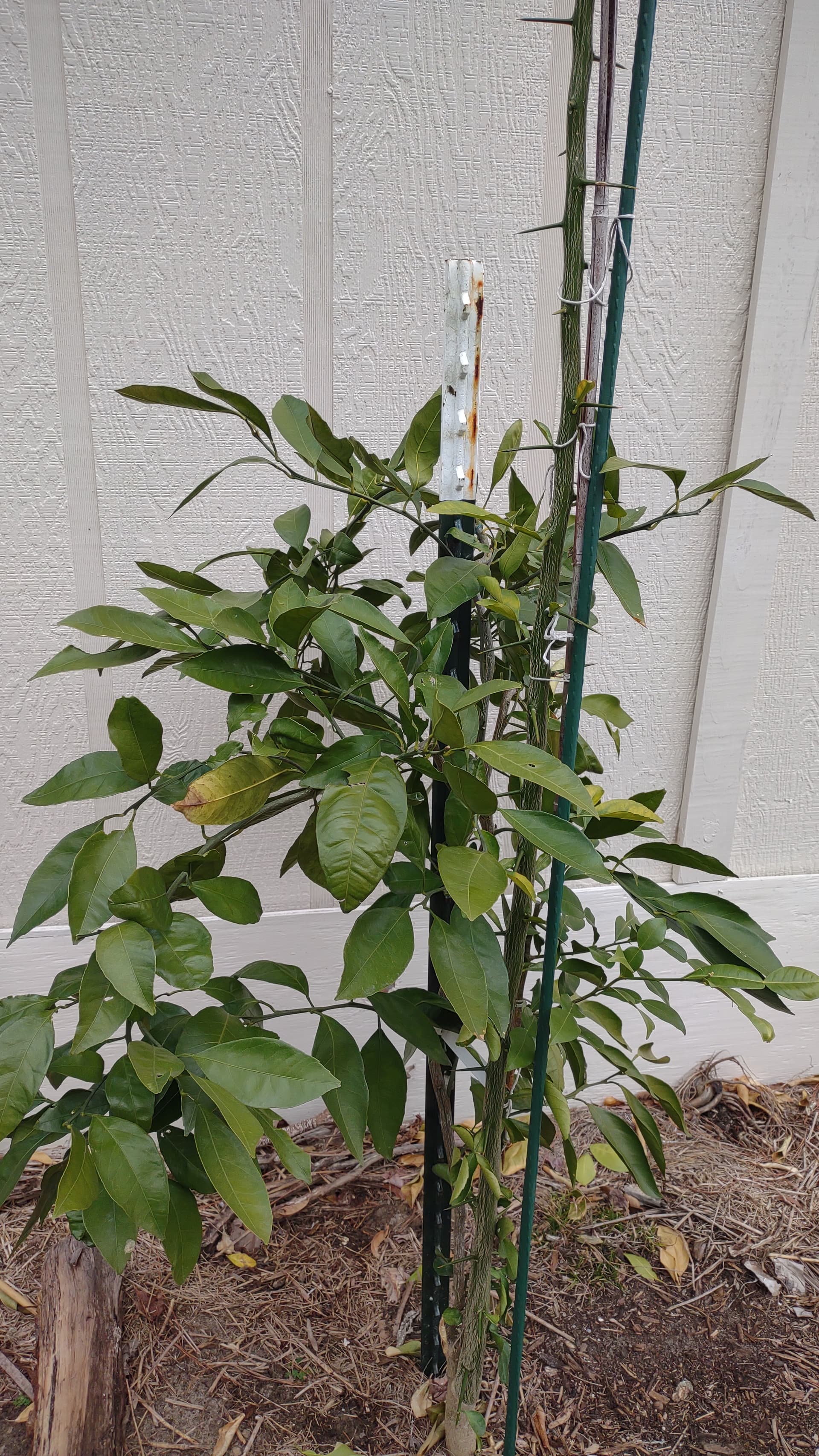
Owari and Ichang papeda
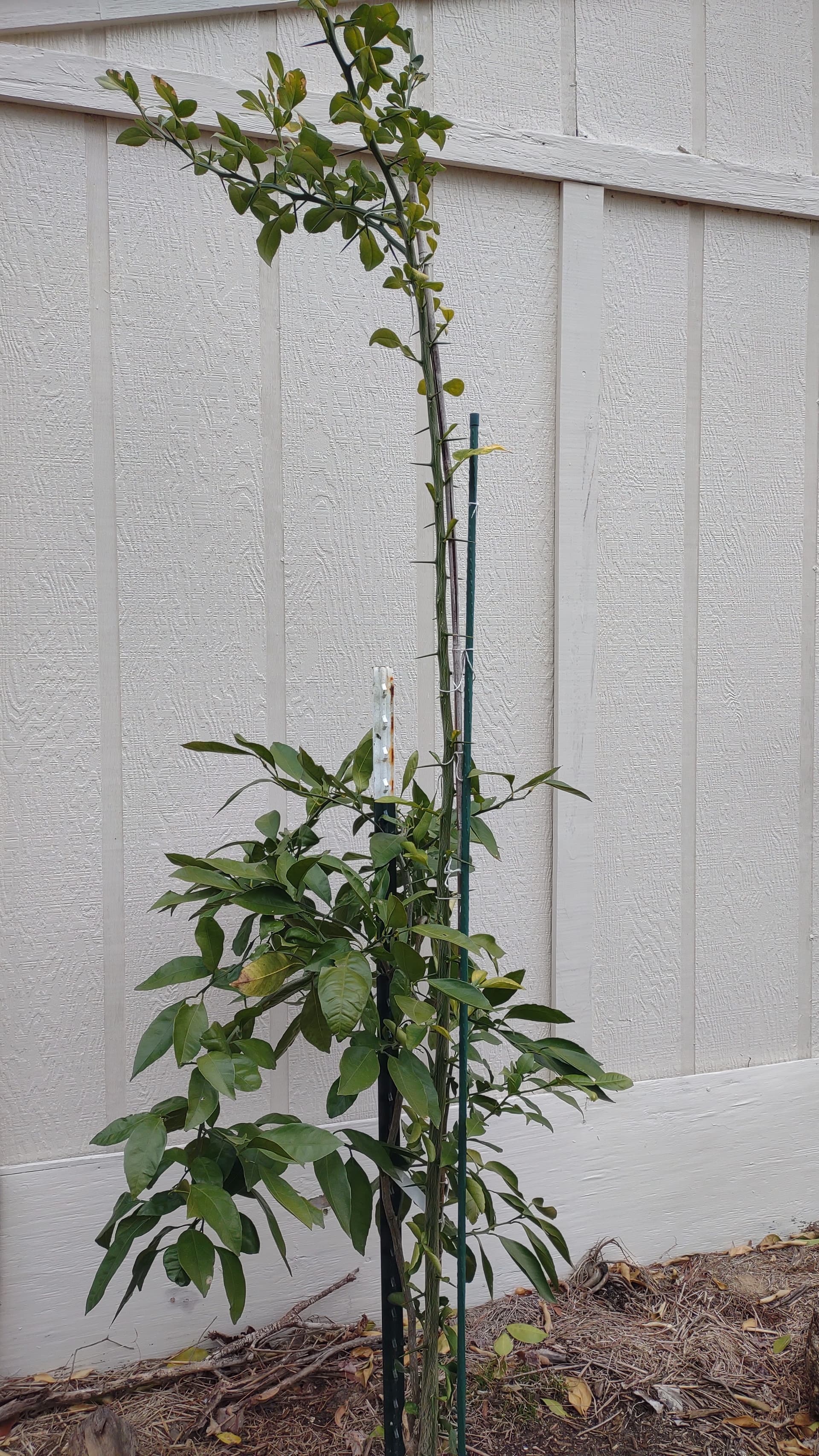
Watersprout
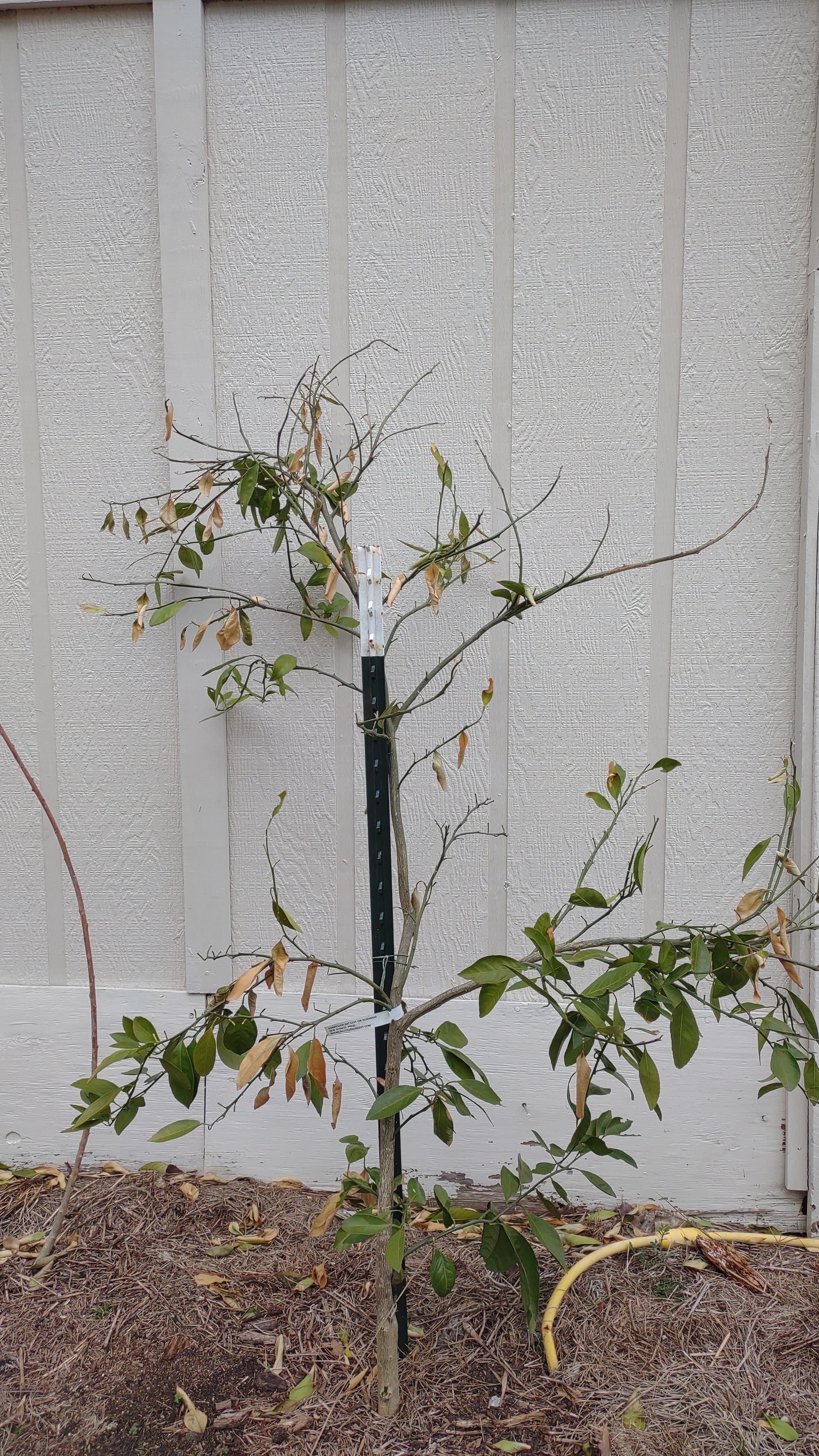
An unhappy Kimbrough.
Perhaps some chemical produced in the leaves of the hardy varieties is making its way into the Owari side? I’m not sure, and perhaps it’s just a fluke or a difference of rootstock, though for rootstock I’d expect the opposite since US-802 is half pumelo and shouldn’t be as hardy as kuharske. In any event, it’s an interesting result.
3 Likes
Nagami is the most common type of kumquat here. You see it in the stores. I don’t know about OP Nagami if that’s different. It’s quite sour. I prefer Meiwa, although it’s said to be slightly less hardy. I’m having trouble getting mine to retain the fruit.
john S
PDX OR
2 Likes
I personally feel it’s the other way around. But the reason is the Meiwa fruit is ripe around thanksgiving and the Nagami not until mid January. So once all the fruit is off of the Meiwa it’s super hardy, whereas 3 years ago we had that cold snap at Christmas and I lost a couple of branches on my Nagami due to splitting (maybe they would have recovered but i preemptively hacked them off a couple months later)
2 Likes
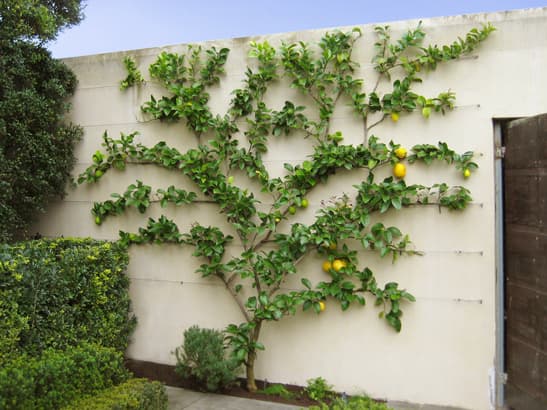
Has anyone tried espalier citrus in zones 6-7? I would think a espalier citrus (similar to the pic) against a south facing wall can be easier to protected with plastic sheets and xmas lights to protect from the cold. Proably easier than wrapping a large tall round plant.
6 Likes
Its lovely! I’ve only seen it espaliered in Italy. Looks fabulous!
5 Likes
i have two yuzus, one on its own rootstock (i don’t see a graft site) and another on C-54 rootstock, the one on C-54 rootstock did much worse than the other this winter (lowest was 15F), it totally defoliated and i only have a few branches left but it’s coming back, the yuzu on its own rootstock hardly took leaf damage. both were protected with the same amount of layers.
i have three red limes, the oldest one fared the best, it’s on trifoliate rootstock. the other two are young with trunks about half the caliper size of the oldest and these are on kuharske rootstock. the two young ones were protected the same but one completely defoliated and had way more damage than the other, though i had to cut a significant amount of branches from both. all three limes were wrapped with moving blankets but the oldest had a tent over it while the two younger ones only had plastic as their outermost layer. the one on trifoliate rootstock only had the most exterior and topmost leaves and branches damaged. is trifoliate much more cold hardy than kuharske? because i read both had good freeze tolerance.
i have two harvey lemons on US-897 rootstock, those fared pretty well this past winter with only exterior/topmost damage, considering that the rootstock is not really cold hardy.
the citruses i had in the ground that did the best with hardly any freeze damage were calamansi (own rootstock), nagami kumquat (own rootstock), yuzu (own rootstock). these were also the least protected with just frost cloths and plastic tents.
3 Likes