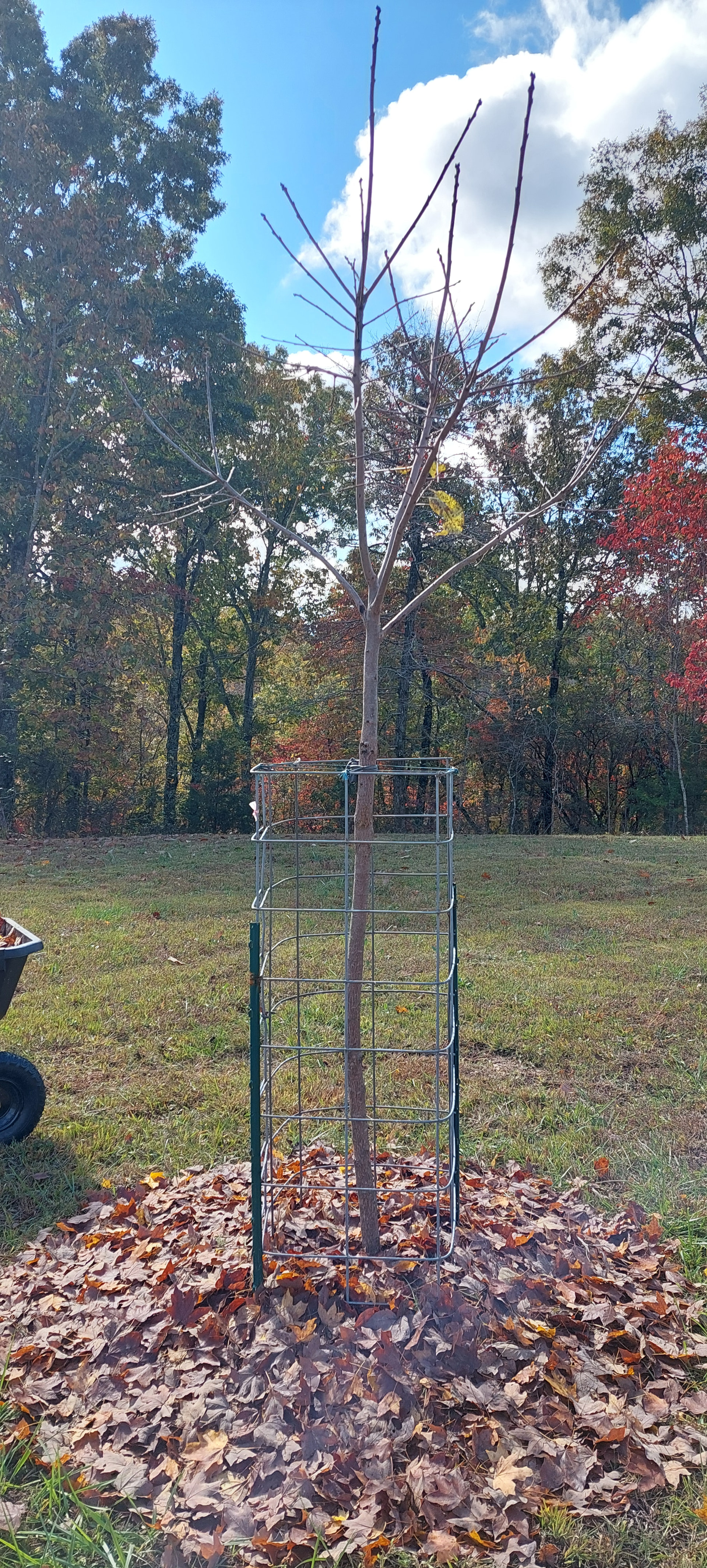
I was curious myself what rootstock my Saiju is on. Bought from Raintree which is west coast nursery 10+ years ago. Never sends root suckers. Does fine in East Coast Philly for me.
So if yours sends up suckers , maybe its more likely D. Virginiana
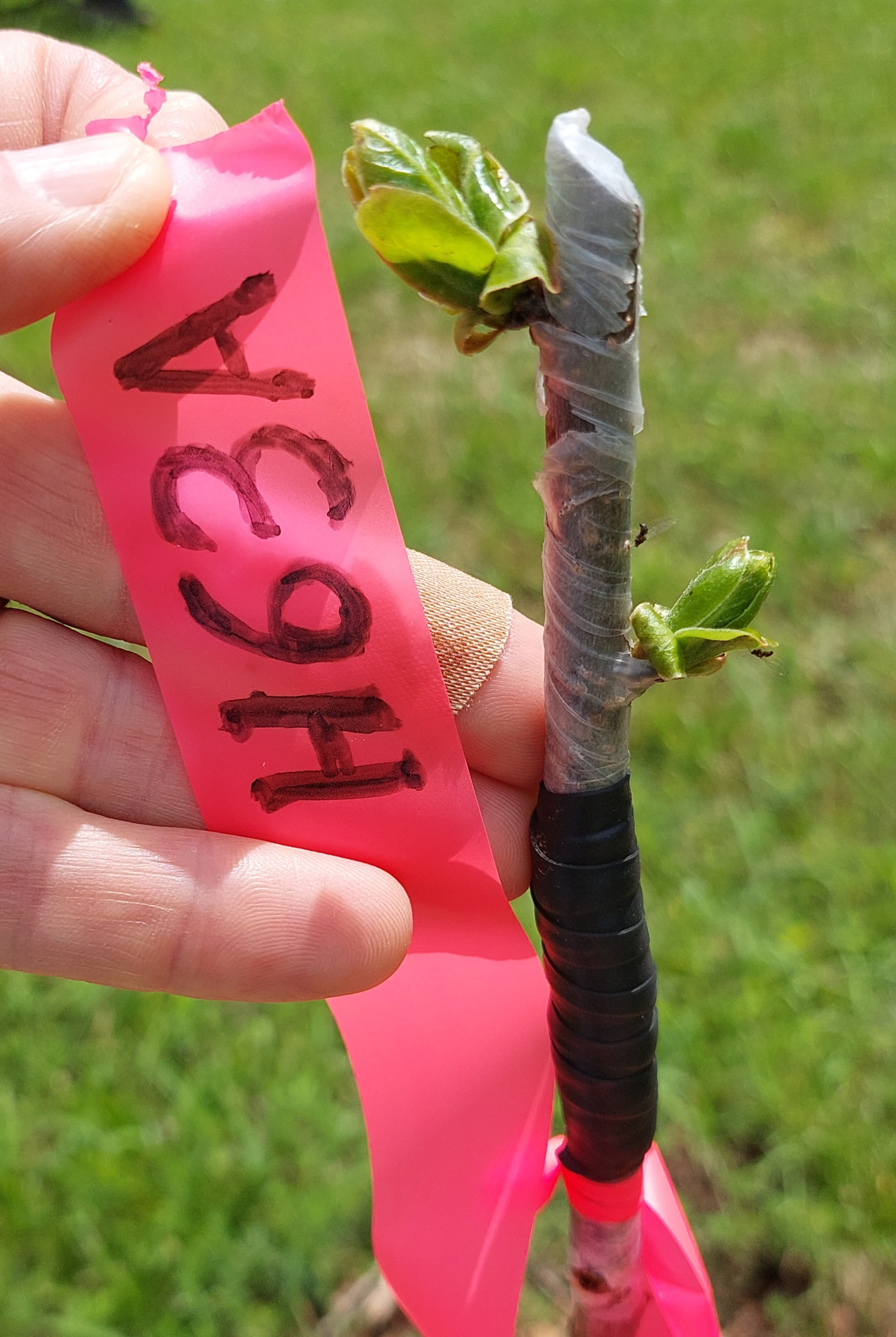
I should add that I keep my scions wrapped in a thin wrap of parafilm (or other) that is thin enough for the buds to push through. I let the buds push through. Keeping them wrapped has been important for me. If I remove the wrap (I’ve used things other than parafilm and sometimes the buds have a hard time poking through) for some reason, and then get hit by 100F, dry (15% humidity) and 30mph winds, the scion can get fried in just a day (been there and done that) even if the tree is well watered. Having an emerging bud (that has not yet poked through) wrapped by parafilm, and hit by very high temps does not cook the emerging growth. It’s generally similar for a scion well wrapped by parafilm with buds poking through. Occasionally issues can happen with any graft though.
I mostly wrapped in parafilm this year with no foil. I did wrap 3 in foil. I noticed no difference though even with grafts on the same tree, one with parafilm only and the other with parafilm covered then with foil. One was a little further ahead, one a bit behind, and one the same in terms of quickness to leaf out. Inconclusive results as to whether foil matter. Parafilm performed fine of course across grafts (~30 grafts total).
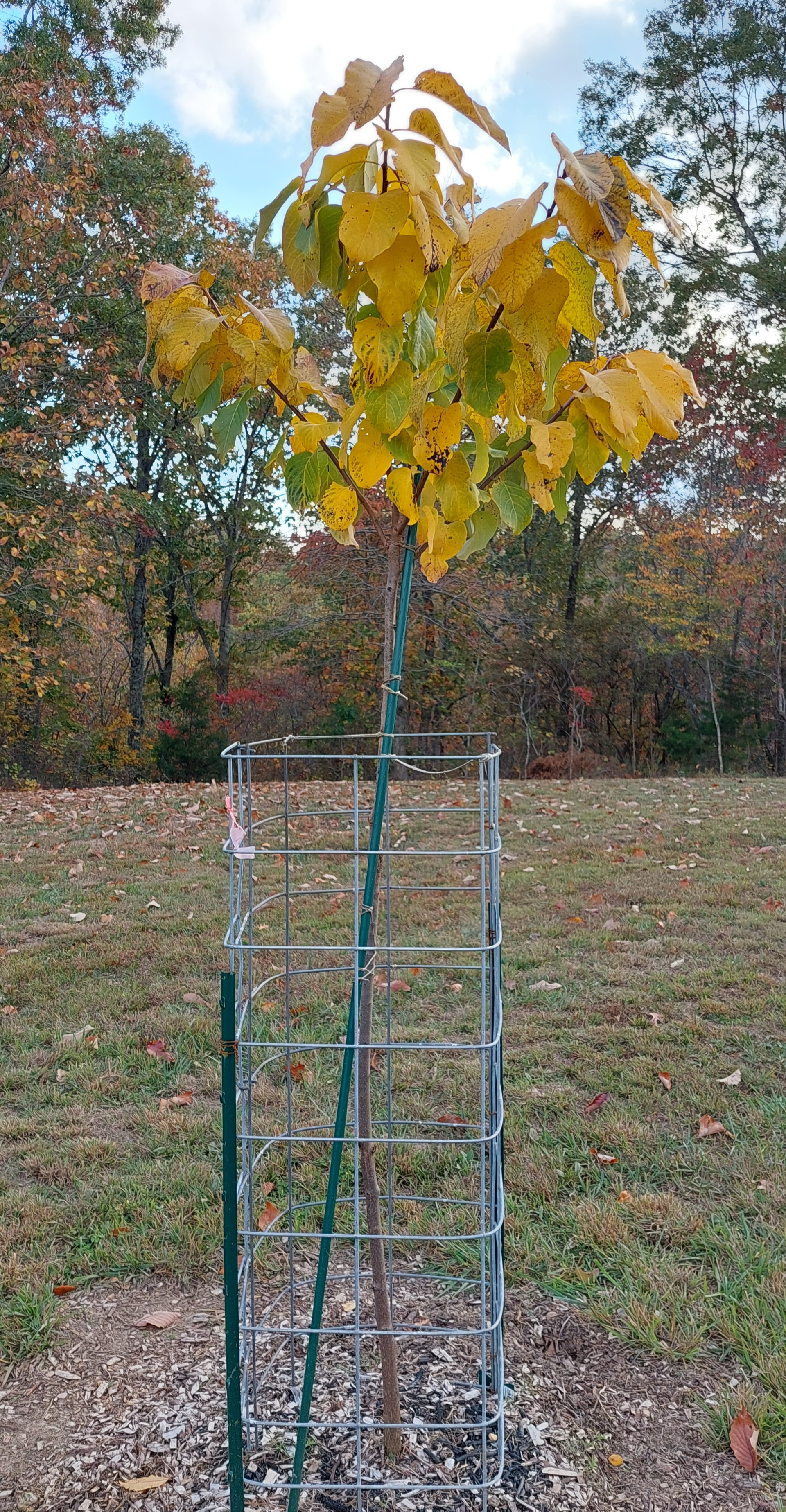
Do persimmon trees need staking first first few years? If so, does anyone have any pictures of their set up? I have a lot of T-posts at my disposable but I hate for roots to grow into the post and get damaged or ripped when removing t-post later. At what point can you remove stake and just let them go?
Also, is there a point when deer rub is no longer a threat or will they need trunk protection for life? It sounds like a lot of what I’ll be growing (Asian and American hybrids) are slower vigor and don’t grow taller than 10-16’, so I imagine trunk doesn’t get that thick. Thanks for any wisdom and experience shared
Staking – Yes. All grafts are vulnerable to damage for the first couple years. As an example, a month ago I had a 3-year old dwarf apple break at the graft due to strong wind. There was no evident flaw in the graft union, but the tree looked like it was hit with an axe.
Wind is probably the biggest threat but you might also get a bird landing on the young tree; a squirrel, possum or raccoon climbing on it; even a clumsy grower banging into it. Paradoxically, the better the scion grows – long stem, bushy leaves – the more vulnerable it becomes. The more weight from fruit, the more stress on the trunk and branches.
I don’t have a picture but I think the essentials are (1) a sturdy stake (e.g., 4’ rebar) that I’d locate on the Sid eof the prevailing wind, and (2) ties securing both the rootstock and the scion. It would be a big mistake to secure only the rootstock so the growing scion could be buffeted by the wind.
You’re probably dying to know why this set-up didn’t protect the apple tree described above. The short answer is that the tie was too loose. Mea culpa.
Re deer rubs, there probably some point at which a mature tree is no longer vulnerable, but I’ve had 7-10 year old pear and plum trees badly damaged. These trees were roughly 4" wide at the time. The easiest approach is simply to circle the lowest 4’ of trunk with hardwood cloth. It can be loose, secured by zip ties, so 10 minutes per tree would protect each tree for m any years.
This is a nice thread with a lot of useful info. Is the usual strategy to graft both male and female scions onto one rootstock. Or do you wait to find out if your rootstock is male/ female and then only graft accordingly?
Gender of the rootstock doesn’t matter. Also unless you are breeding or growing pollination variable non-astringent persimmons you don’t need any males, they produce fruit without being pollinated and will be seedless
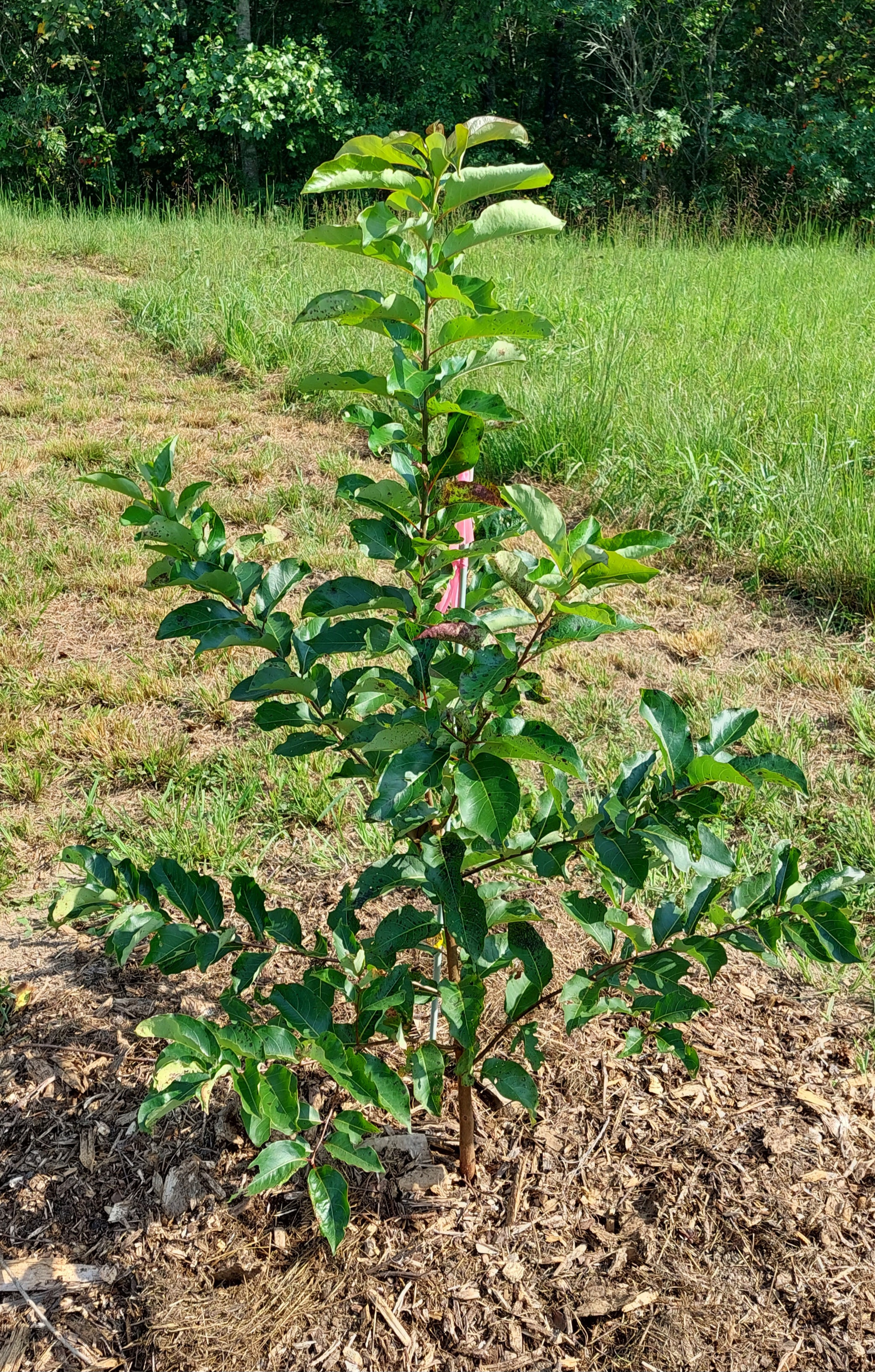
I started off with a nice wild DV rootstock tree. These just sprout up in my fields… And can grow 4 to 5 ft in one season. I let them grow one season then I graft to them.
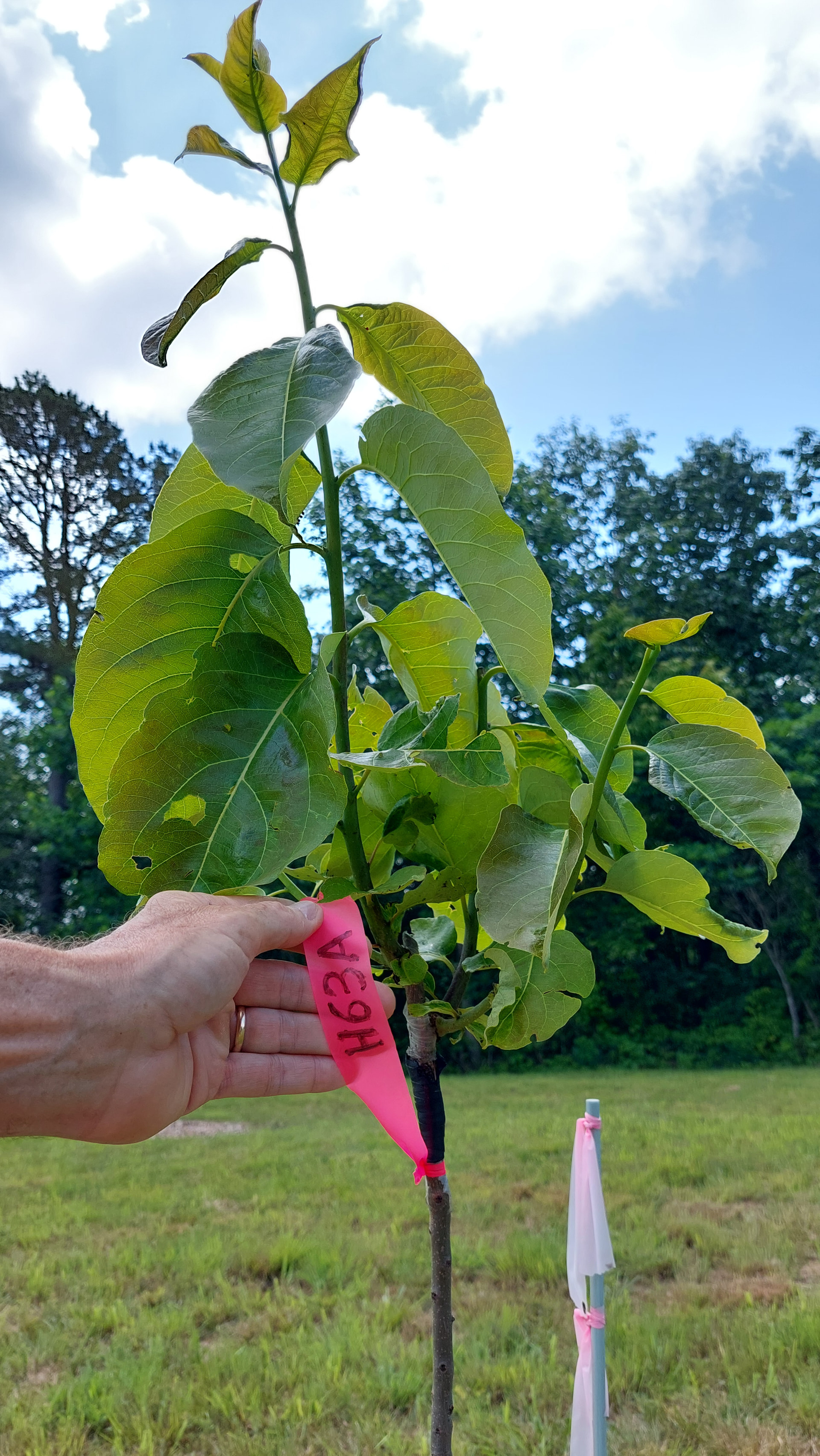
I like to do whip/toung graft where the rootstock and scion diameter match. In the case of my H63A that was approx 40 inches up that wild DV rootstock.
alot of people don’t like males around as they don’t want seeded fruit.
The only people who want are people who want seeds for making rootstock (to graft), or want seeds of a new variety (as they wanted to cross against that initial flower to get a seed to create a new variety on purpose to grow out).
One thing I am wondering from anecdotal evidence, that someone lost their male graft and their fruit on the same tree took a big drop (sure it was seedless but then they lost alot of fruit).
Anyone heard similar info like that, that having male flowers around makes less flowers drop and develop further into fruit (also heard seeded fruit = possibly slightly larger fruit from anecdotal evidence)?
My Szukis flowered for the first time in 2025. This is a cultivar that produce both male and female flowers (I definitely saw males). Nearby is my Early Golden that in 2024 produced seedless fruit but in 2025 was pollenated by Szukis and produced seeded fruit. The Szukis did have very small fruit that were seedless. Will Szukis produce male flowers every year?
I agree with Phlogopite – you don’t need a pollinator, unless you want seeds.
Some growers claim that pollination (a) improves the likelihood that a tree holds it fruit; and/or (b) improves the flavor of the fruit. Personally, I think the 1st claim, even if true, is pointless. Most trees set so much fruit that they really should be thinned. So fruit drop can be a form of self-thinning. The second claim seems unproven. I have seen what I think is better flavor in my Kassandra as it has matured and coincidentally has been seeded by a new nearby PVNA Kaki. But I’m not sure if the seeds are relevant or just along for the ride.
Meanwhile, it is indisputable that eating a persimmon with seeds is inconvenient. Commercial growers of Kaki’s routinely banish or severely constrain male-flowering trees near PCA and PCNA varieties. You’re not likely to find seeded Saijo, Hachiya, Jiro, or Fuyu on the shelves of grocery stores.
Quick question, i read somewhere that cuttings lose viability quite quickly in freezer. It that true or maybe the reason or the grats didnt take were because the time of the grafts?
Can i store the cuttings in the freezer now and graft them when the rootstock awakes or do you shorten the time between getting the cuttings and grafting them the most you can?
I like to leave the lowest branch and graft a few inches above it on the trunk. That way, if the seedling (rootstock) is male, it can contribute pollen, and if it’s female, I get to see what the fruit looks like. The left branch also helps (in theory) draw sap up the trunk and keep the rootstock from dying back and suckering. If the seedling fruit is low quality or you don’t want/need the male pollen, you can always prune the low branch off later.
Appreciate the tip. If I can get seedless fruit without pollination, then I would prefer that. But I’m curious now to see the fruit quality of the rootstock itself. Will be a few years yet, the ones I received are thinner than a pencil at this point.
I’m all for curiosity. But your time might be more productively spent checking out other named varieties. For example, I’m trialing H63A, Barbra’s Blush, Dollywood, H-118, Morris Burton. The rootstock is most likely some uninteresting seedling.
Ask yourself: Where did the seeds come from that produced the seedling rootstock trees? If I ran a nursery and wanted to grow / sell seedling rootstock, I’d probably harvest and plant thousands of seeds from wild trees. That would be wild females pollinated by wild males. The odds that you’d discover anything worth preserving are very low.