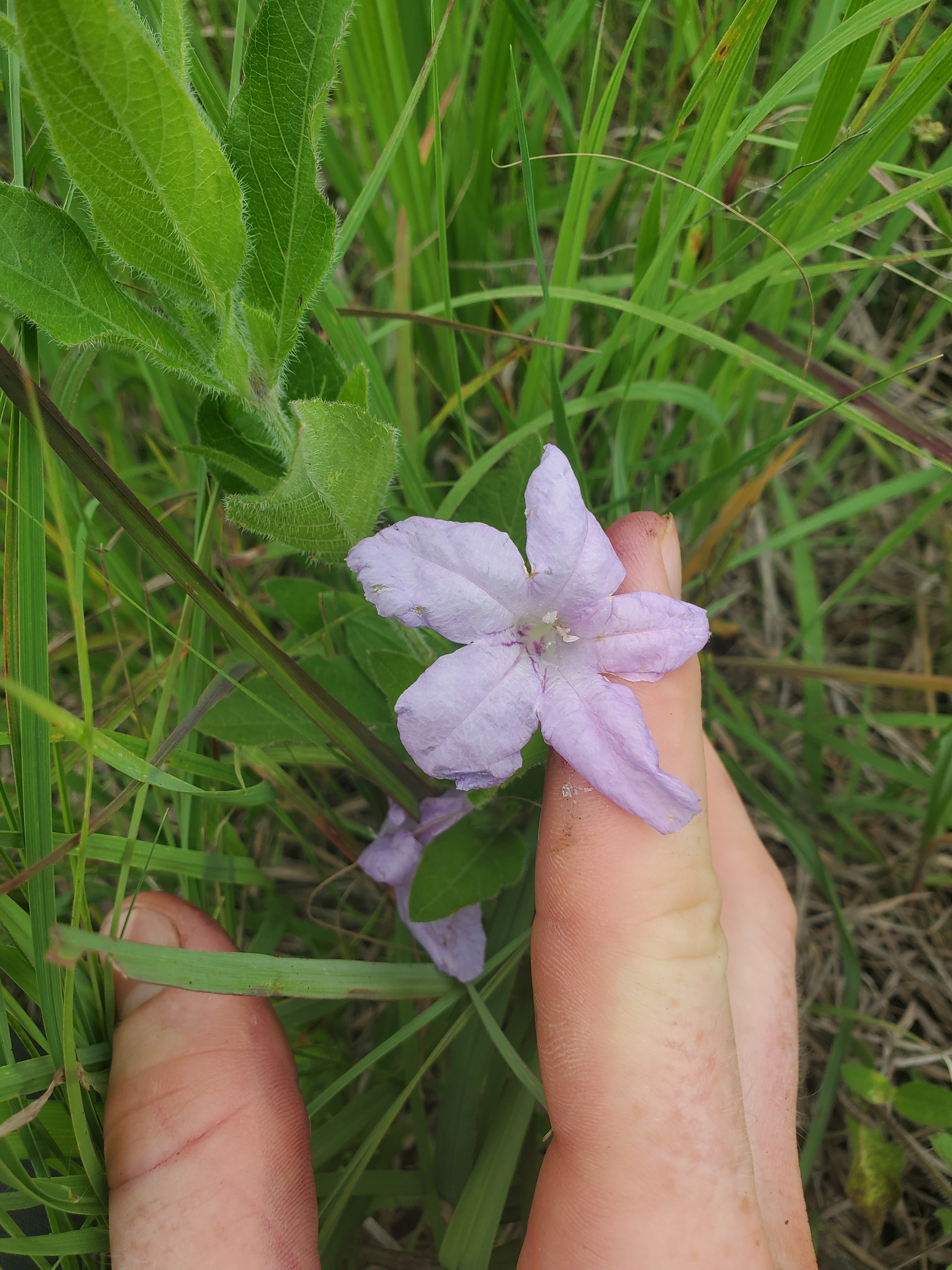
I haven’t worked with I. macrorhiza very long. I had three survive a winter in NoVA (in a pot) that I gave away to a friend doing habitat restoration in Florida. I assumed they weren’t happy up North because they took a long time to come out of dormancy, but I’m noticing the same pattern here in Florida - only 2 of my five survivors have sprouted leaves this year, & only recently (in May, in FLORIDA!). I don’t recall needing to do so for this species, but I would overwinter sensitive potted plants by clumping all the pots in one area & raking a large pile of leaves on top of them, at least 2ft thick. Throwing a tarp over the pile would be ideal, to keep it from getting too wet. Even here I lost a few of the seedlings to root rot. They don’t seem to like wet feet.
But yes! I just grafted ‘Riley’s Chickenclaw’ this year, but it made one fruit that produced one (seemingly) viable seed. Still waiting for it to sprout
I have a ton of raspberries growing everywhere from myself and the birds throwing them around and in the pots…
Thinking about taking them out of the pots they grew in and isolating to see what’s what lol. I have a bunch of raspberries that popped up in my blueberry 25 gallon plants as well as in my blackberry pots too
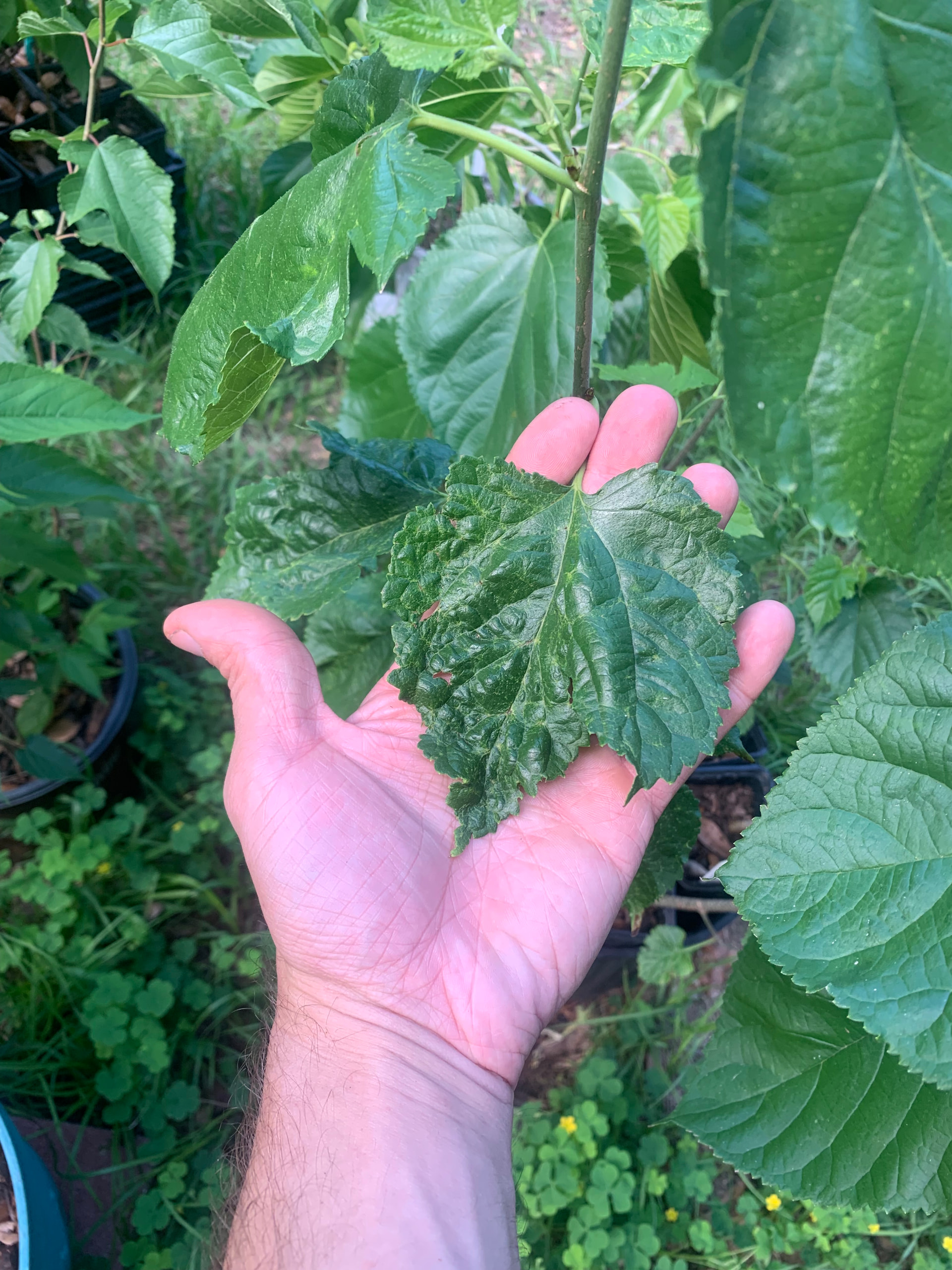
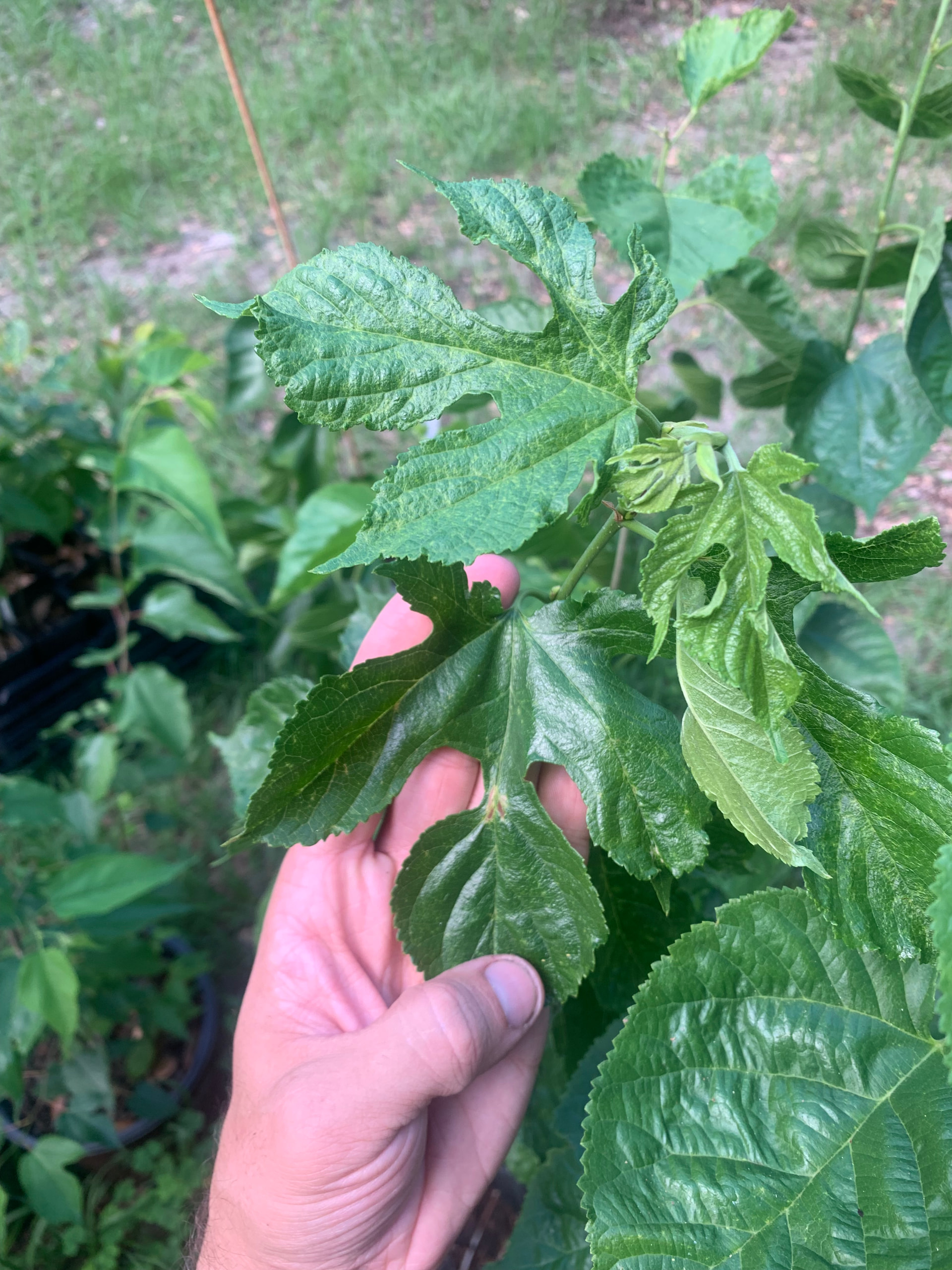
Some of my mulberry crosses (mostly the ‘Himalayan FSP’ x ‘Pithlachocco Two-Spirit Grande’) have wrinkly, misshapen leaves.
@Miniforests Does this look like genome shock? None of my M. rubra seedlings or grafted mulbs have anything like that, so I don’t think it’s environmental.
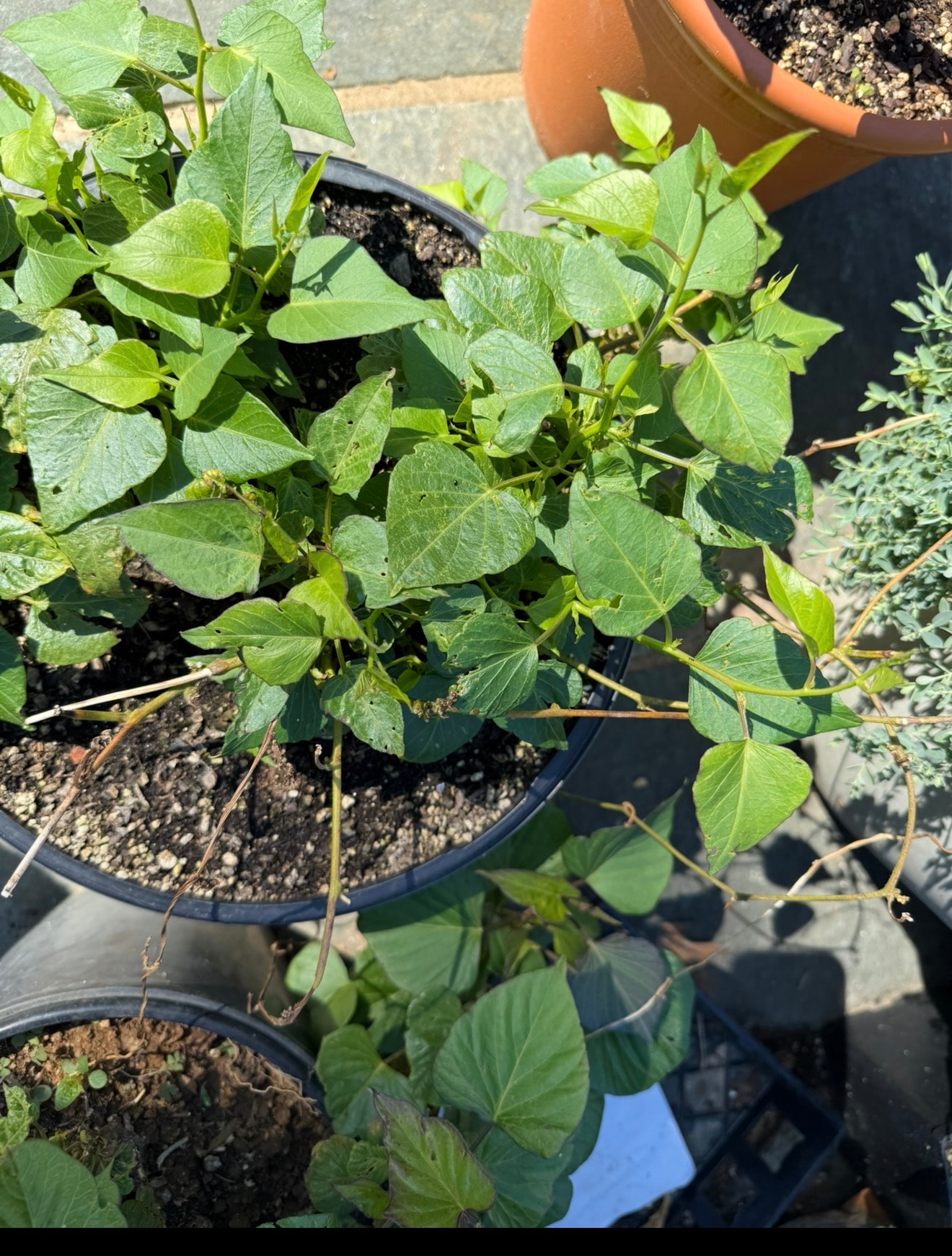
Yea it sure does look it to me, combined with the shock of grafting (which intensifies genome shock when done early on). They seem to usually grow out of it and figure out whatever problem was causing them to look crinkled, variegated, misshapen, short internodes, etc. But interestingly they often return to show some of the same early developmental funkiness if you prune them. With passiflora hybrids I’ve seen it where the variegation will return and leaves will get a little misshapen. With the intersectional sweet potato hybrids they go back to having super short internodes if they get pruned back.
Pretty soon this one will again send out long internode vines for climbing (these all have the same behavior). You can see the ones that died back when I went out of town last winter, the brown stems with long internodes. They don’t go back as fully misshapen and funky looking as when they first germinated, but part way there.
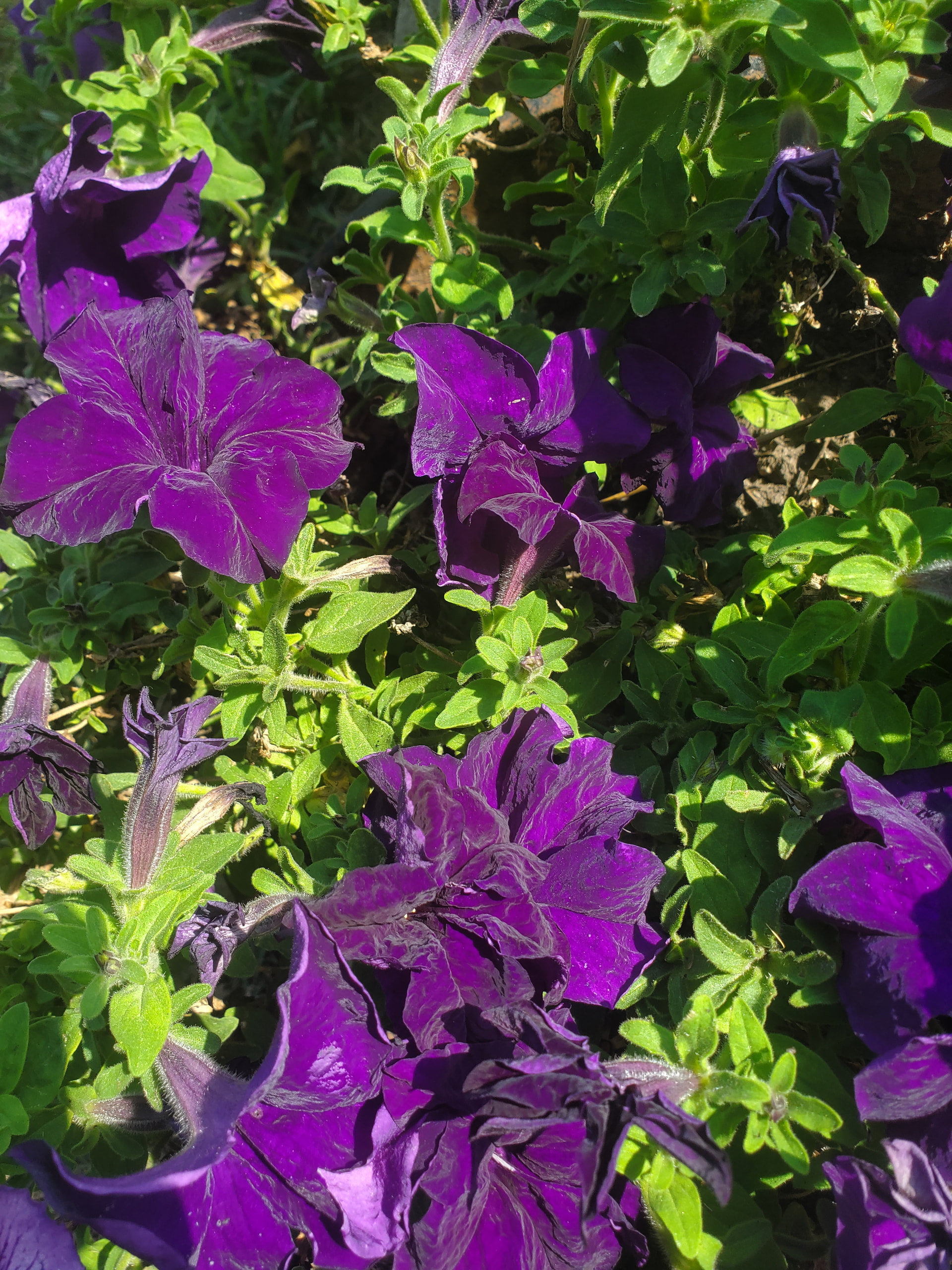
Have some big (comparitively) seed pods one the wild perrenial one that was emasculated and pollinated with the dark purple. Maybe I can get a perrenial large flowered purple petunia?
Also have some cowhorn okra pods almost mature that I pollinated with our perrenial hibiscus.