That is a super cute dog!
2 Likes
They are maybe 6-8 inches. I didn’t actually count the buds. (Which are now under Parafilm.)
Cleft graft? I cut the bottom of the scion into a “V”, split the stock, shoved the “V” until the stock, tied it up with rubber bands, and covered the whole shebang with Parafilm.
1 Like
Here’s a conversation thread on Long Scions where you’ll see names of people who use a lot of long scions:
1 Like
Thanks, that was exactly what I was looking for.
I think the damage I did to the trunk now bothers me more than the length of the scion, but I expect it will heal if I can keep the critters off of it. And I got a really good join between the stock and the scion.
Regarding temperature to callous the graft of plums, will a new bench graft callous if its placed outside and the temperature is above 60 during part of the day, but in the 40’s - 50’s ( and possibly thirties ) at night? ( grafts are in pots )
1 Like
Well, they took a while to sprout, but all my grafts this year seem to have taken. I nipped off the sprouting buds on the stock today, in the hopes of sending more nutrition towards the scions.
4 Likes
Can a graft fail if the tape/string is too tight? This would be for a thin scion and stock (3mm dia) grafted using carefully done Whip and Tongue. Rootstock is a OHXF-87 pear rootstock and scion in Warren pear.
I would say it can only help the graft take, but if it’s too tight (and doesn’t decay naturally like buddy tape) you may want to remove it manually after the graft callouses.
One more cause for graft failure that I saw Mark mention is birds. I have annoying mockingbirds who love to land on new grafts, so I tend to wrap them in aluminum foil to protect the graft from drying and those pesky savages for landing on them leading to lost cambium contact and failure.
1 Like
I think that one year I got so carried away wrapping grafting rubbers on cleft grafts that I choked a few, meaning I squeezed the cambium to the point that it couldn’t transport nutrients. So I think that maybe it is possible. Or maybe they struggled for other reasons. I don’t remember all the details.
In any event the wrap does need to be nice and snug.
3 Likes
In my experience grafting rubbers simply fall off after a season. And have a decent amount of give. So they have never choked a graft. The ones from amleo and others are intentionally made to be more stretchy- less taut than a cut rubber band. That is what I would use.
However, I’ve almost killed many grafts with buddy tape and/or electrical tape. Often discovered them just in time - it’s an ordeal to cut them off without damaging the underlying plant material.
I quit using grafting rubbers about 5 years ago because I began to find that 1” wide strips of plastic gave a more uniform pressure to the grafting union and it can be applied with plenty of tension to encourage callousing. In cases where larger diameter stiffer scions require more pressure to close the gap, I apply electrical tape over the plastic strips sealing the graft union. Then as soon as the graft takes I remove the electrical tape to avoid girdling the graft union. I apply parafilm to the scion before grafting to protect from dessication, so the complete graft is sealed when done. My Plastic strips are cut from plastic bags using a safety razor: cheap, reliable, easy!
Dennis
Kent, Wa
5 Likes
What about rootstock-to-cultivar compatibility in apples? I haven’t seen much about that with apples, so have presumed it’s not an issue. I’ve had trouble with a getting a few particular cultivars to take, though, so wondering if it’s compatibility, or just coincidence.
Specifically, the two I really want to work with but have had trouble with are Lodi and Haralson (I’m sure there are others, but haven’t noticed patterns). The Lodi is from our mature tree (I’ve had good success with other neighborhood trees I’ve taken scion from), and the Haralson from a few sources - I think Fedco, 39th Parallel, maybe Cummins. Rootstock last year was G.214, G.212, and some B.9 and M.111. What have you all grafted these on? Other thoughts on compatibility?
Thanks, all!
Some of the Geneva rootstocks are highly susceptible to latent viruses. I’m not sure if you would get an immediate graft failure or just the death of the whole tree after some period of time?
There’s some known incompatibilities. “M.26 has graft union incompatibility with some cultivars like ‘Rome’, ‘Stayman’, ‘Golden Delicious’, etc.” I think Haralson has come up as one that’s given other people here problems?
I had trouble grafting Haralson, and after it took it was slow to take off and slow to bear, didn’t want to grow out, curling up instead, and is still not very vigorous years later. A fine apple, though.
1 Like
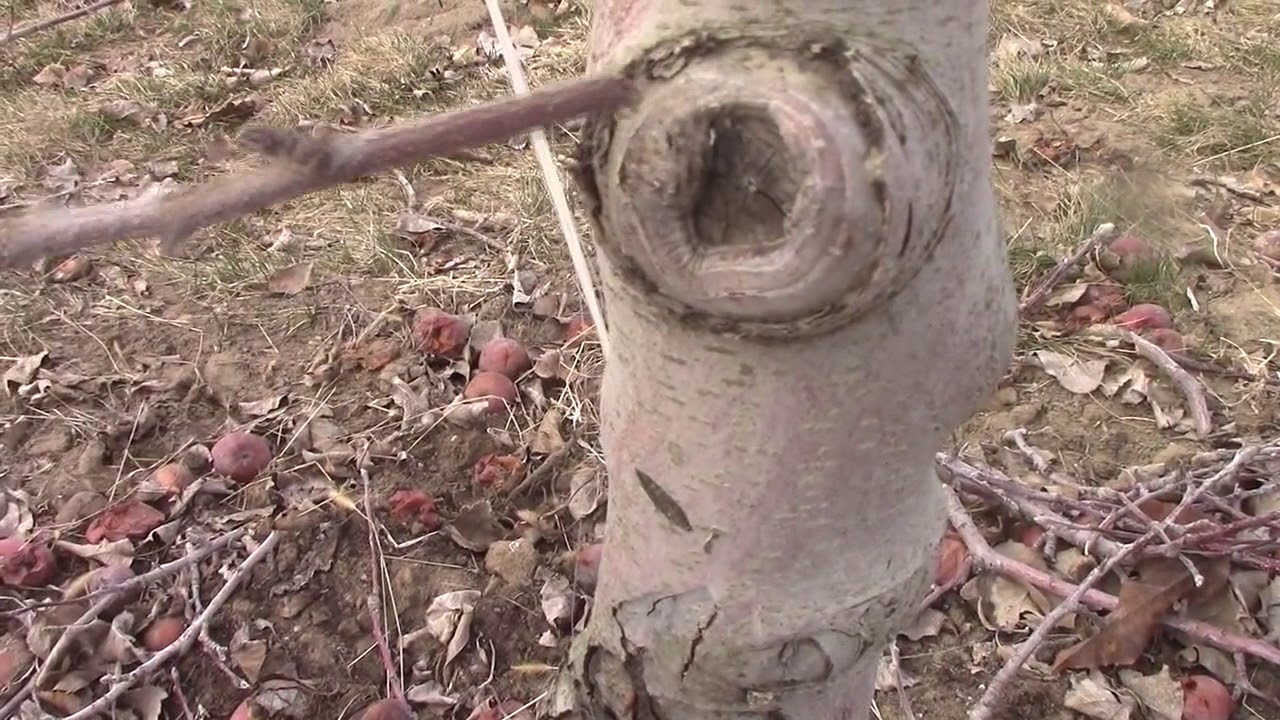
I figured I would post this here since I found the information useful and it relates to grafting. The attached YouTube video is one of the best demonstrations that I have seen for where the cambium layer actually is on the wood. He discusses this around min 4:30.
5 Likes
I can’t figure out where to ask this, so sorry if this isn’t the place. I’m trying to figure out if it is reasonable to try to graft nectarine to Japanese plum or vice versa. Does it fail without an interstem and if so, what would that need to be?
I haven’t tried it but yes, I would expect nectarine to take to J plum and likely the other way around, too.
1 Like
Support the graft !!!

April 2024… i did this modified cleft graft of Mohler persimmon to a wild dv in the edge of my field.
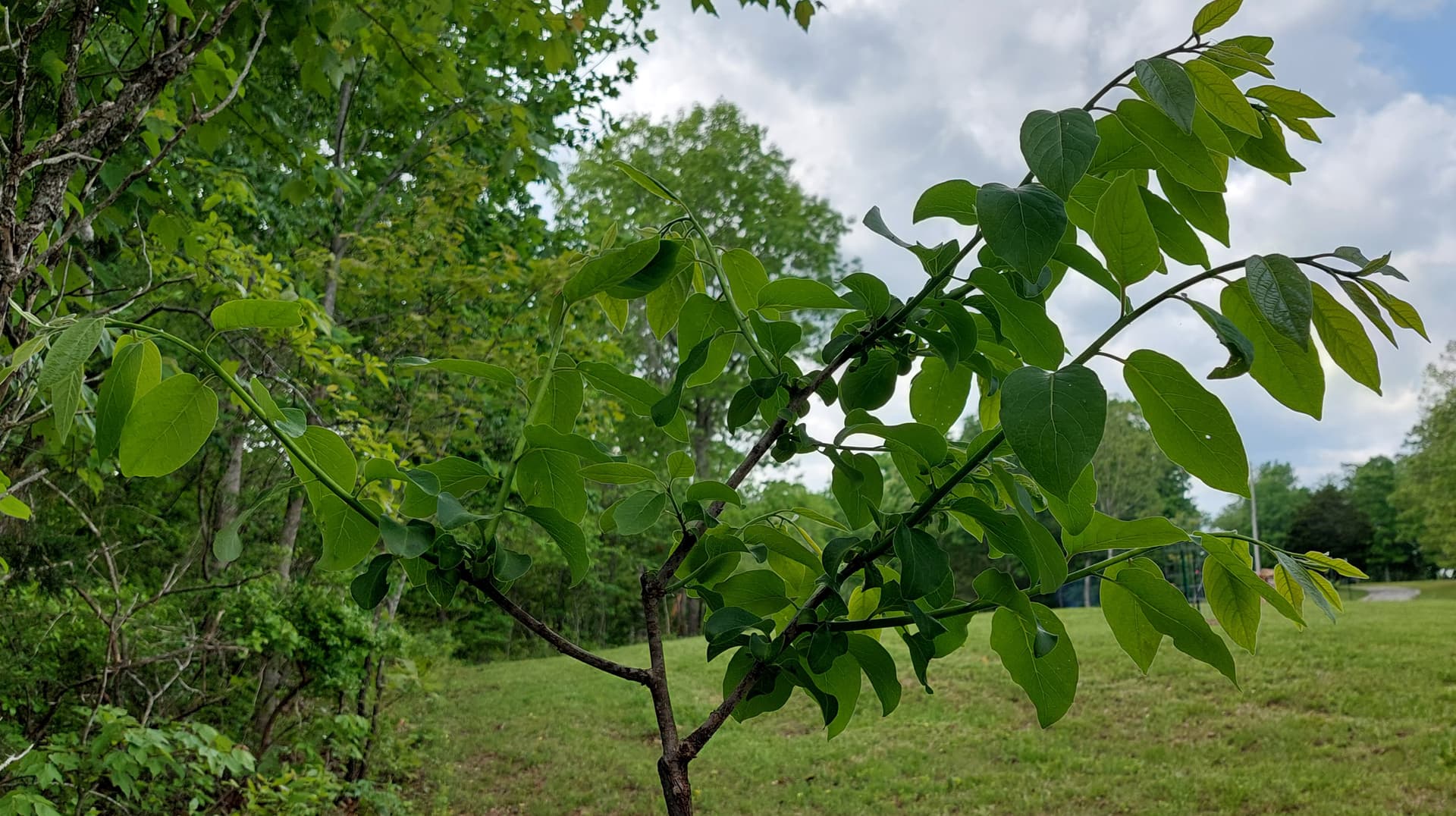
Early summer this year it had put on some nice growth.
A summer storm some straight line wind (and all those nice long leafy limbs)… well just caught to much wind and broke it off at the graft union.
I should have added a 8 ft stake and secured it well above and below the graft.
Bummer.
TNHunter
3 Likes
Very warm winter here and I think the buds on a few of my young peaches are fat. I’m planning on doing grafting for the first time.
We’ve had a couple weeks in dec and jan where the temps are in the low 70’s during the day for several days and 30’s and 40’s at night.
The coldest day of our winters here are often in march. We’ll usually have a false spring or 2 in Jan or Feb, then hard frosts in march and sometimes snow before spring finally breaks for good.
If I graft in march and there is a frost later is that bad? Can a graft possibly survive if leaves are just starting? If I pull the leaves off?
How fat is too fat for buds on scions?
Keep the scionwood dormant in a fridge until you have a stretch of warm days coming up. I’ve only grafted peach one year now and I used advice from this thread: Optimal field grafting times in spring and it went well. The rootstock trees had (small) leaves and about 5 days of highs in the 75ish range and no freezing nights. Around petal fall is recommended for stone fruit, but my weather did not cooperate with that.
I can’t remember exactly, but I think I’ve had freezing temps every year I’ve grafted, after grafting - not long hard freezes but temps that dip to the high 20s overnight. I never even considered it might be a problem but I imagine it could be if it was a hard frost.
This might also be a helpful resource for grafting stone fruit: https://purvisnurseryandorchard.weebly.com/uploads/4/6/2/3/46237531/sidegraftforstonefruit_purvis_nafex.pdf
4 Likes