Thank you for posting this link. Looks like good information.
2 Likes
Another reason that good grafts fail here (southern middle TN)…
Psylliad pest (Persimmons).
They often attack a new graft just as that new tender growth is coming out… they cause the new leaves to curl up along the edge and get all wrinkled.
Here your best bet to deter them is to spray the new growth on the graft not long after it starts growing (seven spray works well).. and check them weekly to see of they need additional spray.
I have had grafts that looked great one week… and check them again 2 or 3 weeks later.. and they are nearly dead from psylliad damage. They love the new tender growth on grafts.
TNHunter
2 Likes
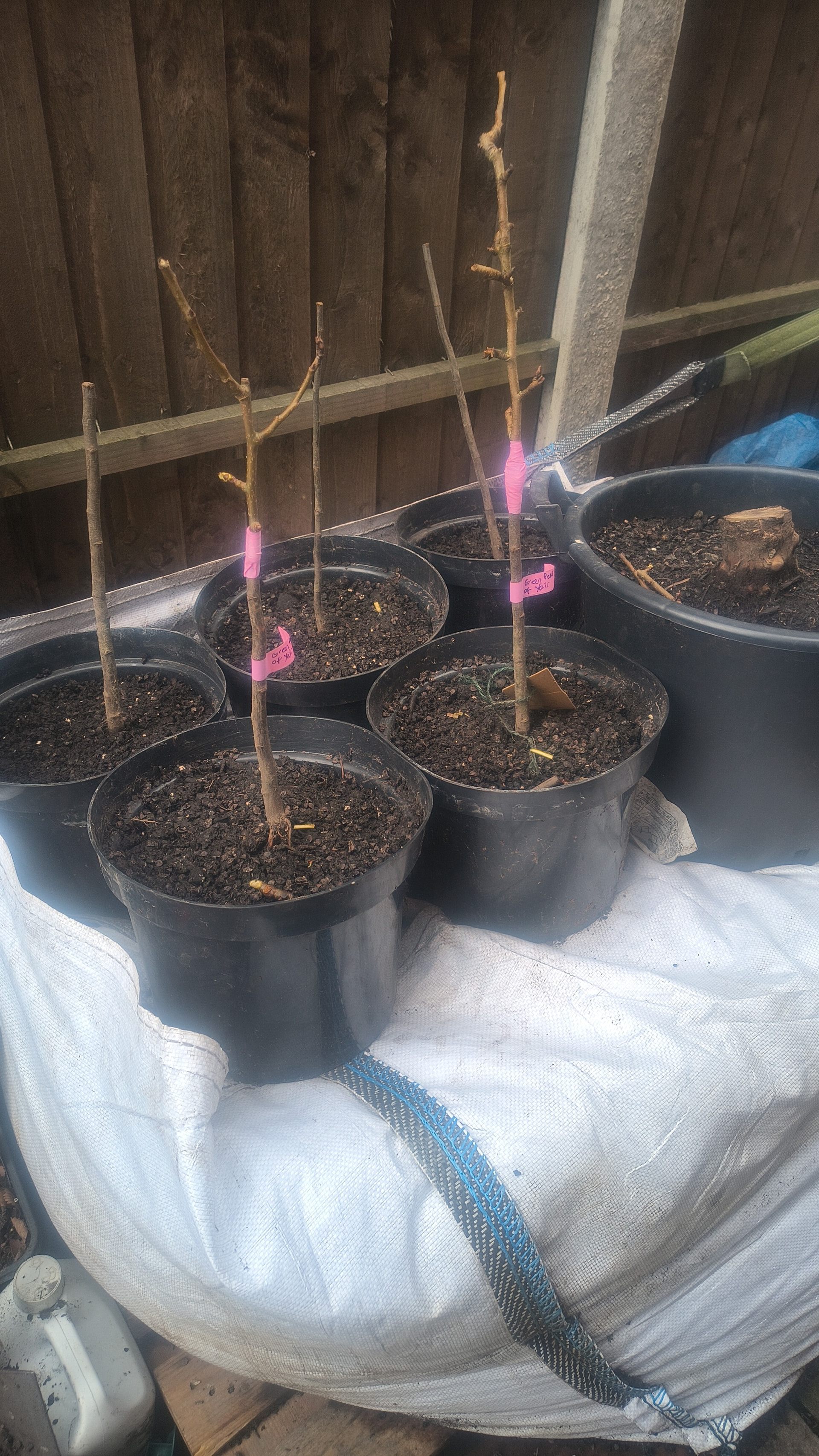
This doesn’t come under best tips strictly but I realised I had a tape type already that might be beneficial. I have previously grafted just with parafilm, grafting rubbers and some wax that is a mix of beeswax and tallow.
I have a lot of pvc tape due to my job using it to constantly tidy up microphone cables. A couple of years ago released a crepe paper alternative which I thought would be good for music festivals to not leave a load of plastic waste in fields from stage cables. But everyone would have to use them for a long time for all the cable stock to switch over and it wasn’t strong enough for the heavy mains and speaker cable sadly. But I still have some around on my person quite often.
I’ve used it in a pinch last winter to repair an m27 graft union that had snapped a little after planting and it did heal successfully. This year I have tried it as a base wrap and then done pvc over the top. My thinking is I can then remove the pvc layer once the graft union has healed without stripping the bark and then the ‘papertak’ will break down. Just to mention I did not pick those scions  it is “green pear of Yair", brought to me by a friend after Xmas whose parents live on the edge of the manor grounds where the variety is originally from and the trees had already had a winter prune.
2 Likes
Question about temperature and callousing for the ones noted as callousing quickly and drying. If the temperature drops below the range for ??? Is the point that the union dries out even if well wrapped and then can’t callous when the temperature rises?
I don’t understand your question. It doesn’t seem specific.
1 Like
Rephrased: For plum, cherry and nectarine that are noted in the original post as callousing quickly or drying out quickly:
- Has it been figured out how much of a temperature drop causes drying to the point of union failure? X degrees below optimal range for X hours?
- In the face of a temperature drop below optimal range, Is drying out irrespective of humidity?
- In the face of temperature drop below optimal range Is drying out irrespective of how well the union is wrapped?
1 Like
I think what you are describing is what has happened to me. After grafting, a bud in the scionwood turns green. I get excited. I wait. I keep waiting. While other grafts start leafing out, this one remains the same dot of green. Eventually, it yellows or browns, and I chalk up another failure. Except then, upon occasion, when I’ve given up, a bud surprises me and forms a leaf. Joy!
I was trying to figure out why this happened, and this is the best explanation I’ve seen. Thanks.
4 Likes
Top ways my grafts fail are:
Sour Sap / drowning (possible contamination?)
The buds rotting/dying off even though the graft eventually “takes” (too much moisture beneath parafilm/old budwood?)
Rootstock dying out from under me due to root rot from lack of leaves (esp. in avocados)
And finally, once everything starts looking good and I’m getting growth, slugs, birds, and deer eating off the advantageous buds or new shoots
1 Like
Ambrosia beetles bore into mazzard rootstock and caused every last cherry I grafted this year to fail, I burned all the rootstocks in the burn barrel.
1 Like
Do you think touching the back of the graft after you cut it could cause failure? I ask because like all of mine failed and in trying to figure out why
1 Like
I don’t think touching the cut part is good. But I have done it accidentally and still had grafts that were just fine.
Anything that dries out the cut parts of the wood, or damages it, or gets dirt or oil on it would be bad. I try to minimize the time between when I cut the scion and when I do the graft and I try not to touch the cut surface or get it dirty.
5 Likes
how many grafts did you do? what type of tree/scion? what type of graft? how were the temps?