I live in a colder zone and have found that nectarines need three or four fruiting seasons before full flavor develops. Fantasia was one of the worst tasting nectarines I ever ate. No flavor just terrible. The third year the flavor was amazing!! Hard to believe it was the same tree!! The texture too was unique. Marshmallow soft and super creamy. Loved it!! My new favorite. Spice Zee Nectaplum was the same. Just terrible the first two years. After that it is close to the perfect nectarine. Both of
these produce giant fruit. Exceptions like Arctic Jay and Arctic Glo were good first year. So I really don’t judge fruit till the third year.
4 Likes
That has been my experience in zones 6-8 but even then when compared to the place of origin it can be quite different, I still get real shacky and very variety specific about zone 5 and 6 with nectarines.
1 Like
I can say honestly that Snacktime runs the size scale. Both good size fruit and smaller here in California. Also like most of the Donut style nectarines it can hole out or split in the blossom end. But i tested fruit with 23.5 brix on Snacktime this season with a great acid carrier. I tend to be leaning towards the higher acid fruits these days, More like the old Harko types
2 Likes
@EDLO01 The best fruits I’ve ever eaten are still the Honey series nectarines: Lite, Blaze, Royale, and Diva. When I’ve achieved 24-28 brix via deficit irrigation, they can develop a tropical flavor that I haven’t tasted anywhere else. Although Valley Sweet peach can at times have some of the same flavor.
By the way, is it widely known in the California fruit growing industry, that deficit irrigation can greatly increase fruit brix? Or is that discredited by the pros? What I see is people growing 10-15 brix peaches and nectarines in the humid east and 24-32 brix by some growers in CA and in my greenhouse where I can control water. I’ve seen Arctic Star at 10 to 30 brix in my greenhouse all dependent on how much the tree is watered.
3 Likes
Thanks for the feedback, those are really high brix for those varieties. You would never see those brix on a commercially grown nectarine here. But in a greenhouse, you should have total control, that is an ideal way to grow in zone 7.
I have always highly recommended controlled irrigation. A recommendation that I have included in my lectures for years is “It’s Not How Much Water You Give A Tree, Rather It Is How Little Water Do You Give The Tree To keep It Healthy And Productive”. This results in better flavor and higher brix.
Deficit irrigation as it is typically used in commercial orchards in California is applied towards harvest after they have sized the fruit with plenty of water. Once sized they shut the water off to get the sugars up, rarely works in my opinion. That’s where they get the Brix of 12 to 15 on those varieties you are fond of. I too like the Honey Series but find that anymore the low to sub acid just doesn’t do it for me. Partially it is the influence of the younger folks that I am working with that shy away from the low to subs because they are picked too early and come into the stores flavorless firm fruit; Looks damn good though! Don’t get me wrong they are always amazed when they sample, say a Honey Blaze when it is harvested right, but still I find they like to more complex higher Acid/sugar blends the best.
3 Likes
The acidic types are definitely better than low acid at 15 brix and below. Above 20 brix, and better 24, the low acid types really shine.
What I’ve learned over 20+ years of growing in my greenhouse is that it’s a milder climate than outdoors. I’d say water use in the greenhouse is about two thirds of outdoors. Outdoors in CA central valleys is a pretty harsh environment.
Thank you for your input.
1 Like
@EDLO01 I think I spoke too soon… I am in the middle of picking Snack Time for this season, and it is very good. Brix for soft ripe ones is 18-20+. The first one I picked had a 12 Brix, and it was just acid, which was the case with my crop last year. This variety has to be picked soft ripe in my climate to be able to achieve high quality. It is also my earliest nectarine, and has no competition with the low-acid nectarines that I prefer (curiously my Arctic Star tree is suffering and dropping fruit unripe). I have two scaffolds on a 3-scaffold tree, and will keep them.
1 Like
Yeah that is correct. Why I like that fruit is it’s the only decent fruit you can grow here. Although some low acid fruits come out fine here too. The Nectaplum is decent here. Low acid but sometimes it does get to the twenties in brix here and it’s not bad! I say worth growing here. Such a beautiful looking tree too. And Japanese beetles leave them alone. The purple foliage must taste bad?
1 Like
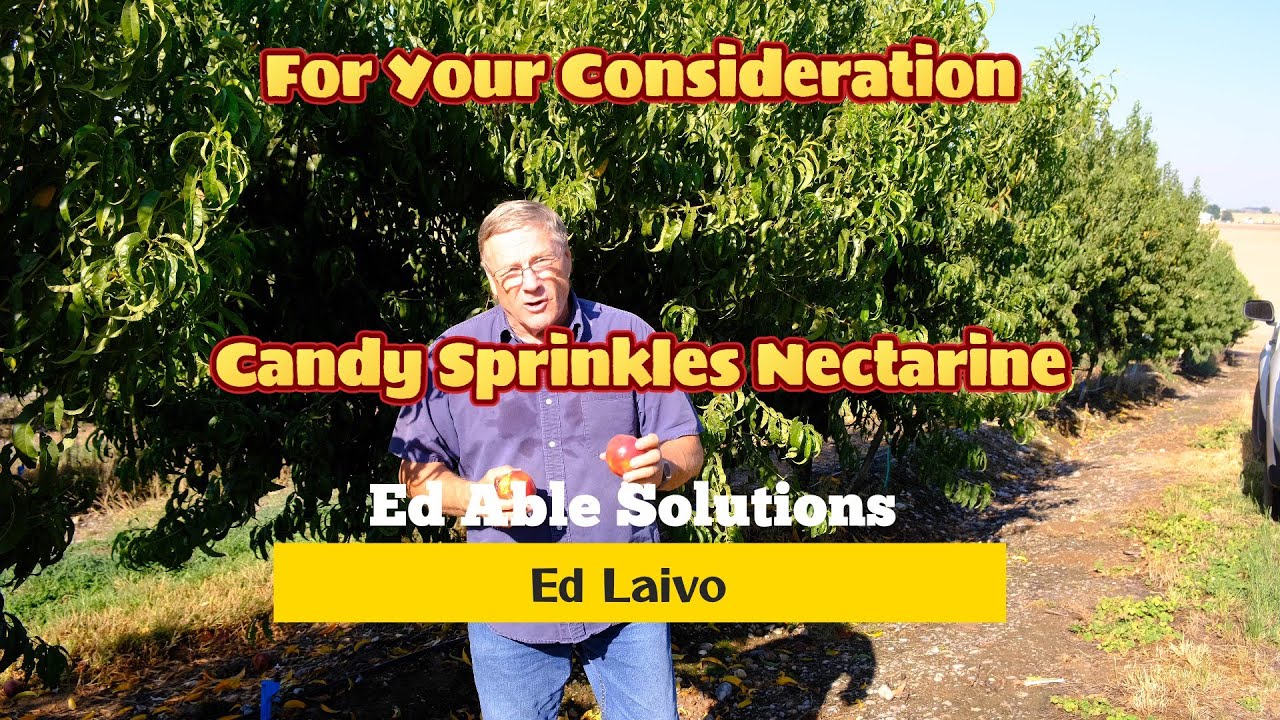
Candy Sprinkles available at Bay Laurel this coming season.
Mr Ed’s review-
1 Like
This post needs an update. In 2025, Candy Sprinkles, Freckle Face and Diamond Ray, all three were excellent. They are all high acid/high sugar and have excellent complex flavors. They were serious competitors to the sub acid nectarines that I prefer. Freckle Face is the sweetest, Candy Sprinkles is the only free stone of the three, and Diamond Ray is the firmest, with the longest hang time (makes sense it is a commercial variety).
4 Likes
Interesting!!! To improve sweetness!
1 Like