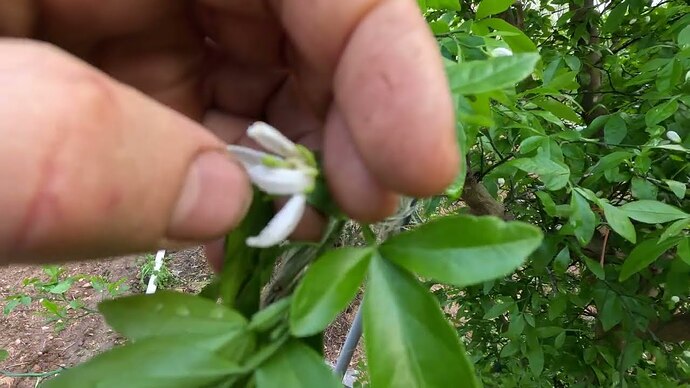
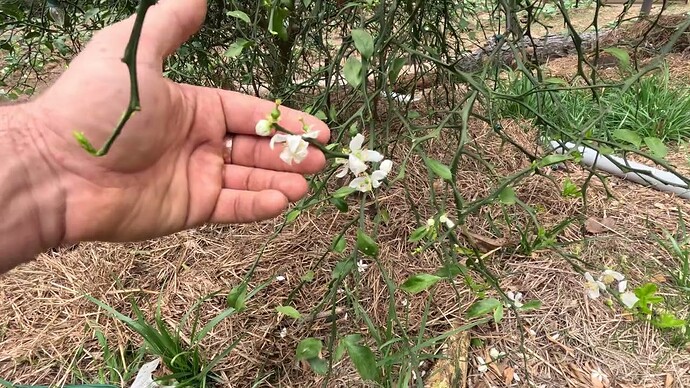
Citrus temperature ratings

When nurseries discuss cold hardiness of citrus it is important to understand they don’t mean sustained temperatures. They are referring to brief dips to those temperatures of less than 36 hours. Please refer to this article Satsuma - Worth All the Effort

“Satsuma - Worth All the Effort

- September 25, 2023

Satsuma - Worth Every Effort

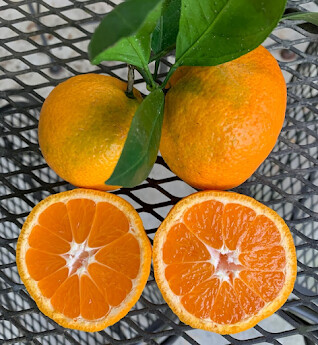
The Satsuma “orange” (actually a type of mandarin) is generally considered to be the hardiest commercial citrus, and it generally lives up to its name. It has a reputation of being reliably cold-hardy to at least 15F, and perhaps a little lower, as long as the freeze is of relatively short duration. By short duration, I mean less than 36 hours of continuous temperatures below freezing. During freezes of longer duration, Satsuma appears to be only as hardy as other mainstream citrus, and temperatures of 10F or below OR freezes lasting longer than 48 hours will kill an unprotected Satsuma.

Having said that, it’s only fair for me to admit that I live at the absolute northern limit of possible culture for Satsuma. My 20-year average winter minimum is about 15F, meaning that on average, I am pushing it. In February 2003, January 2014, and December 2022, temperatures in my area were around 10F and freeze duration was 48 hours or more, meaning that any Satsuma I plant is probably on borrowed time as an in-ground, unprotected citrus tree.

But I grow Satsumas anyway.

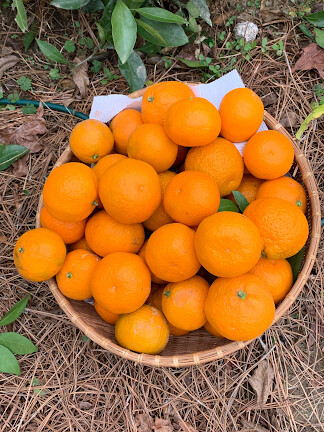
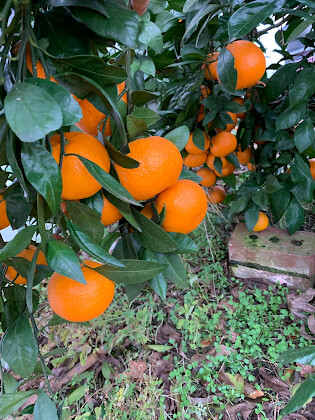
Why? Because Satsumas are THAT good. Because they have good short-duration freeze endurance, they will come through my average winter (whatever that is) without any problems. And they are worth the effort. Fruit quality is excellent, and the fruit here ripen to a beautiful bright orange inside and out. Fruit ripen in fall and are harvested well before my area generally experiences a hard freeze. They also store well under refrigeration for at least a month. Trees stay relatively small, making them easy to protect as needed.

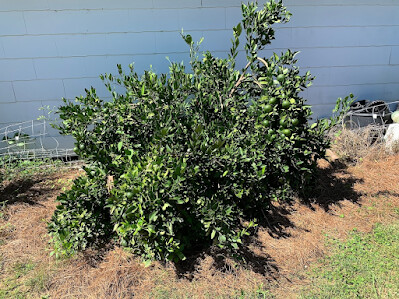
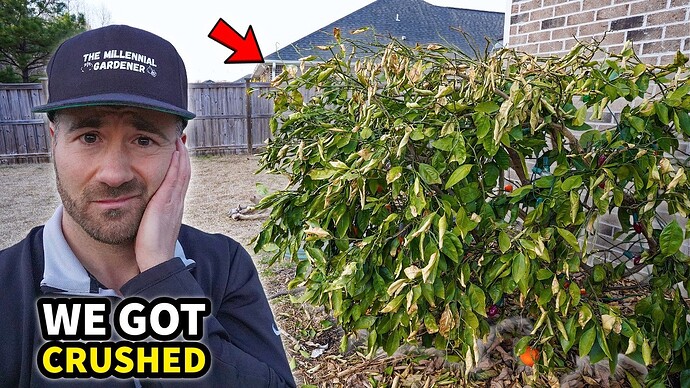
However, last winter was a lesson for me. I had just planted several different types of Satsumas (Ueno, China S-2, Miho, Arctic Frost) the previous summer, and I lost everything except one Arctic Frost and an Owari I had grafted myself some years before and just decided to plant out that year. I even lost a seven-year-old Silverhill (see photo) that had done very well in previous winters. Honestly, I underestimated the severity of the freeze and didn’t think I would actually lose the large Silverhill, but by February I could see that the main trunk was infested by ambrosia beetles attracted to the ethylene gas the dying tree was emitting.

So now I am left to start over, for the most part. I plan to do the following:

1. Limit the number of Satsumas I will plant. It’s too difficult to try to protect everything, so I will limit myself to my favorites. I still have Owari and Arctic Frost, so for the time being I will focus on these.

2. Protect at any temperature below 15F or duration of more than one full day. In retrospect, I wish I had severely cut back my Silverhill and taken radical steps to protect the main stems. Had I done that, I would have lost any chance at fruit this year, but the main tree would have survived and likely made a full recovery. As it happened, I lost the whole thing.”

The last article is good and when they say protect I’m sure you understand they mean Christmas lights etc.

5 Likes

Satsumas really shine after a light frost, the sweetness is jacked up to a different level. That is my observation from when I lived in north Florida. I agree that they are the best eating and beautiful trees. I have a few growing and am planning on planting a few more.

4 Likes

@fromthsea

I’m looking forward to that All about Satsuma oranges

@clarkinks

I remember persimmon Bob from Arkansas because he grew so.many kind of citrus in his garage converted to sunroom. He is a pro at it. I haven’t heard from him in a while. @aap

Tony

1 Like

@aap was not feeling well last time we spoke @tonyOmahaz5

2 Likes

It sounds like Owari and Arctic Frost are the top two for you (that got in your climate)! What makes these two your favorites? Have you tried Prague Citsuma?

1 Like

@APete

I made some more upgrades and added Browns Select as well. I like it i think you convinced me

“Prague Citsuma

Prague Citsuma or +Citroponcirus ‘Prague’

Prague Citsuma may be the best citrus available that combines cold hardiness and taste. Surviving 3°F (-16°C) 1, and 1°F (-17°C) 2 without damage, making it hardy in Zone 7a, and perhaps Zone 6b

Ripe fruit are sweet without the bitterness of Poncirus.4 Leaves are small and widely spaced. The leaves vary between trifoliate, bifoliate and unifoliate. Branches are thin and slightly pendulous.

The origin of Prague maybe unknown. B. Voss received it from the from greenhouses ITSZ from Prague. ITSZ is the abbreviated name of the Institute of Tropical and Subtropical Agriculture. This is a Faculty of Agriculture University. It is suggested that it came from Russia. It is possible it could be the Chinese chimera Hormish, but small fruit of Prague are not pubescent.

Chimera
While in a hybrid all the cells are genetically identically the same, ‘a chimera is a plant composed of two or more genotypes in the layers that make up the shoot tip’ 3 For Prague, based on taste and appearance, the fruit cells are Satsuma, and the stem tissue and part of the leaves are from Poncirus, possibly Dragon.

Woody plants have three dividing cell layers at the growing tip. They are named L1, L2, and L3. L1 is the source of the exterior of the stem and the top of the leaf. It makes the epidermis, stomata, and sacs in fruit. 4 In the diagram, the green color are the cells from Poncirus, L3

It is probably a chimera 2 for the following reasons

  1. Quality of the fruit
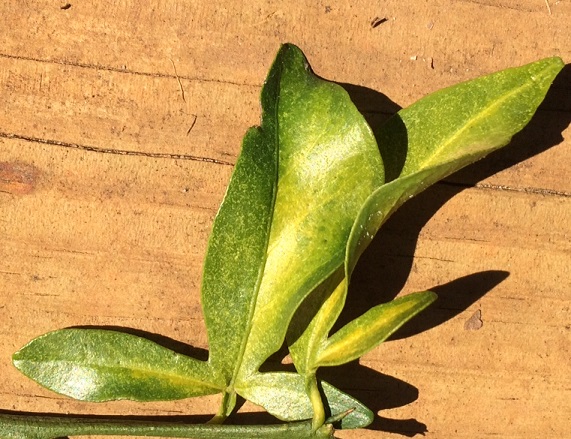
  2. Appearance of the leaves in the winter indicating a mixture of genotype.
    The L1 epidermis
    L1 sub epidermal layer
    L3 corpus, inner layer, center of leaf, also vascular bundle. L3 is poncirus

Schmidt (1924) presented the “tunica-corpus” concept to describe the stratified appearance of the cell layers in the shoot apical meristems of flowering plants. Most dicots have three distinct apical cell layers (L1, L2, and L3) that remain independent from each other…In citrus fruit, both the juice sac and pericarp epidermis originate from L1; L2 ordinarily produces seeds, segment walls, the hypoderm, and the mesocarp of pericarp; while L3 develops into the vascular bundle

According to the “tunica-corpus” theory, a plant chimera is a mosaic in which genetically different cells exist in the shoot apical meristem that gives rise to cells that develop into organs of the plant.5

Pictures taken in January 2020 showing the yellow in the center of the leaves from Poncirus cells.

Virginia Fruit Grower Video”

2 Likes

@APete

@PaulinKansas6b and @Stanthecitrusman looks like is growing them. I located this old thread when googling for information. Prague Citsuma hardy sweet citrus

The main problem with prague is reportedly production.

3 Likes

Heck yeah! I Iike the information you shared - I haven’t seen something this detailed before. VFG’s videos are nice too.

I got my plant from @Stanthecitrusman earlier this year! It does seem like production is a serious concern. I’m going to try to graft a scion onto trifoliate orange at some point over the next year or two. Maybe that will help with plant vigor as well as production?

3 Likes

@APete

It appears to be a temperature issue with prague fruit set. I think trifoliata will impart some cold hardiness on any citrus but more importantly I would diligently protect the bush not because the bush will die but because cold appears to impact fruit set. @KS_razerback was just discussing the pros and cons of this.

2 Likes

Speaking in broad terms kumquat are also very cold hardy. Since trifoliata are the most cold hardy that means when people breed citrus they will predictably use some combination of mandarin, kumquat, or/and trifoliata in their breeding program. That is exactly what swingle / usda did in the early 1900s.

3 Likes

This is a great report on prague, Thomasville, swingle and others in bloom.

3 Likes

Interesting observations @clarkinks ! Appreciate that you also write in Celsius so I don’t have to Google it. :grin: Have you grown Yuzu? :blush:

1 Like

@VanHalsing

I’m growing it now. We will see how yuzu does.

3 Likes