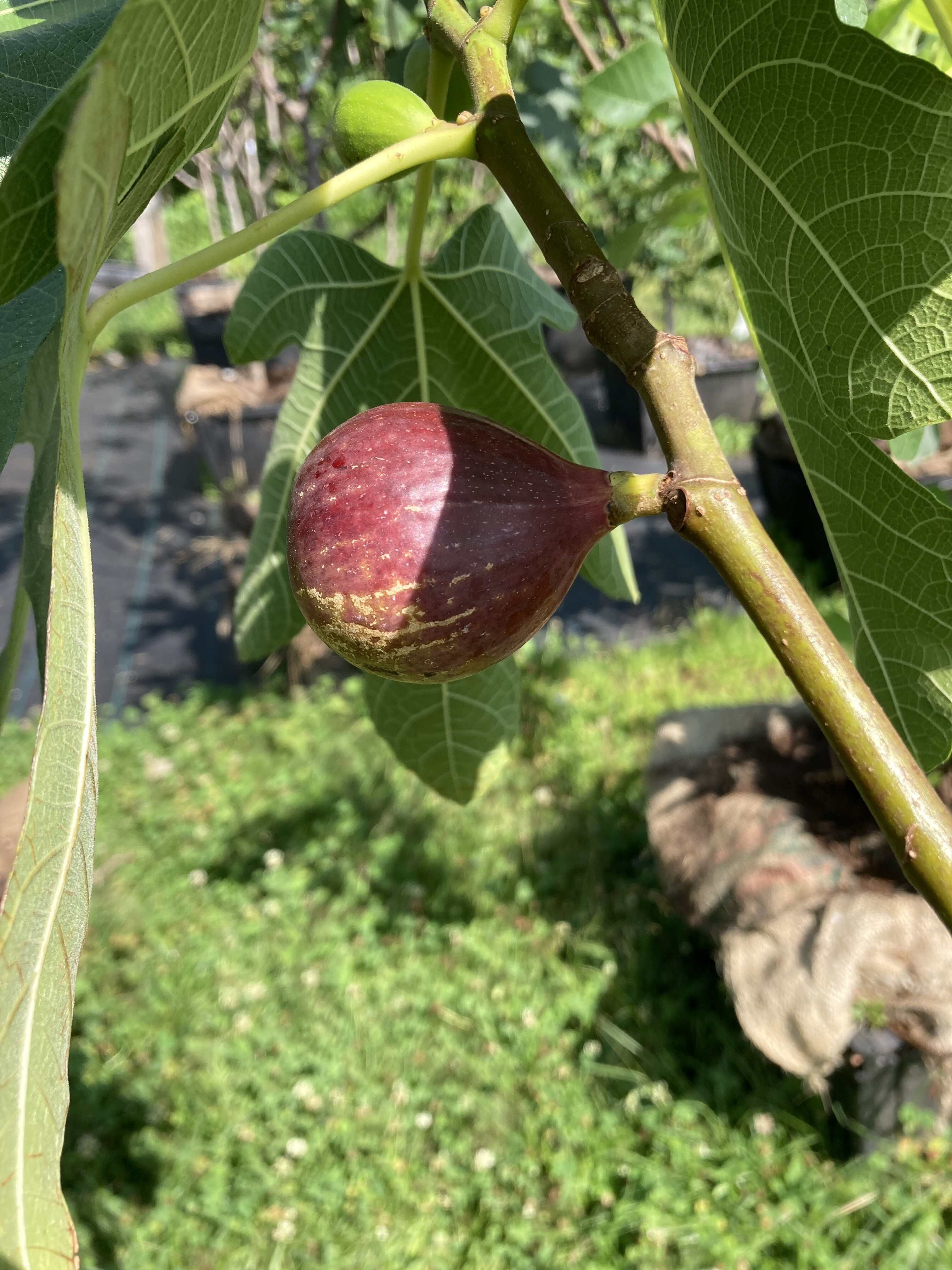
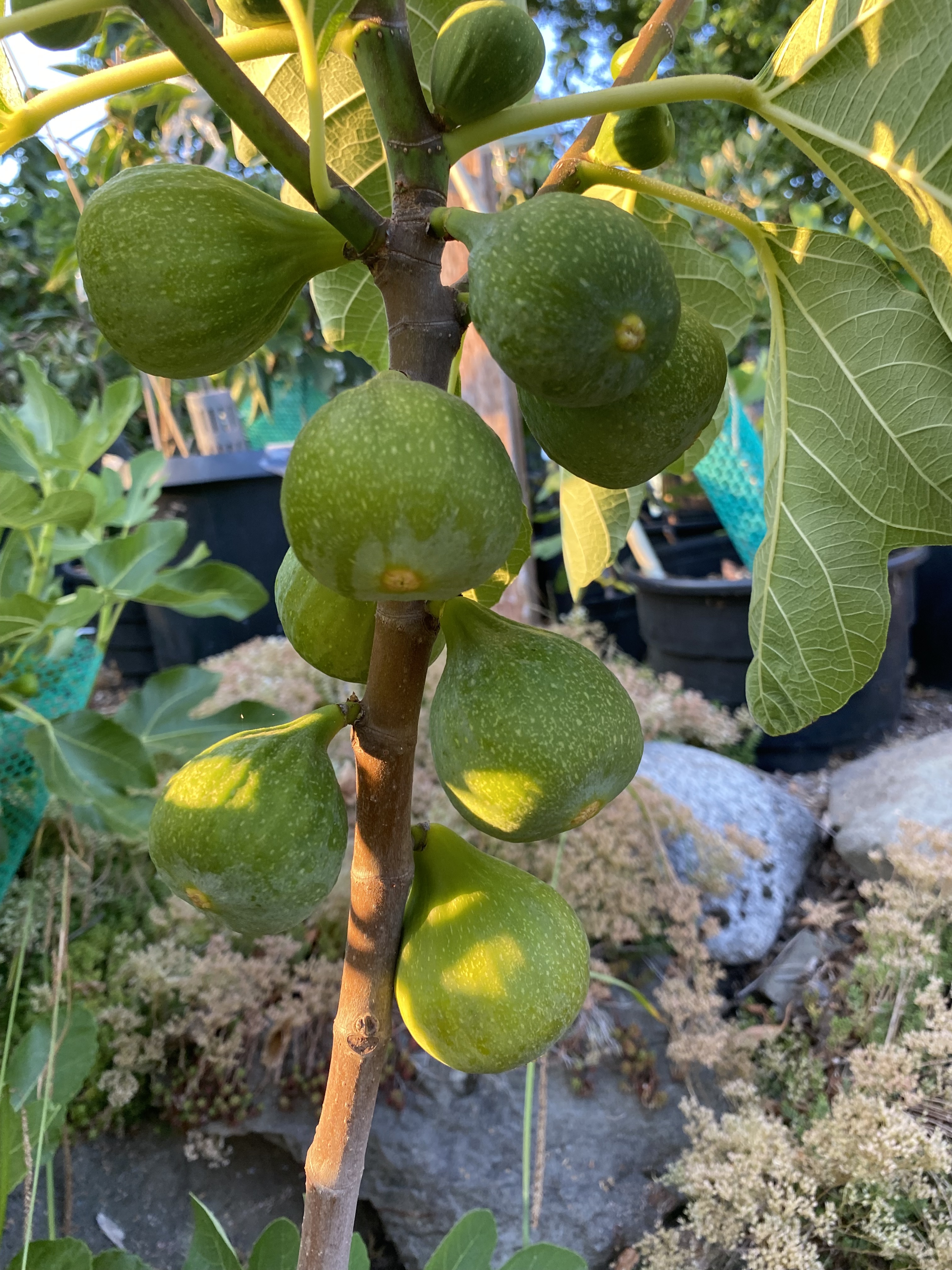
I have been growing figs here in zone 4/5 Maine for around 10 years, and have trailed a few dozen varieties. Some were named varieties, others mystery finds in ethnic neighborhoods or homes of immigrants in the northeast US. Most came as cuttings that I rooted. What I have found is that only the early ripening varieties can successfully produce a crop in my short season location.
These might be breba producing specialists, earliest maincrop producers or both. Hardiness is not much concern as I bring my potted plants into the cellar for the winter.
After culling plants that didn’t perform, killing a few by accident here’s my keeper list:
The earliest-
Improved Celeste
Florea
Ronde de Bordeaux
Iran Candy
De Tres Esplets
Teramo
Early enough for most to ripen-
Verdolino
Figoin
Kesariani
Worth keeping for breba and a few maincrop
Green Michurinska
Genovese Nero
I will add some photos as they come in!
What are your earliest varieties?
Thank you for sharing your updated list Jesse! Last year, Fort Mill Dark gave me my earliest fig and it looks to be ahead of the pack again. I need to get Florea going again, I’m confident it is earlier. Definitely interested in some of the others on your list that I don’t have yet, they seem to be on a few people’s ‘good one’ lists.
I’m not in the north, (6b Midwest) but my figs still have to be early, I really like Black Greek and Allentown Black. Early, prolific and I really like the flavor.
Ross talks about Brianzolo Rosso about being just as early as RDB.
Figue Jaune which I have a small plant of that won’t fruit this year is supposedly one of the earliest too.
@JesseinMaine I know you were growing a half dozen Mt Etnas. Was Kesariani better than the others or did you just trim to that one because they seemed to be the same.
I am in Southern Michigan 6a, 49 miles from the Indiana border and have mass fig trials going. This will continue for the next several years. They are being grown in ground, low cordon style. I am growing them in a tunnel I constructed in a field that gets full sun. The tunnel is 2 feet high, 2 feet wide and 77 feet long. The tunnels have 1.5" foam board insulation, the sides stay on the whole year and i have a foam board top that will be put on during the winter. It worked well for the 2023 year. I am adding two more tunnels this year. I will have 7 individual tunnels when its all done. I’m planting 11 individual cultivars in each tunnel with the plan to trial each until we get winners. In the spring I can lay plastic over the top and get the greenhouse effect to push them along. I’ll know much more about this with better data after this winter and will share more results.
I take Ross with a grain of salt, and same applies to anyone in the sole possession of some “rare” variety. I’ve seen a pattern of hyping varieties too often, and I’m happy to wait for other folks to trial and confirm quality and ripening time. It’s common for folks to start a cutting indoors in the winter, or give a plant an early head start in heated greenhouse or under grow lights and then report getting “early” figs.
Yeah regardless, Brianzolo Rosso might be worthwhile to keep an eye on it for more data.
Back to the Mt Etnas, you might have missed my question above; I was interested in Kesariani. I was hoping you could elaborate why you choose that one, as I know you have been growing a half dozen or so Etnas.
I’m in Zone 5b in eastern Canada, and I have two figs, both Celeste, in their second year. I put them in my unheated garage over winter, but once they put on enough growth for me to take cuttings, I’m thinking I’ll try cuttings of them in the ground to see what they do (not expecting much).
Does anyone know of any figs that will survive (even just the roots) and reliably fruit with -10F lows in winter? I know you can bury them or cover them with mulch, but I’m wondering about figs I can just leave as is, if any such thing exists.
@JesseinMaine, very interesting list.
I got Albo from you many years ago and it is super early and extremely productive. Has a large eye which may be problematic in some locations but not here.
Another very early excellent fig is Pastilliere but you need patience for it. It will drop figs for about 5 years straight.
I am also impressed by Smith which is early enough to ripen here and extremely good tasting.
Glad to hear Albo has done well for you Ram! For me it was not productive enough to make the cut. I have Pastiliere, and enjoy the figs it makes, but it still drops the majority, so maybe it doesn’t t like container culture. I’m still hopeful so have kept it around for the time being.
Smith is a grade A variety, mid season for me and unfortunately I lost it in winter storage and haven’t replaced it yet.
The very few Florea I’ve tried were good because they are early and fresh figs. Kind of like how early apples tends to be OK for similar reasons, with some exceptions.
I grafted Campaniere on some in ground trees this Spring, reported to be as early as Ronde de Bordeaux, hints of cherry, tight eye, resists splitting, will be a couple years before I get a good read on it.
I tend to forget about Florea once RdB starts producing well. Florea has a caramel/figgy taste to it, but can develop a bit of berry flavor in the latter half of the season. I’m not a big fan of caramel-like flavors, so I don’t prefer it over most others and I like the taste of RdB a lot with its complex berry/fruity taste. If you like caramel and figgy flavors, then you’ll like Florea more than I do. I still appreciate it for being so early. It tends to be a week earlier than any of my other figs and ripens its fruits quickly, so it’s nice to have in the first couple weeks of the season since it churns out lots of fruit in that time while other varieties are just starting to kick into gear.
I don’t have Improved Celeste, so I can’t comment on that one.