Fruit Breeding - Tips, Tricks, & Discussion

I’ve learned an incredible amount from this website, as well as from others like @SkillCult. I’d like this thread to become a crowdsourced resource on breeding fruit. Please share anything you’ve learned along the way that might help others—nothing is too small. Sometimes the tiniest details are the most valuable.

I recently received some Aronia plants in the mail, hoping to collect pollen to attempt a cross with Pear (Pearonia™—haha). When the first-year plants failed to produce pollen, I decided to use them as the seed parent instead. With no pear pollen available, what’s a guy to do?

Forcing Branches for Pollen

The Callery pear trees had buds that were the furthest along, so I cut several branches with flowering buds. I brought them inside, put them in water, and under LED lights. Five days later, I had Callery pear pollen ready to use. The trees from which I took the cuttings are at least a week or two behind, if not more.
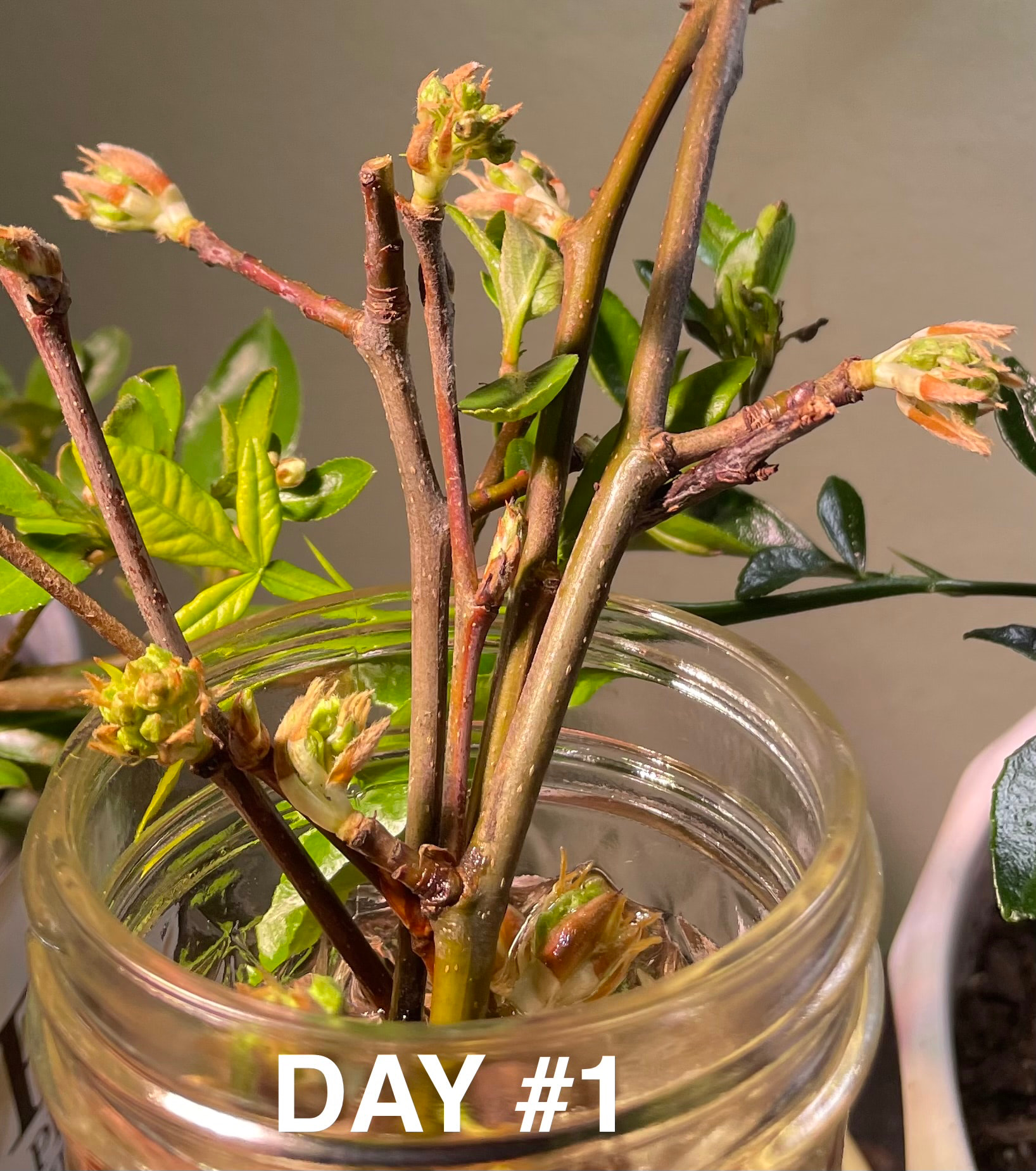
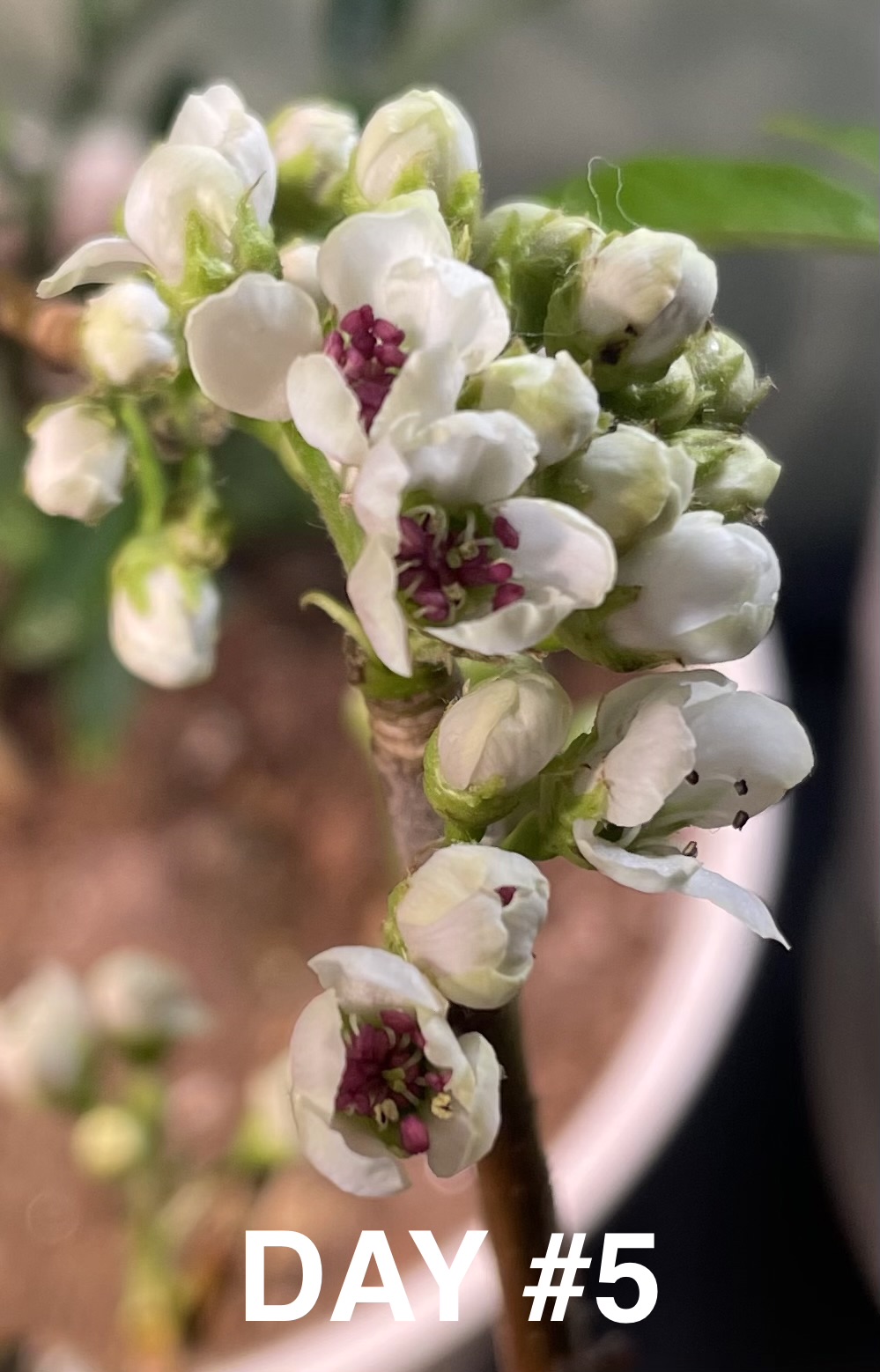
Credit goes to my friend and neighbor, who brings flowering quince branches inside for Lunar New Year to create good luck. I started doing the same and noticed they produced pollen.

I’ve only ever tried this with Pyrus and Chaenomeles, but studies suggest it should work with other species too. Pollen amount and viability are reduced, but it only takes a little, and drying pollen reduces viability anyway. Based on the studies, it seems you can do this anytime after bud swell, though closest to bud break is best. In certain species, it may even work any time after chill hours have been met.

I’m not an experienced breeder or any kind of authority, but I found this incredibly helpful. Apologies if this has already been posted somewhere—I’m not on social media and rarely watch YouTube. Some of the Aronia ovaries have already started to swell; I’m not expecting Pearonia™ just yet, but it’s a first step.

You can follow my attempts at intergeneric hybrids below. I have a few more things to post, but I’d love to hear from others first.

11 Likes

@AdamNY
G. Acquaah. Principles of plant genetics and breeding, 3rd edition.

4 Likes

Thanks for the suggestion—it looks like an incredible resource, so I just ordered it. It’s a bit more than I usually like to spend on a book, but it seems well worth it.

I also wanted to clarify my post about forcing branches: it’s definitely a well-established procedure in the scientific literature. I’m not claiming to have come up with it—I just hadn’t seen it discussed much outside of academic sources.

1 Like

fruit tree breeding is liiterally my job, while my passion lies in cultivating and breeding succulents.

While I cannot disclose specific professional details, I can share some non-specific practical tips and personal experiences:

1. Document Everything!

  • Timing: Record flowering and harvest dates. This data is essential for planning your workload next year.

  • Inventory: Keep track of viable parents and available pollen stocks.

  • Crosses: Log every hybridization combination!

  • Management: Use the old reliable Excel spreadsheets or SQL databases to manage this massive amount of data.

Pro Tip: I find that using a phone while working is too distracting. I prefer recording everything on paper first, then inputting the data into the computer once the session is finished.

2. Set Clear Objectives

Breeding offers infinite possibilities, which means you have infinite choices. Selecting a “good” individual is incredibly difficult without a clear goal.

  • My specific succulent breeding goal is to develop Kalanchoe varieties that do not produce plantlets along the leaf margins.

  • Once that foundation is met, I then select for beautiful variegation and strong branching habits.

3. Use Grafting to Accelerate Growth

Once you have seedlings that have passed basic selection—meaning they grow healthily without major genetic defects—consider grafting them onto larger rootstocks. This technique can help you speed up the process and save years of waiting time.

but only graft when you have spare sample. grafting may faile and you will lost you only sample.

4. Establish a Coding System You Are comfortable with

Breeding projects can spiral out of control quickly. When managing hundreds or thousands of seedlings, each with different parentage, you need a standardized ID coding system to keep everything organized.

you can use Lineage coding .date of year coding .place of planting coding

your coding system sould be able to trace each seedling individually .

5. Practical Small Tools

  • Masking Tape + Sharpie: Although marker ink fades after months of sun exposure, you usually harvest the fruit before that happens. This combo is a quick and easy way to label your crosses. (If you want to be even lazier, you can skip writing the female parent—just remember to record it during harvest!)

  • Glassine Paper: This is very useful for collecting pollen. Pollen should be stored in containers that do not generate static electricity. Never use plastic; static will make it impossible to retrieve the pollen properly.


The Reality of Breeding

I must say, the truly “exciting” moments in breeding are brief. The rush of seeing them bloom for the first time or finally collecting trait data only accounts for a small fraction of the time.

The rest of the work is administrative management: collecting trait data, harvesting pollen and seeds, recording reasons for culling, tracking plant locations.

17 Likes

Didn’t think about the static pollen issue. Thanks for putting it out there.

3 Likes

While pollen does cling to plastic due to static, with proper pollen container choice I don’t find that to be problematic. I prefer to use micro centrifuge tubes to hold small amounts of pollen. They are plastic, and pollen does stick to them. I merely use the inside of the cap as my pollen applicator tool and touch that to the pistils since it has a nice pollen film on it. When the film needs refreshing, you just close the lid and shake the tube for a fresh pollen film. I breed grapevine most extensively, but I have also used the tubes for black berry and pear pollen, and it worked just fine for all. Many different ways to skin a cat.

10 Likes

The tip on forcing branches for pollen was a good one that I’ll potentially use in the future. Thank you for sharing.

3 Likes

A large number of species, especially temperate species, have pollen that can be easily dried, frozen and stored for up to several years in a household freezer with little difficulty. I’ve done the forcing early flowers thing with potted plants etc, and it absolutely can work, but I personally much prefer drying and freezing pollen. It stops you from having to try to time it to match up bloom times with whatever you’re forcing and your desired seed parent, and you can use pollen from very late cultivars on very early cultivars and the reverse at will.

6 Likes

Would flash freezing (like freezing in liquid nitrogen) help very much with reducing the loss in viability in long term storage?

1 Like

Not sure. That’s not a method I have ever used. Drying on foil under a lamp for 1-2 days followed by freezing has worked adequately for me. I’ve used grape pollen stored that way as old as four years old and still had decent set. I haven’t tried to use blackberry or pear pollen any older than a year, but wouldn’t be surprised if it lasted longer as well. Because standard drying techniques work fine for more than a year, I’m not sure liquid nitrogen storage would be worth the extra effort and expense, even if it increased storage life.

3 Likes

the humidity also mess with pollen.when you took the platic tube or bagg out of fridge.

some water condense from air and drop inside . this is not ideal.

maybe it;s dryer in your place. but this is one of the reason why we do;t use plastic tube.

1 Like

The way to dramatically reduce/eliminate this is to use two containers/bags. If using small amounts of pollen in microcentrifuge tubes, I put them inside a closed ziploc type bag before freezing. If using large amounts of pollen directly in a Ziploc type plastic bag, I use a second bag over the first.

When you pull the pollen out of the freezer, let it warm to room temperature before opening either bag. The condensation will form in the first bag, and not in the pollen container.

If you placed a single plastic container in the freezer, such as microcentrifuge tubes not sealed in a Ziploc type bag, or pollen loose in a single bag, not double bagged, there absolutely would be issues with condensation getting in the pollen and damaging viability when you pulled out the pollen to use it.

I am located in East Texas, on the gulf coast, so a very humid climate. Not dry at all. It’s comparable to Florida except we get a handful of nights each year that get colder, preventing us from being truly subtropical.

5 Likes

Discussion

American fruit breeding programs seem almost wholly dependent on classical genetics—breeding for specific heritable traits—and pay very little attention to other factors that could potentially play a significant role in breeding outcomes.

In particular, seedling phenotypic plasticity, epigenetic effects, and broader environmental influences are largely overlooked in many breeding discussions. I believe this is at least partly historical. During the Cold War, Soviet biology under Lysenko rejected Mendelian genetics and promoted “Michurinist” ideas centered on environmentally driven inheritance. In response, Western science doubled down on classical genetics and became understandably skeptical of anything resembling environmental inheritance.

However, that reaction may have gone too far. While Lysenkoism itself was flawed, it doesn’t follow that all environmentally mediated effects on plant development are irrelevant or unimportant. In fact, some of these areas have since been explored more rigorously and independently in modern plant science.

I know some people will read this and assume I’m arguing for Lamarckian inheritance, but that’s not what I’m saying. Consider the following:

We already accept that in the form of bud sports, trees can show major changes in fruit traits—color, size, shape, lenticels, ripening time, storage characteristics, texture, sugar, acidity, and flavor profile. These changes can also extend to tree morphology, growth habit, vigor, and disease response.

It’s also well established that seedlings can be highly responsive to environmental conditions, and in some species those early influences appear to have lasting effects on development.

Given all of that, it seems reasonable to ask whether environmental and developmental factors are being underutilized in breeding programs, or at least under-discussed relative to classical genetics.

Curious to hear others’ thoughts.

6 Likes

I had read some paper on plant memory somewhere before of some experiments they did with seedlings from the same parents on testing cold hardiness and drought tolerance where they planted some in a colder climate and some in warmer climate and took cuttings from all of them and grafted and tested their limits on cold hardiness and the ones grown through their adolescent in a colder area were consistently more hardy than the ones from a warmer area. The same thing supposedly held true for drought tolerant tested ones, but for the drought stressed ones in their adolescent stage were also less prolific in growth.
And also they supposedly tested the offspring from those and the environmentally induced traits were highly inheritable.

6 Likes

Yeah, that’s exactly the kind of thing that’s just starting to be explored in the U.S. I imagine most fruit breeders here strive to grow their trees under optimal conditions. Depending on what they’re selecting for, that could actually be the wrong approach.

4 Likes

I think the main reason for this, is breeding for specific heritable, measurable traits is how you measure generational progress. If you can’t measure a trait effectively how can you select the best individual to use as a parent for the next generation? How are you going to measure the epigenetic impact of growing a seed in one environment vs another and separate that from the different genetics in each individual? If you can’t select the best individuals to use as parents, you can’t make progress even if the trait is highly heritable.

Now if you want to make the argument that varieties should ideally be bred in as similar a environment as possible to where they are intended to be used, then yes, definitely. Most breeders try to do this to the extent they are able. A tomato bred to be a good cultivar in a organic outdoor growing system in the Pacific Northwest is not going to be the best variety for growing in a florida greenhouse in a aquaponics system. If you’re breeding for a greenhouse tomatoes you should grow seedlings and select in a greenhouse, and if you’re breeding for a organic system you should grow seedlings and select in that environment. Most of what you will end up selecting for is going to be genetic differences certainly, but some portion of it could be some of the other things you mentioned as well, but those other things aren’t practically measurable, so they are ignored, no matter what their influence may or may not be.

Again, if you can’t measure it efficiently/effectively, you can’t improve it in a meaningful way. If you can’t improve it, not much sense in worrying about it as a breeder.

6 Likes

They are fully measurable and certainly not ignored. In fact, the largest seed companies in the world are now beginning to engage with this area in various ways. It seems likely they would have moved in this direction much earlier if not for the historical constraints mentioned above—there was a time when a Western scientist would have struggled to secure funding for research into environmental effects on plant traits. Today, however, this work falls under the umbrella of epigenetics and is widely regarded as cutting-edge plant breeding, attracting substantial investment.

When Soviet scientists were finally able to return to classical genetics, they attempted to make up for lost time by focusing on areas that had previously been off-limits. Meanwhile, some Asian countries, less constrained by rigid ideological divisions, maintained continuity in this line of research throughout the Cold War and produced a number of noteworthy studies.

For a breeder, the current generation matters far more than future ones. Productivity and profitability are driven by present performance, not hypothetical downstream outcomes. If particular environmental conditions are shown to enhance a trait under selection, it would make little sense not to take advantage of them.

That concern is also somewhat overstated, since epigenetic effects are measurable and unlikely to significantly impair the selection of parents for future generations. When marker-assisted breeding is used, the issue becomes essentially irrelevant.

An analogy can be drawn to humans: a great deal of time, energy, and money is devoted to child development even before conception. This would still be done regardless of any potential effects on future generations.

3 Likes

There is a usefulness to me for having a general understanding of this for breeding. Like, say I am breeding figs and pomegranates for cold hardiness, it would be a lot more beneficial for me to grow the seeds out here where it is lot colder than if I employed someone else from a warmer area to grow them up part way there and then send it to me to test and select for the most cold hardy.

5 Likes

Then breed fruit and select on these traits till your heart is content and enjoy! Since your previous assertion was that American fruit breeders largely don’t focus on epigenetic traits, but you also assert they are “fully measurable” is your assertion that American fruit breeders are somehow uniquely ignorant or hard headed? From the rest of your post I seem to gather that is essentially your assertion. :grin::wink: I assure you plant breeders all over the world regularly review what other breeding programs are doing, and if someone comes up with an improvement in methodology that works for one crop, if applicable, it tends to find it’s way into other crops pretty quick. When it doesn’t, there are usually good reasons not related to ignorance. It can be cost related, crop lifecycle related, etc.

However, if you believe that American fruit breeders are uniquely ignorant, you’re certainly welcome to show them all up! If you’re successful, they will actually appreciate it and adopt your methods! :wink:

Not really true. It depends on the goal. There are many goals that cannot be achieved in a single generation. Every breeder knows this. Breeders have to think far beyond a single cross for long term gain, and tend to be very strategic and patient people overall.

4 Likes

This is ad hominem framing and doesn’t address anything I actually said. I don’t believe American scientists are ignorant—on the contrary, they’ve been on the right side of the science. Epigenetics is an emerging field worldwide and, as in many areas of science, the United States is a leader in it.

I find the historical and political context—who studied environmental effects on plants, when, and why—particularly fascinating. I think this context helps explain why the U.S., along with the rest of the world, is only now beginning to refocus on this area of research.

These aren’t my methods—they’re confirmed in scientific studies and are being adopted worldwide. I thought people here would find it interesting—I didn’t realize it could be triggering for some.

3 Likes