This spring I will take scions of a very large and crisp sweet heritage variety brought from Scotland in 1853. The family that brought it and settled nearby planted an orchard of many apple varieties. Today this single tree survives standing about 30’ tall and braced up by master gardeners to keep it vertical from windstorms and fruit loads. The fruit is about 1/3 larger than my Tomkins King
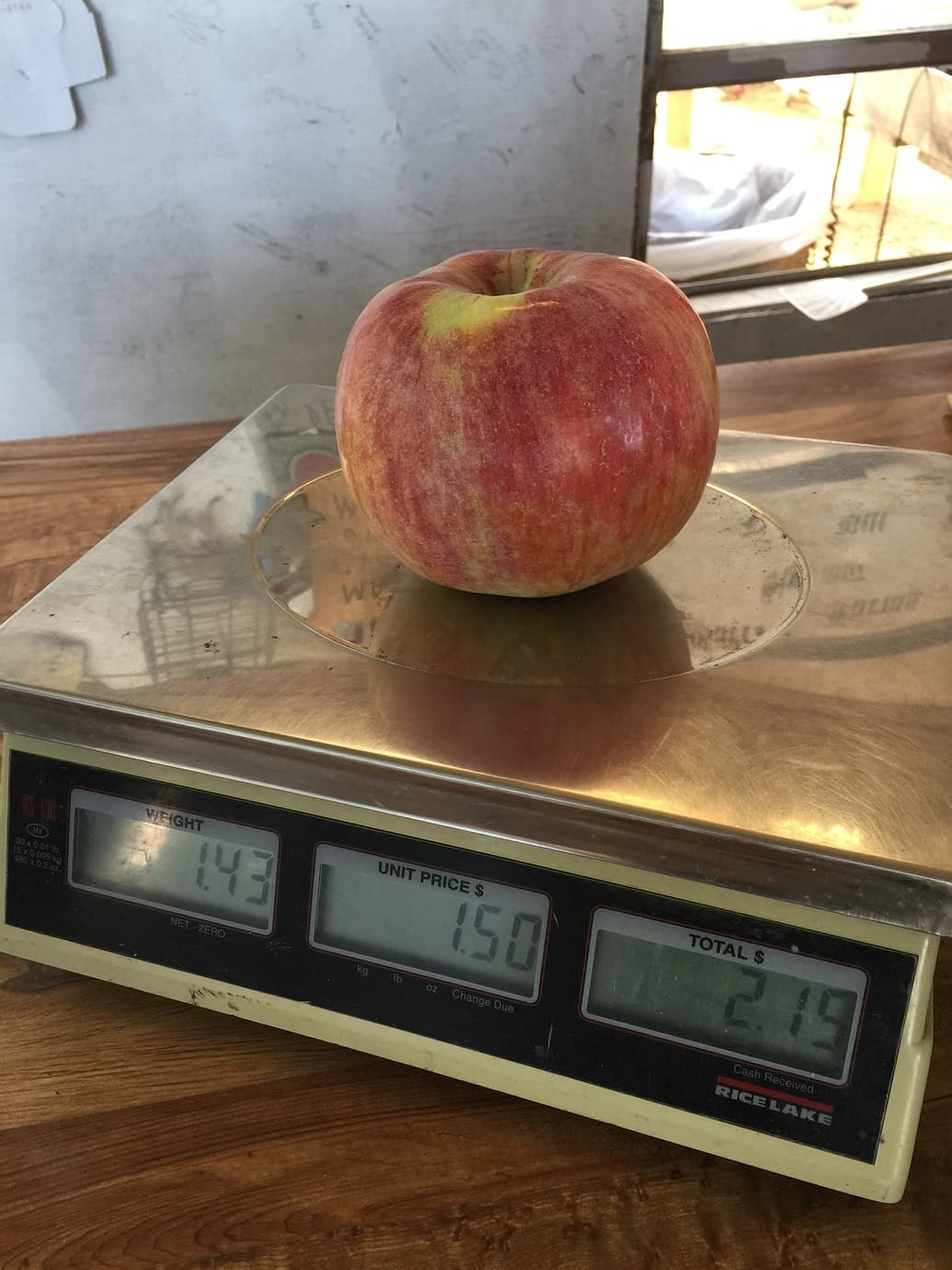
There were some apples at @39thparallel farm that looked more like cantaloupe than apples they were so big. What impressed me is they were still flavorful. They were various types of apples.
The largest apples we grow are: Bushey Grove, Gloria Mundi, Eve’s Delight and Wolf River. Belle de boskoop can get also get very large if well thinned.
Switches to Okefenokee Swamp resident mode: “I’ma gonna haf to getz ma spectacles ands reads up on ya’lls Apples. Boy.Lots of dem Apples ain’t frem around heah.”
Seriously though you have a lot of unfamiliar names to my amatuer Apple knowledge level.
Yes, I reached out to several members in UK but no one was able to take a bite! So I just call it Neely King after the family that brought it here! My guess is that a variety of this quality is still being grown somewhere in the UK.
Dennis
In my childhood we had an old standard Wolf River apple tree. Tree so big we kept our picnic table under it to use it for the shade it provided. Had many Sunday meals sitting under that massive tree staring up at the giant apples. We did not use the picnic table when those apples got ripe! It would be unsafe to do so without wearing a hard hat.
I recall the neighbors coming by for some of those apples and used 3 or 4 at most to make a pie. Not all got large as we did not thin the crop but left it to chance as to what size we got. I can vouch for Wolf River bearing really big fruit!
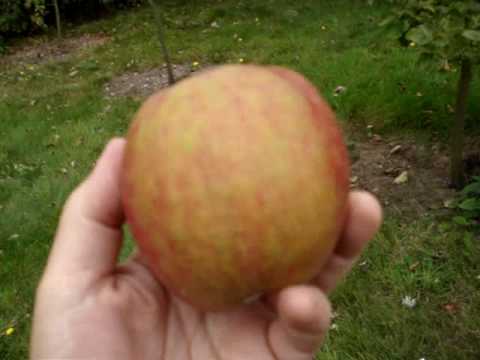
Actually when I went through the list of well know Pippins I came across this video and the apples in is video are a very close match to the apple pic I posted from the local unnamed tree. Very cool! This just may be the name!
My pic:
The fruit sure speaks well, not a one that we gathered this year were wasted, but were the first that were finished, really a delightful apple. I can understand why it got this name! Here is a pic of the old tree that must have been planted soon after the Neely Mansion was built. That lower limb on the left side became buried and now has rooted itself. So I will go in next spring and segregate all the new rootstocks that have suckers attached. I think I’ll get about a dozen new plants of this variety.
Dennis
Kent, wa
I’ve heard this before here, but I have to put in a plug for Wolf River grown outside California. Apparently it’s all about terroir. Seed Savers says Wolf River is an, “Open-pollinated seedling of Alexander found growing on the banks of the Wolf River near Fremont, Wisconsin, in 1875.” The large fruit are sought after for pie-making in Wisconsin. The dry flesh holds its shape well during baking without becoming soggy. It requires little extra sweetener. It soaks up and takes on the flavor of the fats it is cooked with. Wikipedia says, “Wolf River is a world-class apple butter apple, which has long been praised for the rich, fluffy apple butter it provides after hours of slow cooking.”
Mike, I hoped someone else could contribute that had tried OOTEN…I suspect it’s pretty disease prone, but I’d try it again if I had a reasonable expectation it’d do OK.
ps. My Hudson Golden Gem has fireblight…going to have to decapitate and hope it comes out of it after I butcher the main trunk.
~
I was not impressed with my Hudson’s Golden Gem. It was just okay of an apple BUT a beaver helped me decide if it was to stay or go. The beaver took down the tree so it went bye-bye.
I would like to at least try to graft a Ooten apple onto a tree of mine of if I could get a scion or two. That way if it is disease prone I would not have wasted a tree slot for it.
Well, I bought my scions of Ooten about 5 years ago from Jason at Horne Creek Farm/Preservation Orchard. It took off great…but died in second season on a standard root after I planted it.